[wpvideo 9c9tZoxh]
Main street St Kilda
[wpvideo 9c9tZoxh]
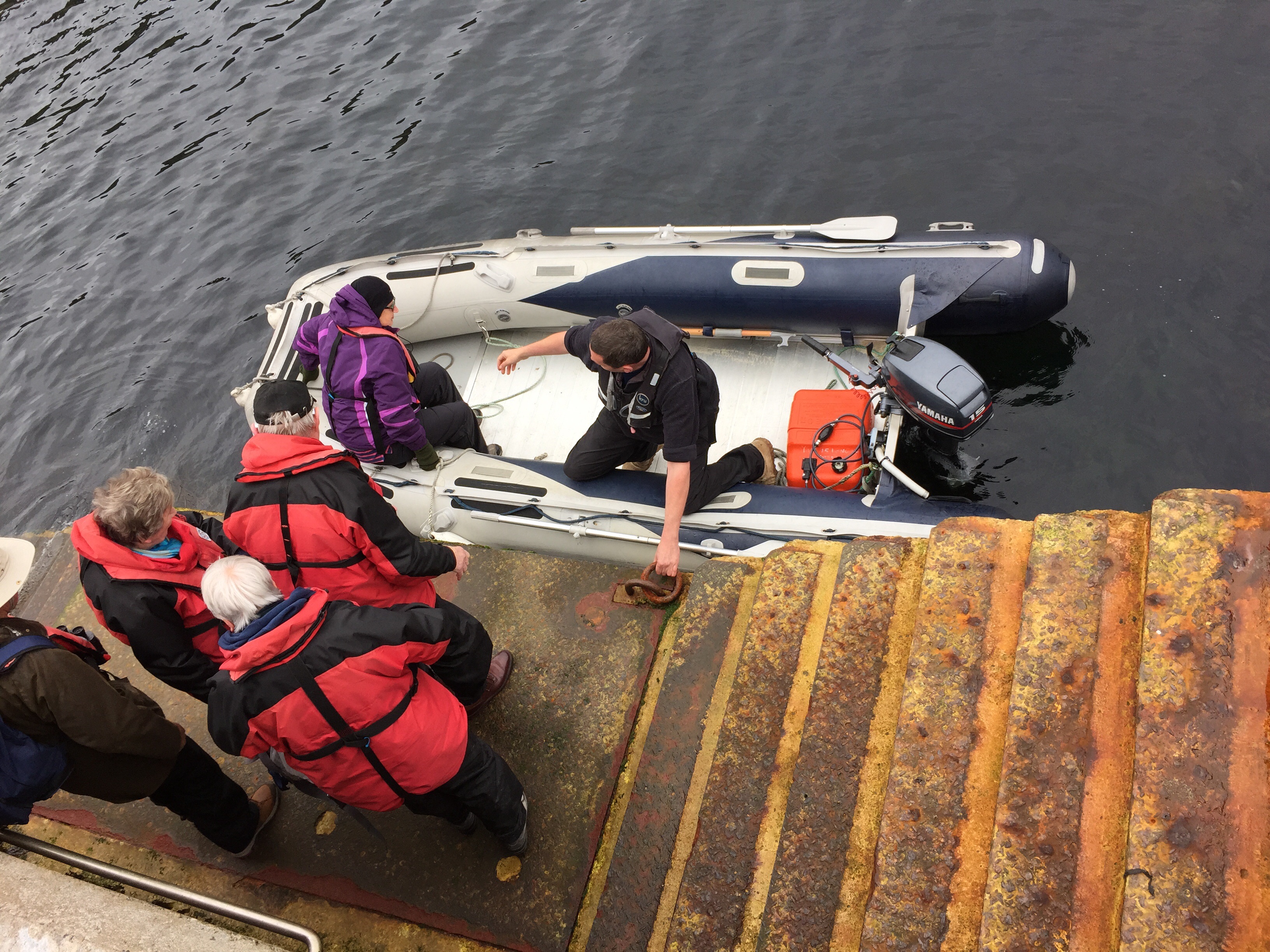
Arriving on the island
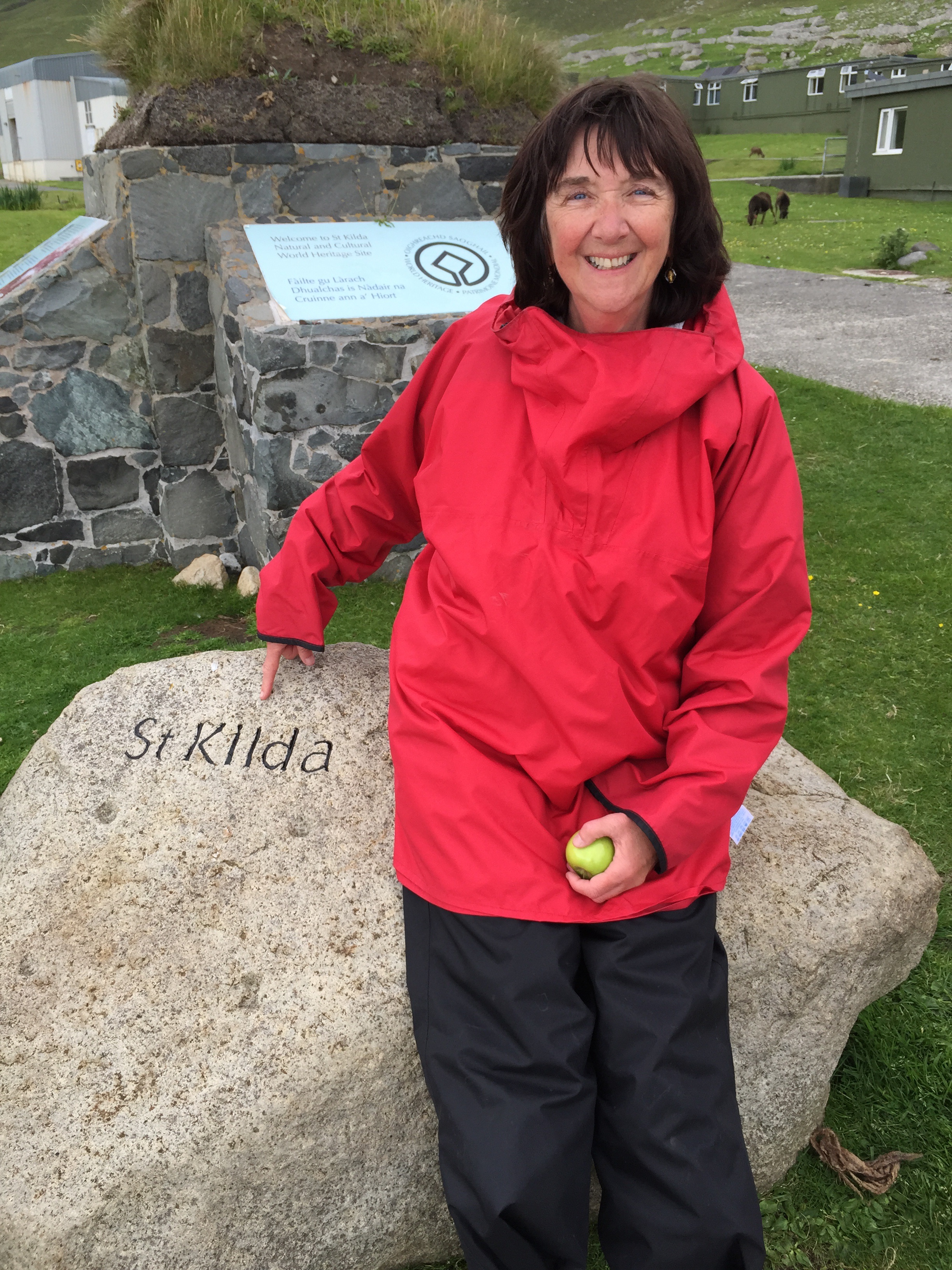
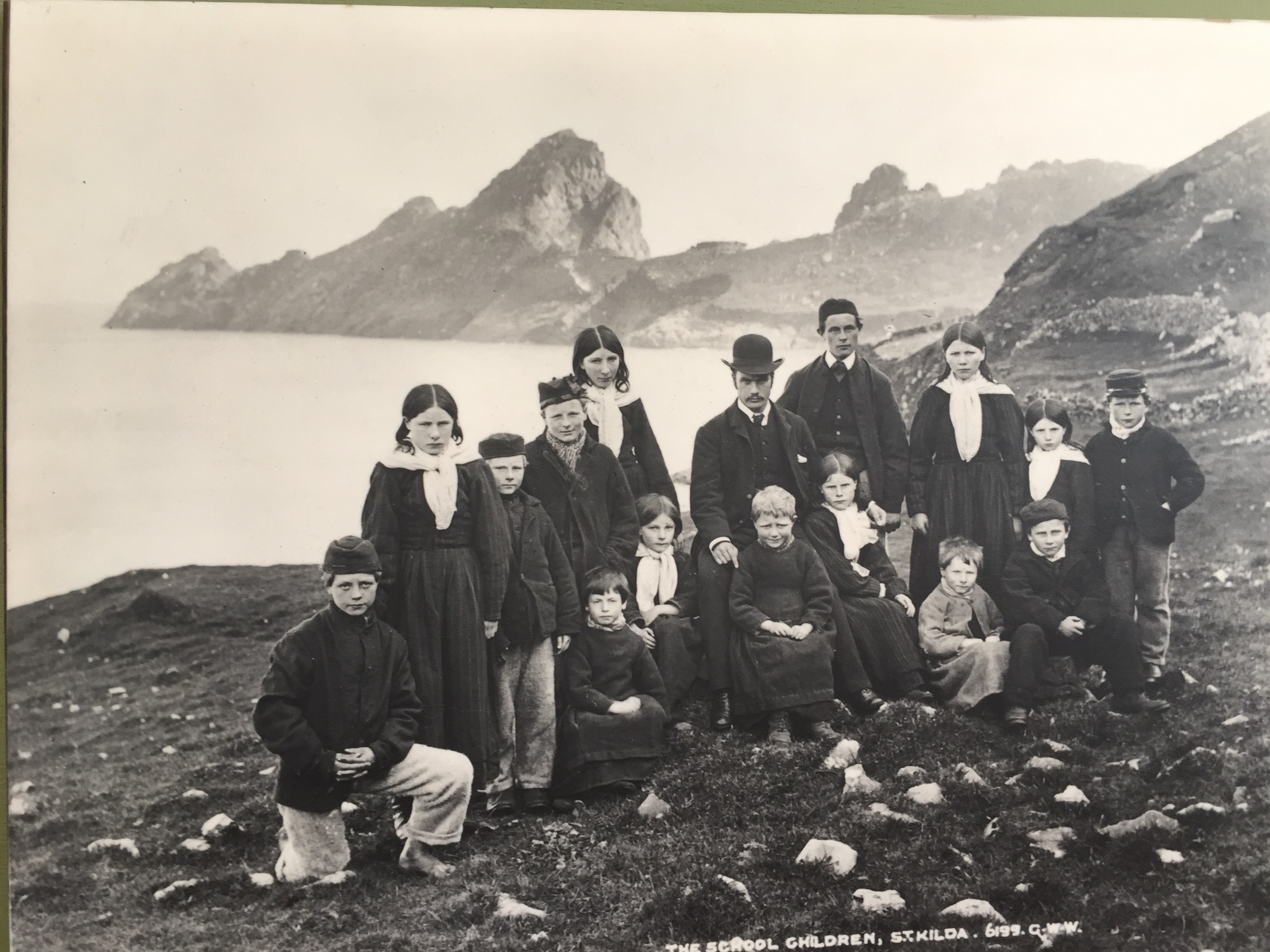
The last of the inhabitants who left in 1930
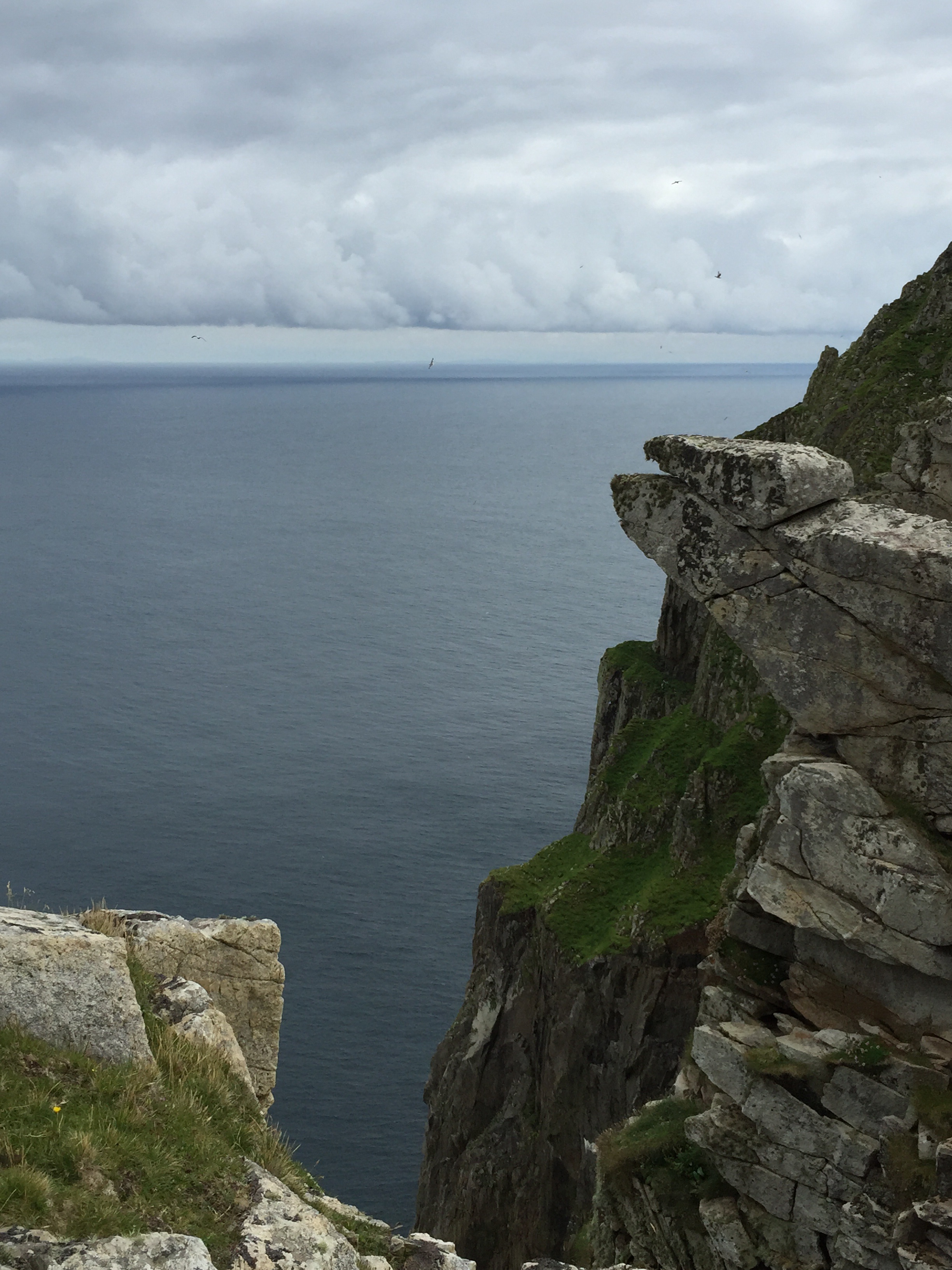
At the top of the hill there’s a sheer drop- no warning, no fence, just nothing!
No wonder the brochure says of a day in St Kilda ‘not for the faint hearted.’ The day began with breakfast at 5:30then a hour coach drive except the coach driver had misplaced his keys so we had to bring out 2 emergency taxis. Then a 4 four hour boat ride on a 12 seater boat. Then a transfer into the island in a 6 person inflatable. 4 hours to explore the island. Facilities included 1 bathroom, period. No food or drink. And then the same journey in reverse except for an additional hour detour to see the birds nesting and orcas. Dinner back at hotel at 9:45. Not enough space here for the amount of exclamation marks needed. It was WONDERFUL😊
I’m not sure when I last had breakfast with a group of people at 5:30 a.m. Cereal and tea was all I could manage at that ungodly hour. At the hotel check in desk we picked up our packed lunch. I had forgotten that a ham sandwich meant one transparent slice of ham and one lettuce leaf! It came with a drink, too. A can of Pepsi. I asked to exchange it for water and was given a glass bottle of water. And I had to pay 8 pounds for this lunch in addition to the tour price – really? But as I was realizing all this our driver Ali was going around in a total panic. It turned out that he had lost the minibus keys! Out boat to St Kilda would leave whether we were on it or not, so the desk clerk was frantically trying to get us two taxis to take our group to the harbour. Eventually, after calling several taxis we got two and piled into them.
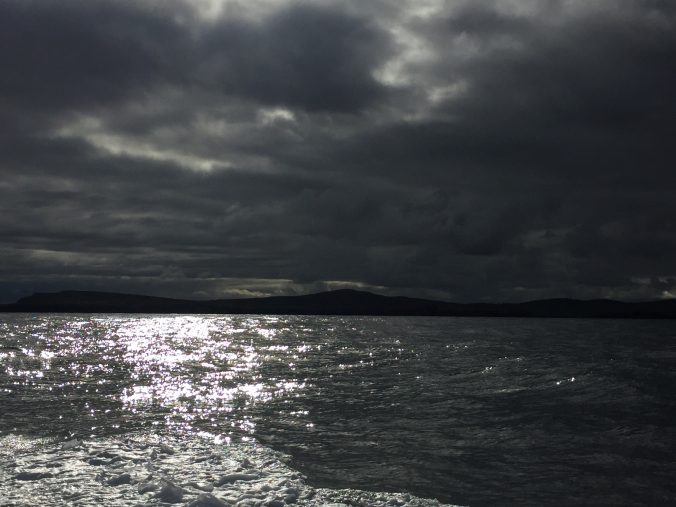
It was close to an hour’s drive to Loch Roag on the West coast of Lewis to meet our 42 foot motor cruiser MV Lochlann. The harbour facilities consisted of a hut, a cockle shack and a bathroom. We were kitted out with waterproof jackets and pants, and then boarded the boat. I was surprised how small it was. We were joined by a younger couple for the day’s excursion. As we pulled out of the harbour I sat outside facing the rear of the boat and immediately the boat began to go up and down – a lot. I thought that was perhaps just until we picked up speed – but no, it was like that for four hours. the majority of the time we rose and plunged so fast that we were in free fall. Despite there being a bathroom on board it was impossible to get to unless we asked for the boat to stop – such was the plunging and tossing that it was totally impossible to stand up, let alone walk. We couldn’t even change seats without requesting the arm of our captain’s mate. Within an hour of this i was feeling decidedly sick and just managed to request a sick bag in time. We had been directed not to be sick in the bathroom because that would put it out of use for other passengers. Tea was served as we boarded the boat and the crew were fantastic. They are so used to people throwing up that I didn’t feel like a burden at all. Eventually they suggested I go into the cabin and I put my feet up and a blanket was thrown over me . . and I completely slept through the first sighing of the island! Darn it!
I woke up as we were coming to a halt at Village Bay, and we somewhat precariously transferred to a dinghy, then up the steps and I was there. So why had I come here? Many, many years ago my mom had brought home a book called The Life and Death of St Kilda. How she came across the book or why we had it in the house I don’t know, but I’d been fascinated by the story of this island which had been voluntarily evacuated in 1930. I’m rereading the book now. I’m sure I never read the whole book before, but now every word and every photo in it means something to me. I’ve stood in the very footsteps of the inhabitants, and seen the 100ft sheer cliffs, the highest on the British isles, and the colonies of seabirds on the sea stacs.
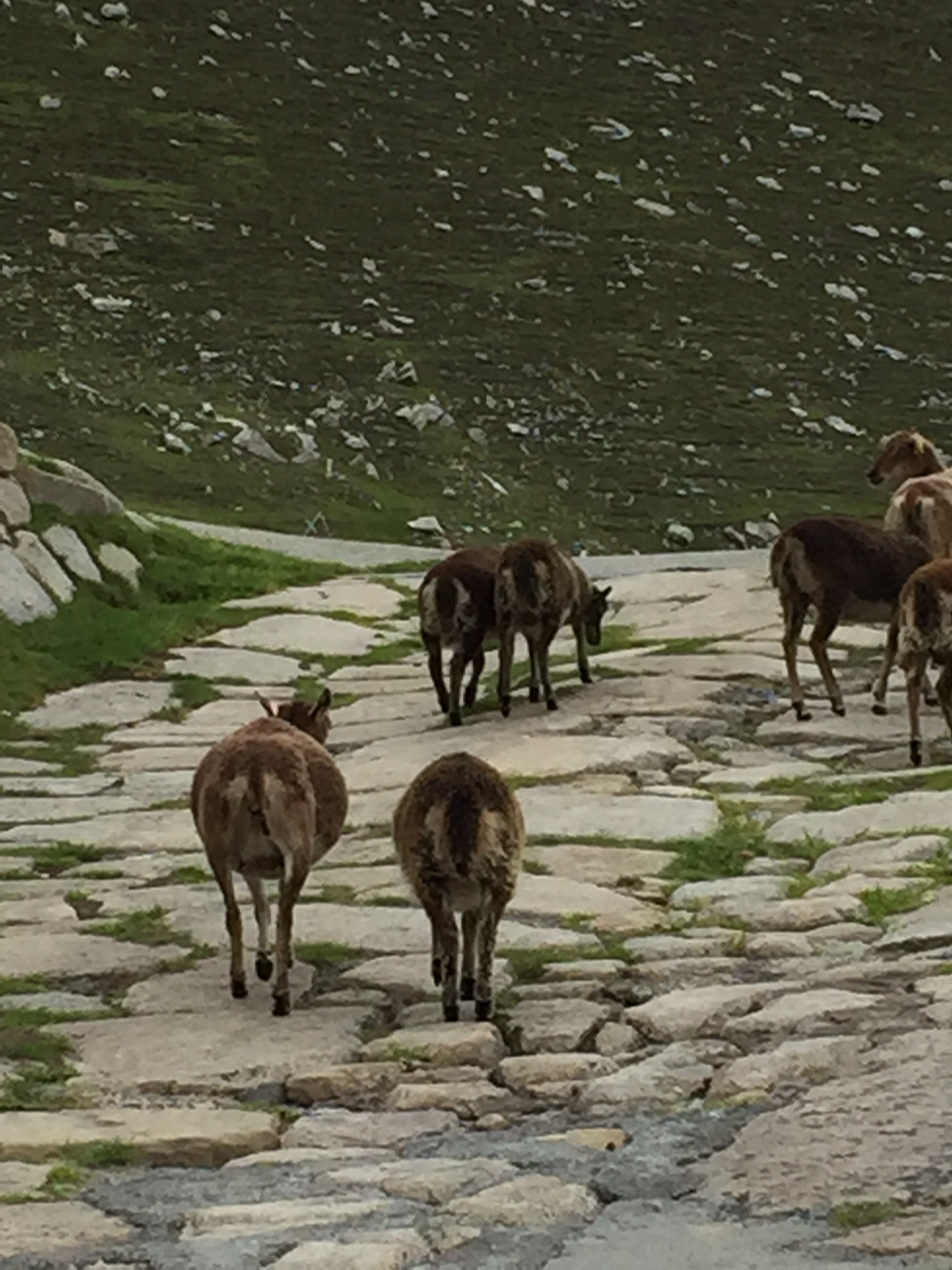
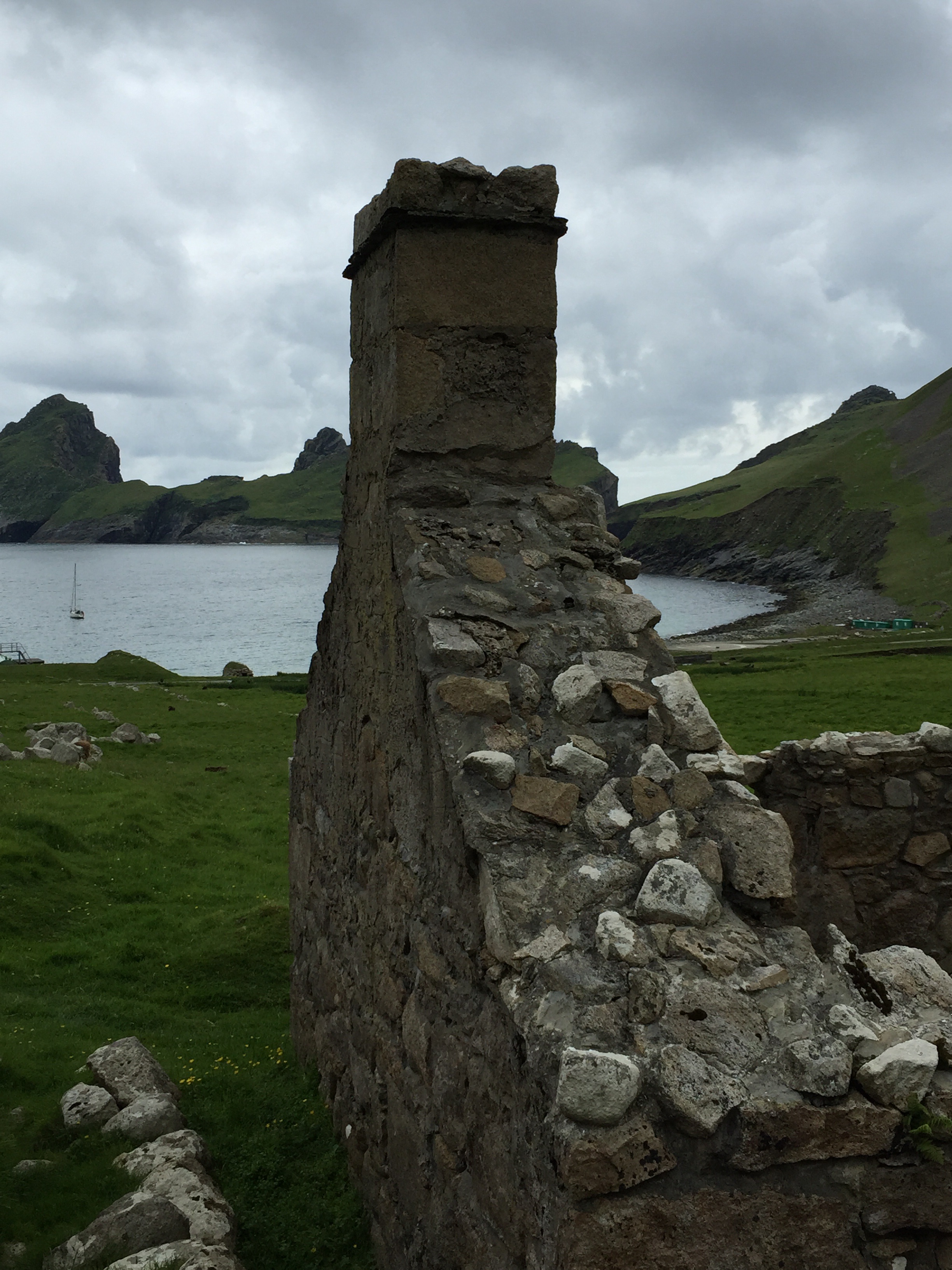
We were greeted by a park ranger who told us a little of what we could do and see in or four hours but after 5 minutes we were on our own. I think I’d thought there would be trails to follow and our tour group might stick together but it was obvious that was not going to be the case. I made a bee-line for the street whose only occupants are now the sheep. Each renovated newly roofed house was built in the 1860’s and currently houses archaeologists, volunteers and park rangers. Between each of these is the ruins of black houses where people and animals would share the same living accommodation. The post office is now the museum and shop where you can buy a postcard and stamp and have it stamped with the St Kilda’s postmark. Of course I did that and sent a postcard to myself – and it arrived home before I did. Because I had’t booked the trip until close to the time it left I’d done very little research about what there was to do once I was there but the ranger had said that in four hours it was possible to hike up to The Gap. So off I went – gourmet picnic in hand, or rather rucksack. This cannot have been me! There was no real path. i just followed the line of cleits up the mountainside. I quite from Tom Steele’s book: ‘cleits are unique to St. Kilda. They were constructed entirely out of stone and turf, usually about8- 12 ft in diameter and 4-5 ft high. Those built inside the wall surrounding the village were used mainly to store the carcasses of seabirds and were round in shape. Beyond the wall cleits were used to store practically everything that had to be kept dry like ropes, feathers and even clothing. High on the hill slopes they were used almost exclusively to dry and store lumps of turf for the fires of Village Bay.’ I read somewhere that on the island nothing grew taller than a cabbage, so it was pretty ironic that when the islanders were relocated they were given jobs in the Scottish Highlands as lumberjacks! I was so fortunate in the weather. Apparently during the whole month of May boats were only able to land on the Hirta on 5 occasions. Today it was sunny and clear, with a strong wind as I go higher and higher. I followed the line of cleit sup a very steep hillside. There was no-one else in sight. Here I was, in one of the remotest places in Britain, in fact, the remotest, and it felt so good to be exploring alone. I passed many cleits topped with live sheep but I was never fast enough to take a photo. After the first steep climb the hillside flattened for a while and then an even steeper climb was in store – something I couldn’t tell from the village. I kept looking back at the village as I was getting an increasingly bird’s eye view of the layout and the rocks surrounding the bay, and then suddenly there was a 1000ft drop in front of me. No warning. No fence. No sign. But just one further step would have meant certain death. Of course I wanted to see the cliffs and I crawled on all fours as close as I could get to get a video of the nesting birds on the cliff face but I couldn’t get close enough to see the sea directly below me. Stac Lee, like some dragon’s tooth, lay in front of me, and Stac an Armin, and the bigger Boreray as sea birds in great quantities soared and swooped above them.
To my left there was another climb to Conachair but I reckoned I probably wouldn’t have time to climb that too, so I backed away from the cliff and settled myself for my picnic with a view of Village Bay, and sheltered from the driving wind by a cleit. I brought out my hedgehog too at this time. I’d purchased it at Gibson Mill in Hardcastle Crags. Because of something that Anna did a few years ago my mom’s symbol has become the hedgehog (in the nicest possible sense) and so i took out my little stuffed hedgehog so that my mom could experience the view of St Kilda that she’d introduced to me so many years ago.
Back down at the village I visited he school house and the church. I’d seen several photos of both when they were in use and it was wonderful to stand in the very spot in which those photos were taken. The brand of religion was very, very strict and this contributed to a high degree of life to be so untenable on the island after probably two thousand years of habitation. I was determined to find the cemetery. I came across one of our tour group who gave me the wrong direction which had me climbing back up the hillside, and then another wrong direction from someone else. By the time I found the oval wall which surrounds the few graves I was running out of time and I had to hurry back quickly to be on time for the boat. I wondered how many people get lost, or miss the boat!
Back on the boat at 4:15 (via the dinghy again) we went around the east of Hirta and I got a fantastic view from the sea of The Gap. Then we got close to the sea stacks and our crew suggested we went out on deck to get the best glimpse of the seabirds. Now I’m by no means a birder, but something very strange happened. As we got very close in between the stacs I became completely overtaken by some strange emotion and found myself wanting to cry. It was just so amazing. I can’t ever recall feeling that way before. The stacs were one mass of nesting birds. Now I dont know a fulmar from a puffin but whatever they were these birds were the life source of the St Kildan, providing food, oil, feathers to pay their rent to the owner of the island, MacLeod of Dunvegan Castle on the isle of Skye. As we idled the boat began to lurch violently. We could see 4 other boats and the captains ere in walkie talkie contact describing where the orcas were. People got very excited, and I certainly didn’t want to say that I can sometime walk out of my house and see orcas passing along Santa Cruz bay. We did see a few flipper flying. This detour added an hour to our 4 hour trip back to Loch Roag (during which I was sick again) and then we had an hour’s minibus journey (Ali had located his missing keys) . Supper at the hotel was at 9:25. I managed about 3 spoonfuls of soup. (The end of an amazing day which I didn’t manage to write up in my journal until Aug 20th, 2016).
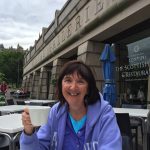
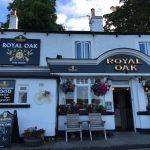
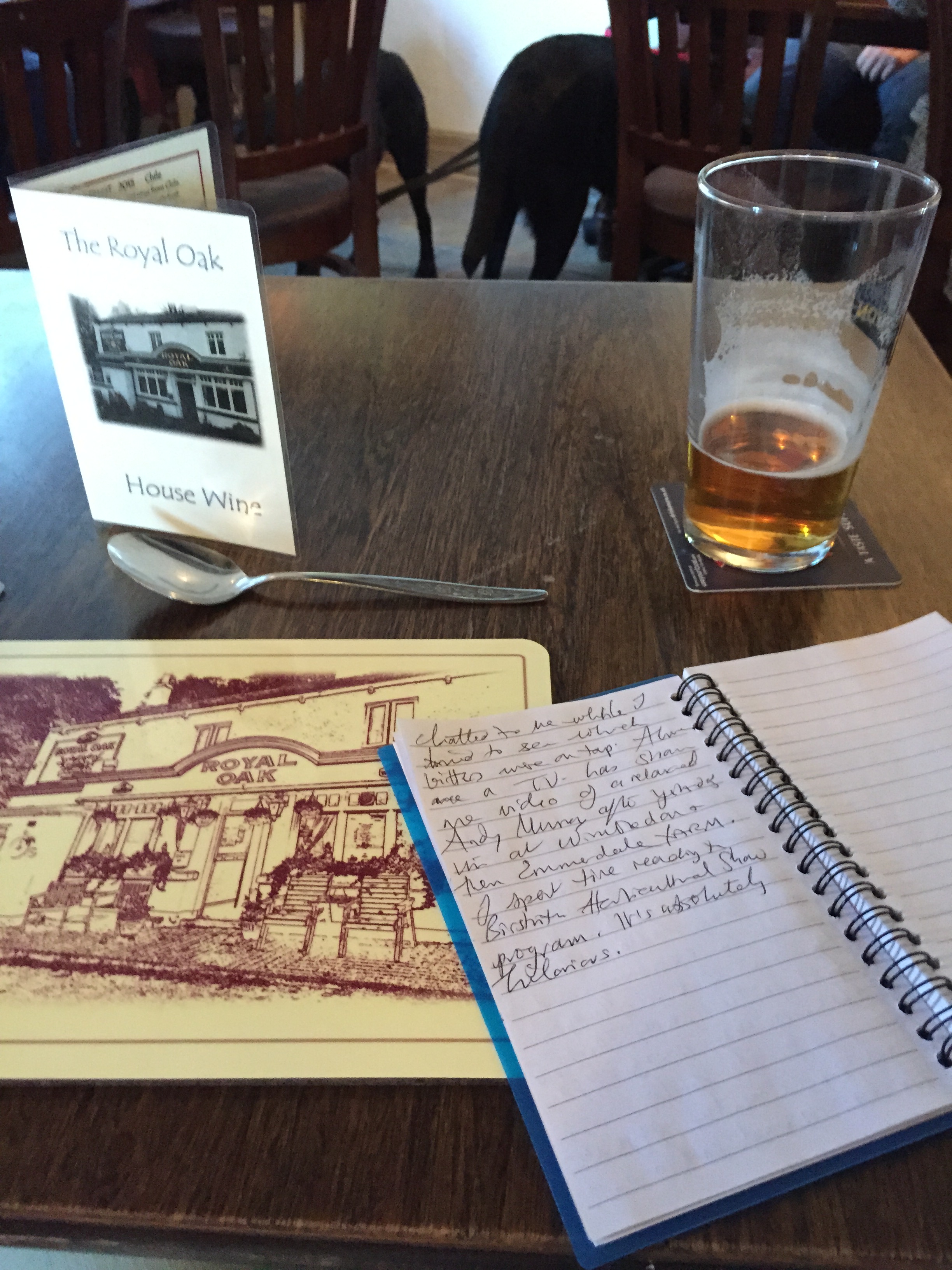 6:25 p.m. I’m sitting in the Royal Oak, Pateley Bridge and I’ve just devoured what was probably my favorite meal of the trip so far – black pudding and bacon salad in sweet chilli, washed down by a pint of London bitter. I’m still trying to decide if I want rice pudding with jam and shortbread for dessert. Rice pudding with shortbread??? After my first day ‘in’ (well, I did walk down to the Post Office for a warm cornish pastie and vanilla slice for lunch) I’ve come for 2 hours to Pateley Bridge where Judith has a committee meeting from 6-8. I started the day by beating myself up for not zooming around Harrogate for the day but i reasoned with myself like this: I’ve been on the road for 33 days ( a lifetime record, I believe) and I’ve been out doing stuff most of the day for each of those 33 days. Tomorrow I leave on a 5 day trip which is billed by the Brightwater Travel as ‘to the ends of the earth,’ and ‘not for the faint-hearted.’ If I was at home and just about to leave on any 5 day trip I would be psyching myself up, planning and packing so that’s what I decided to do. I even got out my embroidery for the first time on the trip.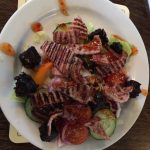
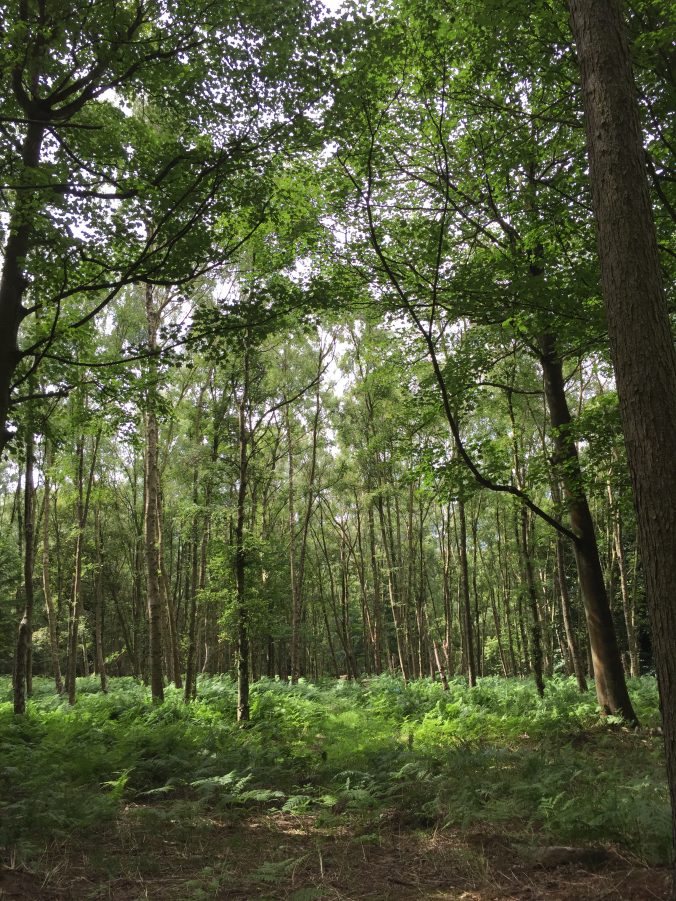
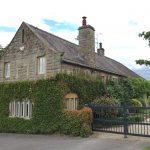
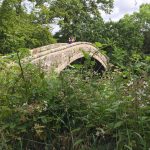
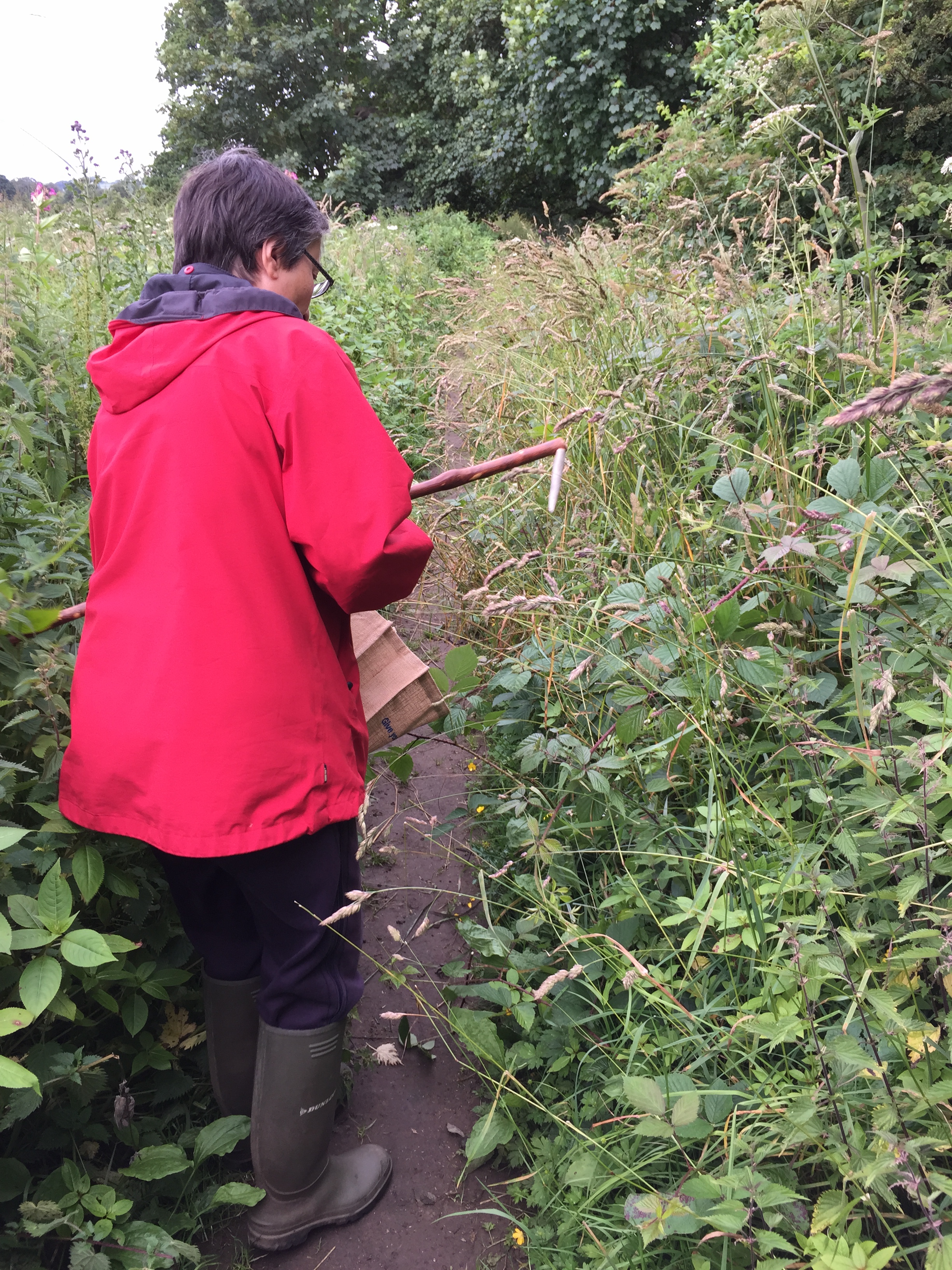 with a big stick and gardening shears to clear a way through the shoulder high brambles and nettles. We walked along the River Nidd, over stiles, past bunnies, through a field full of very inquisitive cattle and past beautiful farmhouses. Over the ancient packhorse bridge where the monks of Fountains Abbey would have walked we spotted a farmer bailing hay.
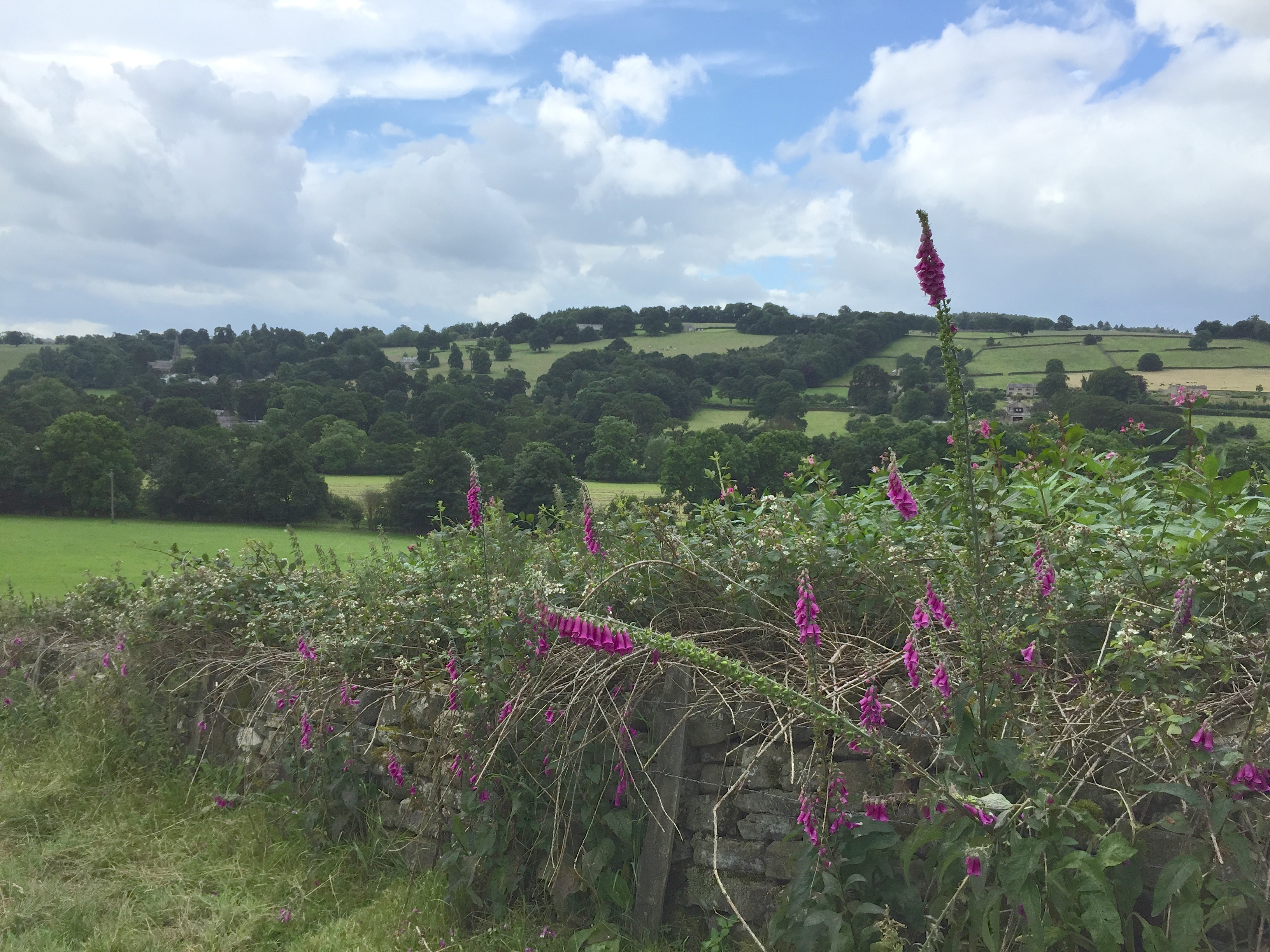
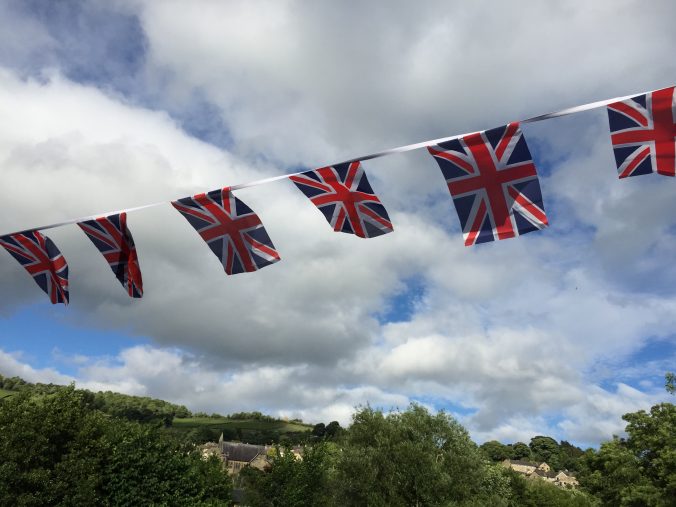
 It had been a mixed bag of weather in Birstwith during the game – very heavy rain one minute and bright sunshine the next, so I suggested we take a Sunday afternoon drive to watch the clouds. We were out for an hour and saw lots of very big puddles on the hill roads – and a rainbow. The landscape reminded me of the Cotswolds – very pretty, but maybe not much going on. I got some lovely sky photos though.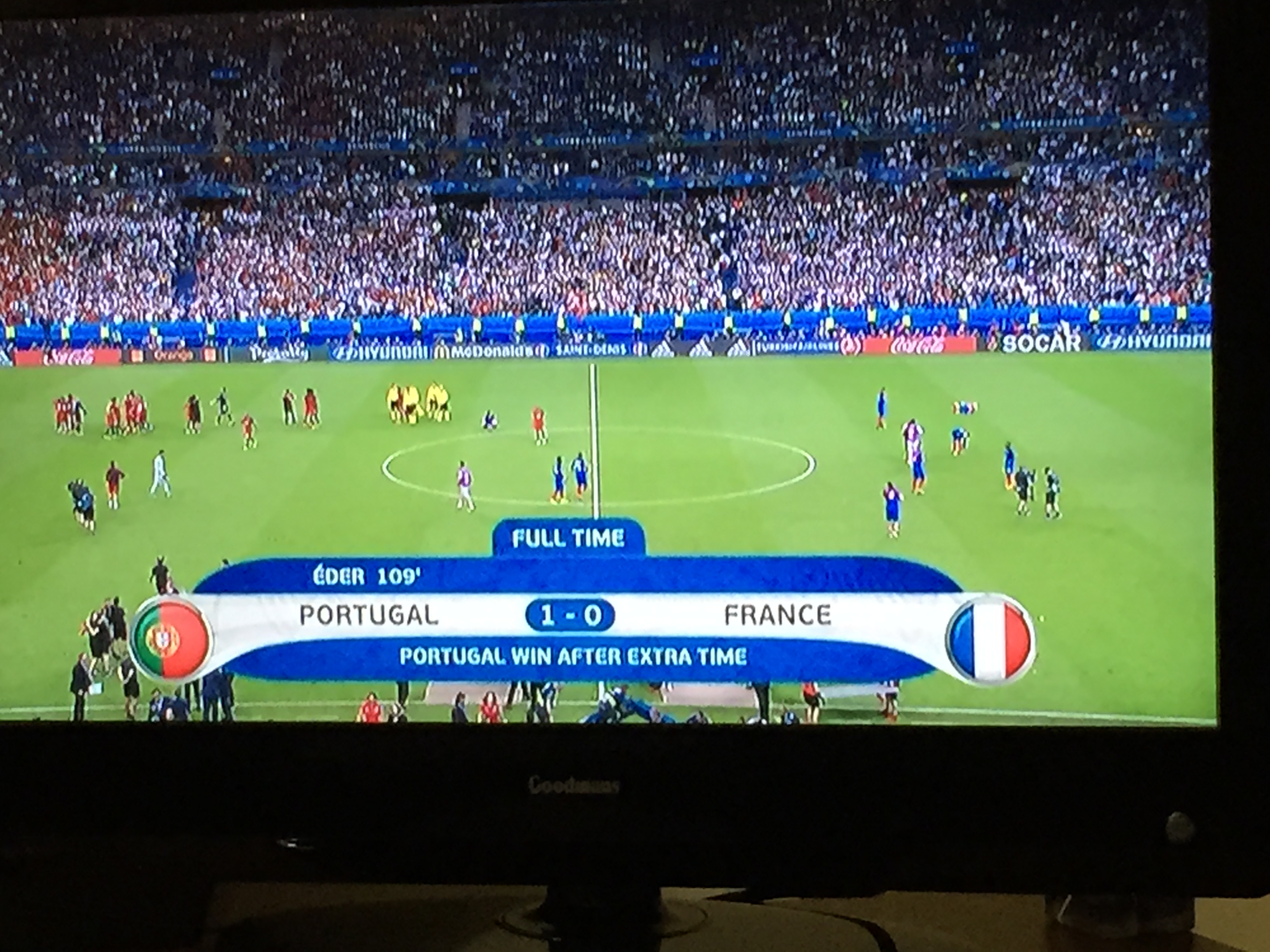
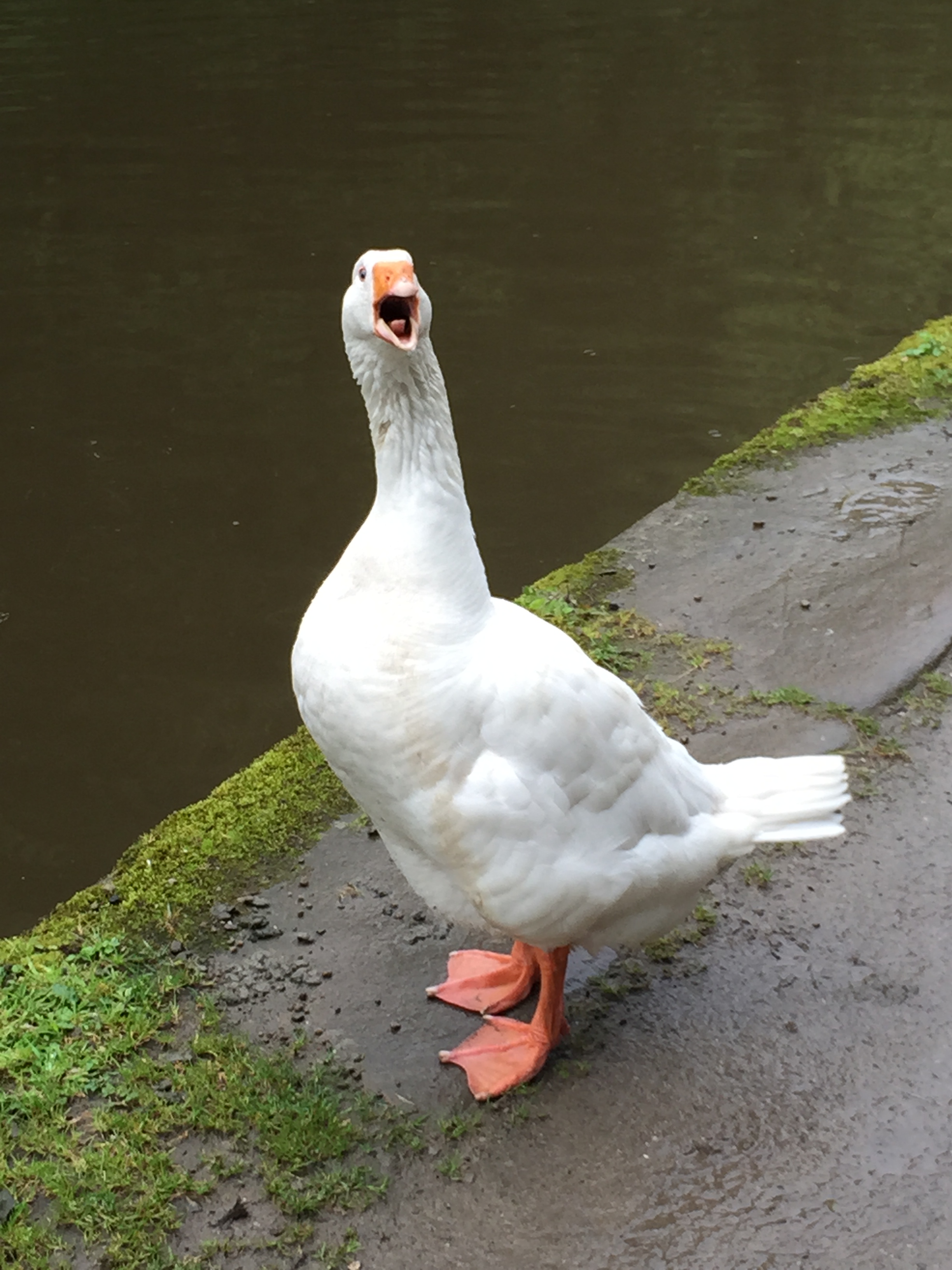 then took a taxi to the station. Just handling my 2 roller bags on the cobbles was a major problem, but I was soon on the train to Leeds and then on to Harrogate where Judith met me at the station just like last year. This time we drove straight to the village of Birstwith, about 8 miles from town, through pretty rolling countryside, scattered with sheep and cattle. We chatted about all the festivals that I’d been to over the last month. There are lots of festivals in this area too, but these are up-market ones like the Harrogate International Music Festival, and the Great Yorkshire Show (whose fairground I past on the train) and all the events are big ticket items. There’s not the impromptu pop-up musical extravaganza in the square or the free events of the Heptonstall festival. This area looks and feels much more genteel. Gently rolling hills replace the dramatic ravines of Calderdale. There’s no sign of industry, past or present in the deep valleys and the farms have a manicured, very affluent aspect. It’s much more sparsely populated and so there are far fewer smaller, local events.










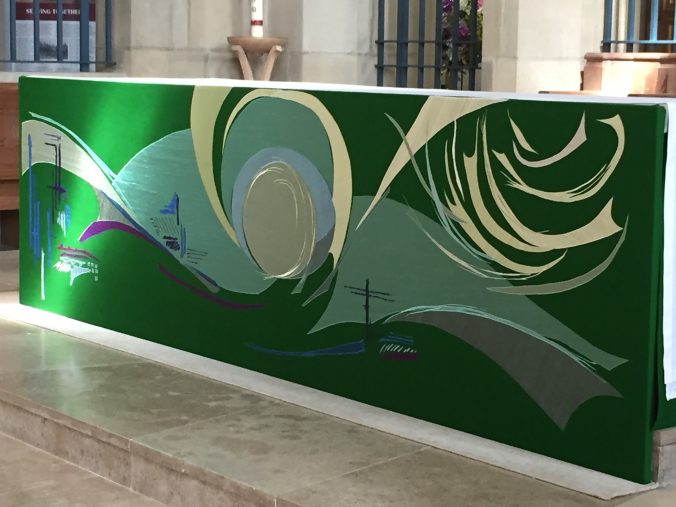
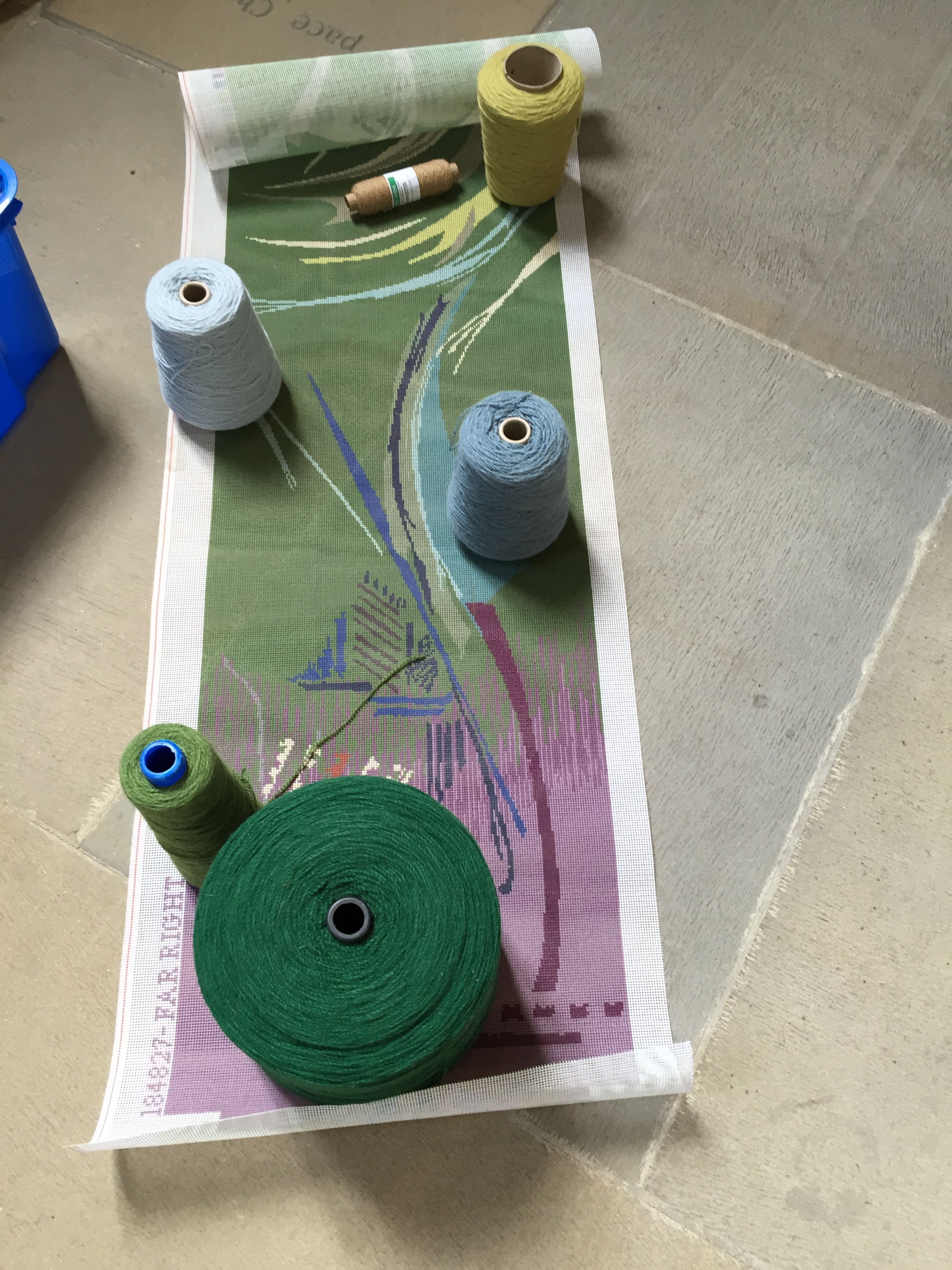
 was welcomed with open arms. Everyone who contributes their needle-working skills is named in a book that will be kept with the tapestry. There’s no telling how long it will take to finish, but a similar finished work of art currently adorns the altar. It ‘s green but there are a series of 4 for each of the seasons. The man who was sitting next to me has the reputation for being the best needle-worker in the group and he told me that he can do 180 stitches per hour. After watching me get started he said, ‘I can see you’ve done this before.’
 class wool heritage and its German population. Another suggested going into Waterstones

Recent Comments