Category: Uncategorised (Page 4 of 15)

A balloon, a circus, 2 pubs and a wizard.

A balloon, a circus, 2 pubs and a wizard.

It was the week before Halloween, a day of brief rays of sunshine punctuated by heavy downfalls of rain. I was on my way to find two pubs 1/3 of a mile apart on the Burnley road ten minutes walk from the centre of Todmorden just across the River Calder from Centre Vale Park. Centre Vale House, an imposing residence with gardens, stableblock, coach house, and outhouses was built in 1821 for Thomas Ramsbotham a cotton manufacturer from Manchester who owned the water powered Ewood Mill where dimity and fustian was made.

 Centre Vale House subsequently became the home of John Fielden, MP for Oldham and his descendants. His most notable campaign as an MP led to the Ten Hours Act of 1847, which limited women’s work to ten hours a day and inevitably, due to the division of labour, also reduced men’s and children’s working day. He wrote “I well remember being set to work in my father’s mill when I was little more than ten years old. Of my associates then only a few of them are now alive; some dying very young; others living to become men and women; but many of those who lived have died off before they attained the age of fifty having the appearance of being much older, a premature appearance of age which I verily believe was caused by  the nature of the employment in which they were brought up.”
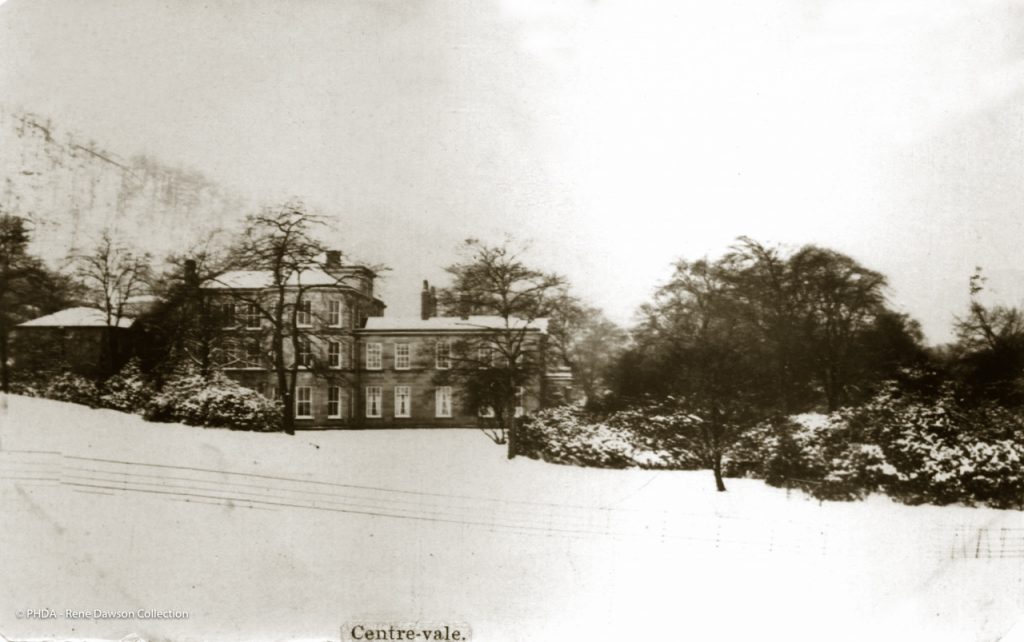
The mansion in Centre Vale Park once home to ‘Honest’ John Fielden who bought the estate in 1842.

The property stayed in the Fielden family until 1910 when it was sold to the Borough council and opened as a  spacious public park of 75 acres in 1912. During the first world war the house served as a temporary hospital for wounded and convalescent soldiers in 1914, a fitting tribute to a family who were such great benefactors to the town, both in the erection of public buildings but also in the care and concern they had for the mill workers of the town.  I looked in vain for the house but by 1947 dry rot had set in and sadly the building was demolished in 1953. But I did find the statue of John Fielden, created in 1869. He was known as Honest John. Hmm. My writing group meets in a pub in the centre of Todmorden called Honest John. I always wondered to whom it referred! It’s just across the road from the imposing Town Hall which was built with money donated by his three sons and is the most well known and visually arresting of the works carried on by this philanthropic family devoted to the betterment of Todmorden. Other works which he funded  including improving the town’s drainage, the construction of a town workhouse, housing for workers, and  the building of the Unitarian Church.

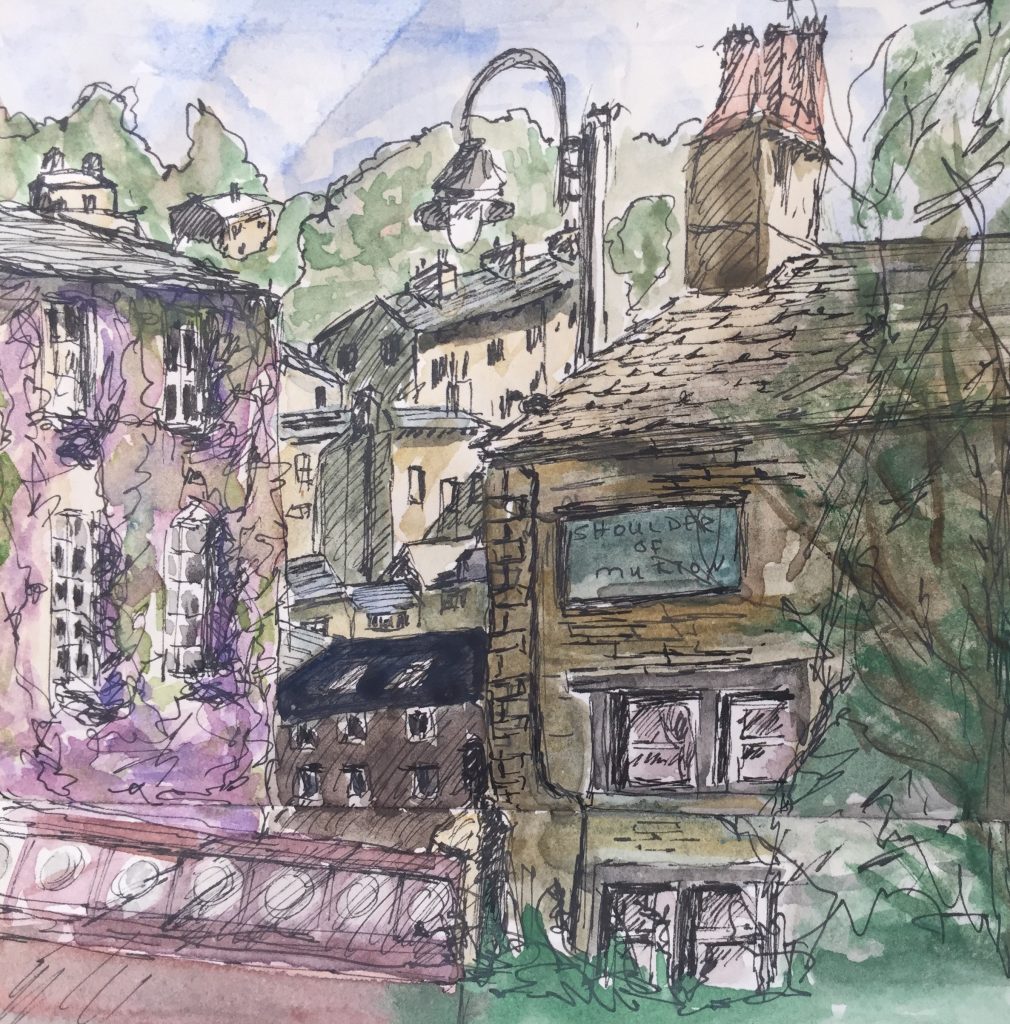
Five years after Centre Vale House was built one of my ancestors, Thomas Ingham, became landlord of the Shoulder of Mutton at just 23 years of age. The pub is one of the oldest establishments in the area dating back to the 1600s and originally incorporated a farm, a slaughterhouse and a brewery and like many pubs it is recorded that, in 1817,  it also housed a library. For over 75 years the Ingham family,  first Thomas Ingham, then his son William and finally his grand daughter Ann ran the pub: In the Todmorden Almanac I found that ’Mr Thos. Ingham commenced selling drink at the Shoulder of Mutton Inn, Toad Carr, Dec 12, 1826. So, it was to this pub that I was bound. Following the perimeter of Centre Vale Park I almost walked straight past my destination because it’s been  renamed.
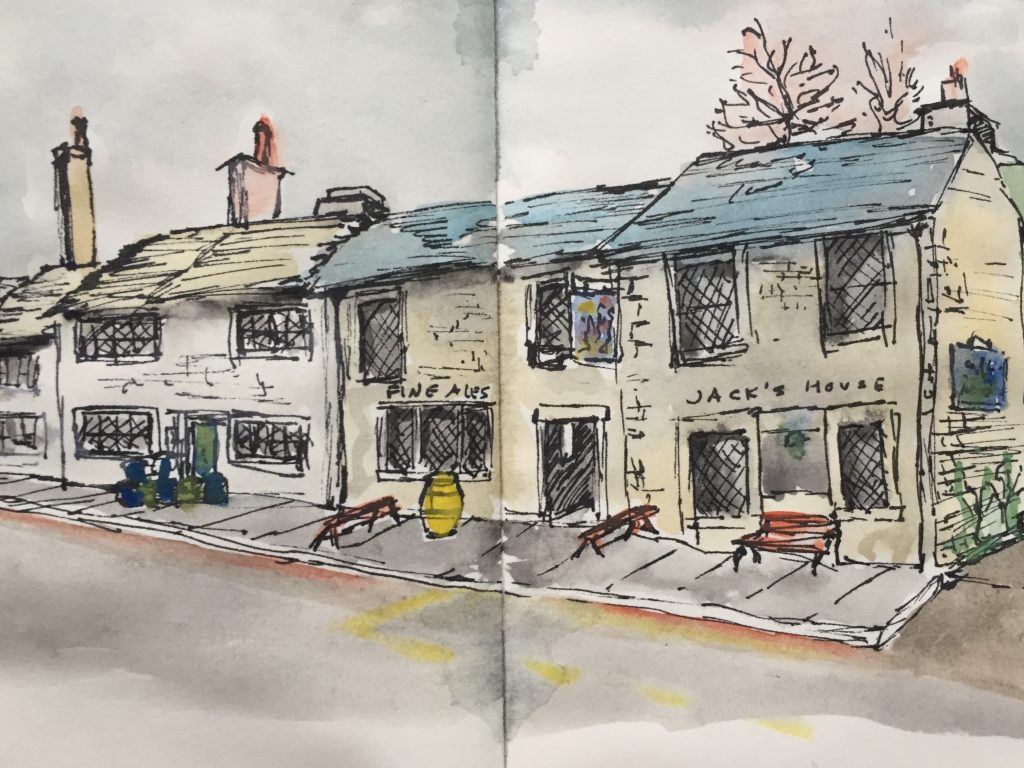
My sketch of Jack’s Place

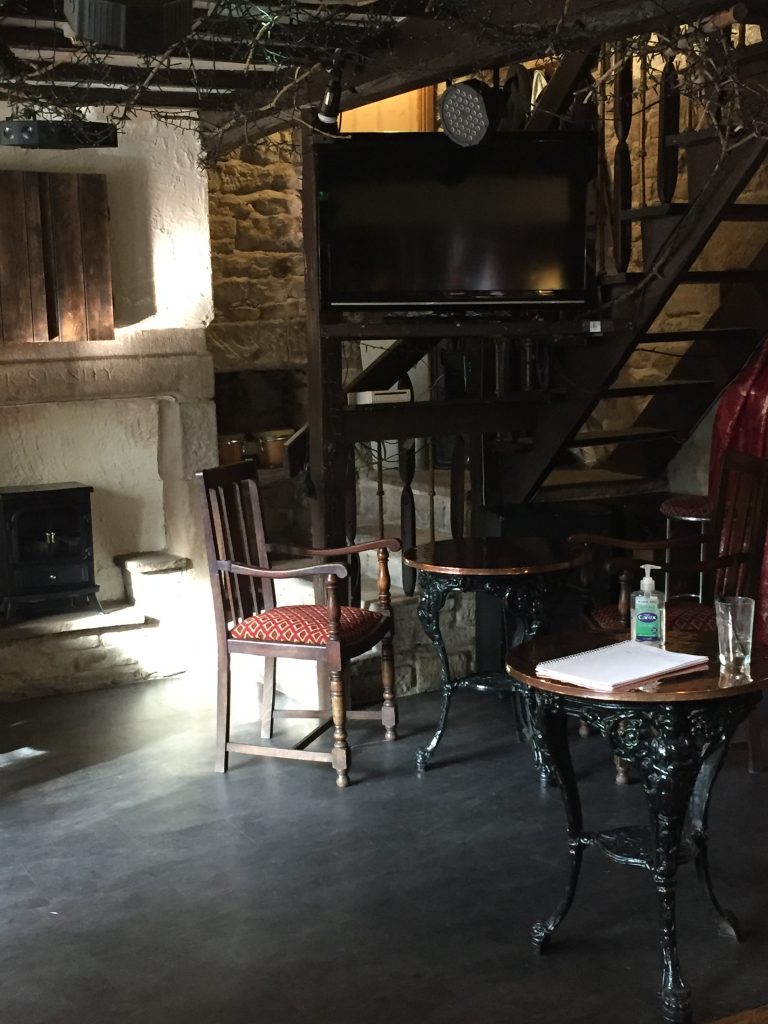
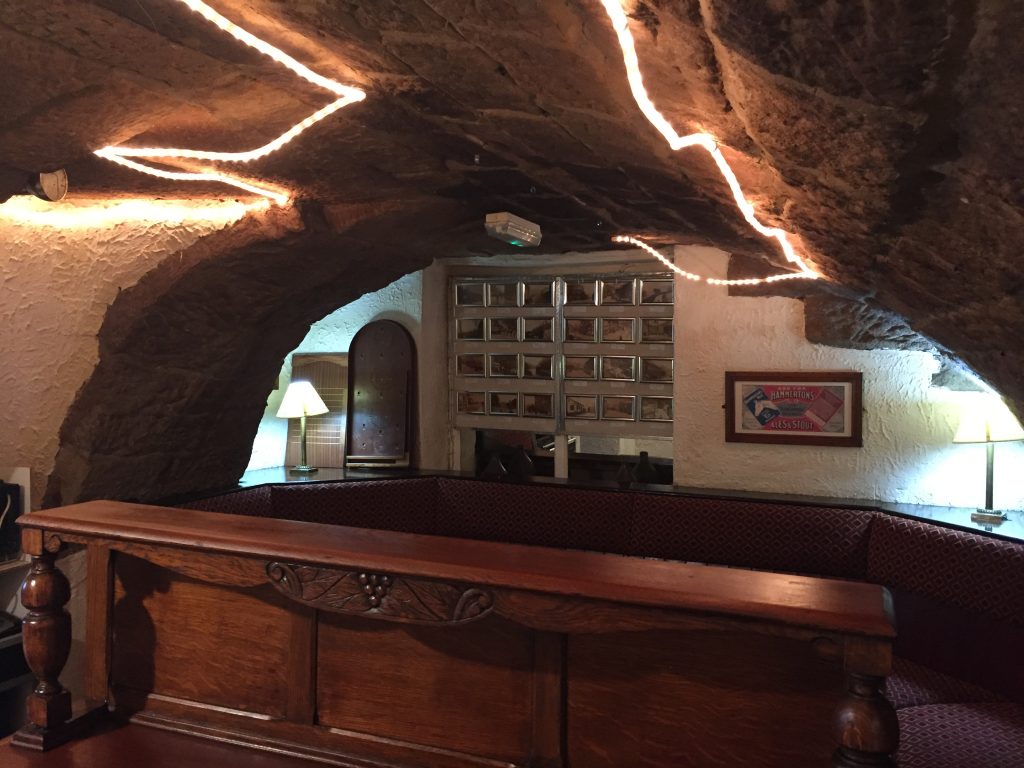
It’s now Jack’s House, a name it adopted when it was refurbished by one Jack Brook in 1974. I’d read that in 2014 it had been awarded Pub of the Week by the Lancashire Telegraph and I’d called the pub in the morning to make sure it would be open. I found only one other table occupied. Inside it was an interesting mixture of ancient and modern.  It’s got a good reputation for live music but this morning a big screen TV was showing some reality daytime show while slot machines lay dormant along the walls. These up to date furnishings were housed in a cosy lounge, with wood floors, exposed stone walls some coated in  rough plaster, open fireplaces and a low beamed ceiling. In one corner a few guitars hung on the wall, available to anyone who wants to have a strum. Small latticed leaded windows looked out onto the park and old pictures of the town were displayed on the uneven walls. The tiny snug room has a stone, barrel-vaulted ceiling inches above my head. Many years ago the local bobby, Sergeant John Heap, lived next door and found ‘the hold’ most convenient to house the area’s rascals while they awaited judgement from the travelling magistrate.  Today it’s strewn with fairy lights but its stones are bulging with history.
So this was the pub that remained in the Ingham family from 1826-1910, Thomas’s daughters Ann and Ellen eventually taking over the tenancy from their father. I took a seat in the ‘new bit’ (added in the 1700s) where Bella the pub pooch was lying on her bed in front of the fire as I chatted with the family that make Jack’s Place their home today. Landlady Sue was eager to share her knowledge about the building itself and how the building and rebuilding of the Burnley Road directly outside the front has impacted the place. As the road has gradually been rebuilt its got higher and higher so now the pub floor is below the road level making it subject to flooding, a constant problem in the Calder Valley.

It was here that William was born in 1827, the eldest of 4 children born to Thomas, the innkeeper and his wife Sally.

By the age of 24 William was a butcher, still living here with his family, in the rooms above the inn.  In 1858 he married Hannah Gibson, and it is through her that I trace my connection to the Inghams. Hannah’s father had been the butcher and innkeeper of The Bull Inn in Hebden Bridge until he killed himself in his slaughter house just 2 months after Hannah’s marriage. I found that she had been baptized at St James’s in Hebden Bridge by Sutcliffe Sowden who had presided at both the marriage and funeral of Charlotte Bronte.

 Exactly 14 days after William and Hannah were married at Halifax minster their first child was born, a daughter, Sarah Ann, the first of 6 children. Their wedding took place on the 3rd of March. I wonder what the weather was like. There could easily have been snow on the ground as they travelled the 12 miles to Halifax. Surely they must have travelled by horse and cart. They would have taken the turnpike road through Hebden Bridge. William and Hannah set up home in Blind Lane, about two minutes walk from the pub, where William kept a butcher’s shop.
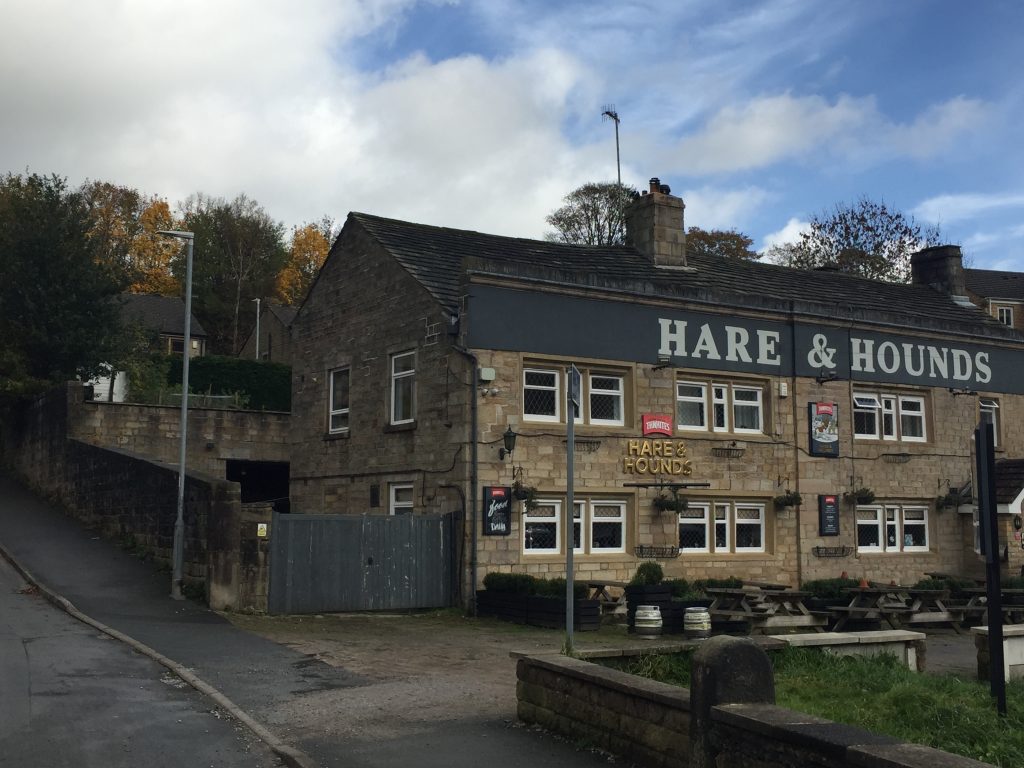
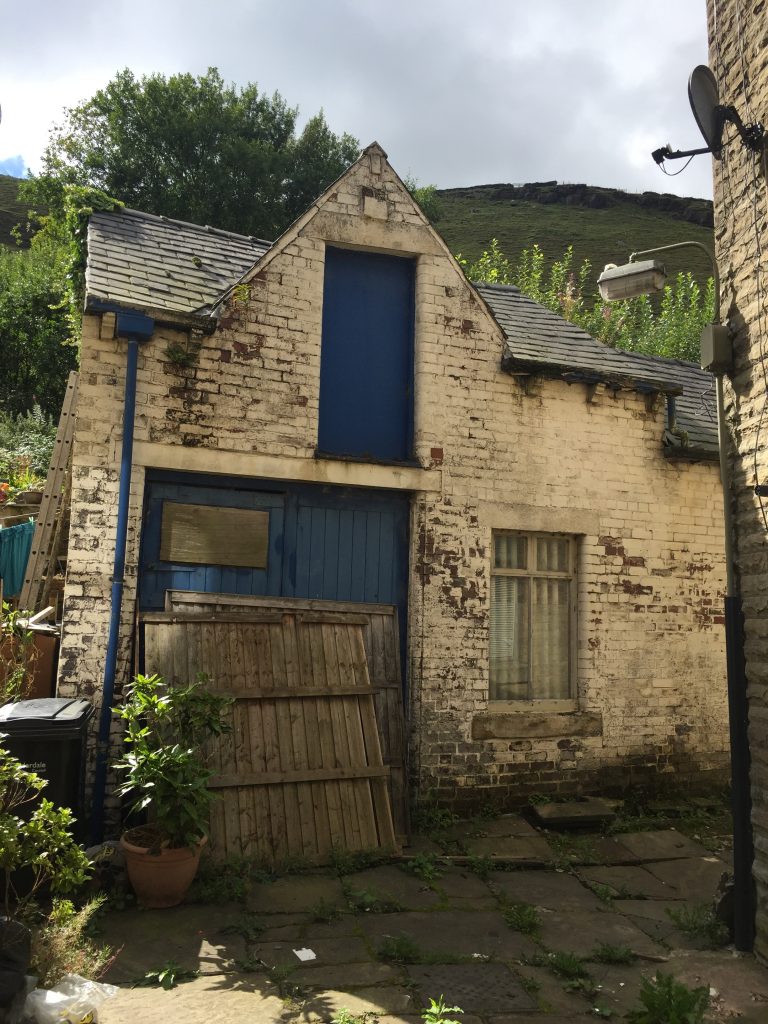
You can see the outbuilding at the rear where the hounds were kept

Then, by 1870, William 43 and Hannah 34 were following in their parents’ footsteps  and were innkeepers at The Hare and Hounds , just five minutes walk away up Burnley Road. There they had six children. I read that ‘A cow in the possession of William Ingham of the Hare and Hounds Inn near Todmorden  began frisking at Hartley Royd and thereby threw itself on its head and broke its borns and its neck. It was immediately slaughtered. The cow was worth $19.’ In another incident recorded in the Todmorden Almanack in 1877 Mr George Ormerod  aged 63 ‘fell on the floor of the Hare and Hounds and died the same night. Three of his ribs were broken. A verdict of ‘Death through misadventure’ was given. My sense of the macabre put a spring in my step as I followed the channelled River Calder along the perimeter of Centre Vale Park to the Hare and Hounds. I’d called in there once before I knew the details of its connection with my family. A large car park fronts the old stone building on this rare piece of flat land. I couldn’t help but smile at the Strictly No Ball Games notice, for this was once the home of a bowling green I am reliably informed from someone on the Todmorden Past and Present Facebook page.
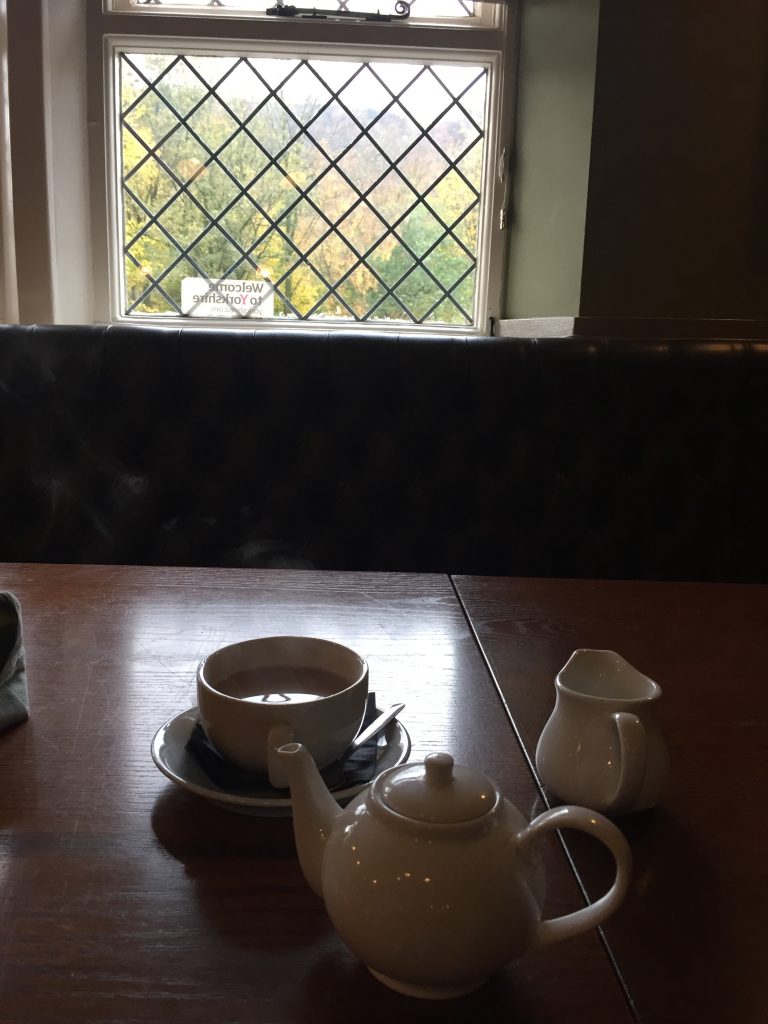
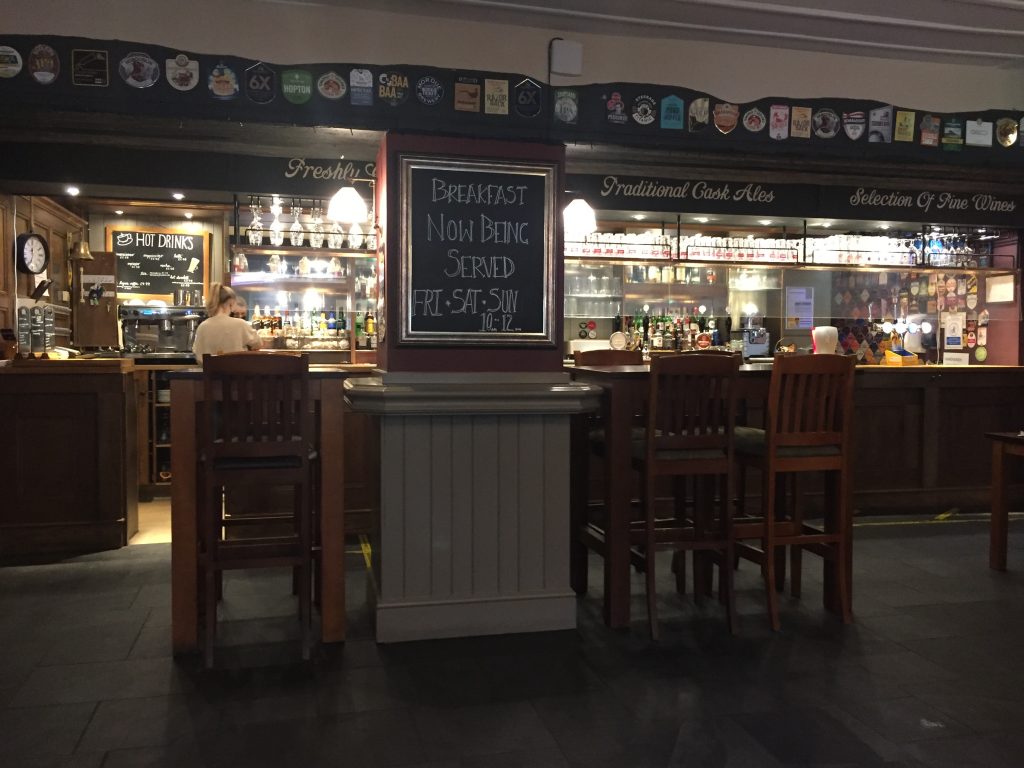
Like the Shoulder of Mutton the inn dates back to the 17th century and still retains many of its original features. I’m sure William and Hannah would have felt quite at home here. Today at the rear of the building a beer garden backs on to the railway embankment but originally this was the home of the kennels housing the hounds of the Todmorden hunt. It must have been a noisy place to live but it would appear that William was a member of the hunt himself for it is said that William’s favourite hunting horse was buried in that embankment. The horse’s stirrups and bit were kept for many years at the pub. Today the door was open and only one other table was occupied, by the inn’s present family. The walls are full of old photos, one being of a charabanc filled with Todmorden landladies on their way to their annual picnic. I asked the current landlady if she knew anything about William’s horse. “The inside of the pub was covered in horse brasses when we moved in but the brewery took them all down and carted them away.” I was disappointed. “What about where William’s horse was reputed to have been buried?’ Well, the locals used to call the embankment at the back the pet cemetery. We’ve dug it out and came across a few bones, probably dogs, and lots of tyres, but we’ve made it into a beer garden now.” “Is there anything left of the kennels that belonged to the hunt?” I asked. “It’s just a big building where we keep our stuff. I’ll have my husband take you out there if you like.”
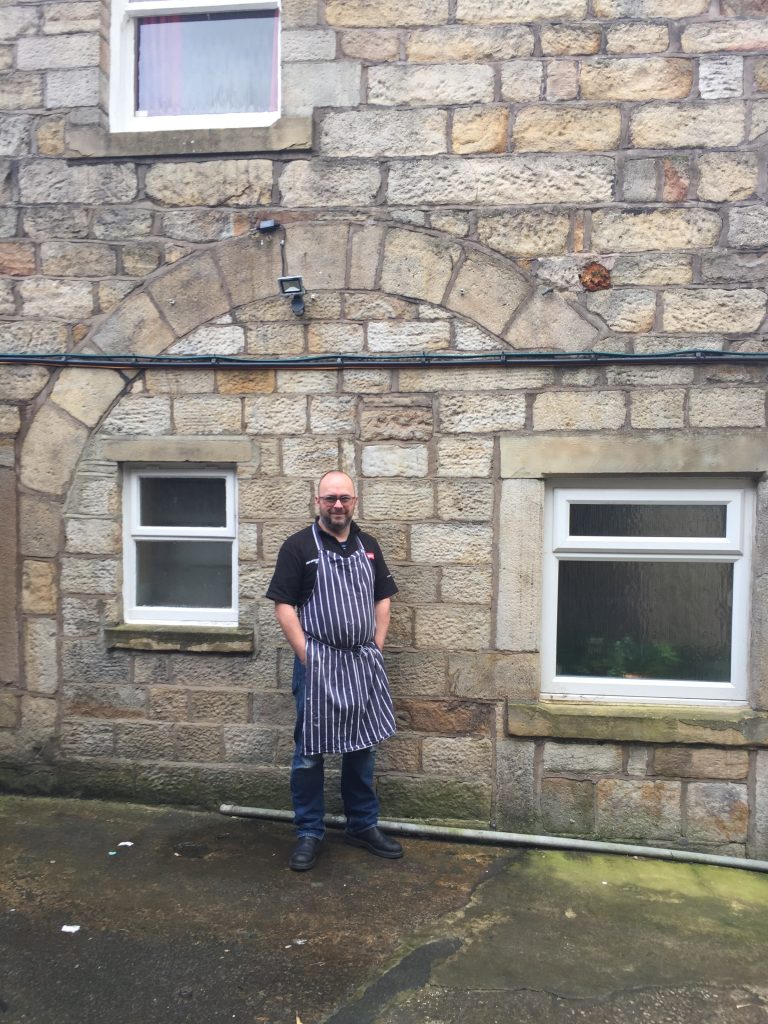
Today’s landlord showing the old entrance to the barn

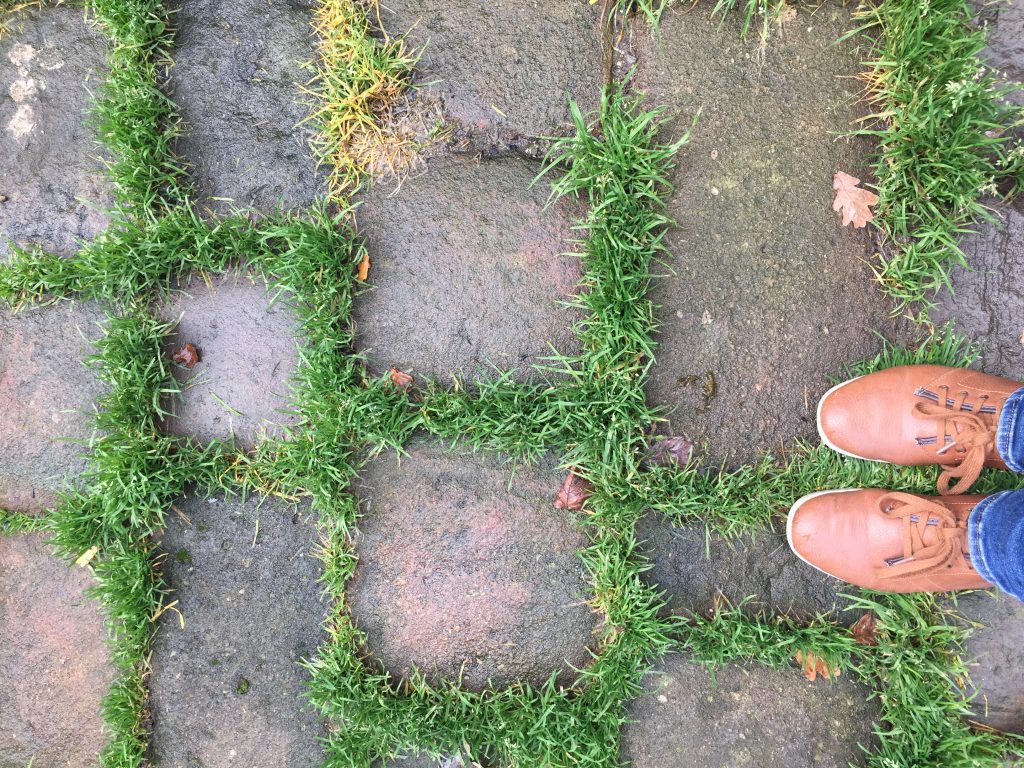
A few minutes later I found myself being beckoned through the big double doors to the left of the pub and into the family’s inner sanctum. The yard still has its old cobbles and in the rain today they were decidedly slippery. The landlord pointed out the original arched doorway in the pub building showing where it had once been an attached barn, and there, built into the embankment was a large low building that had once been the kennels.
It’s very satisfying to have read about something and then finding that there are remnants of it that I can still see 200 years later, especially when it belonged to my relatives. High above the inn is the silhouette of Whirlaw, a rocky outcrop abounding in myths and legends. I’d taken a hike to that exposed spot in June 2016, with the same leader as the hike which led me to Dobroyd Castle.
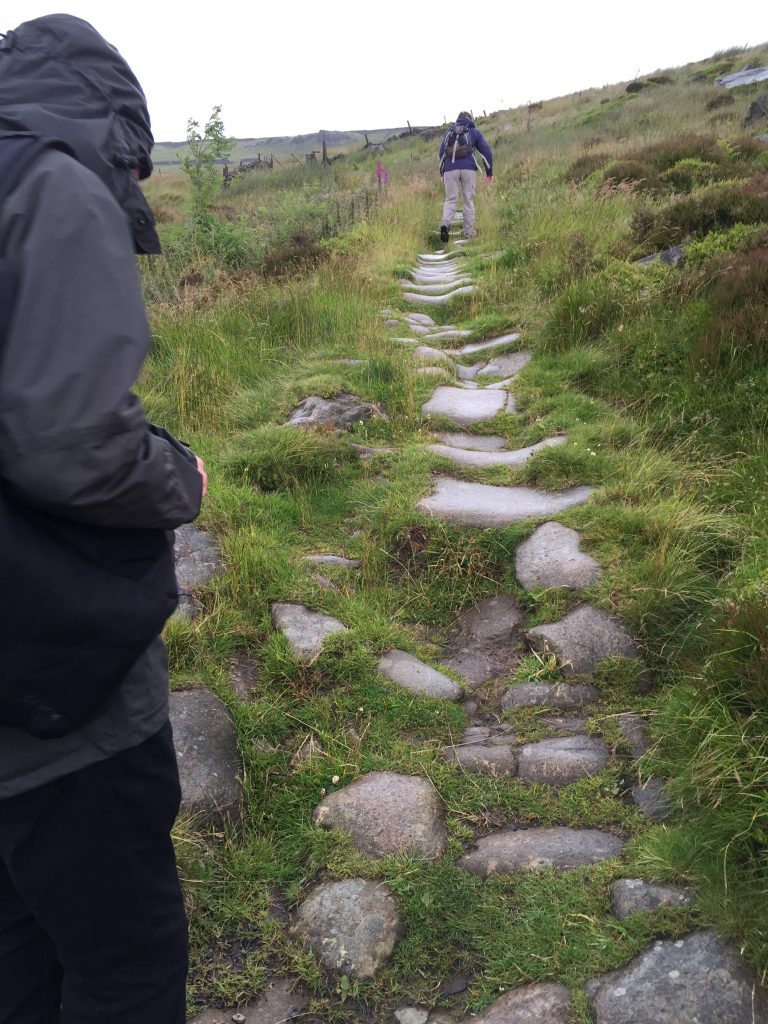
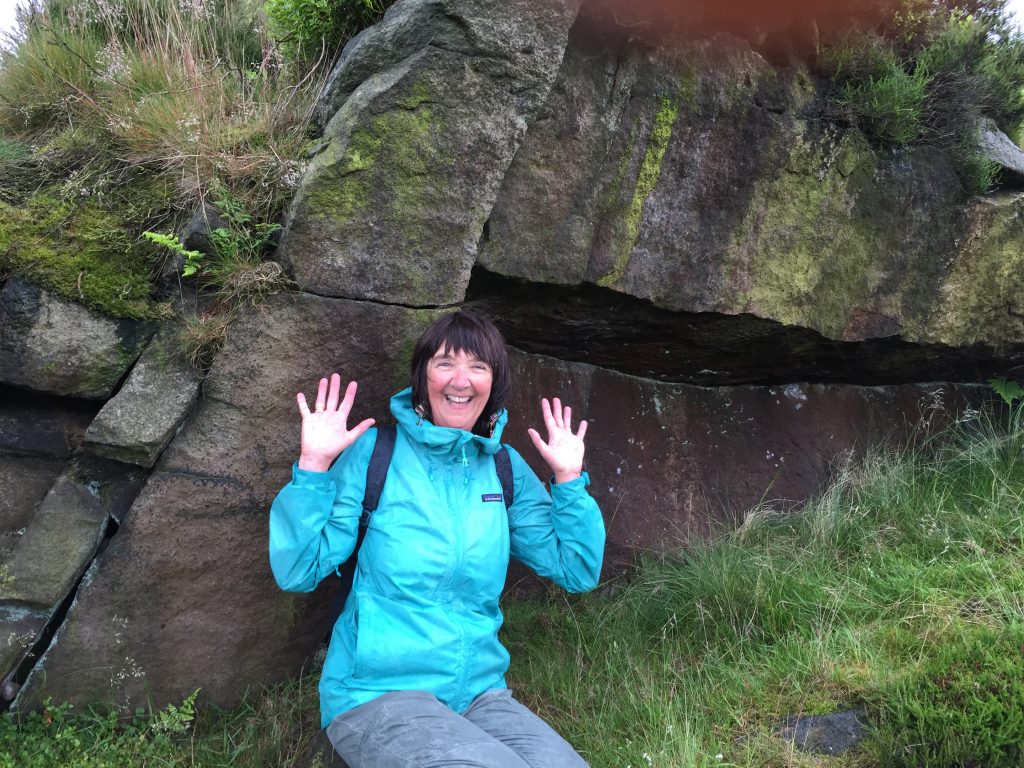
Just as we reached the rocks on top of the hill a torrential rainstorm blew through the region and I have a photo of me cowering beneath the stones.  I think we must have disturbed the Wizard. During lockdown I obtained a signed copy of ‘The Wizard of Whirlaw Stones’ by Todmorden author, traveller, broadcaster, man extraordinaire, Billy Holt and on one of my hikes I just happened to stumble on the grave of his beloved horse Trigger on whose back he rode to Italy and back.
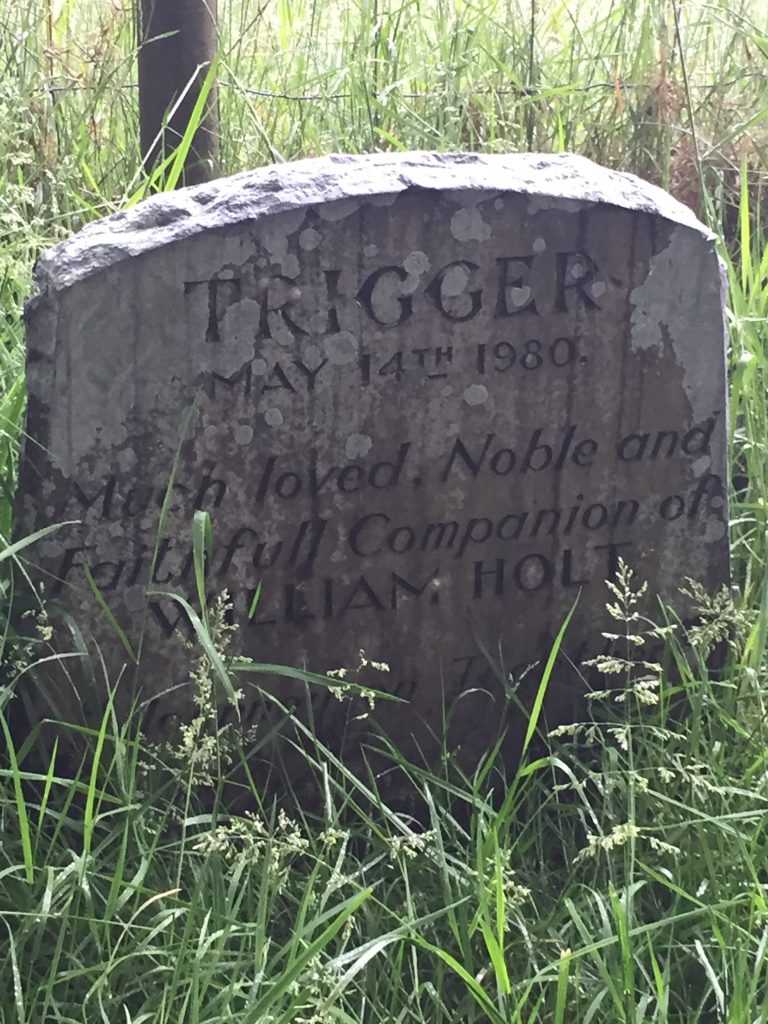
The pony’s grave, Kilnhirst

As I left the Hare and Hounds I thought about the Todmorden hunt who housed their dogs in that building, now used for general storage.  In 1883 the first in a series of farmer’s dinners given by gentlemen comprising the Todmorden hunt and a few friends came off at the Hare and Hounds. A company of about 50 farmers and others spent a most agreeable evening.’  Feb 1883. In 1886 the sale by auction of the famous Todmorden pack of harriers at the kennels adjoining  the Hare and Hounds was mentioned in the town’s almanac:  ‘The pack consists of 35 hounds realising 78 ½ guineas.’ In more recent times in 2018 the pub was the location for an Extraordinary Meeting of the Fielden Society, a group who wish to keep the history of the Todmorden part of the Fielden family intact for later generations to see. The meeting had been called to consider winding up the society due to the low level of support but I was pleased to learn that a new committee was elected and the society is still going strong.
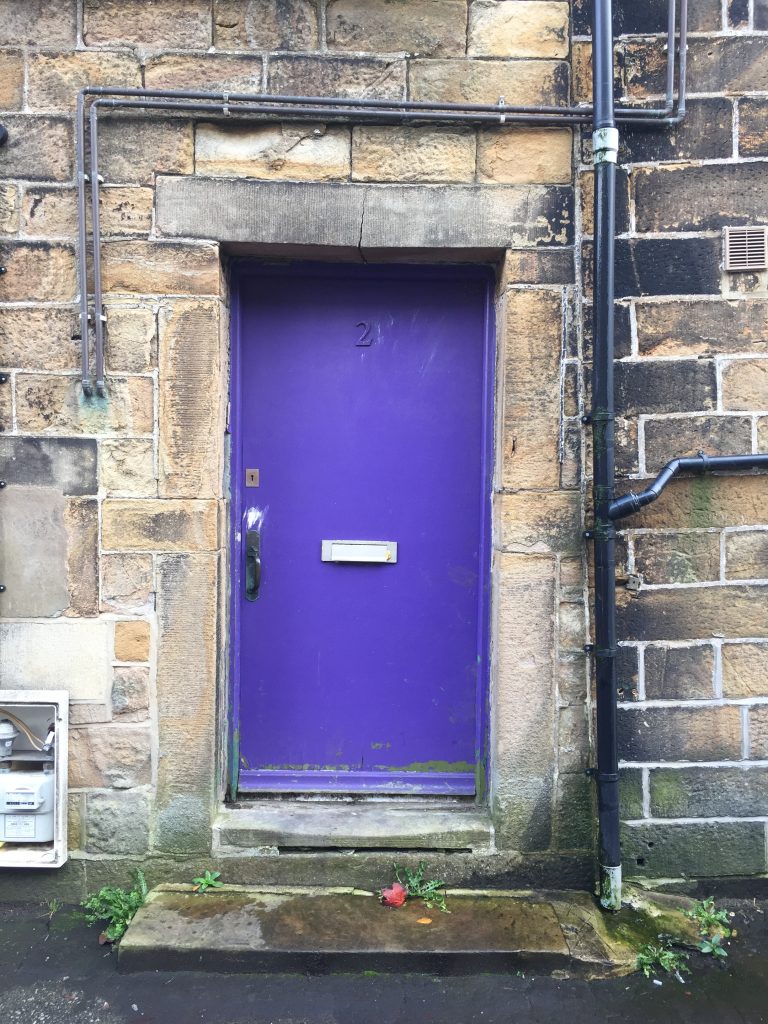
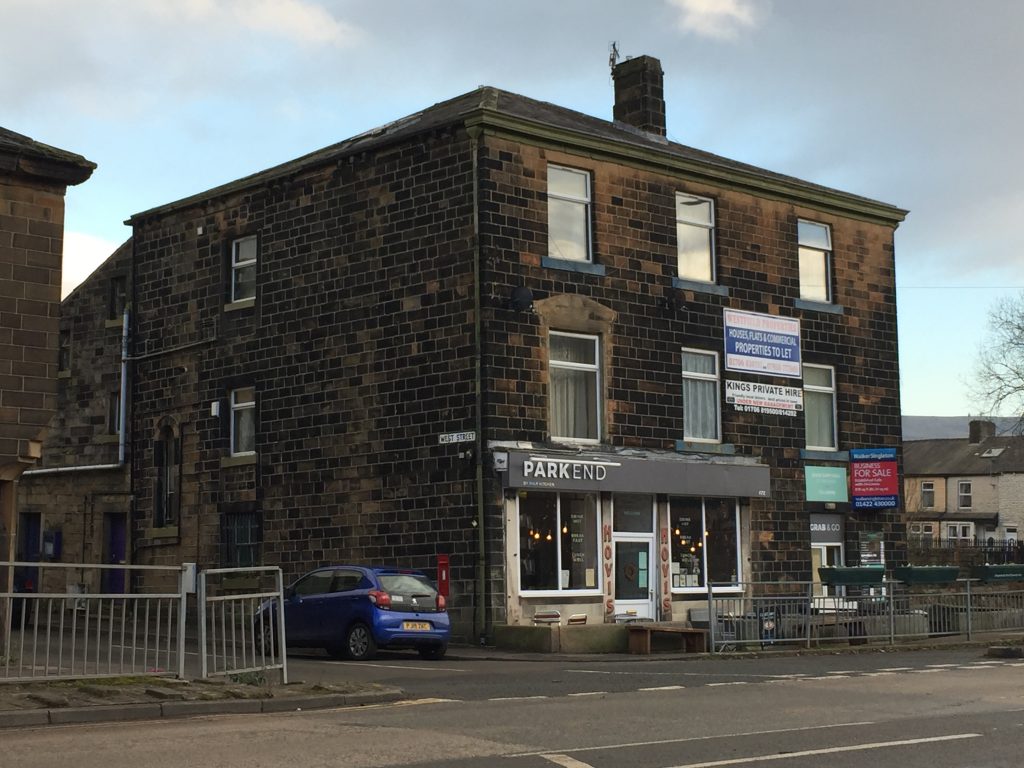
2 West Street, home of William Ingham and his family from 1880-1901

 In 1879 Hannah died and William retired and moved to 2 West Street with 6 children. He remained living there for the rest of his life and it was here that he died in 1901. I noticed that by this time William is 52 years old and on the census he is reported as ‘retired.’ That’s unheard of in my research. People just basically worked until they died. It’s also extremely old to be the father of a two year old daughter. Or was he?
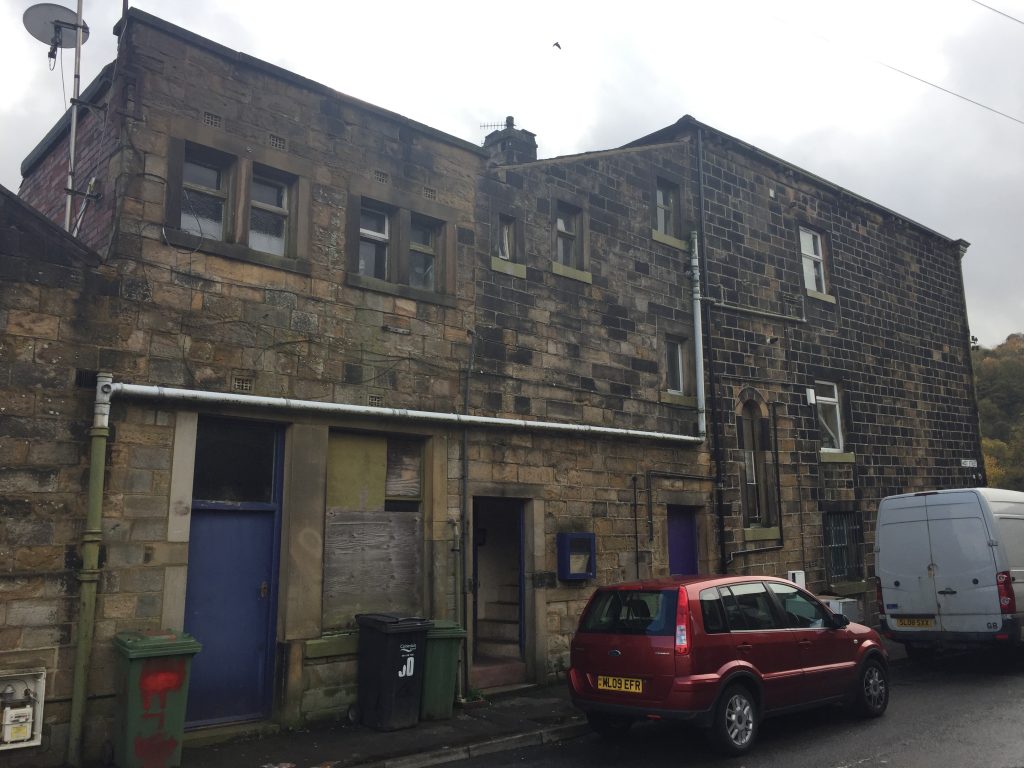
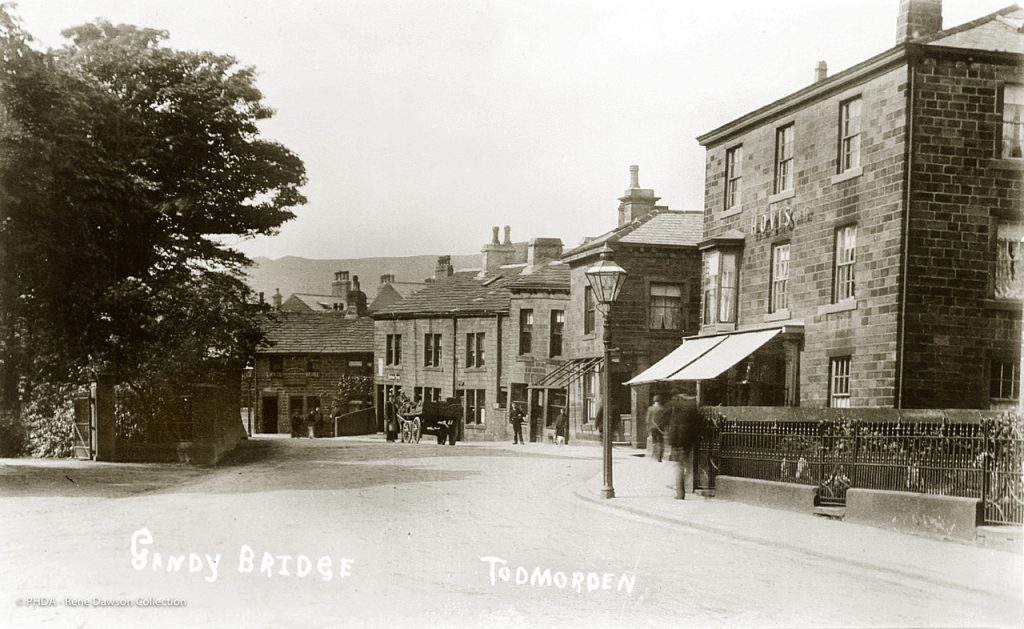
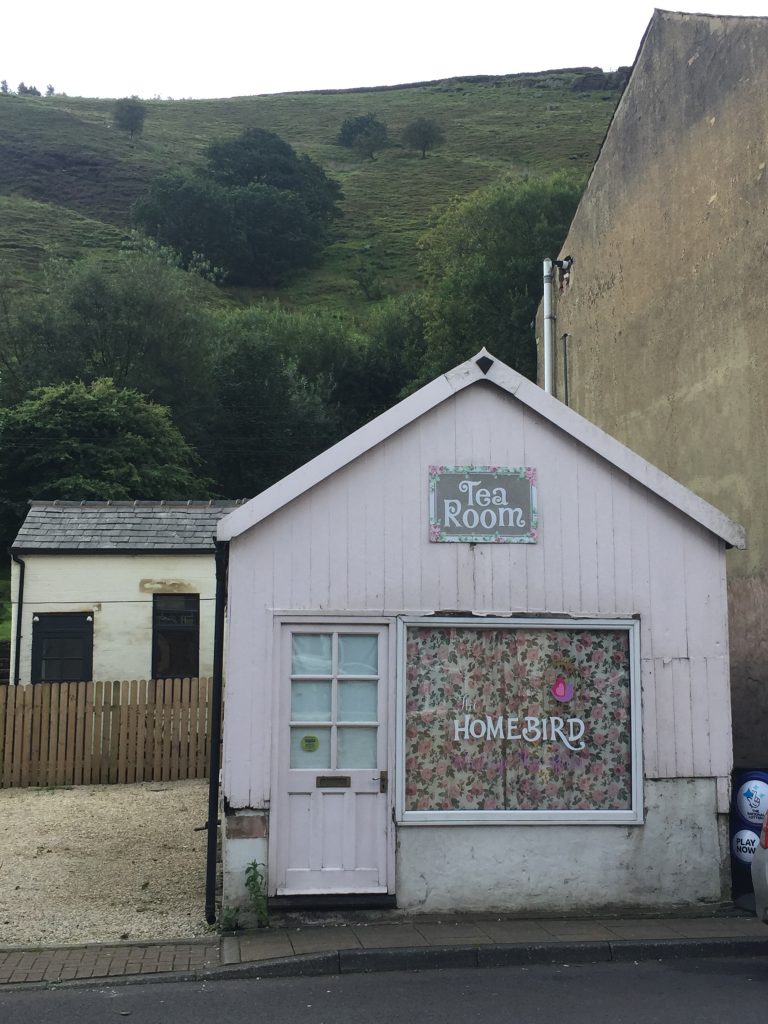
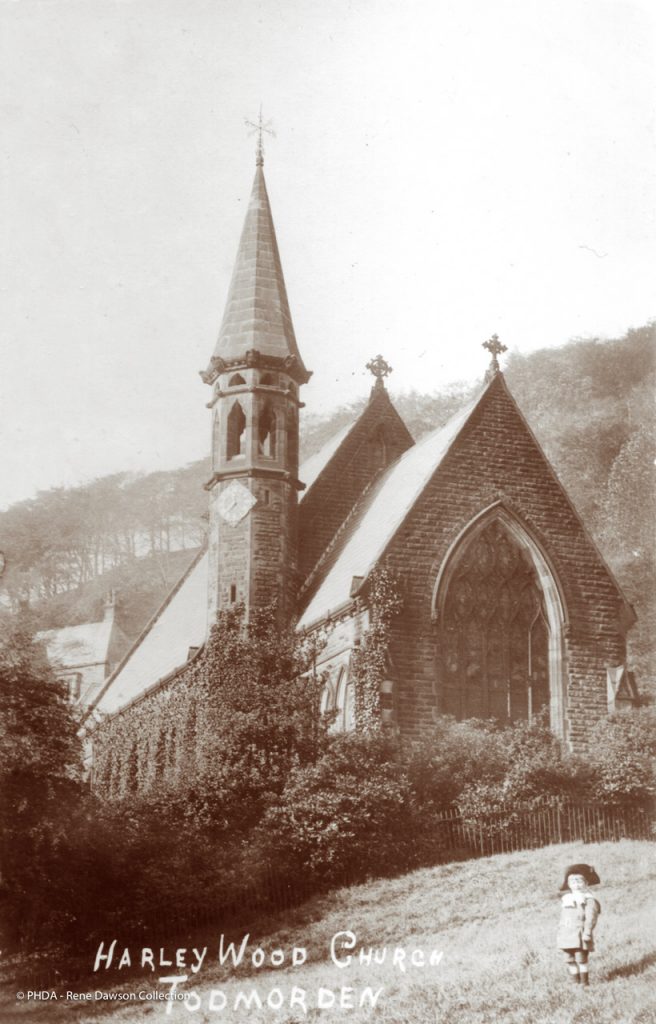
At first I thought that perhaps his wife had died in childbirth. She was, after all 44 years of age when Hannah Elizabeth was born. I did a little, actually a lot, more searching and finally I found the answer to the puzzle. On October 13, 1878  a baby, Hannah Elizabeth, had been baptized at Heptonstall church. She’d been born on June 13, and her mother was a spinster, Sarah Ann Ingham. What clinched the fact that I’d got the right Hannah Ingham is that her address is Gandy Bridge, Todmorden. When I looked up Gandy Bridge online the first photo to pop up was of the old tearoom at the corner of West Street, showing Harry King’s bread and grocery shop. So, William appears to have passed off his daughter’s child as his own, at least for the prying eyes of the census taker. Sarah Ann would have been 20 years old when her daughter was born and eleven years later at All Saints Church, Harley Wood, she married a joiner, John Scholfield, seven years her junior – again, quite unusual for that period.
Burnley Road opposite Centre Vale Park, the park entrance can be seen on far left.

In a couple of minutes I arrived at 2 West Street. It’s a taxi business now, the first building on West Street off Burnley Road and the front of the building is Park End café, where remarkably I’d had lunch on the first organized hike that I’d done in Todmorden in 2016 when I spent the summer in Hebden Bridge. The highlight of the hike for me had been a visit to Dobroyd Castle, high on the hill above Centre Vale Park, built by John Fielden, the son of the John Fielden who had built Centre Vale House.
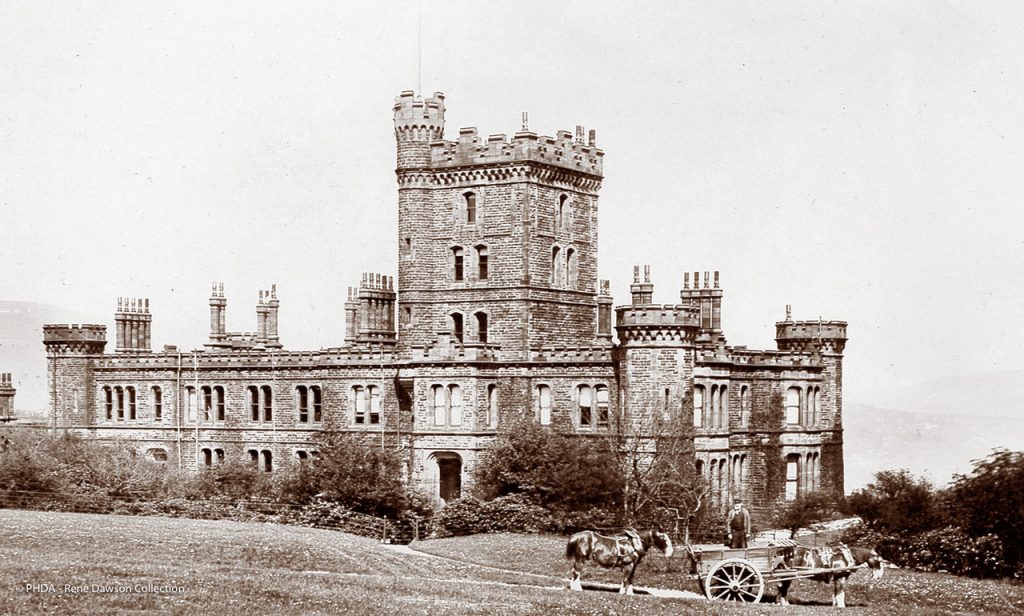
The home of the Fielden family. The castle was built for John Fielden between 1866 and 1869 at a cost of £71,589. In the mid-twentieth century it became an approved school, then a Buddhist Retreat and is currently used as an Activity Centre for Primary School Groups.

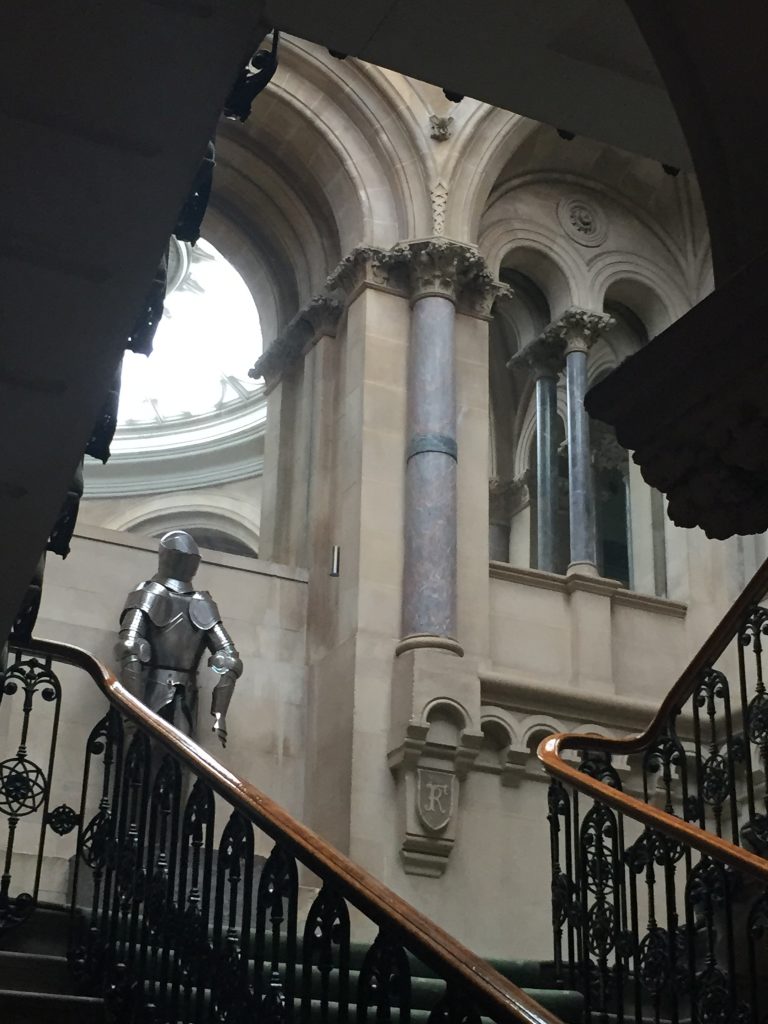
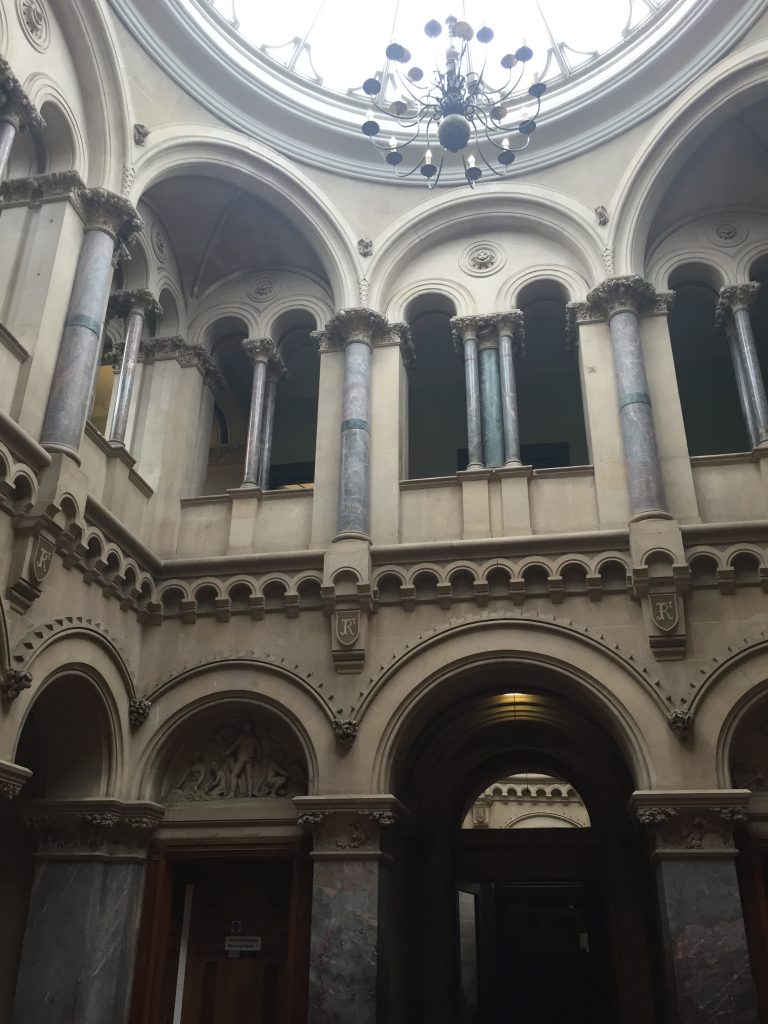
The castle has 66 rooms, 17 stables and cost 71 thousand pounds to build and the couple moved in in 1869. From my 2016 journal: ‘It’s now an outward bound school for kids from all over England. We passed a group of students from Wolverhampton. Our hike leader’s daughter had attended classes there only  last week but Moy herself had never been inside. We knocked on the door and were told that because they are responsible for children they couldn’t let us in. I put on my best American accent and said that I’d “come all the way from California and would just looooove to see inside an English castle.” The door opened and we were able to step inside and look at the amazing statues, marble columns, intricate stone friezes, crystals chandeliers. A knight in full suit of armour stood guarding the staircase. Of course this ‘castle’ is a folly, but the opulence of the decoration was amazing.’
On Aug 21 and 22, 1891 an event occurred so close to West Street that it’s difficult to imagine William and his children, and his sisters Ann and Ellen who were running the Shoulder of Mutton not being caught up by the excitement. The children of the town had been given a half day off from school to participate in a grand parade and from Roomfield Board school in the centre of town the children marched in procession accompanied by the Todmorden brass band. They were heading to the large field adjacent to the Hare and Hounds for  this was the 32nd annual exhibition of the Todmorden Floral and Horticultural Society, with both pony racing and human racing as well as an ‘unusually spacious marquee’ housing the flowers and vegetables to be judged. From the Todmorden newspaper account: ‘Friday was the better day of the two. There was no heavy rain in the afternoon though it came on smartly during the evening. Saturday proved very inclement from the outset; consequently the ground already pretty well saturated by the downfall of the previous night was speedily reduced to the conditions of a quagmire but the programme was stoically gone through as planned.’
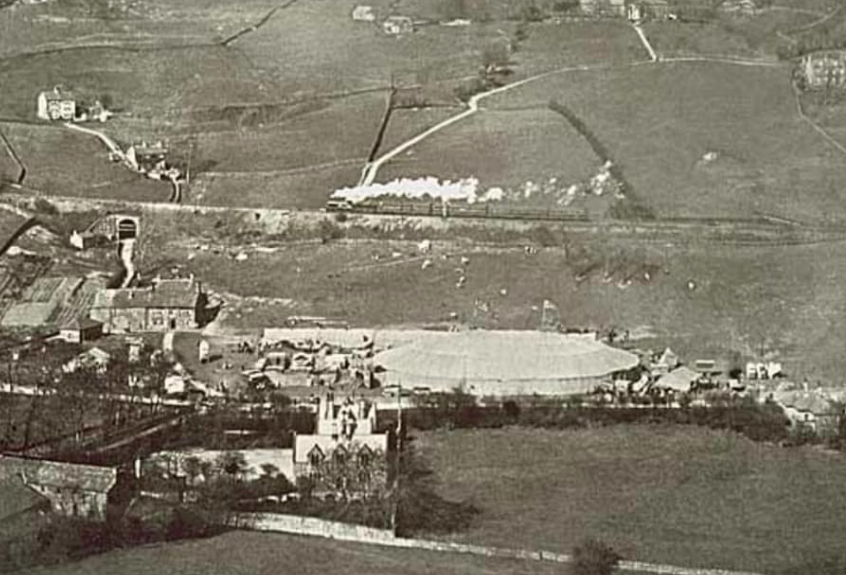
Photo showing Hare and Hounds inn and the grand marquee for the fair – or the circus. This must have been taken before 1907 when Mos Mill was built

Now it takes an awful lot of rain for people of the Calder Valley to complain about soggy conditions but here ‘unpropitious weather had a good deal to do with the paucity of attendance.’ Yet between two and three thousand children still attended over the course of the two days despite the inclement weather. Since moving back to England three years ago I’ve attended the Halifax county fair with its white coated, tweed capped judges, clipboard in hand making their decisions on the best cow, flower arrangement, and prize winning turkey with the gravest expression on their weather-beaten faces.  One of my mum’s proudest moments was when she won ‘3 duck eggs, any colour’ in the local fair in Tottington.  I still have her certificate, dating from the early 1960s. The newspaper account of the Todmorden show, taking up a whole page of the newspaper, duly listed the many categories and the names of the winners but it was what the winners won that fascinated me. I’m sure in my mum’s day you were just awarded a certificate. Back in 1891 the winner for a plate of tomatoes or a plate of peas was awarded 2/6, but for a bunch of grapes the winner was awarded a walking stick or pipe valued at 5 shillings. I tried, unsuccessfully, to imagine anyone in Todmorden successfully growing grapes and decided that such an achievement would be well worth a walking stick. The children’s sporting events featured a three legged race for boys, a 50 yard egg and spoon race for girls and an obstacle race for boys. My dad was a champion egg and spoon racer and I have a photo of him doing just that.  The first prize for the obstacle race for boys under 18 was a six bottle dinner cruet and the second prize was a flower stand. Hmmm. I rather think it was their mums who were being thanked. For the 120 yard race the first placed winner won a tea and coffee service, the second won a six cup egg frame and spoons. One of the grandest prize of all was awarded to the winner of the 440 yard race: a buff leather Gladstone bag and the second placed winner came away with a China salad bowl and server. However on the Saturday ‘a number of the athletes decided not to compete when they saw the wretched state of the track owing to the heavy rain.’ On the horse track a pair of trousers and a vest was awarded to the winner of the carters’ race and the second placed winner got a whip! Perhaps he’ll come first next year if he uses it. The winner of the 2 mile pony race took home a black marble clock and the second placed winner had a handsome case of cutlery to share with his family.  The sports concluded at about 6:30 and ‘then Miss DeVoy went up in a balloon and descended by parachute into a nearby field.’ Wow!  That got my full attention. Dressed in a dark closefitting costume and light blue cap she climbed into the bucket suspended below the balloon and as she released the balloon from its moorings she rose almost vertically climbing to a high altitude but within a minute was lost from view ‘all the time rain pouring in torrents and streamed in bucketfuls as she ascended in the bucket.’ She was out of sight of the earth, somewhere around 7000-8000ft above the ground when she took the leap from the bucket. ‘In her descent she and the parachute swayed about like a pendulum.’ She landed in a field at Shurcrack and was conveyed back to the field in a trap, describing her experience has having been ‘half blinded by rain.’ ‘Large numbers (of people) had remained in the showfield while the hillsides and streets of the town and suburbs were dotted, in some places thronged, with knots of people watching for her ascent and descent. I’m sure the Inghams were there. This was her 34th jump and when finally safe on the ground she commented that today it had taken an ‘unusually long time before the parachute opened owing to its wet condition.’  What makes this jump so remarkable is that thirteen days earlier her husband, ‘Professor’ Higgins had been killed during a similar feat in Leeds. A tear had appeared in the balloon which caused it to trail against some telegraph wires, dislodging Higgins who fell 35 ft to his death. 

But of course, there were no health and safety laws in those days that could have applied to this feat or that of the performers, both human and animal, who performed in Sanger’s circusan annual event also taking place in the field adjacent to the Hare and Hounds. A newspaper account reporting the circus says that in April 1894 ‘A few of the horses had been watering at the Hare and Hounds Inn when of the animals broke loose on returning to the field, and whilst galloping knocked four children down, injuring them rather seriously.’ Annals p137. Billed as ‘the grandest and most inspiring pageant ever witnessed by the eye of mortal man the procession covered two miles of oriental magnificence’ as it established itself on Holme Field Sanger’s circus consisted of a staff of 240 with 300 animals. The company travelled with its own blacksmith, wheelwright, tent makers, saddler and cooks. 
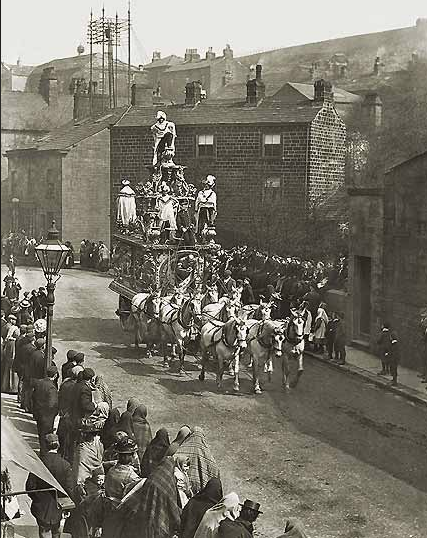
Sanger’s circus parades through Todmorden. Notice the clothes of the spectators

Two and four horse chariot teams headed the procession followed by monkey, ostrich and camel teams, ‘llamas driven by Natives, Western Wild and Prairie life with genuine Mexican rangers and Texas cowboys, a genuine camp of Cheyenne, Arapahoe, Sioux and Pawnees Indians,’ ten huge performing elephants, a band of musical elephants and pugilistic boxing elephants.’ 1905 Three big elephants ambled heavily along, displaying little apparent interest in their surroundings. Other features of the procession included an antiquated. uncomfortable-looking carriage, whites aim stated to have been the property of the late President Kruger. Another car, bearing high up on its top a lion, come very near to fulfilling the Biblical prophecy that the lion and the lamb shall lie down together, only in this case the lamb, which was in reality a full grown sheep, stood up all the way, separated from the king of beasts by only a couple of men. The lion, which was chained to the coach, ‘was a particularly fine specimen. with a grand head and mane. ‘John Sanger’s circus was billed as ‘The largest show in the entire world.’ It had even been bidden to Windsor Castle to perform for Her Majesty, Queen Victoria from whom John Sanger had received a diamond pendant.
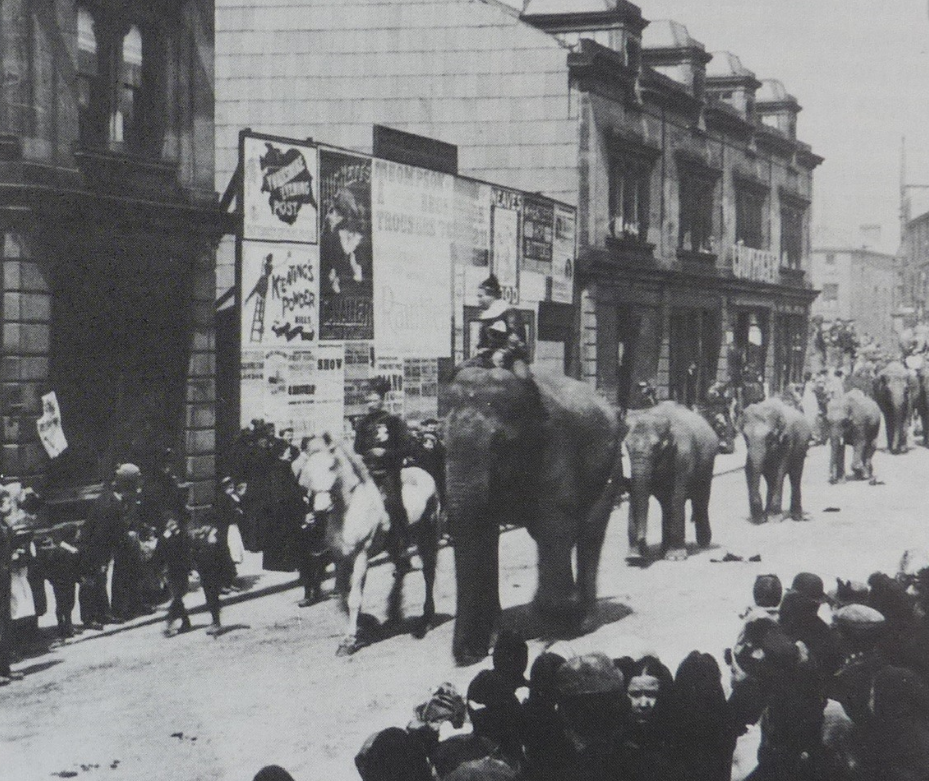
Passing the Golden Lion !!!!

But in 1907 Holme Field was destined to become the new home, not of elephants and ostriches but an enormous spinning mill, Mons Mill. Building began in 1907 and it was completed in 1910, so Ann Ingham, Thomas’s daughter who was still at the pub when she died in 1910 would have witnesses its building. I wonder what she thought of such a huge building overshadowing the Hare and Hounds.
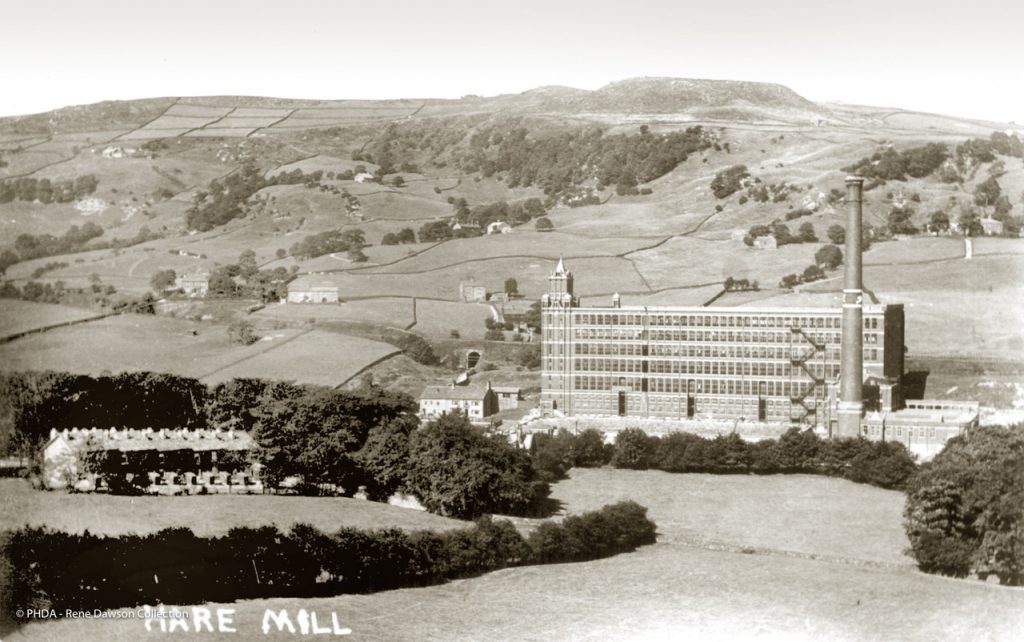
Hare Mill on Burnly Road was built for the Hare Spinning Company and was completed in 1910. It passed to the Mons Mill COmpany and was renamed Mons Mill after the First World War battle. Textile production ceased in 1968 and the mill was demolished in 2000.

 It was constructed of red Accrington brick, standing out like a sore thumb in this valley where stone is the ubiquitous building material, and was similar in design to that used in Lancashire cotton mills, causing the district in Todmorden where it stood to be nicknamed Little Oldham. My mum worked in such a spinning mill, Swan Lane mill, in Bolton and from my bedroom window at Affetside I could see many such mills spread across Bolton. It was anticipated that this new mill in Todmorden would provide work for 600 people and new housing for 400 workers was built consisting of several streets of terraced brick millworkers houses, which I could still see today on the left of the old stone inn.
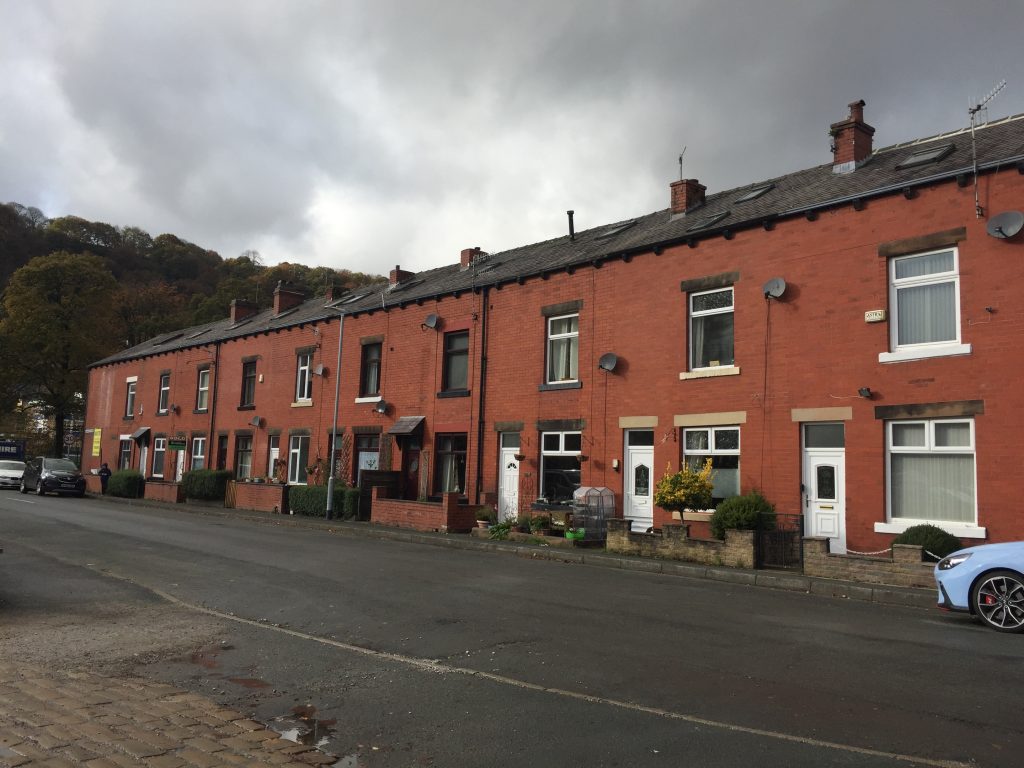
Brick terrace built for workers at Mons Mill

The mill was seven storeys tall and it was famous for the logo of a white hare on the mill chimney. There were six directors of the company and one just happened to be Frederick Hague Moss, another of my ancestors who owned a dye works at Bridgeroyd on the East side of Todmorden. The mill and its chimney were demolished in 2000 and the site is now a grassy bank on which is Asquith Hall, a residential care home and blocks of apartments.
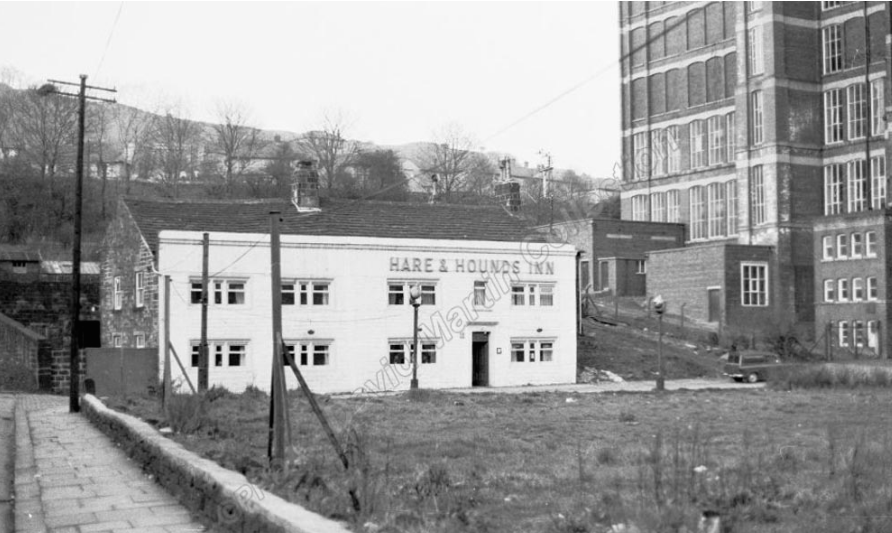
Dwarfed! (Photos from Pennine Horizons Digital Archive)

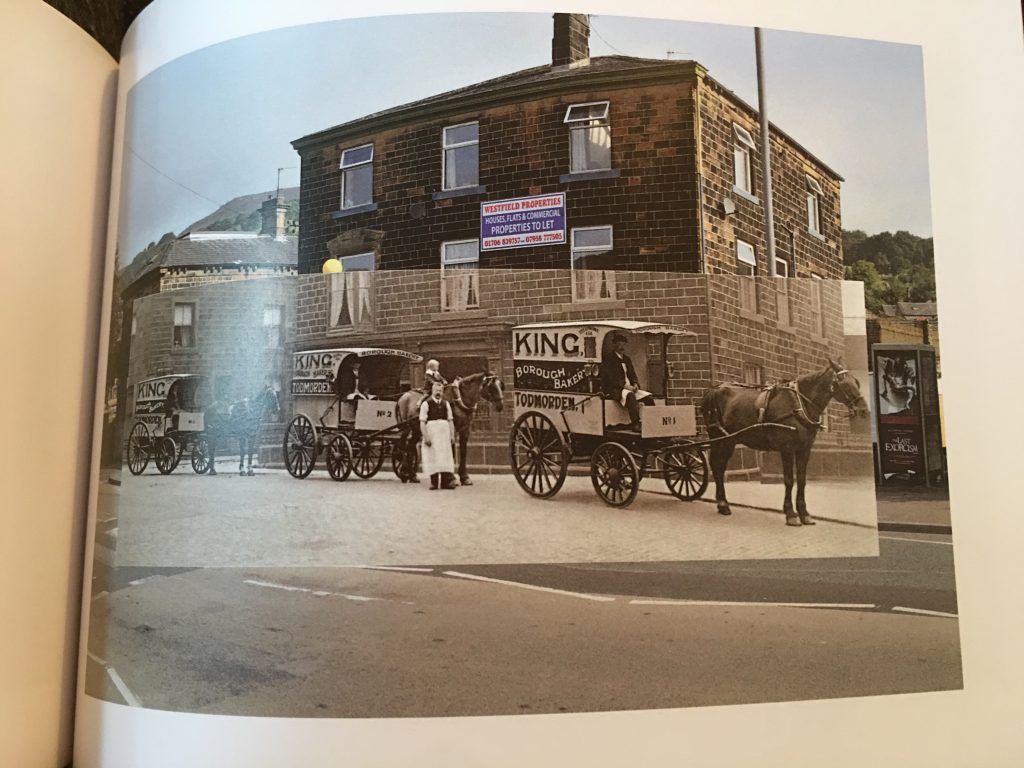
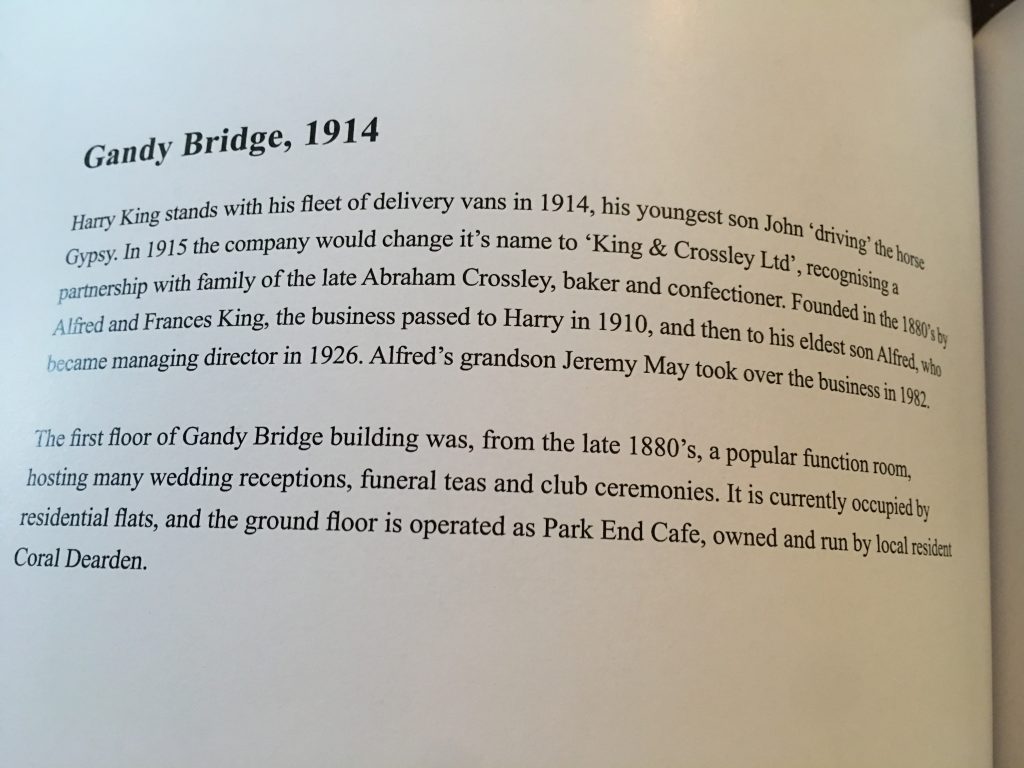
As I walked back towards the bus station a photograph in an estate agent’s window caught my attention. Alongside the usual glossy photos of properties for sale was an old photo of three horse drawn carts, emblazoned with ‘King, borough bakery, Todmorden.’ On the back of horse number two rides a young boy, maybe five years of age bedecked in his little Lord Fauntleroy suit for a photograph was a special occasion.
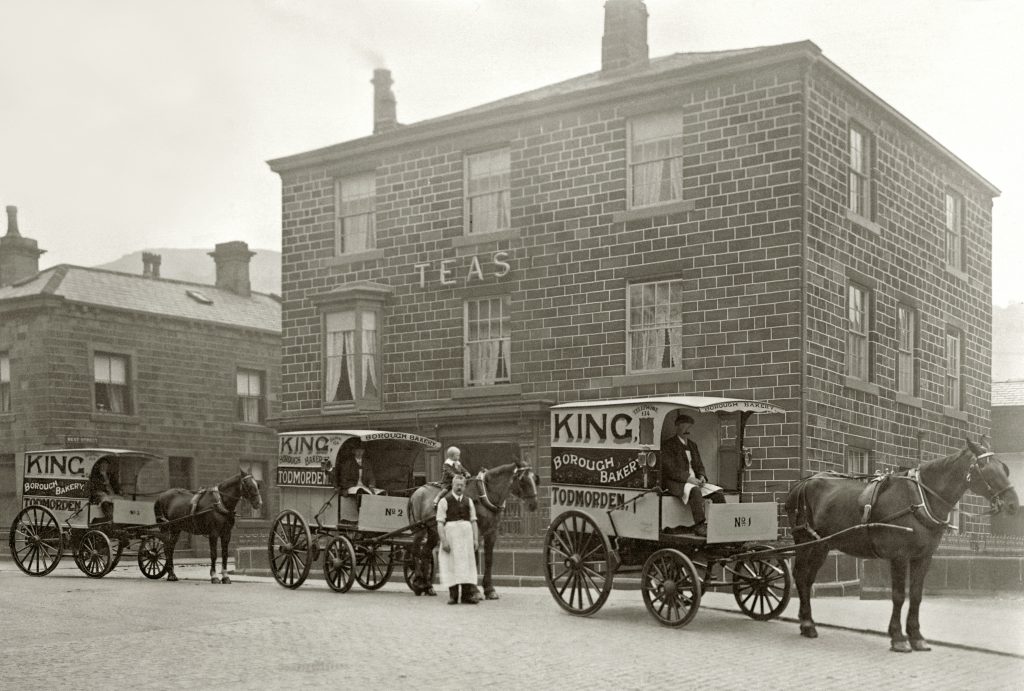
The side street is West Street courtesy of Daniel Birch

They were posing outside a three storey building with a sign ‘Teas’ high up on the wall. I immediately recognised the street at the side of the building – West Street – and I could just make out the street sign confirming my suspicion. There was no credit given on the photo but on enquiring in the office I was told it had come from the photo collection of Roger Birches. I found the collection online and within hours his son had emailed me a high resolution copy of the photograph but probably dates from around the turn of the century.
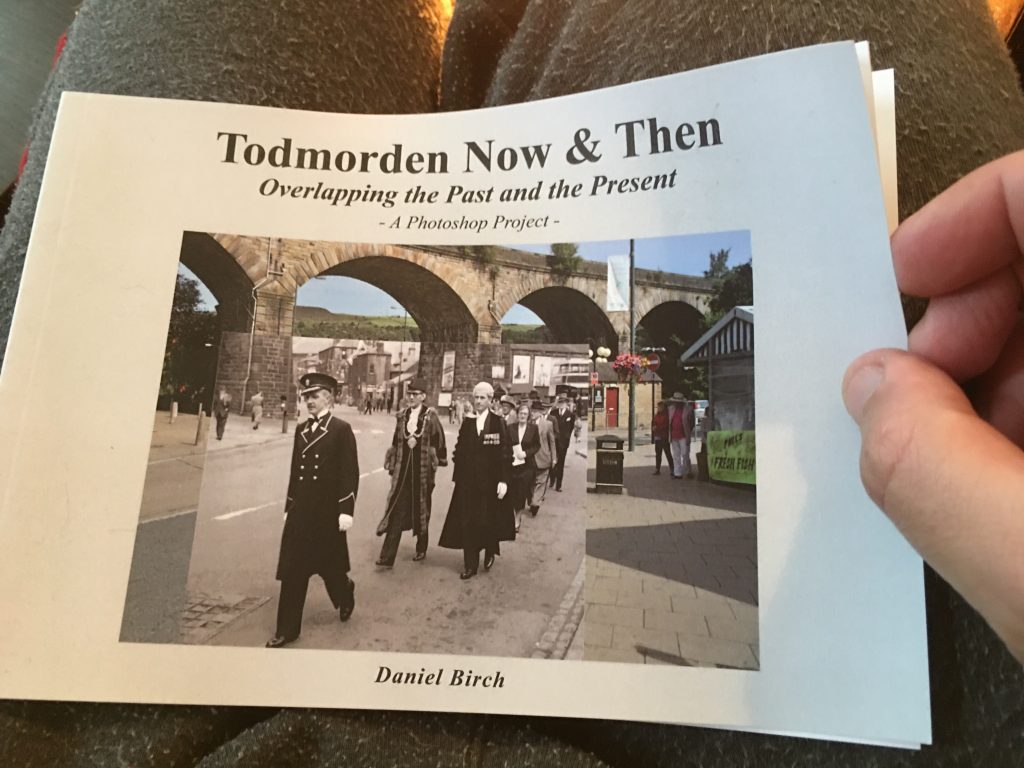
Same view today.

A walk that made me smile

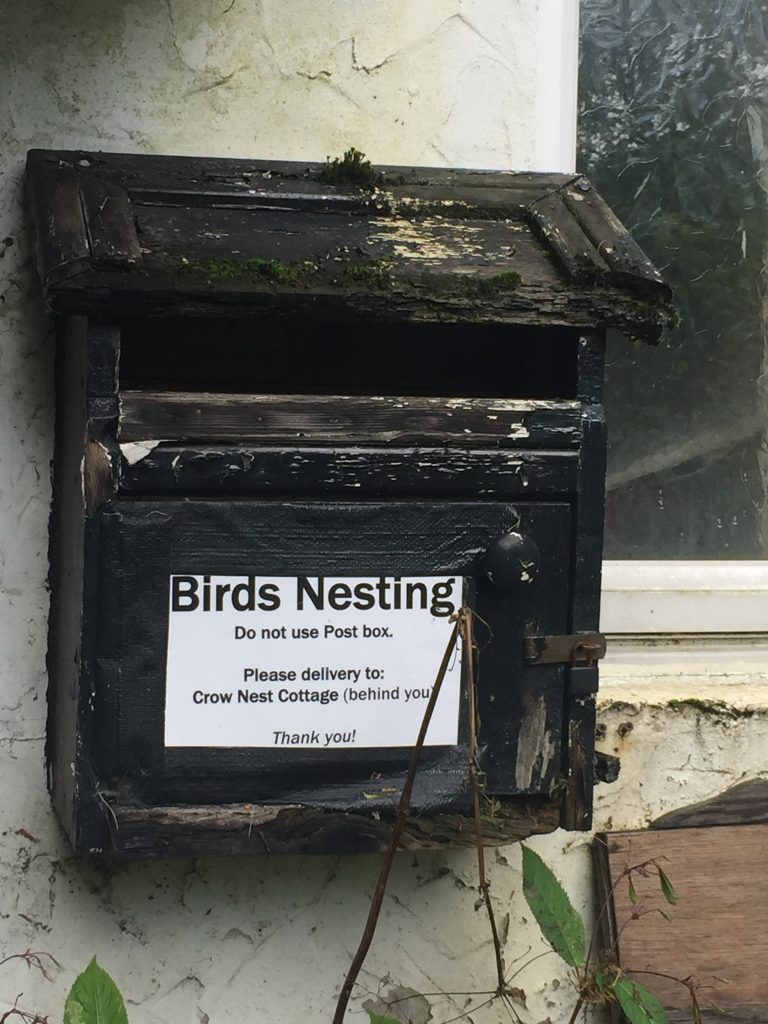
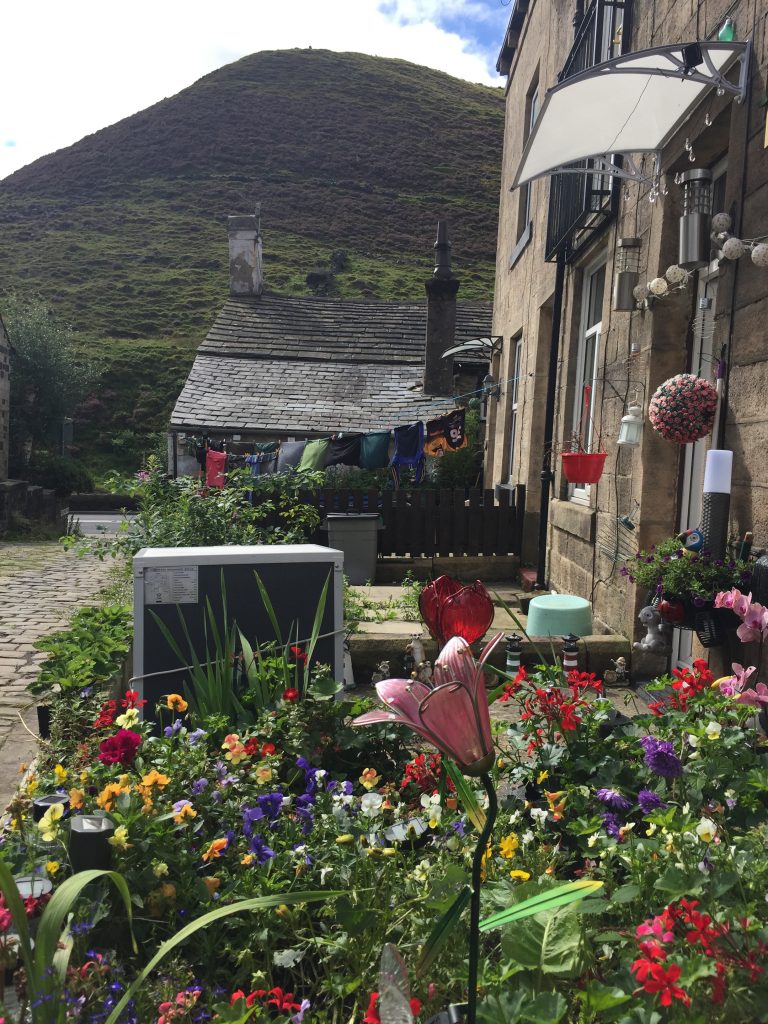
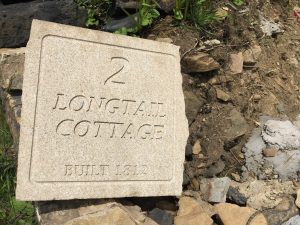
Note the name of the cottage!


Weird

Beautiful colours

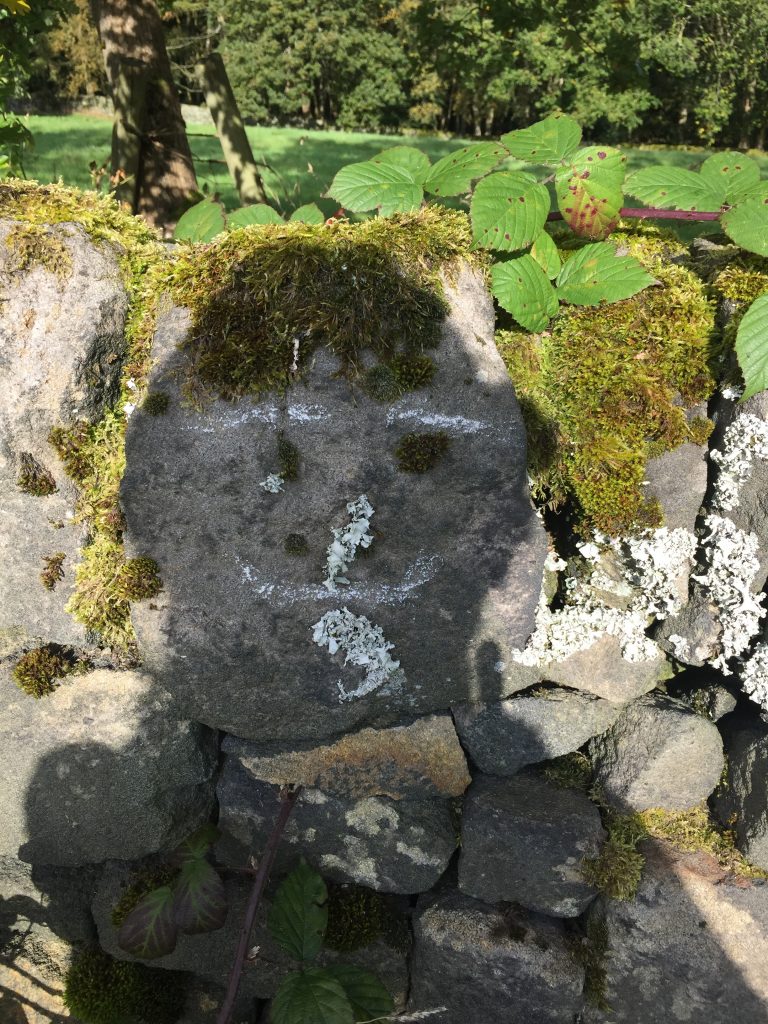
OK. I added the eyebrows and the mouth – and then superimposed myself
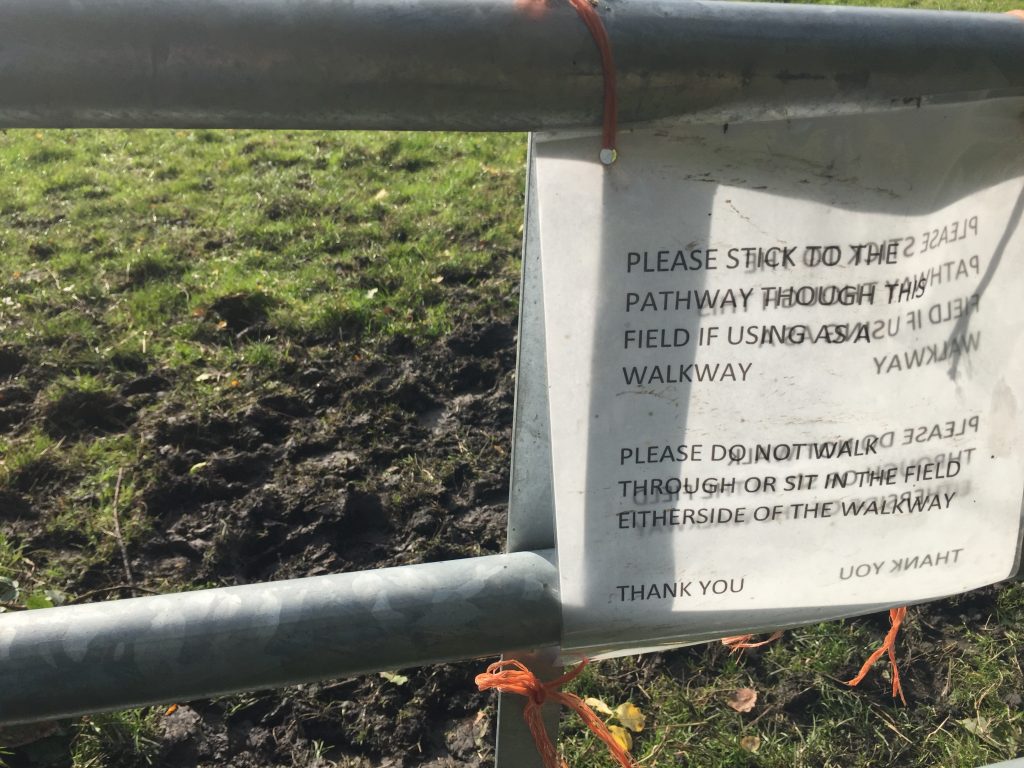
The notice says Please stick to the pathway. In all that mud I wouldn’t have much option to do otherwise

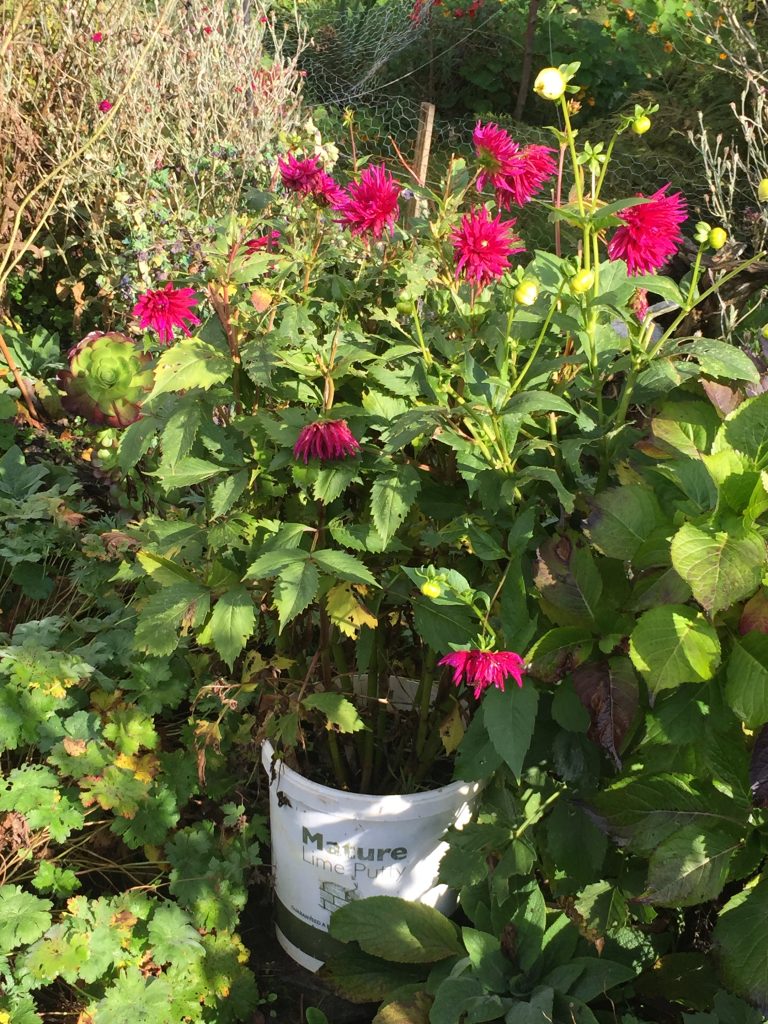
Dahlias growing in Mature lime putty bucket

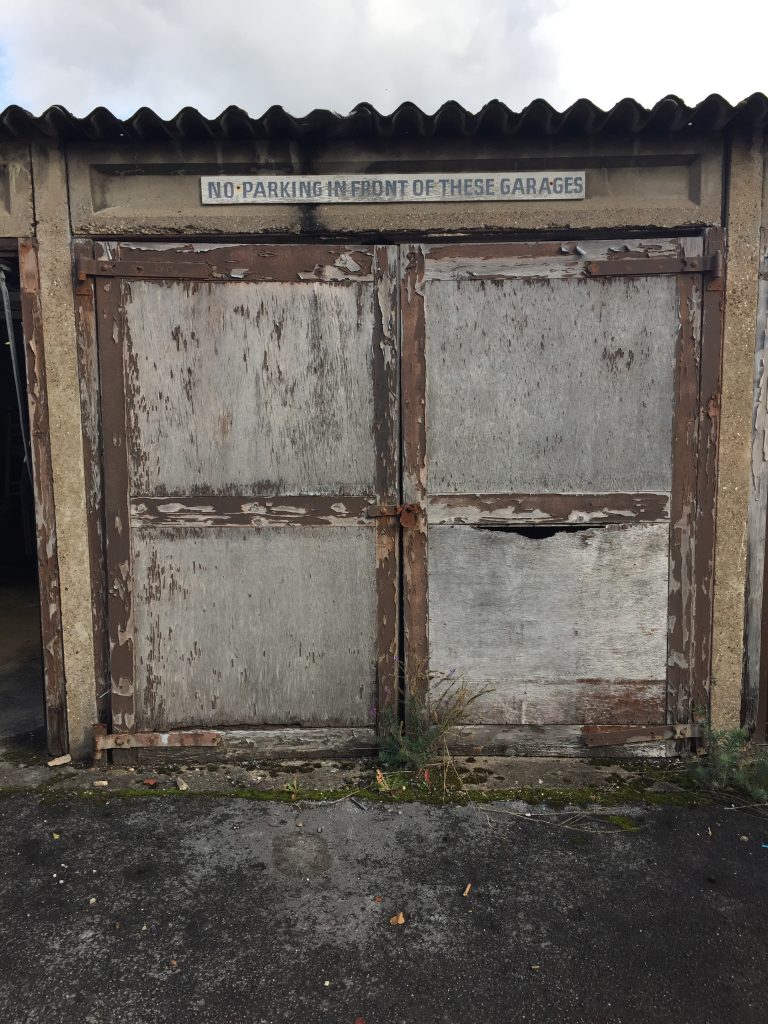
I wonder when this last saw a car


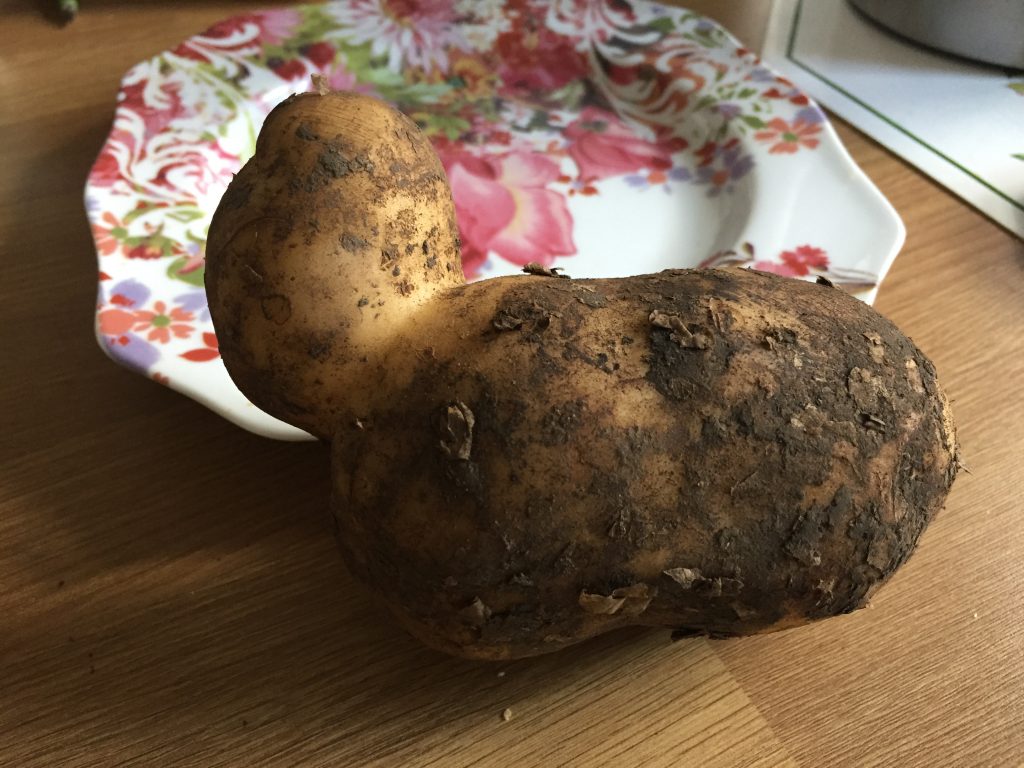
Should I eat it or play with it in the bath?


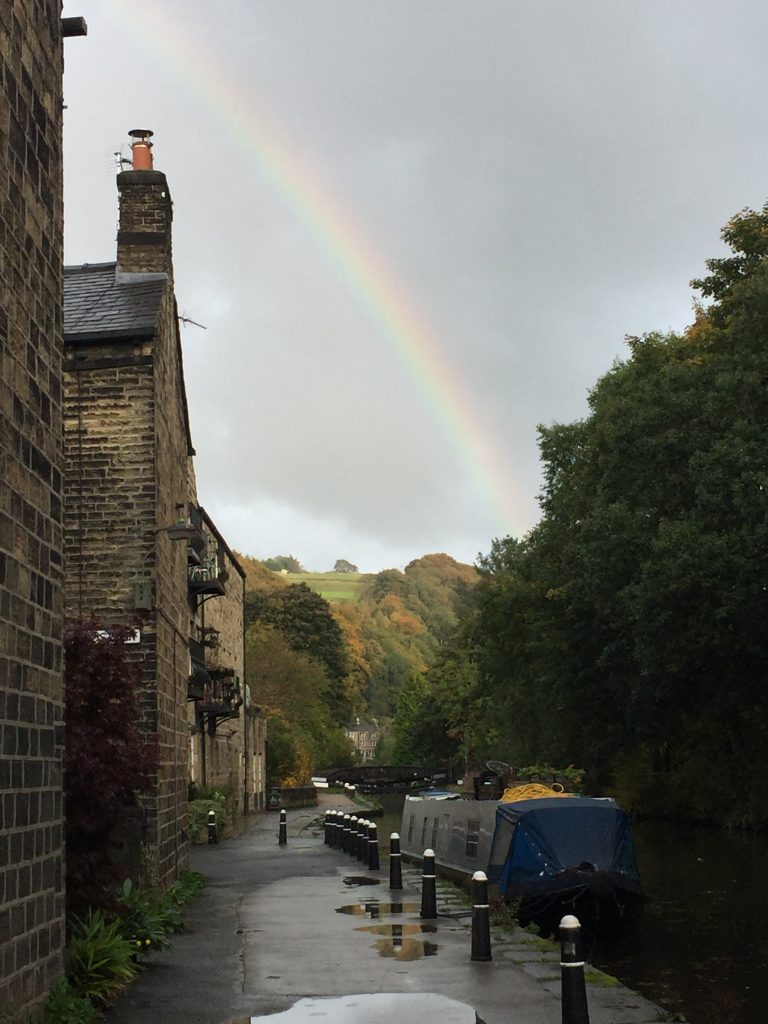
Terry Riley’s A Rainbow in Curved Air


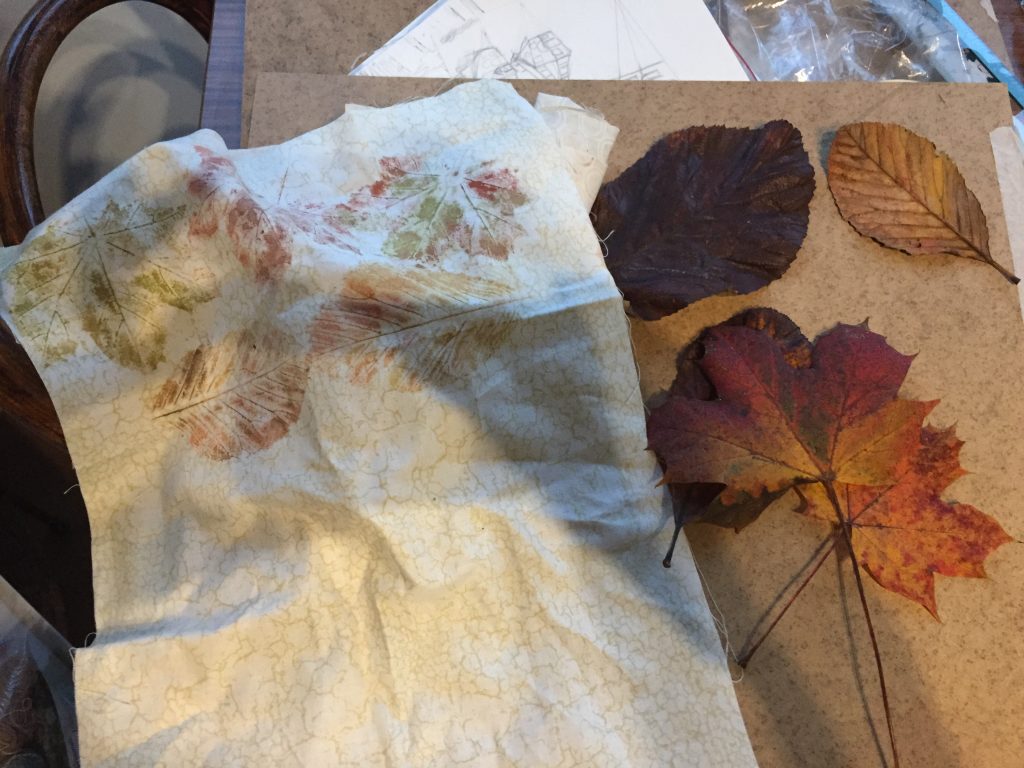
Printing on fabric with real leaves

Cliviger Gorge – again

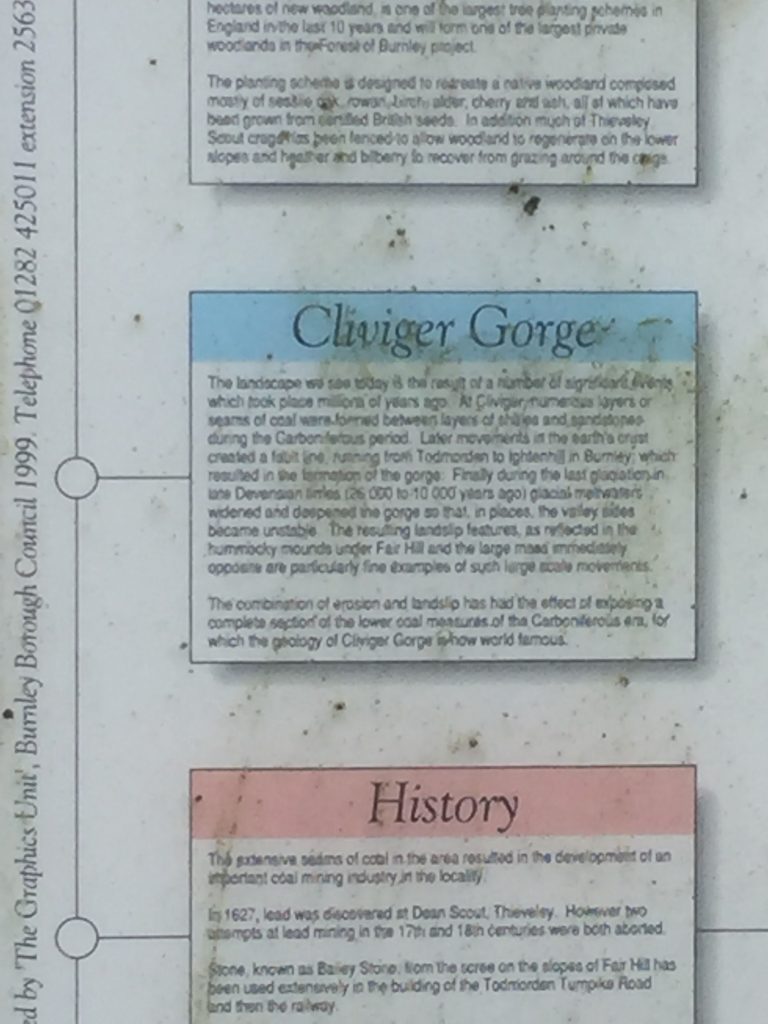
So I set off to walk a section of the A646 through Cliviger Gorge that I’d only driven along before, just a couple of days ago. by walking I see much more. I got the bus to Walk Mill and intended to walk back towards Todmorden, probably as far as Cornholme. It was overcast and for 5 minutes of my bus journey the rain came down quite heavily. I’d not been walking for more than a few minutes when I found a very helpful notice-board providing the answer to several questions that my recent visits to the area had generated.
First I wanted an explanation of the geology that caused this narrow, steep valley lined with hummocks, and, sure enough here was the reason: Cliviger gorge is a geological fault and the hummocks are rock slides caused by the slippage of unstable land.

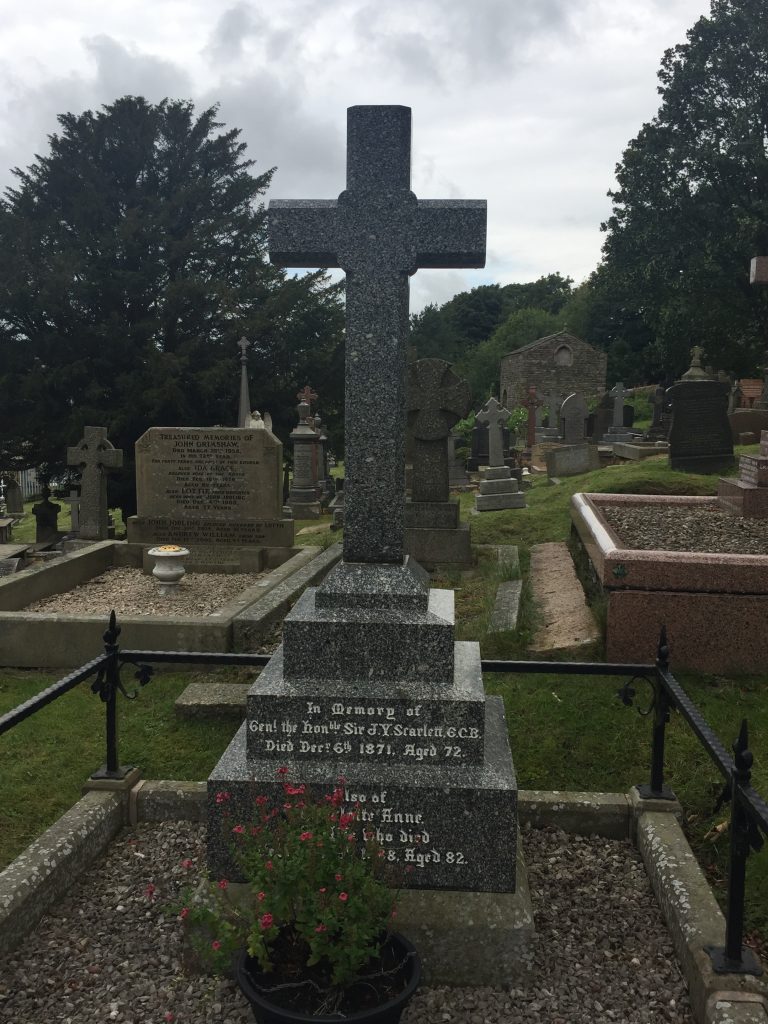
Next stop was another visit to the church of St John the Divine where I’d failed to find the grave of Sir James York Scarlett.

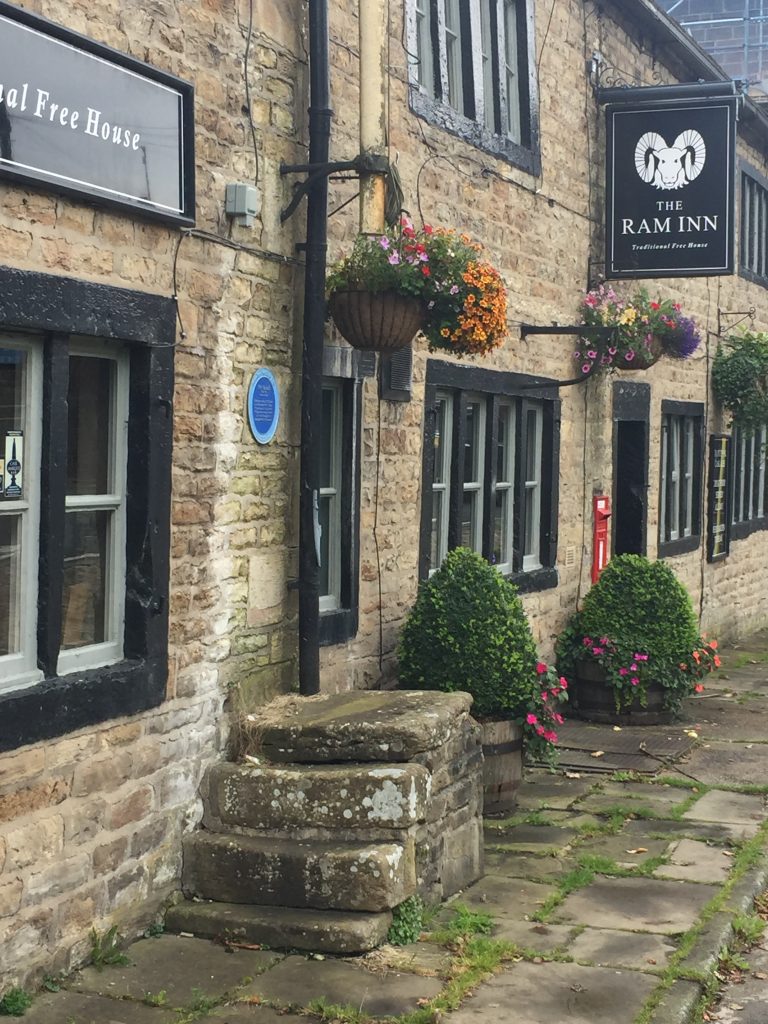
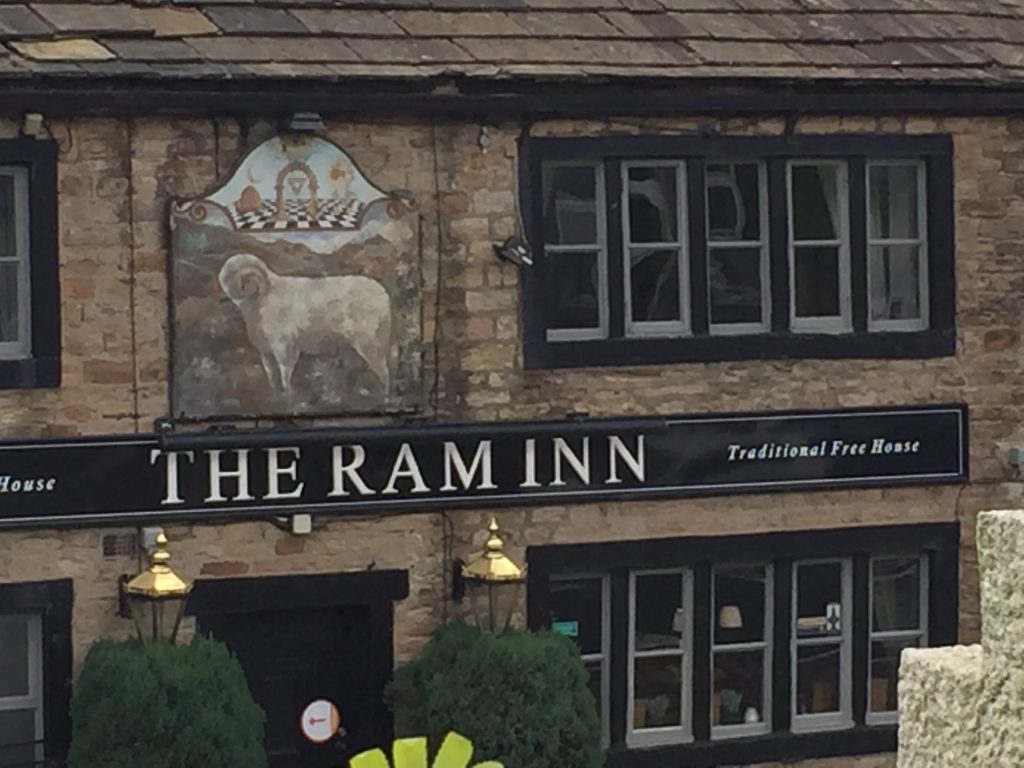
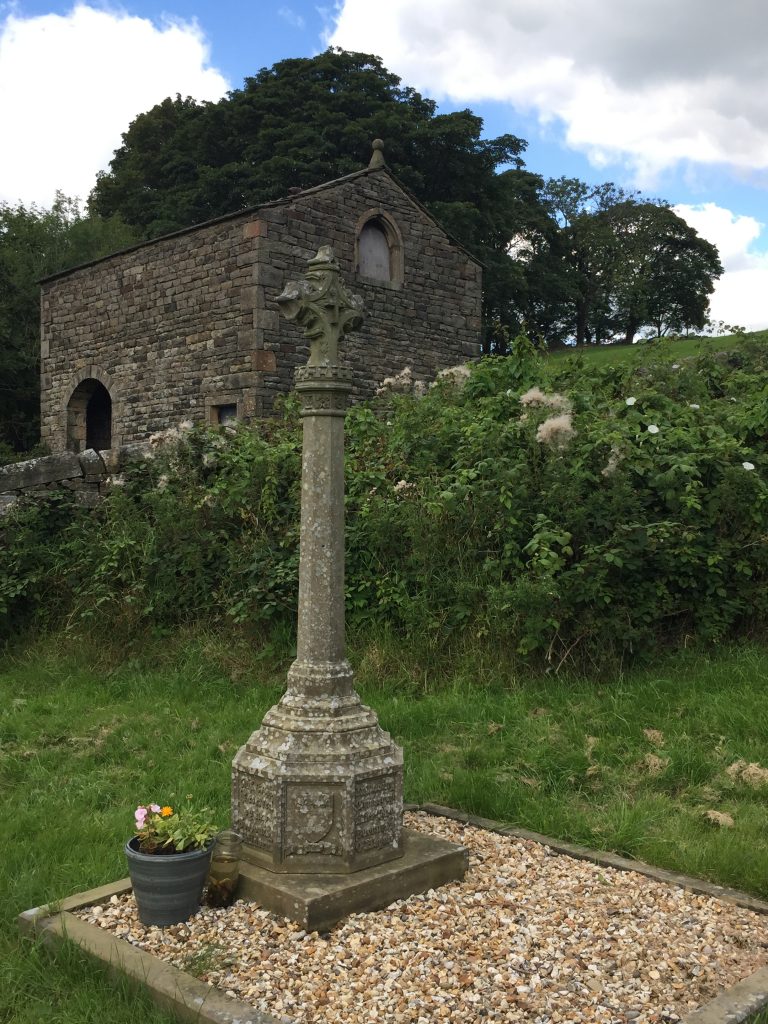
This time I found it straight away. Then on to The Ram Inn. Having parked the car in the car park at the rear of the building last week I hadn’t really noticed the painted sign of the Ram, nor the mounting block – which itself is Grade ll listed.

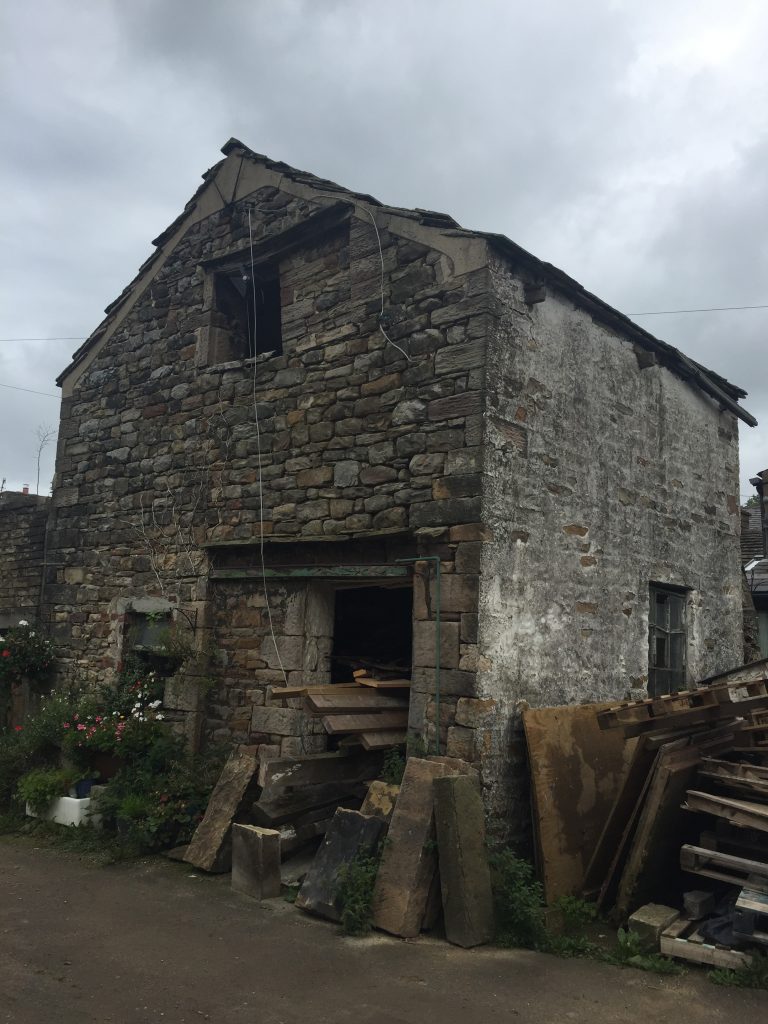
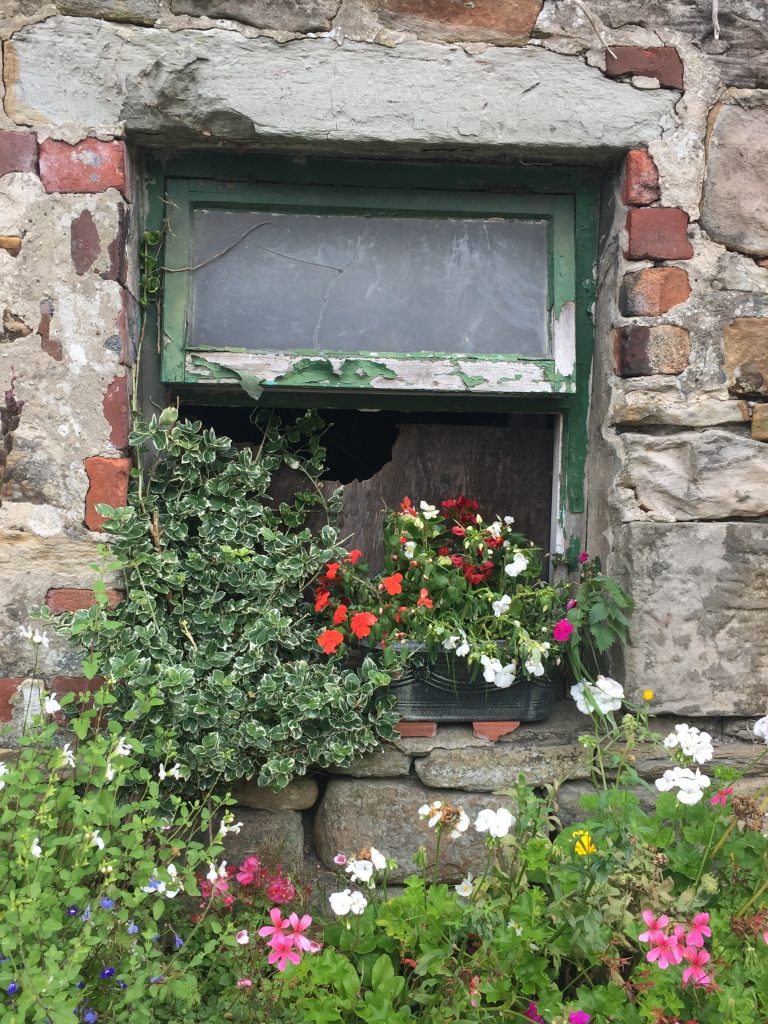
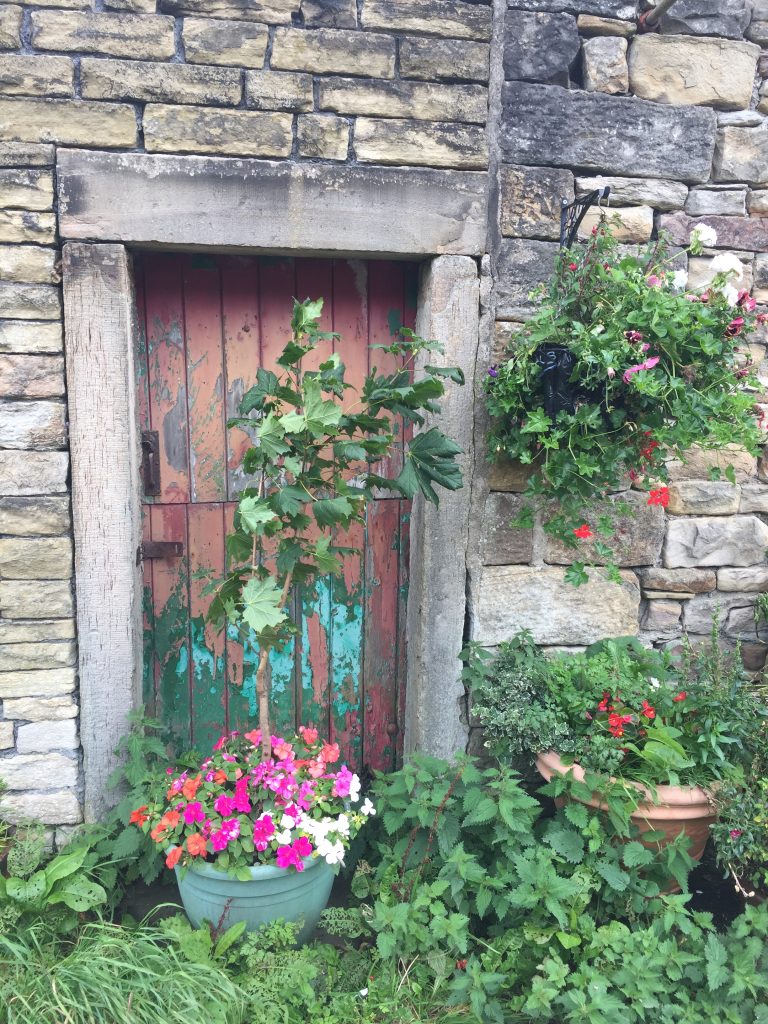
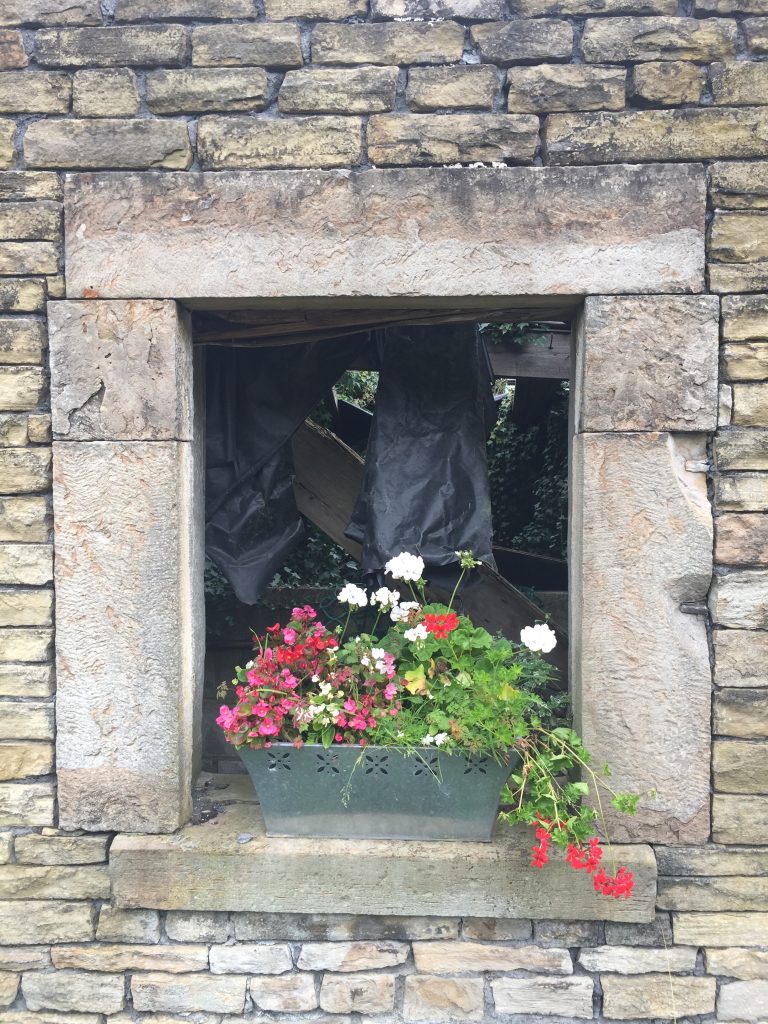
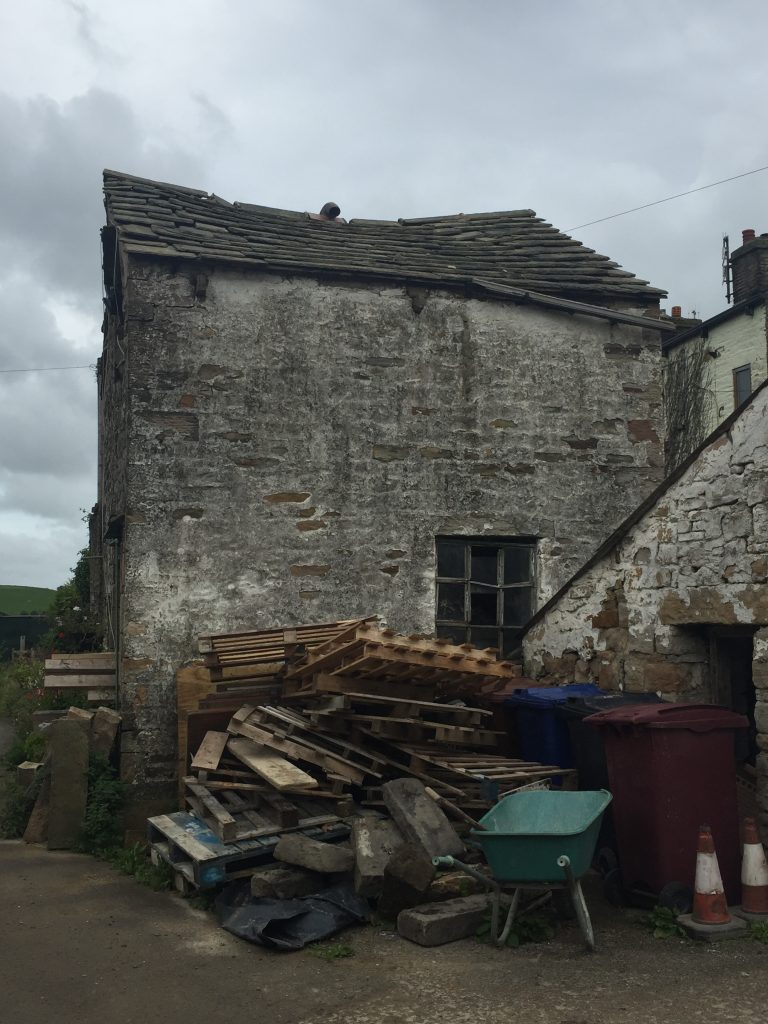
Next I found a little fold with a ruined barn, now used for storage, but each window and unused door was brimming with summer colours.

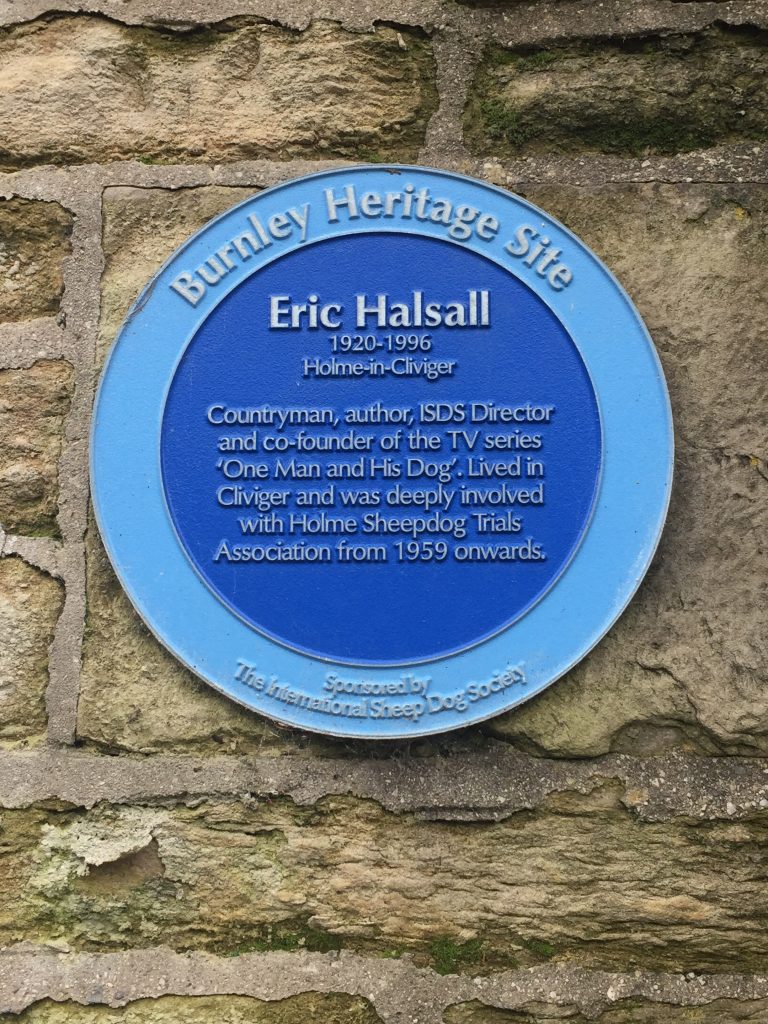
Next I came upon a blue plaque commemorating the founder of the TV series One Man and His Dog. I remember watching this program about the work that sheep dogs do in assisting the shepherds. We took our children to see the sheepdog trials on one of our visits to England. I’ll have to consult my journals as to when and where! As I looked down the valley I could actually see this happening right in front of me.

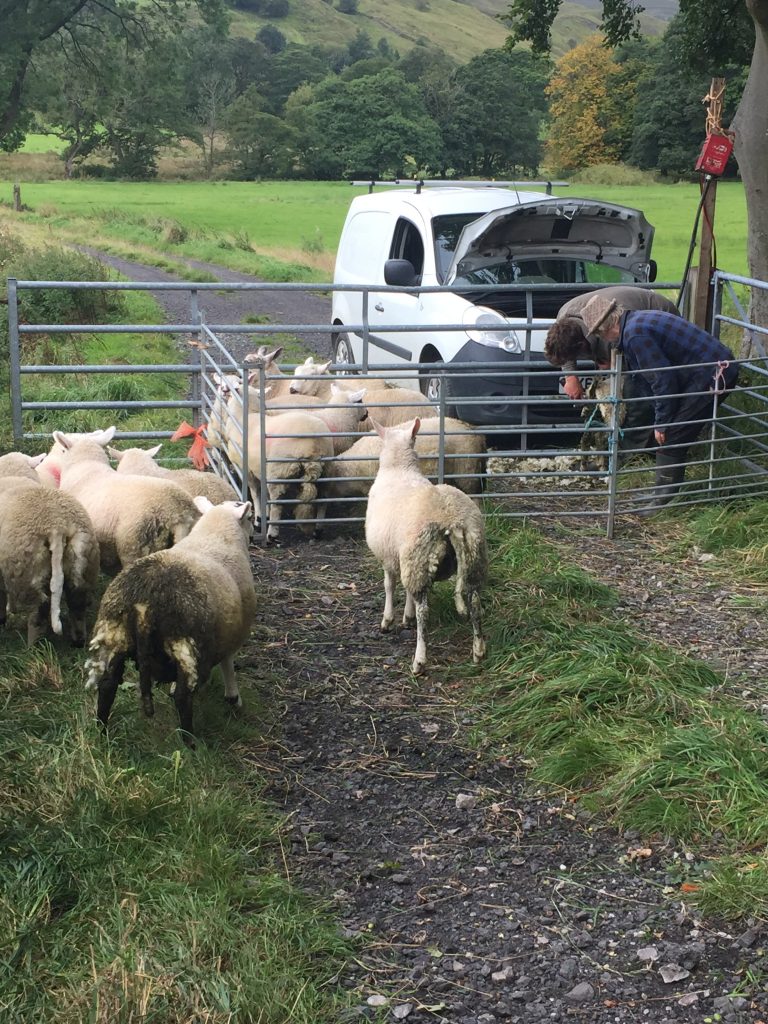
A few fields away I chatted to a couple of shepherds who were shearing the rear end of a group of a dozen sheep, cleaning their flanks and tails of poop. They explained that the poop attracts flies to that area of their body, the flies lay eggs and soon the sheep’s wool is full of maggots. Guess I learn something every day!

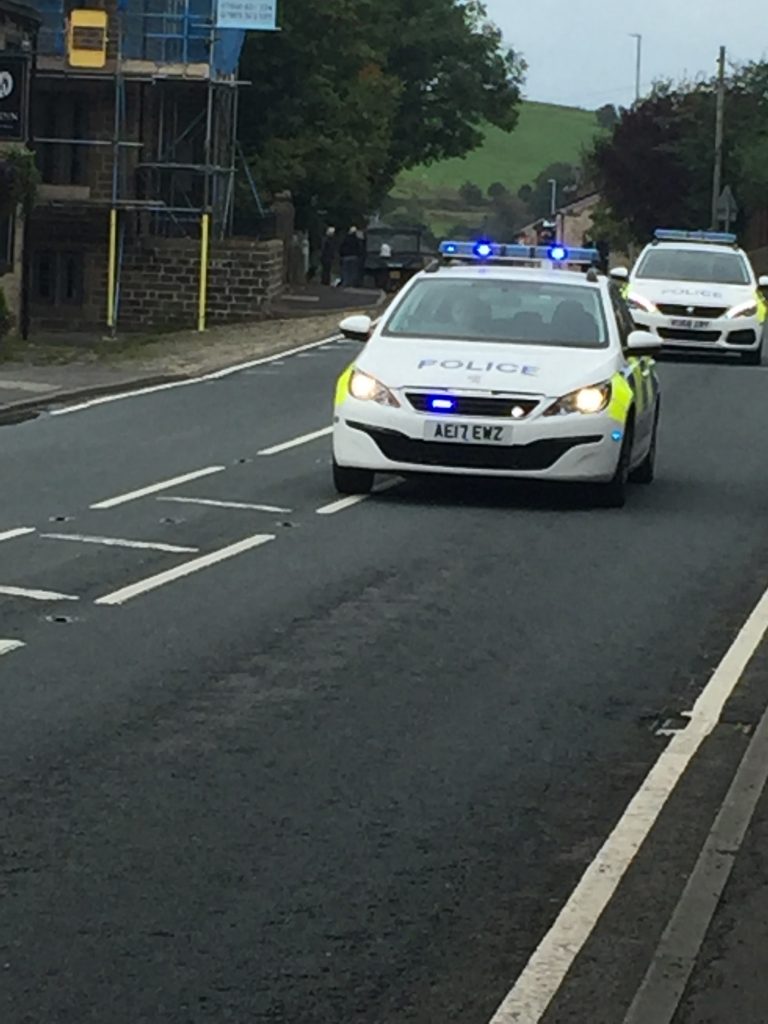
Just at that moment an air ambulance flew above the valley, turned around and flew along the valley again. A couple of minutes later 4 police cars came along at great speed, sirens blaring, heading in the direction I was walking. All traffic came to a standstill and within a few minutes many car were turning round, their way blocked by a police car. I could see that even a couple of bicycles were being turned around. Of course I was the only one on foot and I approached the policeman with some concern. As I anticipated I was not allowed to go any further. He was most helpful as to what my options were – climb 600 ft and hike 8 miles along Long Causeway? – no! Call someone to come and pick me up by car? – I don’t know anyone available. Call a taxi? Obviously all the buses had been stopped. “How long is the road likely to be blocked for?” I asked. “Could be several hours. This is a major incident.” I could see the air ambulance had landed in a field close by. As he turned around car after car I decided the only thing for it was to hitch a lift with someone heading for Todmorden and after a couple of tries a couple offered me a ride – via Bacup. It probably took 20-25 minutes to get back into Todmorden and I was very grateful for the ride.

Back in Tod I called in at the market for some black embroidery floss. I would work on my textile project. Walking through Cliviger Gorge will have to wait for another day.

St John the Divine & The Ram Inn!

So, inspired by another video from Nick, I set off to find St John the Divine church in Holme Chapel, situated in the Cliviger Gorge: https://www.youtube.com/watch?v=m4Zln5clYTg&list=WL&index=54&t=1968s

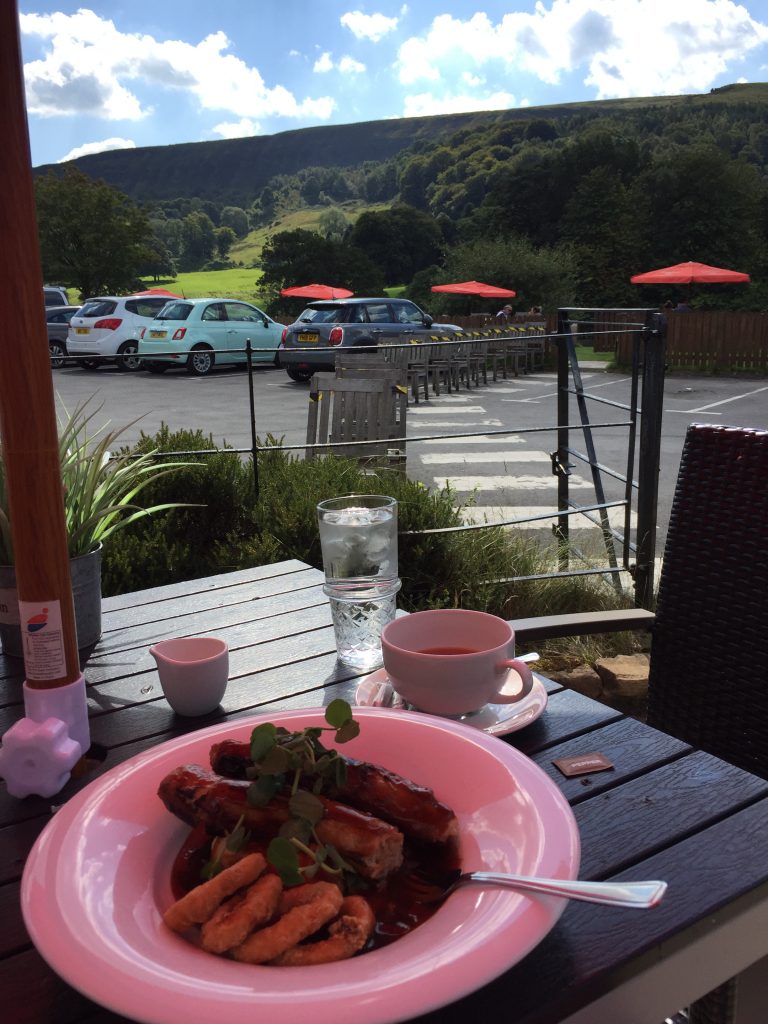
This was to be my third trip exploring the valley and on a previous bus ride I’d noticed a pub at Holme Chapel with tables set out at the rear giving great views of the opposite side of the valley, so I planned to have lunch there with Jane and then we’d see what there was to see at the chapel itself. There’s no actual village of Cliviger – it’s the name given to the collection of 5 villages that constitute the parish of Cliviger.

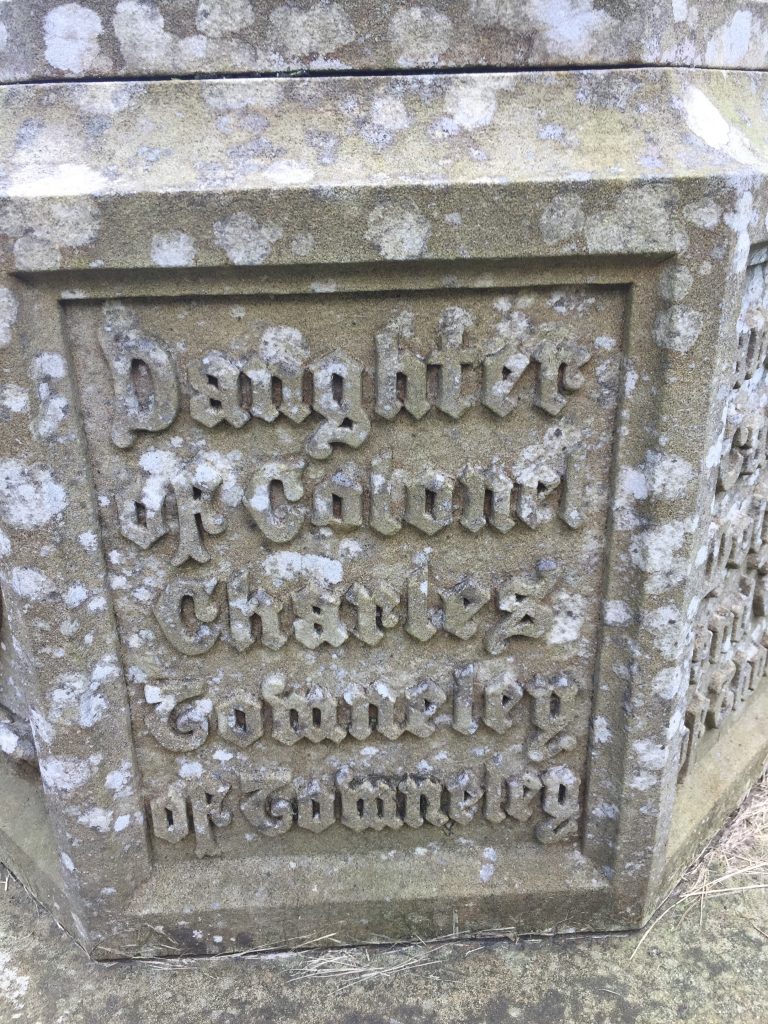
In 1588, the queen Elizabeth I gave to her principal surgeon, Robert Balthrope, a coal mine in Cliviger. This was later transferred toJohn Towneley of Towneley Hall. TLimestone was mined at Shedden Clough in the 17th century and lead mining was attempted at Thieveley in the early 17th and mid 18th centuries.  Also near Pot Oven Farm, there are the remains of a blast furnace constructed around 1700 for the Spencer partnership. I seem to remember learning about blast furnaces in science lessons at school! Although it had become a pottery by 1760, it is thought to be the first blast furnace built in Lancashire. During the mid-18th century, Cliviger produced worsted woollen pieces for the neighbouring town of Burnley. Open cast coal mining took place in the 1940s and 50s above Thieveley Scout and on Deerplay Moor.

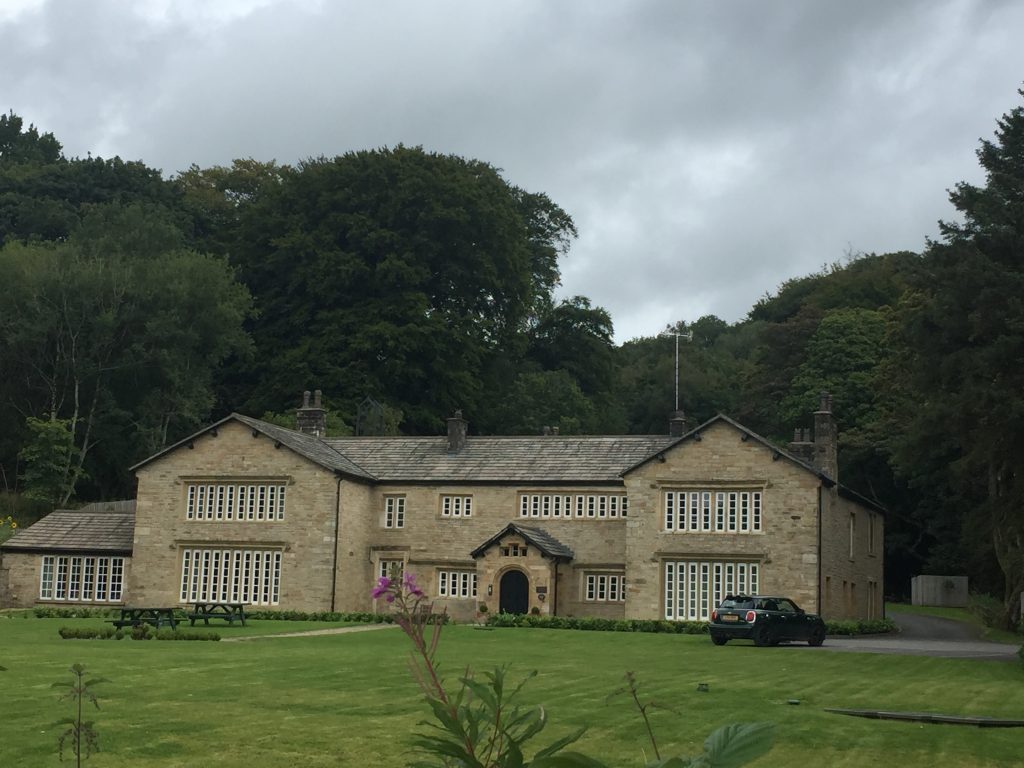
I’d read that close to the pub and chapel was Holme House which had once been the home of a man who had written a famous history of Whalley and he’d enlisted the artistic talents of one J. W. Turner to illustrate it. Wow! Then I read that his old home had recently burned down, or a least a large wing of it had been destroyed. When I mentioned the fire Jane immediately knew which house it was and we turned off onto a short drive and there was the old manor house, now fully functional, and converted into flats. It’s still an imposing building but looks rather new. Holme Hall dates back to 1340 when Richard de Whitacre arrived in Cliviger from High Whiteacre (Padiham). In 1431, The Holme, then a manor house of 40 rooms, was referenced in connection with Thomas Whitaker. The process of converting the original wooden structure into stone began in 1603 and was completed 1717 with west wing. The Whitakers built an extension to the rear in 1854. The land once belonged to the Tattersall family and housed a chapel which lent its name to the neighbouring village of Holme Chapel.

Holme House: from here to Chesapeake Bay in 1611

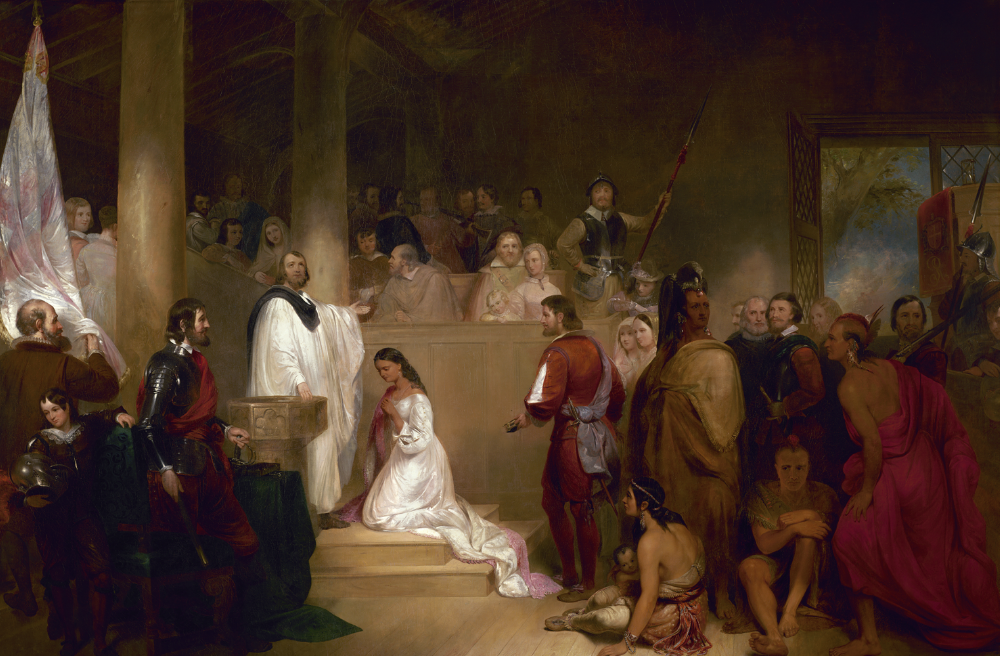
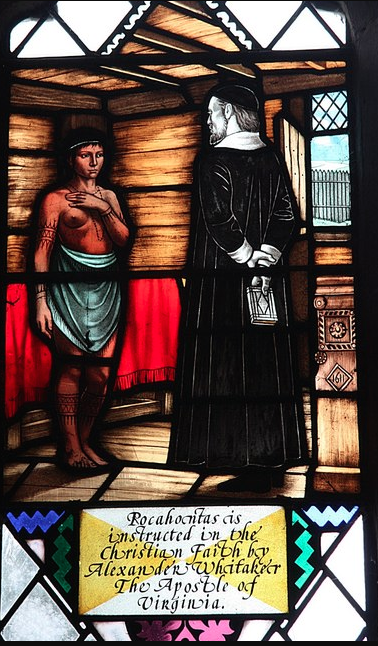
And then I discovered something so unexpected it stopped me in my tracks. Rev Alexander Whitaker, 1576-1617 sailed with Sir John Dale in 1611 to the colony of Virginia in Chesapeake Bay, becoming known as The Apostle of Virgina. My goodness. From here to the U.S (or at least what would eventually become the U. S.) in 1611!!! 2 years later Pocahontas, the daughter of the native American chief, was captured and placed under Whitaker’s care where he was taught English and the Christian religion. She was given the honorary title ‘Princess’ and it is generally believed that this minister from Holme House officiated at her baptism and eventual marriage to John Rolfe, the founder of the Virginian Tobacco Industry. Little did I think that there would be any connection to the U.S on my visit to this little village today. My daughters learned the story of Pocahontas in their American history lessons, but I certainly had never heard of her until then. Whitaker drowned while crossing the James River in 1616.

Then it was over the road for lunch in the lovely gardens of the ancient Ram Inn. Like Holme House it’s a Grade II building. It has a lovely stone roof and mullioned windows and a mounting block for getting on your horse.

We enjoyed our lunch, going with the traditional sausage and mash – excellent.

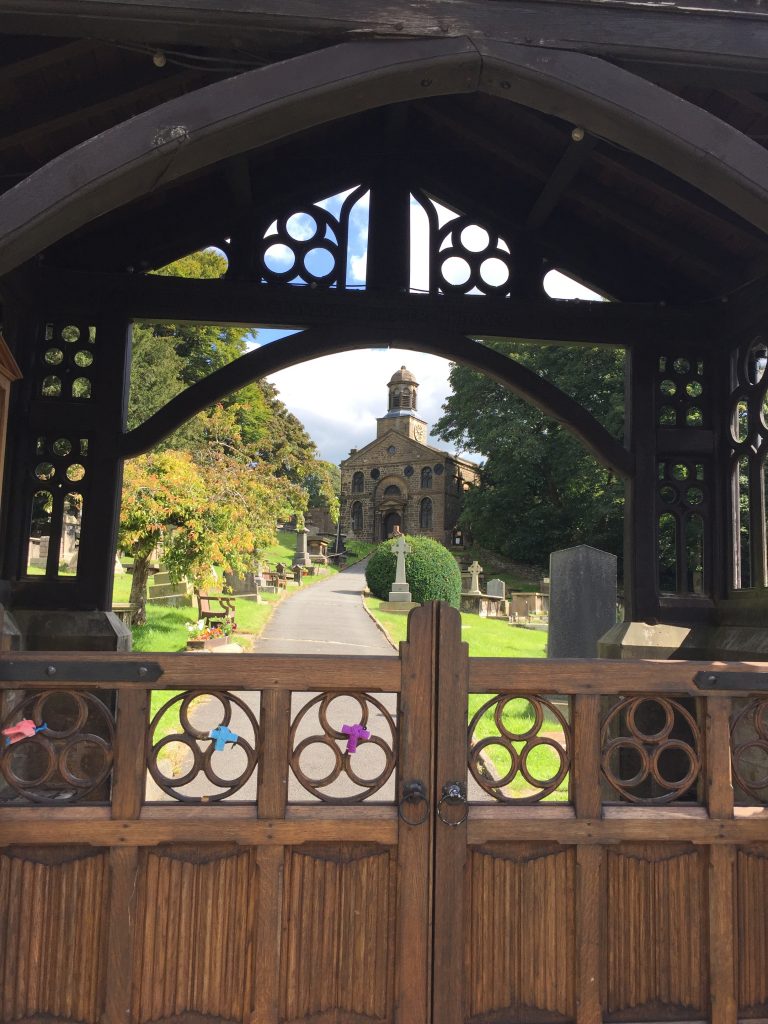
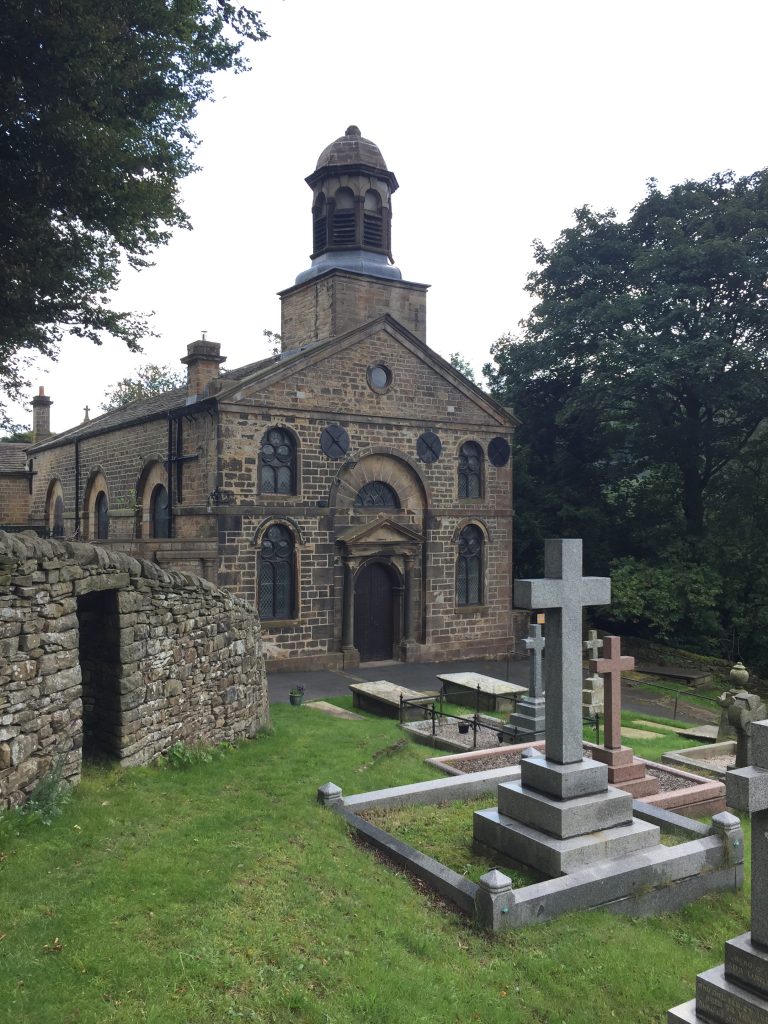
Then it was merely a few steps across the main road leading to Burnley and we were at the lychgate leading to the church St John the Divine. Besides the church being unusual for a small rural parish being constructed in the Classical style I had wanted to take photos of it for a specific reason. I’m currently taking an online art class in architectural drawing and I thought that church would give me a good subject to work from. Yet another Grade ll listed building it was built between 1788 and 1794, replacing a small chapel, and is in simple Classical style.

Above the west front is a bell turret with an octagonal cupola, and inside the church are carved oak stalls, moved from a demolished church, which include a poppyhead and misericords. All this talk of Grade II listed building reminds me of the house we lived in in Bedfordshire, Wet Manor in the village of Milton Ernest which was a Grade II building, built just before 1600. Not surprisingly the church wasn’t open though it is still a functioning church with regular services. But I was disappointed not to be able to walk around the exterior of the church – it was fenced off, so I contented myself by wandering round the very well maintained graveyard. I was on the lookout for the grave of Captain Scarlett, who led the Charge of the Heavy Brigade during the Crimean War. When I first heard this mentioned by Nick in his video I though it was a joke . . . I mean, everyone’s heard of the Charge of the Light Brigade, right? According to the Household Cavalry Museum’s website: In 1854, the Royals were the first British regiment to deploy abroad as part of a joint Anglo-French army that journeyed to the Crimea in support of the Ottoman Empire in its war with the Russians. The Royals achieved military success in a display of what cavalry were capable of at the Battle of Balaclava where, in the engagement known as the ‘Charge of the Heavy Brigade’, a force of 800 British cavalry, with the Royals at their heart, routed a force of 3000 Russian light horseman in an engagement that lasted barely eight minutes. Unfortunately, this triumph has been somewhat overshadowed by the disaster at the same battle which was the Charge of the Light Brigade. So how on earth did this highly decorated military gentleman come to be buried in this tiny village in Lancashire? Son of a Baron he’d been educated at Eton and Trinity College, Cambridge and in 1835 he had married Charlotte Ann Hargreaves a coal heiress from Burnley and from then on he made Burnley his home. After his military career he became a conservative member of parliament and on retirement he stood again as a member for Burnley but was narrowly defeated. When he died in 1871 and estimated 60,000 people lined the streets of Burnley for his funeral procession. There was a General Scarlett pub in Burnley named after him and in 2016 it became the Scarlett Tea Rooms. As I wandered around the tiny village it was hard to match this quiet enclave with the vigour and bravery shown by Capt. Scarlett.

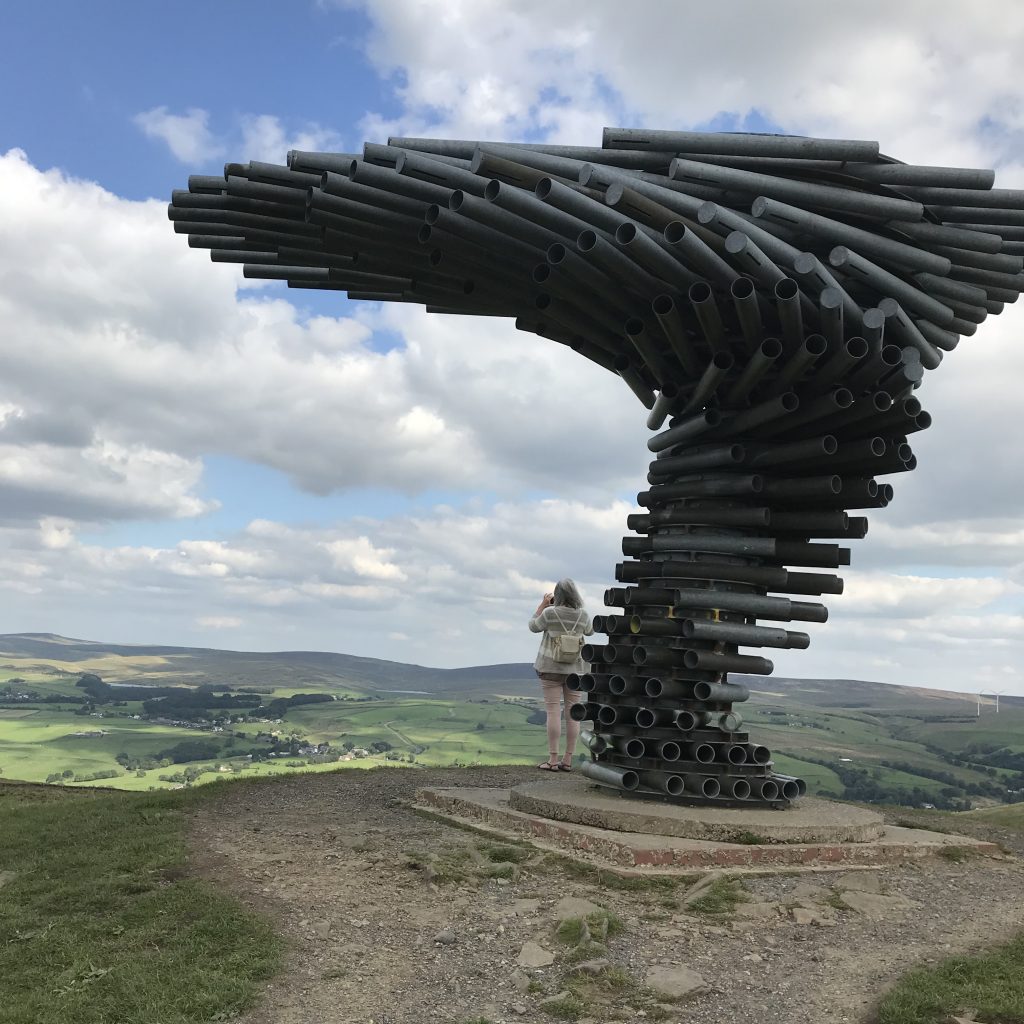
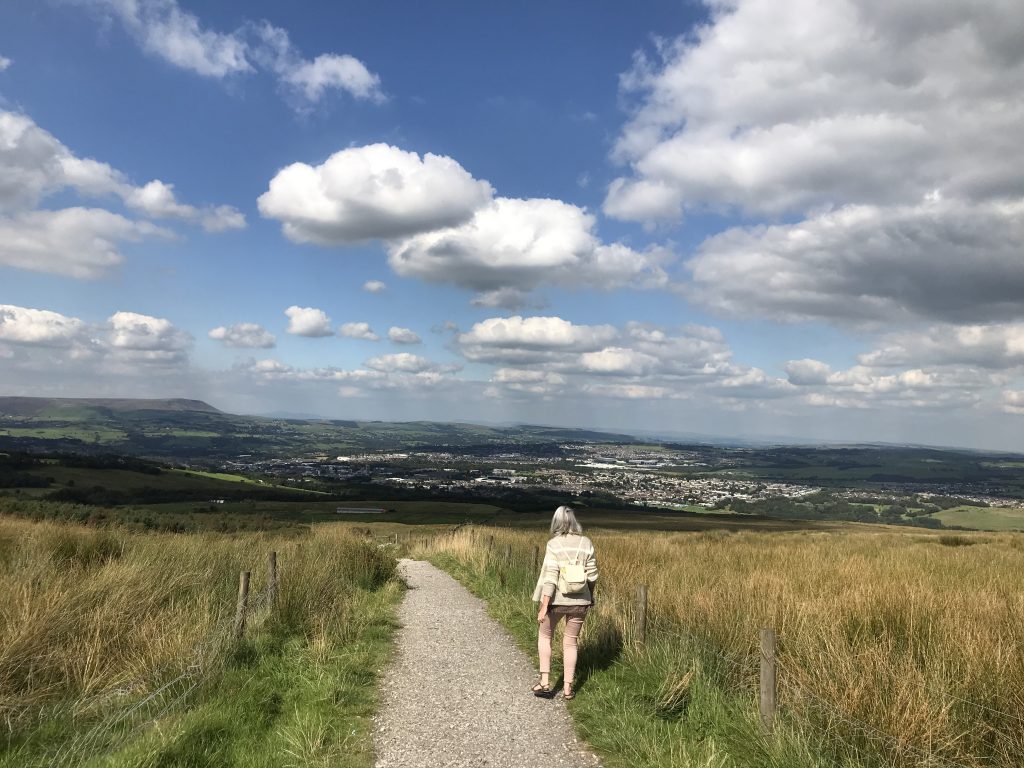
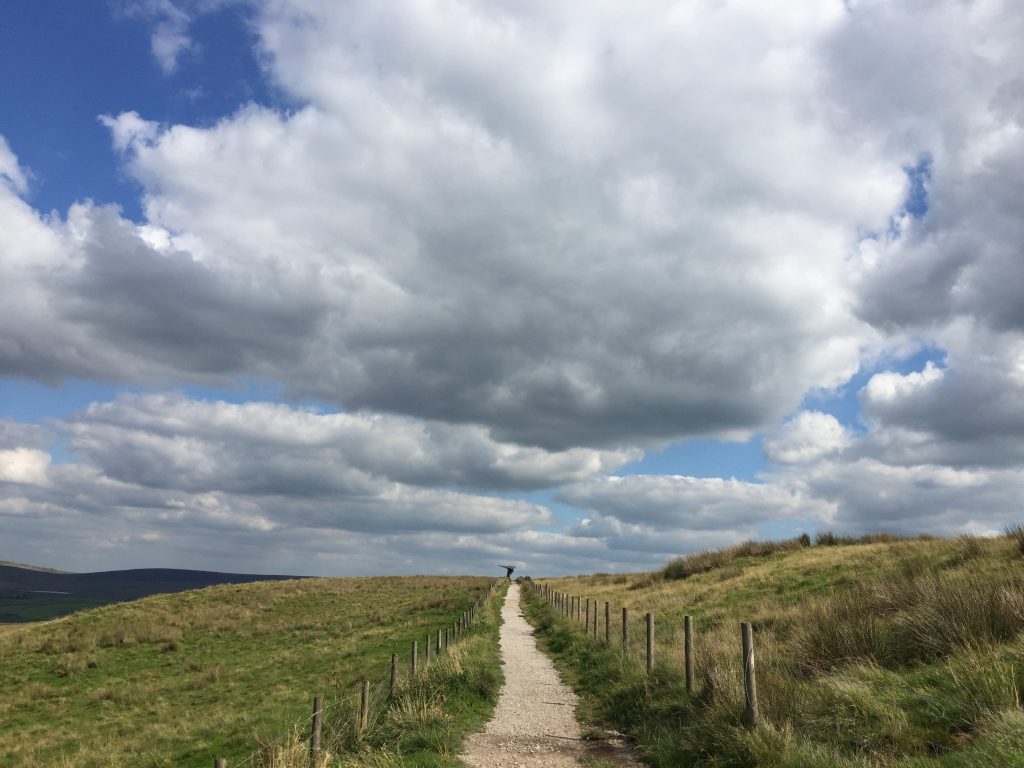
Our final stop was at the Singing Ringing Tree, a panopticon overlooking the Cliviger Gorge, and with a gentle breeze blowing it sang to us. The sky had cleared of its earlier clouds and so we could see way into the distance. I think I could see Ingleborough. A diagram of the points of interest would have been very useful!

Looking forward to exploring more of the valley soon.

Exploring a new valley

It’s been a while since I last posted. I could blame many things: the inclement weather, lethargy, started working on a book, getting back into some more serious piano practice, the concern about the fires back in Santa Cruz, the realisation that Covid 19 is here to stay for a while, etc., etc.

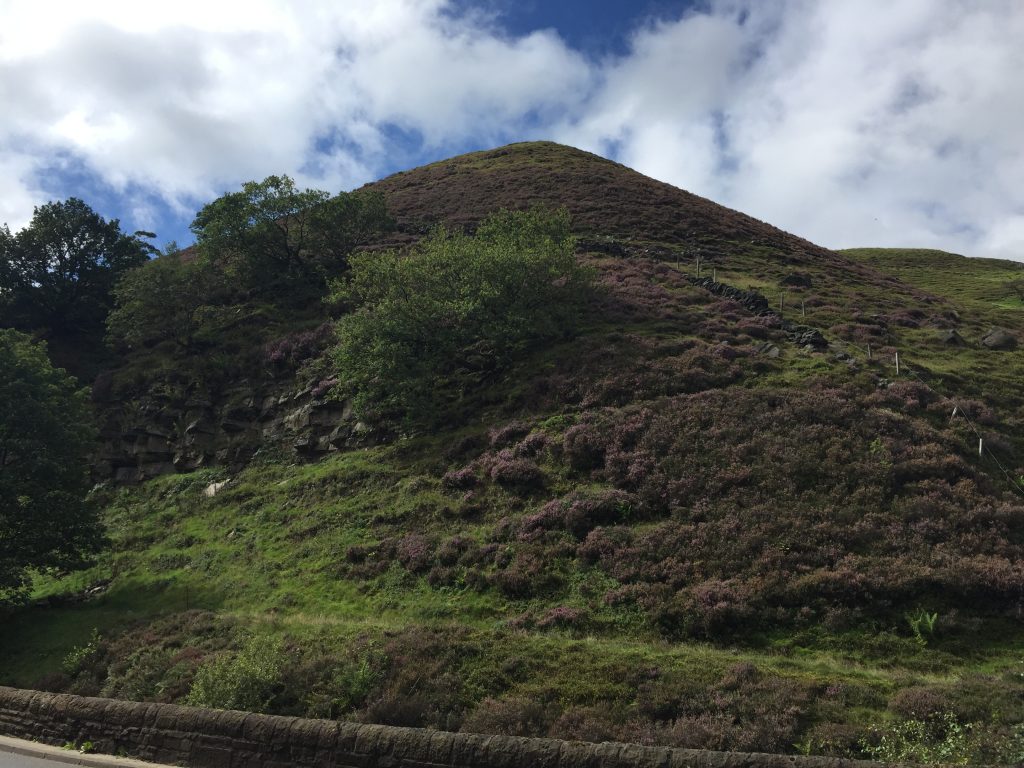
The hills encroach on the road

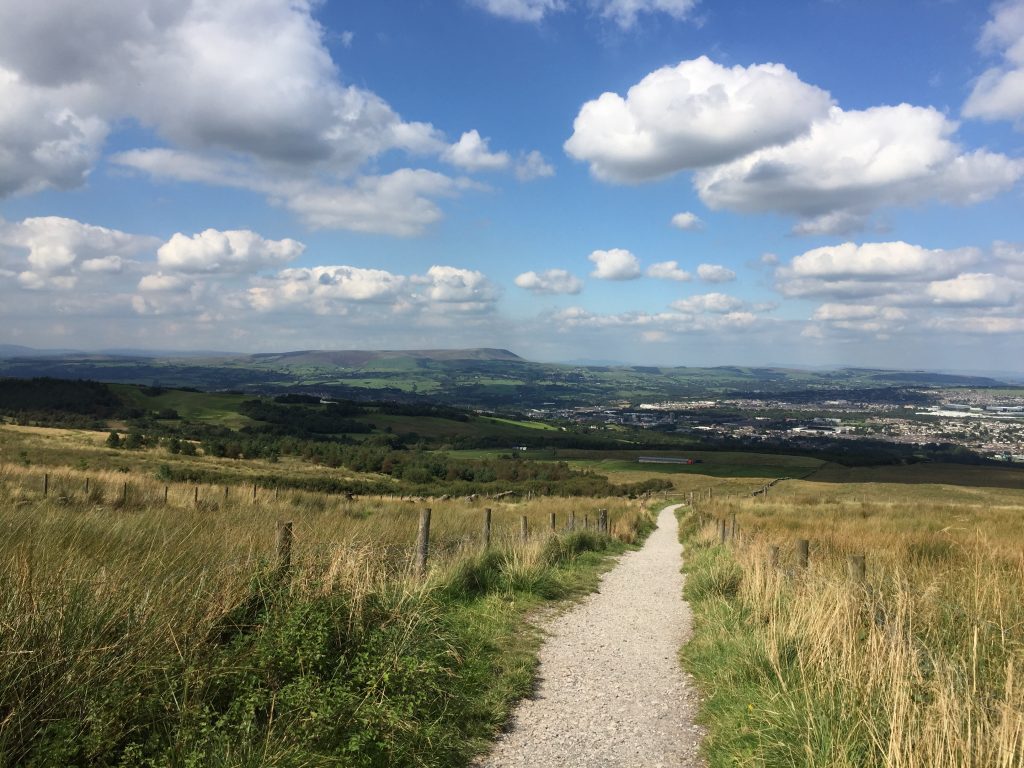
But last week I just happened to watch a YouTube video of a guy hiking in the Cliviger Gorge, the valley the connects Todmorden to Burnley. I’d watched a couple of his homemade videos before, mostly around the Calder Valley, so this was a new area for me, and it showed a ruined chapel at Shore, near Cornholme. The roof is off, walls are missing, it’s perched on the edge of a cliff, and it’s difficult to get to. What more could I ask? The perfect place for exploration.

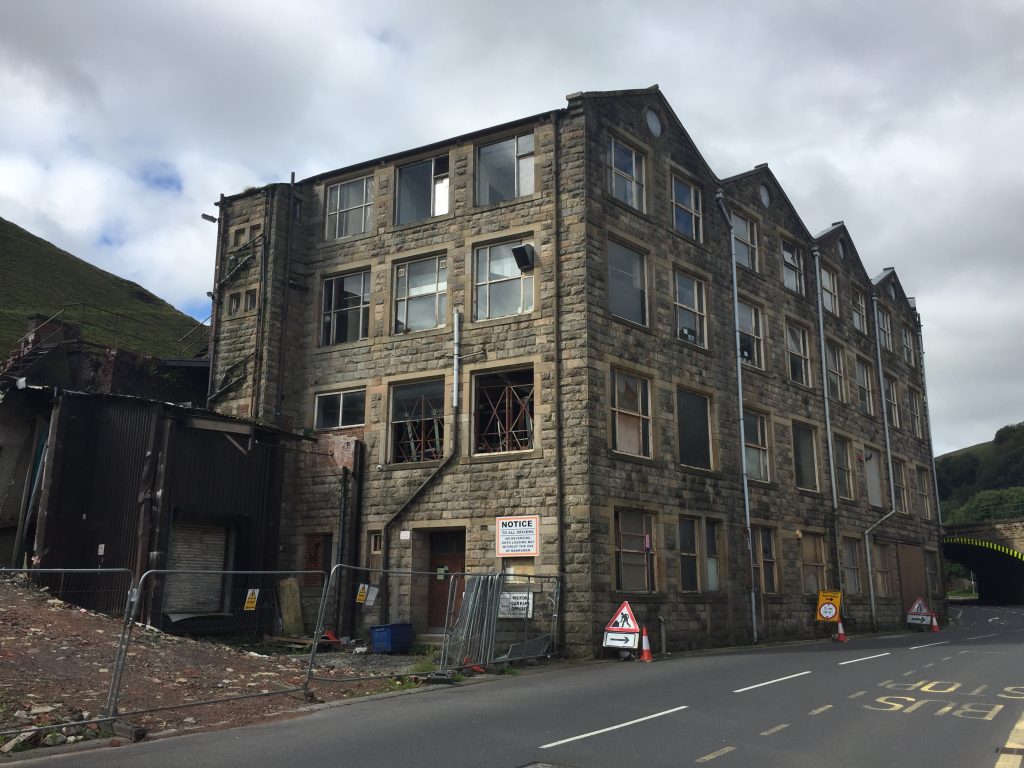
Former mill in the valley bottom

So my first step into the valley came last week when I took the Burnley bus as far as Cornholme and then just followed the road back down into Todmorden. Though I’d travelled along this 8 mile valley by train and bus before I’d never walked through it. A few derelict mills are wedged in the valley bottom which, like the Calder Valley forms a very narrow channel for a road, a railway line, a river, and a few small communities.

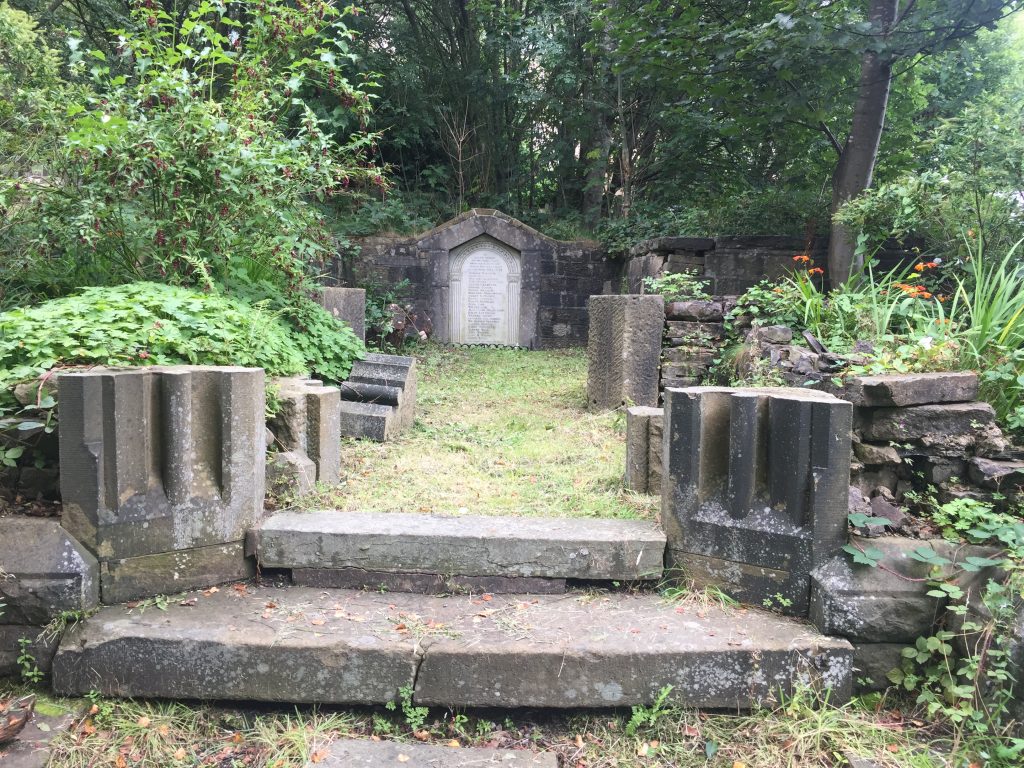
All that remains of Cornholme church

In fact the lower end of the valley is narrower than the Calder valley in Hebden Bridge and some of the terraces of houses are only around 4 houses long on either side of the main road. Unlike Hebden Bridge few houses are perched on the valley sides because the land here is notoriously unstable. The valley sides appear to be full of hummocks, caused by landslides over the millenia. A little coal mining was done, some iron smelting and then the textile mills took over during the industrial revolution. I passed a lane heading steeply upwards signposted to Shore but I wanted to do more research before heading up to the ruined chapel.

Colour in the garden

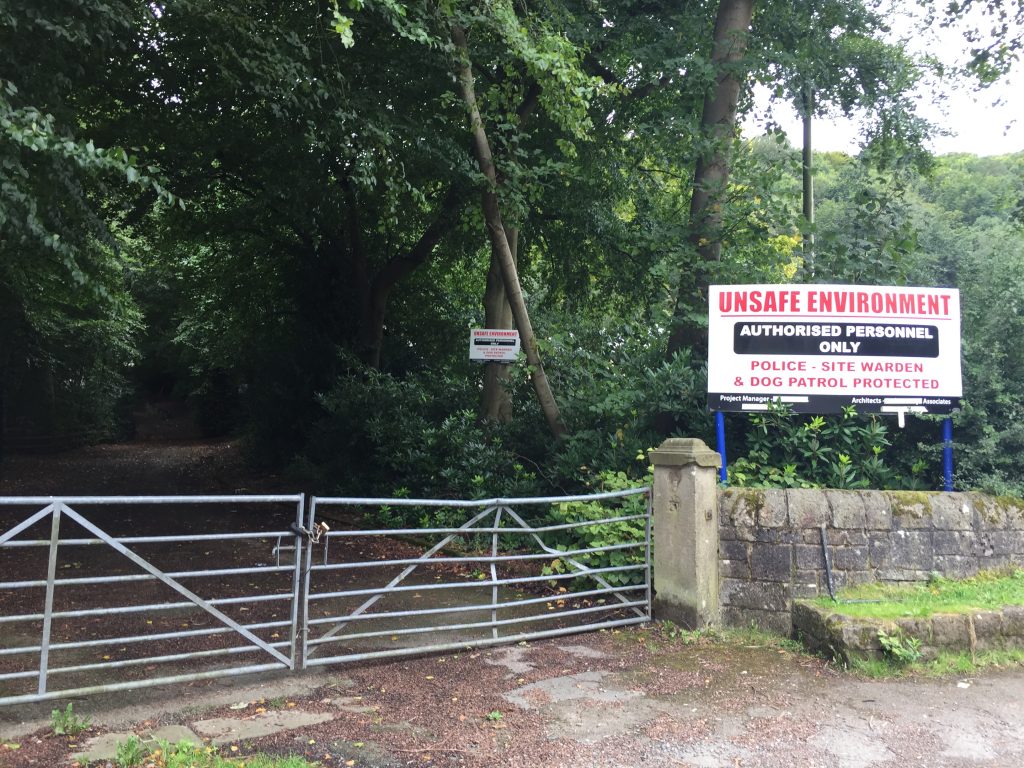
Arriving back on the outskirts of Tod I came to an imposing gateway leading into a densely wooded area. Big signs saying police cameras, dog patrol, hazardous to your health, razor wire made me inquisitive and on researching when I got home I found that the drive once led to Todmorden’s most famous hotel which was the victim of arson and now lies derelict.

I passed the Hare and Hounds and Jack’s Place, 2 pubs that my ancestors had kept years ago, then past Centre Vale Park, one of the few flat areas of land in the area. The River Calder rises in the hills above the Cliviger Gorge, part of it heading into Yorkshire and past into Lancashire. Bob Gaunt and Annie Harrison who I worked with on the aging Project at Manchester Uni are currently tracing the Yorkshire Calder from its source to the sea.

A victim of Covid 19?

What lies beyond? Scaitcliffe Hall Hotel & Restaurant Originally the seat of the Crossley dynasty, Scaitcliffe Hall can be traced to the middle of the fourteenth century. The Crossleys, local landowners and latterly magistrates, remodeled the hall over five centuries, constructing the present hall in 1821. The Scaitcliffe armoury and museum was a Lancashire country house museum, formed by two generations of the Crossley family of Scaitcliffe Hall, Todmorden c.1810–40, and dispersed at auction in Leeds in 1892. But details of the works in the collection, bound into seven folio volumes, along with an index volume to the entire collection, survived in collateral descent until 2011 when the last owner died. 

Built in a Tudor fashion with a porch, mullions and leaded lights, the building still incorporates some of its earlier materials, in particular the numerous stained-glass windows in the Garden Room and the large rear window of the main stairwell. More info and photo of the house in its heyday:

https://sites.rootsweb.com/~todmordenandwalsden/Scaitcliffe1.htm

The long tale of Longtail

Longtail

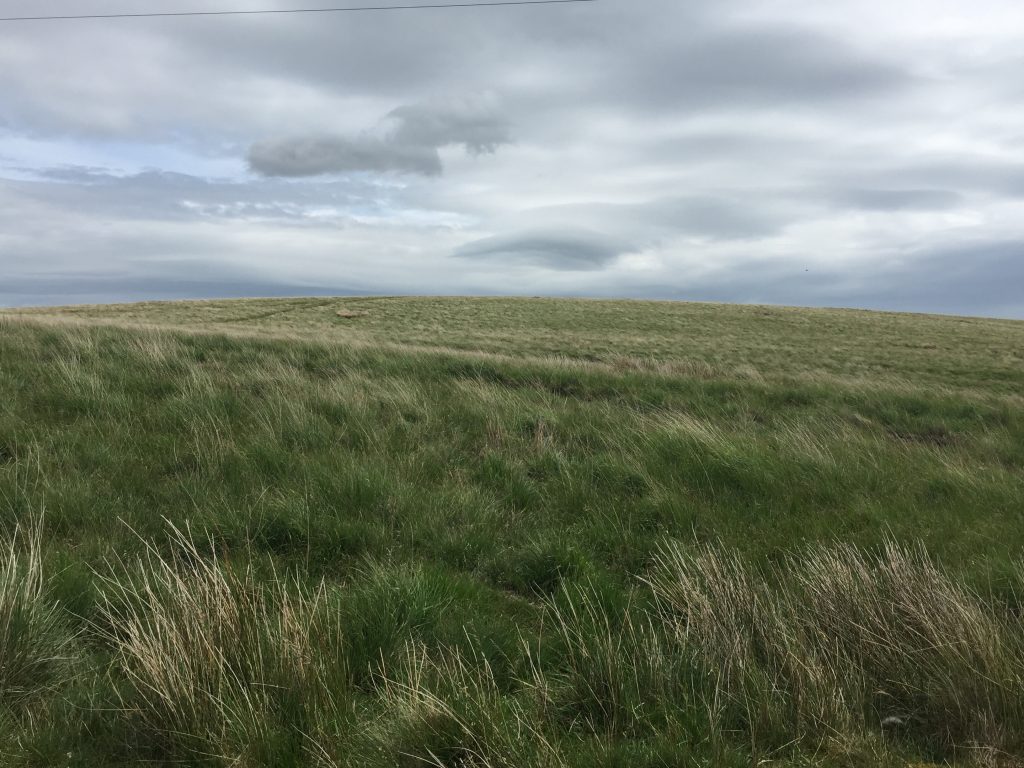
Moorland

This morning I went in search of Longtail. Well, actually I just wanted a good reason to take another walk along Edge Lane, having enjoyed my first two walks along the lane. In 1881 The Pack Horse Inn was the scene of an altercation between a group of thugs and the landlord, my ancestor, John Wolfenden. When the vandals reappeared at the inn the following day two policemen were summoned from Hebden Bridge and during a scuffle, as they were being marched back to Hebden, some of the men broke free and headed off in the direction of Longtail Beer House.

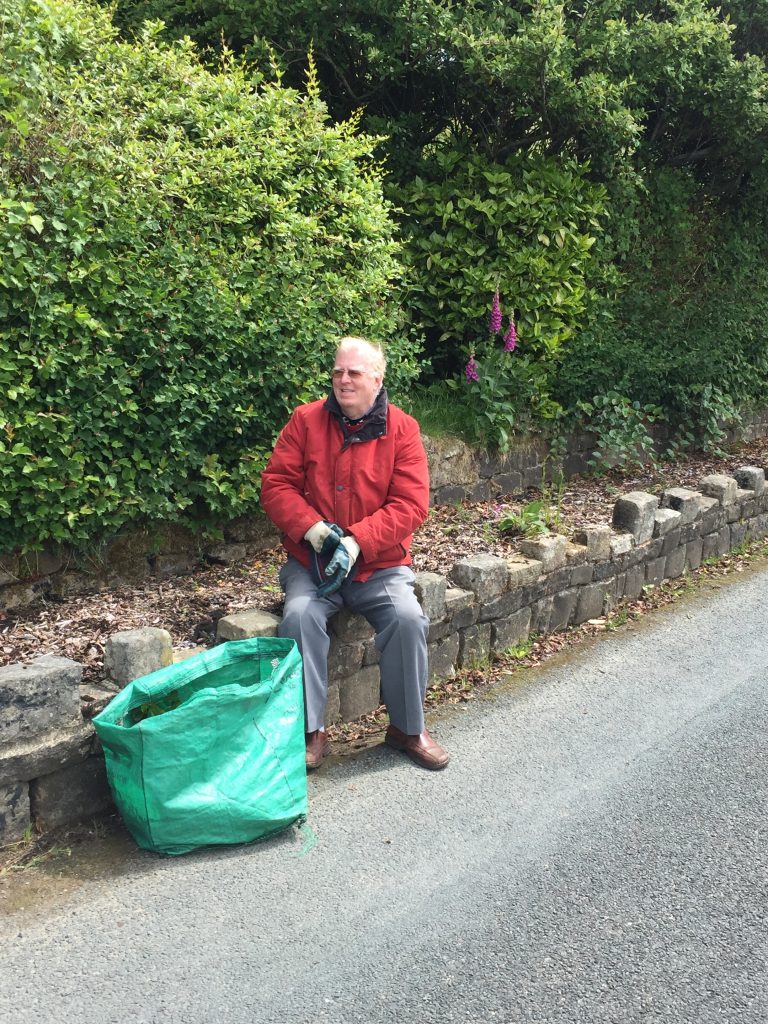
Current resident of Longtail

So today I went to find it. I knew that it is now a private residence and as I drew close to the building set above the road with a panoramic view of the Upper Colden valley I was delighted to see that one of the residents was doing some gardening by the roadside. We chatted and I learned that the building is now divided into three cottages. I told him of my mission and he recalled the story of a murder at Longtail beer house, but I’ve not been able to find any reference to this yet.

Lots of construction at Longtail

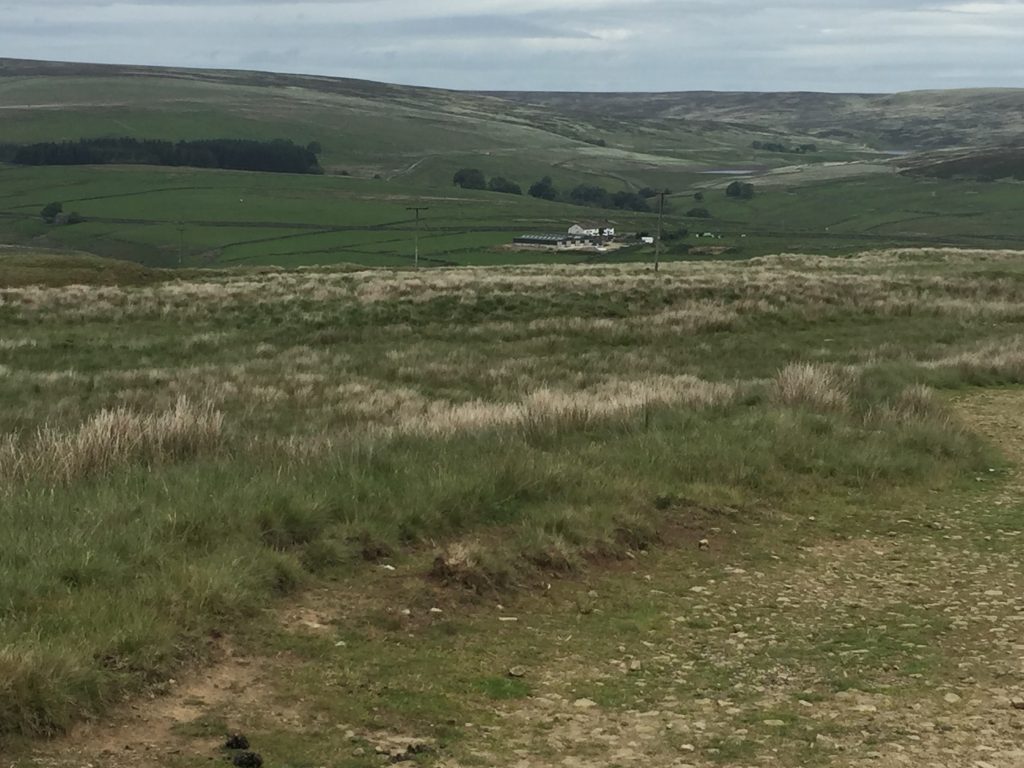
I carried on along the lane, passing Spink House where my ancestor John Sunderland lived, and the former workhouse and soon I passed through the gate at the end of the car track and found myself on open moorland. There’s a grand view of Gorple reservoir and the three Walshaw Dean reservoirs.

Lonely Pack Horse Inn with the 3 Walshaw Dean reservoirs behind

The Pack Horse Inn was the only building in sight in any direction. I sat on a grassy bank to admire the view and as I did so I soon began to be the object of attention of several curlews who obviously wanted me out of the way. I was able to take a nice video of them swirling about my head, making a call just like a car alarm. For a minute two birds were calling in unison and I felt as though I was being treated to surround sound. I wondered if the track was made when the reservoirs were constructed or if it is an ancient track over the moors but my phone didn’t get any signal way out here so I couldn’t check the historic maps.  (I later found that there was some evidence of the track marked on the 1851 map). So I headed back along the stoney track passing some friendly sheep. I even caught a glimpse of an owl, sitting atop a gatepost, eying me suspiciously.

On the way up I’d called in at May’s farm shop which I hadn’t been in before. An elderly lady – May? – related the story of  her mother babysitting for a couple on a farm close by as a young teen and then the farmer killed his wife, but again, I can’t any reference to that in the local papers of the time. On my way back I called in at the shop and purchased a pasty to take home.

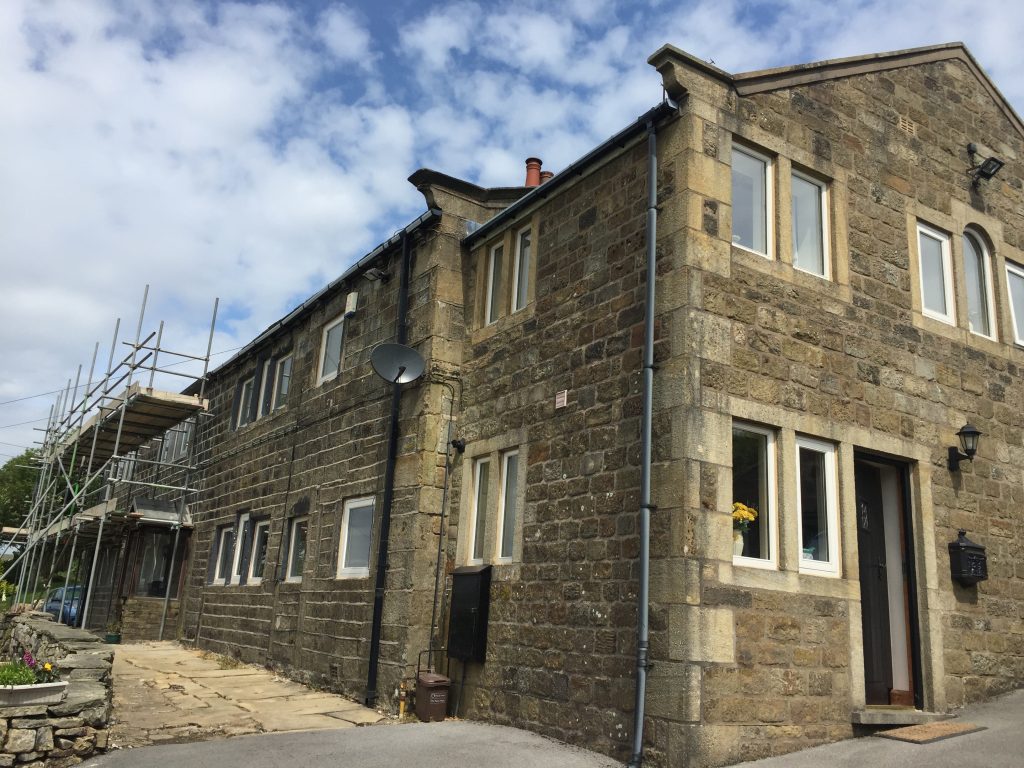
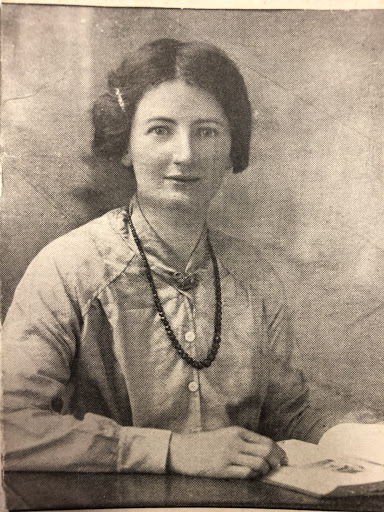
Digging up more information online later that day was I surprised to learn that Longtail had once been the residence of a lady who wrote Helen of Four Gates. Oo, that might be fun to read, I thought, especially if it’s set in this area. But before I could order the book online I found that it had been made into a silent movie in 1920, and that the author, Ethel Carnie Holdsworth, had been an important  working class social activist and feminist.

Ethel Carnie Holdsworth

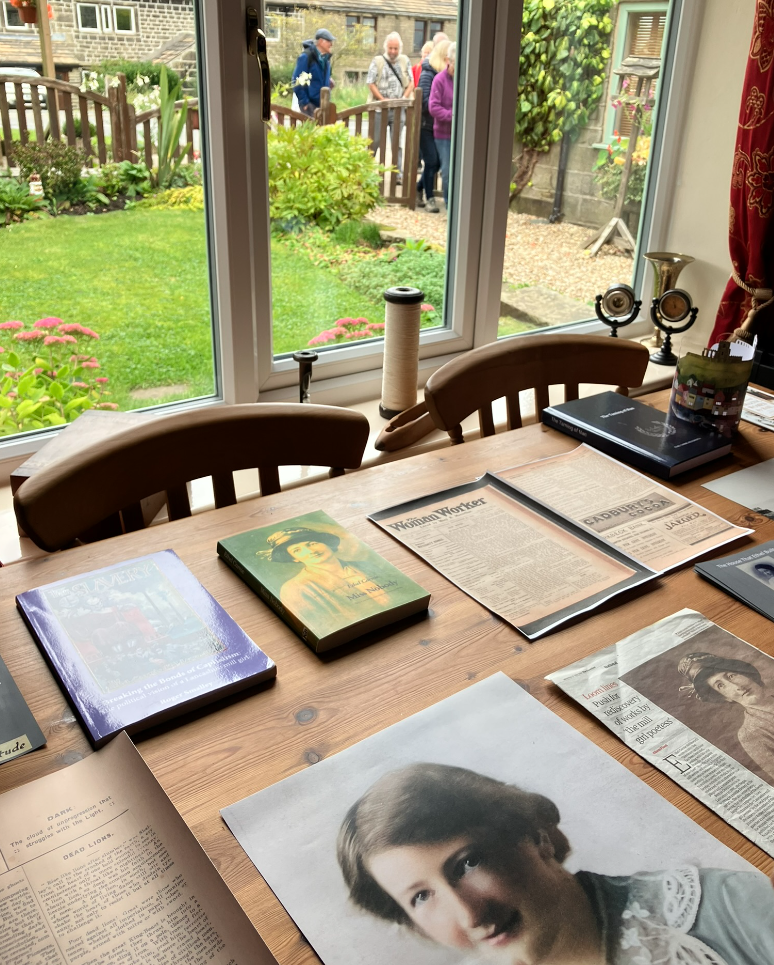
Her story had even been the subject of someone’s Phd thesis, available to read online.  Born in Lancashire, she began work at the cotton mill aged eleven as a part-timer, working full-time from the age of thirteen.  In an article for The Woman Worker (which she edited for six months in 1909) she described the factory worker as ‘practically a beggar and a slave’, declaring all workers ‘dependent on the whims of a master class.’ Her first publications were poems, collected in Rhymes from the Factory in 1907. Two further volumes followed: Songs of a Factory Girl (1911) and Voices of Womanhood (1914). All were produced under difficult circumstances – between serving customers at the draper’s shop her mother had taken in Little Harwood, between lectures at Owens College, Manchester, where she registered as a non-degree student from 1911 to 1913, and between the creative writing classes she taught at Bebel House in 1913 and 1914. What a coincidence that my daughter attended Owens College at Manchester Uni too! She lived at Longtail from 1919-1921.

But the story doesn’t stop there. The director of the film was Cecil Hepworth one of the founding pioneers of the British film industry. He created the first film adaptation of Alice in Wonderland. By 1910, Hepworth was also the inventor of Vivaphone, an early sound on disk system for adding sound to motion pictures and he was one of the first people to recognize the value of film stars, both human and animal. His Rescued by Rover, 1905 had a collie dog in the title role and was a huge financial success.  Following the international success in 1919 of Alf’s Button Hepworth’s company went public but failed to raise the necessary capital and the company went bankrupt. All of the original film negatives in Hepworth’s possession were melted down by the receiver in order to sell the silver, and his feature films have been considered lost for many decades. However, an original 35mm. print of his 1920 film Helen of Four Gates  was located in a film archive in Montreal, Canada in 2008 by film maker Nick Wilding. Back in 1920, cinema-goers packed into the Co-op Hall in Hebden Bridge, eager to see a new film; a harrowing, heart-rending story shot in the countryside around their town. After a little detective work, Nick discovered it was Ethel Carnie Holdsworth who persuaded Cecil Hepworth to use Hebden Bridge as a location. There are scenes of the countryside around the town, including the beauty spot of Lumb Falls.

“She took Hepworth up the moor,” says Nick. “He writes in his autobiography about being taken there. He had a good look around and decided where he was going to film.” In June 2010 the film, with live music as was originally intended was shown at the Hebden bridge Picture House, directly across the road from where I write, as part of the town’s celebration of the 500th anniversary of the town’s pack horse bridge – it’s first public showing in 90 years. So, my story both begins and ends with a Pack Horse!

On September 16, 2023 I attended the unveiling of a Blue Plaque commemorating the hoouse at Slack Bottom where Ethel had lived after she sold Longtail. The entire movie is available to watch: https://player.bfi.org.uk/free/film/watch-helen-of-four-gates-1920-online

Someone has also a 4 minute movie about her life

All were produced under difficult circumstances – between serving customers at the draper’s shop her mother had taken in Little Harwood, between lectures at Owens College, Manchester, where she registered as a non-degree student from 1911 to 1913, and between the creative writing classes she taught at Bebel House in 1913 and 1914. She lived at Longtail 1919-1921.

HORRID MURDER, WADSWORTH

Greave Murder

The remote farm of Greave was the scene of a murder in 1827 that made headlines in newspapers all across the country. A policeman was even sent from London to  solve the gruesome crime. The most comprehensive account of the ‘horrid murder’ was in the Manchester Mercury, June 5, 1827. The details give both a detailed description of the character of the victim and conjures up the remoteness of Greave, the farm where the murder took place.  The farming community of Greave which comprised 2, possibly 3 farmsteads has been in the possession  my Shackleton ancestors since 1790 that I can trace directly, but there were  Shackletons living there four centuries ago.  A  1604 survey of the Savile estate lists 26 farmsteads in Wadsworth, 14 of which were owned by Shackletons and the document specifically mentions 2 at Good Greave. A detailed website belonging to John Shackleton documents the story of the Shackletons of Widdop, putting them into their historic context. John has been helpful in my quest to discover more about my Shackleton ancestry. How does this tie in with my family tree? Well, Gibson Butterworth married Isabella (nee Wolfenden) following the death of her first husband Thomas Shackleton(1842-1890), one of the Shackleton dynasty. Isabella had been living with her parents John and Hannah Wolfenden in one of the Greave farms and so, after her marriage, at the age of 16, she moved in with ‘the man next door’ – to another of the Greave farms.

HORRID MURDER, WADSWORTH, NEAR COLNE. In one of the wildest and most sequestered spots in Yorkshire, distance about 13 miles from Halifax and 7 from Colne, and within 2  or 3 miles  of the Lancashire border in a district celebrated for majestic scenery. In this nook of  the country, a place called Good Greave in the township of Wadsworth, is situated; the former is the scene of this horrid crime; it consists of only four houses, two them separated from the rest  by a distance of about a quarter of a mile and the nearest them within a mile of  the Halifax and Colne road. Stretching towards Colne, Haworth, or to Blackstone-edge in different directions, the  township of Wadsworth consists of  heaths and the deep ravines running between them. Nearly the foot of steep aclivity, and within short distance of one of the gullies which carry off the waters from the mountains lived James Shackleton, an old man in the 7lst year of his age. In the dwelling where his existence was at last prematurely terminated, he first drew breath; that and the surrounding acres, were his paternal estate, and by  careful habits and moderate desires, he had rendered himself a man of considerable substance. Satisfied with much less of the good things of this life than he had the ability to purchase, in what he did enjoy a brother and sister, also advanced in years, but younger than himself, participated; the three having chose a  life of celibacy, they were restricted so far as regards family and social intercourse, to themselves, except, indeed, their nephew, residing just at hand, who had a wife and  three children.

On the night of Wednesday the 23rd ult. about half past nine o’clock in the evening, the unfortunate victim, James Shackleton and and a man named Richard Smith, an aged house-carpenter dwelling in the house until had completed a few jobs, were sitting over a cheerful fire of peat, waiting the return of Thomas Shackleton, the old man’s brother, who had gone a short distance from home, on some business, relative  to the formation of a new road. The sister Mary Shackleton  had gone to  bed, when six men entered the house, armed with bludgeons, and one of them, going up  to James Shackleton, said “he wanted to  purchase a cow.” This excited some astonishment in the old man, who replied that “that was a very odd time to come on such a business.”  A demand instantly followed for his money, with which the old man hesitating to comply, the carpenter, Smith, said, “James, if you have any money, pray give it them.” Two cur-dogs in the house barked most furiously at the villains who struck them with their bludgeons. James requested them to desist doing so, and he would quiet the dog. They, however, still continuing hark, one of the men, with a knife or some other sharp instrument, made a desperate blow at  the larger intending cut his throat, but he only made a deep incision in the  neck the animal. The men insisting immediate compliance, James rose from his seat, and proceeded to  a chest of drawers, from whence he  took out two purse*. These, the villains said, only contained copper, to which he answered that there was both gold and silver in them. They then told him that had £lO, in the house, which he had received for a cow that he had sold. This he denied, as, if the cow was sold, he had not yet received payment. The villains then struck the old man and the carpenter with bludgeons, but particularly the former, and demanded all he had, while some of the party took down two hams, and gun and pistol, which were hung up in the house. The carpenter, being alarmed for his own and his employer’s safety, got up and proceeded towards the door, to call the nephew, but was interrupted by two men at the doorway, armed with pistols, who declared that, if he stirred a step, they would blow his brains out. He then returned to the house, and the men were preparing to retreat, after the old man had surrendered his all. Fearing, from their ill treatment, that they would take his life, the old man had risen up, and gone towards the window, which had no open casement, and was calling for his nephew. From this circumstance, and the yelling of the wounded dog, it is probable a sudden fear seized the murderers. On their rather hastily retiring a voice was heard to exclaim “d–n  him, shoot him,” and one of them, armed with a  gun, seemed return to complete their crime, for on arriving at the end the passage, from whence he had a view of the man at the window, he levelled his piece, and shot him under the left shoulder blade, the shot penetrating through the body and coming out at the breast. He instantly  fell, covered with gore, and having been laid abed on the floor of the house, the purple flood continued to flow until life was extinct. This closed the unfortunate man’s life, within half hour after the occurrence. Medical aid was sought soon as any one dared to stir out, but found, it was in vain. The nephew, John Shackleton, first became alarmed hearing one of the dogs make an unusual noise (probablv when the wound was inflicted upon him) and laying down the pipe which he was smoking, he proceeded towards the house to inquire the cause. On approaching it, he saw a man standing in the passage, and supposing it to be his uncle Thomas who might have just returned home, shouted ‘ hallo’. To this no answer was returned. He then retraced his steps, and entered his own house; but not  satisfied with what he had seen, he returned immediately, after locking the door of his house, for his own family’s security. Having again sallied forth, the man in the passage ran at him, as he approached, and exclaimed “I’ll kill the devil,” inflicting, at the same time, a severe blow on one  of his shoulders. It was then that the nephew became sensible of the danger. When precipitately retreating,  he heard the cry of “d–n him, shoot him,” and instantly saw the flash of gun in the house. He ran to loose a bull dog which was tied up on his own premises, and while so engaged, the villains appear have left the house, for, on his again coming forth he heard nothing but a kind of murmuring noise, as if from the voices men, ascending the declivity, nearly at the foot of which the house was situated. The men were only about ten or fifteen minutes in the house, and on leaving it. went in a direction towards Haworth, over the moors, but this, no doubt, was a feint to elude detection.

Four days later in the Sheffield Examiner we read ‘The body of the unfortunate James Shackleton has been opened by a surgeon, who states that the wound was not inflicted by small shot, as was reported, since, in the course of his inquiry, he found two slugs, which had apparently been cut off from the handle of a spoon.” Someone was taken into custody but discharged and according to the obituary of James’s brother, Thomas, the murderers were never discovered.

Sixty years later the murder was still a hot topic in the local press and it was still on the lips of people in the community. The writer, one Tattersall Wilkinson,  obtained his information from “old Sally Walton” who eked out a living in a two storey cottage close to the road at the bottom of Widdop pass. “Witch and boggart tales she thoroughly believed—and many a happy hour has your humble servant passed by the turf fire side listening to the tales of yore told by the venerable dame.” According to Sally the area around Crimsworth Dean and Pecket Well was “infested with a gang of desperadoes – poachers and house breakers. Sally tells us more about the carpenter – Richard Smith known as “Old Dick o’ Whittams” who lived at “Th’ ing Hey” near Roggerham Gate. I find these names so priceless and so evocative of their time. Adding further fuel to the drama, the robbers who had ‘blackened faces,’ finding no ammunition for Shackleton’s  gun “in a most deliberate manner took a leaden spoon from off the table and cut it into slugs.” The oft-repeated story has caused a thrill of horror to pass through the mind of the listeners at many a winter’s fire-side, and although seventy years have passed away since the occurrence took place, many old people still live in the neighbourhood who remember the affair who give mysterious hints as to who were the actors in this fearful drama.

So how does this story relate to my ancestors? The murder victim was the great great uncle of Thomas Shackleton, the first husband of Isabella Wolfenden, who married Gibson Butterworth after Thomas died.

Stoneshey Gate

It was a Winnie the Pooh day, blustery, with a distinct promise of rain,  as I set off to visit Stonesheygate, on Widdop Road. It was apt that I wearing my new hat, which arrived yesterday, a birthday present from Rachel. Apparently it had been sitting in the post office for several weeks and last night Rachel had apologized for it being ‘unseasonable.’ However, as I braved the open moors on Widdop Road I could envisage similar winds battering the slopes of Mt Everest. My new beanie was from Peter Hilary’s new range of high end outdoor wear and this was a very special present from Rachel because  a couple of years ago Rachel had gone to Everest with Peter Hillary, the son of Sir Edmund!

I’m still on my pilgrimage to visit as many houses where my ancestors lived as I can during this crazy summer. I think I’m over the 100 mark at the moment, and all within either walking distance, or a 5 minute bus ride.

Stoneshey Gate

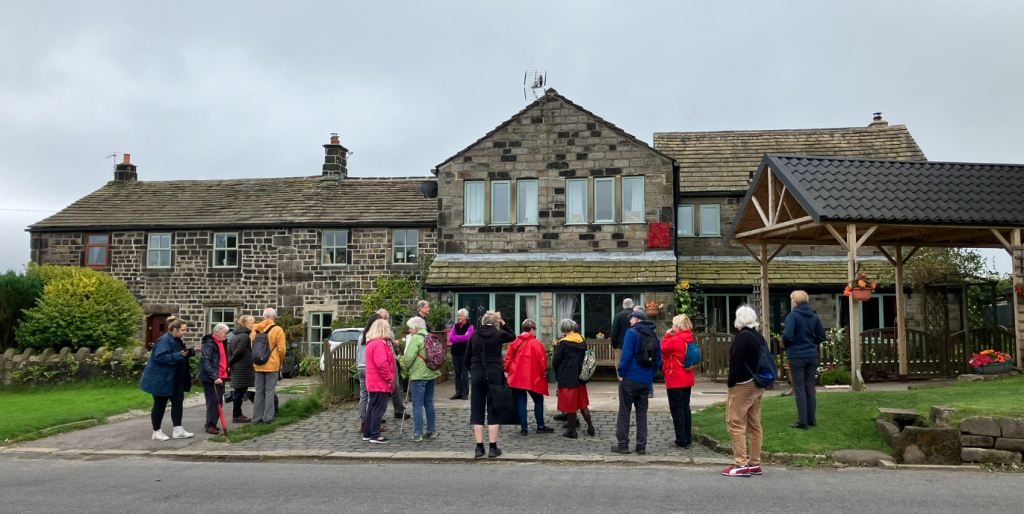
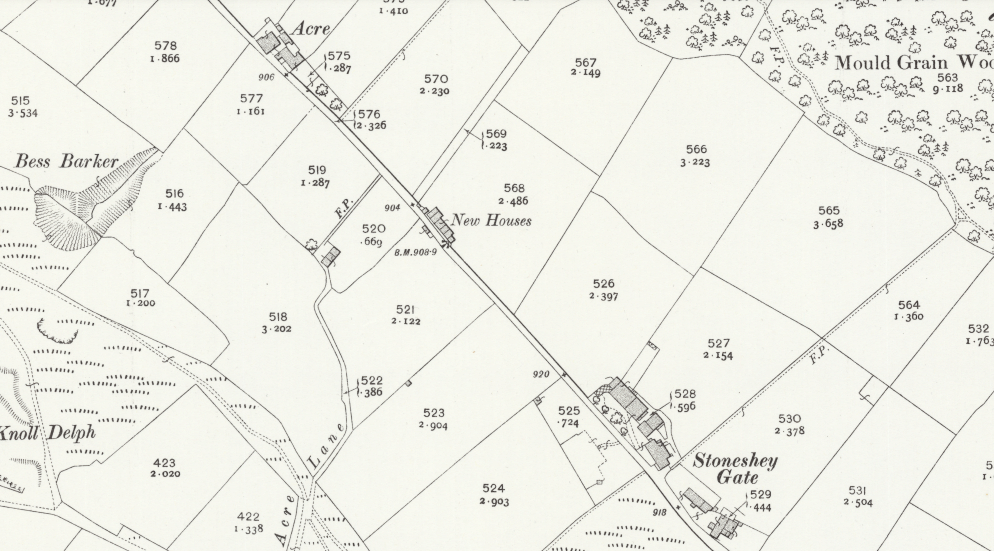
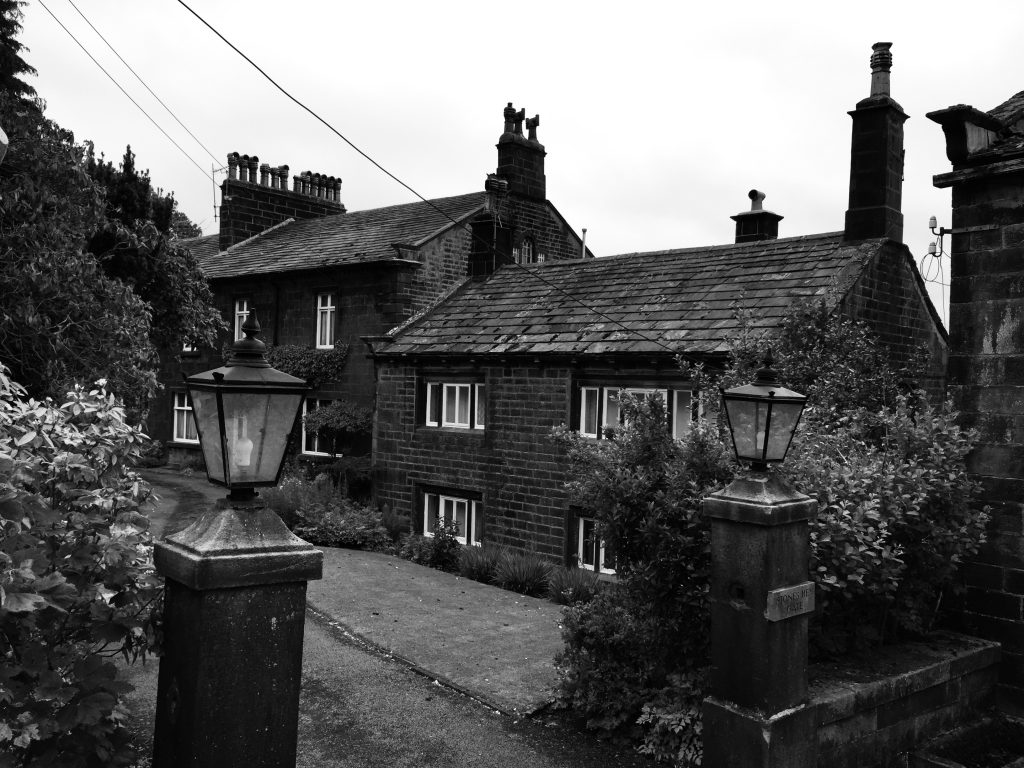
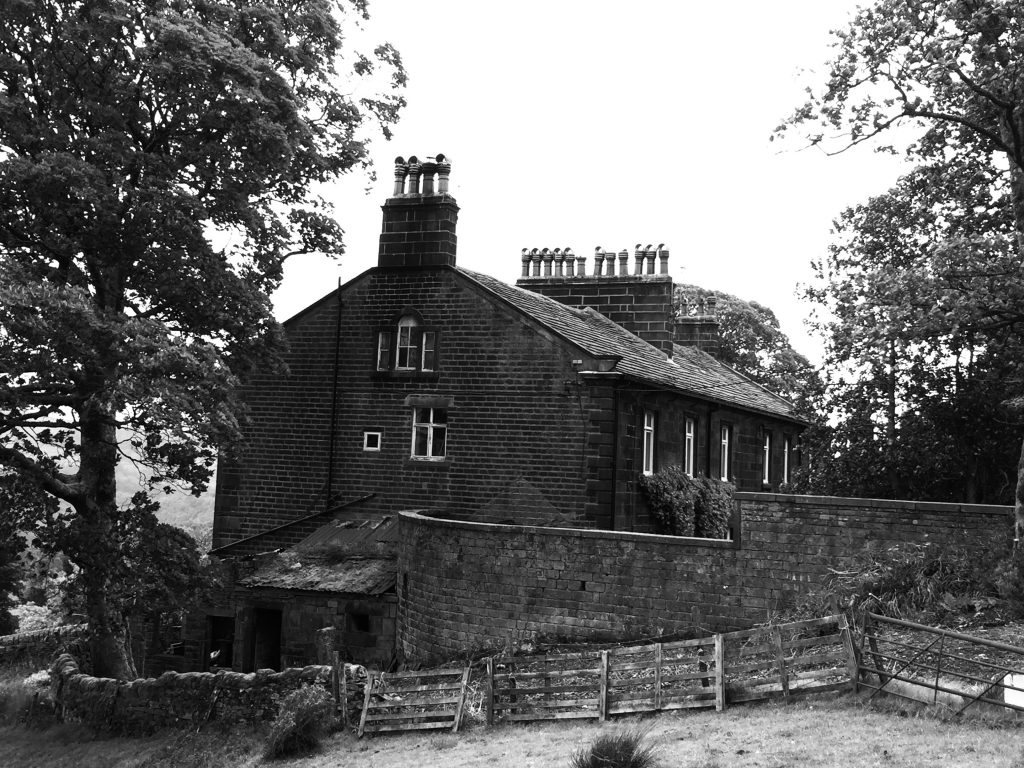
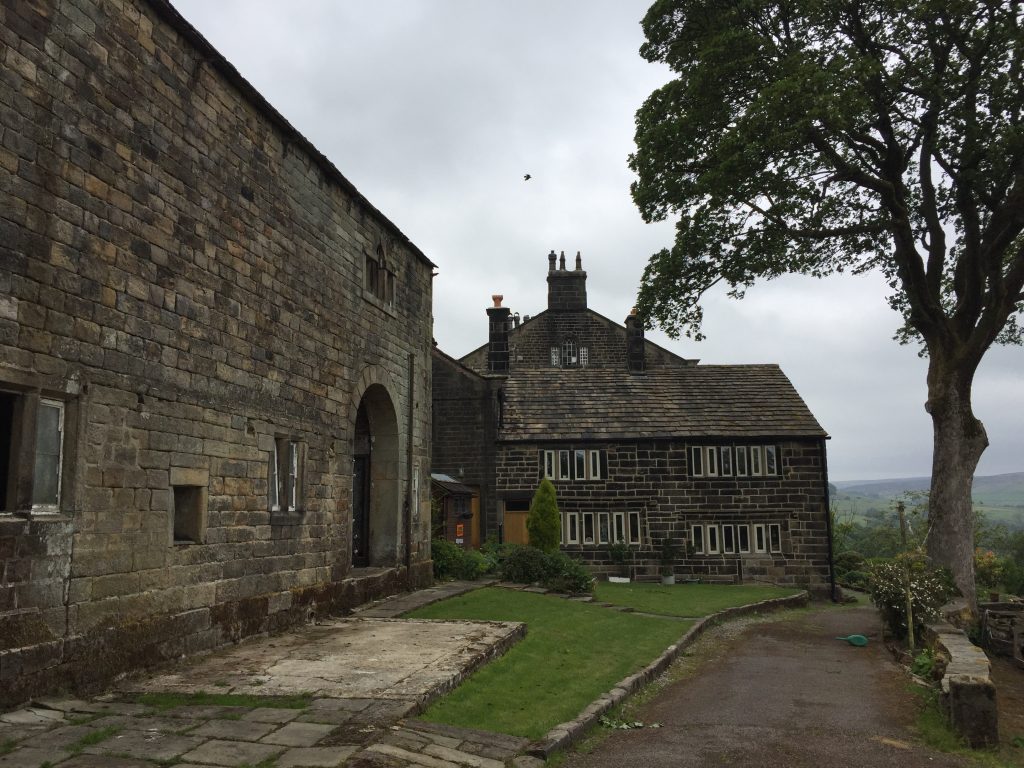
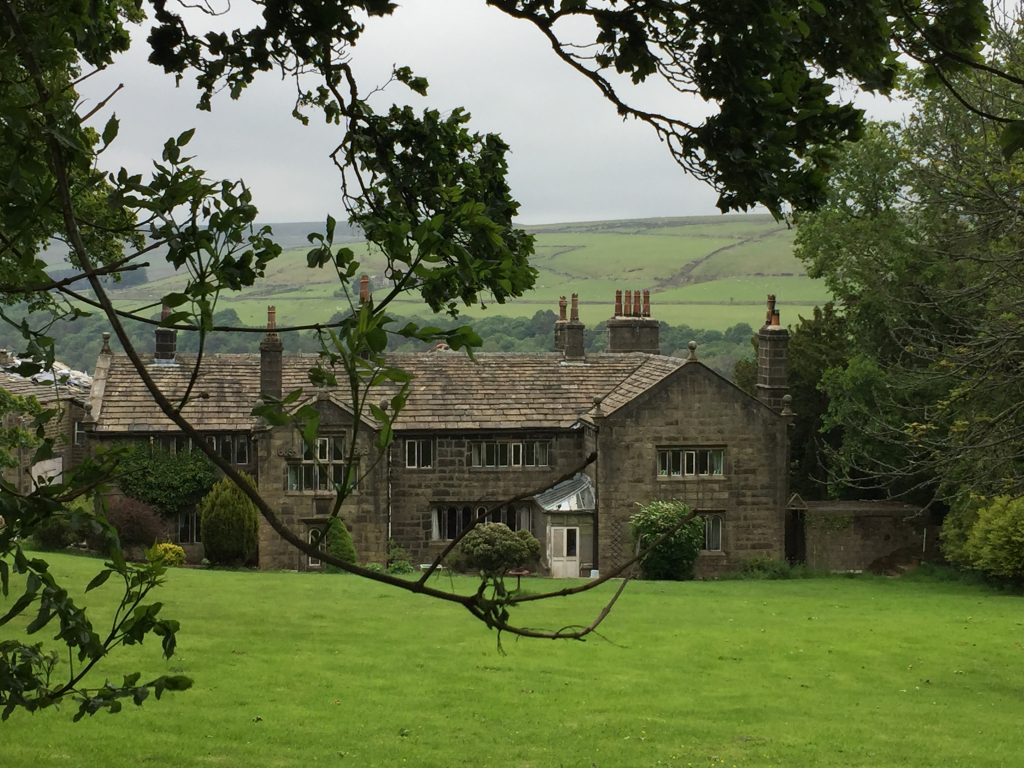
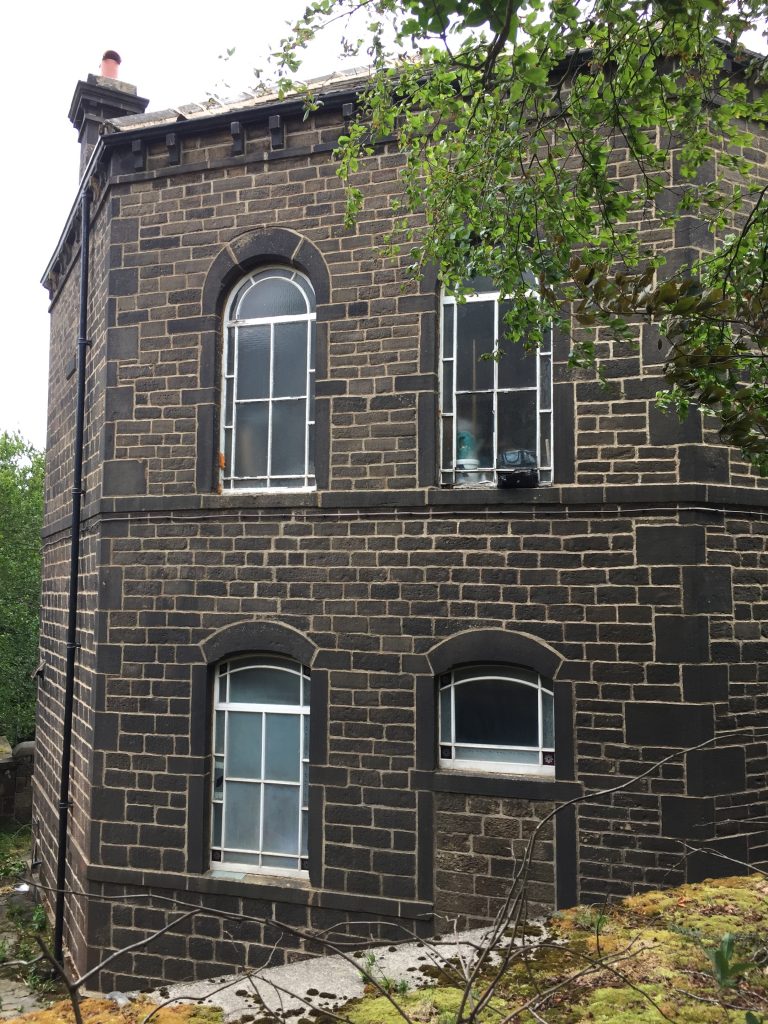
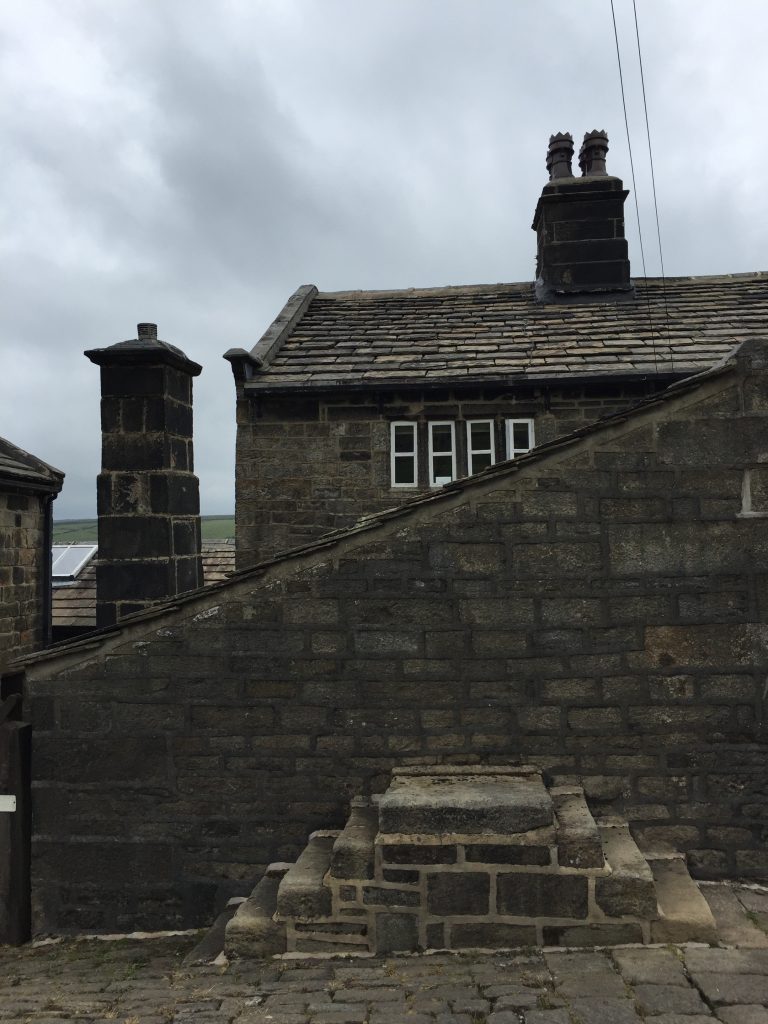
In 1891 John Sunderland,  1826-1903, was the 65 year old  head of one of 4 families living at Stoneshey Gate. He was the  great-grandfather of  the wife of my 3rd cousin 2x removed. (I’m so glad that Ancestry.com figures that out!). Only 5 minutes walk past Slack Baptist church (you can’t beat that name) I came to a collection of cottages marked Stoneshey Gate, adjacent to a very grand looking building which I late found out has a datestone of 1794 and is Grade ll listed building.

I

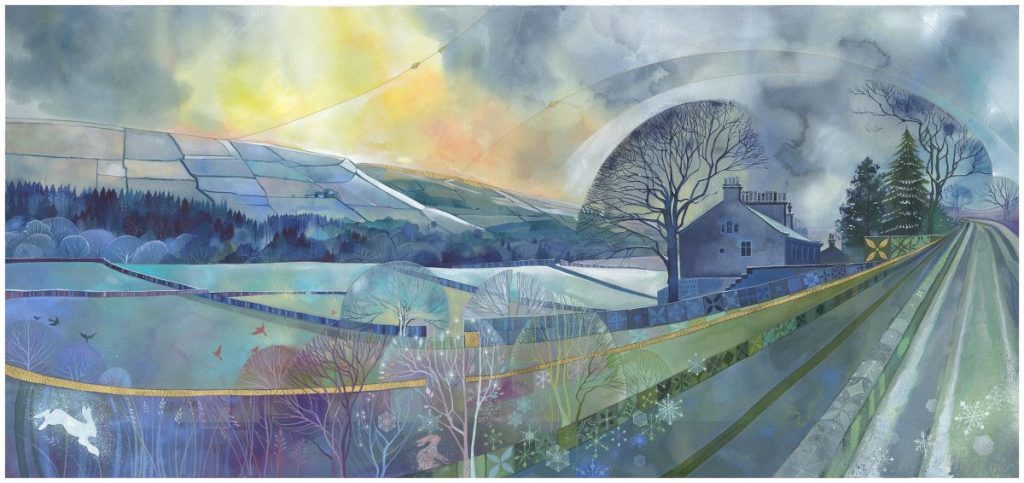
Kate Lycett’s painting of Stoneshey gate

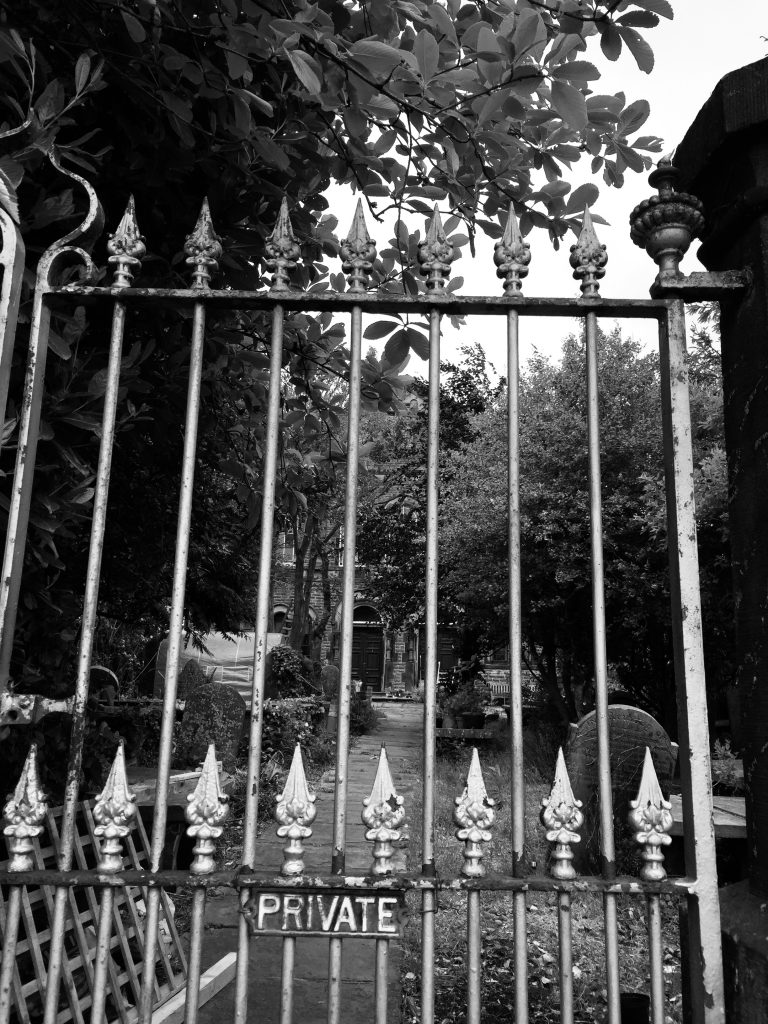
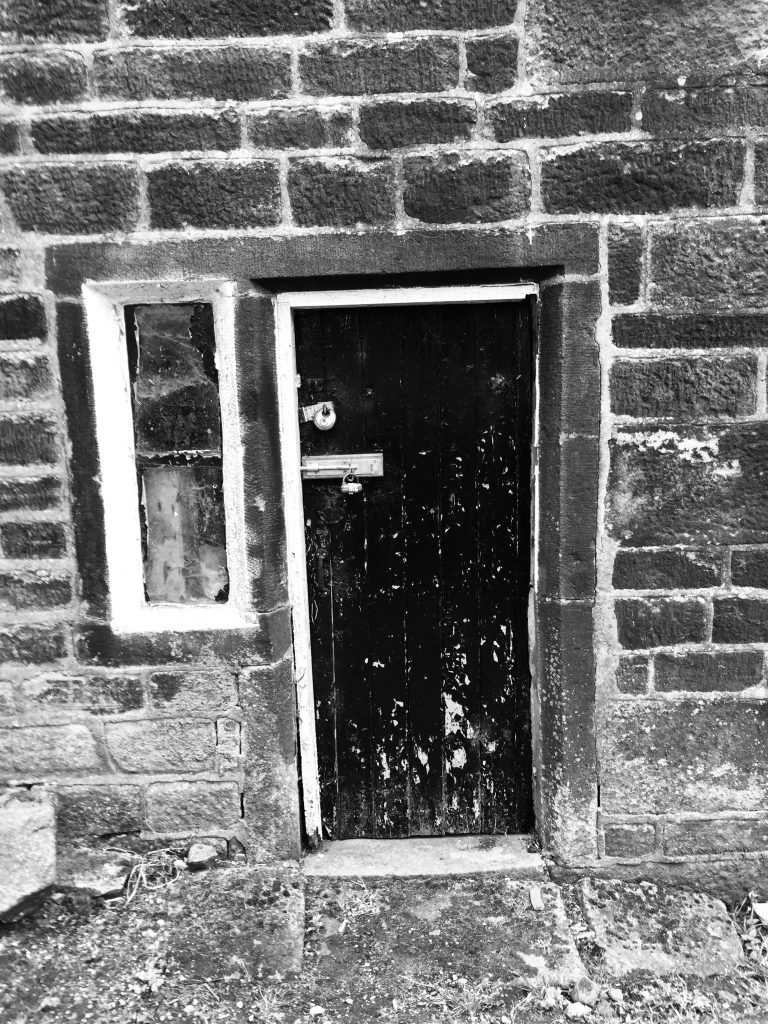
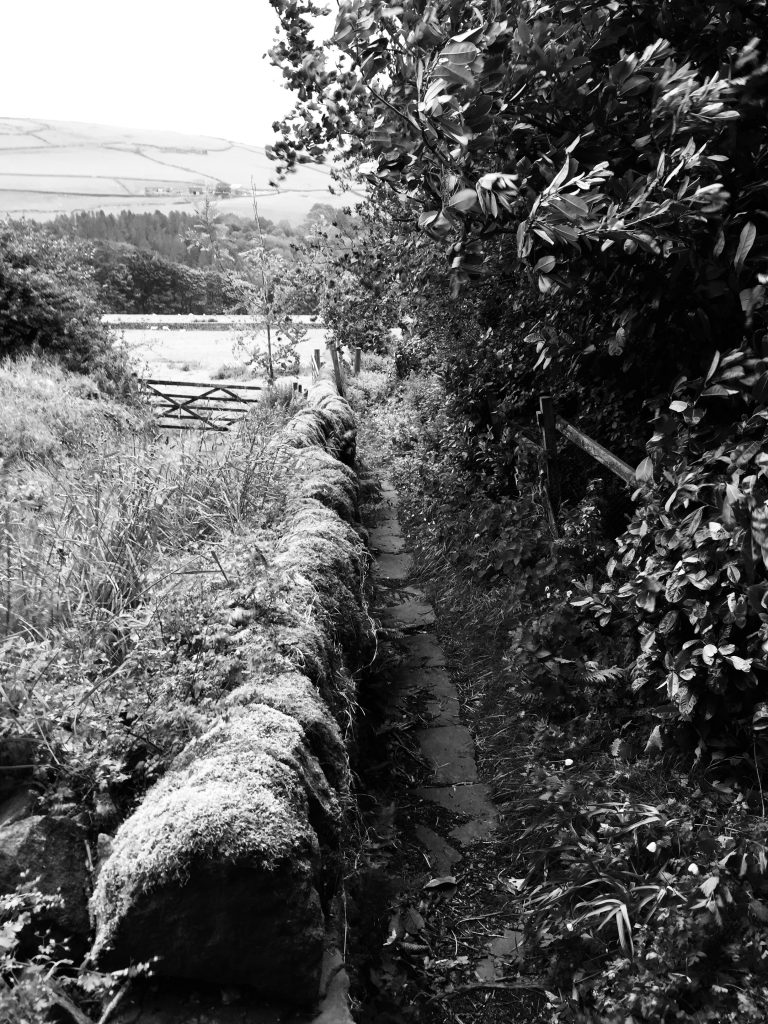
It wasn’t easy to get a good photo from the road since the house is screened by rhododendron bushes, today in full flower, though being severely battered by the wind gusts. But I spied a footpath sign that led to a very narrow stone paved track past the back of the building, appearing to disappear into shrubbery leading steeply down to Hardcastle Crags and from there I saw what an imposing building this is.

The side overlooking Hardcastle Crags

It’s perched on top of the ridge above the valley below where Abraham Gibson had built his mill, now THE local tourist destination. Abraham Gibson, who  had donated Gibson Mill to the National Trust, had lived at Greenwood Lee, just a few minutes’ walk from Stoneshey Gate and a couple of years ago I was given a grand tour of the building and grounds, complete with peacocks, because it was up for sale. Two years later it still is. See previous blog which caused the son of the current owner to contact me. http://blog.hmcreativelady.com/2018/03/05/my-story-of-greenwood-lee/#comment-1226

Greenwood Lee, once the home of Abraham Gibson

Indeed, I found a business connection between the two men:  19 December 1884 Between Abraham Gibson of Greenwood Lee (The Liquidator of the Colden Cotton and Commercial Co Ltd in voluntary liquidation) vendor and Gamaliel Sutcliffe of Stoneshay Gate cotton manufacturer, William Gibson of Stoneshay Gate cotton manufacturer, William Mitchell Sutcliffe of Heptonstall Grocer, purchasers – agreement on sale and purchase of the Company’s Estate and Effects. Recently burnt down mill called Jack Bridge Mill and the remains thereof with the Weaving Shed, Warehouse buildings cottages engine house engines boilers shafting mill gear and millwright work etc. Gameliel Sutcliffe married Susannah, daughter of Abraham Gibson of Greenwood Lee – virtually next door neighbours.

The view over the valley of Hardcastle Crags is fantastic and above the valley is Shackleton Hill, with the small hamlet of Shackleton barely managing to cling to its position halfway up the ‘mountain.’ Last month I climbed up to Shackleton and was rewarded  with views across to Slack and Widdop Road where I was now standing.

View across the valley to Stoneshey gate from Shackleton

According to the 1891 census Stoneshey was occupied by four households: two farmers, (one being my John Sunderland), a coachman and a widowed housekeeper. Yet on the electoral roll of 1894 both Gameliel Sutcliffe and John Sunderland are listed as living at Stoneshey, and qualify to vote as ‘Land and tenament’.

In 1891 John was 65, his wife Grace, 61 and his daughter Susannah, 32. By 1901 John is a widower, still living with his daughter but they have moved to ‘New Houses’ where John is listed as a retired farmer and his daughter Susannah, now 41, has been lured by the industrial age and is now a machinist in a fustian factory. I wonder where? New Houses is a small terrace set close to and beneath the road, with a row of outhouses across the street, some of which are numbered to show which cottage they belong to. No wonder people used potties for calls of nature in the middle of the night, especially in a raging storm.

Outhouses

A lady had just driven up to the cottages and was walking to her door. I explained my presence and they fact that I was taking photos but she hurried indoors. I didn’t realise until I got home that this terrace was originally called New Houses because the sign on the terrace today says Craggside.

New Houses

So what about John’s earlier life?  John had married Grace Crabtree in 1849 at Heptonstall church. At that time he was living at Hawdon Hole, where my friends Freda and Chris live and which I’ve had the good fortune to visit and see inside. He was an overlooker and the following year he was still an overlooker but is now living on Smithwell Lane which extends from the centre of Heptonstall towards Jack Bridge. Their son Abraham was born the following year, with Eliza, James and Susannah following in quick succession. James died at the age of 4. From 1861-1881 the family remained living on Smithwell Lane and John was a cotton throstle overlooker. This was someone who supervised the throstle doffers! Throstle doffers would removed the full bobbins from the cotton spinning machines and replace them with empty ones. What a contrast to become a farmer – even though Stonesheygate was no more than 10 minutes walk away. I wonder what prompted that decision. John died in 1903  at the grand old age, at that time, of 77 and he’s buried at Heptonstall church. His wife Grace had died 5 years before him. Two years after her father died Susannah married John Helliwell, a widower,  at the ripe old age of 47 – most unusual. John, a stone mason,  was living at New Houses at the time of his marriage and Susannah had moved to Acre farm.  They set up house together at New Houses, most likely in John’s  home and 1920 finds her at 5 Knowl top.  They are all buried at the Baptist cemetery at Slack.

Slack chapel

As I researched the buildings at Stoneshey Gate the following morning I came, quite by chance, upon a document that had been sent to me by James Moss last month. His father had spent years at Halifax library reading the Hebden Bridge Times and Halifax Courier picking out pertinent stories. James wrote, “We used to pull his leg that it was a perfect hobby, sitting in a library reading the newspaper. I suspect it can be done by electronic word search but then he went through it page by page. When I was working from Halifax Police Station I occasionally called in the Library and the staff remembered him as ‘the toffee man’ because he always had toffees with him and would always offer the staff one.”

Octagonal rear of the chapel. I could easily mistake this for Heptonstall Methodist chapel

One of these articles mentioned Stoneshey Gate as being the residence of Gameliel Sutcliffe, a man of some importance, so, of course, that set me off on a whole new direction and many more hours of ‘diggin.’  I knew that Sutcliffe was a very prolific name in the Heptonstall area. There’s a large area in the cemetery surrounded by an elaborate wrought iron fence containing many Sutcliffe tombstones, and I’d seen a few of ‘my’ family marry Sutcliffes but I’d never pursued that link of research because I knew that it would be too overwhelming and confusing. But in Stoneshey gate I have not a family member, but a Sutcliffe who was living at the property at the same time as John Sunderland. If the date stone on the building is correct, sometimes they can be marking a rebuild or an extension, the property appears to have been built for Gamwell Sutcliffe 1718-1803 since he was born at Lee, Heptonstall and his family moved to Stoneshey Gate. He was obviously a man of some substance for he is recorded as overseer of the poor in Heptonstall, a person who responsible for the relief of poor people in the township. He also is recorded as having occupied Rooms 20 and 21 in the Colonnade gallery of the Piece hall in Halifax in 1787 one of 320 people listed in the newly built cloth hall which had opened 8 years previously. His son,  Gamaliel, 1750-1840, lived at Stoneshey Gate and is listed as a stuff manufacturer. On the Power in the Landscape website I found the following: 1789 DRAFT BOND OF INDEMNITY dated 30th September 1789 – Robert Thomas of Blackshaw Royd in Stansfield, p. Halifax gentleman only surviving brother and heir of Richard Thomas, late of same, gentleman deceased who died intestate) to Gamwell Sutcliffe of Heptonstall p. Halifax, gentleman.
The said Gamwell Sutcliffe has contracted to buy a messuage with buildings closes etc. called Stoneshay Gate within Heptonstall for the sum of £700 now in occupation of said Gamwell Sutcliffe.
And whereas John Thomas the eldest brother of said Richard Thomas went abroad, beyond seas (as supposed) about 40 years ago and hath never since been heard of but no certain proof can be found of his death. Hebden Bridge Lit Sci Society.

On your horse!

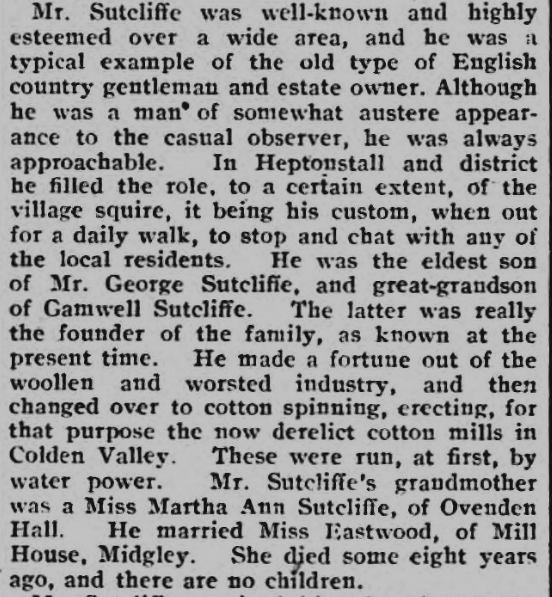
He made his will in 1803 and is buried at Heptonstall Church in the old church in the nave. Gamaliel, 1750-1840 was member of a committee supporting those affected by the Luddites. On Wednesday, 12th May 1813, James Knight, Constable of Halifax, chaired a Meeting of a numerous and highly respectable Public Meeting of Inhabitants of the Town and Parish of Halifax, called by the Constables of Halifax, to take into Consideration the Services of those Gentleman who so meritoriously exerted themselves during the late Luddite disturbances in the West Riding of the County of York, at the White Lion Inn Halifax. In the early 1790s he built Bob Mill, Lower Colden and in 1800 he built the two Lumb Mills. Another member of the family confusing also called Gameliel Sutcliffe (!), the son of George Sutcliffe had owned Brearley Hall in 1920 and had travelled to Australia and America and wrote journals of his travels. It was THIS Gamaliel Sutcliffe that James Moss’s father had mentioned in his articles from Halifax library.

Lumb Mill on Hudson Mill Road

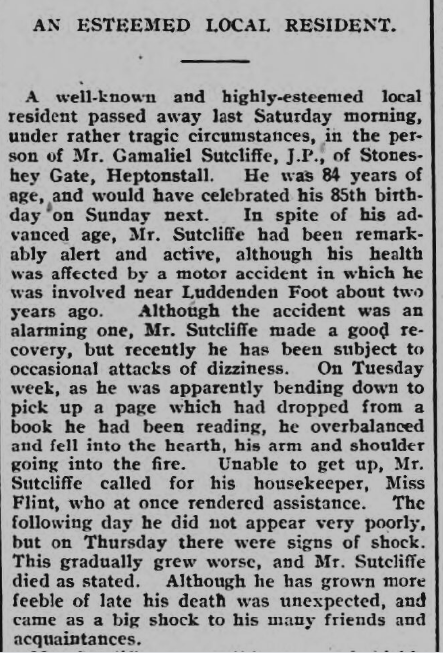
In 1927 another Gamaliel Sutcliffe of Stonesheygate died in the house in unfortunate circumstances. A two column article in the newspaper detailed his death, his standing in the community and lists the mourners at his funeral. He had been a Justice of the Peace for 40 years,a supporter and regular attender at Heptonstall church and it was he that had donated the land which is now name the ‘new’ cemetery, and paid for its enclosure by a “substantial stone fence and massive gates at considerable cost. He was always ‘good company’ with his numerous reminiscences of his travels abroad.” Apparently he wrote a journal of his travels, even venturing as far as Australia but I haven’t located it – yet.

Another interesting reference to Stoneshey gate was its connection with John Wesley, the founder of the Methodists.  On 24th May (which just happens to be my birthday)  1738, he experienced a religious awakening – which he referred to as feeling his heart strangely warmed – and which profoundly changed his life. His brother, Charles, had experienced the same spiritual conversion just 3 days earlier. In 1747, he visited the Upper Calder Valley for the first time at the request of William Darney. He preached at Stoneshey Gate on  5th May 1747,  The crowd were gathered in the yard at the house and others sat on a wall. During the sermon, the wall collapsed and all fell down at once. The people just sat where they fell and continued to listen to Wesley’s sermon. In 1764 the Heptonstall methodist chapel opened constructed to an octagonal plan that Wesley himself had suggested.  The first octagon was Norwich in 1757, followed by Rotherham in 1761, Whitby in 1762 and Heptonstall in 1764. Wesley said: “All our houses should be of this shape if the ground allow.”
Local historians Chapman and Turner later wrote: “Wesley had obviously been impressed by the roof at the Rotherham Octagon, he had the same man construct the roof in Heptonstall. The sections were brought by the most direct, though hazardous, road over Mount Skip, the people meeting the procession of pack horses and singing hymns of joy. Men and women laboured with their hands to build the chapel with the most primitive of tools.”

Kate Lycett, a wonderful artist who currently lives in a building in the centre of Hebden Bridge that once was the Bull Inn where my ancestor, Joshua Gibson was landlord, has done a painting of Stoneshey Gate showing its view overlooking the valley of Hardcastle Crags.

And just think . .  . 24 hours ago all I knew of the place was an entry on my excel spreadsheet with  name Stoneshey Gate and the name of a distant ancestor who had lived there  on the census map of  1891. Unfortunately – or perhaps fortunately, I currently have 235 dwellings on that spreadsheet!!! Over 200 are within walking distance or a 10 minute bus ride.

« Older posts Newer posts »