Author: hmcreativelady (Page 15 of 48)

A morning in Winters

Winters

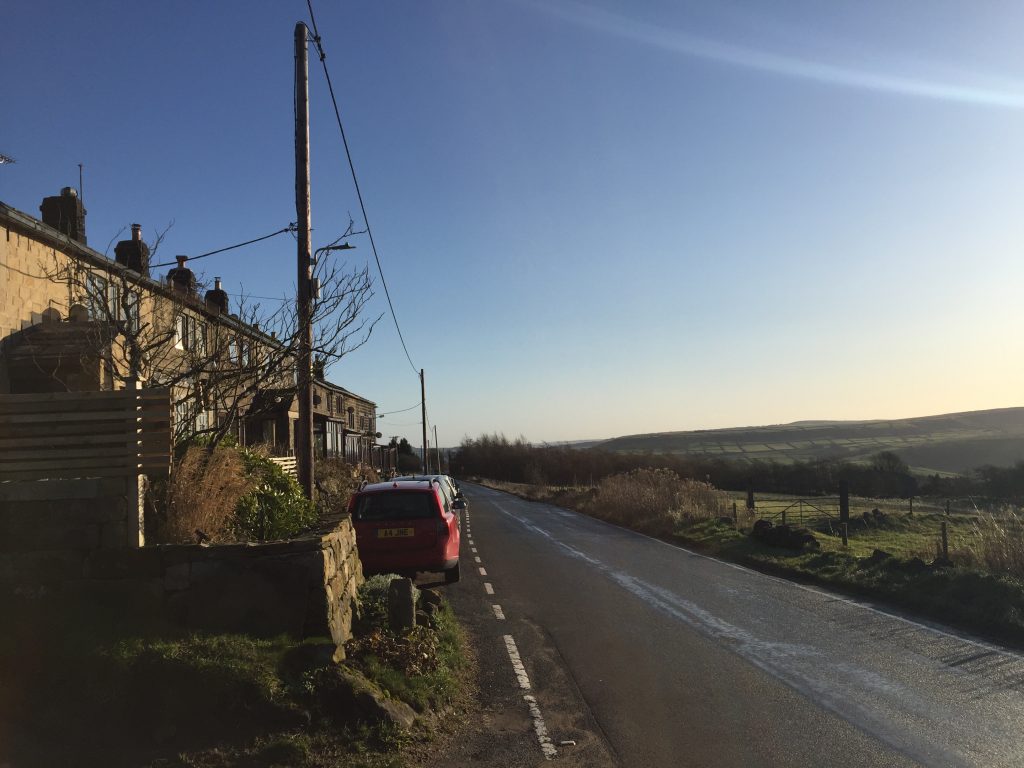
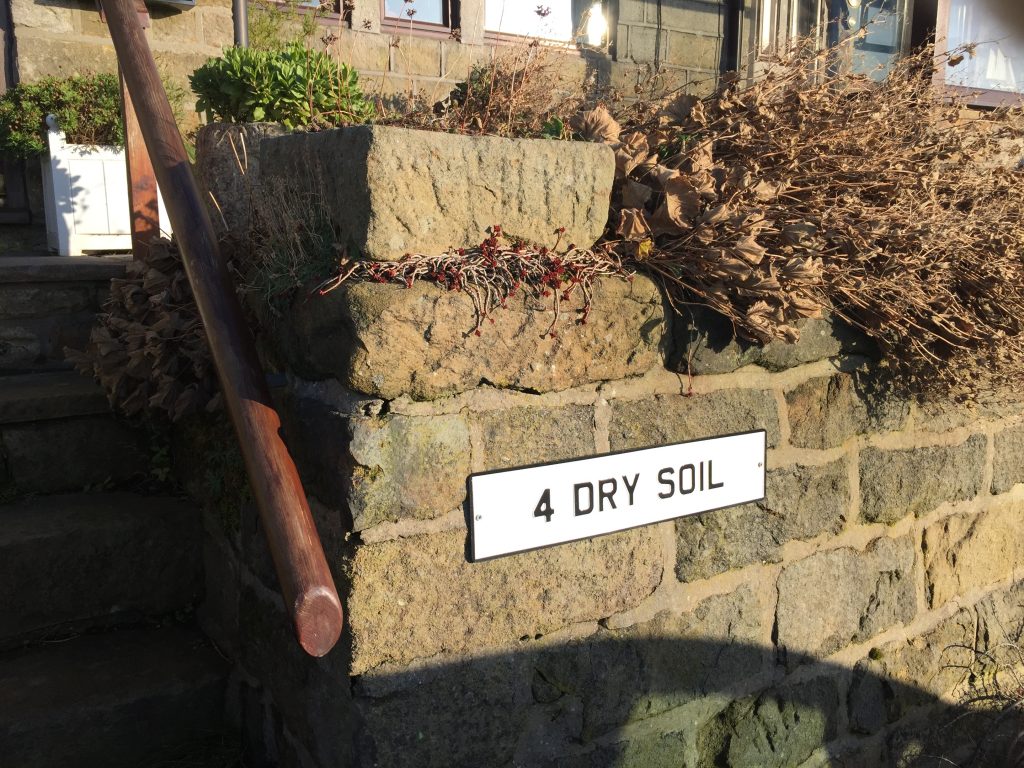
A week ago I hadn’t even heard of Winters. I was coming to the end of tracking the homes of the Gibsons and had become intrigued by a strain of Gibsons who kept pubs in my local area, not always successfully, and some with tragic consequences, but I thought this would be a good research project for the dark winter evenings. When I came upon the fact that one pub was located in the appropriately named Winters – well, that was a no brainer. So the first day that the weather was reasonable enough to tramp over the moors I set off to find Winters. I’d discovered a Winter’s Lane  perched high up on the hillside just below Badger Lane in Blackshaw so I caught the bus to Blackshaw Head. Other places that I’d listed as residences of the Gibson family were on my list too. I knew that I’d previously taken photos of a row of old cottages called Dry Soil just because the name amused me – and now I’d found out that a Gibson relative had lived there: John Gibson  in 1881.
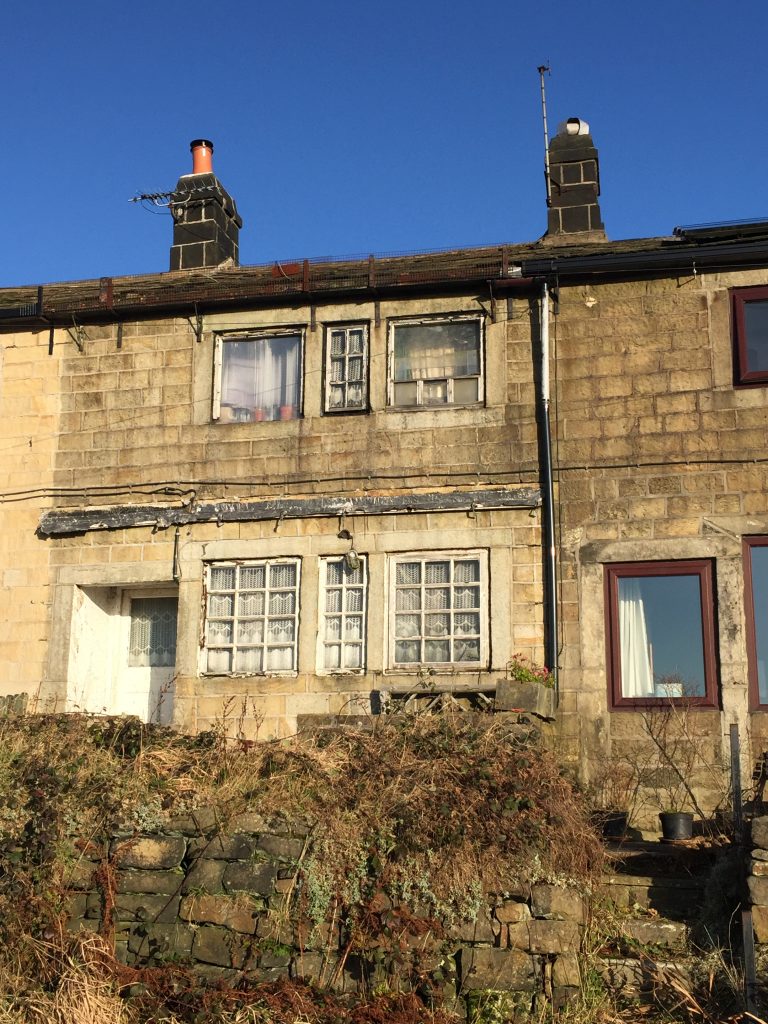


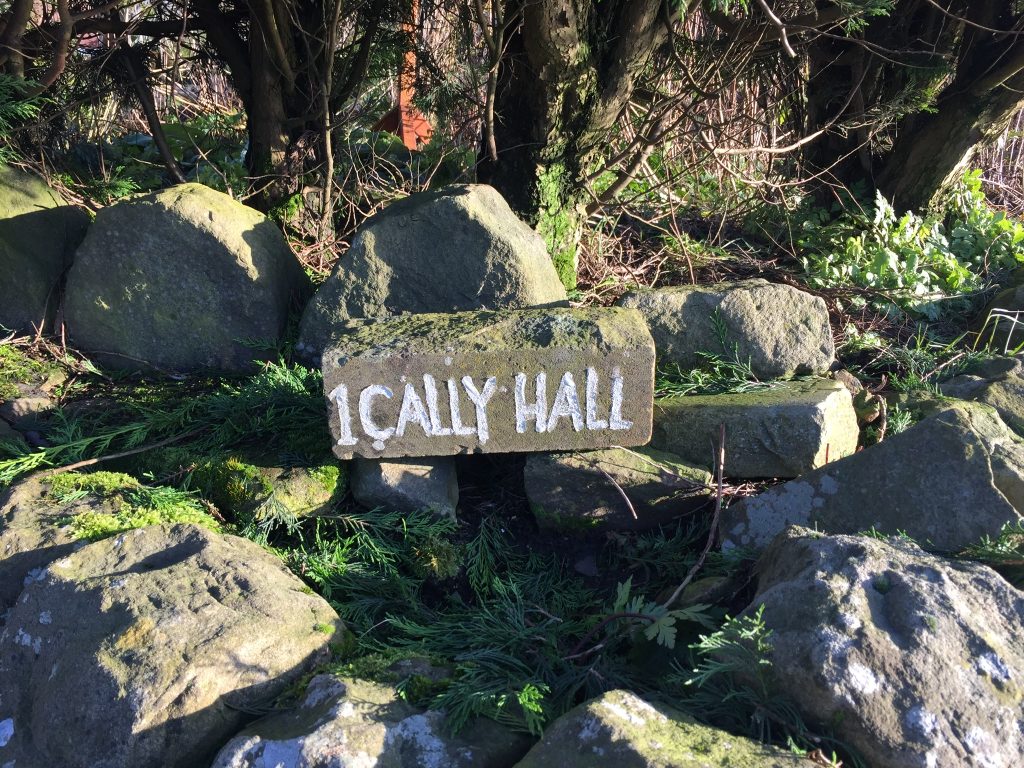
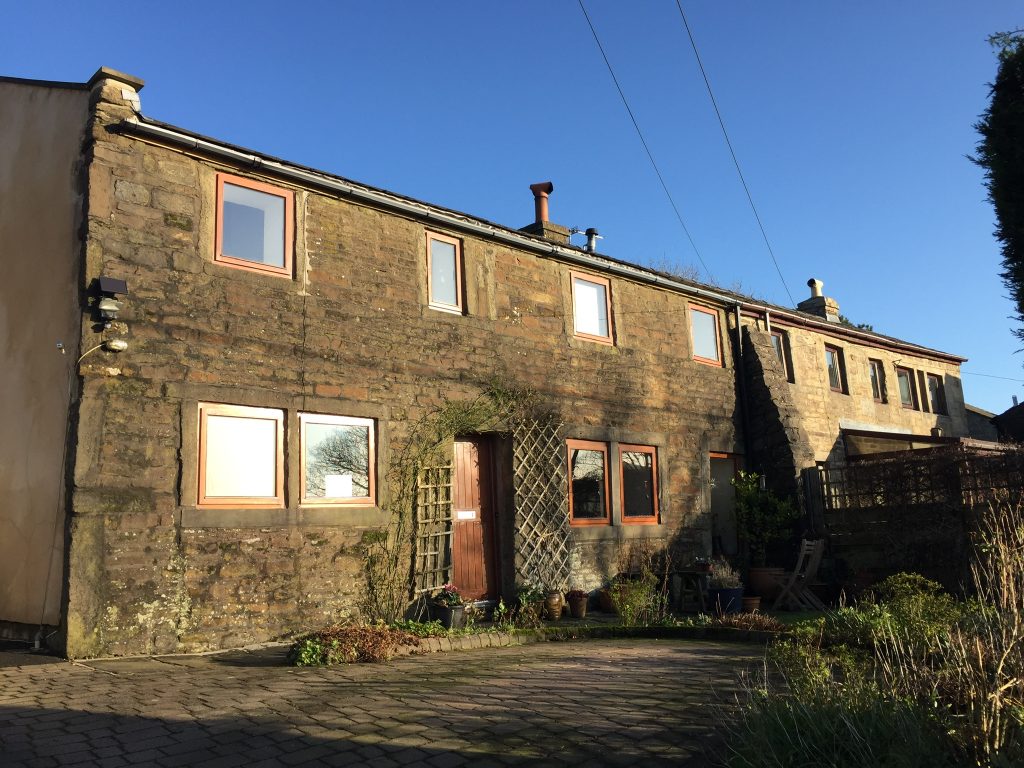
He’d also lived in Cally Hall (1871 census) which was another group of cottages on Badger Lane close by. I’d taken a photo of those picturesque cottages too with their amazing view over the Calder Valley, and I remember finding out that the name Cally had come from Calico cloth. So I stopped to take another photo now that I knew John Gibson had lived there in 1871 and had died there in 1887. (He’d also lived at Underbank at the bottom of the hill in 1861, but that was for another day).
Todmorden Advertiser and Hebden Bridge Newsletter – 15 April 1887

I’d taken a copy of an 1861 map with me and a current ordinance survey map and I knew I was turn off Badger Lane at Marsh Lane. I found what I thought was the correct lane – a a well-used Bridle path but there was no road sign. A man was just turning into it with no hesitation and so I called out,

“Is that Marsh Lane?’

“Yes.”

I crossed over.

“Do you mind if I join you for a little while I’m looking for Winter’s Mill.’’

He knew the place and so we followed the well-marked bridle path down. He was from Colne and had left his car on Badger Lane, was hiking down to Hebden for coffee, and then would take the bus back up to the car.

“I’ve always wanted to move to Hebden but my wife finds it depressing,” 

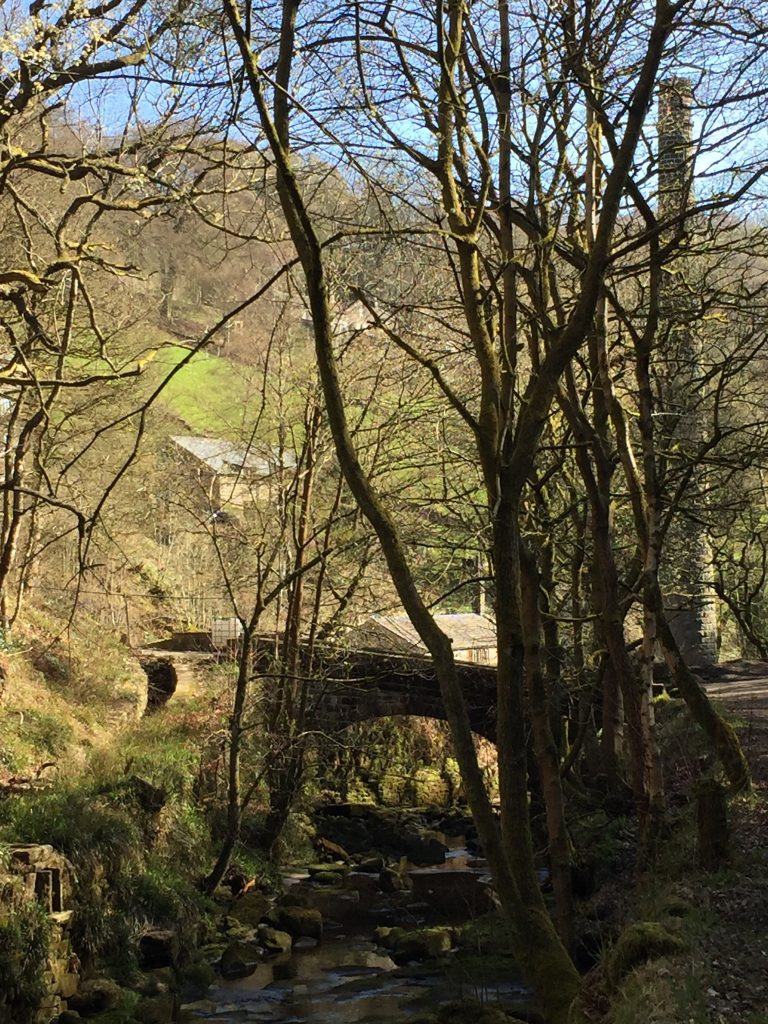
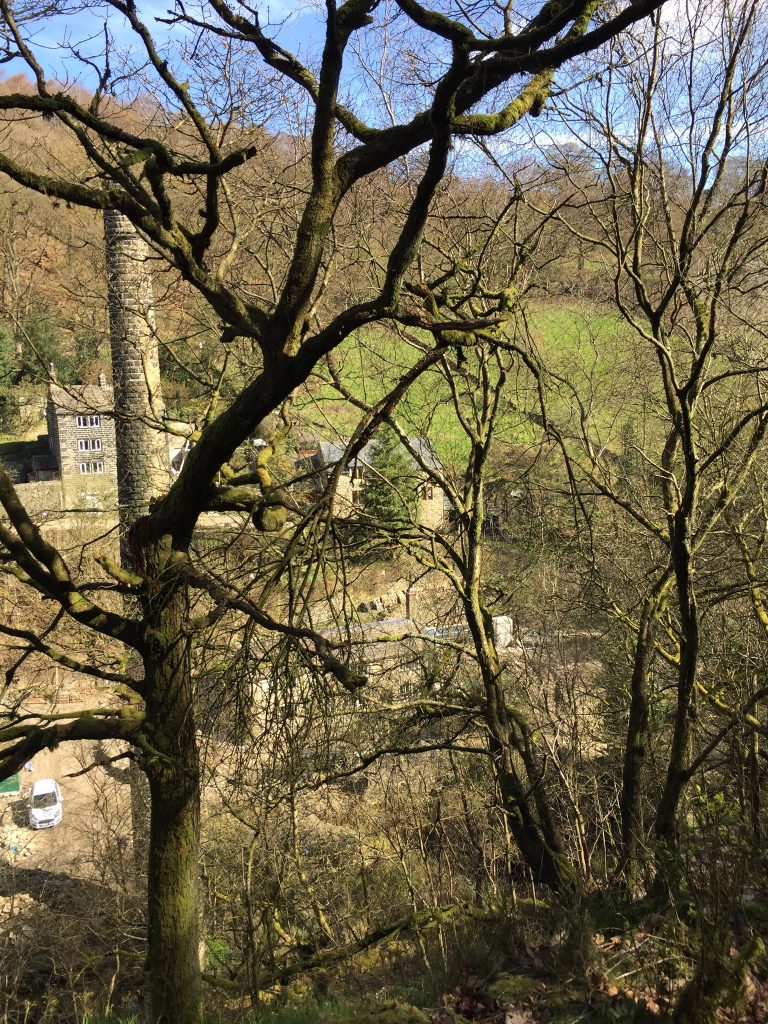
I was looking for a mill pond where water would have been stored and used to keep the machinery at mill moving at dry times of the year. It was the pond’s presence on the map which had alerted me to the mill site because there’s nothing remaining of the mill today. The row of cottages marked on my 1861 map came into view and my hiking buddy mentioned that the old mill pond is now a garden at the back of the cottages.
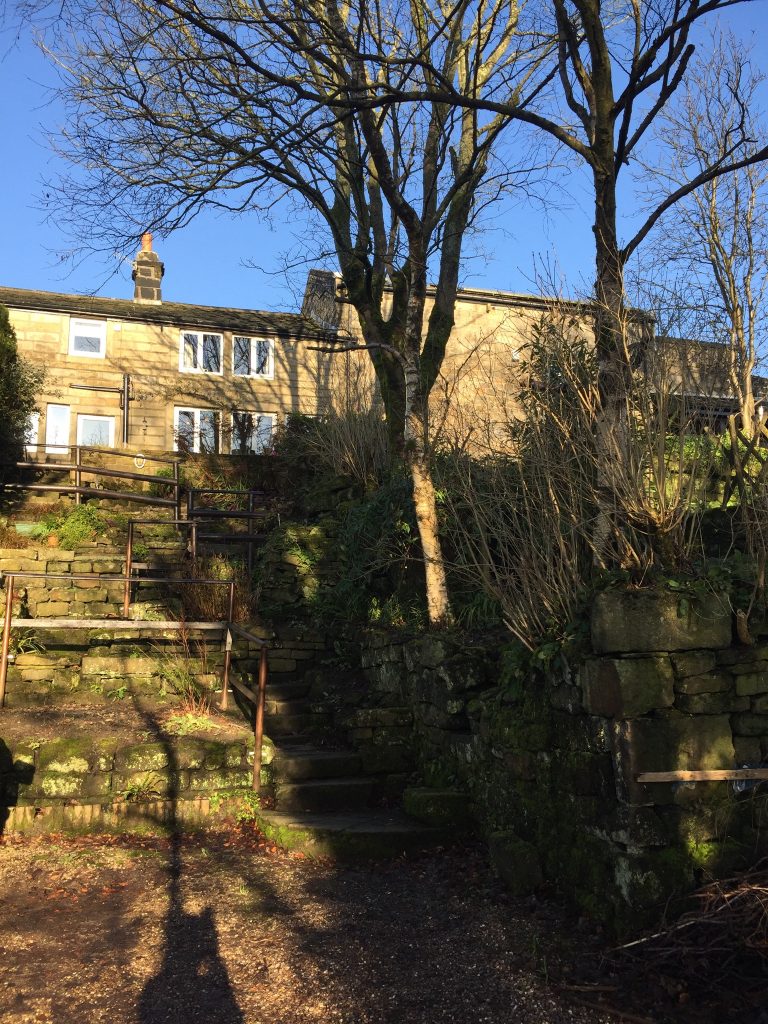
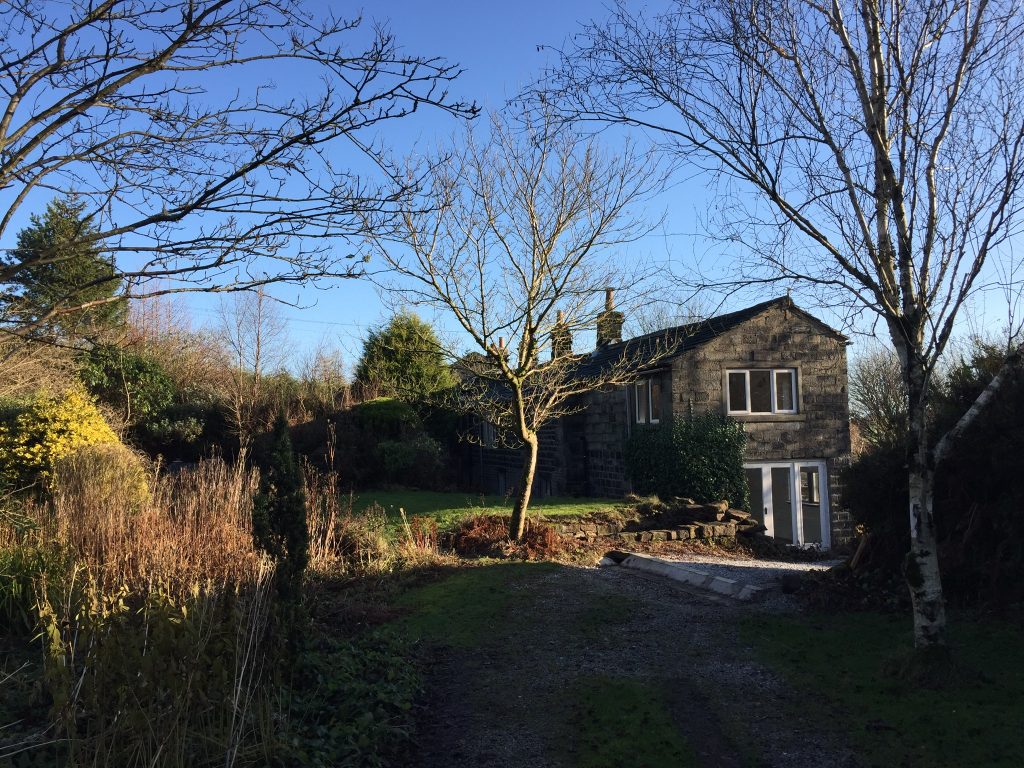
Cottages at Winters

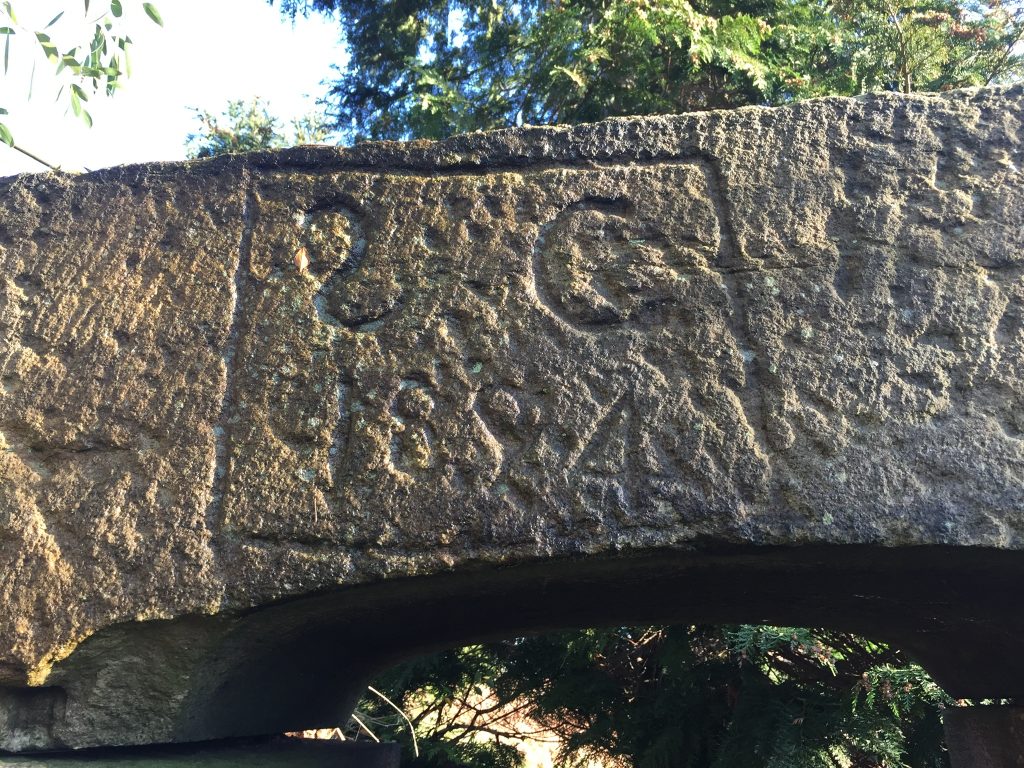
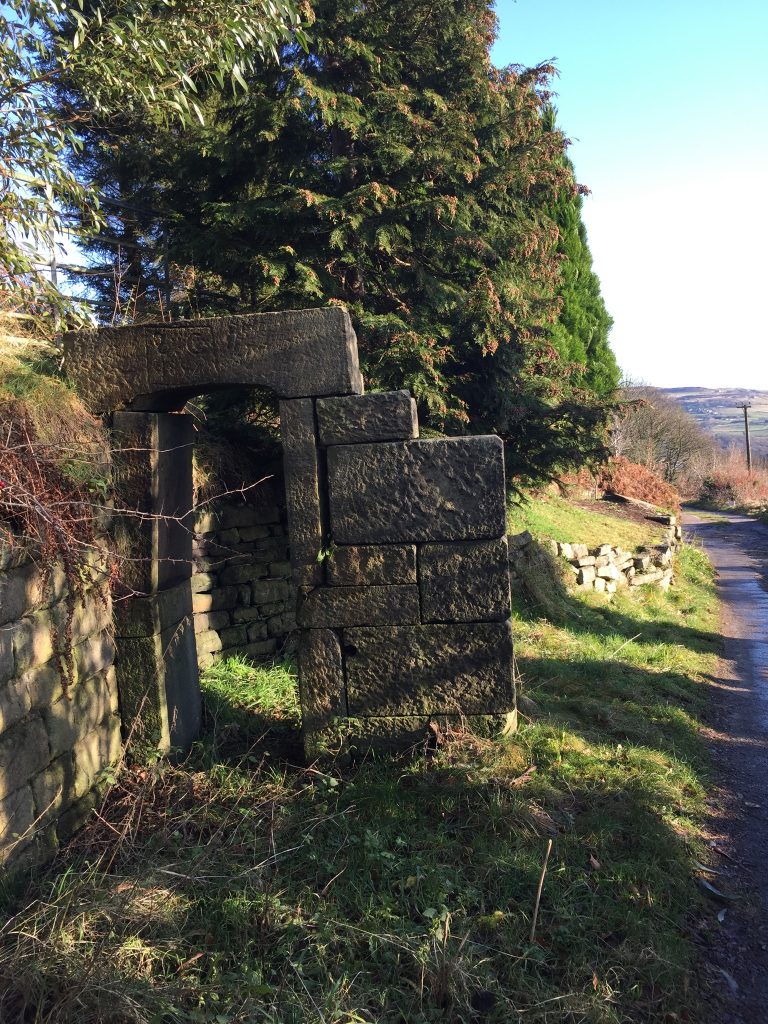
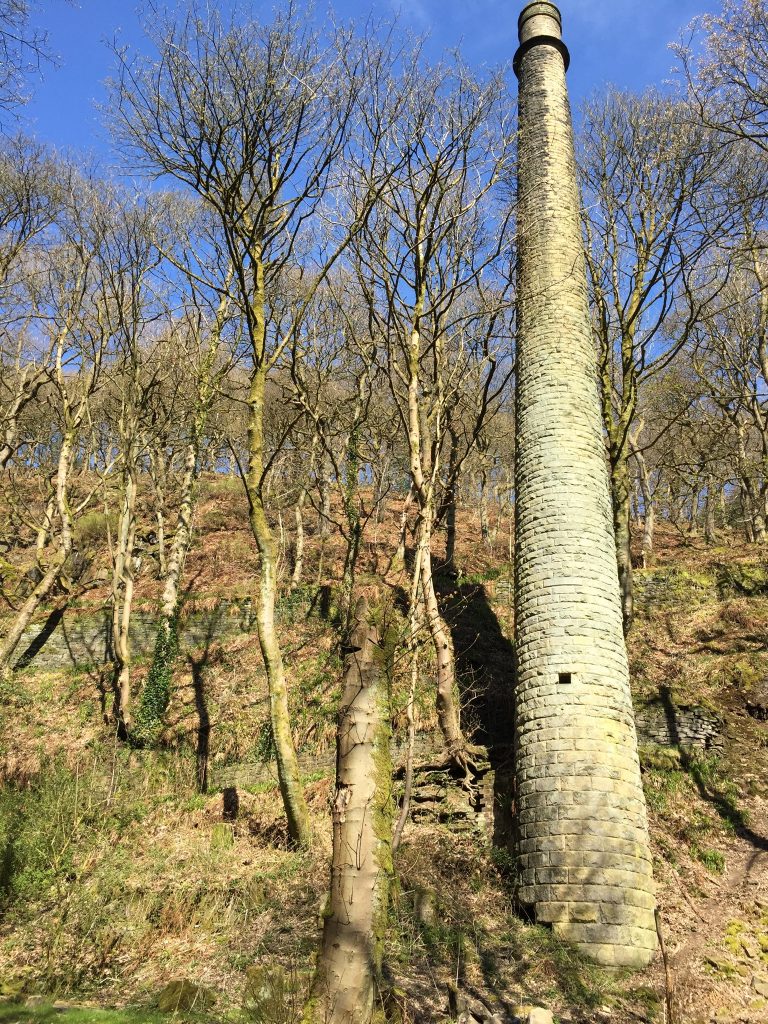
The only definitive remains of the mill was a picturesque arch with initials and date carved above. A well positioned bench overlooked the valley and we sat and chatted, asking him about the accessibility of some of the footpaths back down to the valley. The Pennine Way passes this way but from the map it looks very steep and wooded and  probably not a good option for today. The man agreed. 
I wanted to take a photo of the cottages but trees were blocking my view so eventually I decided to go up the steep drive and see if anyone came out. At that moment I car came upon the drive and the owner of the end house, which had obviously once been a barn rolled down the window.
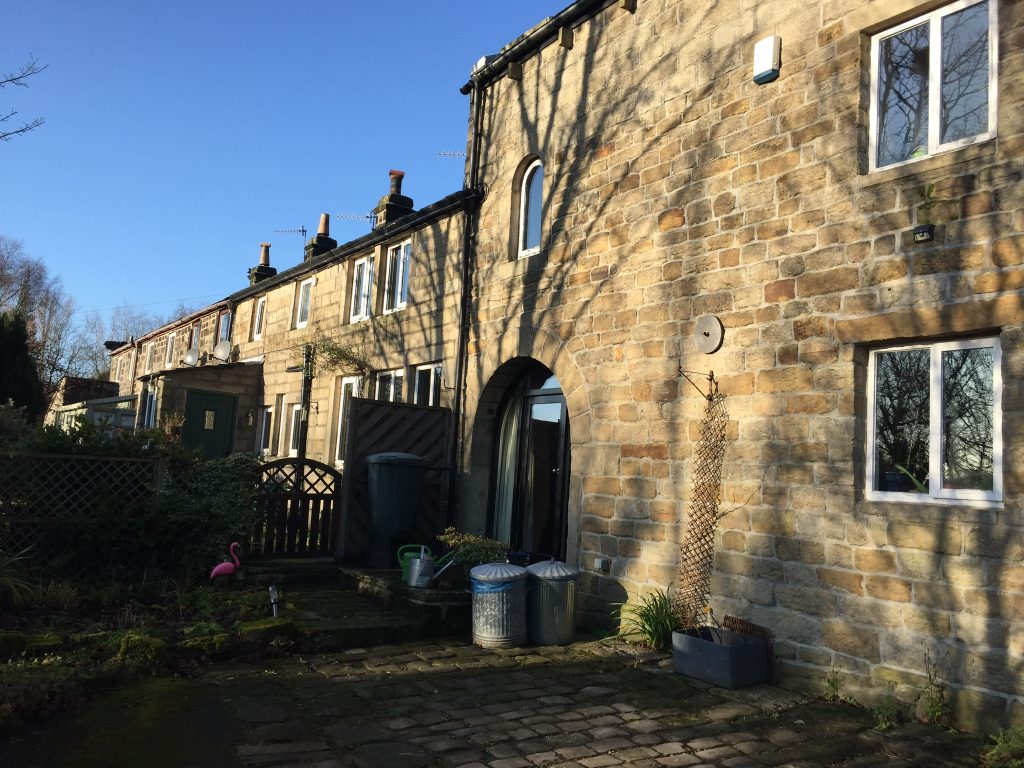
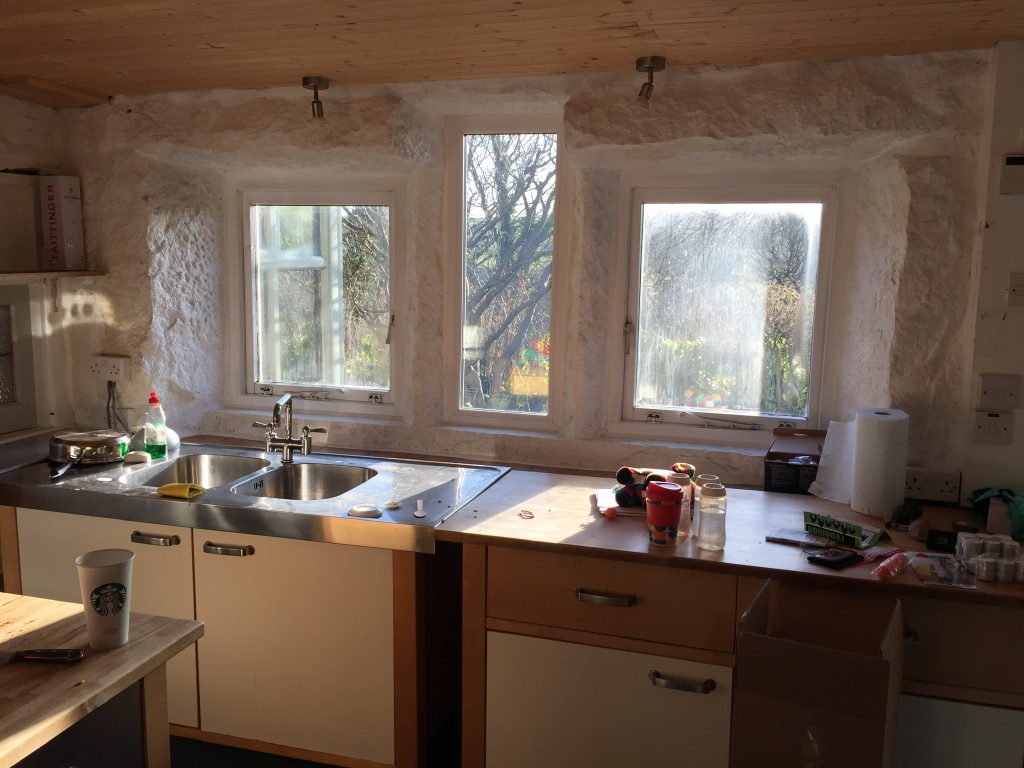
“Can I help you?” I explained my presence and she was very helpful. “You can walk right through the front gardens” she said. “It’s a public right of way.” So off I went along the front of the 4 cottages. As I stopped to take photos a couple with a toddler came towards me. Again I explained my mission. “We’ve just bought the end house, but haven’t moved in yet. Would you like to come in and see it?” For whatever reason this house seemed the most likely place for John Gibson’s shop and beer retailers as listed in Pigot’s directory of 1834. This John Gibson, born in 1780 and died in 1837 was the grandfather of the Dry Soil and Cally Hall John Gibson! Before moving to Winters he had previously been innkeeper of the Black Bull at Bridge Lanes recorded in 1811, 1822 and 1829.  Inside  the house the place was amazing. All the walls were exposed stone and the rooms retained their stone flag floors. The ceilings were not more than 6’6” high and the stone fireplaces were intact, though they now had stoves inset. I immediately wondered about damp and cold penetrating into the house but it was lovely.
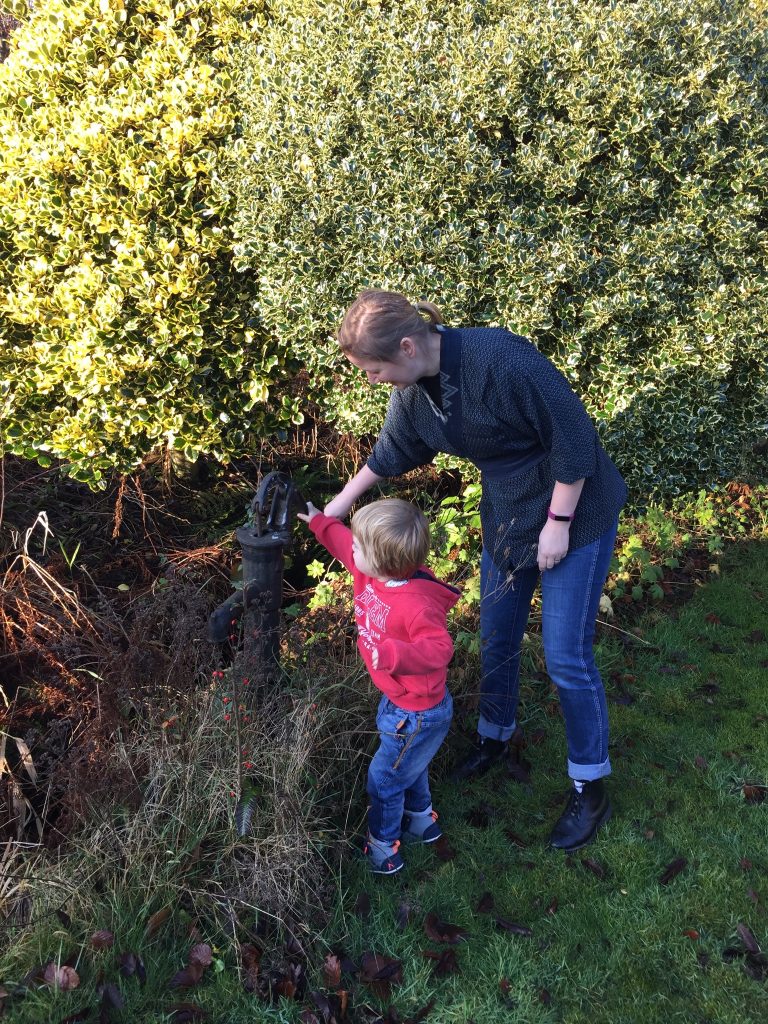
The lady took me out back and within 6” of the back door was a small gully running with fast water over which a stone flat led into the large garden, half of which had obviously been the mill pond. An old water pump remained at the side of the pond. Again I wondered what this must be like in heavy rain but it looked lovely. I told her that my daughter Anna would just love such a place with a bare stone interior! Her husband asked for my email and said that the cottage had come with lots of old documents. I do hope he contacts me – but I guess I can always call now I know where they live. He said the cottage was built around 1730 but isn’t a listed building. I took my leave and wandered around the area for a while trying to find any signs of the mill but many of the tracks were took steep and slippery to explore today. The couple did tell me that there is an old photo of the mill but I can’t find it on Pennine horizons or the Charlestown website even though there’s a history of the mill on the latter site. The only one I can find was taken in the 1940’s of a lady outside the building that was then used as a toilet!
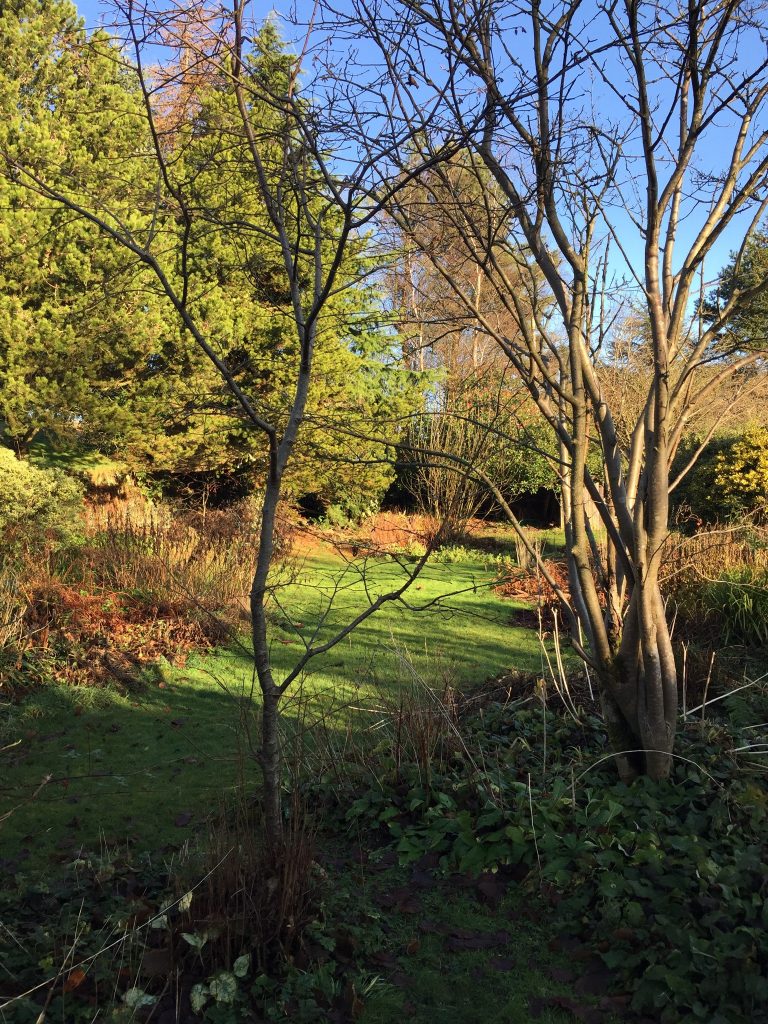
According to the Charlestown history site the mill was built in 1805 by John Sutcliffe. Between 1827 and 1832 the mill was purchased by William Horsfall and it seems likely that it was at that time that it was  converted to steam power to be able to cope with competition from other manufacturers. In 1842 the mill was capable of turning raw cotton into finished cloth. It had departments for carding, spinning (4360 spindles) and weaving (90 power looms ). It was said to be the largest manufacturer of sateens and dimitie going into Manchester.

By the 1841 census there were 32 men, women and children listed as living in Winters: cotton spinners, weavers, carders, winders. The only person not engaged at the mill was Joshua Gibson, 35, and his wife Sally, 35 who were farmers.  Soon after from 1844 to 1855 Joshua and Sally and their 9 children were living in Bridge Lanes and he was a farmer of 5 acres employing an unreadable number of workers. He gave up his license in 1855 and Richard Parker took on the job of landlord at the Black Bull, Bridge Lanes.  and two years later he’s listed as a butcher. The following year he hanged himself in his slaughter house on May 30th, 1858 and was buried at Heptonstall church three days later.
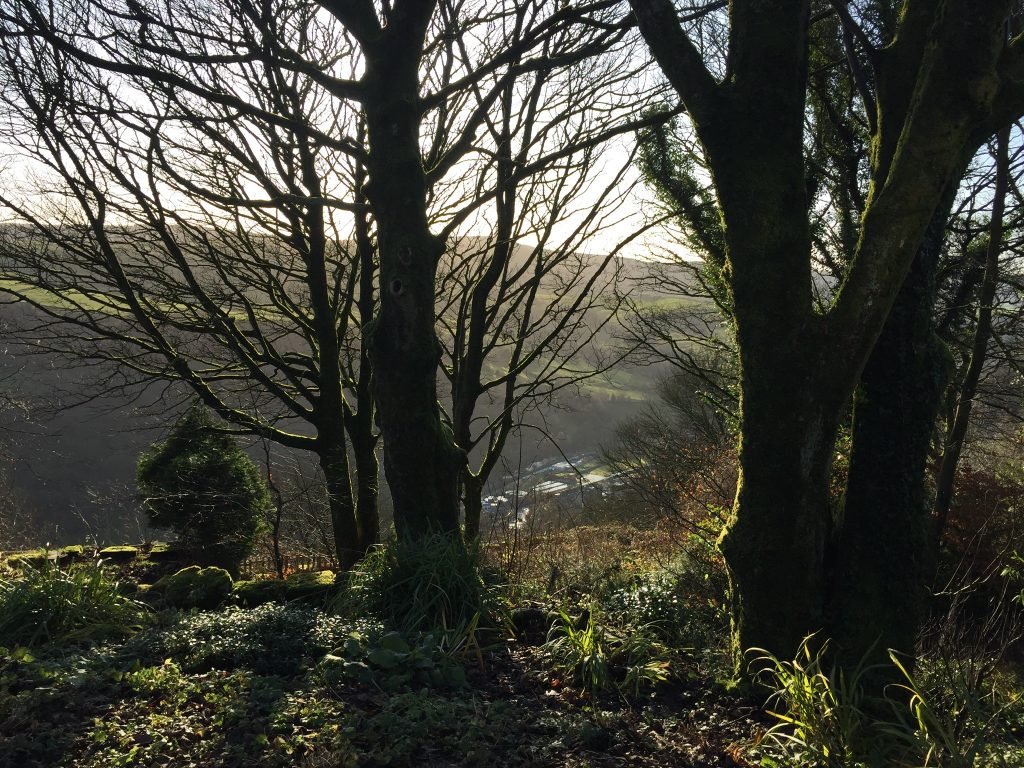
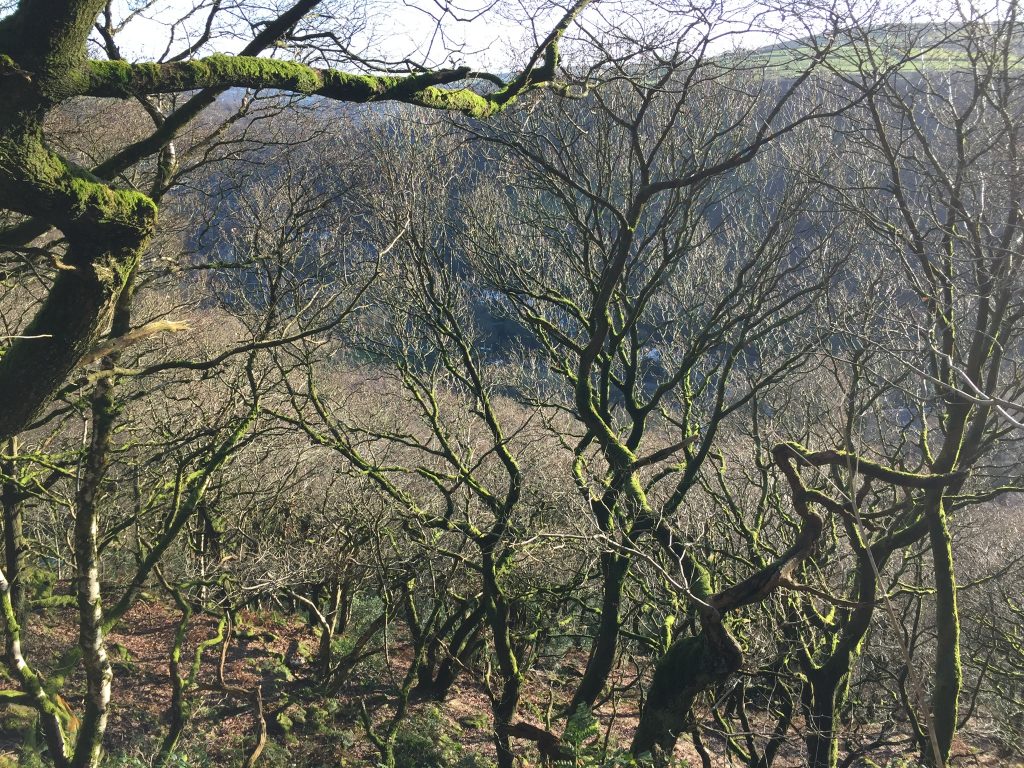
View of the Calder Valley from Winters

In 1842 and 1864 two surveys were carried out regarding the value of the machinery, buildings, utensils and livestock. In 1864 the mill consisted of:

  • Blowing room
    Carding room
    Cellar
    Throstle Room
    Mule rooms
    New mill
    Nos. 1,2 & 3 rooms
    Beaming room?
    Storehourse, store room & office
    Boiler house, engine house
    Yard and gas piping
  • There was also a smithy and a mechanics shop.
  • The 1842 evaluation for the domestic building included: Old white cow, Red and white cow and Roan cow,The new cow, Old stable manure, Bay mare, shaft and trace, General farming utensils and 3 stable buckets, 2 pack carts, Box tubs, lumber, wheel barrow and hand barrow, 2 water tubs

One interesting entry was for articles to be found in the ‘room over the school’ so Winters had its own schoolroom in 1842! By the next census in 1851 the mill employed about 75-90 people. Some workers lived on site eg at Winters Cottages (1851 census shows 63 people living at Winters with two cottages empty),

On February 25, 1868 the mill was struck by lightning.In1877 William raised more capital by a second mortgage on the mill and Underbank, but had trouble keeping up payments to suppliers and creditors.
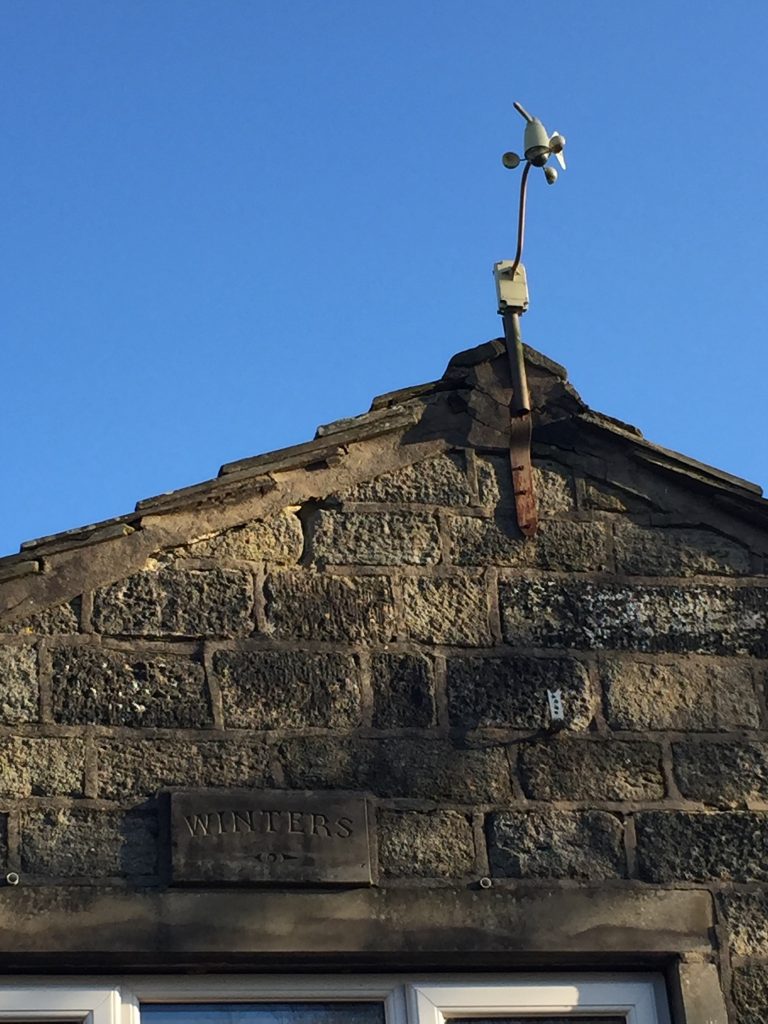
The name Winters

By the end of 1880 the business, now owned by William Horsfall,  was effectively Bankrupt. In March 1881 the machinery and engine boiler were sold and part or all of the mill was sold off for stone.The old part of Winters Mill used mules to spin yarn (called twist) and the newer part was used for power looms to manufacture fustian cloth In 1839 the coming of the railway meant that the mill could get raw cotton from Liverpool and send finished goods to Manchester much quicker.

Winters Lane

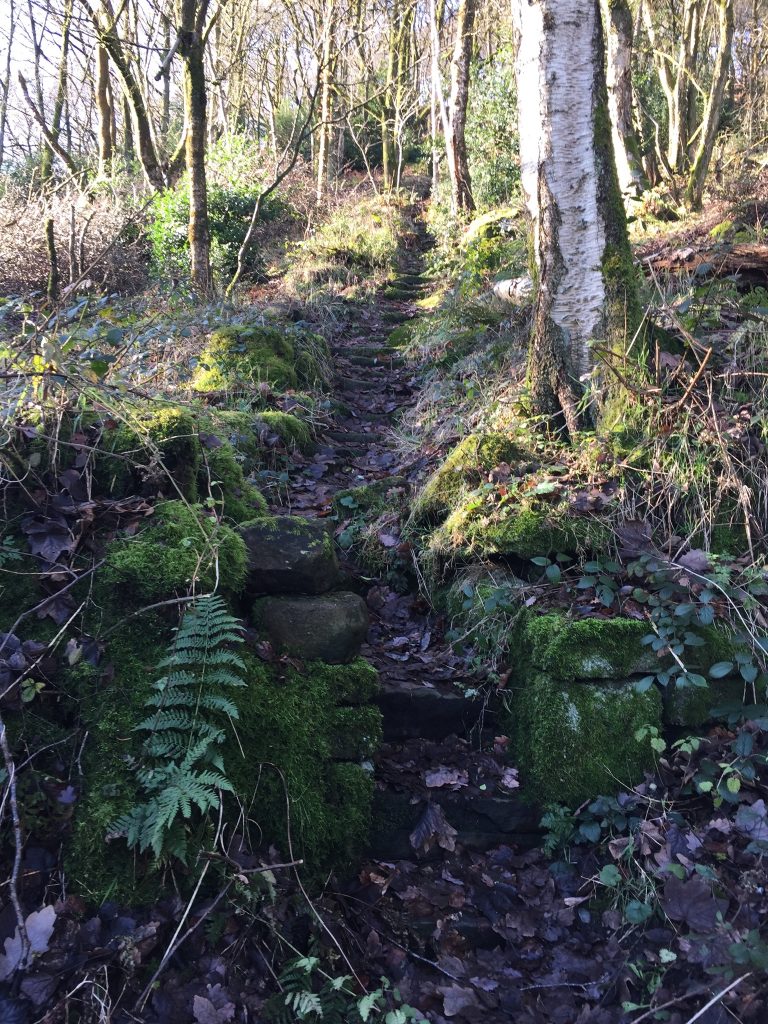
I returned to Winter’s Lane thinking how many more people must have lived in this vicinity both the keep the mill going and also to necessitate a shop and beer house in the 1830’s. I’d checked with the locals that my planned route was easy to follow and it was. Winter’s Lane can carry vehicles but it ends and turns into a tiny track called Dark lane. This was more like Dark River today but my new hiking boots were up to the task. Dark Lane led back onto another lane  that was just about passable by car, though very steep,  although bags of salt were stationed every ten yards in anticipation of icy weather. The sound of traffic along the Calder Valley rose up to the path and the whistle of the train blended in with the birdsong from time to time. 
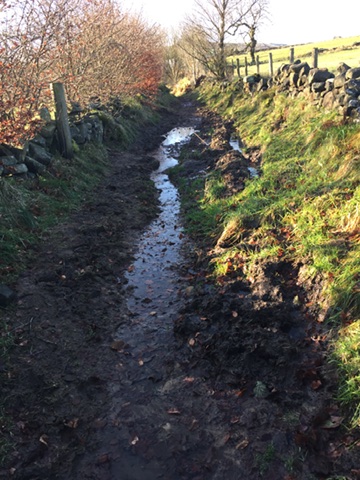
Dark Lane

Eventually I came out onto Rawtenstall Bank,  a very steep road, though fully paved for cars,  with several switchbacks. I decided not to take the short cut down Cat Steps!
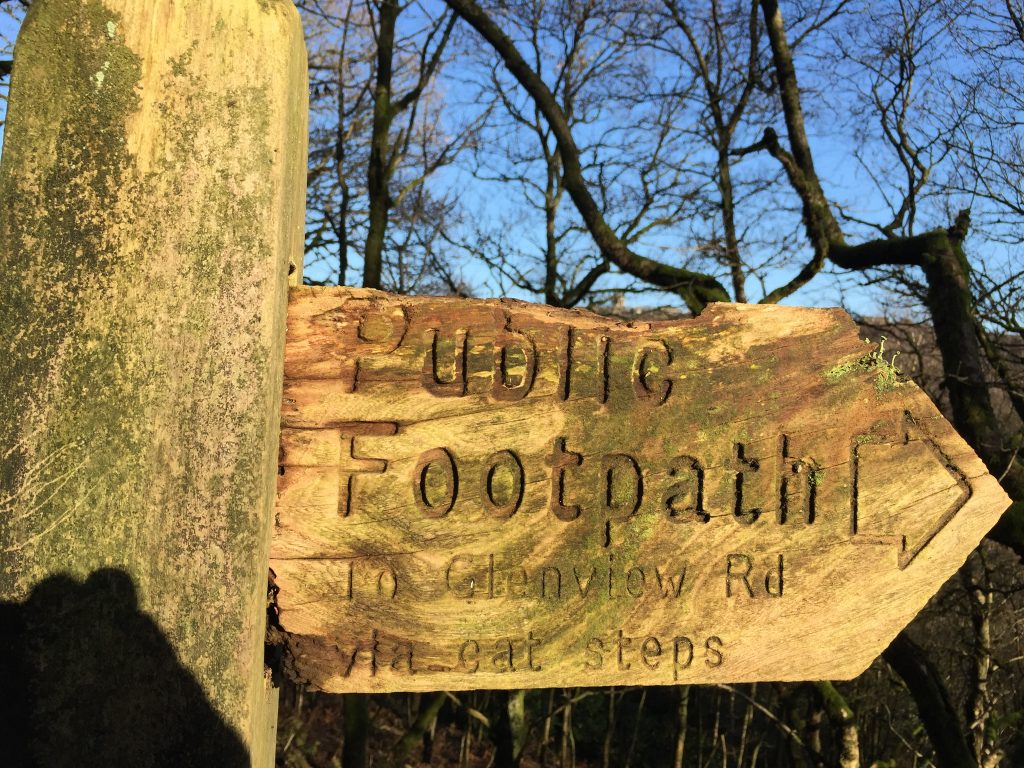
A few terraces are strewn along the road and they are at a crazy angle with their roof line close to 45 degrees. One of these terraces is Glenview, and in 1901 and 1911 Arthur Gibson, Joshua’s grandson,  was living at #9. Arthur was Thomas Gibson’s son. Thomas Gibson had been a butcher all his life, growing up in Winters and presumably attending the school there. At the age of 21 he married Hannah Stott and they had 9 children , the youngest being Arthur, 1873-1957. Arthur had been employed in the clothing industry all his life, first as a tailor’s apprentice then as a fustian cutter. A lady was just coming out of her house as a took a photo of the terrace. “I’m tracing my ancestors. They used to live at #9” I explained. “Ah, that’s that’s  end one.” Weird. The last one was number 8! Ah well. Perhaps the terrace was longer at one time. 
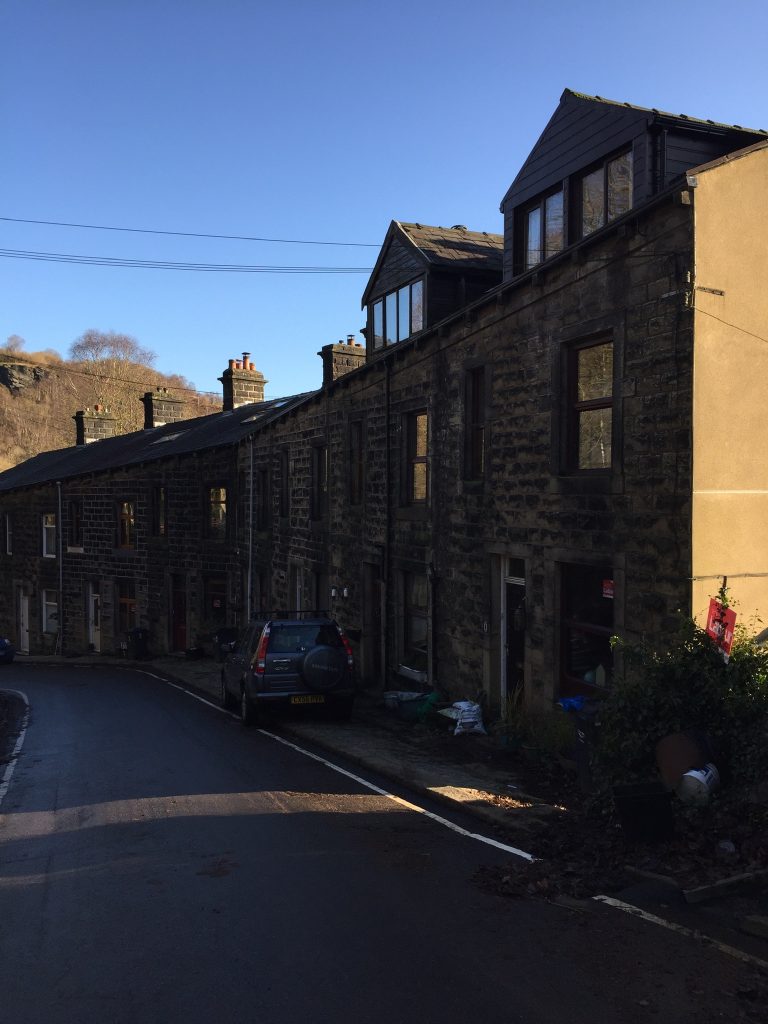
Glenview

My next stop was 16 Bank Terrace, in 1911 the home of Joshua’s great granddaughter Ethel Gibson-Atack, and so the great great granddaughter of John Gibson who I had stated the day with. It is through Ethel’s husband, Harold Atack that I am related to Barbara Atack the president of the Hebden Bridge Historical society. When I first moved here and joined the society Barbara told me that her husband’s father had lived in Cheetham House where I was then living! Bank Terrace is so steep that it looks as if it’s falling down the hillside. 
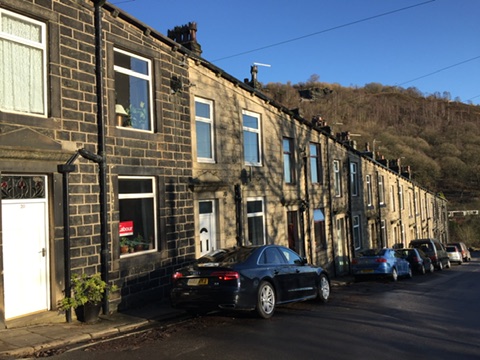
I turned off Rawtenstall bank onto Oakville Road where some imposing Victorian mansions are set up high above the road. At one of these, Oak Villa another Gibson relative – Mary Gibson-Butterworth lived in 1881. Mary was Joshua’s daughter and so had lived at the shop/inn that her father kept at Winters and was 11 years old on the1841 census. I wonder if she went to the school in Winters. 10 years later, in 1851,  she was a servant at the inn in Hawksclough which I’ve not yet quite found, though I’ve been researching that too. Richard Parker was the innkeeper. Remember, a Richard Parker had taken over the license of the Black Bull at bridge Lanes from Joshua (Mary’s dad). In 1861 Mary married Ezra Butterworth a plate layer for the railway company and she was the housekeeper at the now demolished White Horse Inn in Lee’s Yard, Hebden Bridge. My 1871 they are living on Crown Street, my street, and Ezra is still an employee of the railway company but by 1881 at  the age of 51 Ezra is now a farmer with 9 ares of land and he’s living in Oak Villa just off Rawtenstall End. The houses on either side of Oak Villa each have a live-in general servant. Mary and Ezra seem to have gone up in the world. Very rapidly. I just don’t understand their rapid rise in finances.  In correspondence with author Frank McKenna, Will Thorne, a Victorian platelayer himself, stated that the platelayer was the ‘most neglected man in the service.’ (McKenna, The Railway Workers, p.35-36). ‘The railways were one of the few organisations in the Victorian period where someone from a lowly background could rise up to better their ‘lot’ in life. For many, these opportunities were small, but for the industrious they definitely existed. However, excluding women, who could not advance for obvious reasons, one group of railway employees had almost no opportunities to advance beyond their station. These were the platelayers. By 1860, W.M. Mills stated that on Britain’s 8863 miles of railway there were 8598 platelayers. Gangs of platelayers were marshalled under a foreman or ganger, and were allocated a section of line to look after. This had to be inspected twice a day and any faults in the track’s gauge, level and superelevation were to be mended by using their picks, shovels, hammers, wrenches and track gauges. They also had to maintain line side fences and keep the culverts clear, as well as retrieve any item that may have fallen from a train. All these tasks were to be done in all weathers.
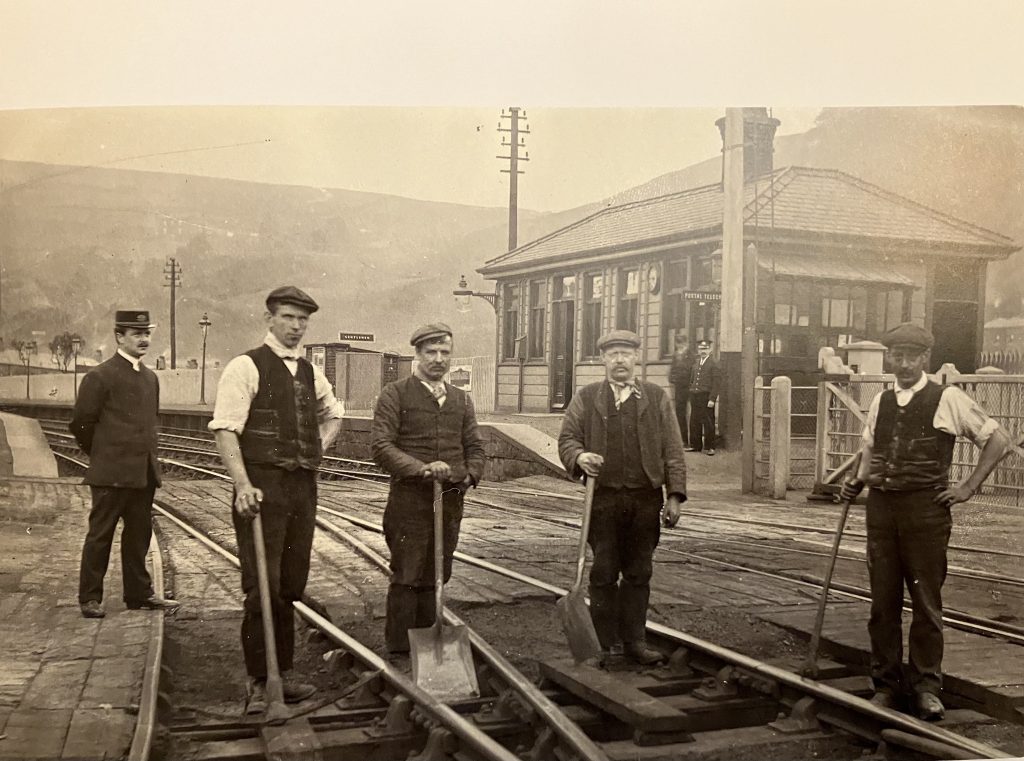
Platelayers at Portsmouth station about 1908-from Roger Birch’s Todmorden Album

Further, to this, platelayer’s working conditions were the poorest of any railway employees. For six days a week they had to be on duty between 6am and 6pm, and at the end of the day they had to make sure that the line was clear and in good working order. Naturally, if the work had not been completed by 6pm, they had to stay until it was done so. Pay was probably the worst of any railway employees, apart from women, and the hard graft was rewarded with a measly 17 to 21 shillings per week. Indeed, sickness on a Sunday would mean that a platelayer would forfeit his Monday pay.’

(Turniprail.blogspot.com: the site of Dr David Turner)

I fail to see how Ezra, son of a handloom weaver, a labourer still living at Dale with his parents at the age of 24, a plate layer for the railway at 33 has amassed the money to build several houses in the centre of Hebden Bridge. In the census of 1871 his describes himself as a ‘railway contractor’ and has built, according to Grace’s bio, ‘some houses on Carlton Terrace on the site of what is now the Cooperative building.’ In Feb 1889 he commissioned an architect to draw up plans for the construction of two houses and a missal on Savile Road. The building plan, which I found in the archives, has ‘dis’ pencilled in above the ‘Date of Approval by the Council,’ therefore reading ‘disapproval.’ Hmm . . . this man is really proving to be an enigma for by 1891 he is residing there. This gentleman’s residence remains today, a showpiece of the man who made it!
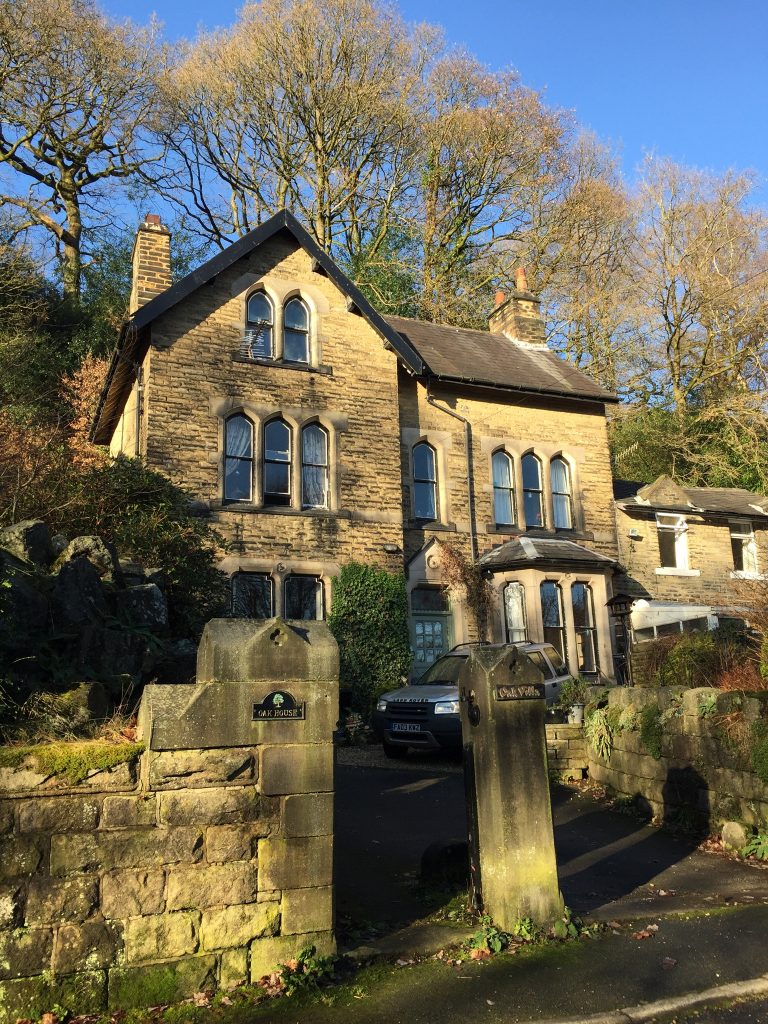
Oak Villa

Oh, oh my. The very next day I thought I’d try and find out more about Ezra’s rise to the upper class and I seriously couldn’t believe my eyes. On Ancestry I found a 34 page document entitled the Life and Times of Ezra Butterworth, 1827-1898 as told by his daughter  Grace,  1863-1944,  to her four children and recounted by them to his great granddaughters, all handwritten by Barbara Moss. It had been uploaded by ‘mossquire’ who I had exchanged several emails with about the Moss family over the last few weeks and so I’d never even thought to look for Gibson’s in his info online! I read quickly through some of the pages and it turns out that Ezra sent his daughter, Grace to the Moss school on Hangingroyd Road that I’ve been delving into over the last month! Truly amazing!. There was even a photo of him in his hunting gear. I emailed mossquire to see if he’d transcribed the 34 page document but no such luck. Think I’ll have to save that job for a rainy day – or a rainy week! (Task completed)
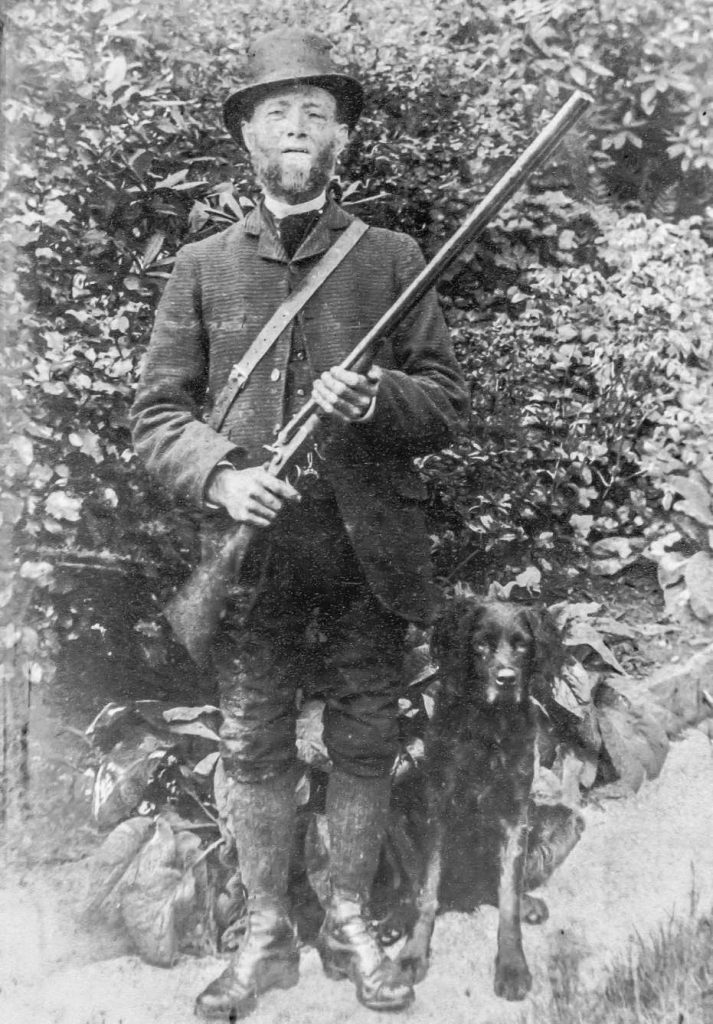
Ezra Butterwoth – husband of aunt of husband of my 1st cousin 3x removed!!!

Ezra Butterworth 1828-
husband of aunt of husband of 1st cousin 3x removed

Mary Gibson-Butterworth 1830-1918
Wife of Ezra Butterworth

Joshua Gibson 1806-1858
Father of Mary Gibson-Butterworth

Thomas Gibson 1828-1897
Son of Joshua Gibson

Thomas Henry Gibson 1869-1947
Son of Thomas Gibson

Amelia Whitham-Gibson 1869-1949
Wife of Thomas Henry Gibson

James Farrar Whitham 1837-1901
Father of Amelia Whitham-Gibson

WILLIAM WHITHAM 1792-
Father of James Farrar Whitham

ELIZABETH ANN WHITHAM-NUTTON-LEEMING 1840-1905 (of Lily Hall)
Daughter of WILLIAM WHITHAM

JOHN NUTTON 1862-1934
Son of ELIZABETH ANN WHITHAM-NUTTON-LEEMING

FLORENCE NUTTON-DENTON 1895-NaN
Daughter of JOHN NUTTON

Jack Dean Denton 1920-1995
Son of FLORENCE NUTTON-DENTON

Heather Jacqueline Denton
You are the daughter of Jack Dean Denton

Update on Ezra’s story

June 2020

From Ezra’s story an account of the life and times of Ezra Butterworth (1827-1898) as told by his daughter Grace (1863-1944) to her four children and recounted by them to his great-granddaughter Barbara Moss I knew that Ezra had become estranged from his son, Gibson, and that he was often afflicted by drink. However, it wasn’t until today that I did some more digging in the local newspapers and found several stories corroborating both his standing of high esteem within the local community and his drunken episodes. 17 October, 1890. Ezra Butterworth, farmer, Hipping was summoned for having his dog out without a muzzle. He sent his man servant to plead guilty.—P.S. Sutherland said that on Sunday afternoon last, about 2-30, he was on duty along with P.C. Copping near Blackshawhead, and there saw defendant’s dog on the highway without muzzle. Defendant and his man-servant were with it. It was a sporting dog.—The manservant admitted the accuracy of the sergeant’s evidence, but said they were only just crossing the road. They had been into a neighbour’s field to look at two young horses—The sergeant said they were nearly a mile from Hippings, and he saw the dog and the two men travel about 100 yards along the highroad. They then left the road and went across a grass field.—Fined 1 shilling and costs 9 shillings. On the other hand in 1884 he was deemed suitable as an overseer and in 1885 he was elected Liberal councillor for Stansfield, and in 1894 a parish councillor

From the journal:

In 1890 Ezra decided against the wishes of Mary and Grace to lease Hippins farm from the Savile estate, paying an advanced payment that would secure his tenancy for the next 25 years. (Is it just a coincidence that Ezra built his residence, Oak Villa, on Savile Road?) It stood on the hillside and was 75 acres in extent. He spent a great deal of money on improvements building a new barn and putting a new inside to the house. He bought from Ireland twelve Kerry cows and a bull and settled down to a very different way of life. They hired a couple to live in the cottage, the man to run the farm and his wife to help in the house.

While still living at the farm Ezra resumed railway work and his son Gibson agreed to assist on the farm, doing bookkeeping and managing the workers on the understanding that a remuneration of 70 pounds a year should be paid to him on the sale of farm stock. When the stock was sold Gibson inquired after the money that they had agreed upon but Ezra told him that his mother had taken all the proceeds. She had left Hippings two days after the sale, having previously told her husband that unless he promised to sign the pledge and abide by it she would not stay. Ezra’s drinking bouts could last two or three weeks at a time, the newspaper recorded. The following is evidence that Ezra’s drunkenness caused problems outside the household too. In the Burnley newspaper we read that on 20th May, 1882 Ezra Butterworth, a traveller from Hebden Bridge, was summoned for being drunk whilst charge a horse and conveyance in St. James’ Street, Burnley at eleven o’clock Thursday night, the 17th ult.—Fined 10s. He did not abide by his pledge to Mary and so two days after the sale she left and went to live with her newly married daughter and husband Elias. However, when Ezra died in December of 1898 it was discovered that he had revised his will and left everything to his wife, and his daughter, Grace, and her husband textile manufacturer Elias Barker and Gibson had been left nothing. So Gibson took out a court action to reclaim what he thought was owing to him. Gibson’s relationship with his parents had not been an easy one. At one time Gibson had been turned away from the home for disobeying his parents. “Grace did a lot of heavy work about the farm when her brother would not lift a finger to help her.” In February 1900, two years after his father’s death Gibson brought a court action against his mother, Mary, and his son-in law Elias Barker claiming wages that he had earned as his father’s ‘hired servant’ at the rate of 70 per year as agreed. The report of the court case spanned three columns in the paper and then, just as Grace was brought to testify the judge adjourned the court because the proceeding had taken up so much time. As I was searching for the next episode in the saga I found the following story covered comprehensively in the Todmorden newspaper:

DEATH BY CHAMBER POT

Can a tale be harrowing and comical at the same time? Is this story a candidate for the Darwin awards? The newspaper heading had it all: The Blackshaw Mystery – Threat with a loaded gun – Disgraceful and sickening behaviour. At the age of 71 Ezra was found in a pool of blood on his kitchen floor by the postman. With the assistance of a neighbouring farmer they two got Ezra settled in his bed but he died later that same evening. One of the witnesses at the inquest was John Whitaker a fustian cutter of Stubb, Mytholyroyd who had been staying with Ezra for the previous three weeks. One night another man joined them and, according to the newspaper report John reported “We all slept together.” Coroner: “Was it cold that night?” (Laughter) “No sir, I thought it very warm” (renewed laughter). We frequently stayed in bed together til 4 in the afternoon. I have persuaded him to stay in bed late telling him that it would save money.” About 10 days before his death the two had been drinking at the Blue Ball. On his way home Ezra fell down and John went back to the inn and the landlord’s son came to assist, and together they managed to get Ezra home, and settled him in bed. Some time during the night he fell out of bed onto the chamber pot, breaking it in two pieces and cutting himself somewhere behind. He stayed in bed for several days , John and his house cleaner bringing him a little food and drink, but eventually took up his loaded gun from the rack in the kitchen saying “I’ll shoot ’em all,” and John quickly left. A few days later he was found by the postman laying on his back on the living room floor, senseless, though still alive, undressed and without his stockings (!). The postman called for help from the farmer next door and together they got him up the stairs and in to bed. Dr Cairns from Hebden Bridge was called and described a 4 to 5 inch wound on the right thigh or buttock. He suggested that this, plus the exposure of being on the cold stone floor was the cause of death. Elias Barker, Ezra’s son-in-law was called as a witness. He had been summoned to the farm immediately the postman raised the alarm. He was asked if there was any money missing from the house, or any articles. No he responded. “Did you remove the chamber pot?” “Yes.” “What did it contain?” “I called it pure blood.” The court accepted that no foul play was involved.

As I returned into Hebden along the canal I stopped to take a photo of #1 Fountain Street which is the first house from the canal in a row of Victorian back-to-back houses.
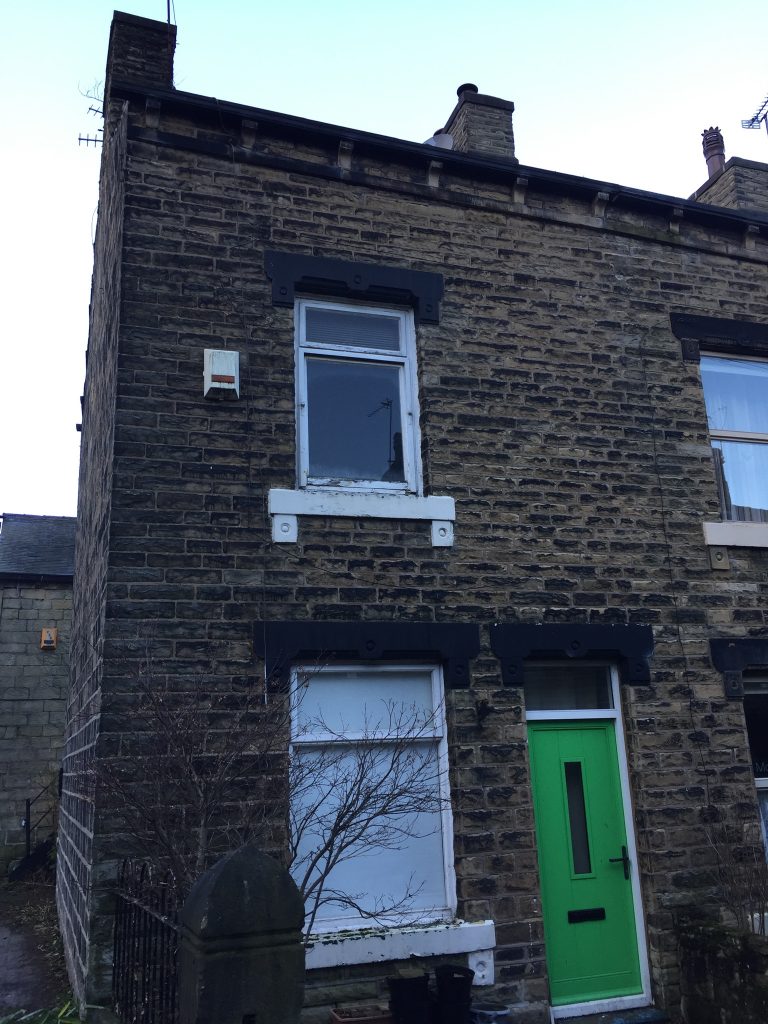
1 Fountain Street

Annie Gibson Hart  (1866-1917) was living there in 1911. She was a grandchild of Thomas Gibson. Her parents were Thomas Gibson and Hannah Stott-Gibson. She married a fustian cutter, Cornelius Hart from Bolton. At the time of her marriage she was a fustian machinist and the newly weds were living with her parents at Old Gate. By 1901 they were living at Hebble End, childless. Hebble End was the area of Hebden Bridge that I first stayed in the summer I came by myself to research my ancestry. 1911 saw them still working in the fustian industry. Prior to his marriage Cornelius had lived and worked at Lower Lumb Mill (built 1802) with his parents and siblings. Lumb Mill School was founded in 1845 by the owners of the mill. In 1851 there was one school room, 20’ by 16’, with 34 girls and 17 boys, who were taught reading writing and arithmetic.  The children would have worked half time, with one group at school in the morning and another in the afternoon.  Somewhere in this locality the Sutcliffes opened a one-room factory school. This was because in 1845 the Factory Acts said that children had to spend a certain number of hours in education if they were to continue working in the mills. 34 girls and 17 boys were taught reading, writing and arithmetic at Lumb.Half timing ended only with the Fisher Act of 1917. The ruins of a 200-year-old cotton mill have been brought back to life, thanks to a new hydro-electricity scheme that starts generating electricity today. The hydro scheme uses the original weir and water channels that supplied the industrial-revolution-era mill when it was first built in 1802, and will produce enough clean electricity to power around 40 homes and save 60 tonnes of CO2 per year from going into the atmosphere. The 450,000 project is the brainchild of Bede and Jane Mullen, who have lived by the ruins of Lower Lumb mill in Hebden Bridge for over 30 years. My photos of Lower Lumb Mill come from a hike I took in April.
Malta – Day 7

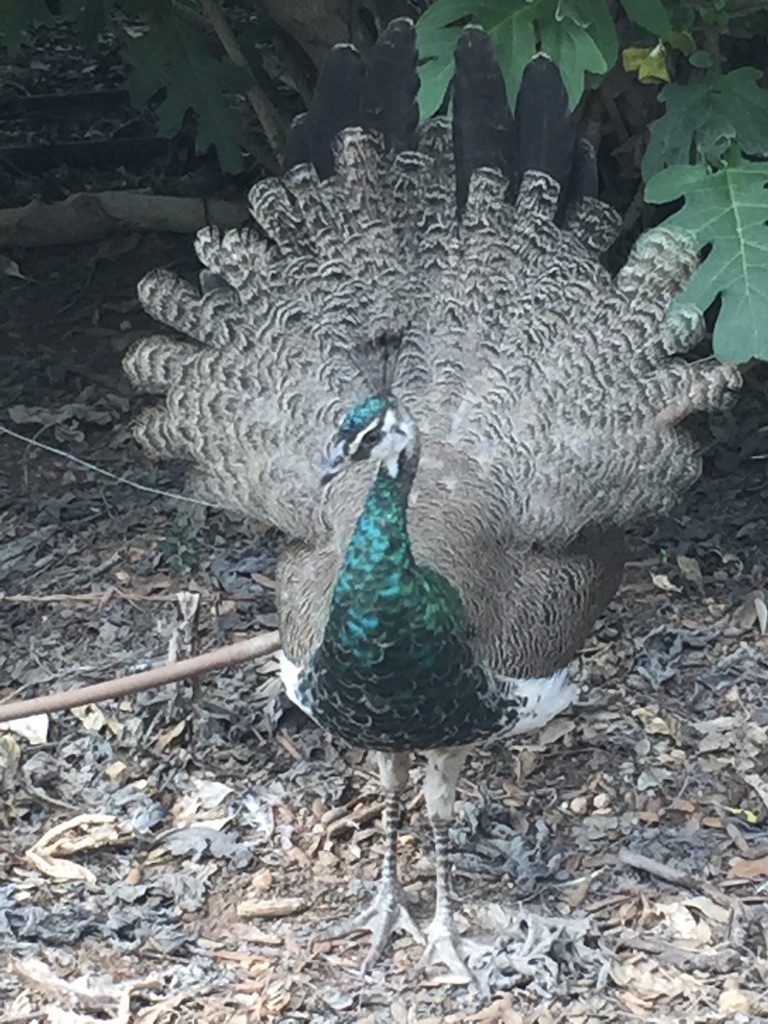
He must have thought I was a peahen

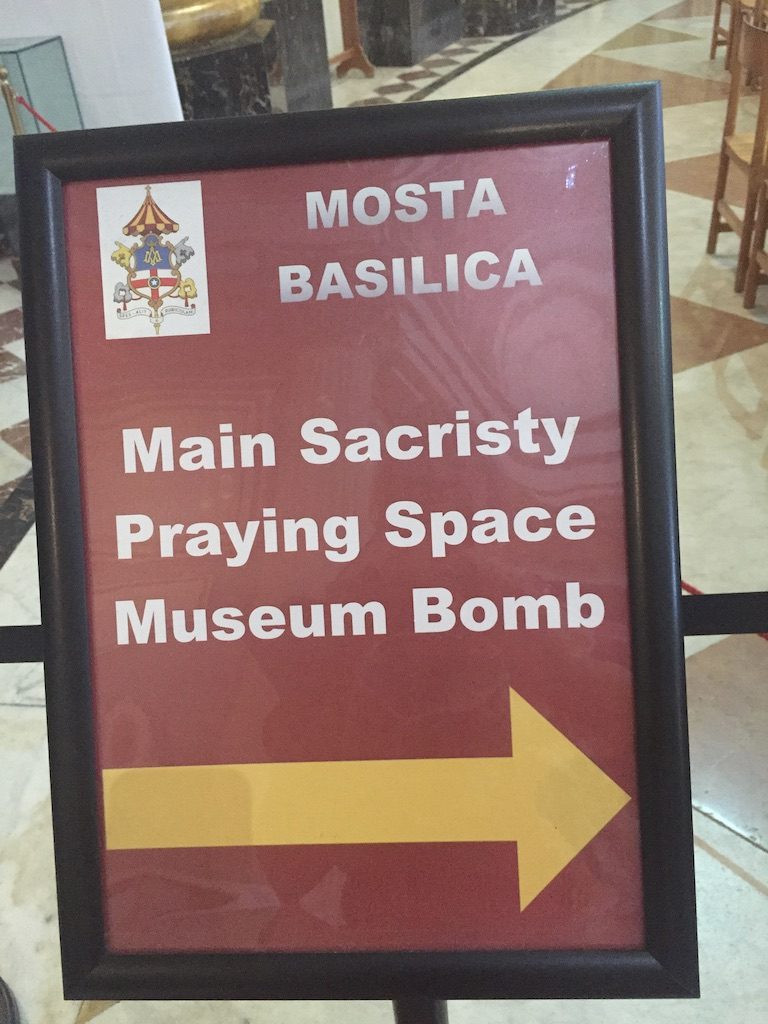
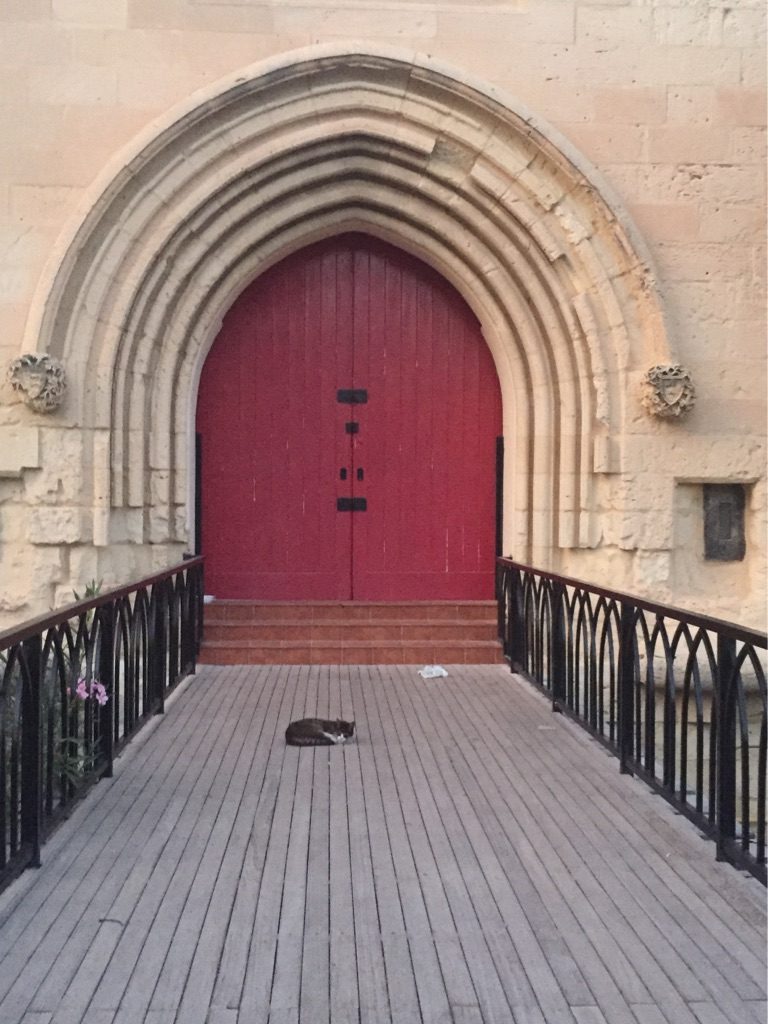
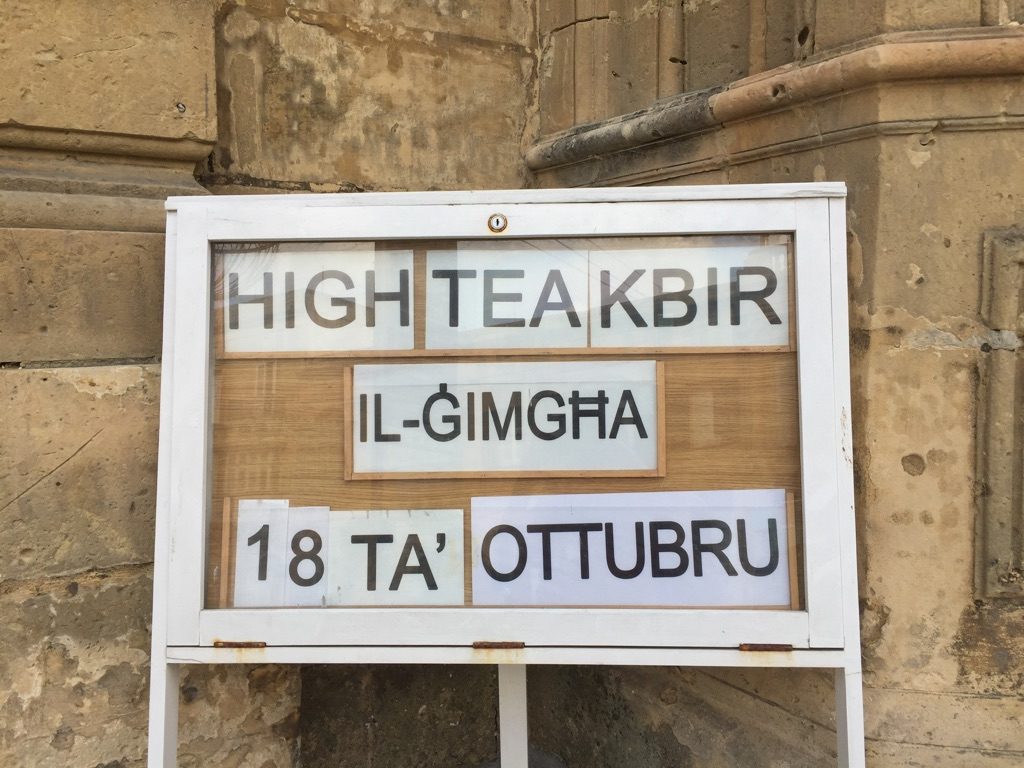
A lovely day for my final day in Malta. First port of call was costa’s famous basilica,  famous for its survival after a bomb fell through the roof in 1942 but failed to explode. An Italian pilot was lightning his load and accidentally dropped it on the church but, as Maria quipped, since it was Italian in didn’t behave as it should have done, and failed to explode, fortunately since 300 people were attending mass inside the church. A replica of the bomb is on display – rather odd to see in a church.  The Ro

Unexpected sign in a church

man Catholic Church was built in 1833-1860 and is based on the Pantheon in Rome. Leaving the church we only were allowed 25 minutes to climb up to the balcony in the dome, visit the WW ll bunkers and/or get morning coffee.

Cannons and religion

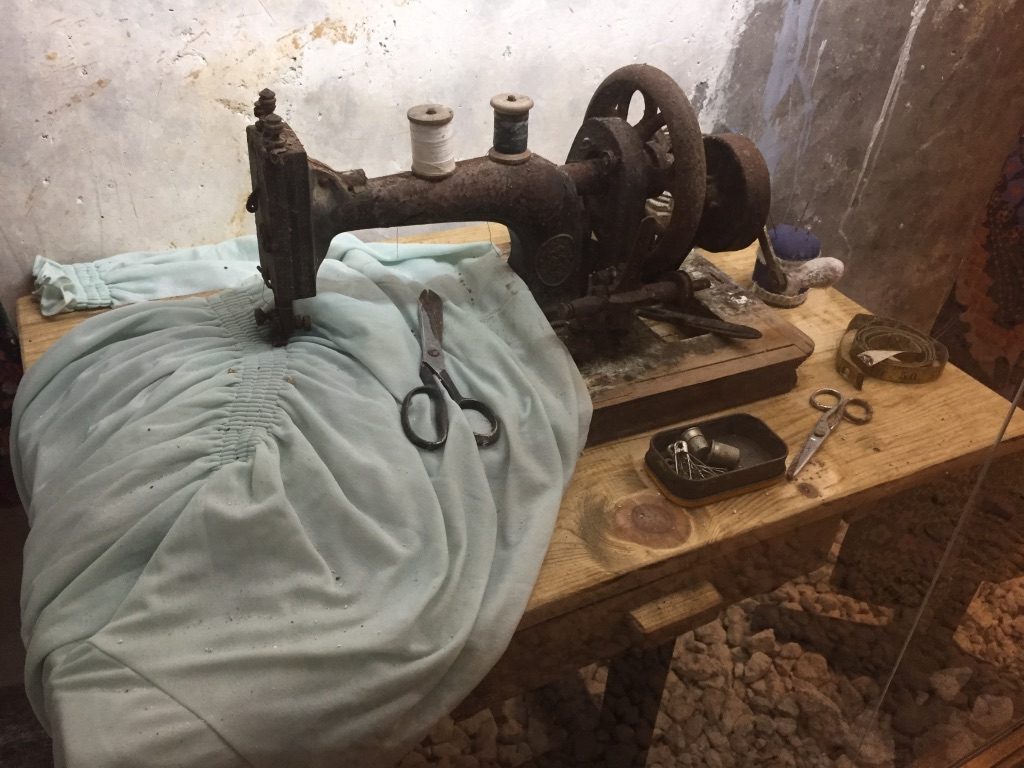
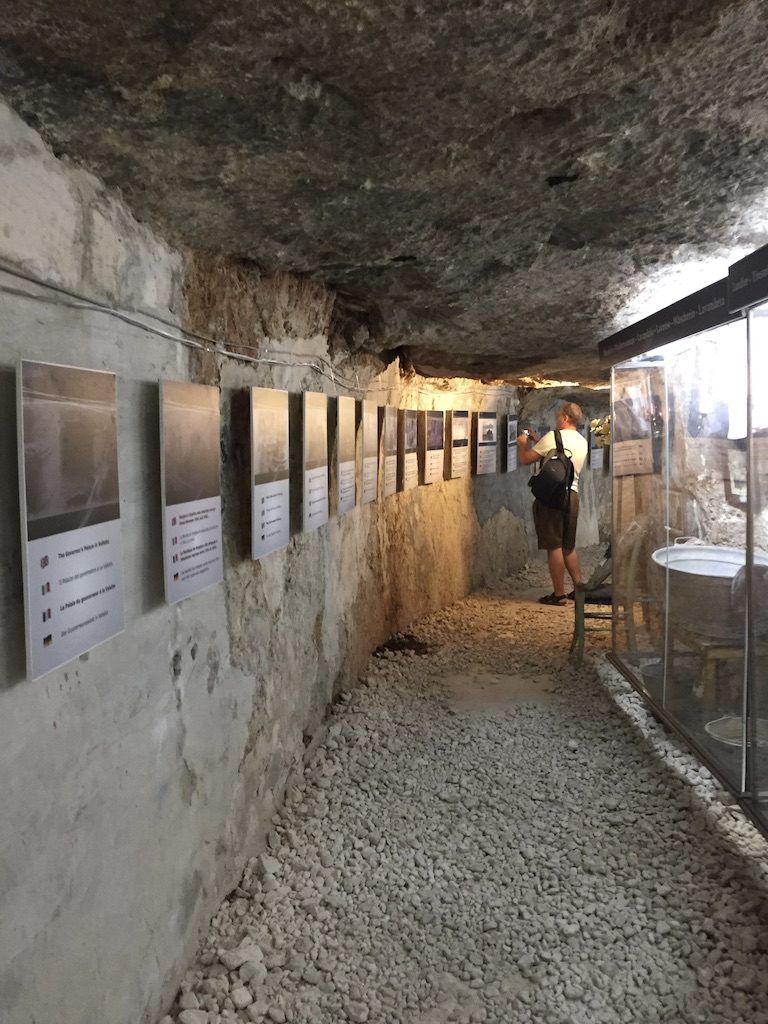
I opted for the bunkers, just outside the basilica and saw reconstructions of the life that the people seeking safety lived. Lace making, hairdressing equipment and sewing machines were all part of life underground. 

Then we were off to visit the San Anton Gardens in Attard. Because the towns in Malta are so densely populated every inch of land in the towns is taken up with building, apart from the few designated gardens which are open to the public. In fact apart from palm trees there are no trees on Malta and so there is no wood at all for building material.
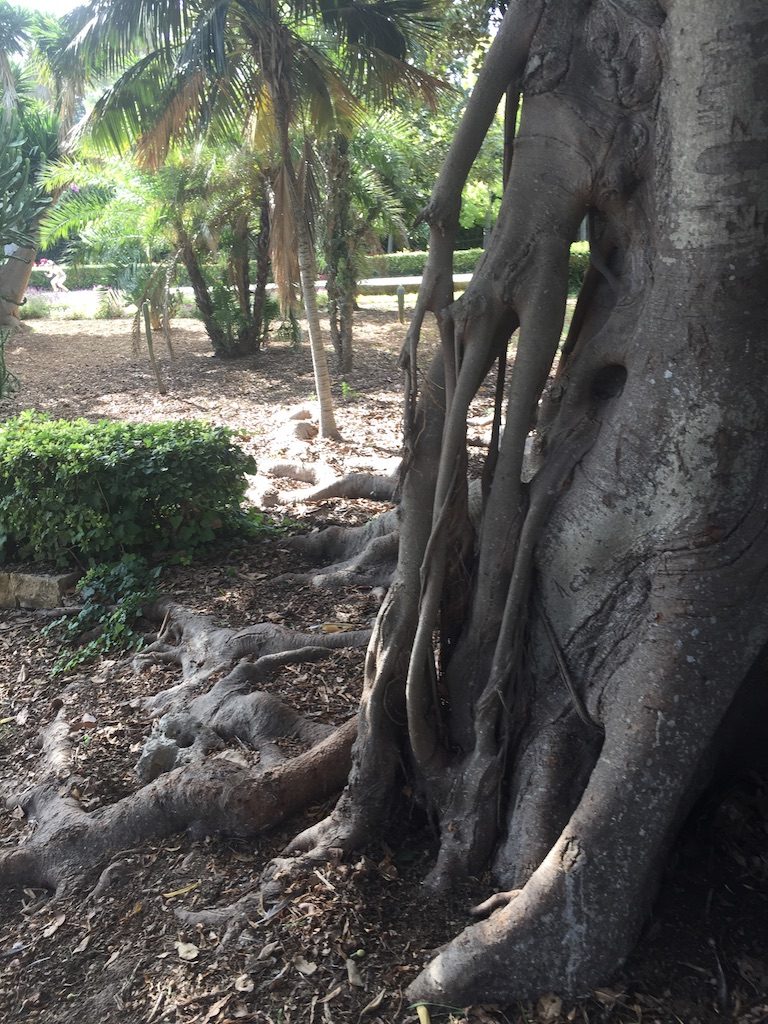
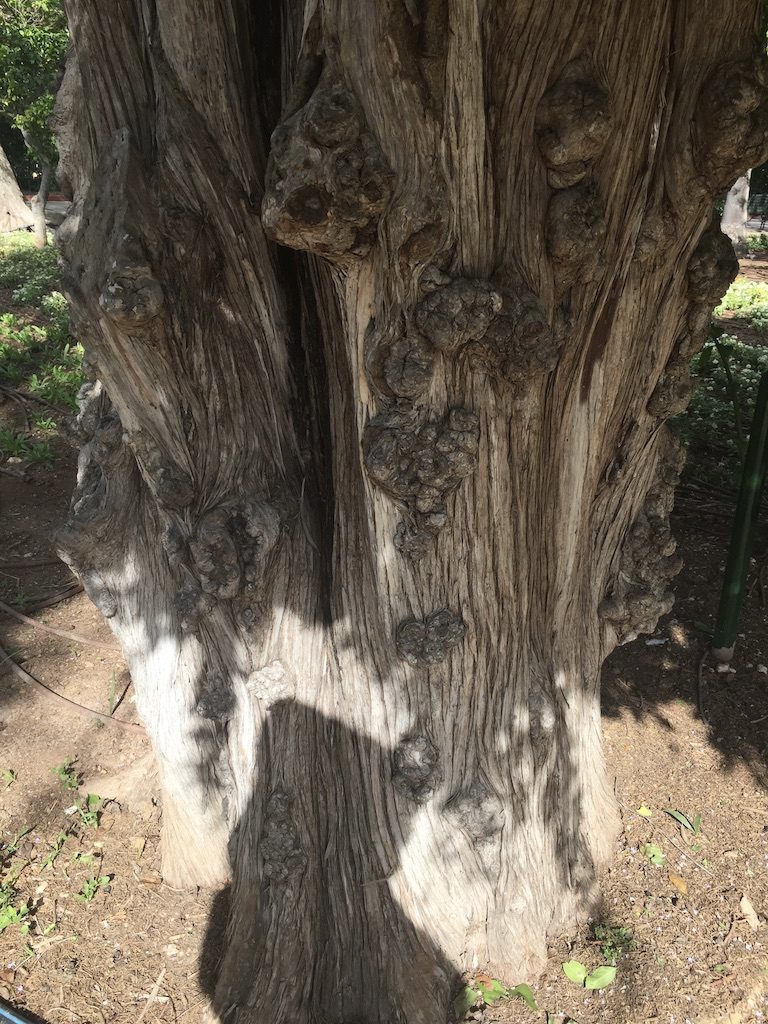
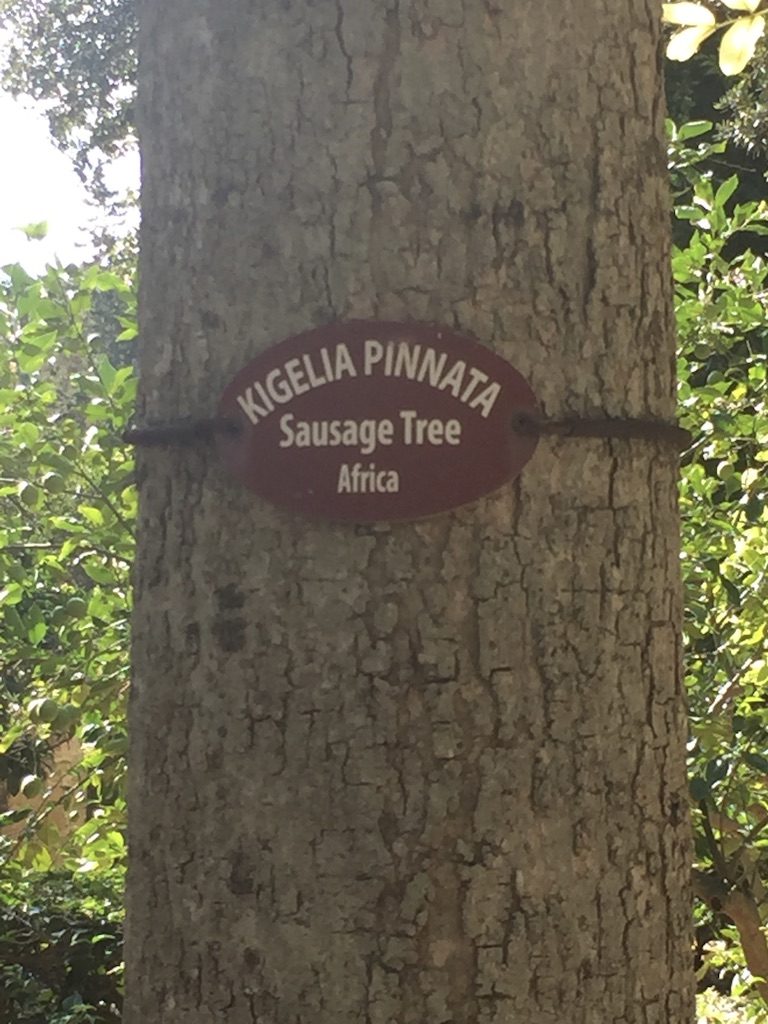
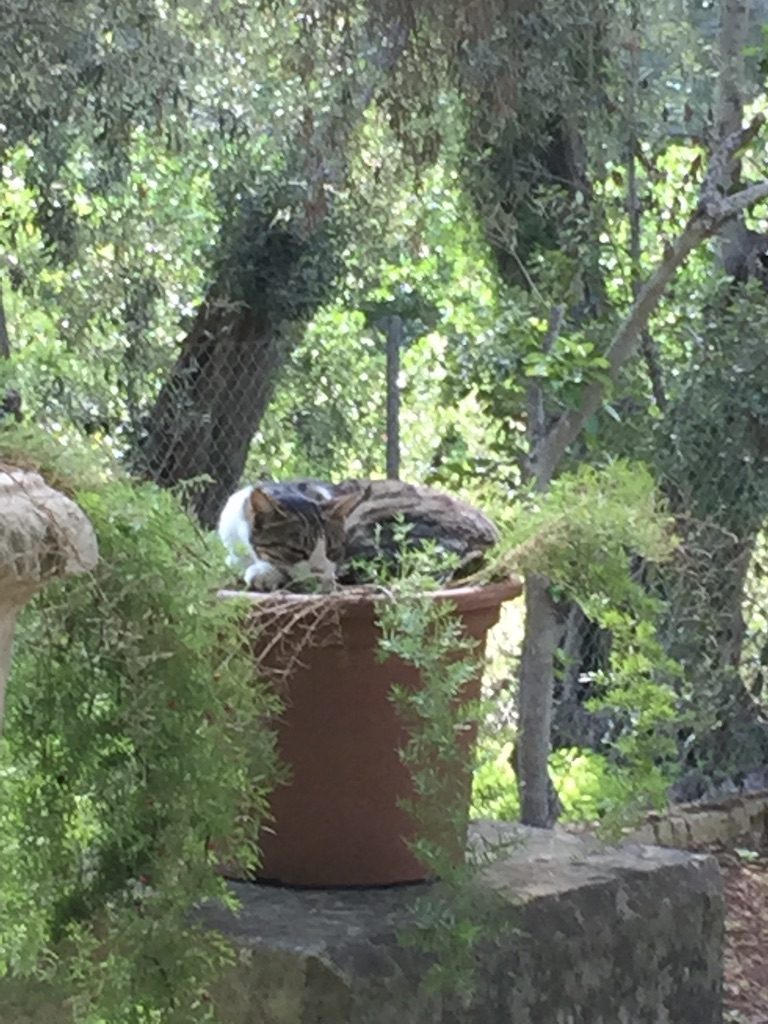
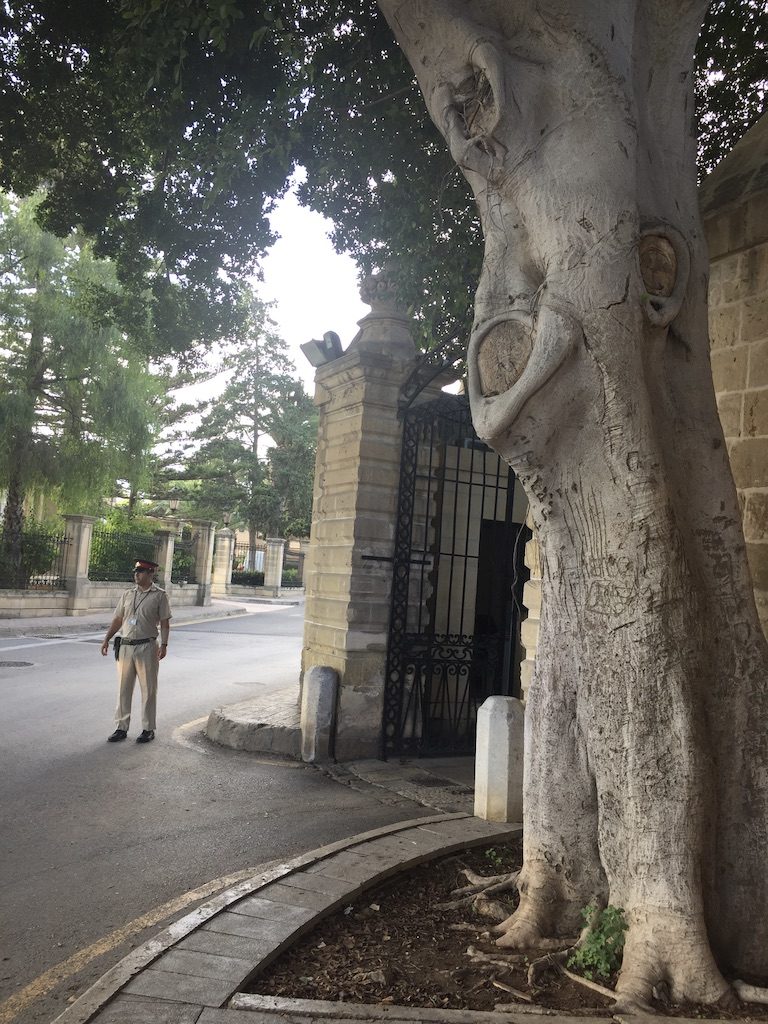
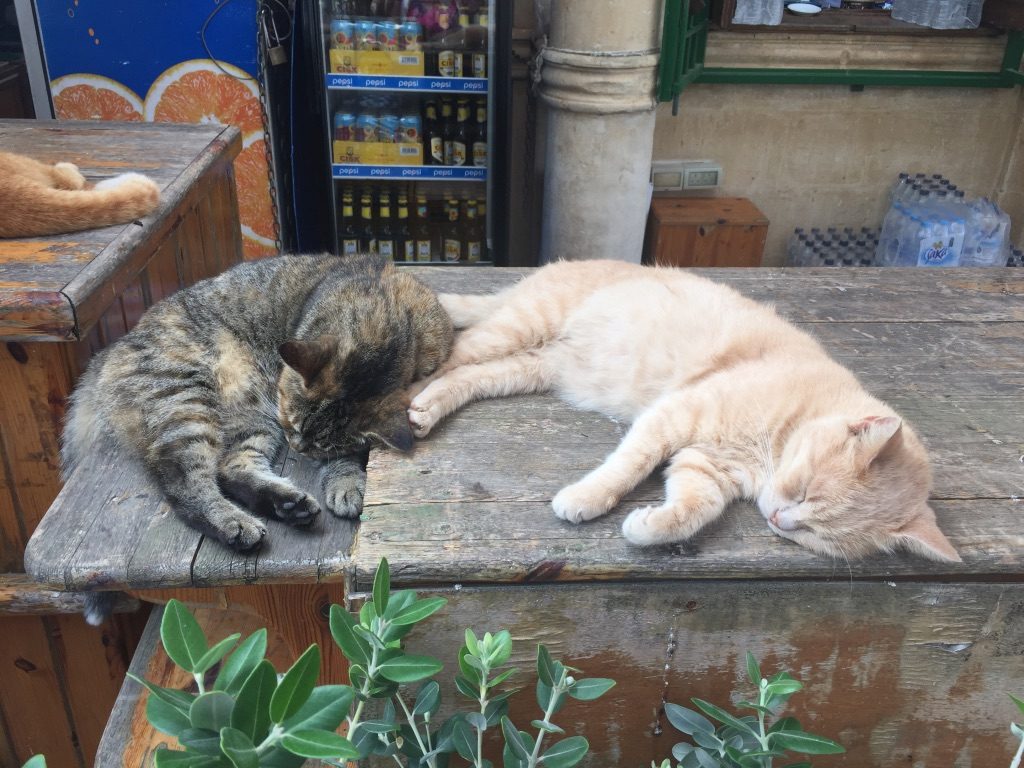
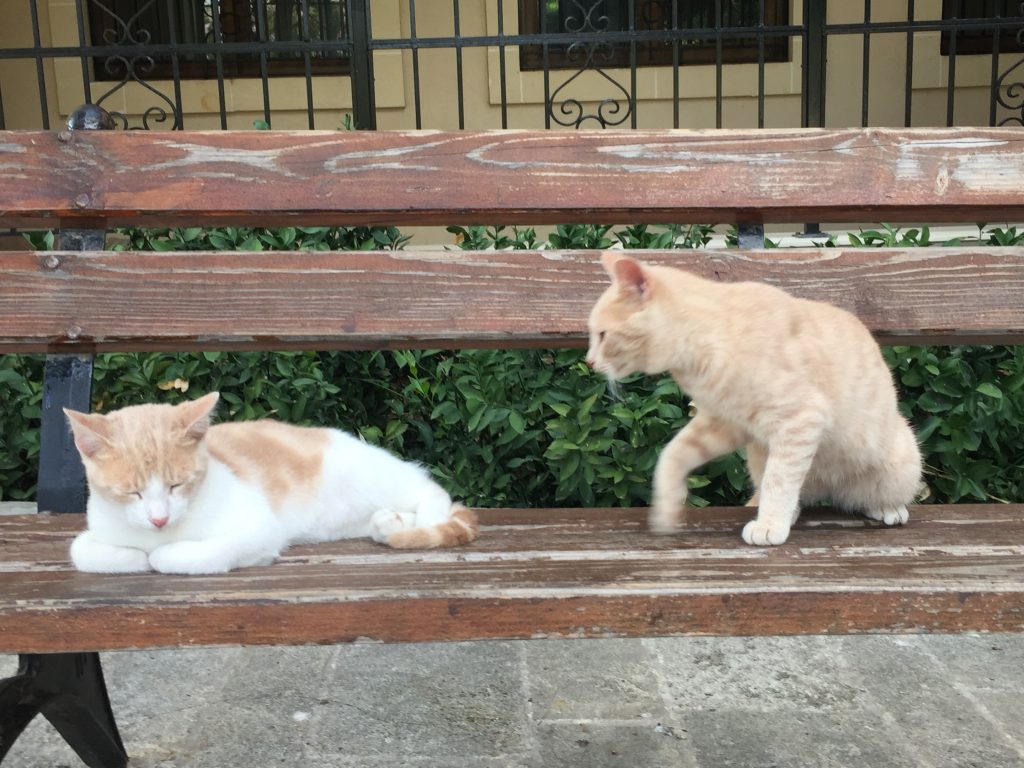
The gardens surround a palace that was originally built in the early 17th century and is now the residence of Malta’s prime minister. As I wandered around there numerous walkways I came to a gate manned by a soldier and at that moment a cavalcade of vehicles drew up and the soldier saluted. I guess the prime minister was in the car! The walled gardens were opened to the public in 1882 and it was lovely to see so much color in the flowers. I hadn’t realized until then how much I’d missed seeing colorful blooms. Of course the Maltese kitties were enjoying sunning themselves in the plant pots too. Several trees with the spiky and bottle-shaped trunks that I’d seen in Sicily were present and peacocks were strutting their stuff beneath them. 
The president arrives – off camera!

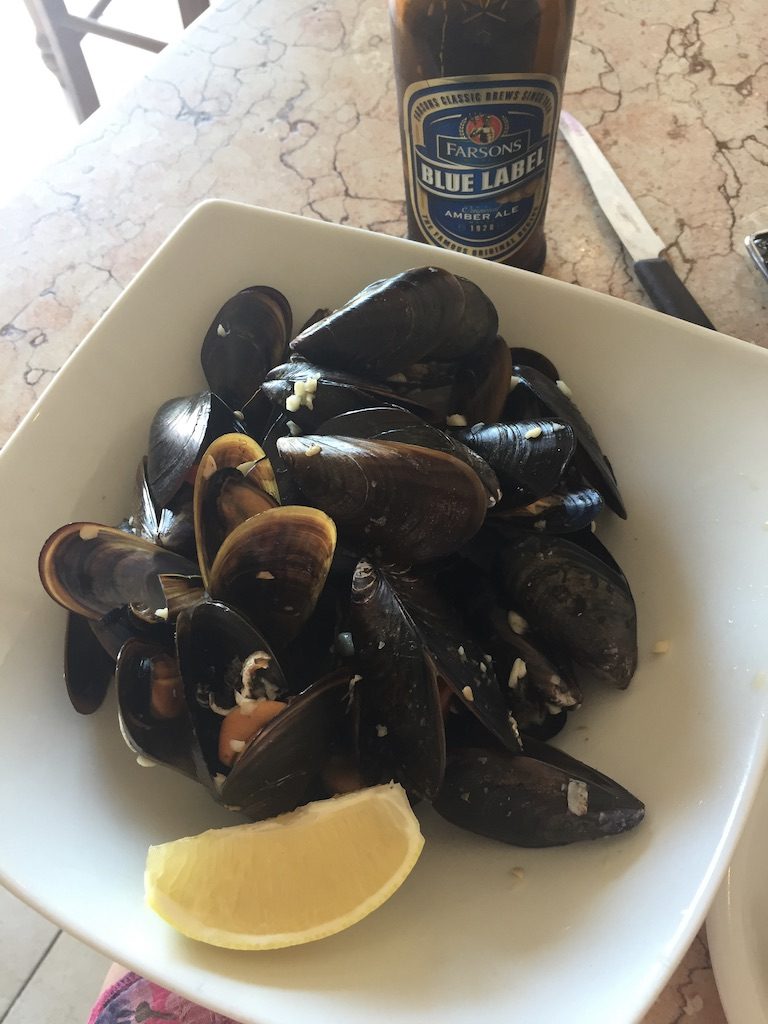
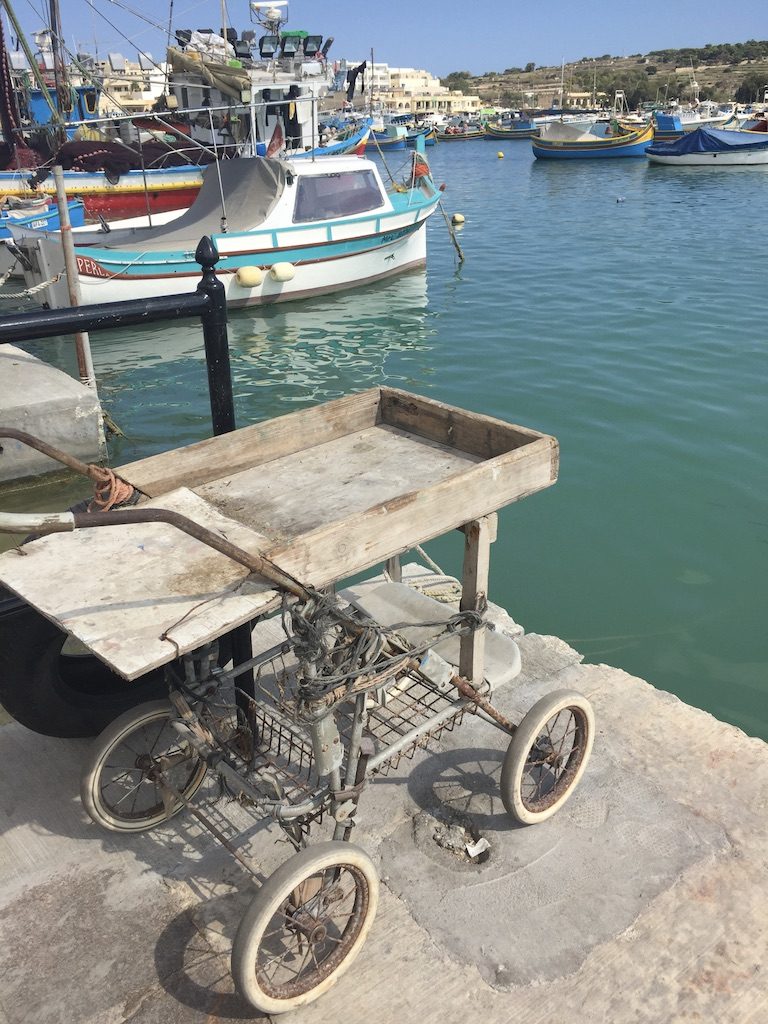
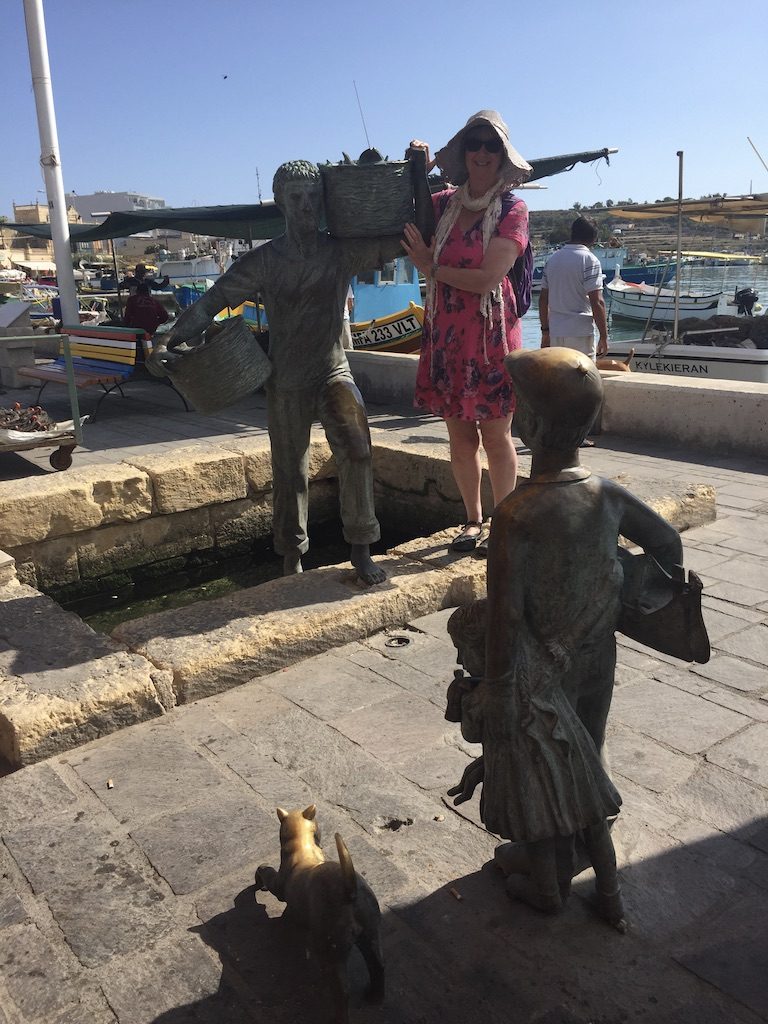
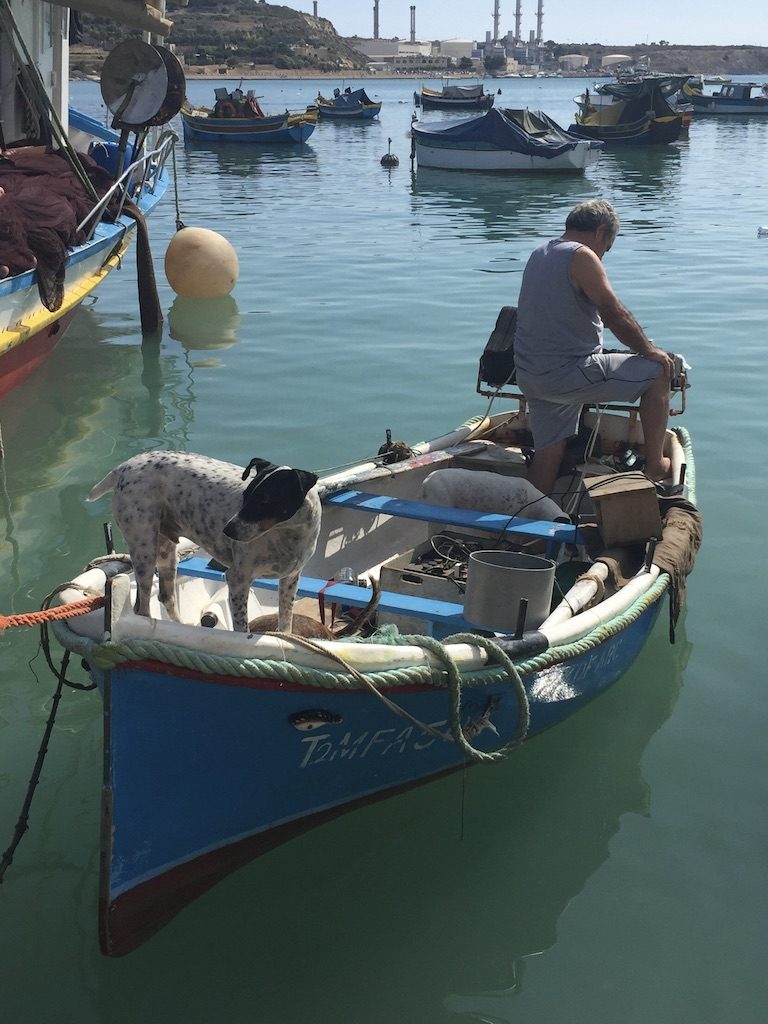
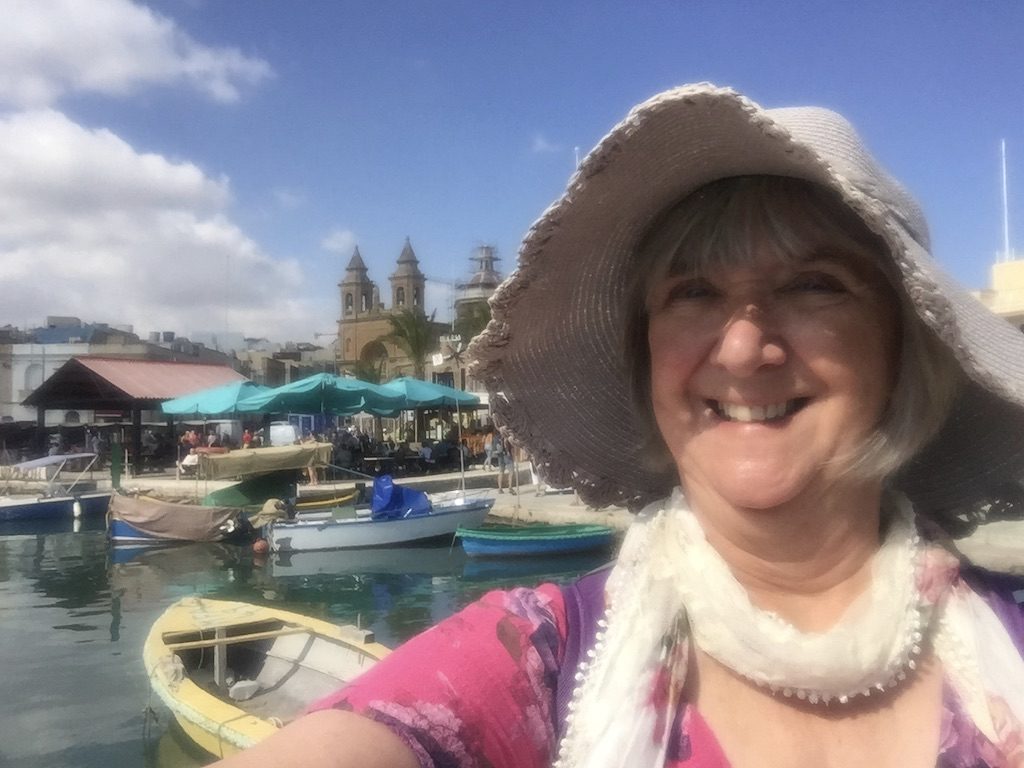
Lunch was at the coastal village of Marsaxlokk which is described as a typical fishing village, but the restaurants and street vendors have moved in and nowadays it’s a tourist haven  too. Still, it was very very pretty with the traditional highly colored fishing boats and there were shoals of fish chomping on pieces of bread. Fishermen had their nets strewn along the quayside and on the menu for one outdoor restaurant, alongside the fried rabbit was octopus stew. I’d been holding out for a dish of mussels until I found a good place by the ocean so here was my opportunity since we were all free to find our own lunch. 

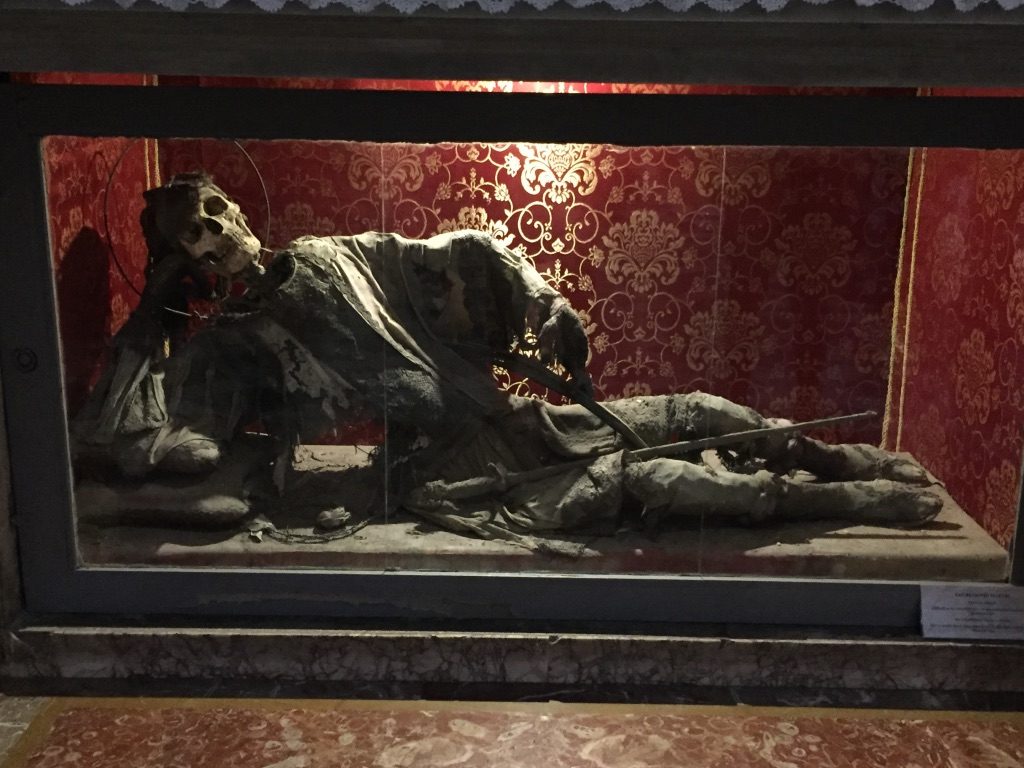
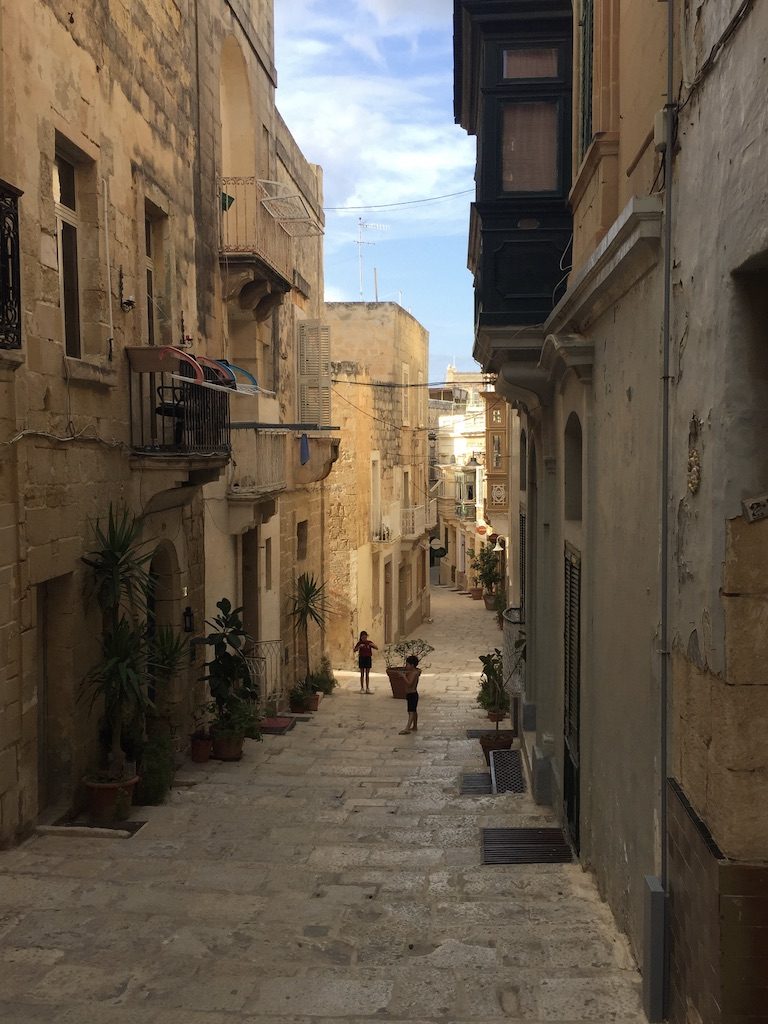
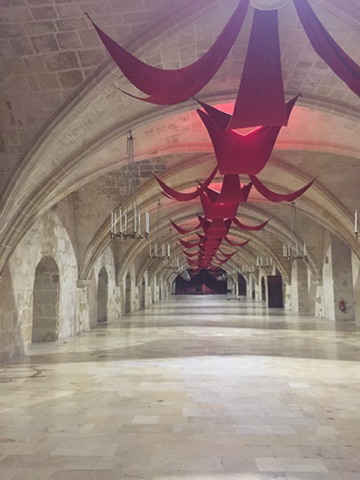
We spent the rest of the afternoon on a tour of the three cities of Senglea, Vittoriosa and Cospicua whose fortifications were built by the Knights of St John. Streets almost narrow enough for people on opposite balconies to shake hands were the order of the day with peeling paint and weathered stone – just my sort of place. The week after I’d got back from my trip I saw a quote from L.S. Lowry in the Manchester Art Gallery: “I seem to have a strong feeling towards decayed houses in deteriorated areas ….” Preparations were being made for the Superleague Triathlon event the next day and tents, camera men and portable toilets and barricades were being set up along our route. In the church of St Lawrence in Valletta there were several clothed skeletons reminding me of the catacombs in Palermo. 

Our final dinner with the group was back in Sliema, at Piccolo Padre, a lovely ending to an interesting trip full of surprises. 

Final dinner

The next morning I left Malta, bound for Leeds/Bradford airport along with another member of the group, and had a trouble-free trip back to Hebden Bridge where the all the colours of Autumn had come to the town in the week that I’d been gone.

Malta – Day 6

As I looked out from my window this morning a flock of birds were circling and soaring around the half built tower blocks. Later I showed my video of their antics to our group but no-one could identify what species they were. 

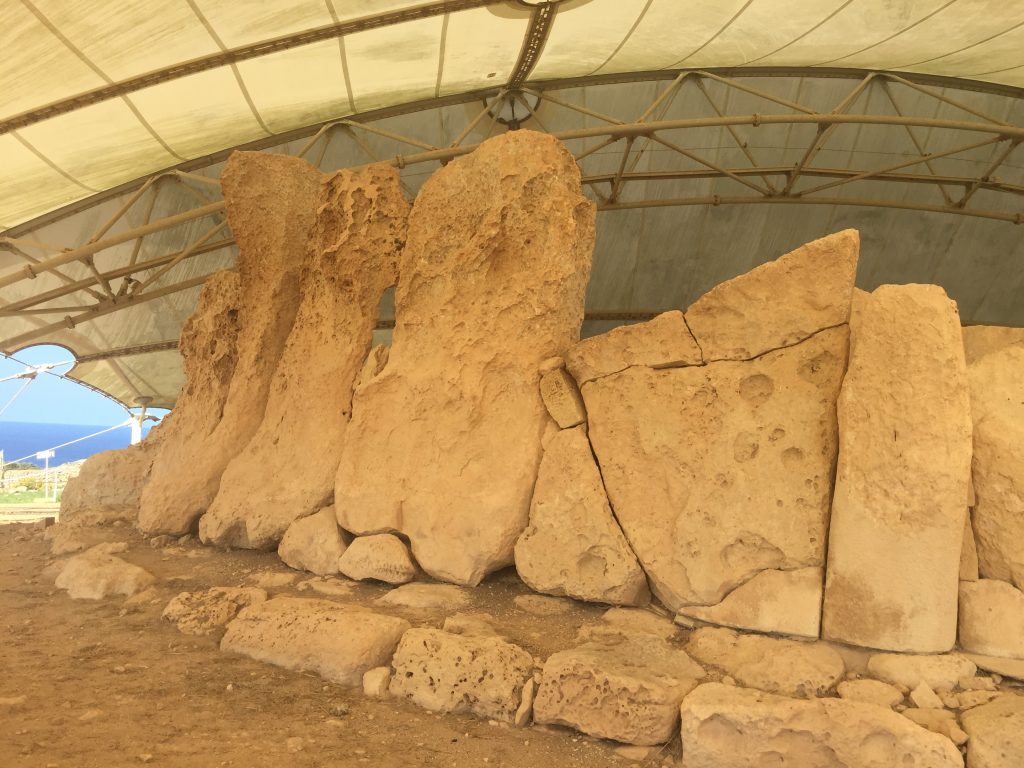
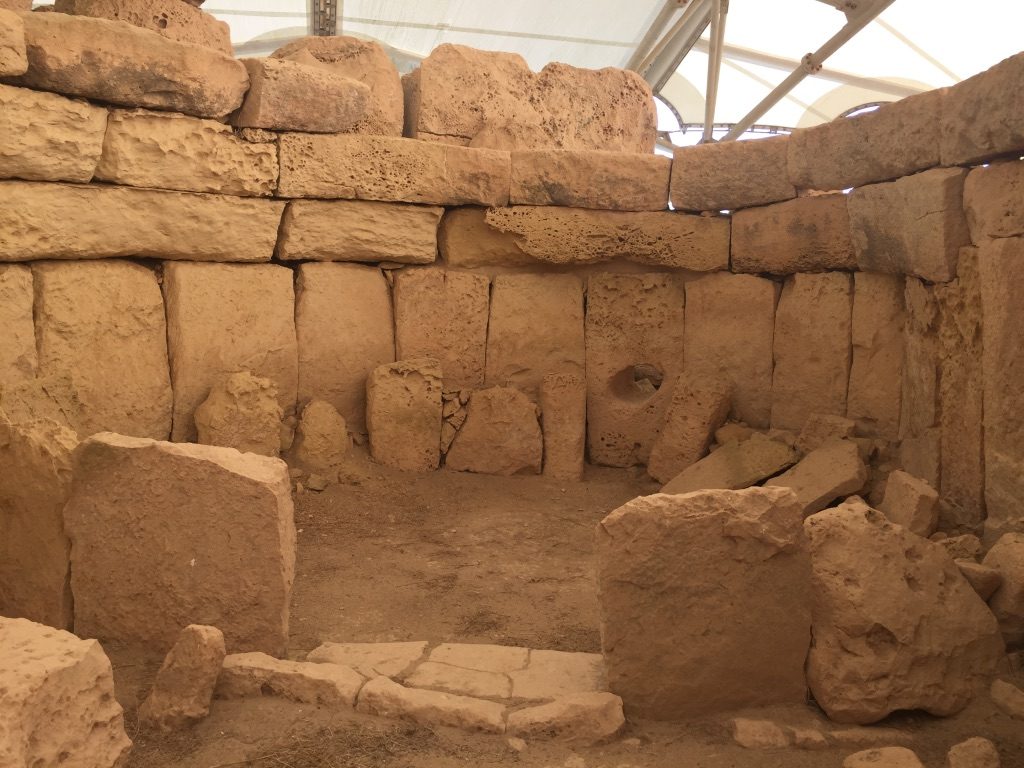
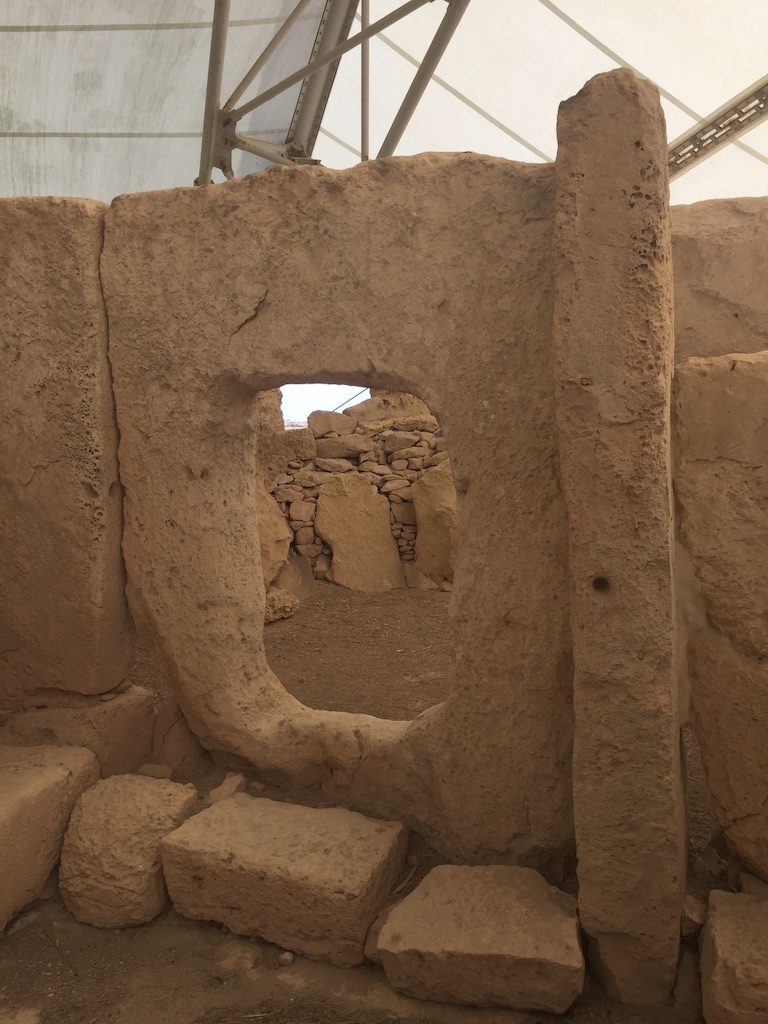
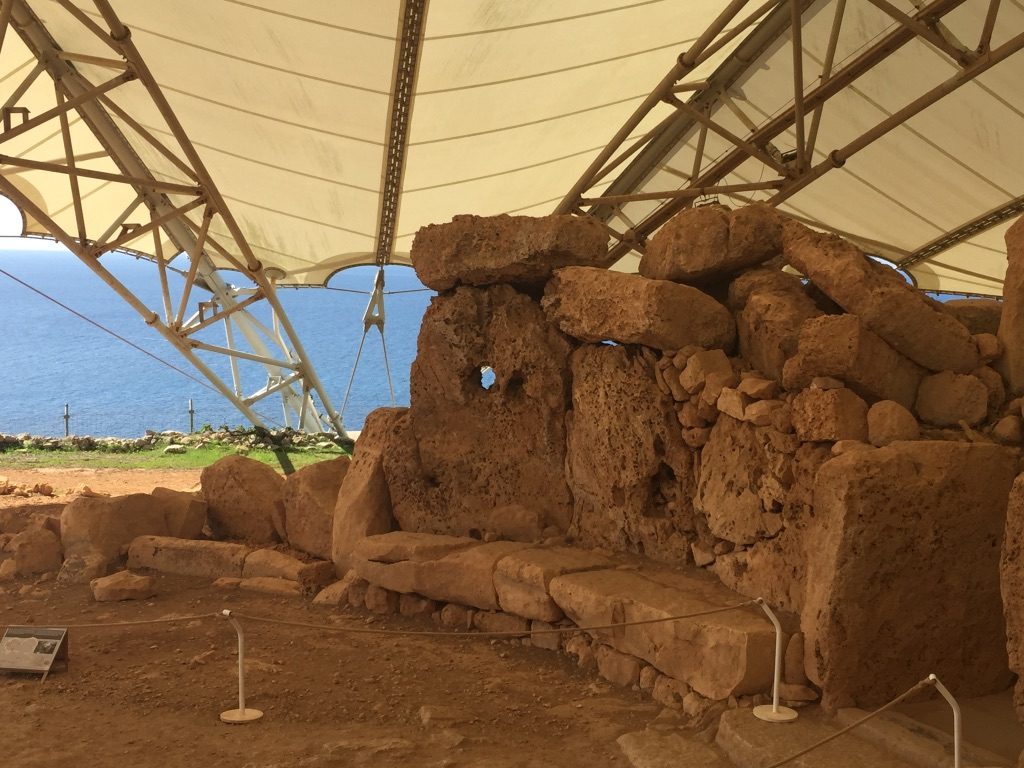
First on the agenda were two temples – Hagar Qim and Mnajdra. First we were treated to a three D movie about the history of the temples. Perched at the edge of the cliff it brought to mind the Temple of Sounion in Greece that I’d visited way back in 1976. The temples here predate Stonehenge by 1000 years, and they were built before Skara Brae in Orkney too, though I could see many similarities. Hagar Qim is the oldest free standing structure on earth and has now been shielded from the devastating effects of weathering by being covered in a giant tent – a protective canopy. It really looks like an alien space station! The lower temple was down a steep track and golf carts were available for anyone who didn’t want to walk. I took the opportunity of this so that I could have a few minutes back up at the top to wander along the cliff top by myself before the others arrives and we continued on our way.

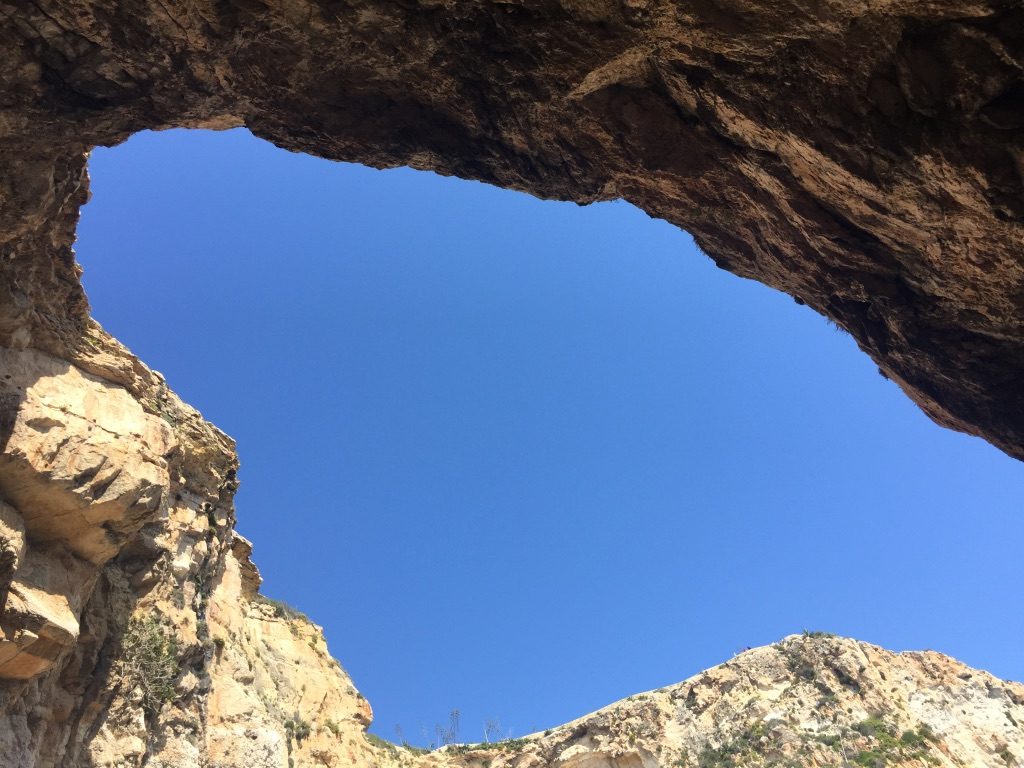
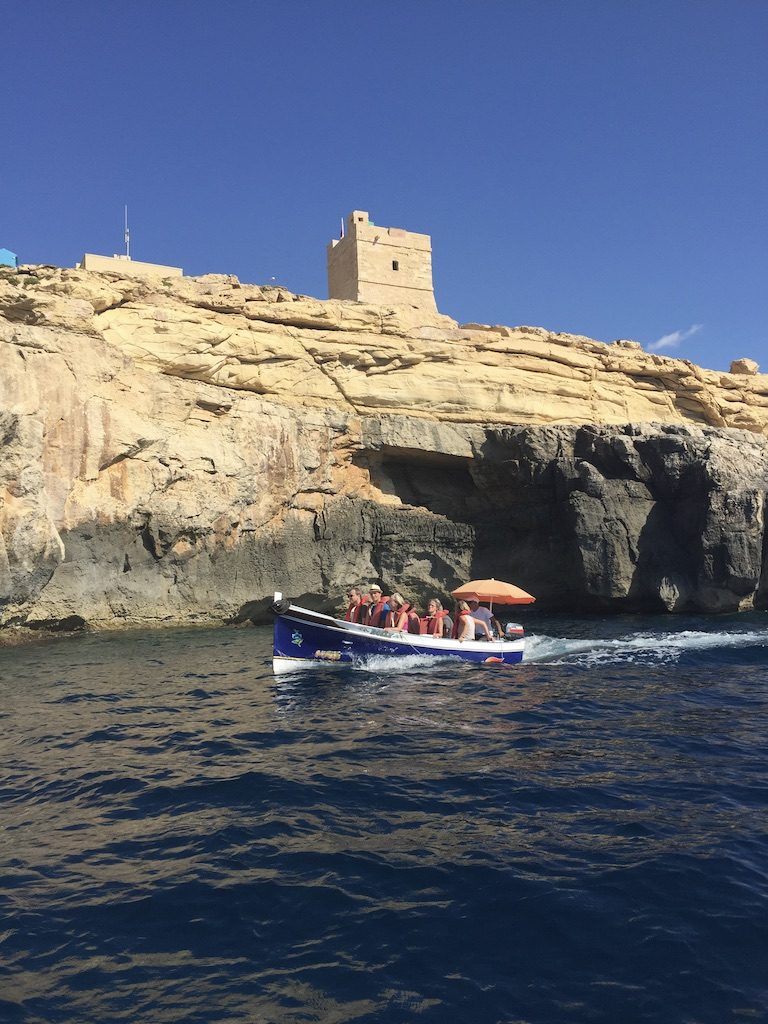
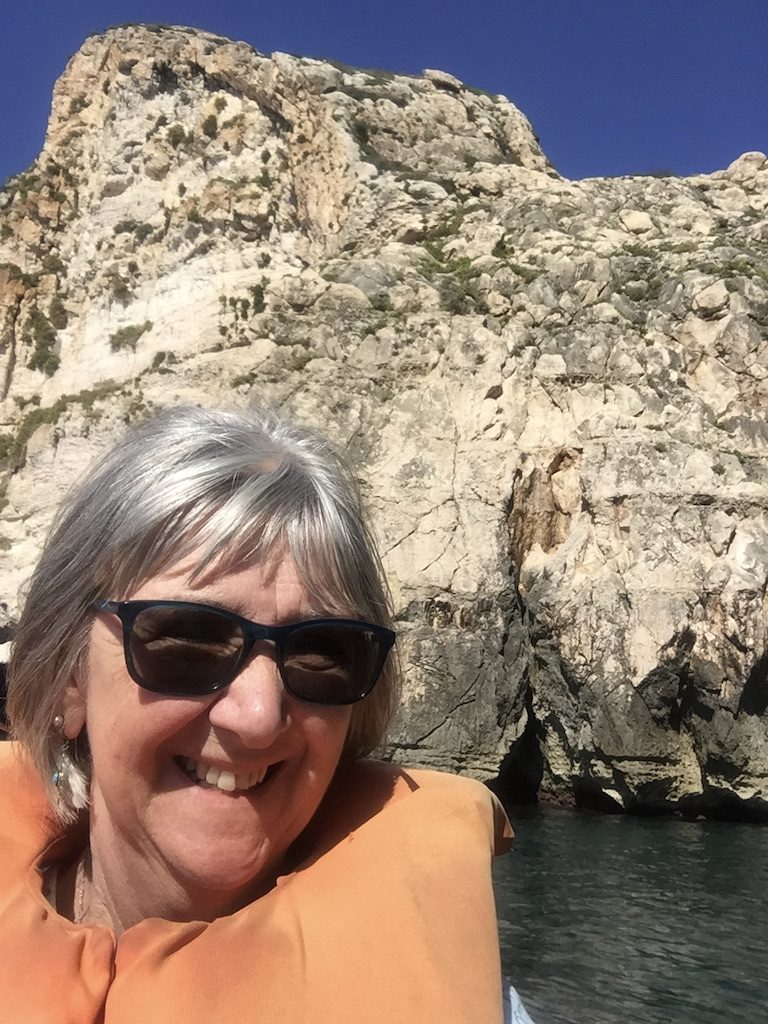
Next was a short minibus ride to  The Blue Grotto for a 20 minute boat ride into the various sea caves, marveling at the turquoise color off the water as we went. I bought a couple of calendars at the wayside gift shop on my way back to the bus.

As we made our way in yet another mini bus and a new driver Maria mentioned that until about 20 years ago women did not work outside the home in Malta. It would have been seen as a failure of the man to provide for his family. Now women work, which means they have less time to shop at local stores. She, herself, stocks up on groceries at the supermarket once a month. So locally soured products are suffering.

Lunch at the farm

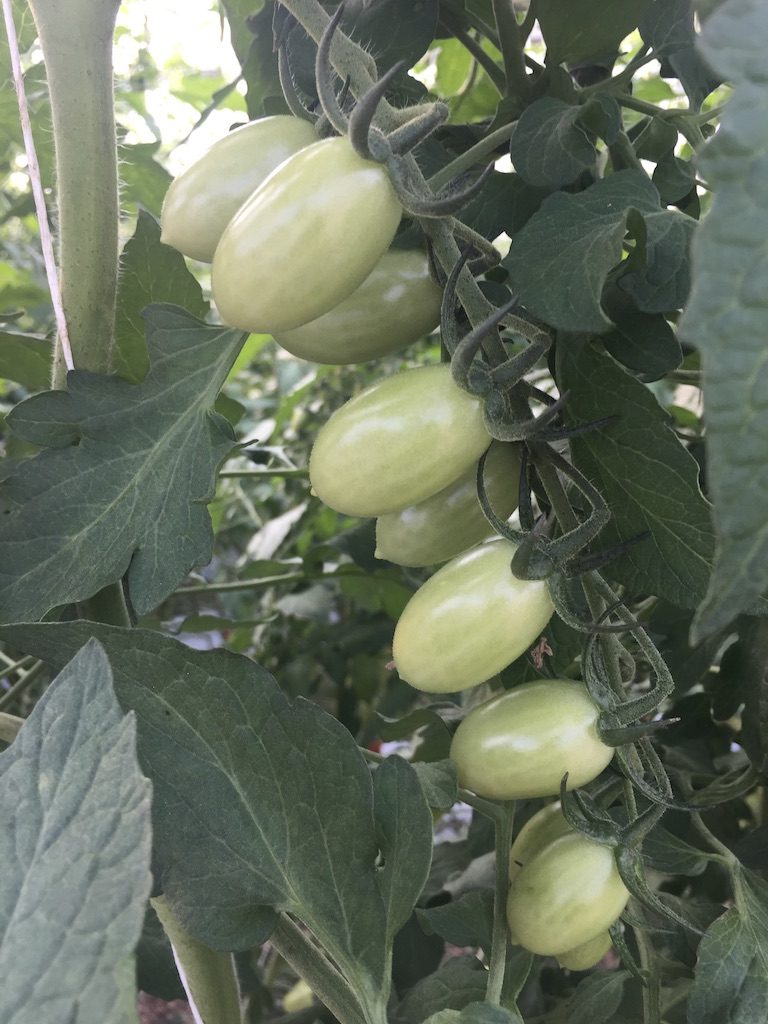
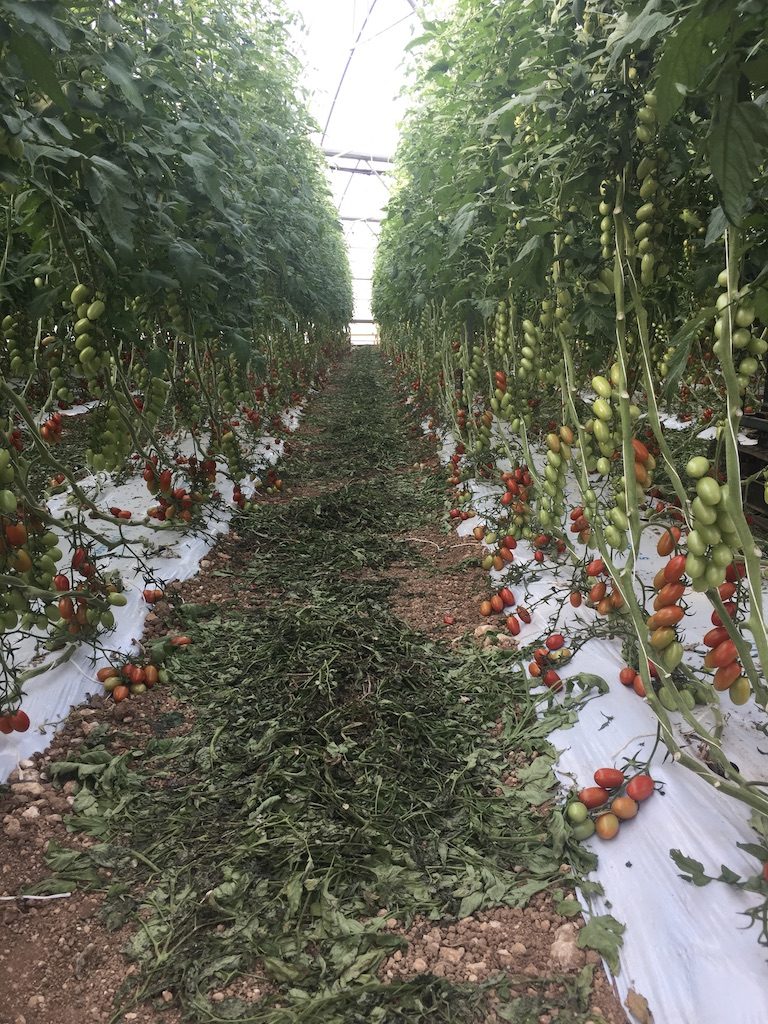
We were on our way to Malta Sunripe to meet an entrepreneurial farmer and his wife who are eager to share their love of farming with tourists. Alongside their 4 enormous greenhouses, each contain 9800 tomato plants they run a farm kitchen where they produce jams and wines, and also have a restaurant featuring their home grown produce. Delicious!

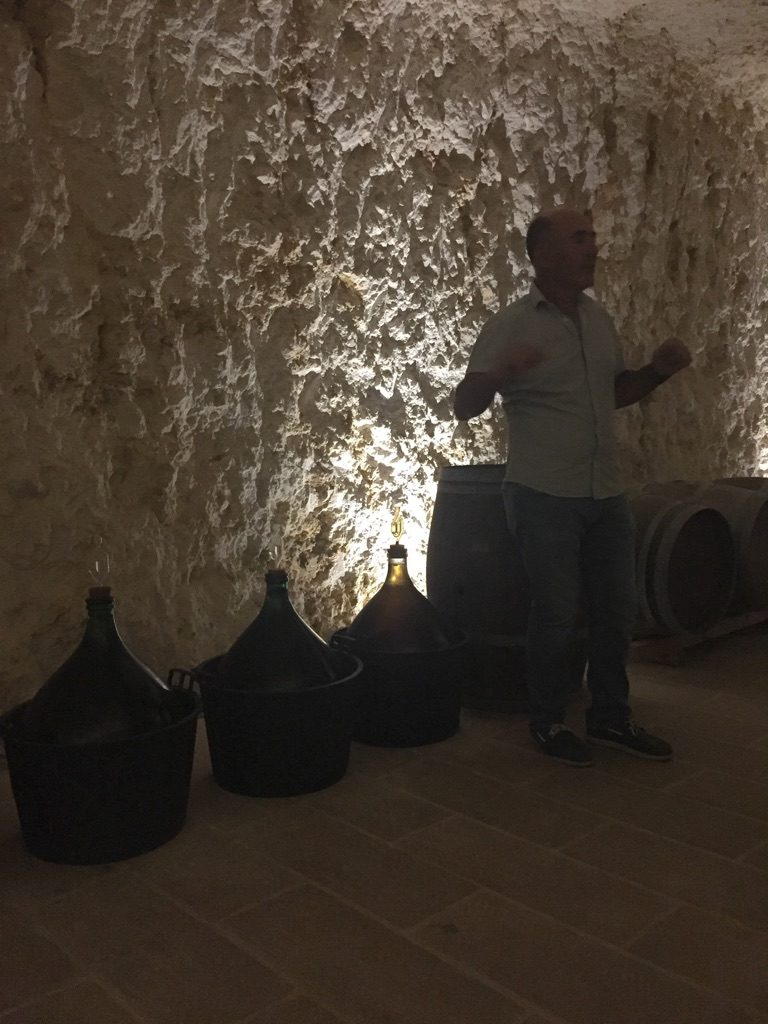
In the wine cellar

We were taken to see the wine cellar that the farmer and his family had carved into the bedrock themselves only a few years ago. After lunch we were shown a film about their work and then we got to tour one of the greenhouses.

8 members of the family farm the tomatoes which means they have to take it in turns to go on vacation because the plants need daily work – planting, tying, applying fertilizer, keeping bumble bees that pollinate the plants. In the summer they paint the roof of the glass house with chalk to stop the sun burning the plants. By the time the rain arrives later in the year the sun is not so hot and the chalk dissolves. Very clever!

On the way back to Sliema we saw the huge building project funded by the EU of 6 new flyovers. One had been completed. Work goes on there 24 hours a day, 7 days a week. Maria mentioned that newly weds tend to purchase  their homes. If they can’t meet the 10% down payment the government steps in and gives them an interest free loan. Wow! People generally live with their parents until they get married, and the average age of marriage is just over 30.

For an interesting take on the problems with the Maltese economy take a look at the first 10 minutes of this: https://www.bbc.co.uk/iplayer/episode/b0bnb6vc/mediterranean-with-simon-reeve-series-1-episode-1

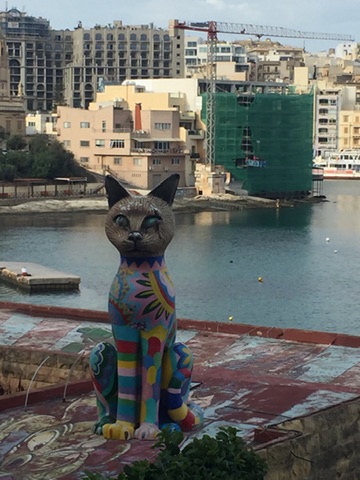
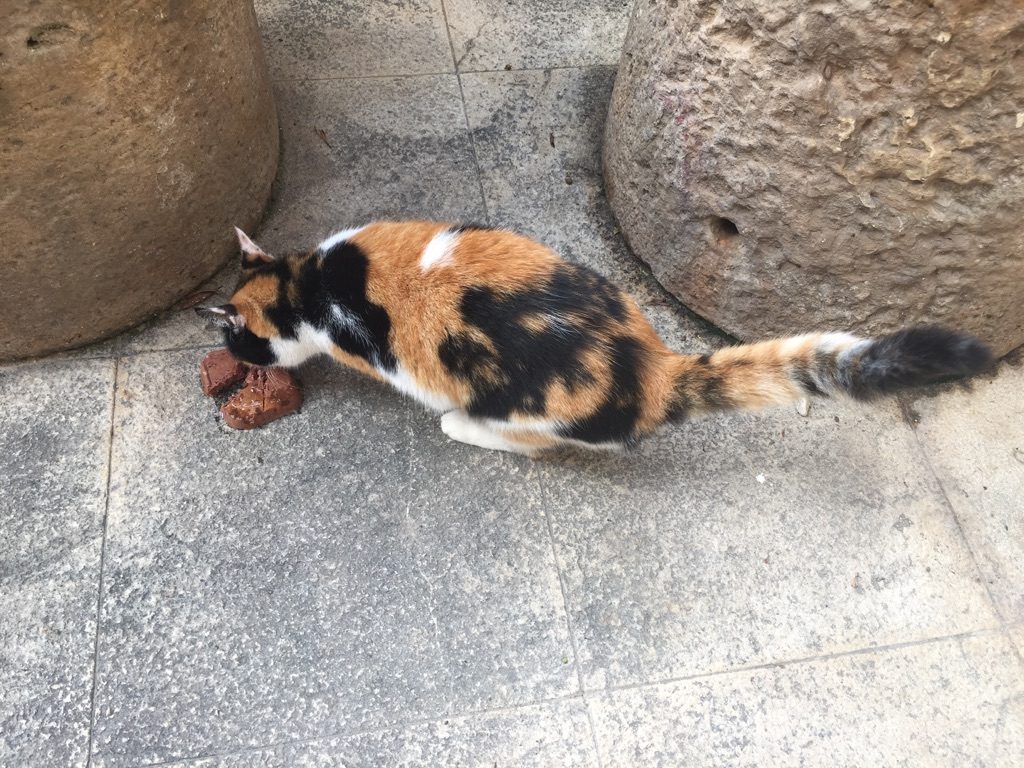
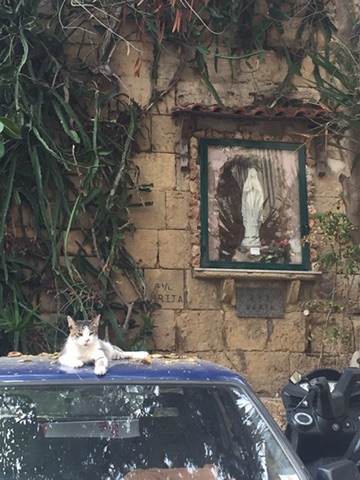
Today’s kitty

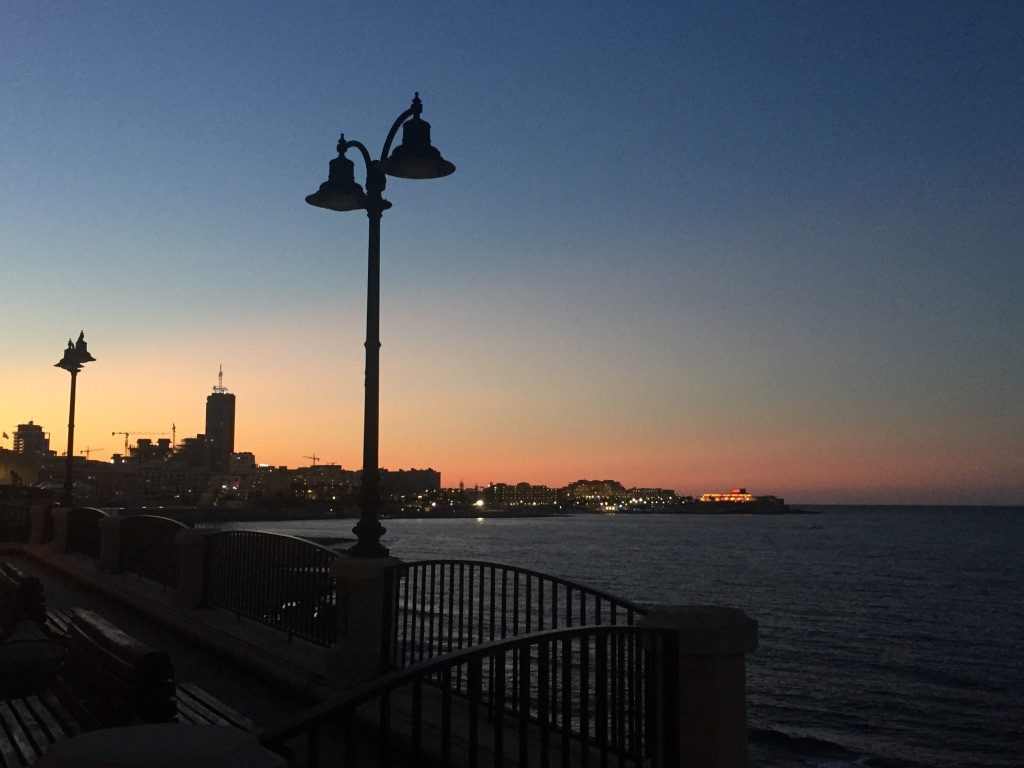
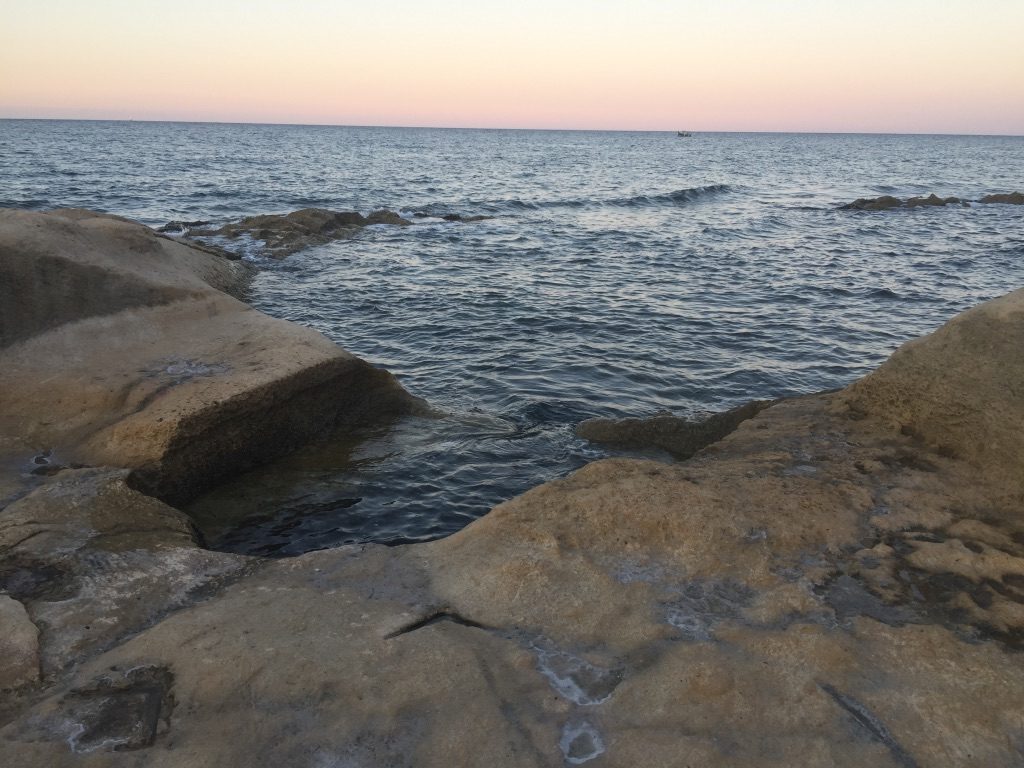
We were back at the hotel by 5:30 for a ‘free evening’ but I didn’t want a free evening. This was when I think a WhatsApp idea for those who wanted to partner up with someone else from the group would have been a good idea: get the ferry over to Valletta after dark, relax at an oceanfront bar, go beach combing. I didn’t want to eat in. A restaurant alone and though I thought about taking a nap I was too excited to sleep, so I headed out along the oceanfront to explore the peninsula. A map had promised Victorian Baths, but I didn’t find them. Still, it was nice to potter about on the rocks for a while. I went back to the mini market which had been closed on the first night and was surprised to find how good it was. It was the only food store I’d been into, or even seen on the trip. 

Malta – Day 5

Day 5

I was woken intermittently during the night by rumbles of thunder in the distance and it was rather overcast when I look out of my window, carefully screening myself from the guys already hard at work on the construction site opposite.

Roof-top kitty

I began the day by walking along the seafront for half and hour or so, checking out the kitties in the playground, and noticing that every second business was selling real estate. 

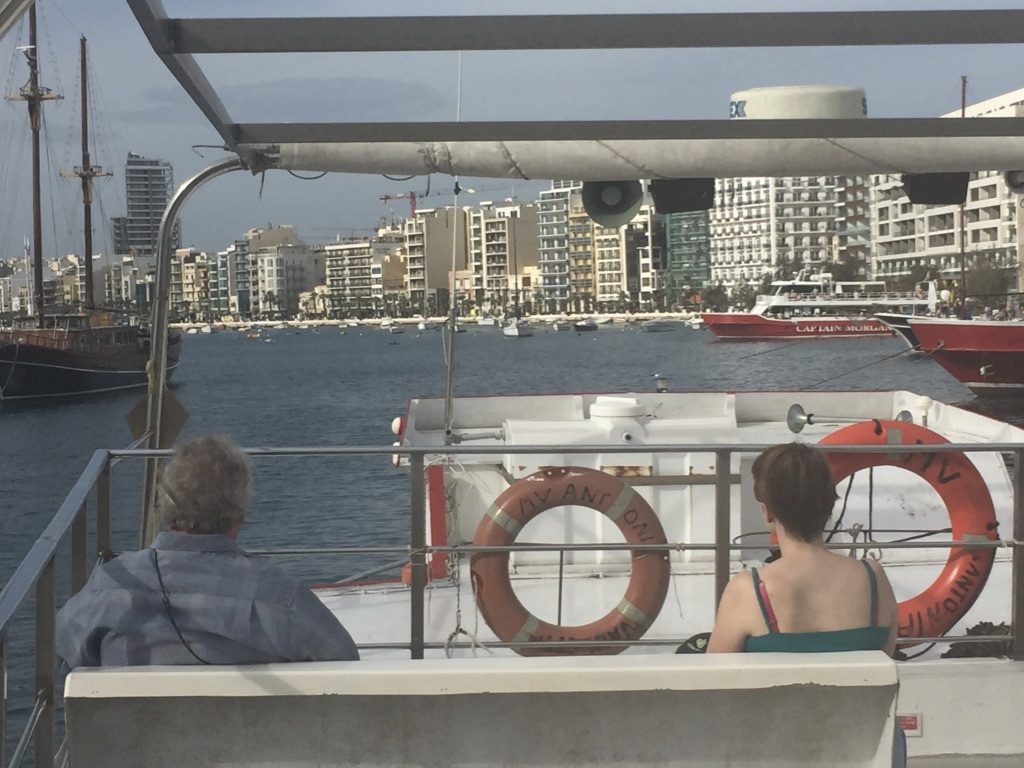
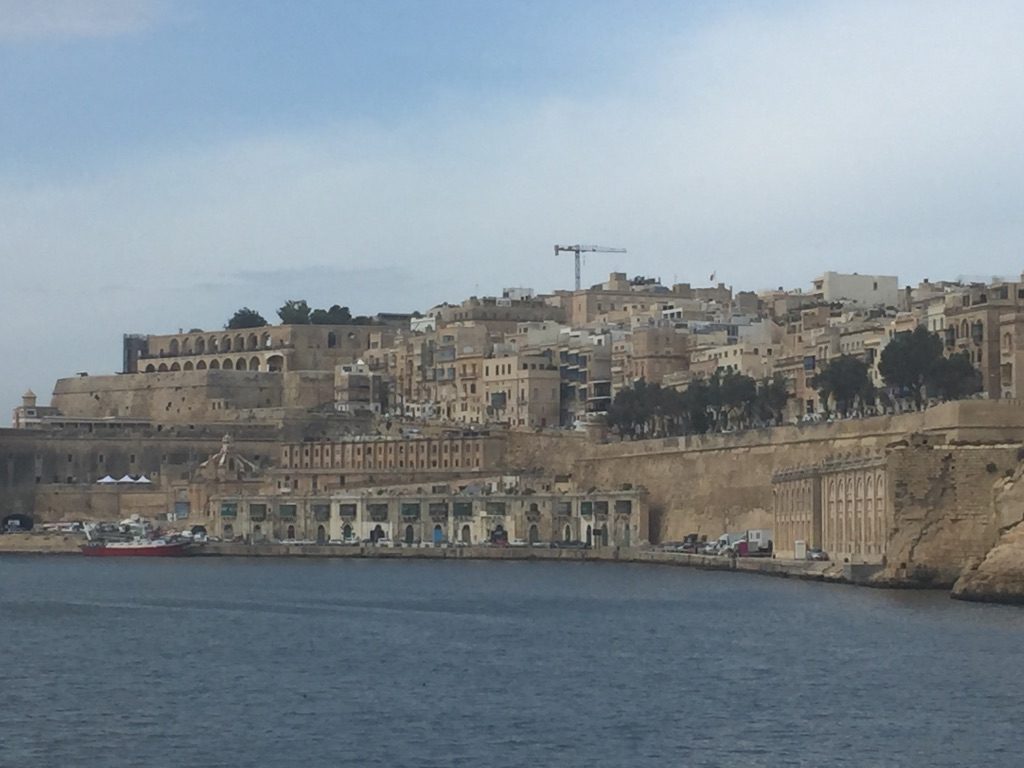
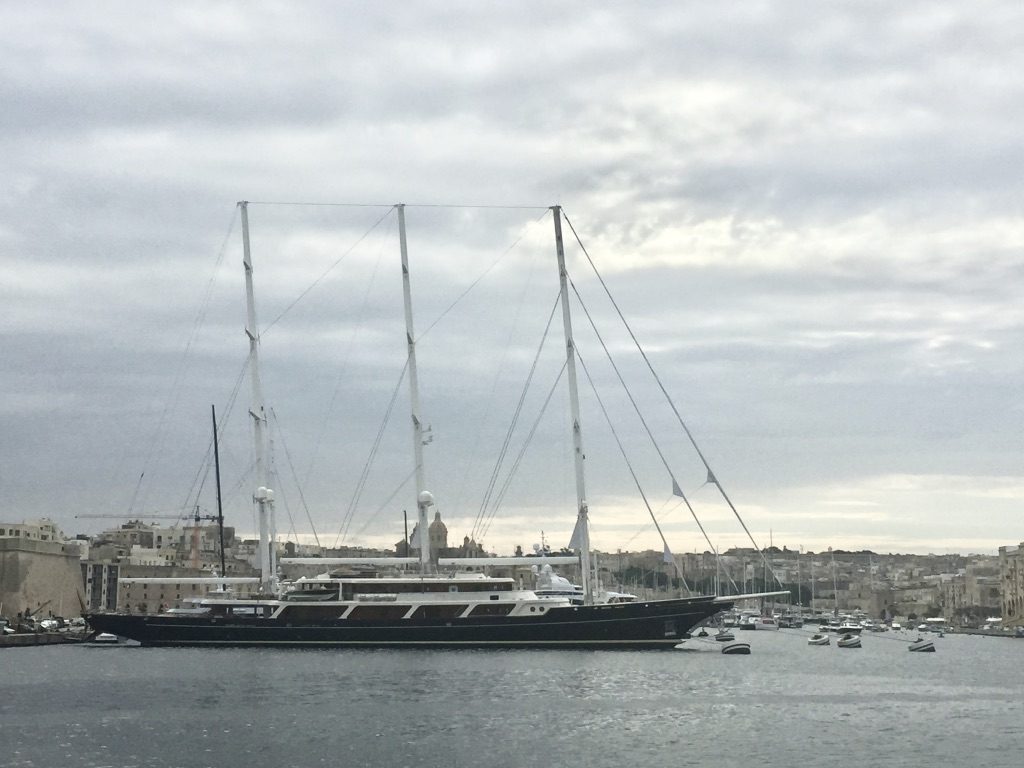
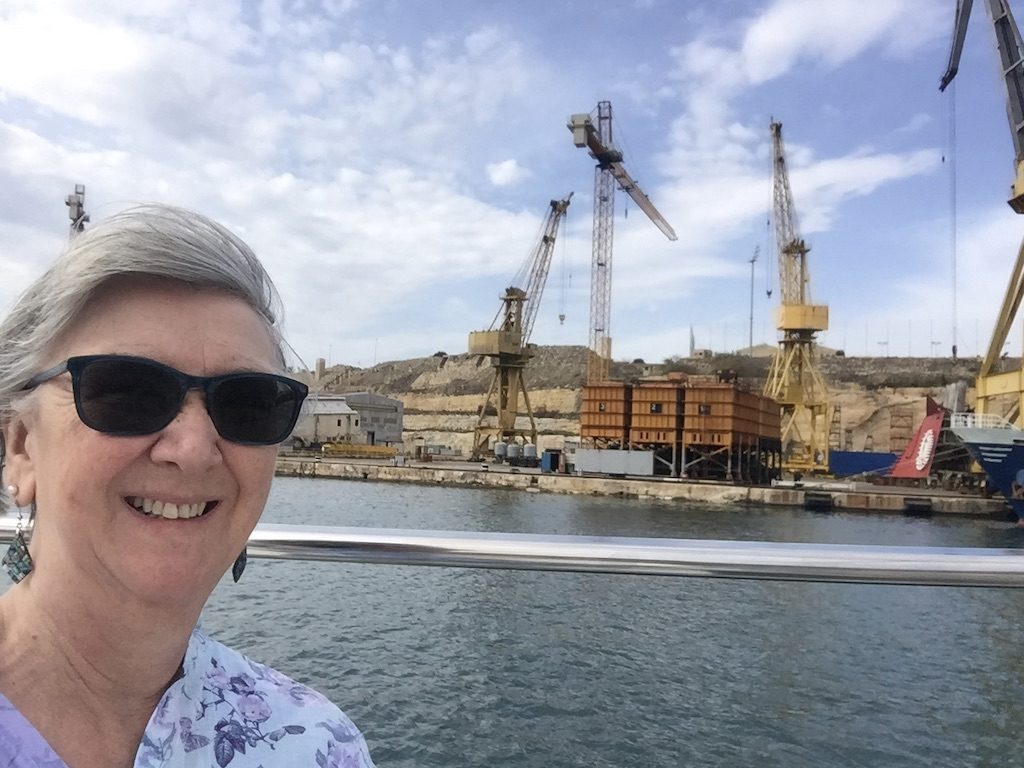
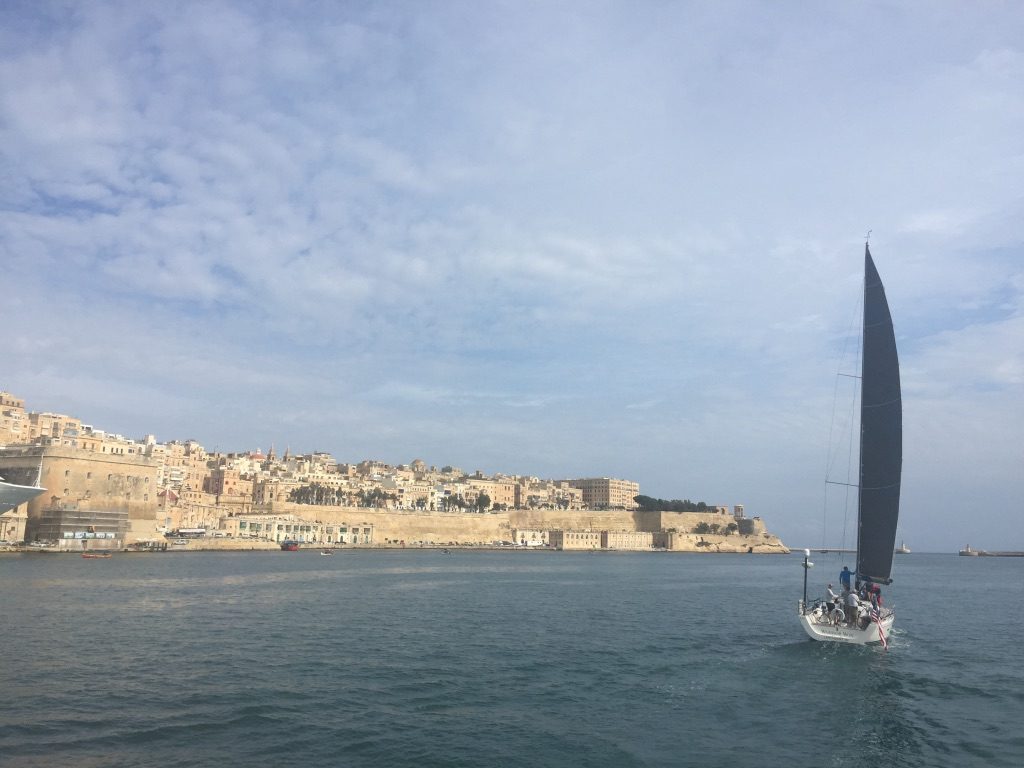
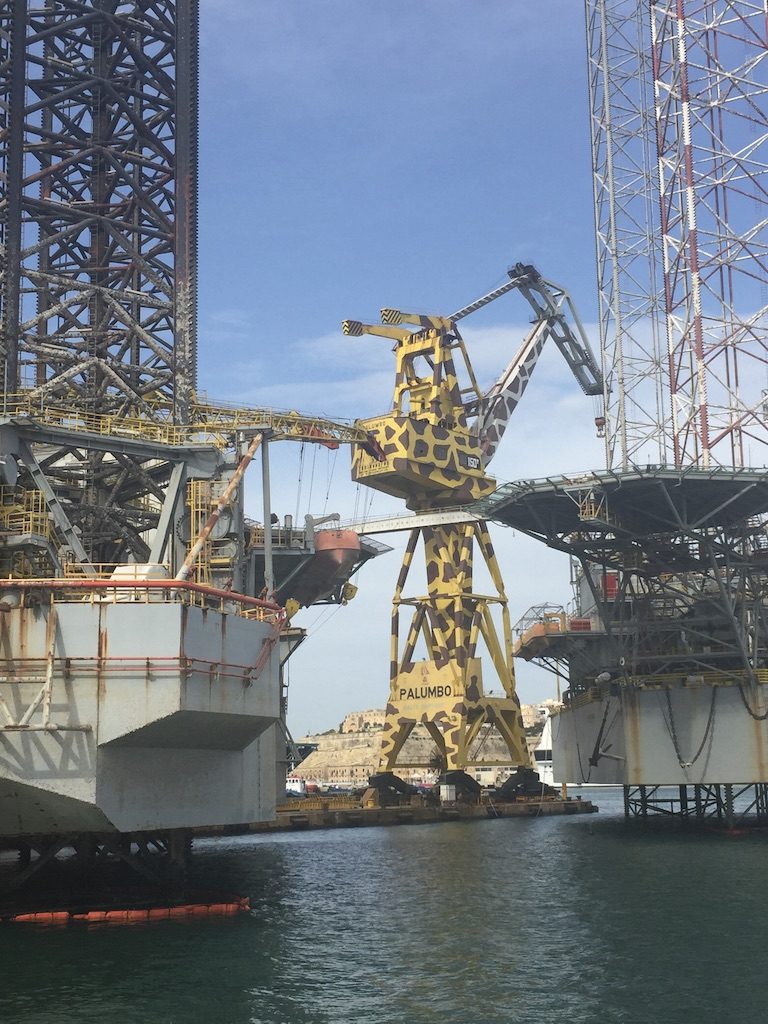
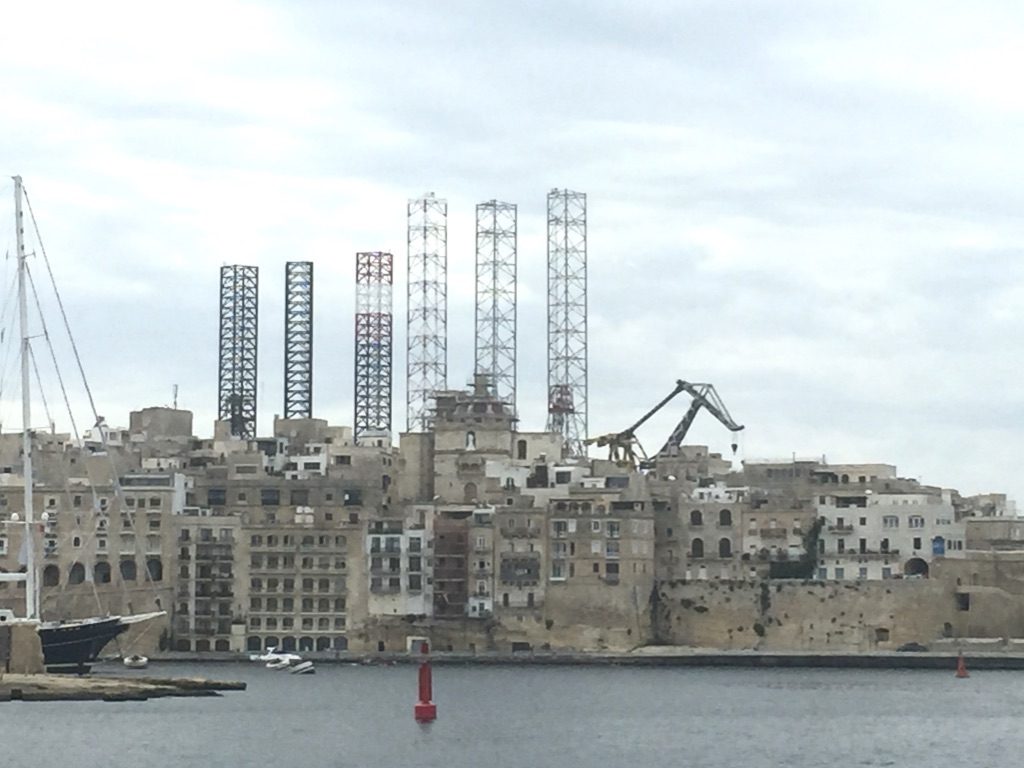
After breakfast we headed out for our 90 minute boat trip in Malta’s Grand Harbour. Maria had told us that the only way to really appreciate the vastness of the harbour was to see it by boat, and though this sounded decidedly like a marketing ploy – Boy! Was that true. There are 5 ‘fingers’ to this natural  harbour and it’s still a hub of activity with its cranes, oil rigs, high end yachts, dry docks for ship building and fishing vessels. I saw a huge crane that was shaped like a head and neck of a giraffe in the distance, and, lo and behold, when our boat drew close, the rigging of the crane had been painted in the brown and yellow spots of the giraffe. Our of our group explained to me that the oil rigs were just there for storage, they weren’t drilling.

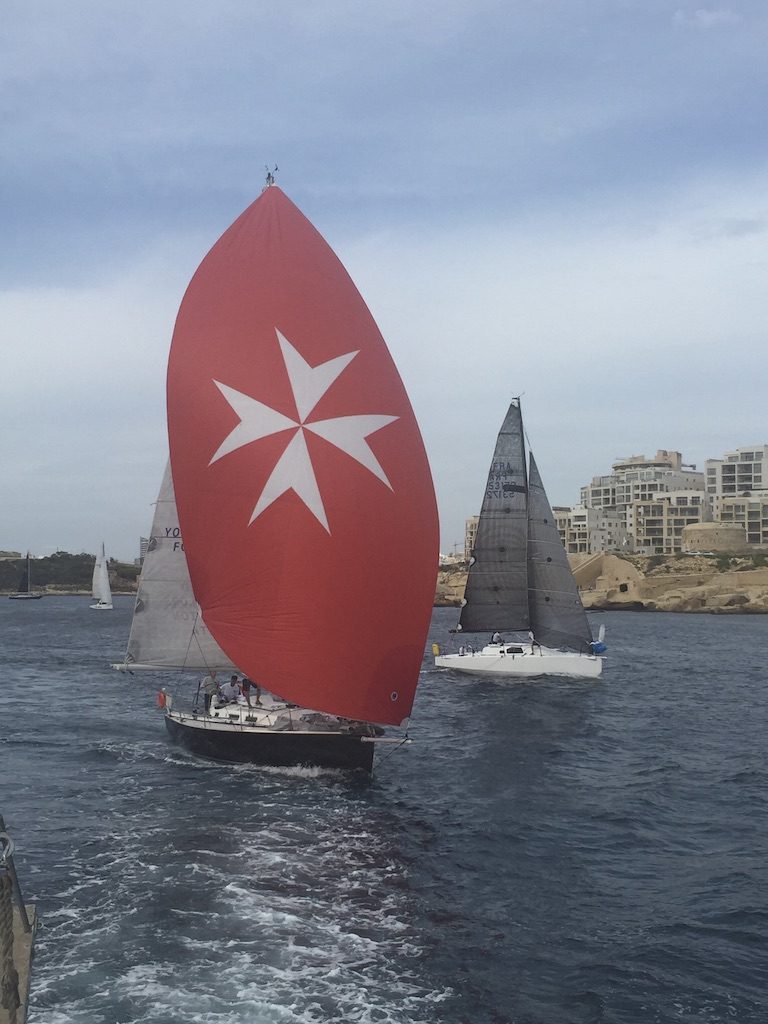
She was from Aberdeen and working in that industry. There were lots of small boats adjusting their sails as they travelled. They were practicing for a big yacht race this coming weekend. The five star formation of the fort was easier to see from the ocean and its fortress walls seemed impenetrable. I could also see the hospital and appreciate its long length and how amazing its unsupported ceiling must have been when it was built. 

Lifestyles of the rich and famous

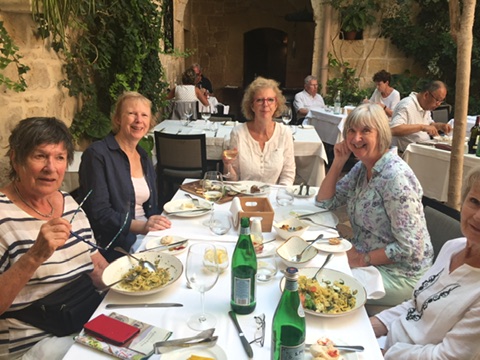
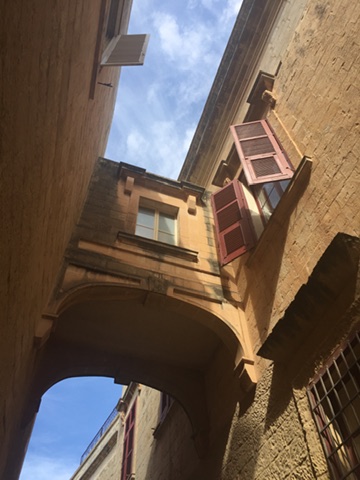
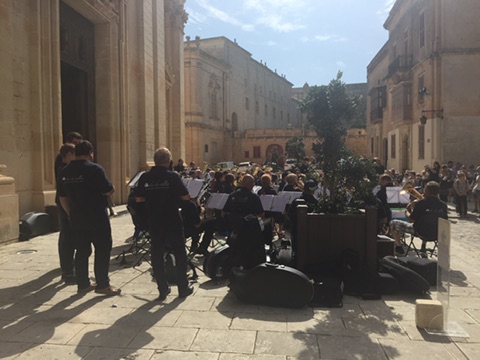
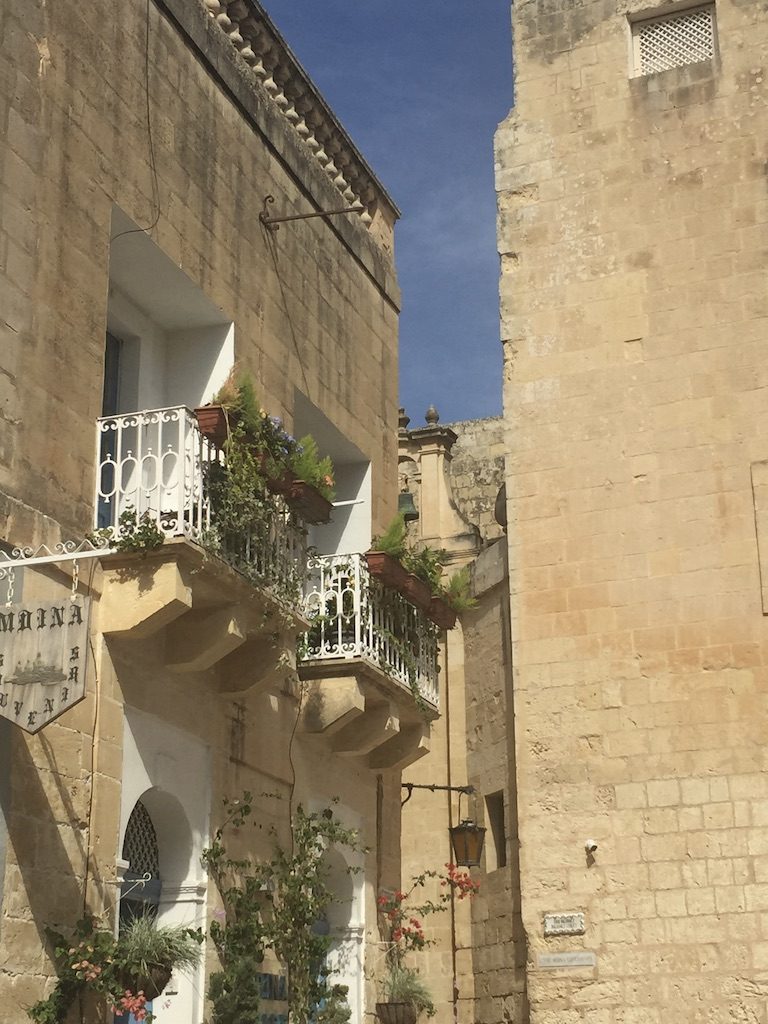
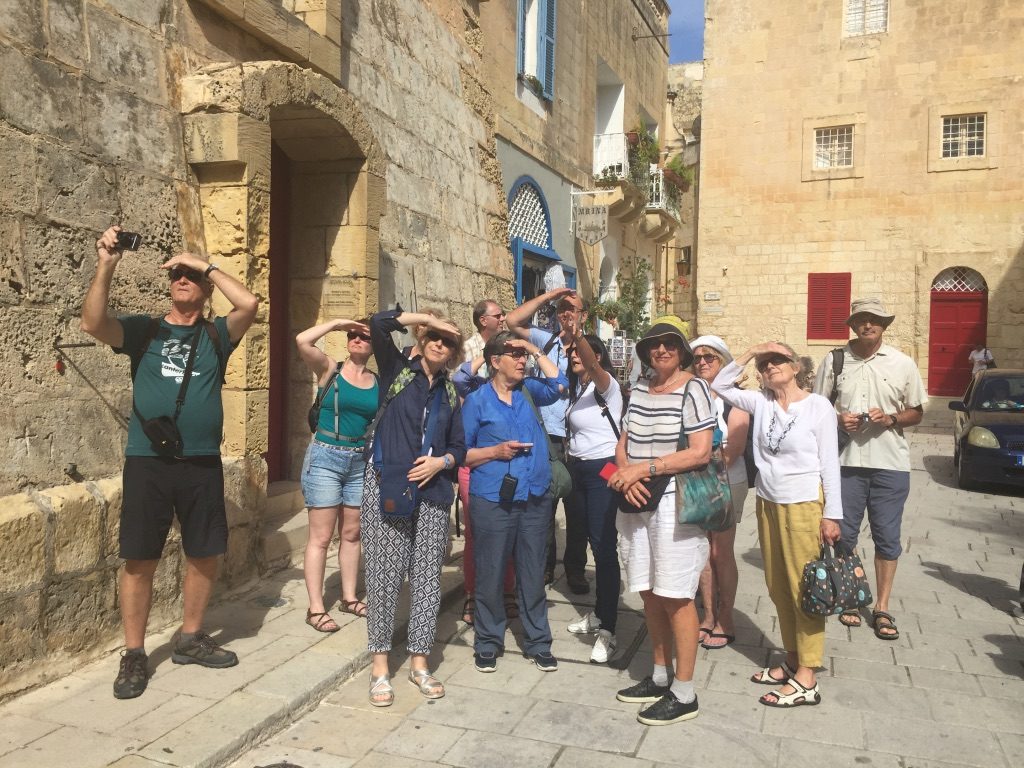
Then onto Mdina where Maria pointed out various places we could have lunch from our central point outside the cathedral. As we approached the central square through the narrow streets I could hear a symphonic band playing songs from Jesus christ Superstar – one of my family’s favourite musicals. I couldn’t wait to see them close up. Four of us headed for a very pleasant lunch in the courtyard of a former palace. We asked our waiters for help with translation of the menu but its was difficult. They were Albanian and Sicilian.
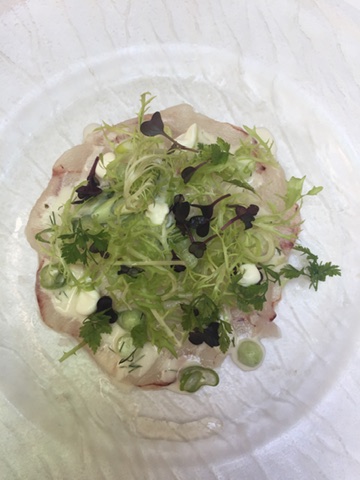
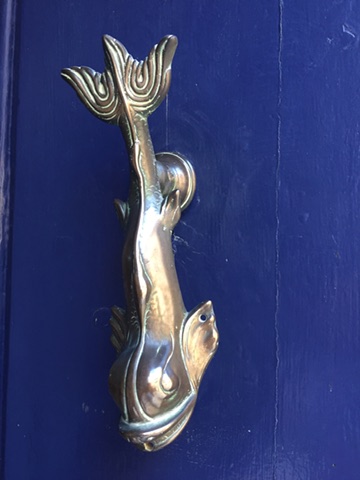
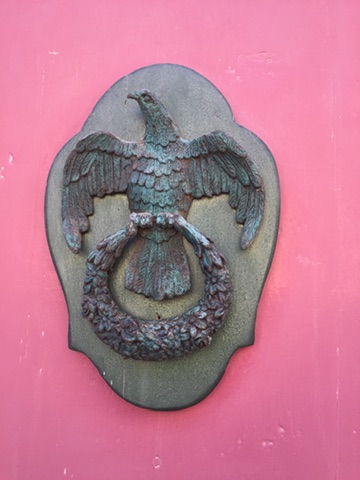
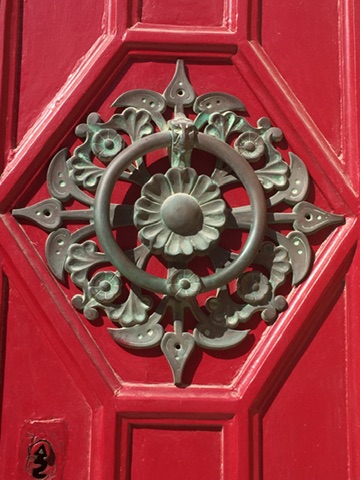
I chose to be adventurous and selected the monkfish carpaccio with the best roast potatoes in the world. Despite the ‘relaxed’ rate of service I still had an hour after lunch to explore the city alone, and found myself taking lots of photos of door knockers. These were a symbol of your social status, and some were very elaborate – daily with a nautical theme.

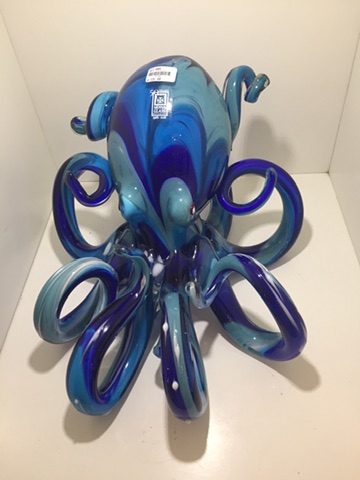
Like Murano Mdina is noted for its glass and I took a look in a couple of the glass studios. I found some lovely pieces but didn’t fancy my chances about getting them home, or the the U.S in one piece. 

Glass octopus

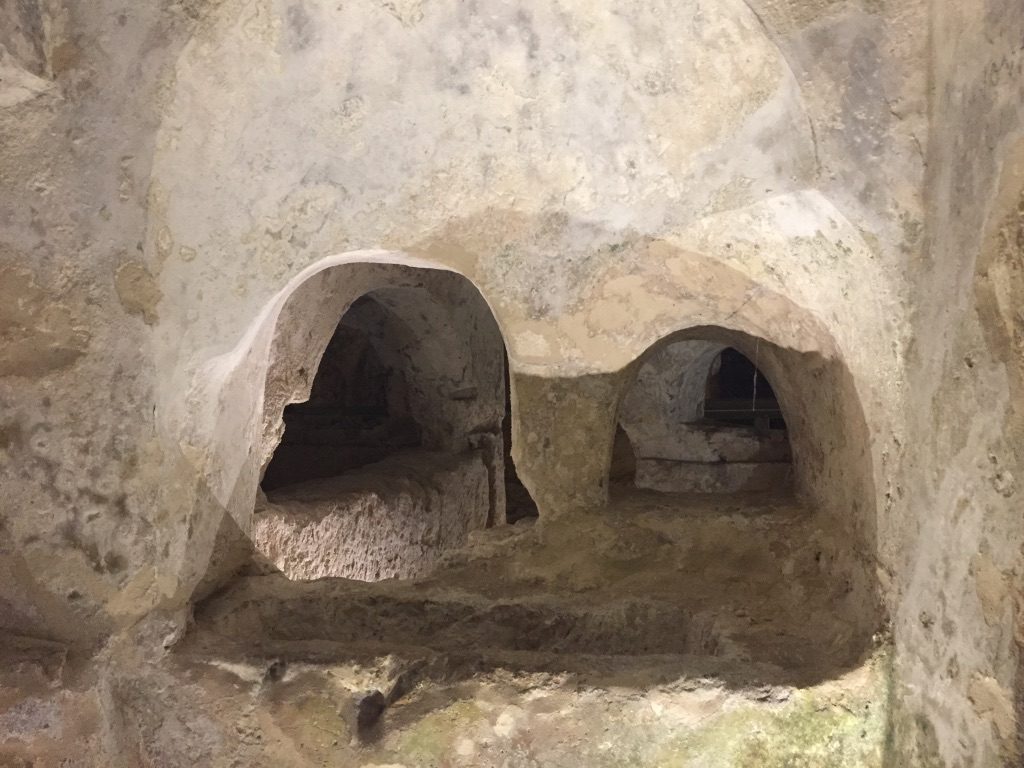
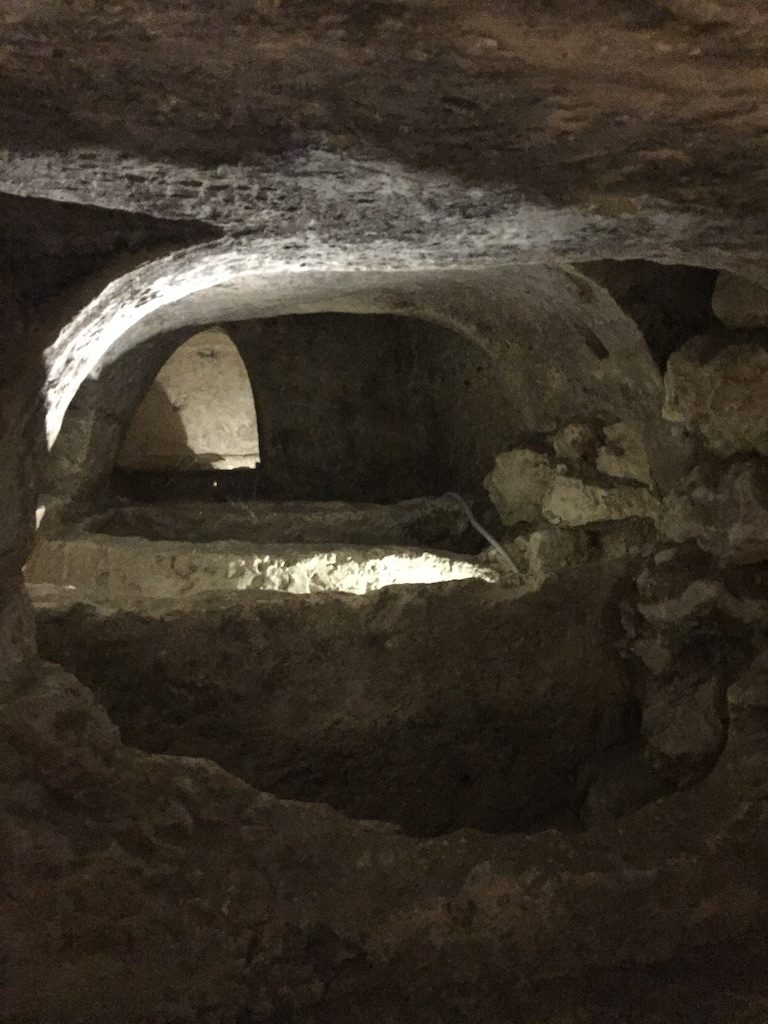
When we met up again, at the British phone box (they look as though they’ve been planted by mistake – along with the British post boxes) we visited a Roman villa with intact mosaic floors and then on to the catacombs. I must admit I was a little disappointed with these at first. After visiting the amazing catacombs in Palermo last year where the skeletons and both posed and clothed, just seeing holes hacked into the bedrock where the corpses would have lain was not as mind blowing. 

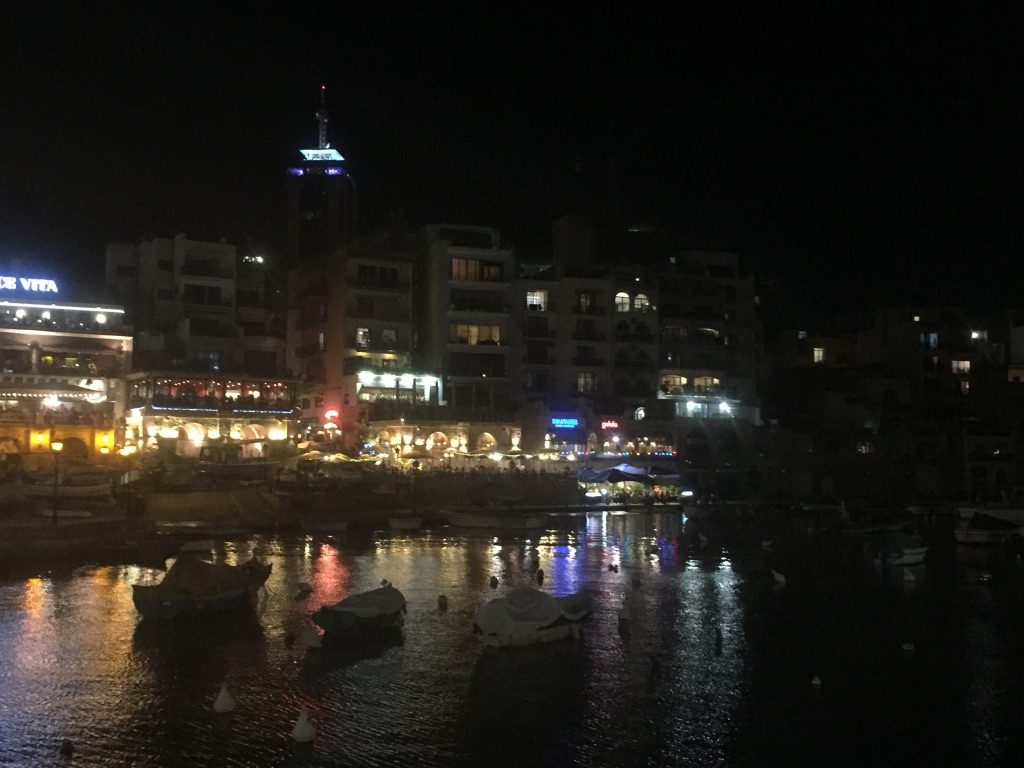
We arrived back at the hotel at 5:30 and met up for dinner an hour later, organized by Maria, at Gululu about 20 minutes walk along the waterfront.

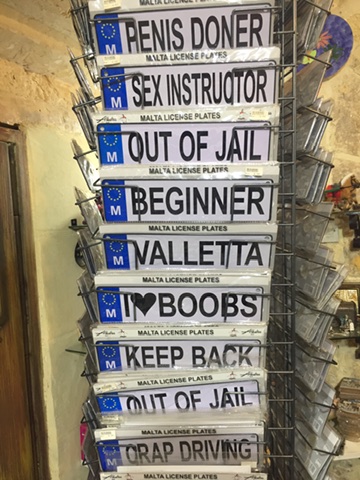
Rabbit is the featured local food but I had clam and aubergine pasta, my first pasta dish of the trip. It was delicious. Our talk at dinner was mainly about places our group had visited –  Cambodia, Egypt, Morocco. I think everyone had been to India at some time in their lives. This is so different from conversation in America where the topic might included visiting a second home at Lake  Tahoe, or a beach holiday in Florida. Malta had 2 1/2 million tourists last year and 30% of the GDP is tourism. Malta can only provide 23% of its own food. The rest has to be imported, much of it from Sicily. Legislation states than new factories must employ native Maltesers and private schools teach English as their first language. Speaking English is a status symbol so the Maltese language is on the decline. All medical treatment is free, though you can take out health insurance to gain faster service. It only costs 20 Euros for a home visit from your family GP.  There is 3% unemployment. The only natural resource on the island is stone, and the original 50 quarries are now down to 3. Most families have a ‘Sunday only’ car in addition to 2 ‘regular’ cars. Sunday cars have a different colored license plate and can only be driven on Sundays so they only pay 1/7 of the road tax and insurance. As you can see – we had a very informative conversation over dinner. I’d not seen any drunken Brits on this trip as I had expected to, or anyone drunk or homeless. The expensive areas are being bought up by Chinese and Russians and there’s a big gaming industry on the island. No property tax either.

 I walked back along the seafront alone and stopped to watch a men’s waterpolo match in a swimming pool at the ocean’s edge.

Dinner with the group
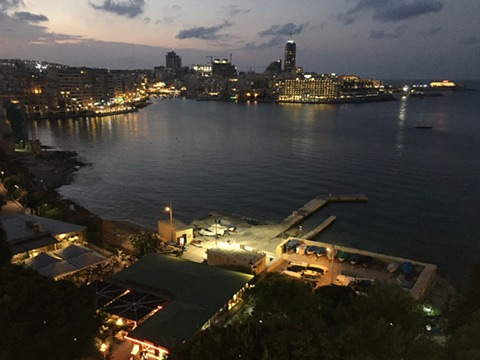
View as I walked back to the hotel

Malta – Day 4

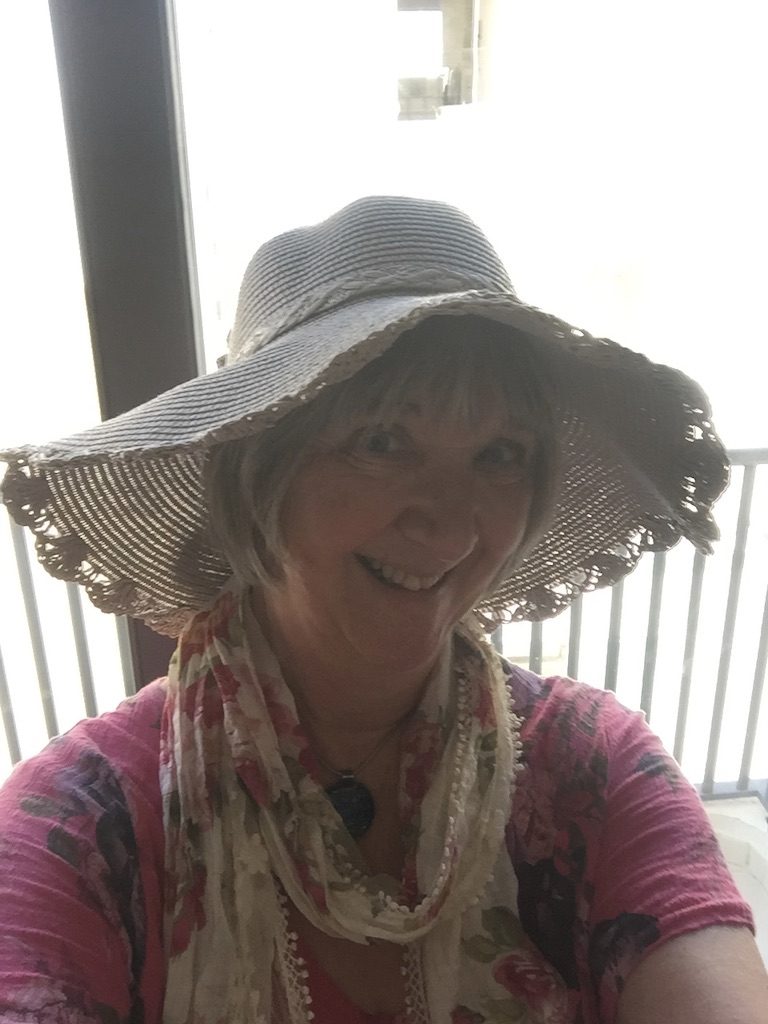
New hat

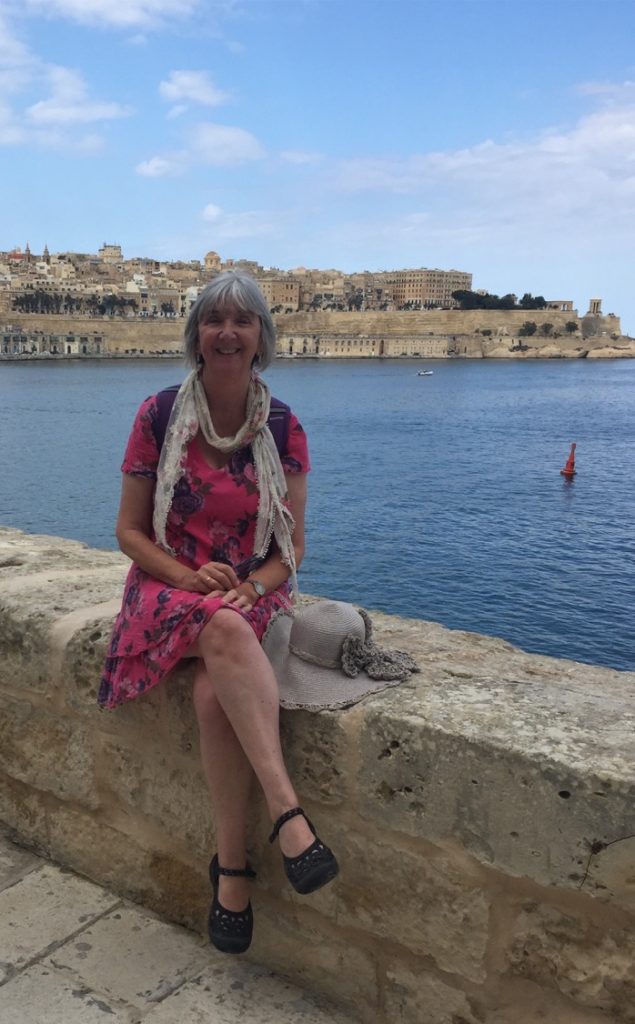
A 9 a.m. departure to spend the entire day in Valletta. It was to be a hot day, entirely outdoors so I donned my new hat (bought at a street vendor’s yesterday) and my new pink dress that I’d purchased on my trip to Whitby with Anna. It was only a half hour drive to Valletta. The entire town is a UNESCO site and is laid out on a grid system with very narrow streets to provide shade. 

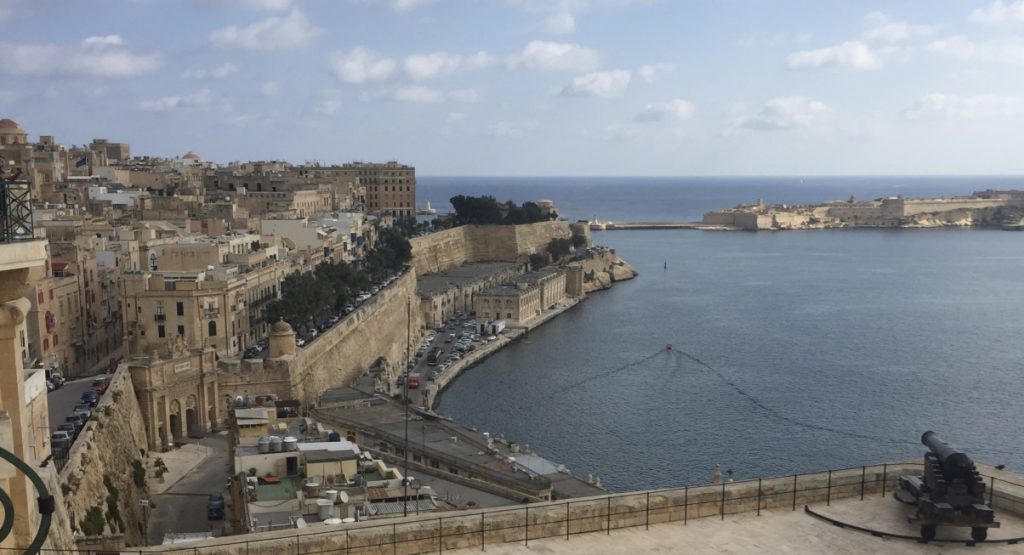
Even though it was not yet 10 o’clock we had to queue to enter the city through the grand gate and the gardens with the wonderful look out were teaming with tourists.

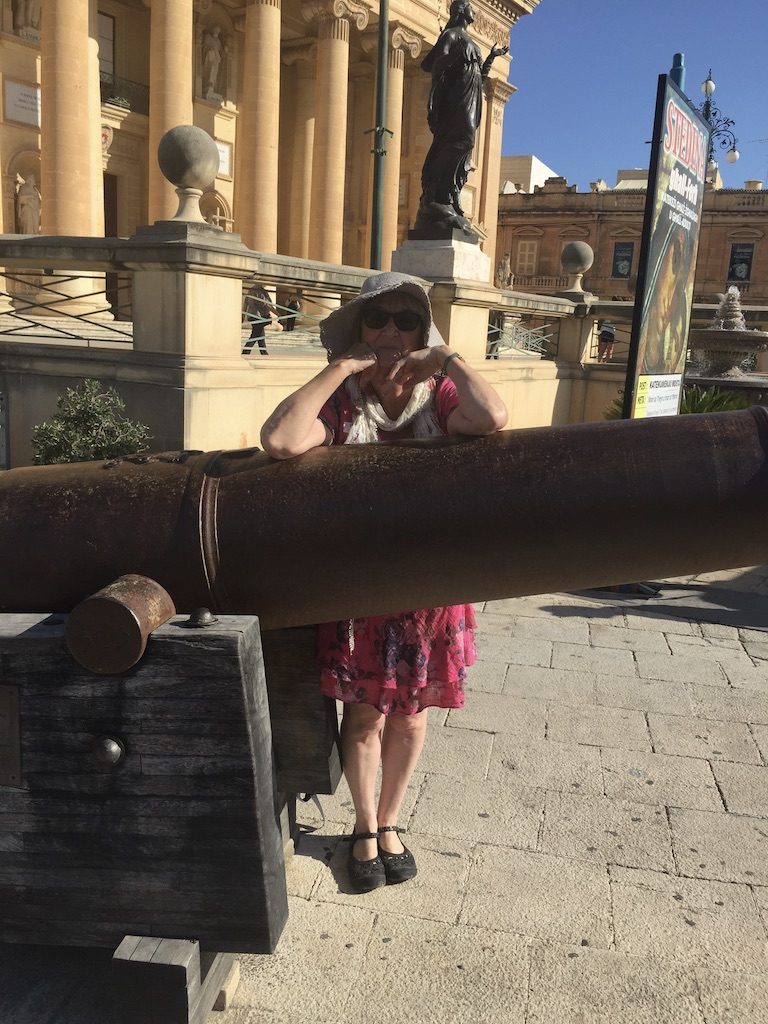
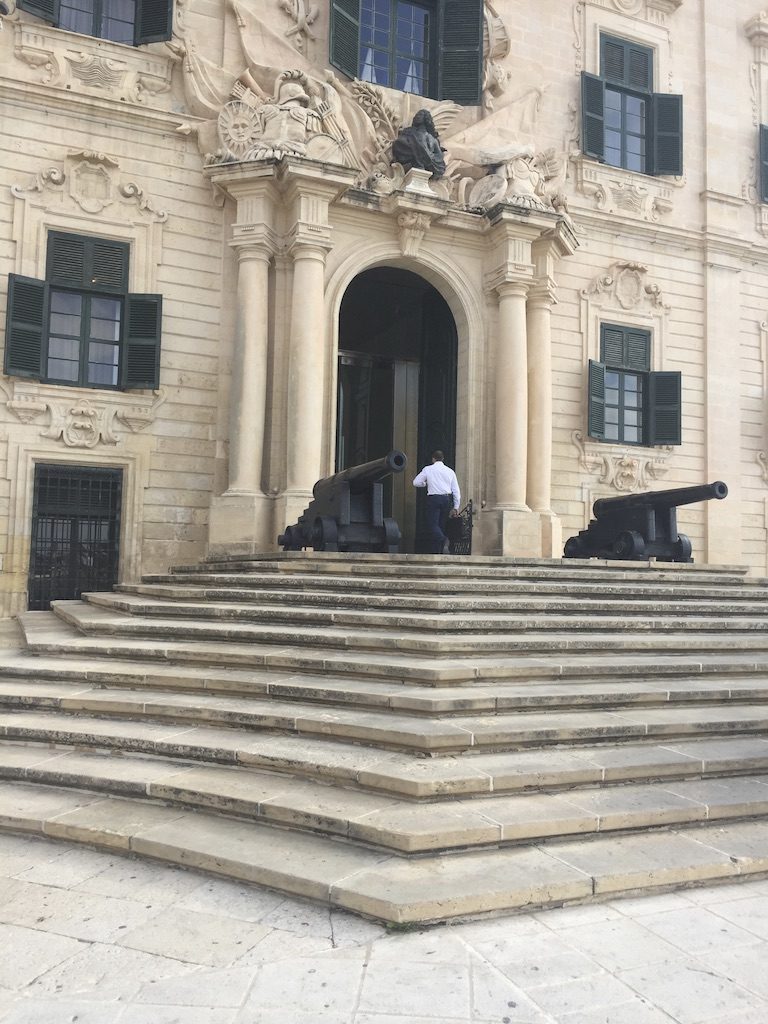
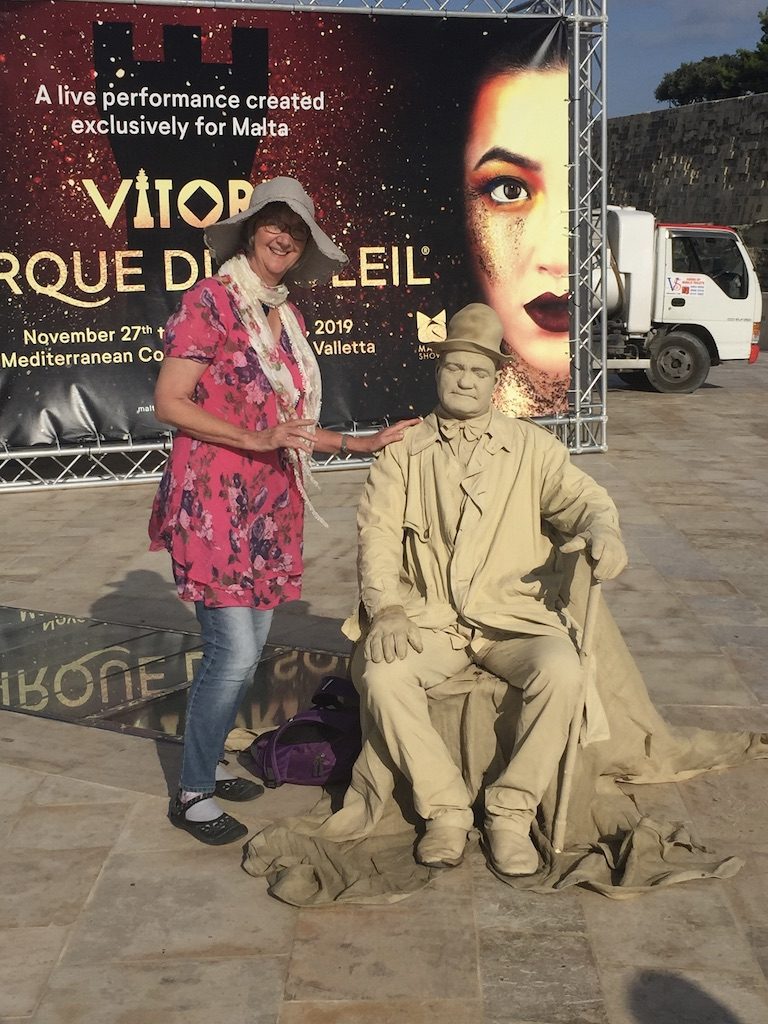
Three cats were sitting contentedly on the counter of the cafe1 I soldier in uniform was preparing the cannons for their twice daily firing  – for the tourists’ benefit, I hasten to add. and on our left is the new building known as the ‘cheese grater’ but which is, in fact, the new parliament building. The prime minister’s house/office s an old building with two historical cannons outside. There was no police presence and kids were climbing on the cannons to have their photos taken. A sand coloured statue of a man sitting cold by caught my attention and I asked on of our group to the my photo as I headed to sit down on his lap – just as I had with the statue of Oscar Wilde in Dublin. I got the fright of my life when the statue moved and I realized it was a real man! 

And then he moved!

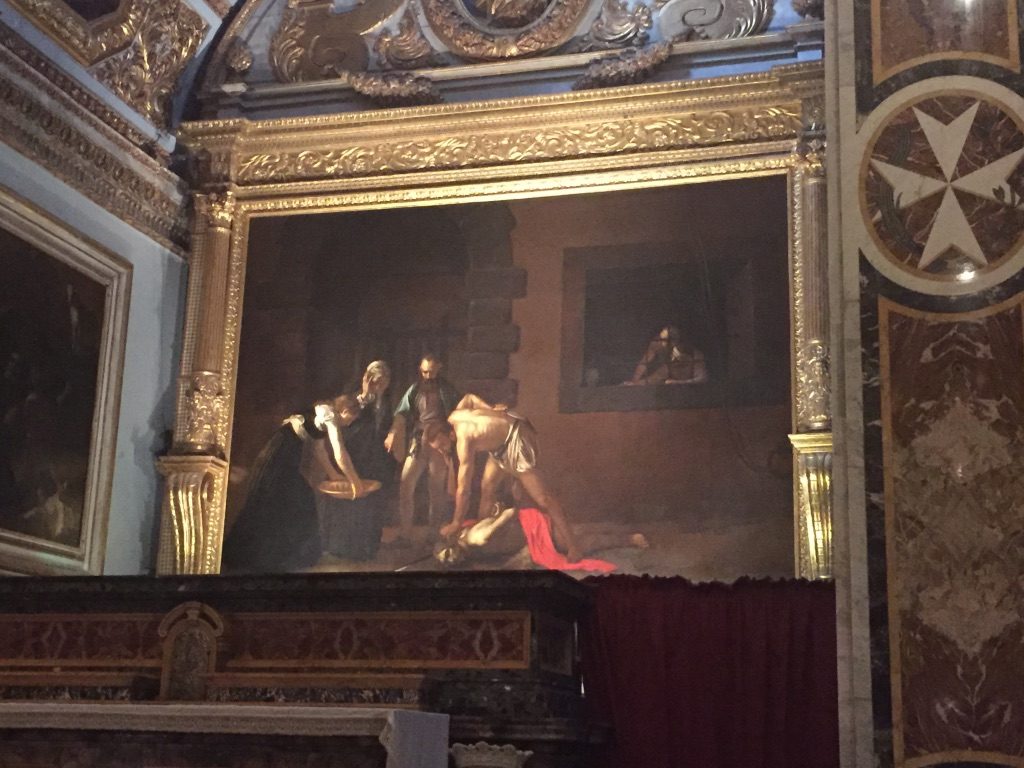
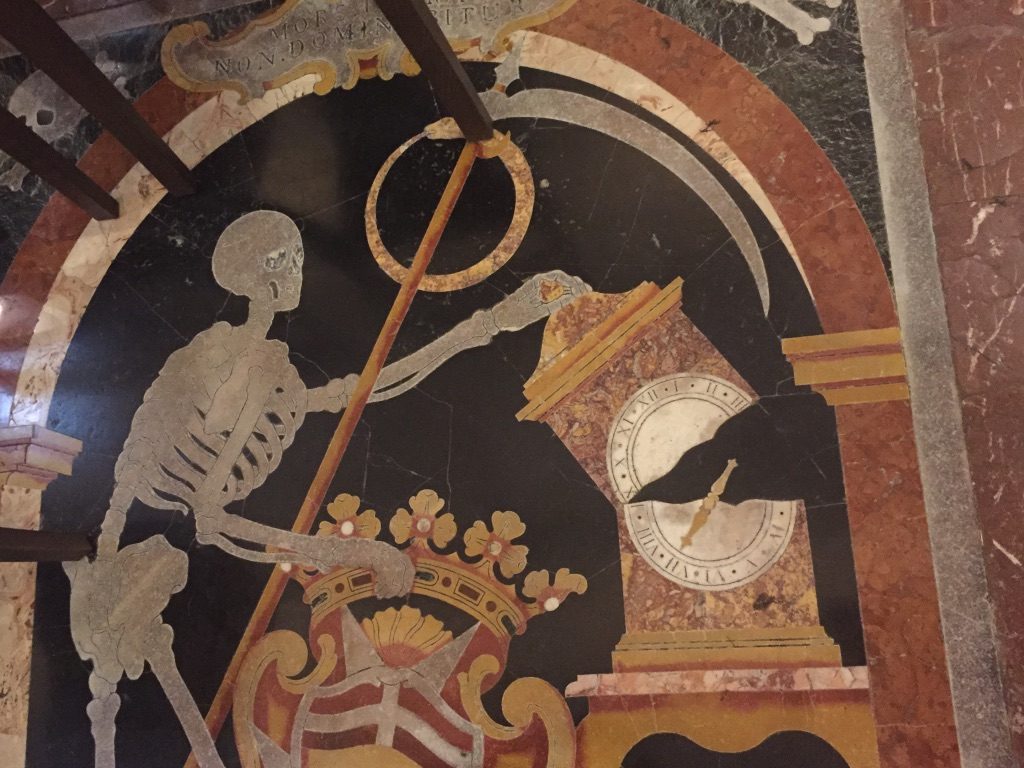
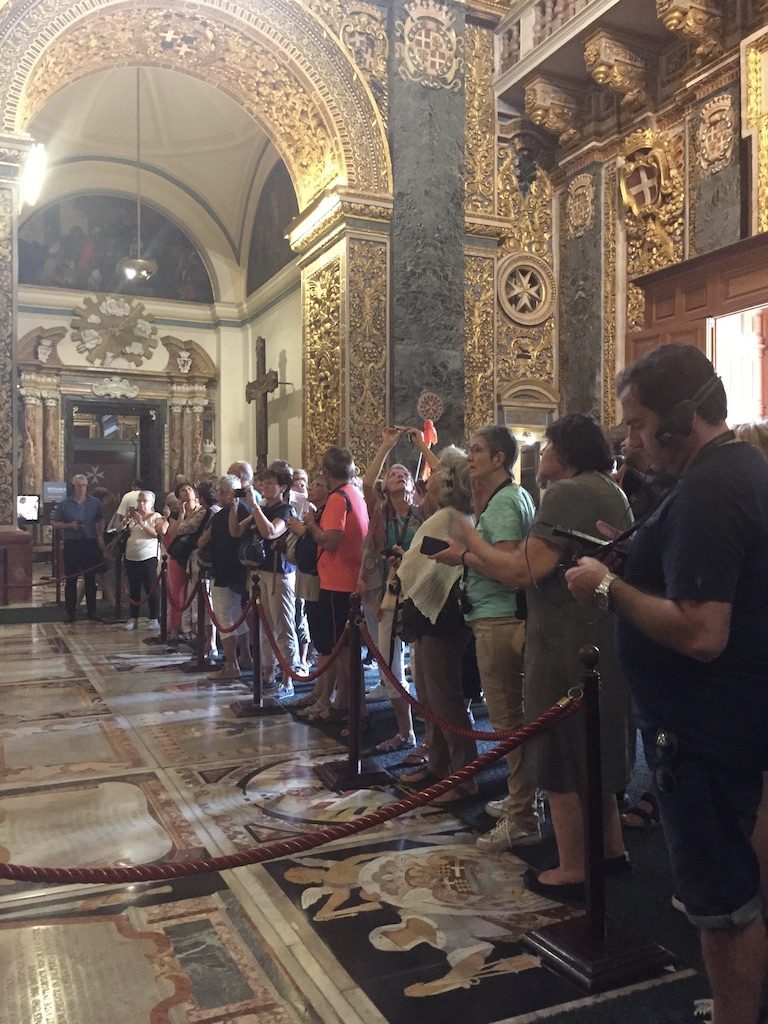
St John’s Cathedral was our goal. It’s amazingly ornate inside with its 8 chapels, one for each nationality of the knights of St John. Each chapel is highly decorated with mausoleums and elaborate walls of carved limestone topped with gold leaf. Each chapel tried to outdo the others in the wealth of artwork. The marble tombstones on the floor were wonderful, and they looked as if they were specially designed for Hallowe’en with their grinning portrayal of Death. We were told that’s because the knights looked forward to death, such was their religious belief. There were loads of tour groups vying for space especially in front of the two famous paintings by Carravaggio. Each person was issued  a headset so that we could listen to our own our guide.

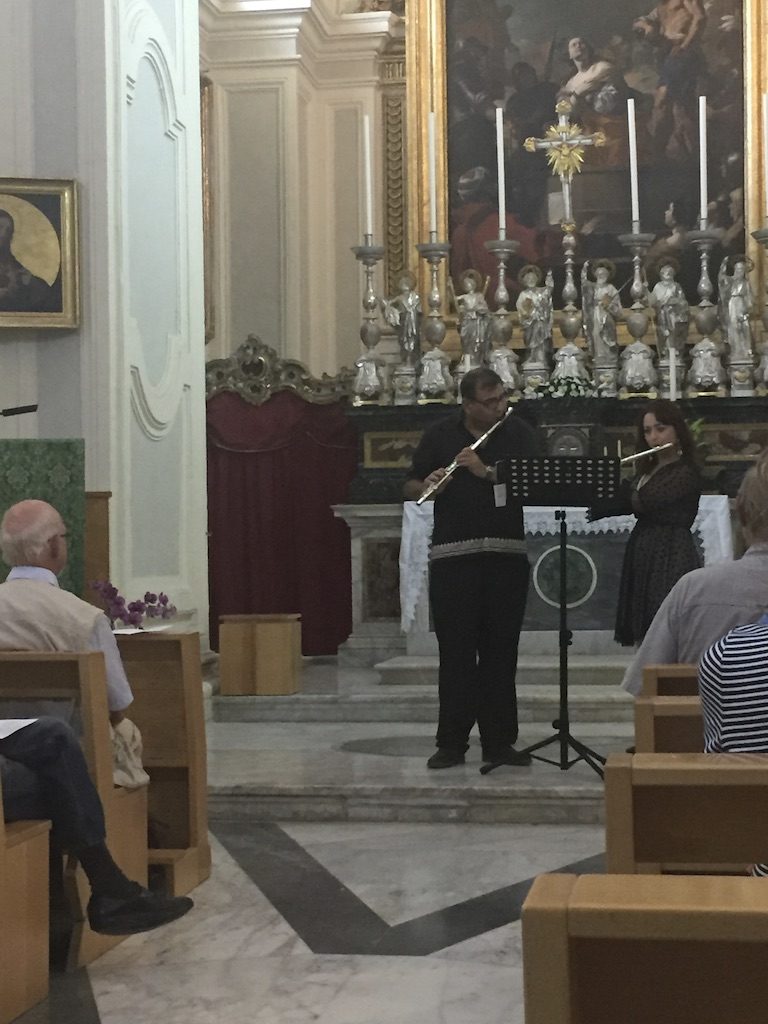
In our free time I chose to go to a concert in a less elaborate church on the square that I’d seen was to hold a flute duet recital. This meant that I had to skip lunch, but it was a lovely opportunity to get away from the hustle and bustle of the town, and listen to music that was composed around the time the church was built. It was a husband and wife duo and they’d both studied at the Royal college of music in London.

The reverb was magical. Above the altar was a dome, unusual in the fact that the paintings were in shades of grey only, but it definitely had a three dimensional look.  We were free for the rest of the day and while Maria headed back home the rest of us headed towards the fortress at the end of the peninsula. ‘The Malta experience’ was showing a movie about Malta’s history and most of the group headed in that direction – to get away from the ‘stand and shuffle’ routine we’d had for the rest of the day. It was excellent and afterwards we were given a tour of  the hospital of the Knights. I’d never connected the St John’s Ambulance service in England with the Maltese Knights of St John, who were originally a medical service provided for all the pilgrims who went to Jerusalem, but they eventually became a military unit of some severity. It was a long, two story building and features the longest unsupported ceiling in Europe(?).

Each bed had its own toilet built into the wall and  air vents in the walls  led directly to the garden so that the perfume from the citrus plants would scent the ward. Amazing. Presidents bush and Gorbachev met in this very room in 1989 for a press conference at the end of the cold war. Downstairs was the ward for the poor, with 4 people to each bed and toilet. The remains of frescoes can still be made out on the walls above the beds. What was once the garden is now a 1500 seat theatre.

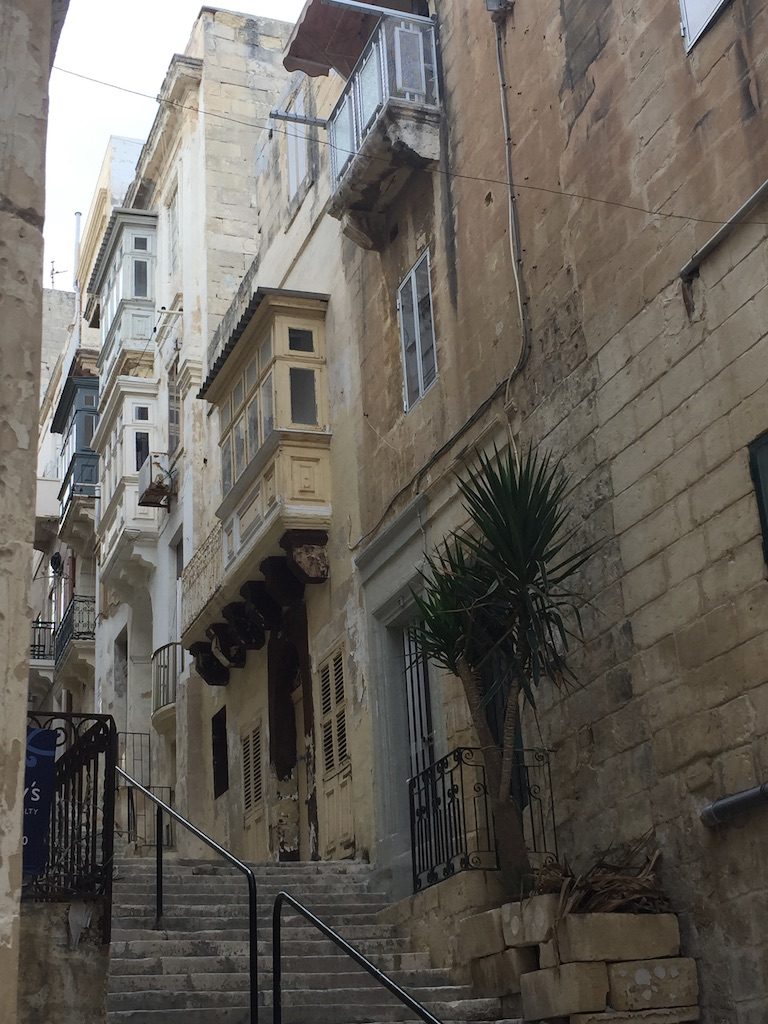
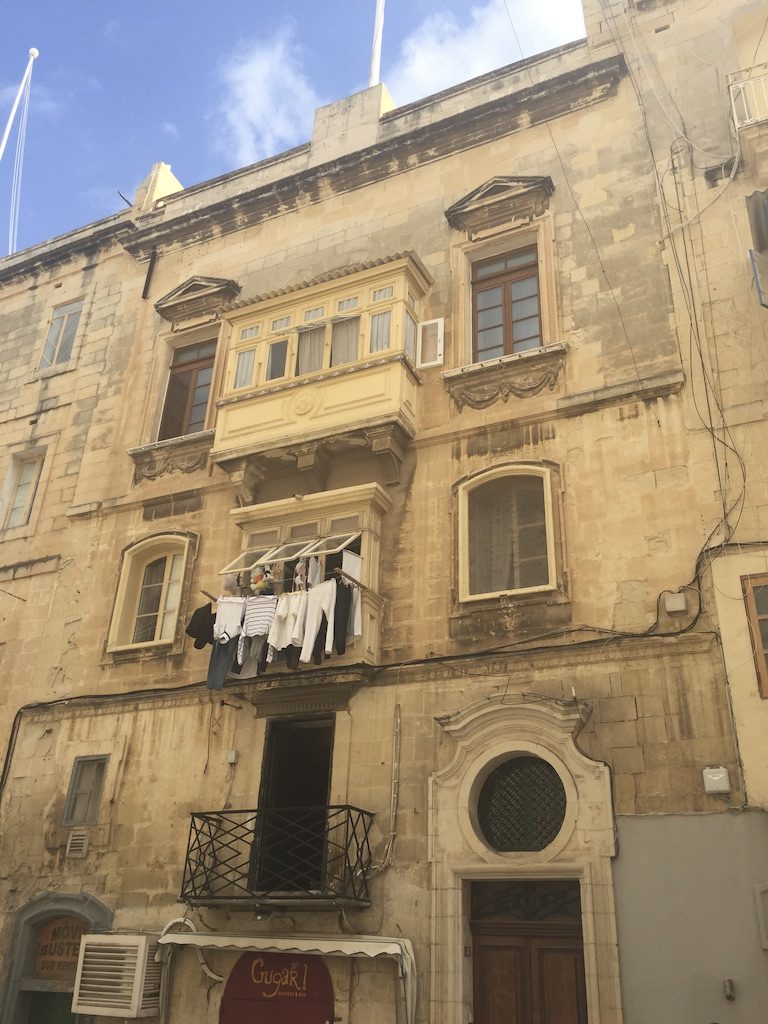
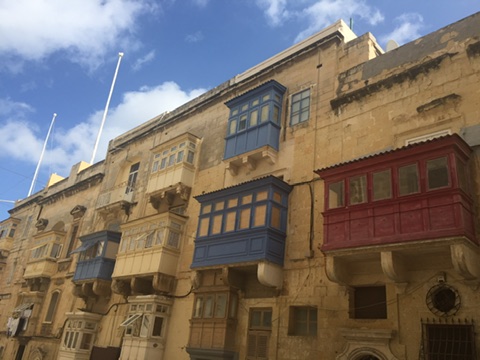
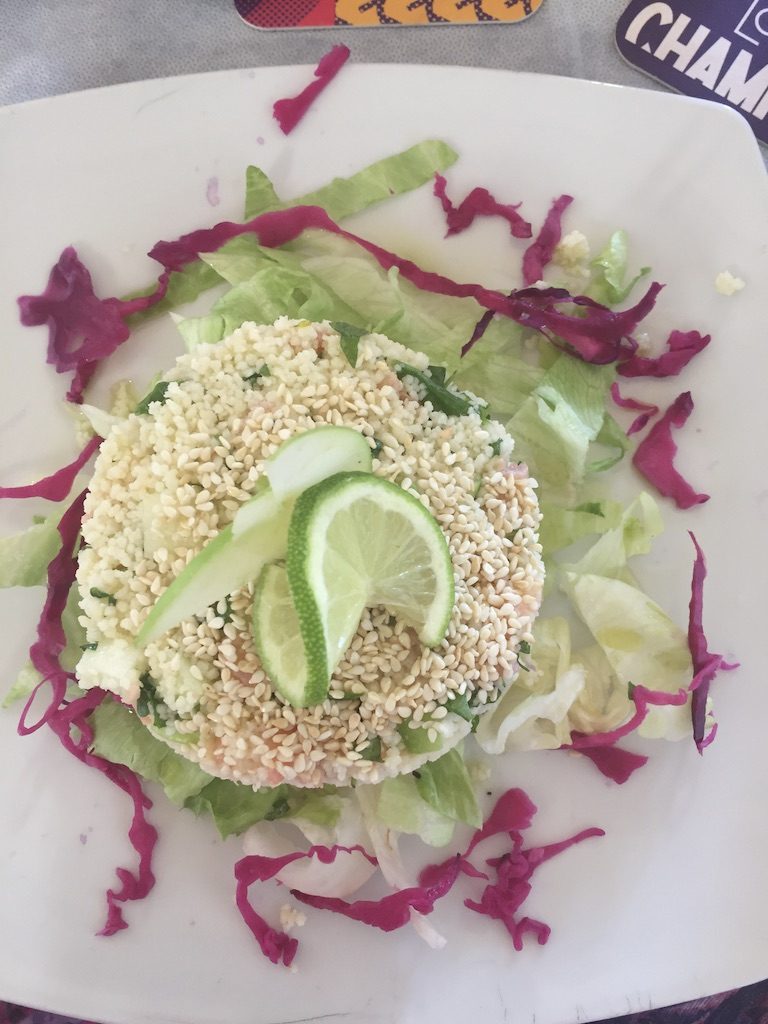
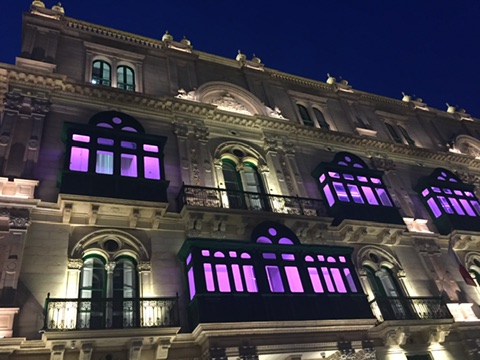
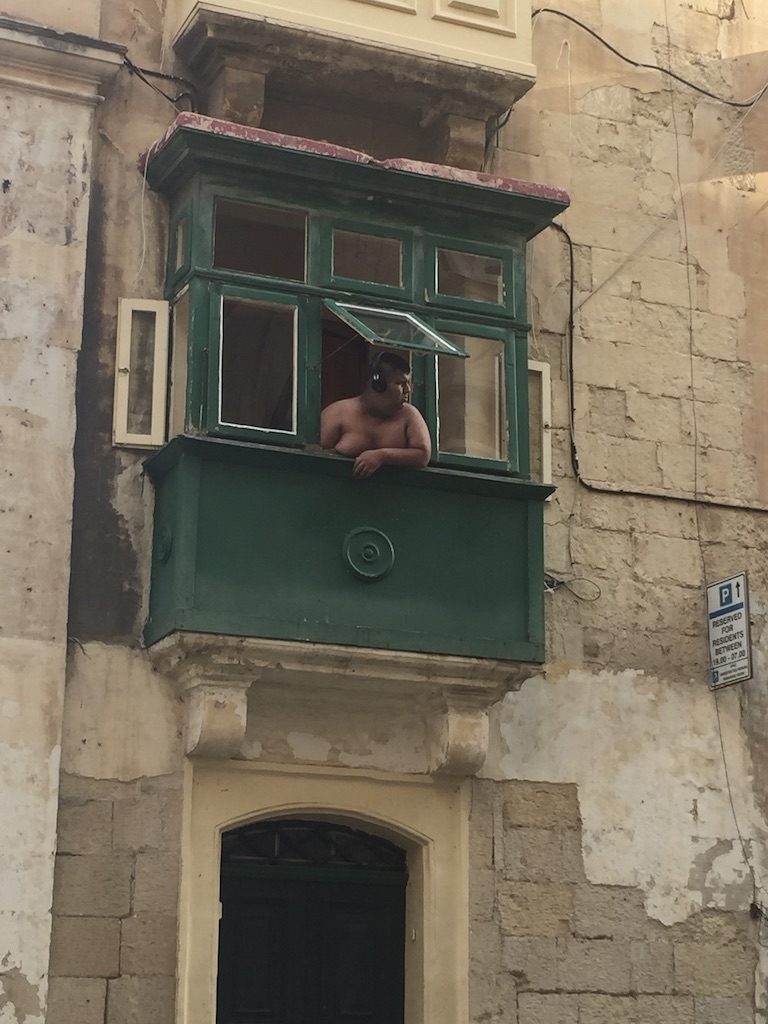
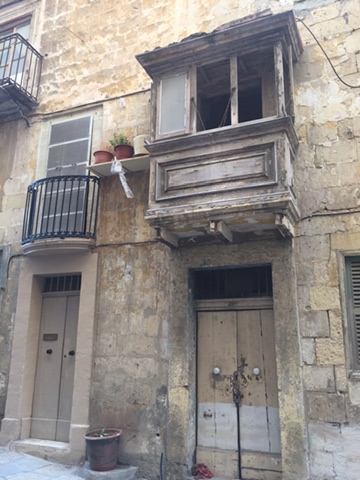
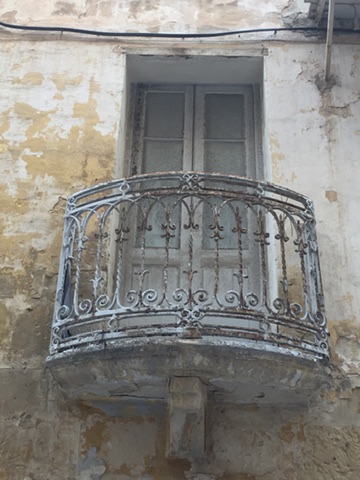
I happened to come out of the building with Marion and we spent the rest of the day together while others from our group heads for the extensive War Museum in the fort. We wandered around the back streets where the wonderful balconies were strewn with washing, and even those apartments without balconies had some sort of contraption whereby they could hang washing outside their window. The balconies originated in the Moslem East when women were not able to leave the house alone, but the protruding balcony gave them access to whatever was going on in the street. We opted for Soul Food for an al fresco early dinner. My salmon salad was delicious but there’s no way I would have guessed that that was what it was from its appearance.

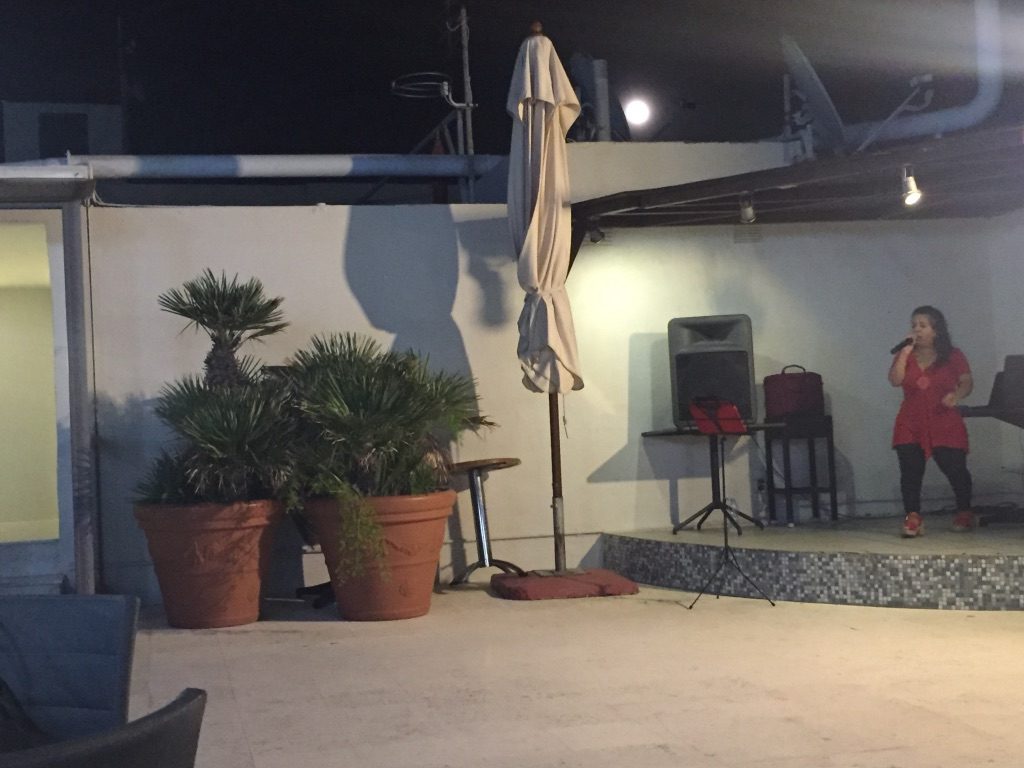
As we headed back to find the bus station I was apprehensive that we wouldn’t recognize our stop, but fortunately we bumped into two more people from our group and we arrived back at the Plaza Regency safely. The buses on the island are well utilized and ours  was packed with people. Back at the hotel I went up to the rooftop bar to have a shufti at the ‘entertainment.’ It turned out to be a good singer, but her ‘stage’ was inadequate and not even lit. 

Day 3 Malta

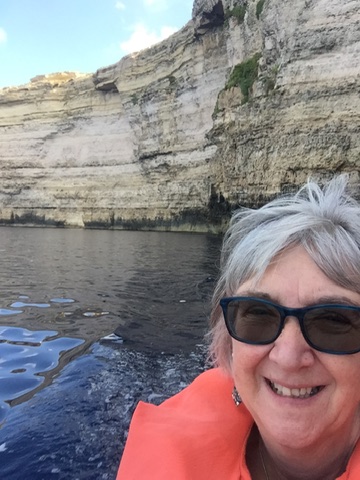
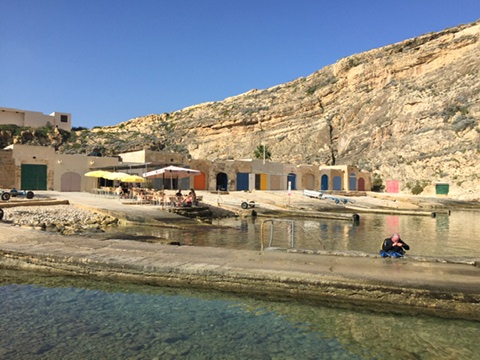
The day began with a 15 minute boat ride – optional – in Dwejra Bay – where the water was so clear I could easily pick out the bright orange coral. Our trip took us into sea caves clouded with bright purple seaweed. The main attraction was, until 2017 the Azure Window, a sea arch. Well, we had Natural Bridge in Santa Cruz! The location was used for the filming of Game of Thrones – which I’ve never seen.

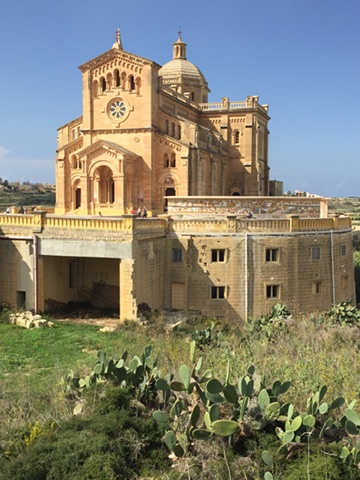
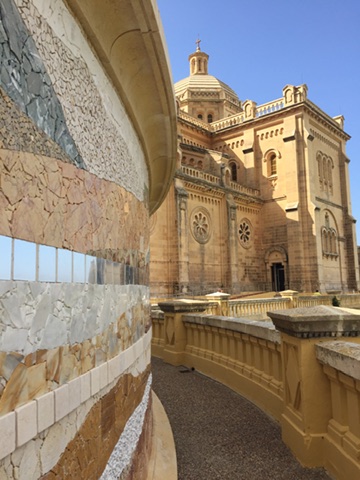
Then it was a short drive to the Ta Pinu Sanctuary noted for its mosaics both inside and outside the church. Situatd in open countryside near the village of Gharb there are some wonderful views from the plaza which has modern mosaics surrounding it. Though the date of the original church on the site is lost in history this new church was built 1922-1932 in the Neo-Romantic style, and it’s a much visited site since pope John Paul ll celebrated mass here. 

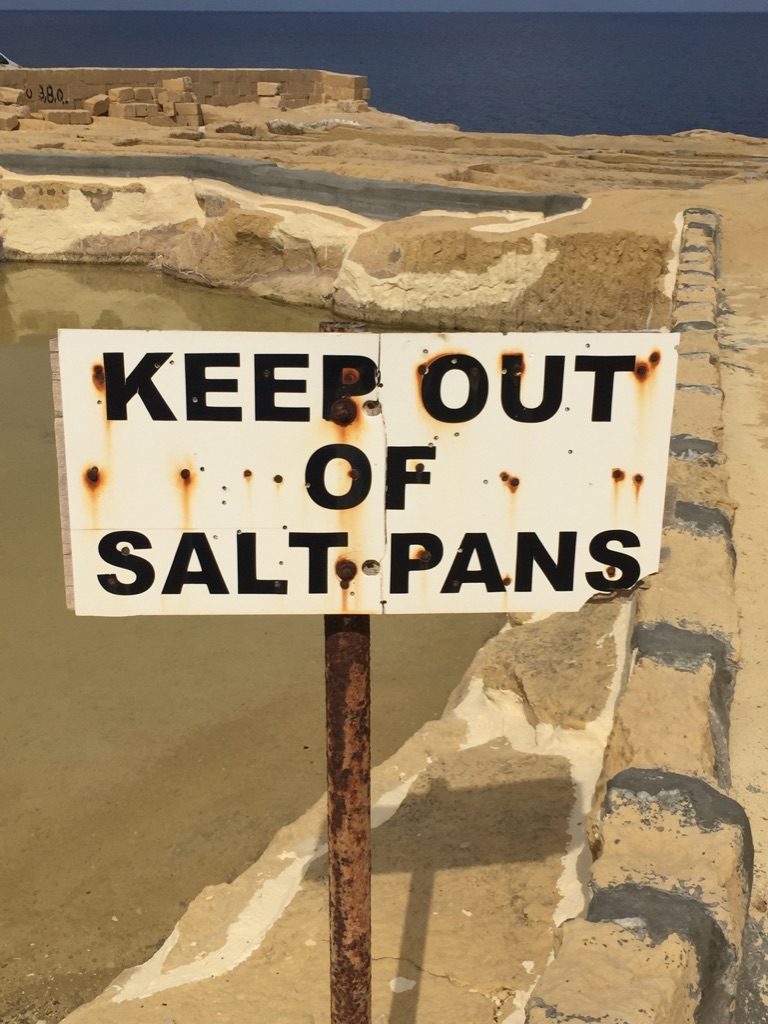
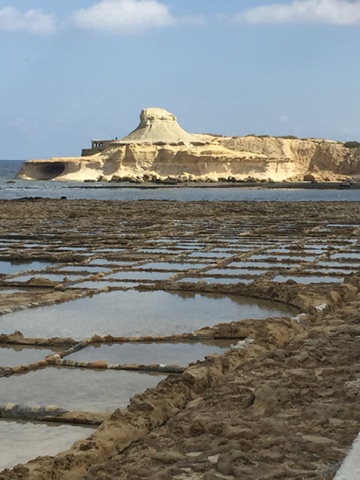
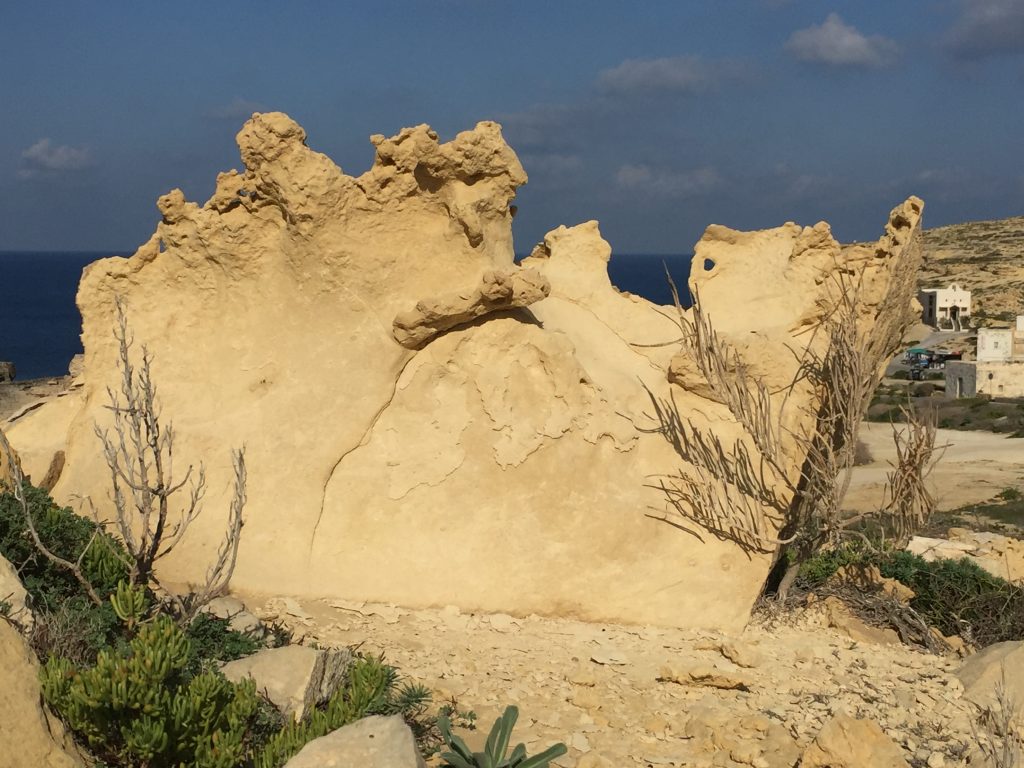
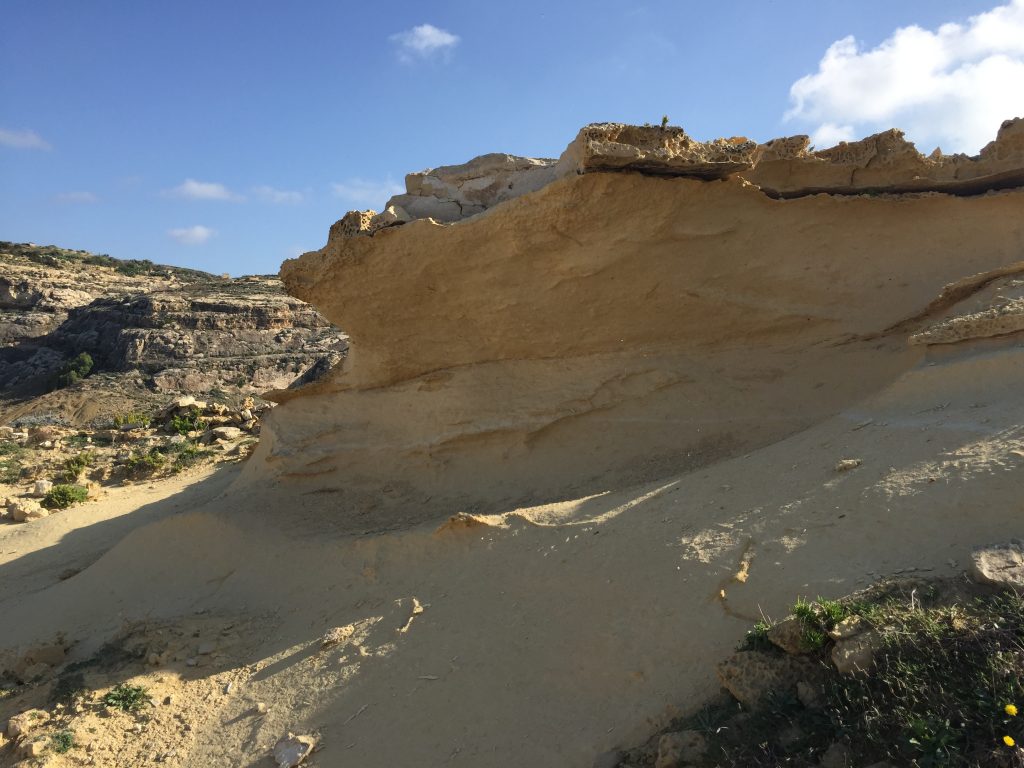
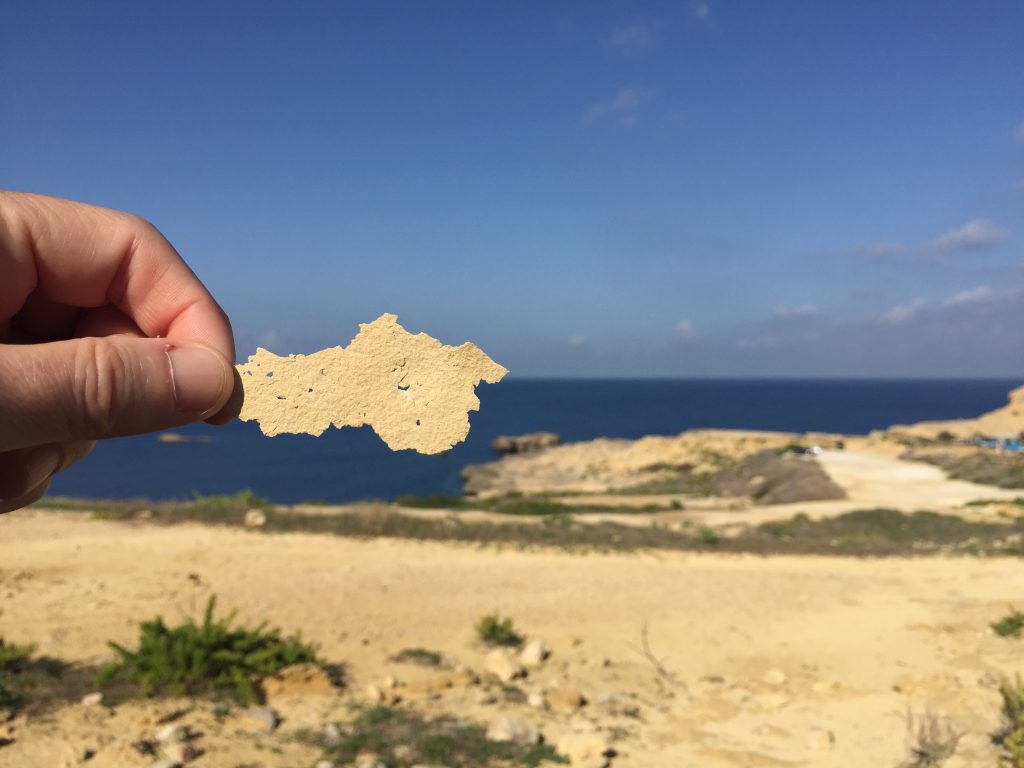
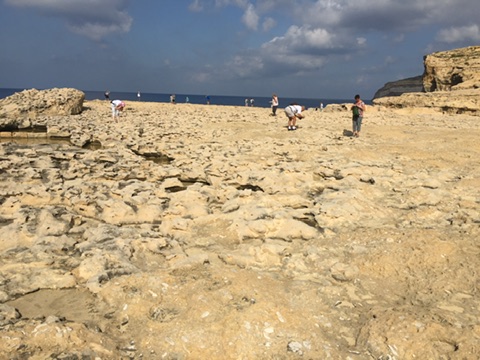
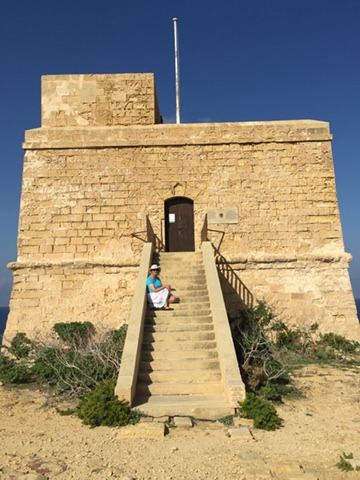
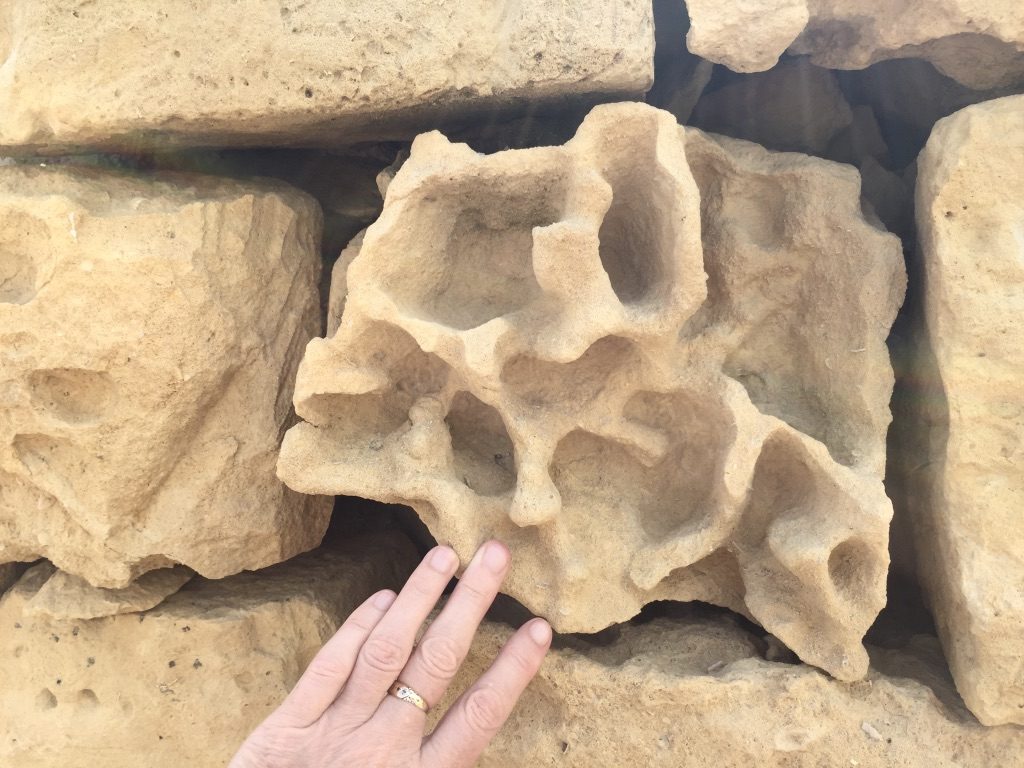
We walked down a steep hill from Zebbug and its tower built by the Knight of Malta to the Salt Pans of Xwejni Bay. This was my favorite sight seeing stop of the day. The limestone rocks here look like frozen waves, made from golden sandstone.

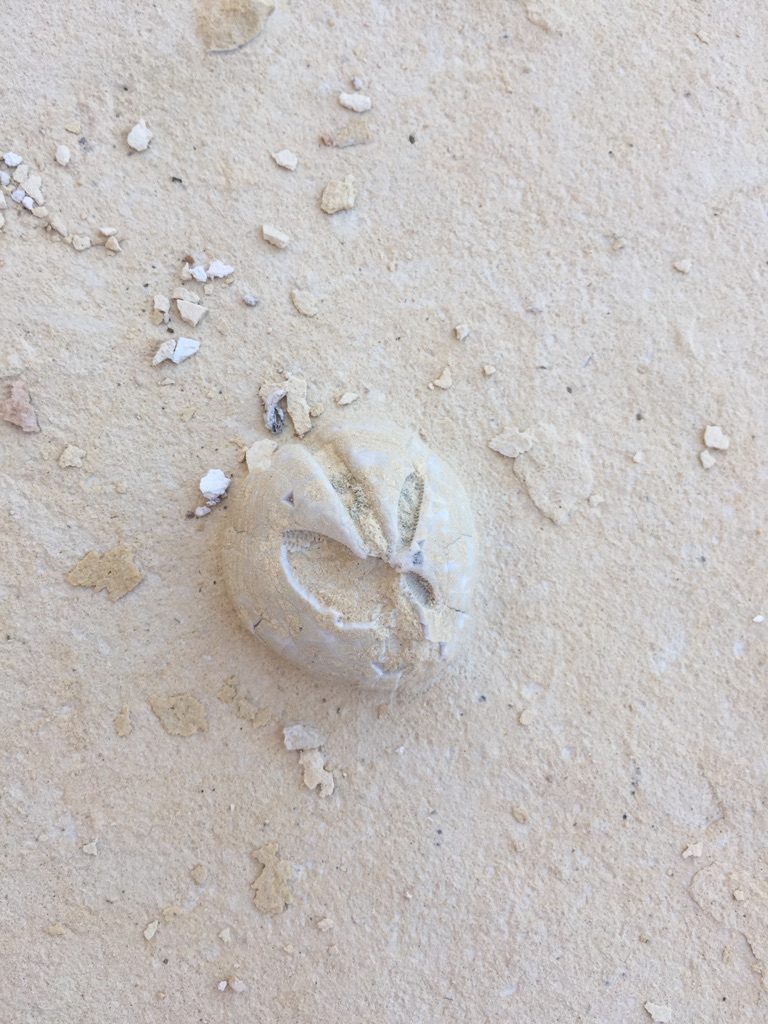
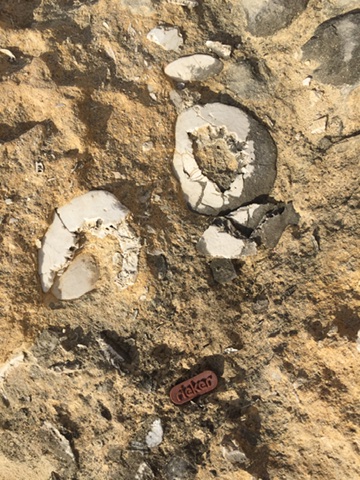
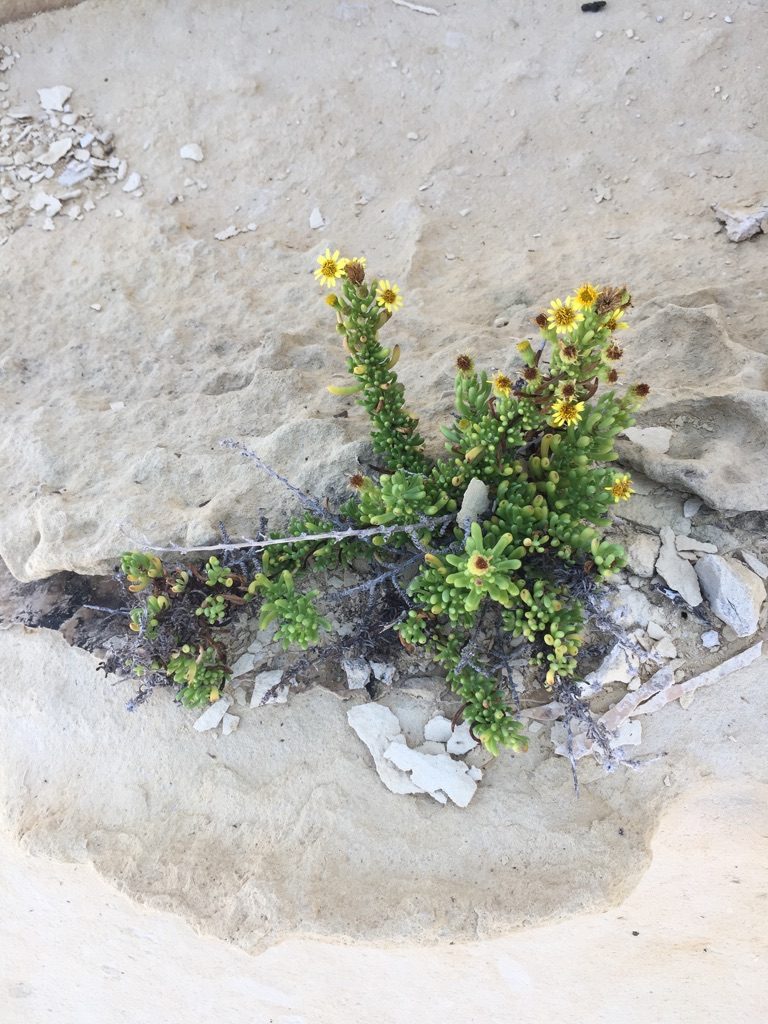
Occasional sections of blood red stone is apparently caused by the oxidation of the limestone. Salt was a very important commodity. Roman soldiers were paid in salt and the crafty officers made sure they paid out on a humid day when the salt would be heavier. From the word saline comes the word salary. I never knew that! I sat down on a ‘frozen wave’ and all around me were fossilized sand dollars. My sitting spot felt a bit lumpy and I found that I’d been sitting on a fossilized sea urchin.

Fossilised sea urchin

Wonderful!  

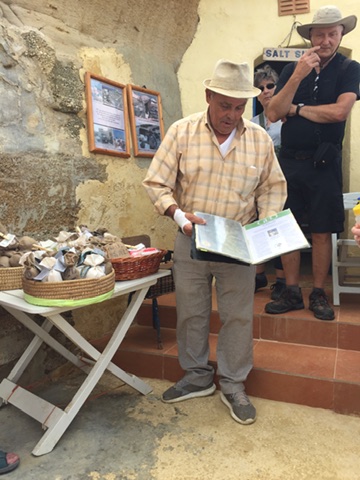
As our group chatted over lunch in Marlsfornabout the scarcity of good salads in England, and good greens in particular, I made the crazy comment that in the U.S rocket just never took off! We visited a man who has worked in the salt pans all his life and he has a little dug out where he takes his siestas every day.

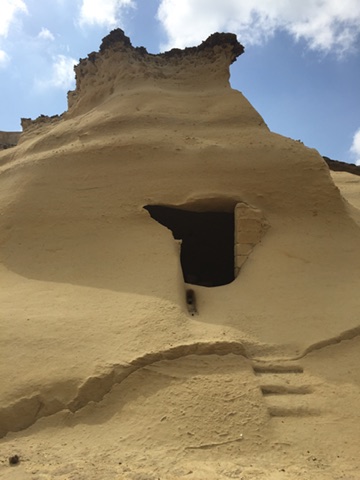
In fact, there were several doorways into the chambers that have been carved into the solid rock. Pretty neat. 

Today we moved from Gozo to Malta, to the Plaza Regency hotel, right on the waterfront in Sliema. Maria had keeping reiterating g that we would find Sliema very different from Victoria and indeed it was. The waterfront was a mass of real estate shops, clubs, bars and restaurants. The harbor was the home of hundred and top range yachts.

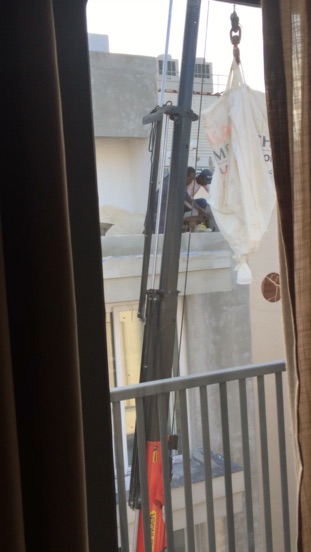
This is how I had pictured Malta – as a destination for Brits in package holidays supping up Watney’s red barrel and turning in to lobsters as they sunbathed on the beaches. As I opened the door into my room on the 7th floor I could see three men pouring concrete almost within arm’s length of my balcony.

View from my window for the next 5 nights

I had a room at the back, facing the building works. No sea view for me. Although there was full kitchen with stove top, microwave and  fridge they were of little use. No mini bar, and what’s more important to me – no milk for my tea! The Wifi was somewhat intermittent and the choice of TV stations was far m ore limited than in Gozo. The only channel I could find in English was a French 24 hour news channel. 

Lookout tower built by the Knights of St John

The group had dinner together in the Neapolitan bar adjacent to the hotel. I was sorry not to be able to watch the England v Bulgaria soccer at the bar across the street but later on the news on the radio I heard about the game being held up twice because of racial slurs directed at some of the English players. At dinner I sat next to Maria and asked her about her interest in tourism and her particular interest in history and archaeology. Apparently she’d wanted to be a tour guide since being very young and had thus specialized in languages and history before going to college to study tourism.  All education, including university is free here, as is all health care. Maira directed me to a minimarket up a dark street, deserted street, ignorer to procure some milk, but it had closed early. So she managed to get the hotel kitchen to sell me a carton. Brilliant. 

View from the roof top bar and pool

Gozo Malta Day 2

Feeling at home! One of our group was wearing a Santa Cruz T shirt today!!! (And the next day he was wearing a Cape Cod shirt)

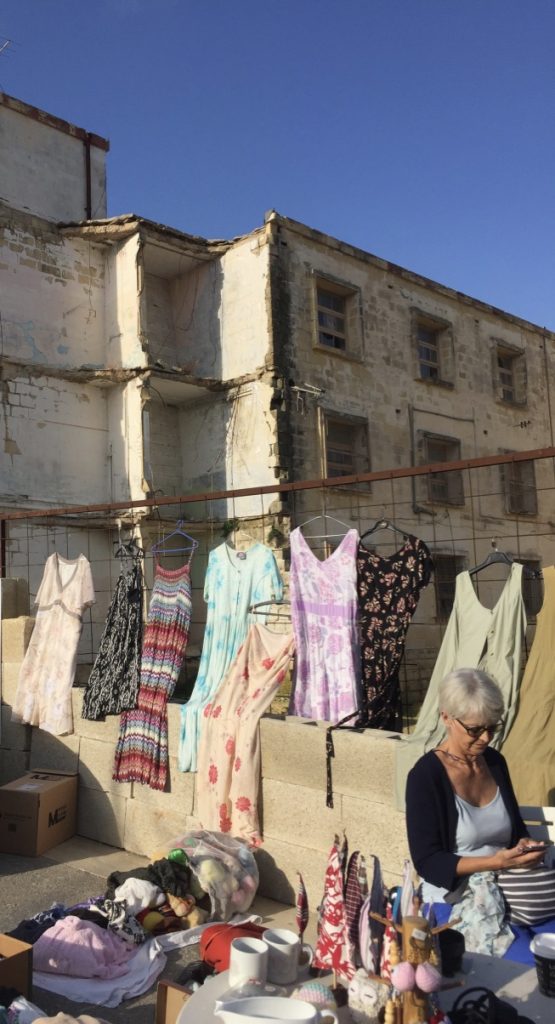
Love the backdrop to the flea market

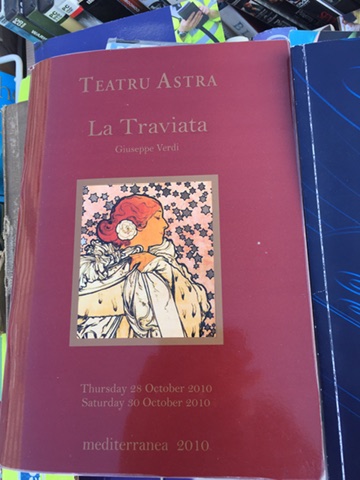
After breakfast at 8 I wandered across the street to the Sunday flea market on the sports complex’s car park. I was surprised how inexpensive things were. I’d have thought that the locals would have cashed in on the tourists’ need for something Maltese. There was a nice selection of bric-a-brac – even some old opera programs with the full libretto.

Opera programme on sale at the flea market

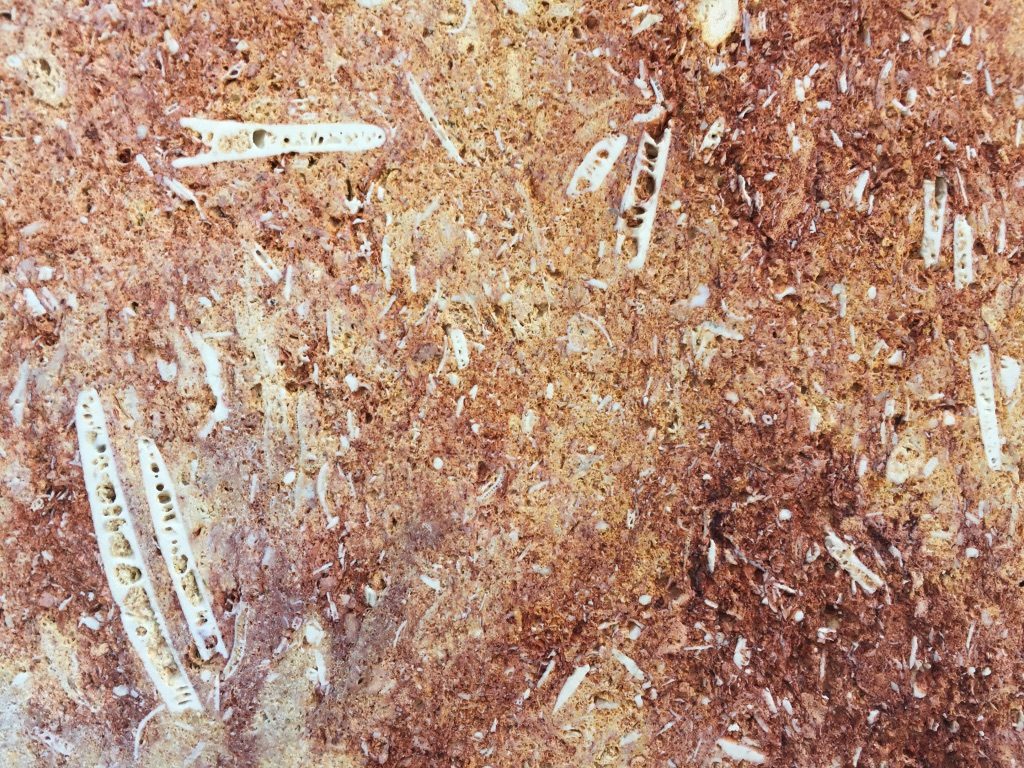
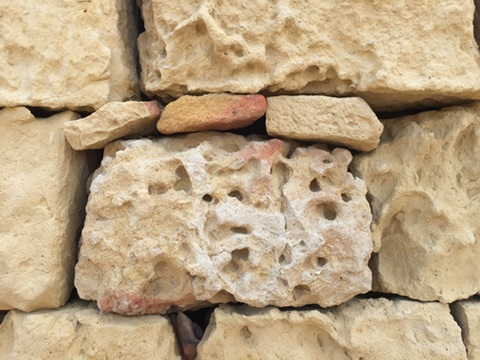
At 9 our group met up for a tour of the citadel built high on the limestone protrusion, giving the occupants a 360 degree view of Gozo. The stone fortifications were covered in fossils. I don’t think I’ve every seen so many.

Fossils in the citadel wall

Maria gave us an explanation of the history but it was far too much to take in.  Because of its strategic position in the Mediterranean, controlling maritime traffic from Europe to the Middle East and Africa Malta has been fought over and occupied by many cultures and races throughout its 7000 year history. There is evidence of Bronze Age settlements here, but the acropolis was probably Roman in origin. The whole citadel is a mass of museums and Maria had selected the prison museum. One of the jobs of the prisoners was to remove the soil that was covering the Megalithic tombs that we were to visit in the afternoon. I also had a quick mooch around a typical 4 storey house close by.

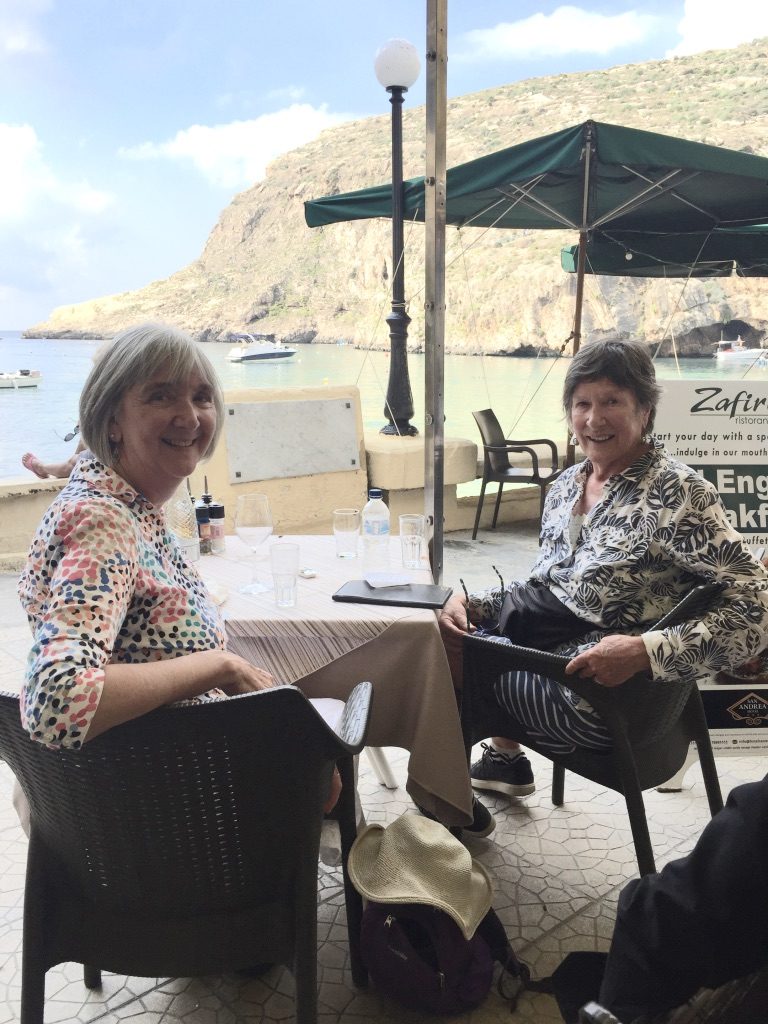
Then it was on to the bay for lunch. For transport during the entire tour we had a variety of minibuses. In some the AC worked. In others it didn’t. Often we had several different drivers each day, several different buses so you weren’t able to leave stuff on the bus. On my tour of Ireland we had one tour guide who was also the driver, and our bus had tables, power points and we were able to drink and eat on the bus. Free water was also provided. Here there was no water, and eating and drinking were no allowed. Neither was there any power points. Maria pointed out various places to eat and Sue and I chose an outdoor cafe on the waterside where I had a relatively inexpensive sea risotto. Like everyone else on the tour Sue had taken many Explore vacations.

Lunch in Munxar with Sue from . New Zealand
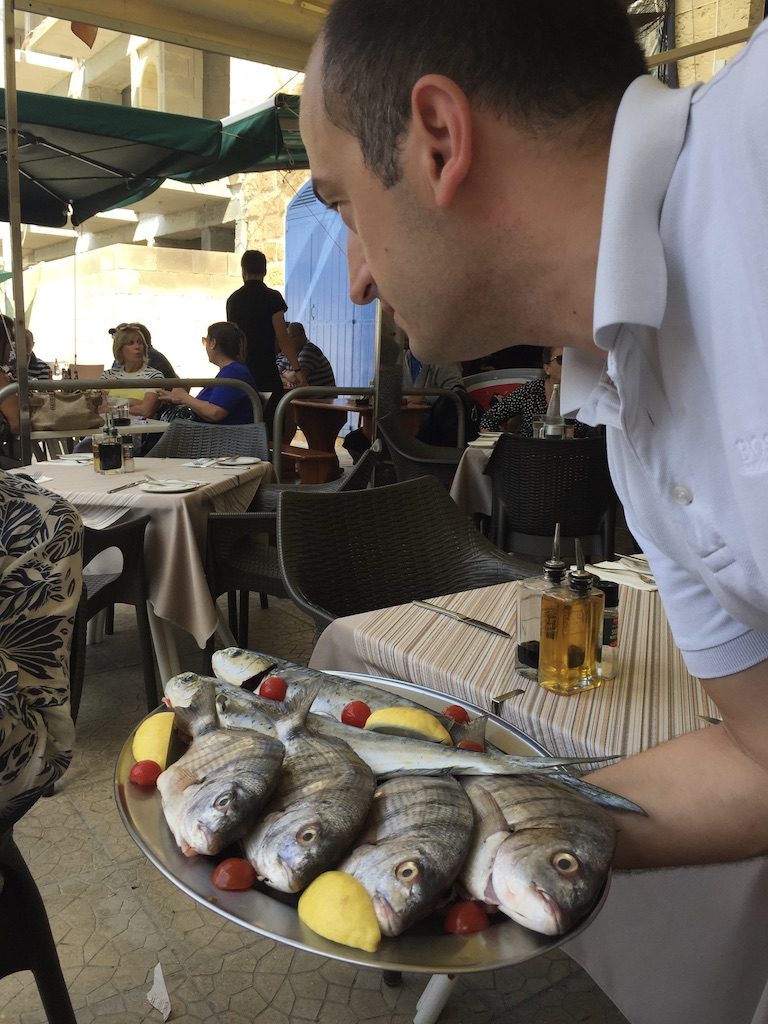
Anyone for fish?

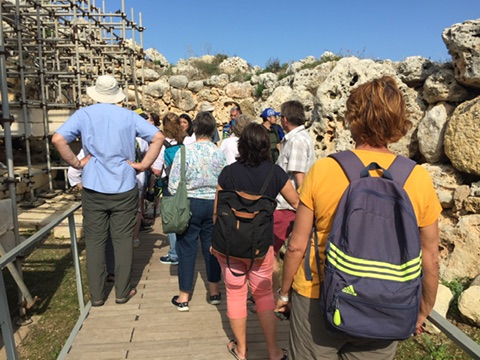
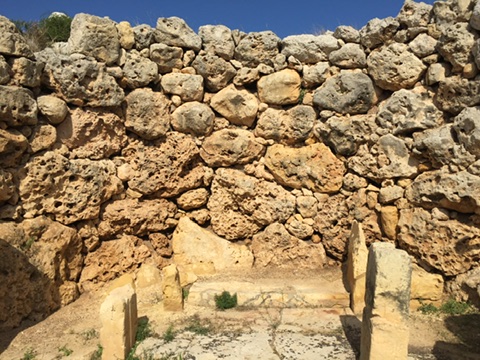
After lunch we drove to the Megalithic tombs, which, it was once believed, were built and lived in  by giants. These predate Stonehenge and are constructed from huge blocks of limestone. There are many types of limestone on Malta all of which weather differently, producing amazing textures. The site was damaged by the 1693 Sicilian earthquake. Some of the standing stones have been recovered to preserve them because of the problems with weathering.

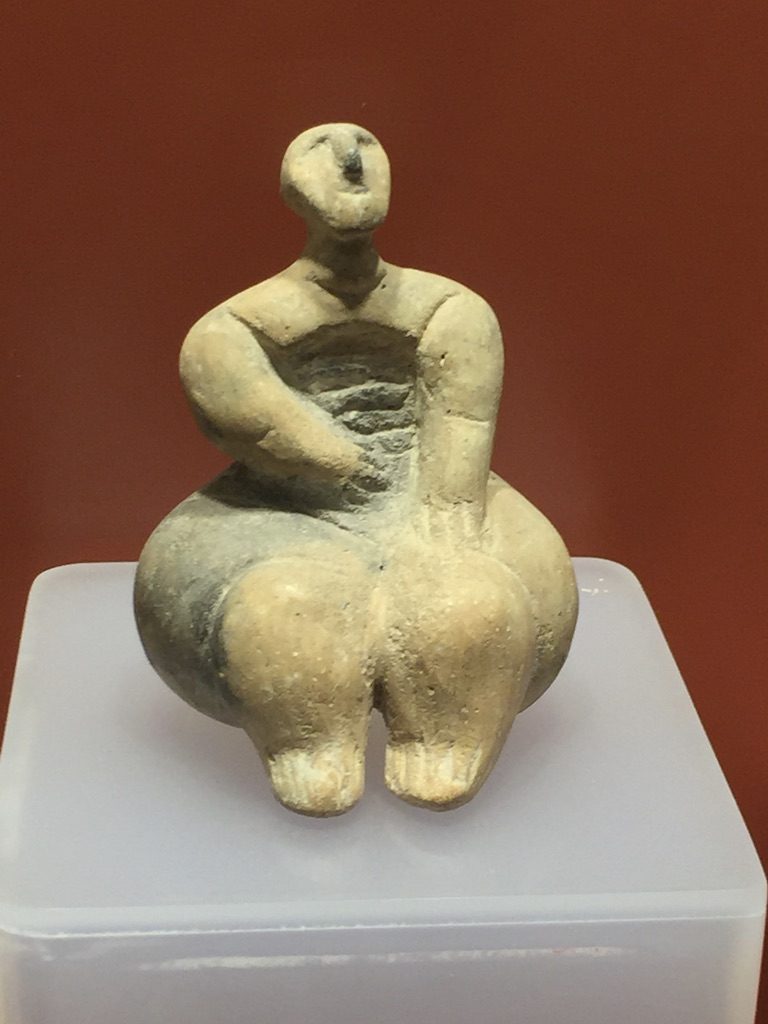
The museum had the ‘fat lady’ figures which had been discovered here, and the tourist shops did a grand trade in replicas. 

The fat lady sings – Megalithic art

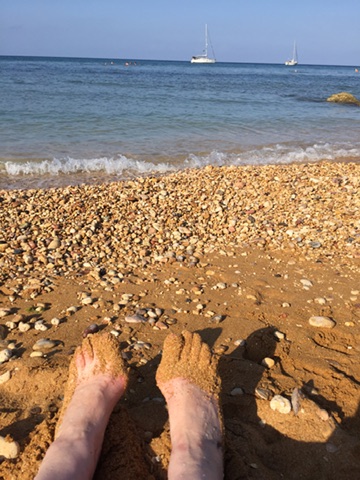
The vegetation here made me quite homesick – for California! Oleanders, pomegranate trees, date palm, figs, olives. We walked down to the beach and while  I paddled  a few people from our group swam for half an hour. 

Paddling in the Med

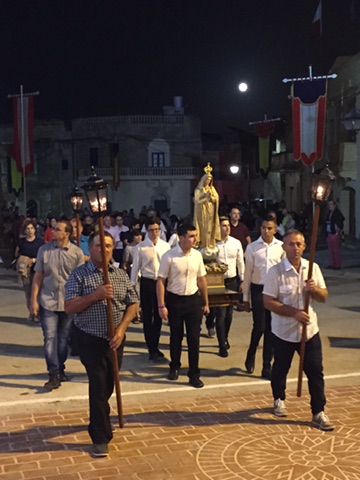
Back at the hotel we had an hour before we met again to go to see an event in Santa Lucia, the Symphony of Lights. This was not on our tour schedule so most of us took a taxi to see this festival of lights. Thousands of lights were lighting up a hillside above the small village and back on the village square music was being supplied by the man singing to his keyboard while a crowd gathered to watch the procession, taking the Madonna statue back to its niche in the church. As I write this up I’ve just found out what I missed! https://www.youtube.com/watch?v=SSOOGLKPCxg The band must have started just as we left.

Catholicism is alive and well on the island. I had  dinner with the two couples on the main square in Victoria and walked back through the empty streets with them around 10 p.m. Again, so different from the night-life in Sicily. 

Gozo Malta Day 1

Malta

St Paul’s Bay, Malta

Why Malta? Well, I’ve been going to islands and Malta is an island! Why islands, then? I think in a funny sort of way they are the closest I can get to the deserts of the South West USA. It was Keith who actually verbalized that when we were in Mull last year. He said the landscape there reminded him of Santa Fe, New Mexico, perhaps not so much in its actual features and flora but in its wilderness and sense of space. For years people have been asking me why I spend so much time in the deserts, mainly in ghost towns, and it’s this feeling of someone having lived there in comparative isolation. So why Malta in particular? Pauline  and I had been talking about our visits to  Sicily and she said that if I had enjoyed Sicily I’d be sure to like a trip to Malta. And Malta popped up as I searched for an island to visit in October which I find quite daunting, knowing that with the change of the clocks the dark will set in so early during the day. So, Malta it was. I hadn’t done any planning. I’d barely read the description other than that the focus of the tour was on the history and archaeology of the place, and so I was expecting a replica of Sicily though on a smaller scale.

St Paul’s Bay, Malta

So you can imagine my reaction when I arrived at Malta airport and found all the signs in English. I looked out of the window whilst I snacked on items from an English menu and saw the cars driving on the left. For a moment I thought I’d been on the wrong flight! 

My taxi to Leeds Bradford had been at 3 a.m., a time I’m not particularly familiar with, but, I reasoned, the airport will be quiet. As we drove through the silent streets, illuminated by an almost full moon, chatting about the political situation in Kashmir, I wondered if the cafe at the airport would even be open. The only there time I can remember being at an airport at such an ungodly hour was at Reykjavik, where people were tucking into their Icelandic beers at 4 a.m. My only previous flight from Leeds had been to Amsterdam and that was midmorning and there was virtually no-one around – just two conveyor belts at security. This time, however, the place was packed, though, unlike my visit to Manchester airport, everything was moving along quickly and I got through checkin and security in 40 minutes.  I even had a moment to chat with the nice guy at Jet 2 checkin desk who said, ’Boarding for rows A to J will begin boarding at 5:20.’ I asked him if he knew the Simon Armitage poem, ‘Thank you for Waiting.’  He didn’t but he made a note to look it up:

As I drank my flat white and ate a yoghurt I watched the news about the conflict between  Syria and Turkey, learned that tens of thousands of people were without power in Tokyo following the cyclone and that Southern California was being consumed by wildfires. 

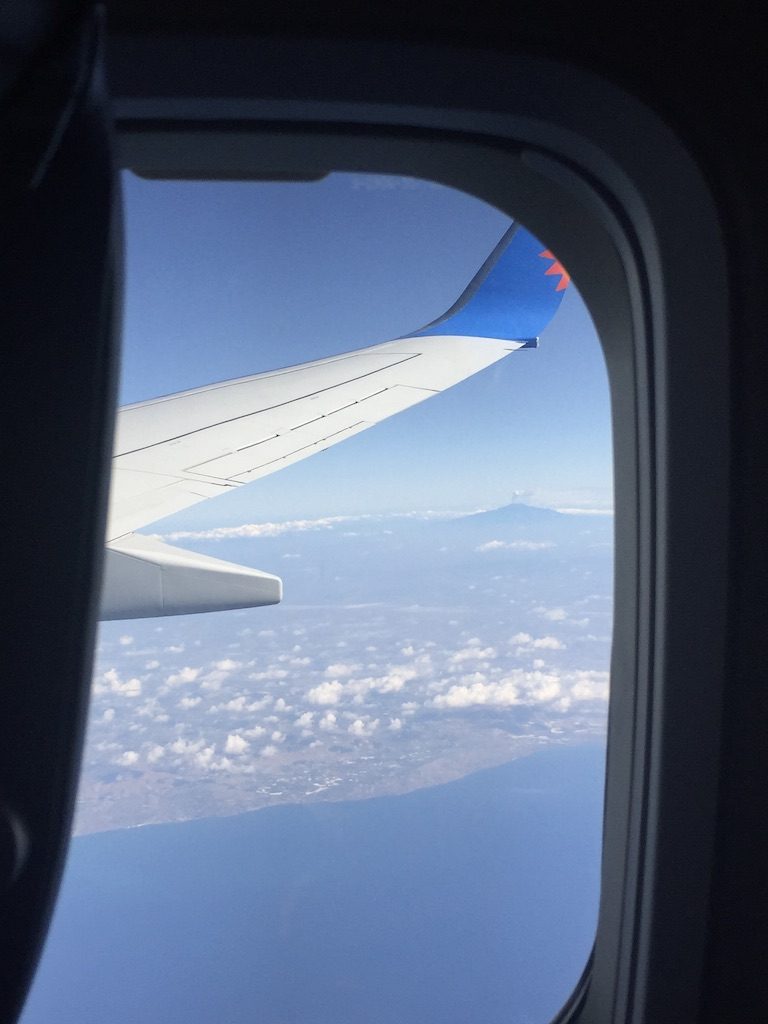
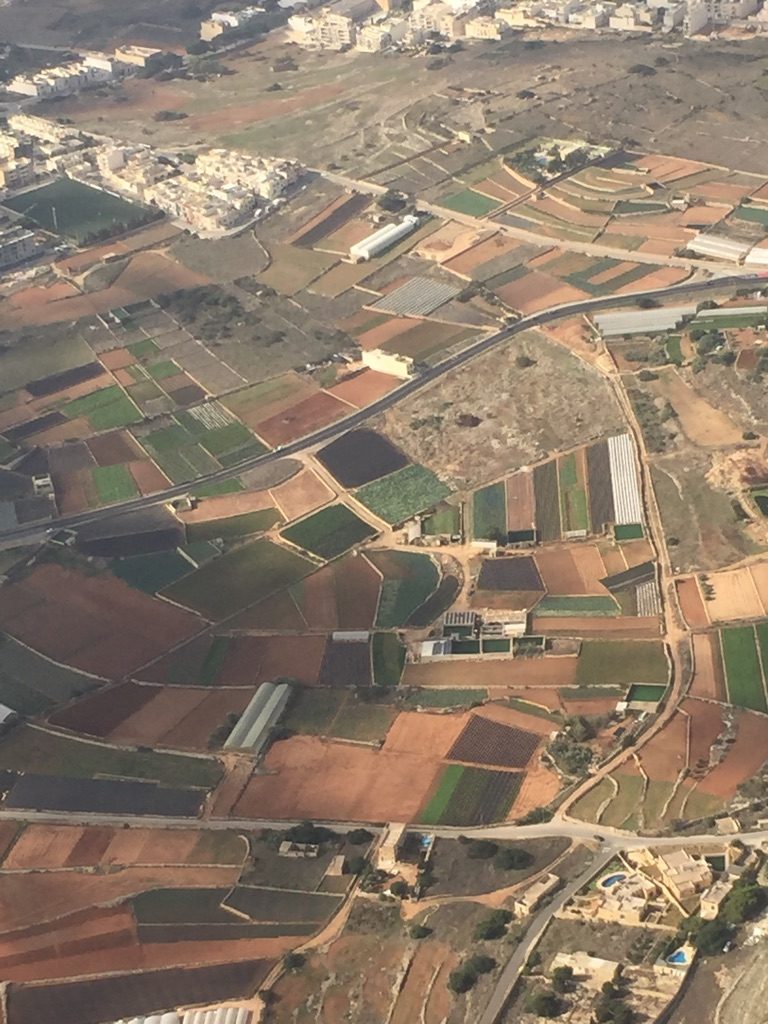
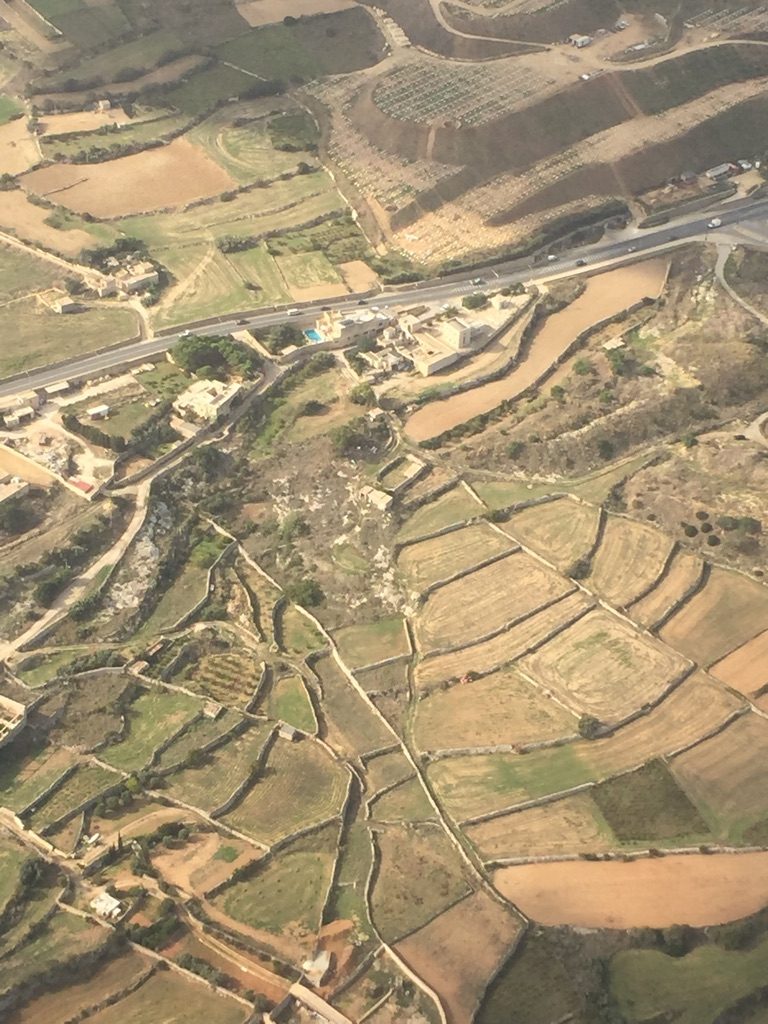
I had a window seat and got a good view of the Italian coast, could see smoke pouring from Mt Etna on Sicily, and then, as we started our descent onto Malta a patchwork of small fields divided by stone walls came into view. In fact there seemed to be so many stone walls that I thought at first I was seeing ruins of an ancient city. But more of that later. 

A lady was holding an ‘Explore’ sign as I emerged from the baggage area and told me that after some other people arrived we would be taken to Gozo, a small island off the mainland, so I settled down in the cafe for an hour. I was surrounded by Brits.

6 people eventually arrived for the transfer and we were shepherded into a minivan, for an hour’s drive to the port, then across the 20 mine ferry ride to Gozo. We could see lots of jellyfish in the clear water and some passengers were dropping bread into the water to attract hungry fish.

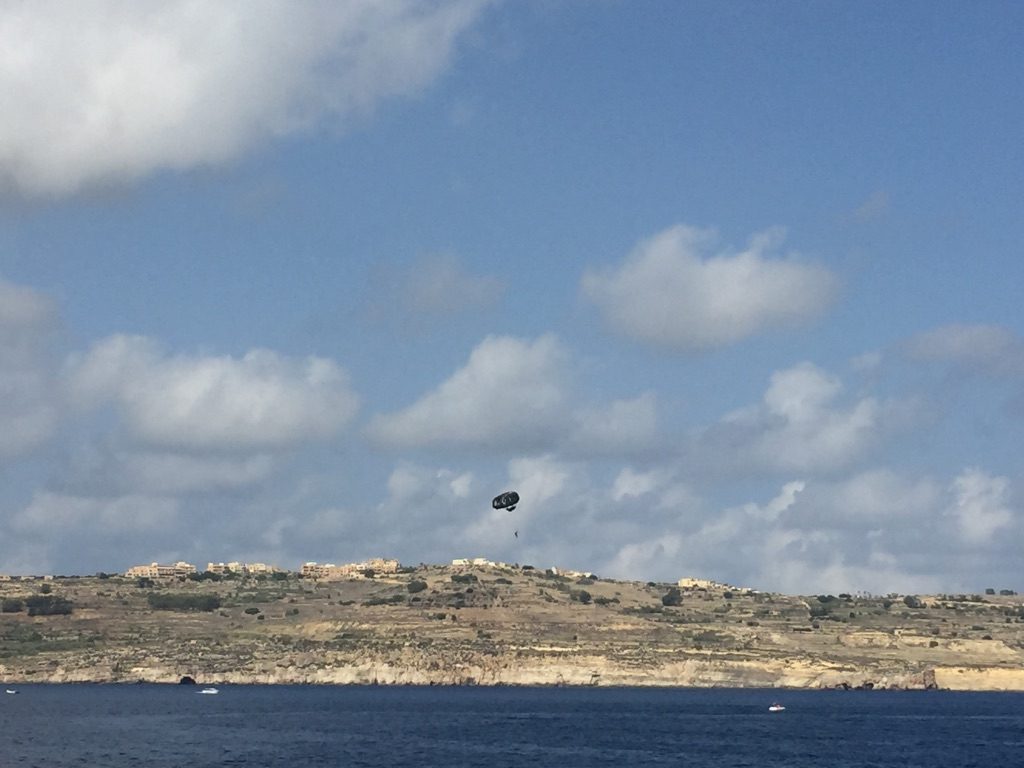
Aerial jellyfish over Gozo

Someone was parasailing overhead and he looked just like an airborne jellyfish.  The first thing I noticed on the short drive to our hotel were the walls. Some were in immaculate condition while others were ruins of terraces. The fields these walls were enclosing were tiny. Sometimes rows of prickly pear cactus plants acted as walls.  Over the week I learned a lots about walls: there are courses for dry stone wallers to learn their crafts. Walls are under a preservation order. By creating terraces they provide flat land for crops. They help to stop wind erosion. They provide somewhere for stones picked out of the ground to clear the land to grow crops to rest. A family’s land would be divided amongst the sons who in turn would divide the plots for their sons and so the fields have got smaller and smaller. Some were made from rubble, others cut to perfection.  Apparently I’m not the only one fascinated by Maltese walls:  https://www.ottsworld.com/blogs/walls-made-of-rubble-in-malta/

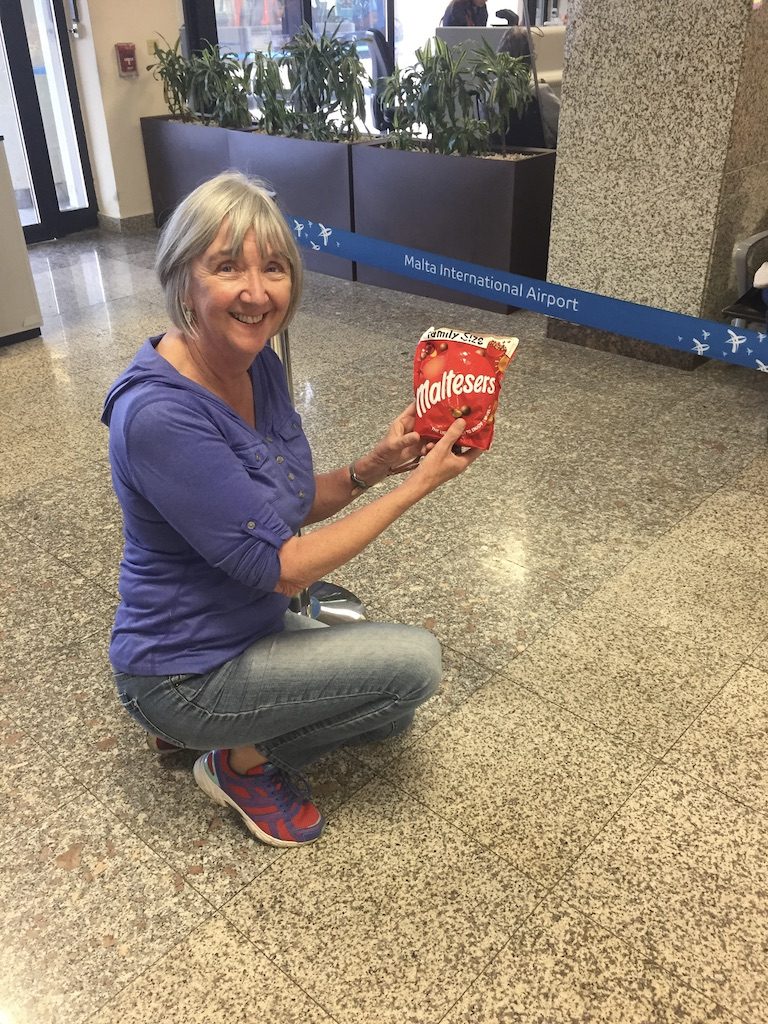
We checked in to the Downtown Hotel, Vittorija. From my room I could just see the sea around the corner of a building. First I took a bath, and found that the bath was so tiny I had a really hard job extracting myself from it! Then I set out to explore the vicinity for an hour. Close by was a park and as I wandered I came across many kitties. Since Anna and Lee  have recently got a little kitty, Twiglet, I was drawn to the kitties and ended up sending her photos of the kitties I saw on my travels each day of my adventure. I wandered along the main street where all the major British stores can be found such  Marks and Spencers and New Look. The opera house was advertising Othello and Aida. I suppose that people who live in Malta are called Maltesers. I made up my mind to buy a packet, but it wasn’t until I was at the airport on my way home that I found a packet to buy. I walked up to the citadel whose origins are 2500 years old. The bedrock had been hollowed out into storage bins for the grain. I didn’t spend too long up there because we have a guided tour of the place tomorrow morning. In the square a screeching noise, which I thought was machinery, turned out to be thousands of birds coming in to roost for the night.

By 6:45 I was sitting on the front deck of the hotel waiting for the group to gather and go out for a meal. My suggestion of creating a WhatsApp group as the group did in Ireland and Sicily didn’t come to anything. I thought it was very useful for meeting up with people in our free time who were interested in doing some sight seeing together. The moon was high in the night sky and almost full and it reminded me of the night in El Curtola when Rachel was convinced the moon was about to bump into the earth! In Gozo Rachel texted me to say that now an earthquake had hit Tokyo on top of the devastation from the typhoon. She has a tour group there at the moment so she’s very busy with work.

Hmmm – I wonder what that means . . . .

Opposite Downtown Hotel is a large sports complex. So far this country doesn’t have the same feel as Sicily. It doesn’t feel Southern European. Where is everyone? In Sicily the streets were filled with people in the evenings on their nightly Passaggiata – until 3 a.m and in the daytime elderly people would sit on chairs outside their houses, directly on the streets. Where were the crazy Vespas? I wasn’t to see a single one in Malta.

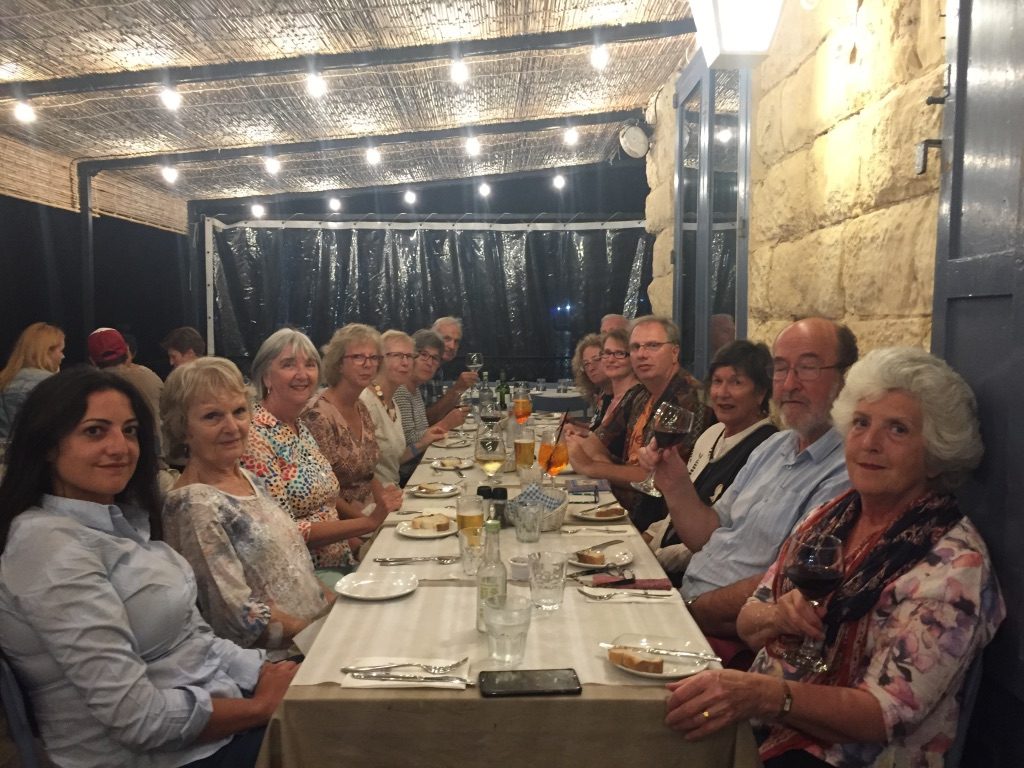
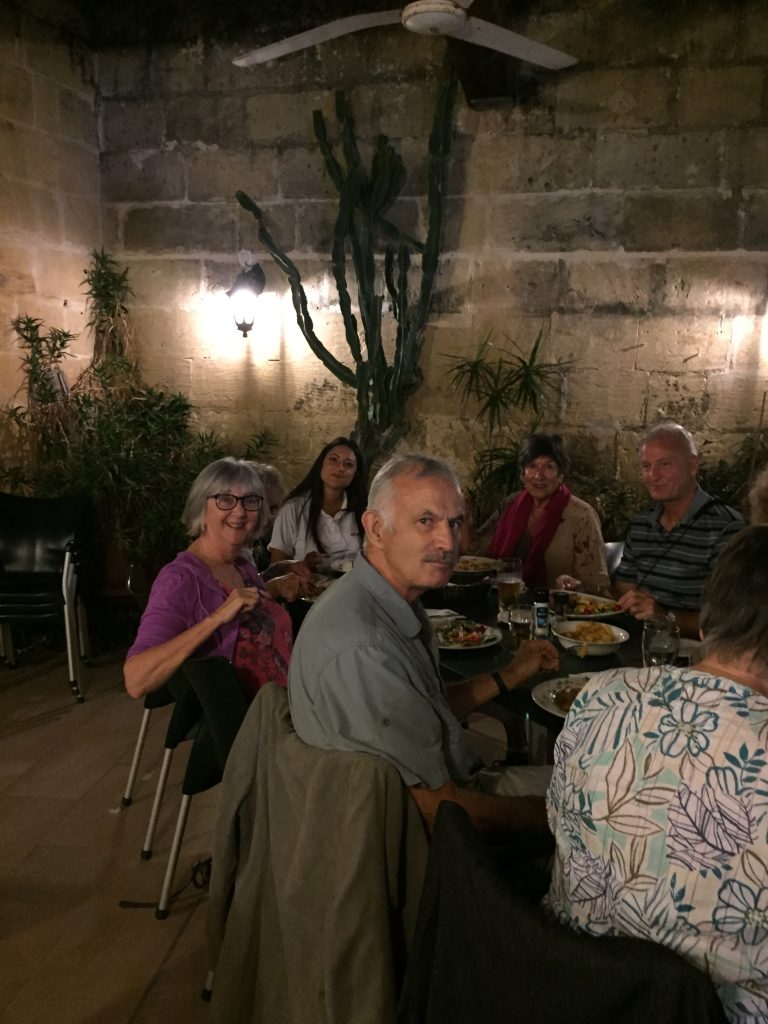
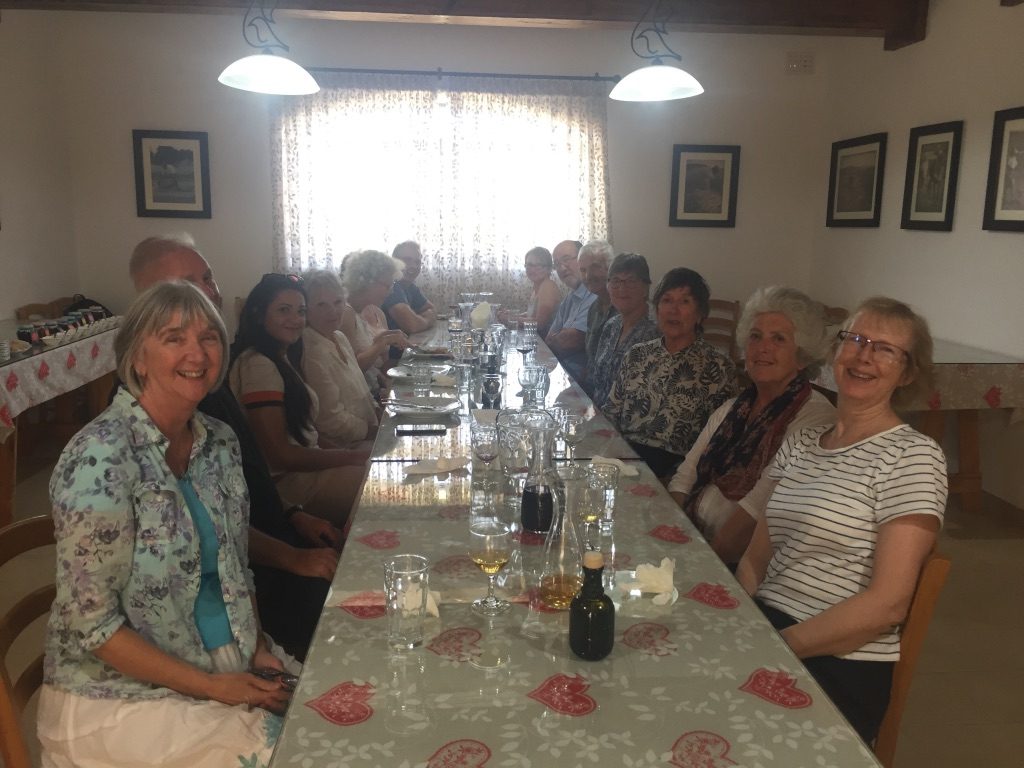
At dinner I met the other 12 people in our group: 2 couples, 2 sisters, 2  men and 5 women traveling alone. Our tour guide is Maria who has a wealth of general knowledge about her country, and a wonderfully contagious interest in archaeology. Dinner was at Il Totto, on the main Square. The local speciality is rabbit, though we didn’t see a single wild one. On the menu there was grilled rabbit, rabbit bolognese, and spaghetti rabbit! I went for the chicken salad. Dinner took two and a half hours! That felt Southern European!

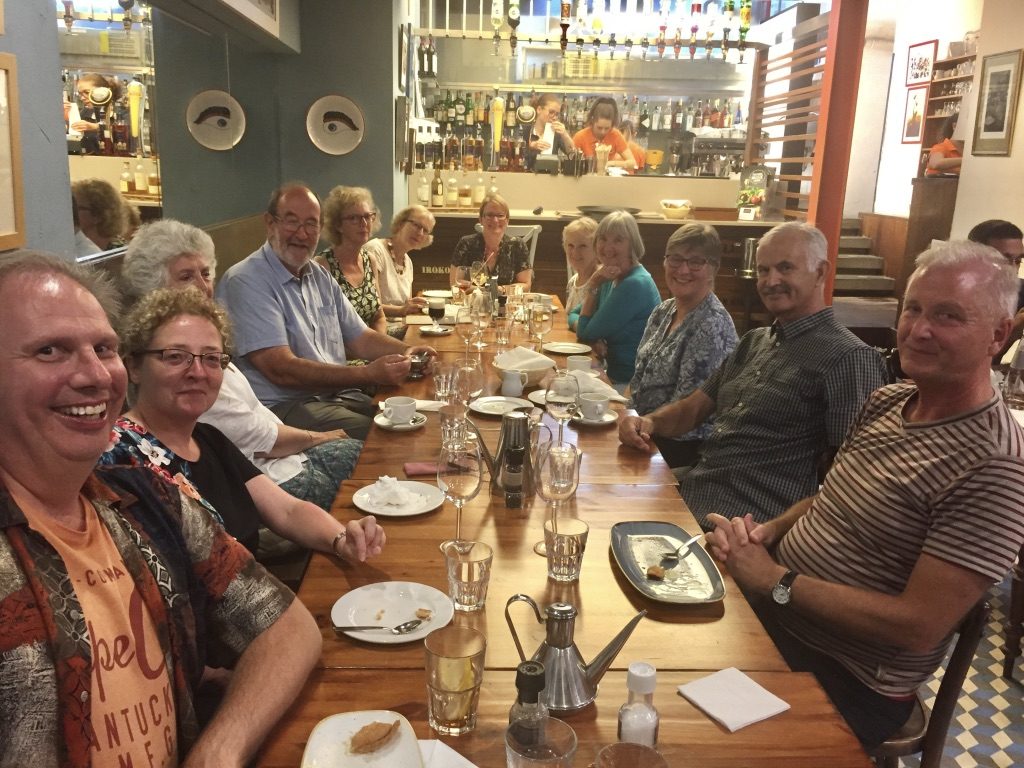
First dinner with our group

I was back in my room by 10 and went straight to bed – after catching the cockroach who had taken up residence in my bathroom and dumping him unceremoniously down the loo. 

View from the Capitol

Delving into Middleton

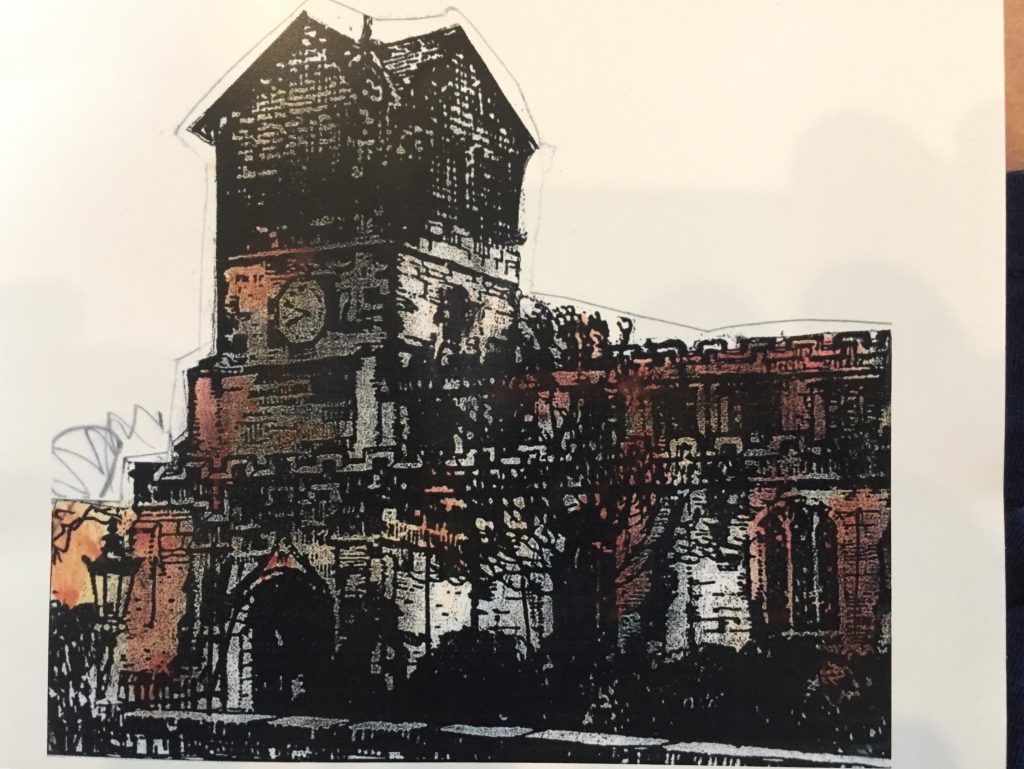
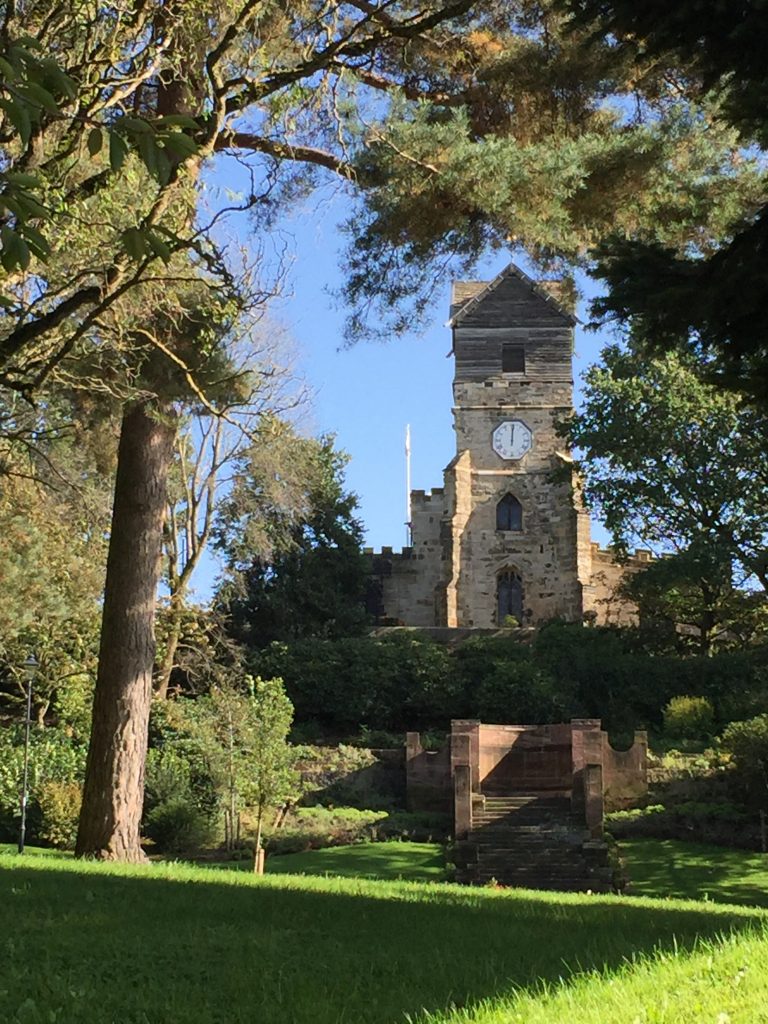
St Leonard’s, Middleton

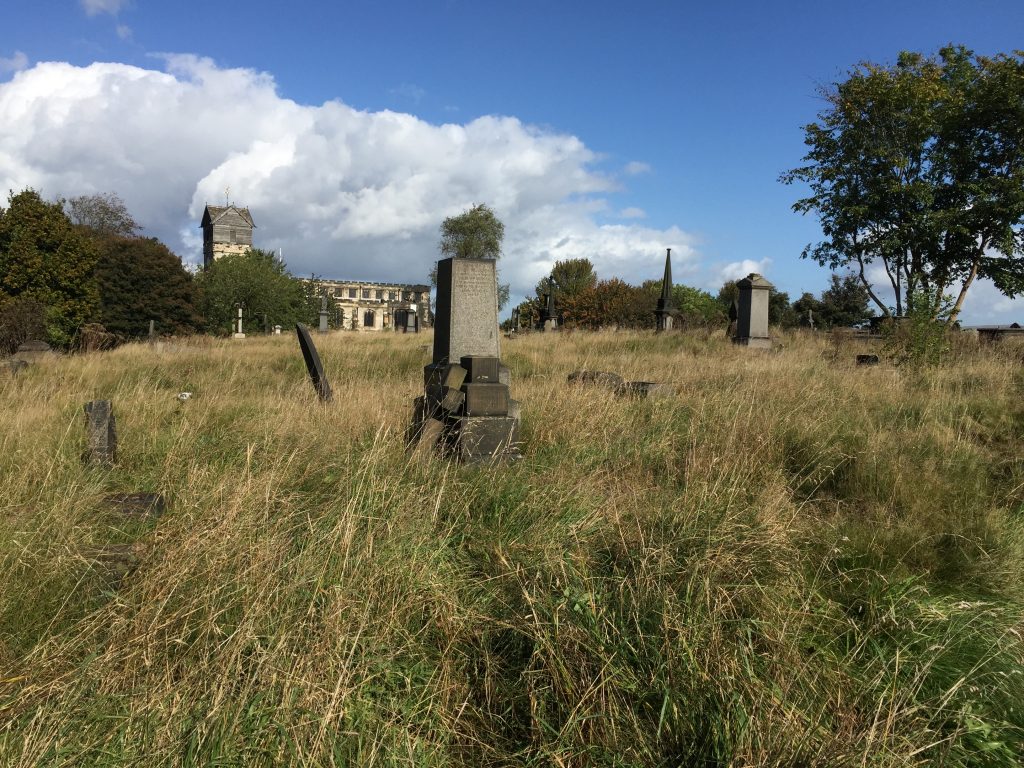
I’d first visited Middleton with Rachel in the summer of 2015, having discovered that some of my ancestors had associations with that town, and several were  baptised, married and buried there. We only visited the church and it was closed sir we wandered around the overgrown graveyard. The church is situated on a hill overlooking some of the industrial sprawl of Oldham. We were both intrigued by the rather strange wooden tower which tops the stone tower. Here’s the writing from my journal about our visit: Wed July 22. ‘It was 3 pm by the time we set out to do a little more ancestry hunting – this time to Middleton and Heywood, which require going around a lot of roundabouts several times! St Leonard’s in Middleton is perched alone today on a spot which used to be the centre of this silk weaving town. The adjacent cemetery was very overgrown. In the porch was a plaque saying that one of the Hopwood family donated a silver chalice. I think we have a Hopwood from this church in our ancestry.’

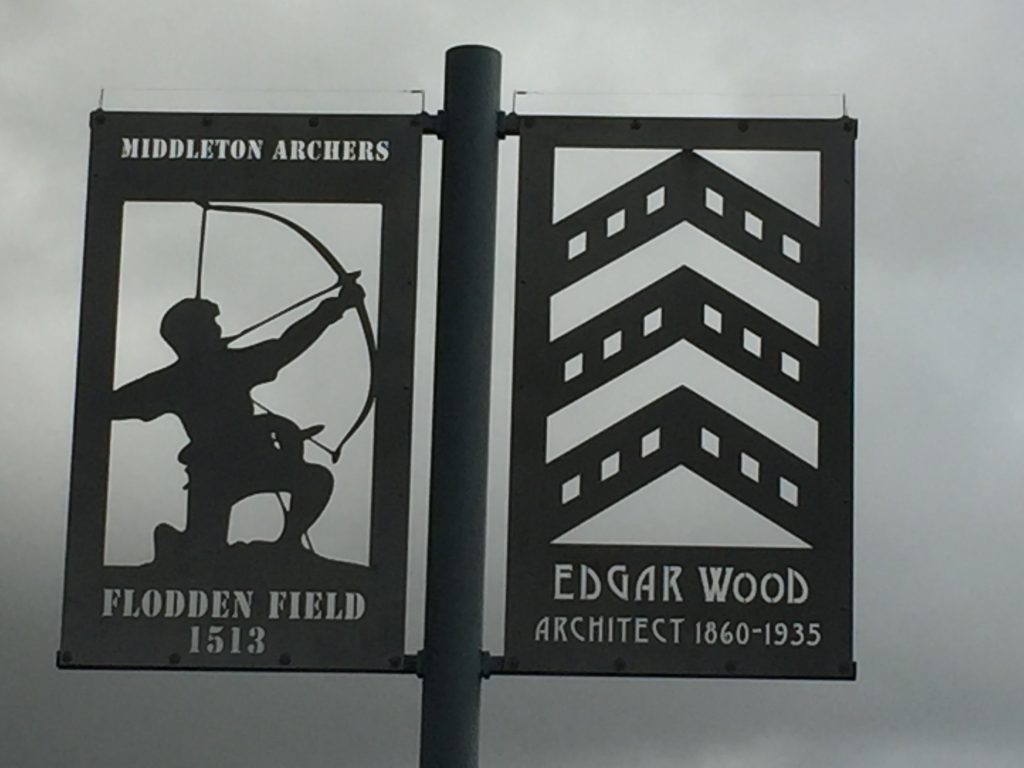
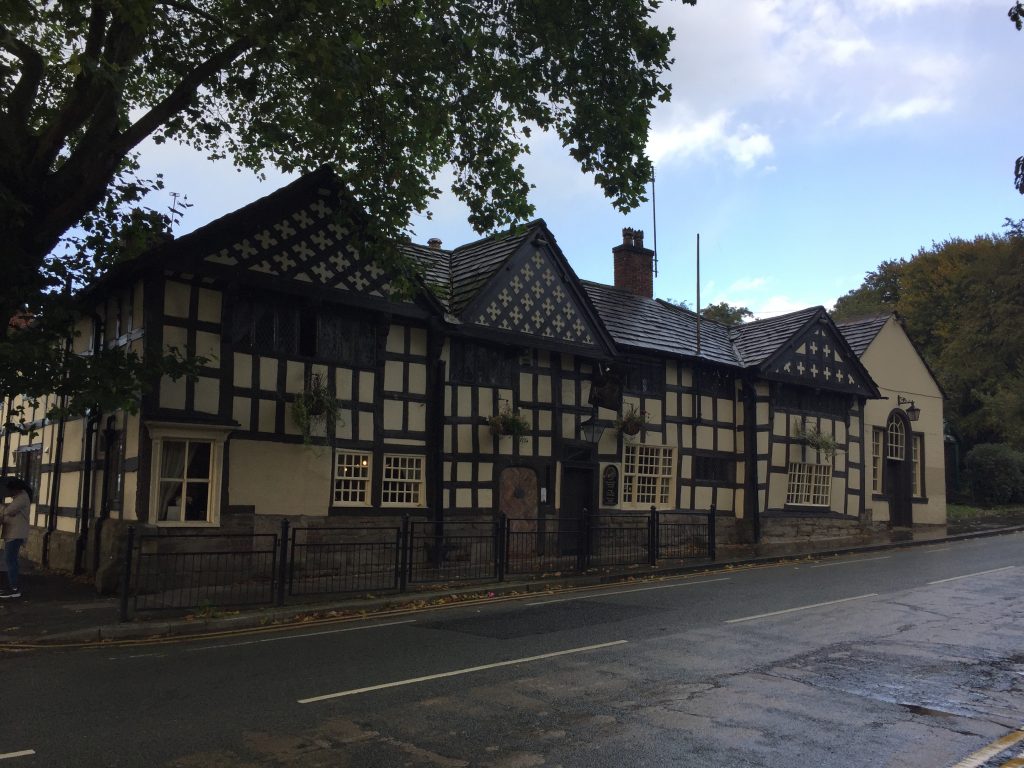
Middleton would have looked very different today had it not been for the famous architect Edgar Wood, an influential proponent of the Arts and Crafts movement. He sent his life reshaping the town and designed more than 60 buildings in Middleton and its vicinity. St Leonard’s Parish Church, Queen Elizabeth Free Grammar School, The Olde Boar’s Head and the Edgar Wood Centre, Long Street Methodist Church all form part of the Golden Cluster.

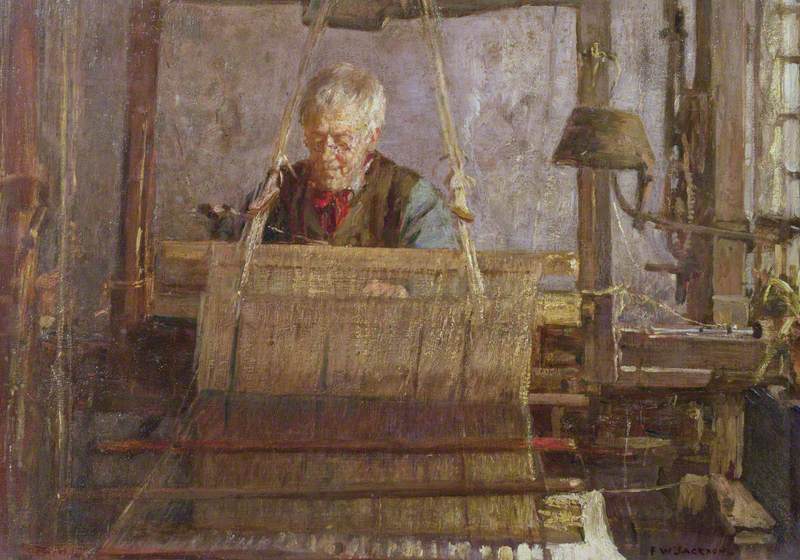
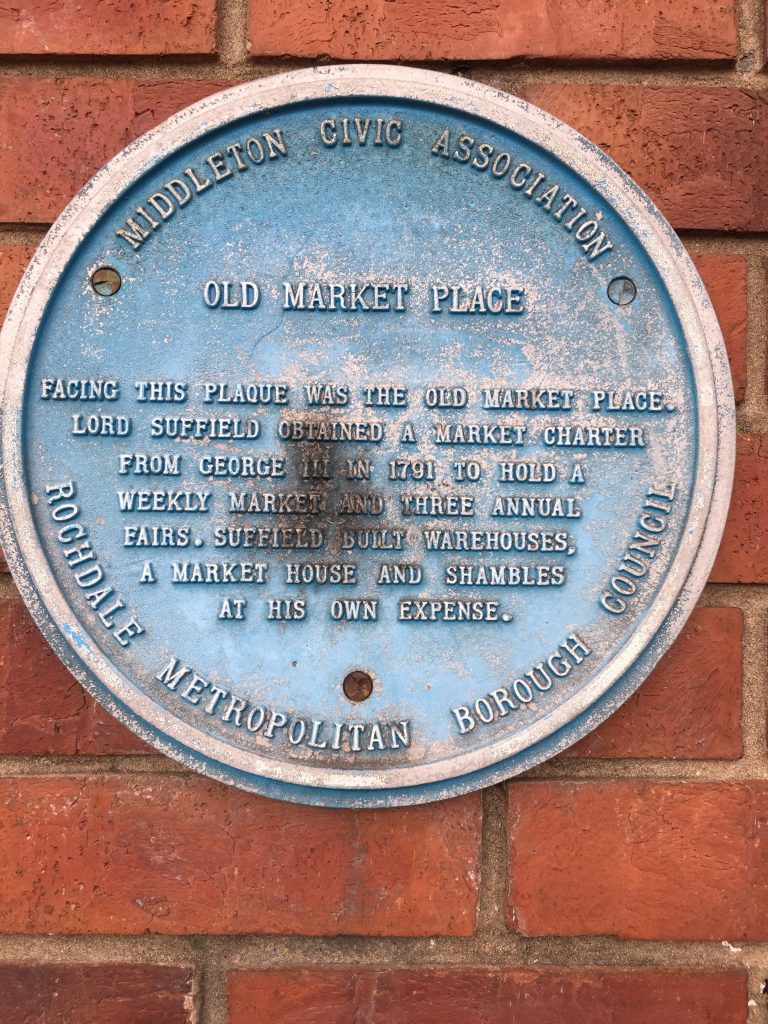
Middleton gained its market charter in 1791. In the late 18th century Middleton was a village with 20 houses, and yet it boasted a grammar school. Like many other villages and towns in the area, the 1780s began to see a growth in population and trade. Middleton was a centre for silk manufacturing at that time, and silk weaving was still described as the chief trade in 1901, alongside a fast growing cotton trade, with its calico printing, bleaching and dying. Middleton handloom weavers were depicted by the artist Frederick W Jackson. Frederick W Jackson (1859–1918) was born at Middleton Junction, Oldham in 1859.

Jackson, Frederick William; The Last of the Hand Loom Weavers

Then last autumn I’d visited with Ed and again the church was closed but we’d taken a walk through the town centre, gone into the library and seen some of the buildings designed by Edgar Allen. It was in the library that I’d seen a flier for Lost  in Manchester Found in Vegas. 

I’d exchanged a few emails with Moira from the church office who, when I had mentioned that I had Hopwoods of Middleton in my ancestry had responded – Are you related to Hopwood Dupree? I’d never heard of him so looked him, up and he’s a descendent of the Hopwoods of Hopwood Hall. He’s currently trying to restore the place. 

I was taking up the opportunity to go to Middleton – train to Rochdale, train to Mills Hill, bus to Middleton because the weather forecast was predicting a rain-free day and it wasn’t until I got up and saw a sunny sky that I decided on the spur of the moment to go. But by the time the train and passed through the pennine tunnel it was sprinkling with rain and as I arrived in Middleton it was pouring down. It was market day  and I sheltered for a moment under some awning  but then decided to continue up the hill to the church. I’d look around the market on the way back. 

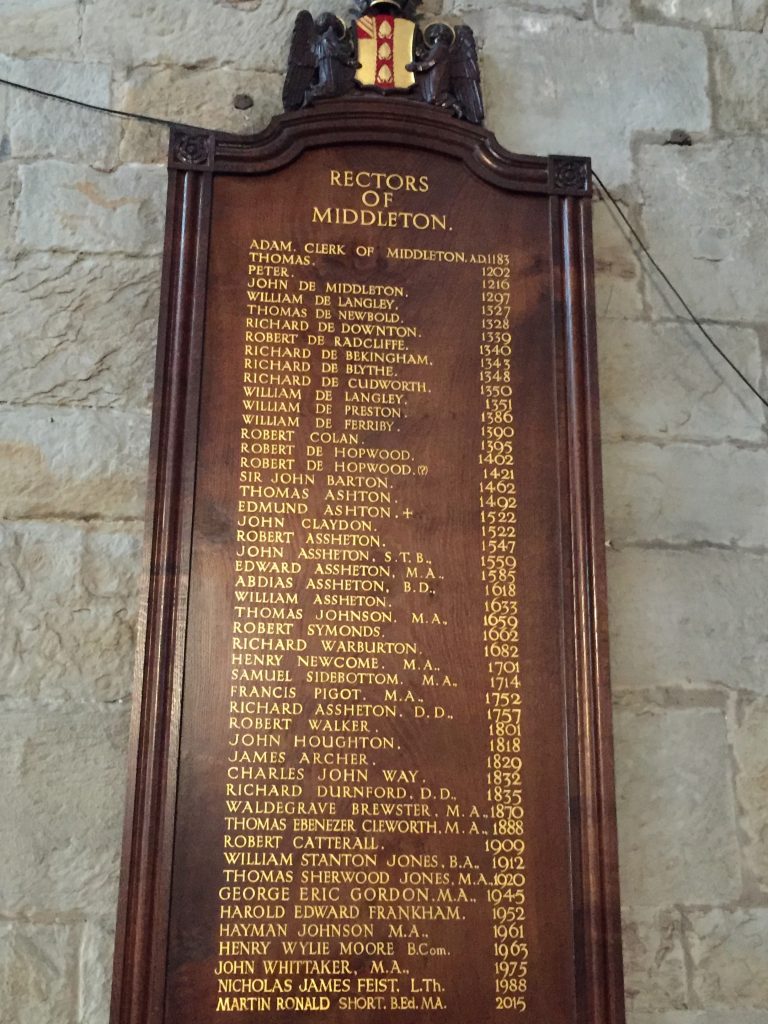
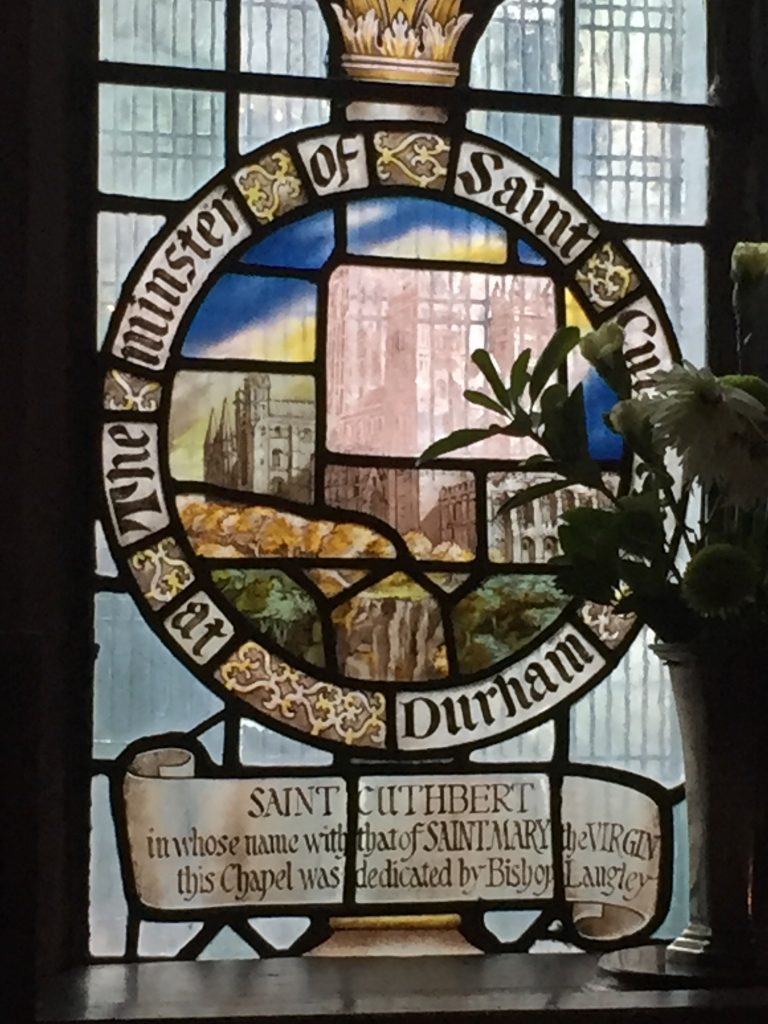
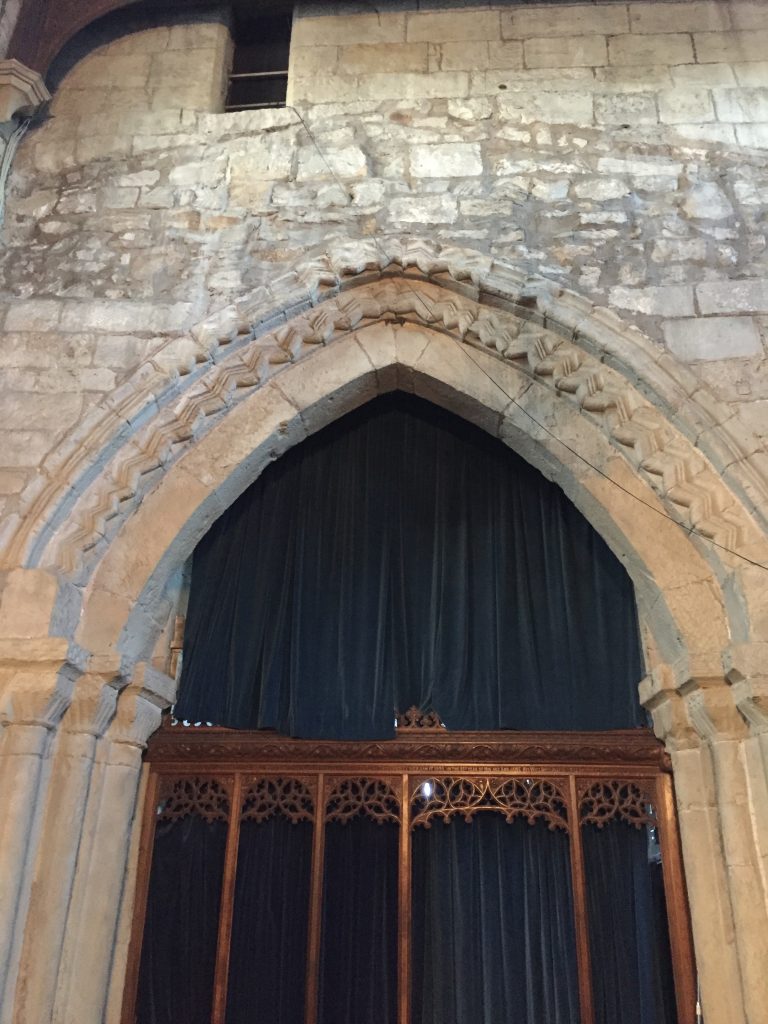
Moira had told me to ring the bell of the church office and I was glad to know that there was someone inside, to not only let me in, but be on the premises while I looked around. Moira handed me a guide book, asked me to sign the guest register (which aids in funding)  and then left me to it. I spent a leisurely hour and a half taking in as much as I could but I really feel I barely scratched the surface. It’s a Grade 1 listed building. I could hear the rain pounding on the roof above the exposed wood, a sound I’m not familiar with in churches. Apparently it’s because the roof is stainless steel rather than lead. Vandals were forever stealing the lead so it’s been replaced and makes a hell of a racket when it rains heavily. The guide book is entitle “ The church with over a thousand years of history.” In 1890 the Rev C B Ward said, “The people of Middleton are distinguished above all the people I have ever met, for the peculiarly fervent love that they have for their parish church.” Around 870 a Saxon church stood on this site, replaced by a Norman church around 1100. This was replaced by the Langley church in 1412. Thomas Langley 1363-1437 became prince Bishop of Durham and served terms as chancellor to King Henry iv, v, and vi. It’s documented at Durham Cathedral that the body of St Cuthbert stayed in Middleton, and with him the Lindisfarne and Stonyhurst gospels. In Cuthbert’s day Lancashire was still largely Welsh speaking (Cumbric) with a British/Celtic identity. The Norman church measured 40’ x 20’. It’s dogtooth molding above the arch was later reused in the pointed tower arch and in the arch over the pulpit. What is now the tower arch was once the principal door of the Norman church. The weathered columns are evidence that it once faced the elements outside.

Thomas Langley was born in Middleton and he built a new church at his own expense in 1412 , and around 1510 Sir Richard Assheton, lord of the manor and hero of the Battle of Flodden, 1513, extended and rebuilt parts of the church, raising the height of the roof and adding the clerestory. The wooden belfry was added in 1666.

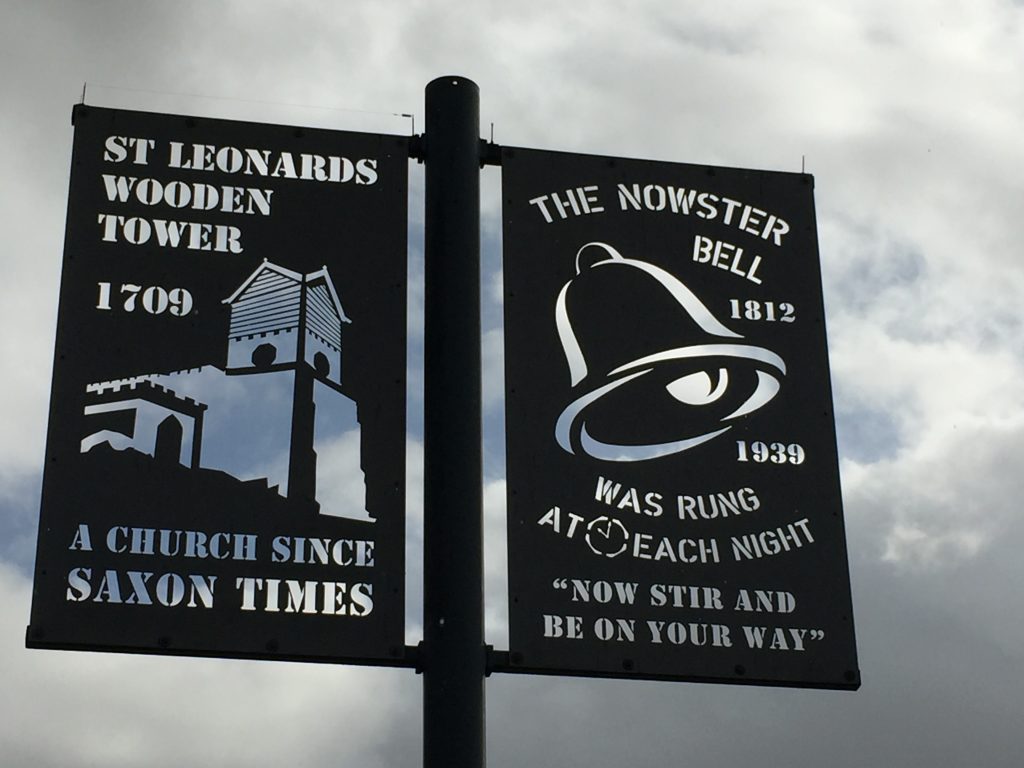
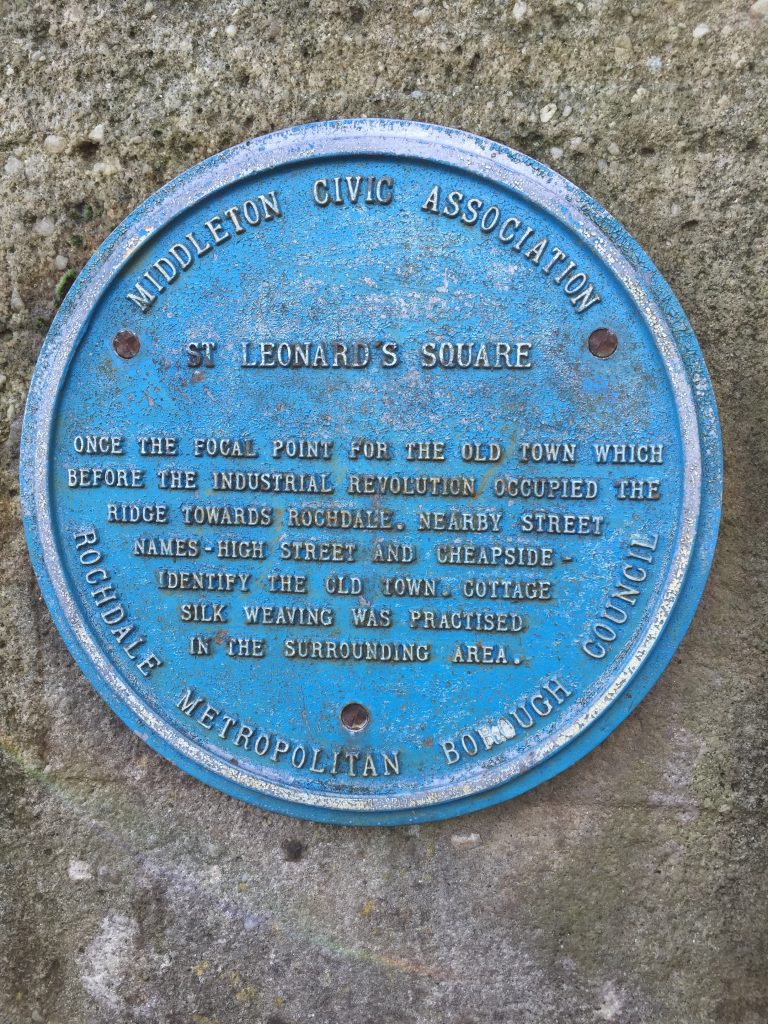
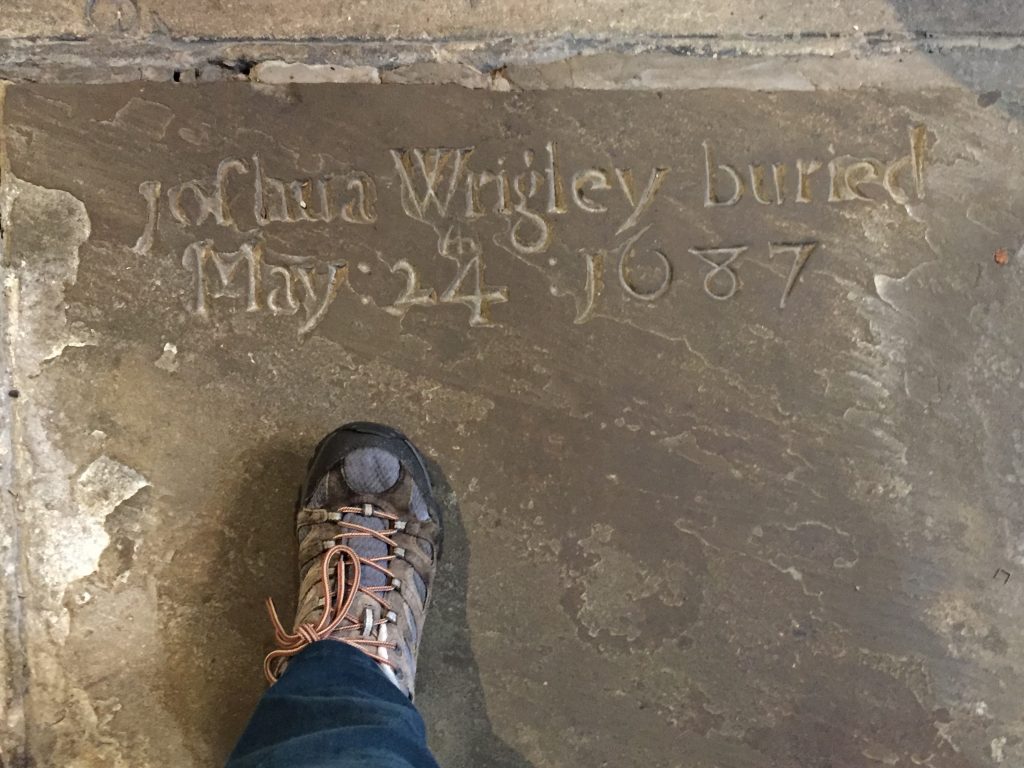
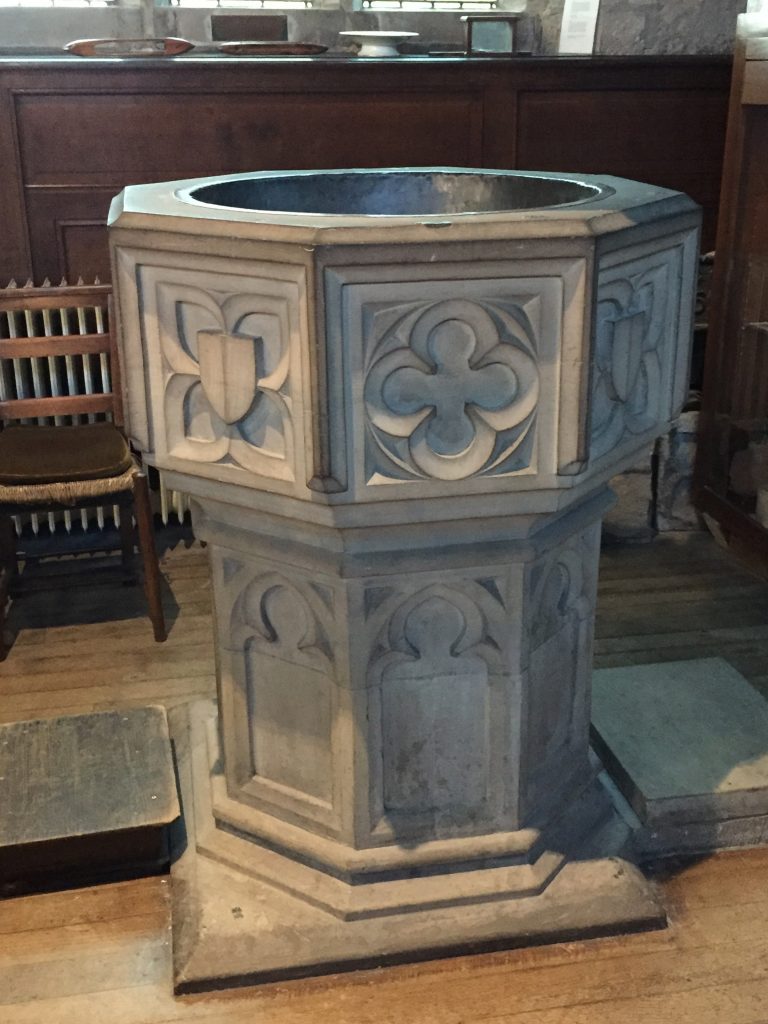
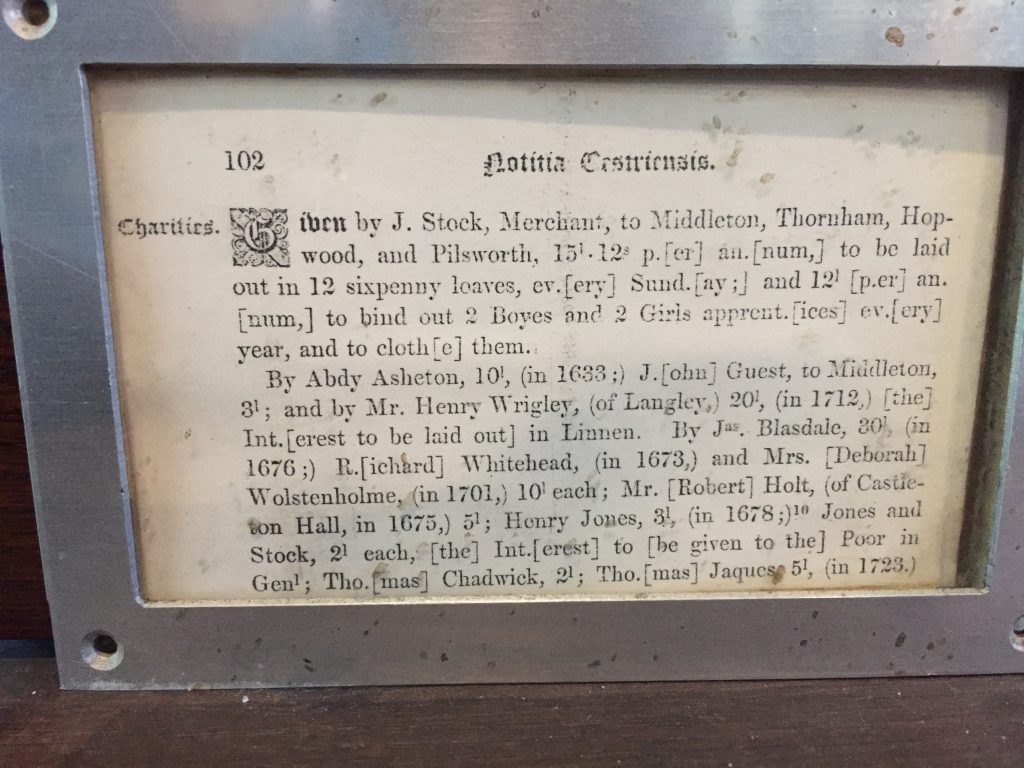
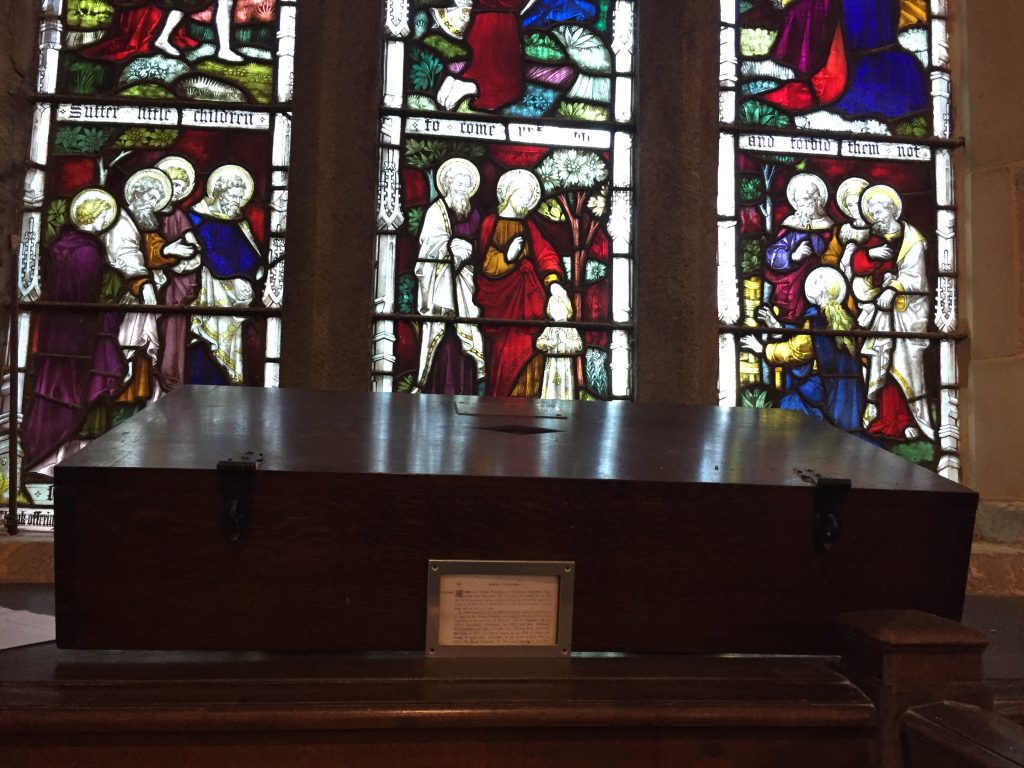
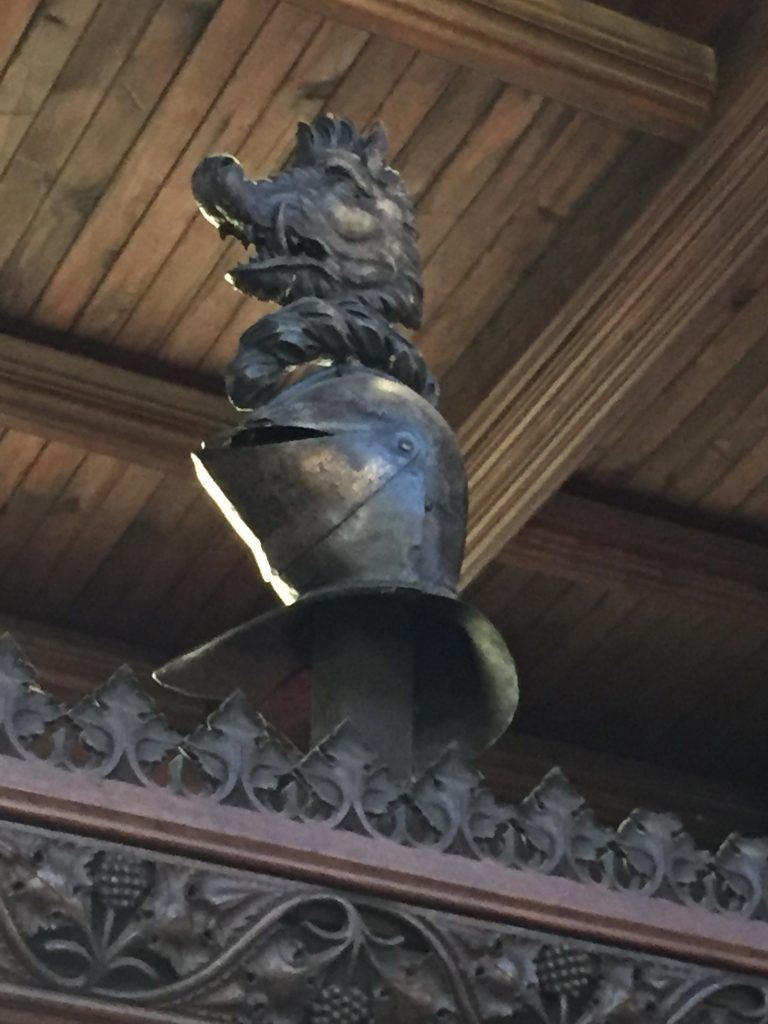
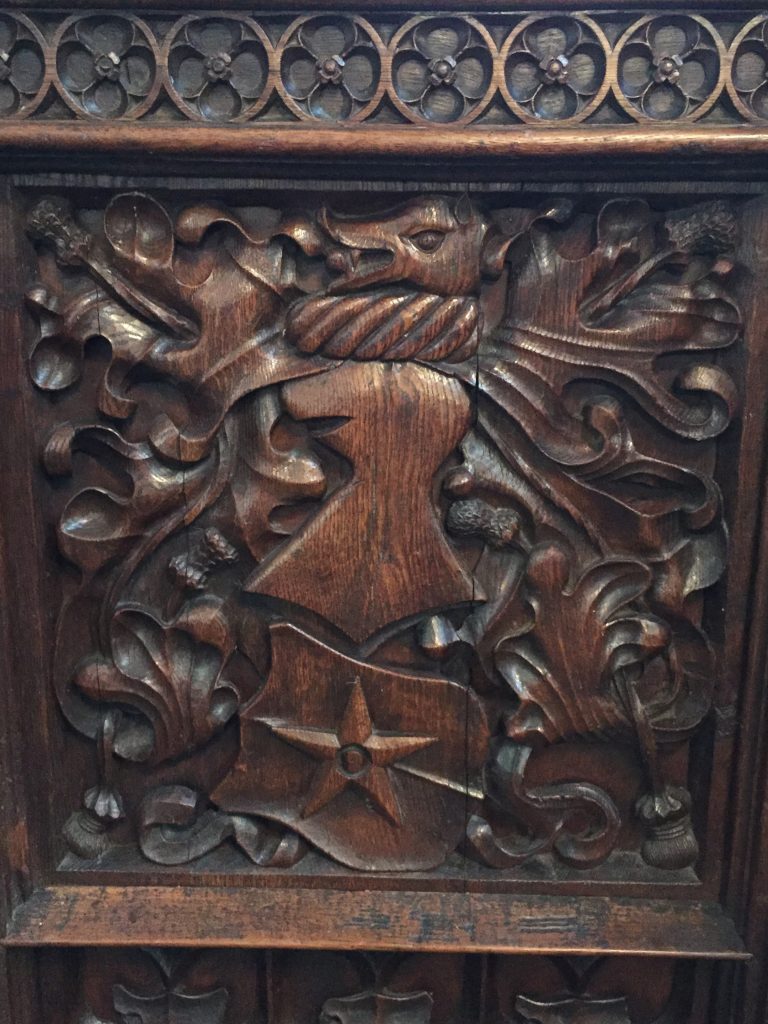
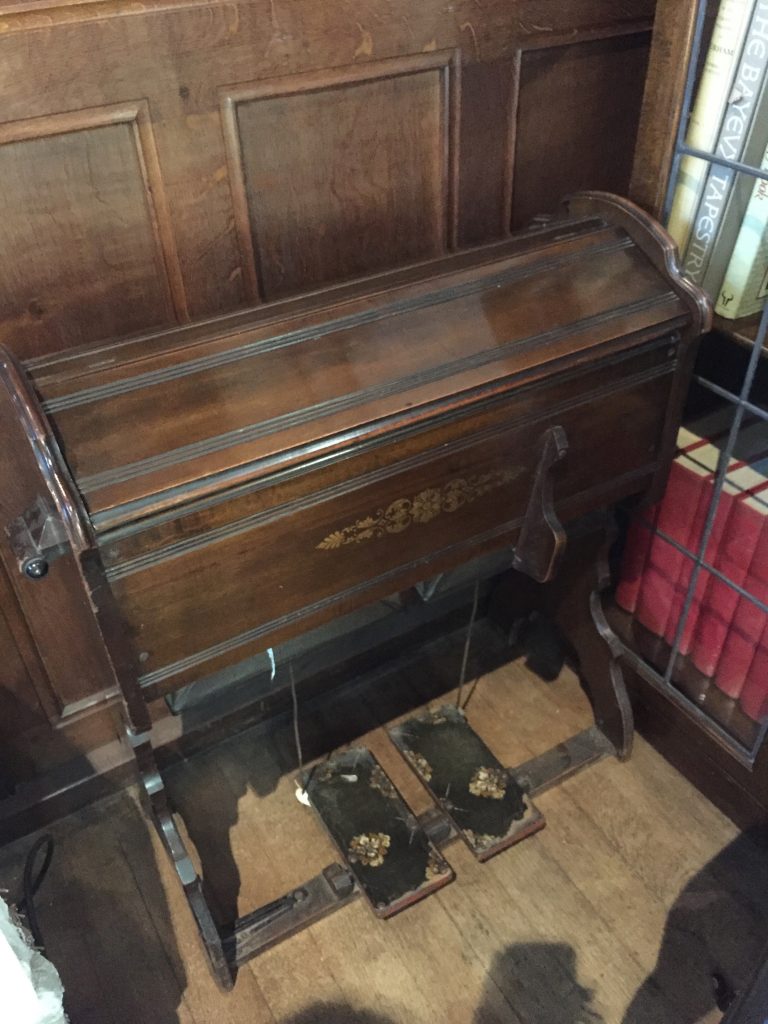
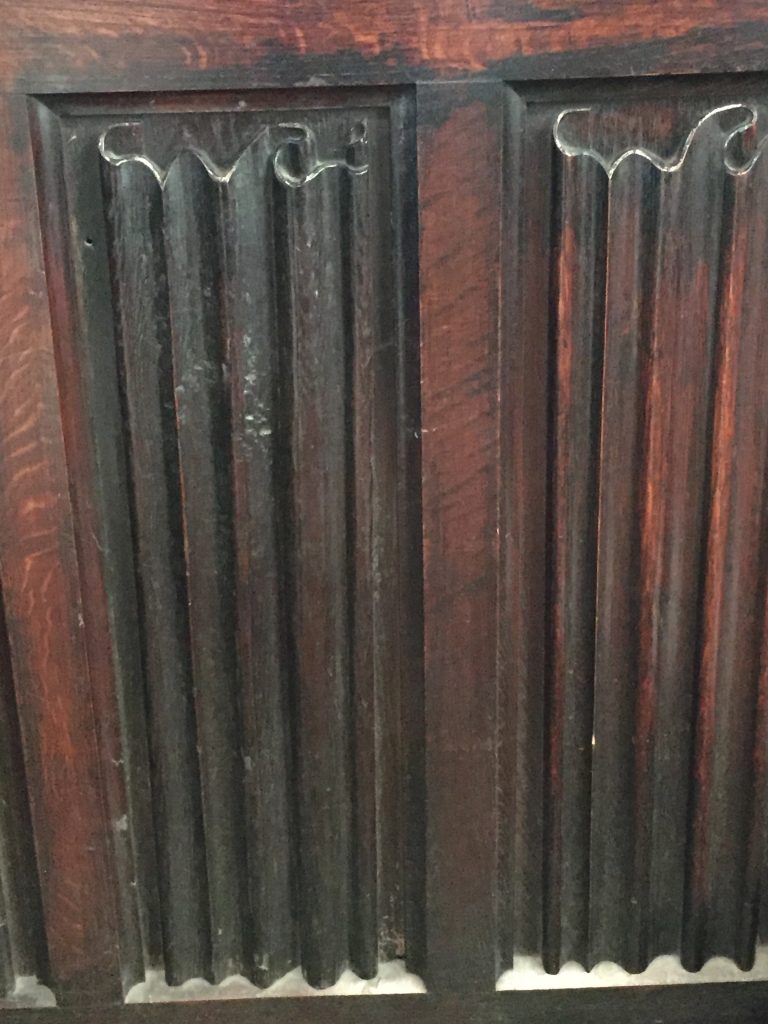
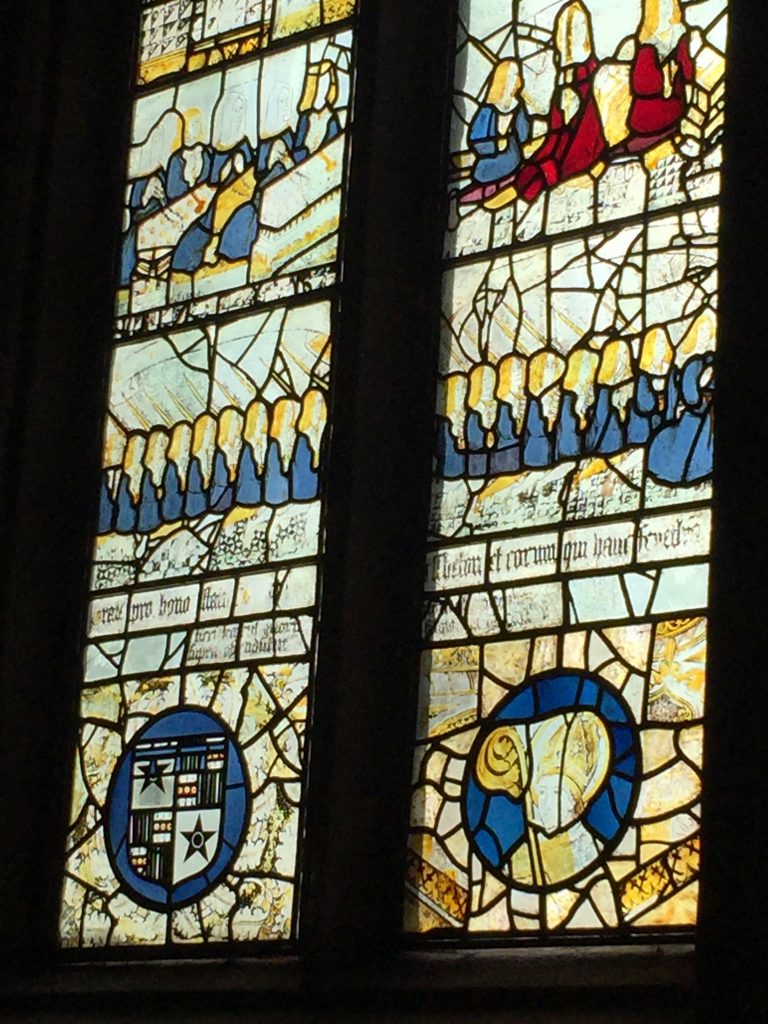
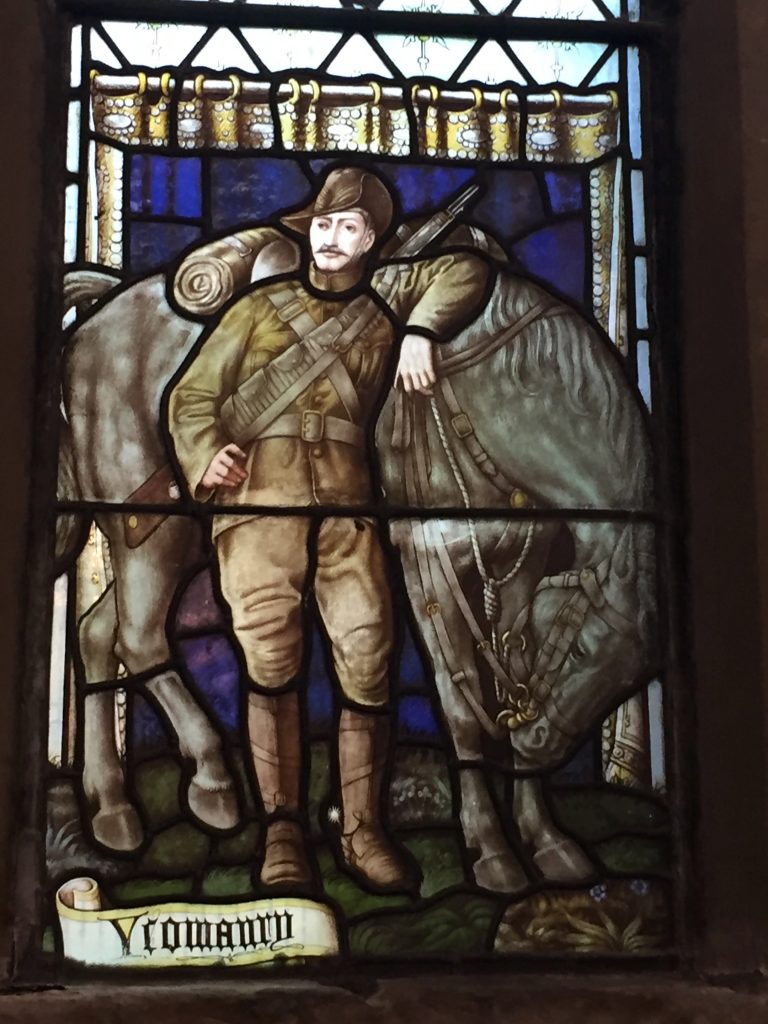
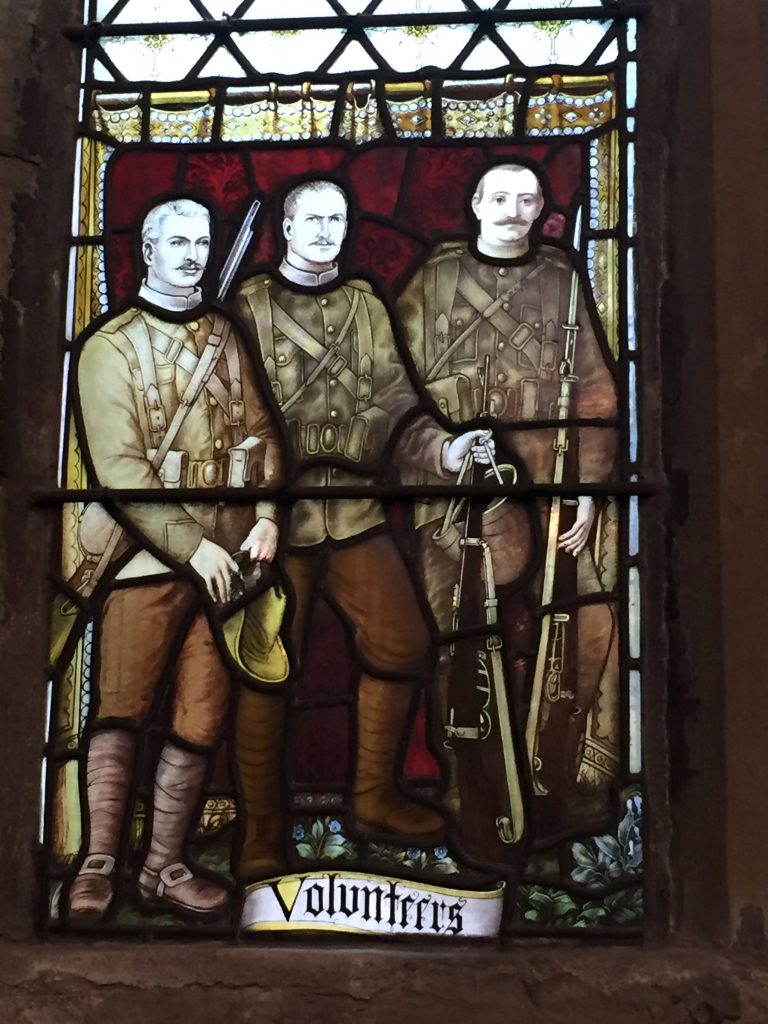
The parish of Middleton included Great Lever, Ainsworth, ash worth, Birtle-cum-Bamford, Pilsworth, Hopwood, Thonham and Middleton. Markets and fairs were held in the square. A blue plaque now marks the site. The current pews dated from 1867 and many gravestones were removed to the churchyard. The south porch shows evidence of sword and arrow sharpening on the external moulding. The main south door is attributed to Langley and the large wooden door with its wicket and drawbar is possibly from Langley’s time. The medieval font was recurved in 1847 by church architect George Shaw and around its rim are lead infills indicating where the locks and hinges once were. The portable harmonium, probably used at choir practice was purchased in 1889 for 6 pounds. Prior to the reformation mass was celebrated for the Hopwoods in their chapel. The pew was enclosed during the Jacobean period c. 1620. It was wonderful Tudor linen fold panelling and elongated barley twist spindles. Hopwood burials took place beneath their pew. The famous Assheton memorial brasses ‘the finest in Lancashire’ are by the altar. On top of the parclose (screen) is the Assheton funerary helmet adorned with the boar’s head, the family’s crest. The helmet was stolen from the church in the 1960’s but was recognized by a London antique dealer and it was returned. In 1911 the chancel was refurbished by parishioners. The 19th century choir stalls were replaced and the floor tiled. The flooded window is 500 years old and shows Sir Richard and Lady Anne Assheton and their squire together with the named – amazing –  contingent of Middleton archers and chaplain who would have accompanied Sir Richard to Flodden field – Sept 9, 1513. They look like individualized portraits. The oldest brasses , by the altar, are those of Sir Richard  Assheton and Isabel Talbot, 1507. Finest in the north of England according to the Brass Memorial Society. Facsimiles of the brasses are available for brass rubbing. The medieval rood screen avoided destruction during the reformation because the carvings were entirely secular. Cardinal Langley provided endowments for two priests to ‘teach one grammar school free for the poor children of the parish.’ The school continued here until 1586 when a new school was built – the Grammar school. Memorial window to Middleton men who fought in the Boer war, designed by George F Bodley, 1827-1907. The illustrated faces are those of some of the soldiers who went to South Africa. The present shallow pitch name roof of 1907 designed by Edgar Wood. The ‘leger’ stones  in front of the screen included Wrigley (Langley Hall). There are 9 bells from 1614-1891. The Nowster was rung every evening from 9.50-10.00 to warn people to get off home. This tradition began as a curfew bell at the time of the Battle of Waterloo in 1815 and continued until the outbreak of WW ll.

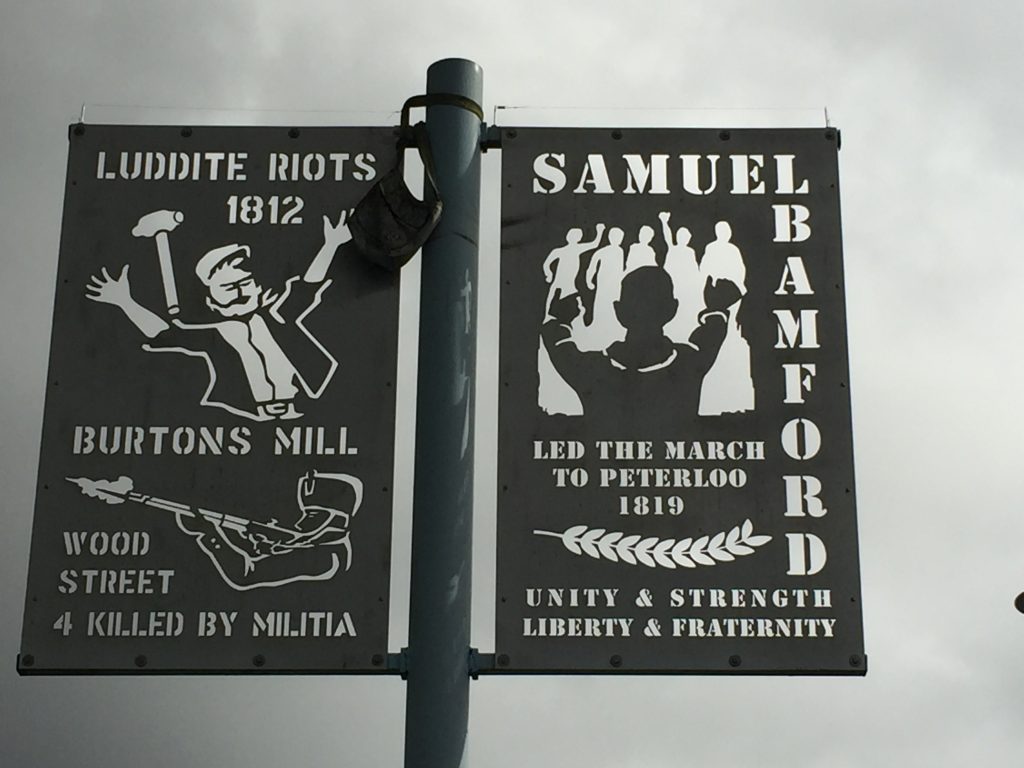
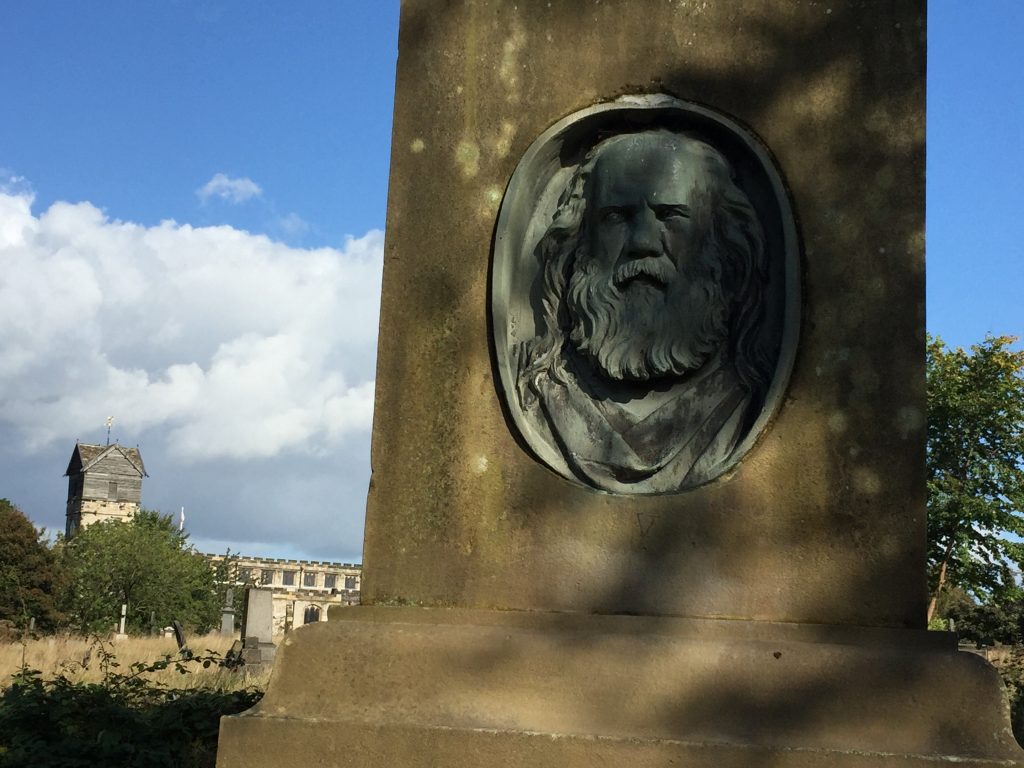
From the church I took a walk in the cemetery where a man with green and pink hair approached me. At first I was a little apprehensive. There was no-one else in site and he made a bee line for me crossing several flat stone graves to reach me. He was out walking his dog. He presumed I was in search of Samuel Bamford’s grave and he was eager to guide me to it. I’d been to see a movie about Sam Bamford at Manchester Museum, and i’d seen the Peterloo movie, made to coincide with the 200th anniversary of that massacre. I’d discovered that my ancestors were living in Middleton at the time of the Middleton Luddite riots in 1812 and so I presume that my ancestors who were weavers just like Sam Bamford could well have participated, or at least, were eye witnesses of the burning of Burton’s mill in Middleton. As it happened I’d just come to the end of reading Glyn Hughes’s ‘The Rape of the Rose’ and the final section describes the burning of that mill. It was reading that chapter that had led me to Middleton this particular day.

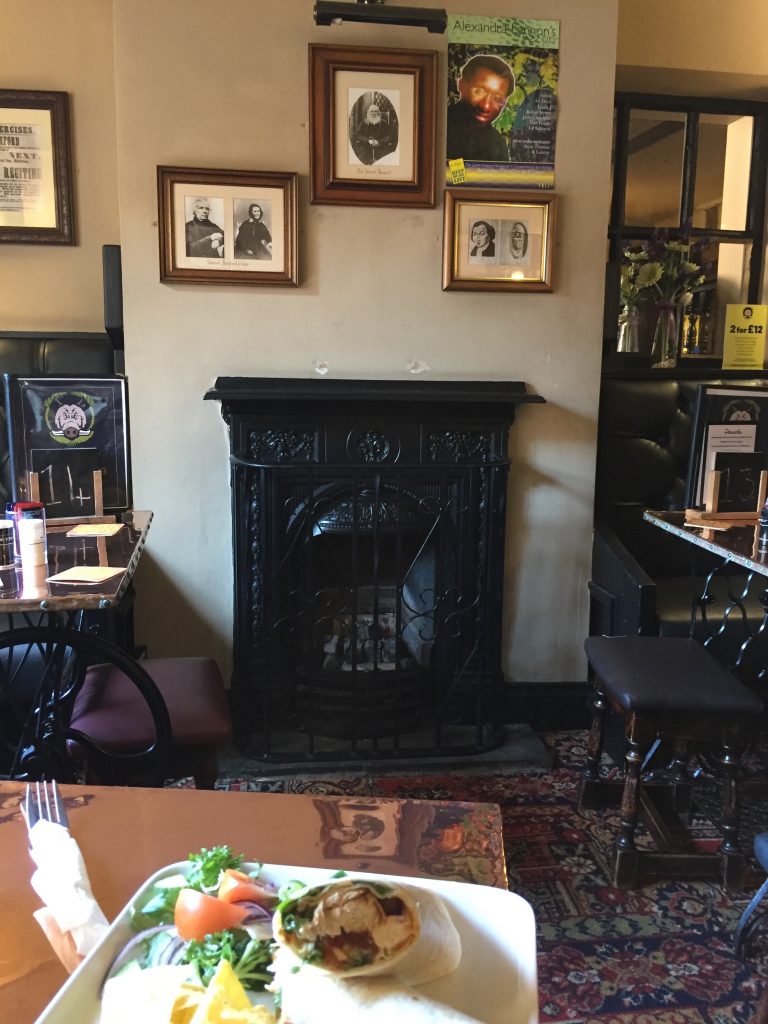
After exploring the cemetery I crossed the road and had lunch at the old Boar’s Head pub, where, quite by chance, i ended up sitting in the Sam Bamford room, decorated with photos of Sam and his family and other associated items.

The 11:42 to York

I woke up to rain. There was nothing gentle about it. It was violent, each droplet drilling its way into the sodden earth with the force of an unseen battering ram. But moments before I left to walk, Andante of course, to the railway station the opening movement of the suite had worn itself out and as the conductor raised his baton for the openings of the gentle pastorale the clouds dispersed leaving  the sun it all its finery. The river, however, was still in an angry mood, a seething blanket of rich brown water with a rumble of bass tremolos punctuated by violin glissandi as twigs and branches raced underneath the bridge. The big puddle on the edge of Holme field, always present after a heavy rain, was basking, yes, radiating in its full glory. A family in wellies were wading through, enjoying their puddle-stomping, but a couple, ill-clad for such Calderdale surprises, had decided to take off their shoes and go for the bare footed approach. I opted to edge around the water in the deep mud preferring muddy boots to soggy socks for my day out with Van Gogh.

The station café was a hive of activity as busy bees consumed their chosen nectar at tables, and lovers passed their Saturday mornings whispering sweet nothings to their honeys. Did steamed up windows blur the outlines of passing trains or did the ghost of an engine in full steam just chug down the track?

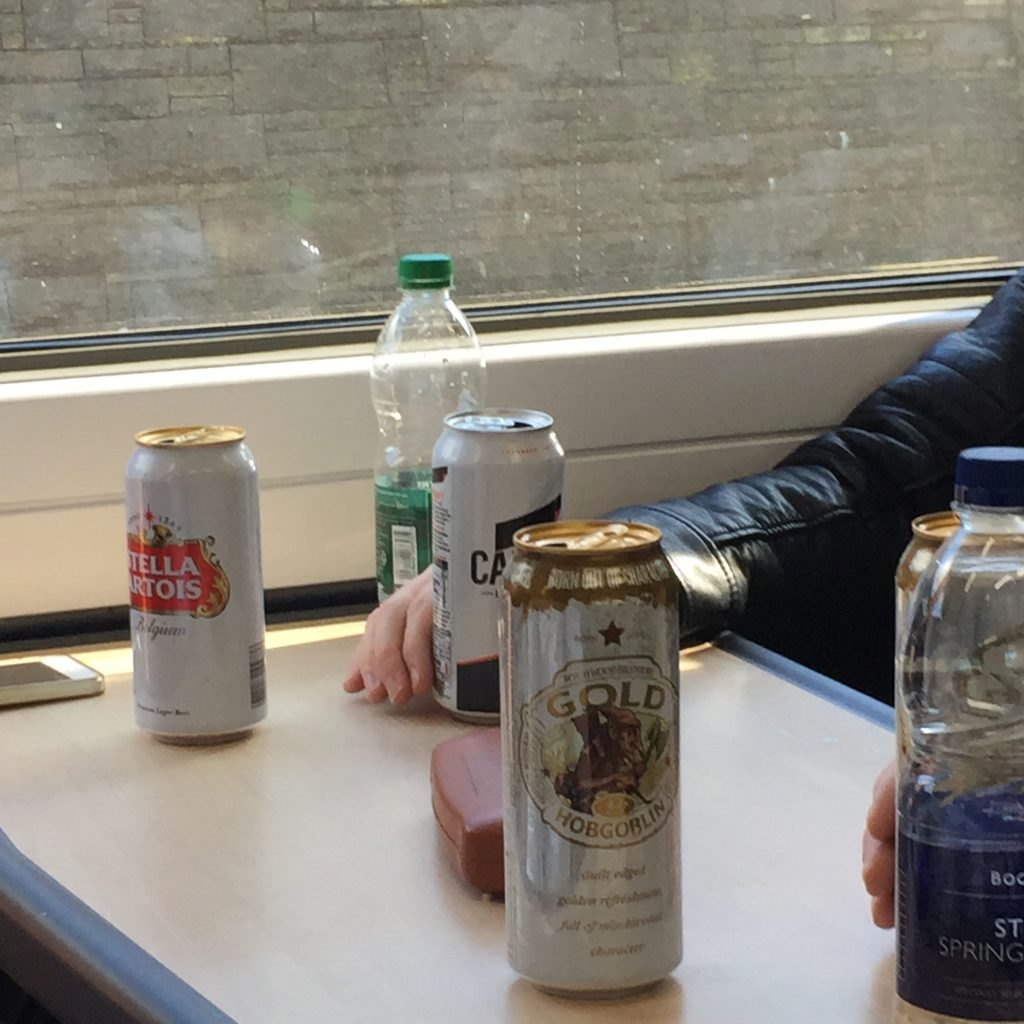
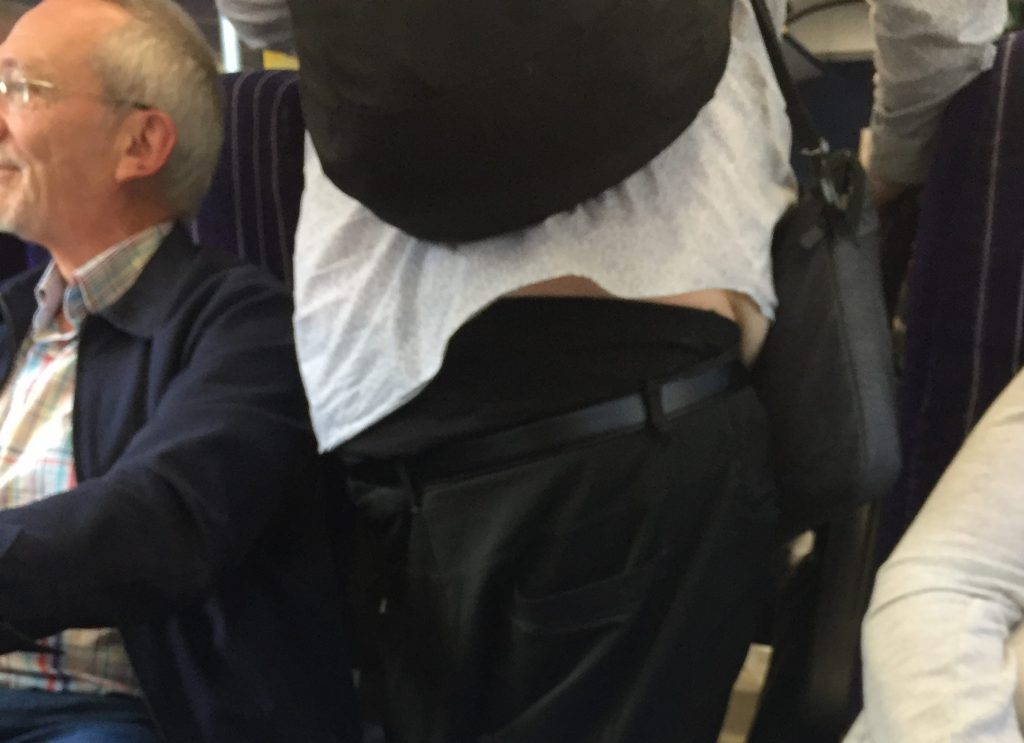
On board the train was packed. Empty beer bottles and cans outnumbered the coffee cups and water bottles even at this early hour. Across the aisle from me 2 gold hobgoblins were doing battle with a can of Stella Artois, a can of  Carling and  2 bottles of water while  2 phones looked on in amusement and the  glasses case acted as referee. Beside them 4 gentlemen of a certain age were dressed in their Saturday best: brown leather shoes, fitted jeans, button down shirts and jackets – leather or linen. They talked in a language foreign to me – words like ‘interconnectivity’ ‘accumulated depreciation’ ‘differentiated target marketing’ fell like aleatoric fragments in an atonal score. I shared my table with three orange-faced women wearing shoes I’d barely be able to stand still in, let alone wobble, and certainly not move in straight line in the cobbled streets of Calderdale. Heavy smears of dark eyeliner and black eye brows drawn onto smooth brows peeked out from above  pink leather jackets adorned with shiny jewelry which looked capable of being strong enough to tether a bull, while the length and sharpness of their matching fingernails would have allowed them to tear the bull apart with their bare hands.  In the corridor between the coaches it was standing room only but the residents there seemed to be have a jolly old time judging from the sforzando outbursts of guffaws that seemed to increase in tempo in sych with the speed of the train. Half a dozen young ladies were struggling to inch their way along the aisle on their way to the toilet. To say they were scantily clad would be exaggerating the extent of their wardrobe. Judging by the looks they were receiving from the sitting passengers I was not the only one to think that these girls must have left home in a hurry – in their underwear. Two of them were trying to cover up as much exposed flesh as they could by wrapping jackets round their posteriors but that was tricky since that meant they couldn’t hide their chests with their arms at the same time. Something had to give! Meanwhile we’d sped through Halifax, taken a quick look at Bradford station before backing out, and had exchanged passengers at Leeds, so now it was standing room only in the aisles too. A large man stood by me. He had a large fully laden backpack, a laptop case over one shoulder and an enormous carrier bag in one hand. As the train progressed, so did his trousers. Down and down. By the time he got off  – the train, that is – his trouser belt was below his buttocks and his underwear was following the downward trend exposing the white belly as  . . .

the touselled heads of the rosebay willow herbs on the tracks bowed their demure heads, too shy to see what would be revealed next.

Just before reaching York the train pulled into the tiny station of Church Fenton. According to the 2011 census the population of this little village was 1392. It has a village shop, two pubs and an Indian restaurant in the former station building. A mass exodus from the train took place at this very spot. The orange ladies, the young ladies almost wearing clothes, the business men, the dad  who’d been entertaining his two wellie-clad, superman sweat-shirted small boys with Quavers, rice crispie treats and Vimto, and the group  Chinese students who had spent most of the journey lying prostrate, if such as thing is possible on a Northern Rail seat, covered in piles of coats, all got off in this middle-of-nowhere. I must have been gazing rather quizzically at this sudden departure of passengers  because the man across from me  offered ‘It’s the mint festival,’ by way of explanation. Immediately pictures from my former life in California came into my head:  the Pacific Grove wildflower festival and the lovely begonia festival in Capitola For some reason I was  finding great difficulty imagining these departing passengers drinking mint tea, sniffing mint soap, and carefully creating artistic displays of mint leaves, eager to be selected  Best In Show. It wasn’t until I got home that I fully appreciated what I’d missed by staying on the train. Instead of immersing myself in the ‘incomparable universe of Vincent Van Gogh thanks to the most recent virtual projection technology’ I could have attended the Leeds End of Summer dance party and got absolutely immersed in torrential downpours throughout the day while listening to Patrick Topping, Gorgon City, Enzo Siragusa, Claptone and Richy Ahmed. Who?

Captured on camera , just before he’s led off to the scaffold. Guy Fawkes pub, York, where Guy Fawkes was born.
« Older posts Newer posts »