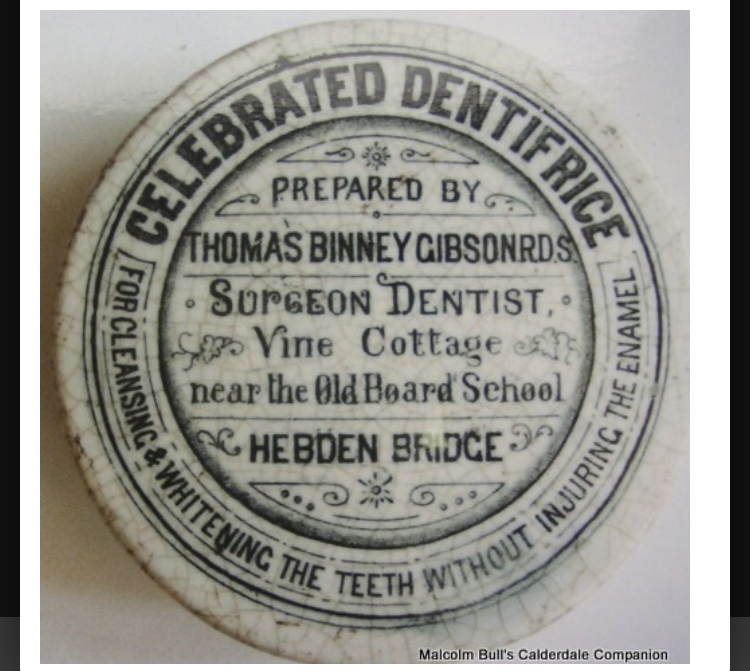
What’s in a name? It was very common practice, at least in this part of the world, to give a mother’s maiden name as a middle name for a child, or perhaps the surname of a grandparent. In my own family my dad’s middle name was Dean, which was his grandma’s maiden name, so I was thrown off track somewhat when beginning my research into Thomas Binney Gibson, whose son was Edward Binney Gibson. I could find no Binneys in their predecessors. It took me a long time to find any Binney connected to the family until I discovered that Samuel Gibson, Thomas’s grandfather, had a good friend and colleague named Edward Binney, the founder of the Manchester Geological society who had come to Samuel’s financial aid in May 1849, when the esteemed fossil collector was suffering from heart disease and could no longer work. Samuel had become bedridden and to obtain some money during his long illness he was forced to sell all his specimens of fossils, land and fresh-water shells, and stuffed birds. Binney made appeals for his financial support and several people made contributions. It was only yesterday that I caught a glimpse of the rear of the former Royal Oak pub where Samuel displayed his amazing collection. I’d passed the front of the imposing building on Burnley Road in Mytholmroyd but today I approached it from from a different viewpoint, across the River Calder from the bowling club. Balconies now grace the apartments and have an uninterrupted view towards Scout Rock. “A wall of rock and steep woods half way up the sky,” wrote Ted Hughes, recalling the landscape of his childhood. The view from Ted’s bedroom window and that of Samuel Gibson had been dominated by the dark precipice of Scout Rock, “my spiritual midwife at the time, and my godfather ever since”.
Thomas Binney Gibson (1852-1920)and his brother, James (1840-1923) younger by 12 years had been raised at Dog Bottom and had moved to Crown Street where their father had set up shop as a photographer. Their mother was Sally Wrigley who was living in Lily Hall when she married Thomas Gibson(sn) in 1838.
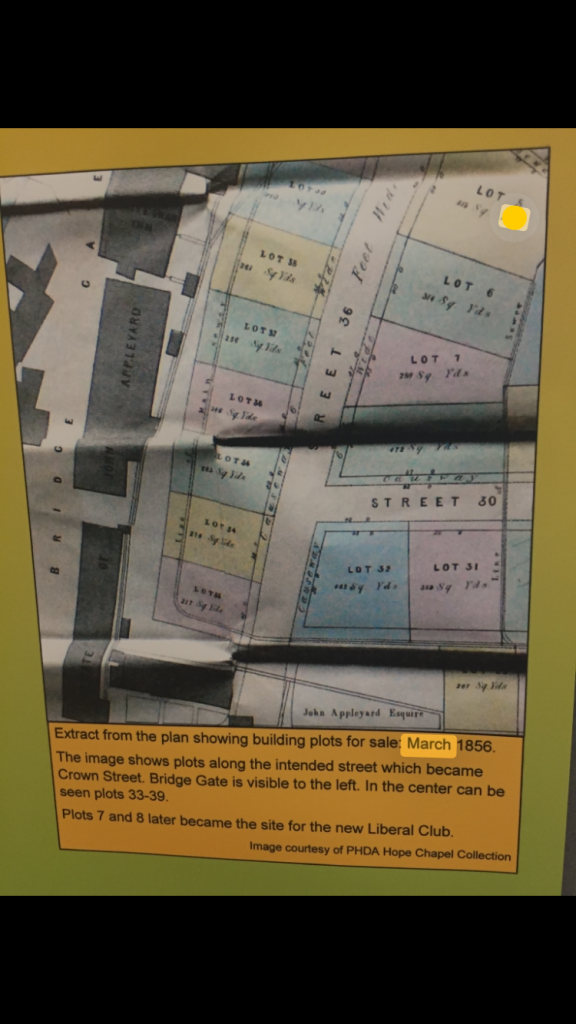
In 1875 Thomas Binney married Ann Clegg from Burnley, daughter of John Clegg, a platelayer for the railways. Three months after their marriage at St John’s Halifax their daughter, Sarah Elizabeth was born. Another daughter, Alice Hannah was born two years later but died as an infant. In 1885 their son Edward was born, and he too was given the middle name Binney. On their marriage certificate Thomas’s occupation is given as mechanic. What kind of mechanic is explained by this letterhead, found in the archives: Thomas Binney Gibson, Osborne St, Established 1880 Dental Mechanic and Manufacturer of all kinds of Dental Appliances to the Profession, Celluloid and Celluloid Apparatus a Specialité. Two years later, however, Thomas is ‘in practice’ as a dentist at Croft Terrace.
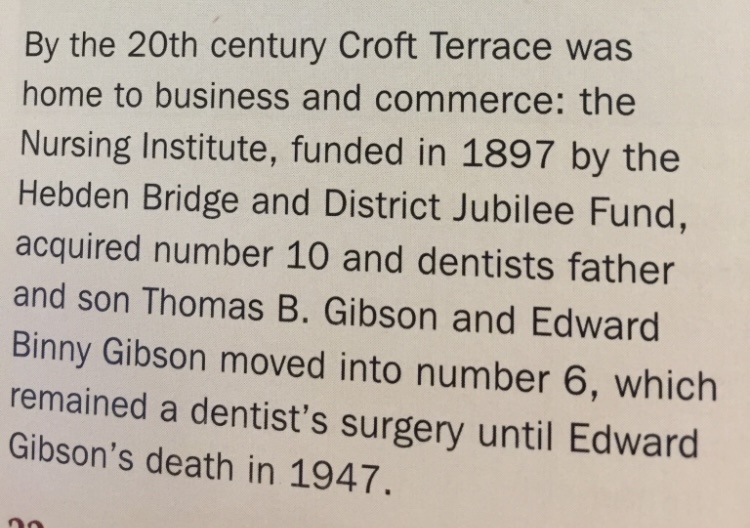
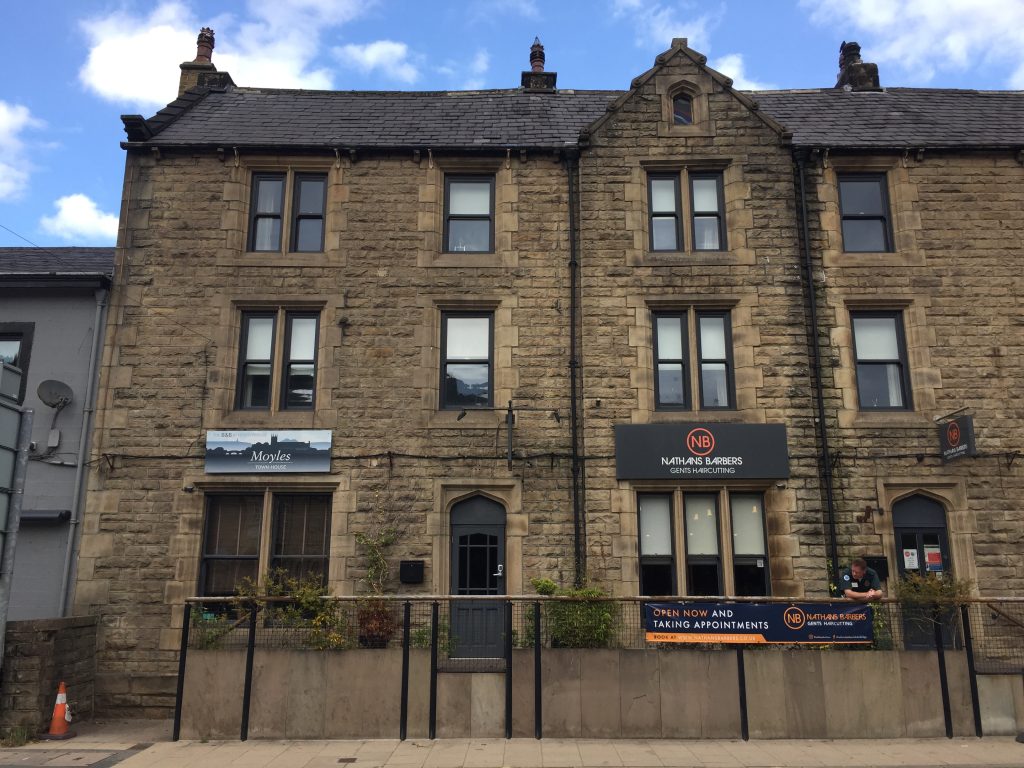
In other words he has not yet taken his LDS qualification. Croft Terrace is situated across the road from the cobbled marina where I took photographs of my family when we visited, from the U.S. in 1987, little thinking I’d be living five minute’s walk away. It was while living here that Edward married schoolteacher Gertrude Ann Eastwood, so I climbed the steep hill of Birchcliffe. Birchcliffe Baptist chapel is a magnificent building, built in 1899, the third building to hold that name. It’s built in an ornate Italian style and is a Grade 2 listed building. No longer used as a chapel it houses the Birchcliffe centre where I’ve spent many a dark winter day searching the archives housed there. I attended a concert there last night featuring a Scottish folk singer, Adam Holmes. Directly across Birchcliffe Road is Birchfield Villas where Gertrude was living at the time of her marriage. Her father Daniel Eastwood was a wholesale fustian clothing man and his wife was Jane. Next door was Edward, presumably his brother, also in the same business. It appears that they moved into Vine Cottage on their marriage and there is currently a blue plaque in the window of Vine Cottage commemorating the fact that they lived there in 1916 – a project done in Hebden Bridge to put signs on house windows to say who was living there during the first world war.
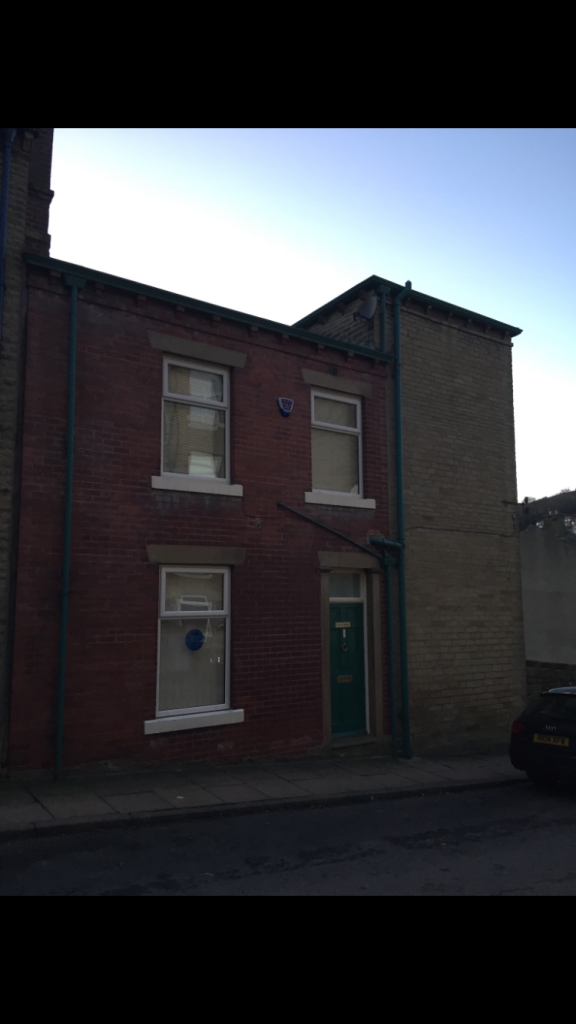
By 1887 he was living at Vine Cottage, the last house in a terrace atop the Birchcliffe hillside, which appears to prop up the other houses and stop them from falling down the hillside. It’s two storeys on the street side but three where it overlooks the town, so steep is the hill. The other houses in the terrace have no outdoor level space but this one has a small area of level ground which was to pay a significant role in the brothers’ rivalry. March 16, 1894 – Todmorden Advertiser and Hebden bridge newsletter: Do not be misled by deceitful advertisements saying that there is but one dentist in Hebden Bridge. T. B. Gibson’s establishment is the most beautiful and complete within 50 miles; and any work done by him not giving complete satisfaction will be immediately corrected free of charge. Painless extractions with gas. On the very same day that Thomas had set himself up as a dentist, July 22, 1878 his brother James had done the very same thing, though 12 years his junior. And if Vine Cottage appeared to propping up the rest of the terrace on Osbourne street then James’s home and place of business was an even grander affair, a house built in the shape of tower, and constructed with the specific intent of shoring up the rest of the terrace. Just to be clear that this was meant to be eye catching and dramatic it was named Eiffel Tower.
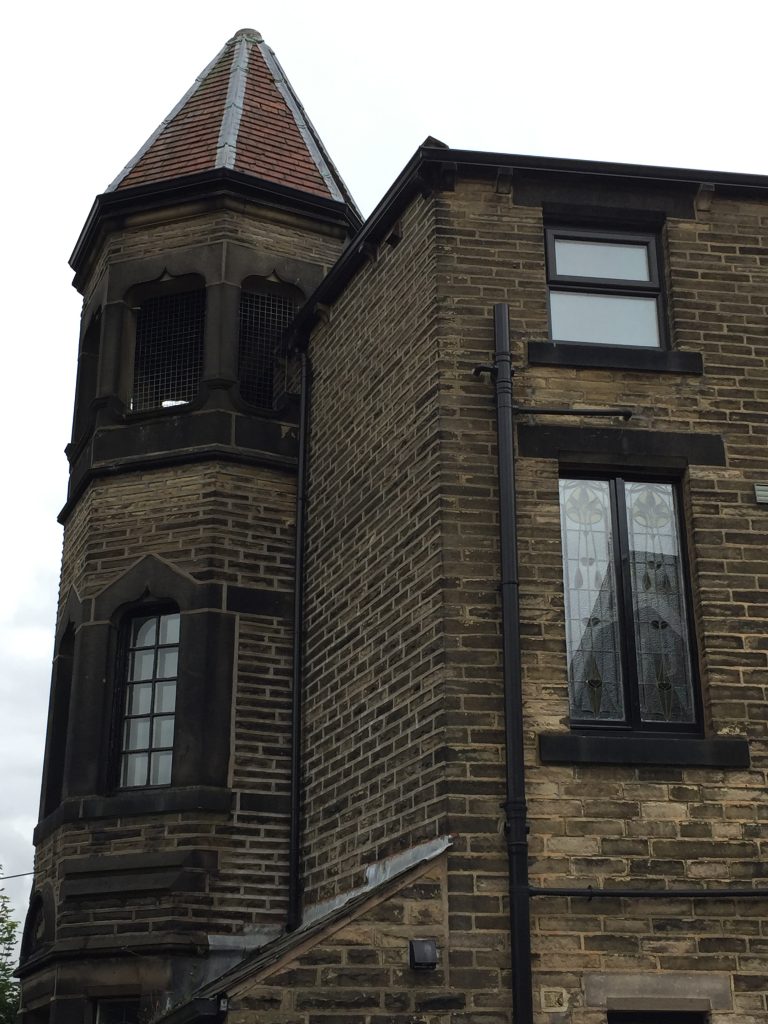
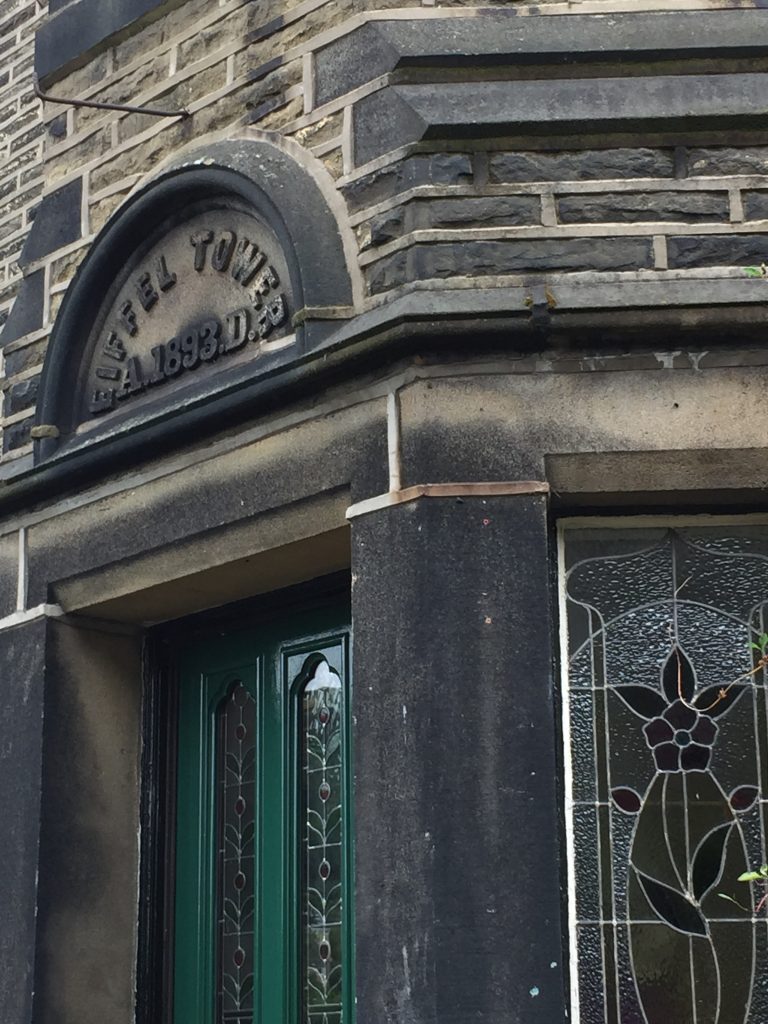
It’s still just as eye catching as when it was built, towering over Hebden Water and visible from most of the town, including from my house. Beginning his life as a mechanic in a cotton mill it was in this capacity that the younger brother had married Elizabeth Rawson in 1869, daughter of a mule spinner. James worked as a sewing machine mechanic for a while, a much needed skill as Hebden Bridge became the centre of the ready-made clothing industry, but by 1881 census he is listed as a dentist operating at Balmoral House on the same street as his brother at Vine Cottage. The rivalry between James and his older brother was intense judging from the many newspaper advertisements. Sept 9, 1881 newspaper: – dentist watchmaker and jeweller, Balmoral house. Ap 4, 1890: two adverts literally next to each other: James: Notice of removal into new premises, May 3, 1889. His new dental premises cum home was possibly the most pretentious, elaborate building in the centre of Hebden Bridge. It’s called Oxford House and its name is proudly carved into the stone above the central doorway with its ogee arch. In fact, its very symmetry singles it out in a town renowned for its quirky off kilter nooks, crannies and crazy angles of its buildings. Two stone verandas on the upper storey maintain the ogee arches in the balustrade while every pillar and post is covered with elaborate stone carvings. Stained glass and mock latticed windows are the order of the day. It’s now Leila’s Kitchen featuring locally sourced food inspired by Persian cuisine, a cosy place retaining the charm of someone’s living room with brocade sofas around low coffee tables with embroidered table cloths and comfy chairs below lace curtained windows. As I sat enjoying my coffee and delicious cake I noticed a framed newspaper cutting on the wall across from me. There was a line drawing of Oxford House with the following notice: ‘Established in 1871 Notice of removal into premises. Mr James Gibson R.D.S LOND, R.D.M.C &c, SURGEON DENTIST who has carried on his practice successfully for many years at Balmoral House has removed into his new premises which are more Centrally and Conveniently situated: Oxford House (the only address) Albert Street where he may be consulted at any times. This Dental Establishment is one of the Largest in Yorkshire and fit up with the latest improvements and inventions for Operations WITHOUT PAIN, and also for the MAKING and FITTING ARTIFICIAL TEETH. Mr J. G. having had considerable experience with Nitrous Oxide Gas (the safest anaesthetic) in THOUSANDS of Cases, is able to extract TEETH or STUMPS no matter how badly decayed., ABSOLUTELY WITHOUT PAIN so that the most NERVOUS or WEAKLY with ENFEEBLED HEART need not be afraid. J.G MANUFACTURING his own Gas, the public may rely upon it being perfectly pure, so that it is very PLEASANT TO INHALE and leaves no unpleasant after-effects. SPECIAL NOTE – Mr J.G wishes it to be particularly understood that he is the only person in Hebden bridge that EXTRACTS TEETH FREE FROM PAIN. Artificial teeth mounted on Gold, Platina, Vulconite, Celluloid, &c. All repairs attended to at once. I am the only dentist in Hebden Bridge, At Home Daily.’ I checked that last comma carefully. If it was a comma all is well. If it is indeed a full stop, then his claim seems bogus for his brother Thomas Binney was also in town! In fact his ad in the very same newspaper is directly adjacent to his brother’s and reads: ‘ESTABLISHED 11 YEARS. TEETH!! TEETH!! GRANDEST DISPLAY EVER SHOWN. ALL PRICES MARKED I THE WINDOW. THOMAS BINNEY GIBSON HAS OPENED HIS BRANCH ESTABLISHMENT at the PHOTOGRAPHER’S CROWN STREET. All parties requiring teeth before consulting any dentist should see the newly opened window at GIBSON’S photographer, CROWN STREET, Hebden Bridge. Less pain and greater comfort than any other. Parties from a distance to enquire for the photographer’s.’ His father Thomas had set up the photographer’s shop on Crown Street by 1871 and remained living there until his death in 1900 so Thomas must have been sharing at least the shop front with his father. I often wonder which building was Thomas’s home and photography business.
/
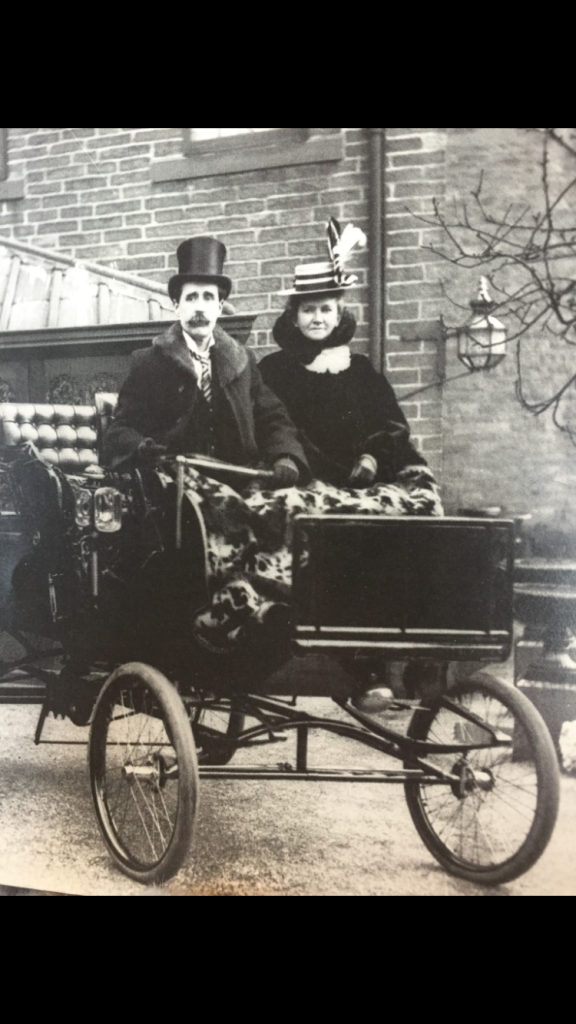
The dentist brothers battled it out in the pages of the newspaper. They ran adverts proclaiming their skills to be far superior to that of their brother. But aside from the dental work I found another area in which the brothers were bitter rivals. Going back to the small area of level ground at Vine cottage, Thomas’s home, it was on this very spot that a significant photograph was taken around 1900 – Thomas and his wife, looking very glamorous sitting atop a very early car, in fact, it was the second horseless car in Hebden Bridge. It was steam driven, made by Whites, an American company and was steered with a tiller, not a wheel. So, the big question is well, if this was the second such car in town who owned the first? James, of course!
James Gibson charged Harry Hutchinson, a youth residing in Halifax with damage to a tree! Apparently Harry and a group of others passed Oxford house on May 24th, (my birthday) and ‘on reaching Mr Gibson’s house they took some flowers from a rhododendron tree and also broke the tree down. The damage was assessed at £1.’ The defendant was apprehended at Hebden Bridge railway station by the local bobby and admitted to taking two flowers but denied damaging the tree. It transpired that the youths were members of Pellon Baptist church, Halifax on a Whit Tuesday excursion to Walshaw Dean reservoir. There were 82 boys and girls on the excursion. After retiring to consider their verdict the Chairman returned with his decision. “Some lads seemed to think they could do practically what they liked, but he hoped the penalty which he was about to inflict would be a warning to the defendant. He would be fined 10s. and be required to pay 10s damages and the costs.“
In October 1900 ”Mr James Gibson, dentist has the honour of having first introduced into the district a four wheeled motor carriage of the most approved type. In every sense it is ahead of anything of its kind for miles around. There is accommodation for four persons facing each other. A hood can be drawn over the two sitting in the rear. Going up steep hills it can gain 8 miles per hour but on flat land ‘a speed of 20 miles per hour can be maintained with comfort.” The carriage could carry enough oil to keep the machine going for 150 miles. Springs at the back and front reduce vibration and the wheels are fitted with pneumatic tyres. It’s ease of control was exemplified: ‘When the vehicle was brought from Manchester yesterday Mr Gibson took charge of it from Rochdale, having had no previous experience and he did not find any difficulty manipulating the vehicle. In 1901 James established a record by driving from Hebden Bridge to Blackpool and back with his wife. The couple set out at 5 o’clock and reached ‘the Brighton of the North’ at 9:20, a distance of 56 miles. His return journey, this time also with his daughter took, took 4 hours 10 minutes thereby achieving an average speed of 13 ½ miles per hour. In the summer of 1898 a car was seen in Todmorden ‘Considerable interest was manifested in motor car which passed through the town on Monday evening, said to be on its wav from Leeds to Wigan. The vehicle moved along quite smoothly at a good pace.’
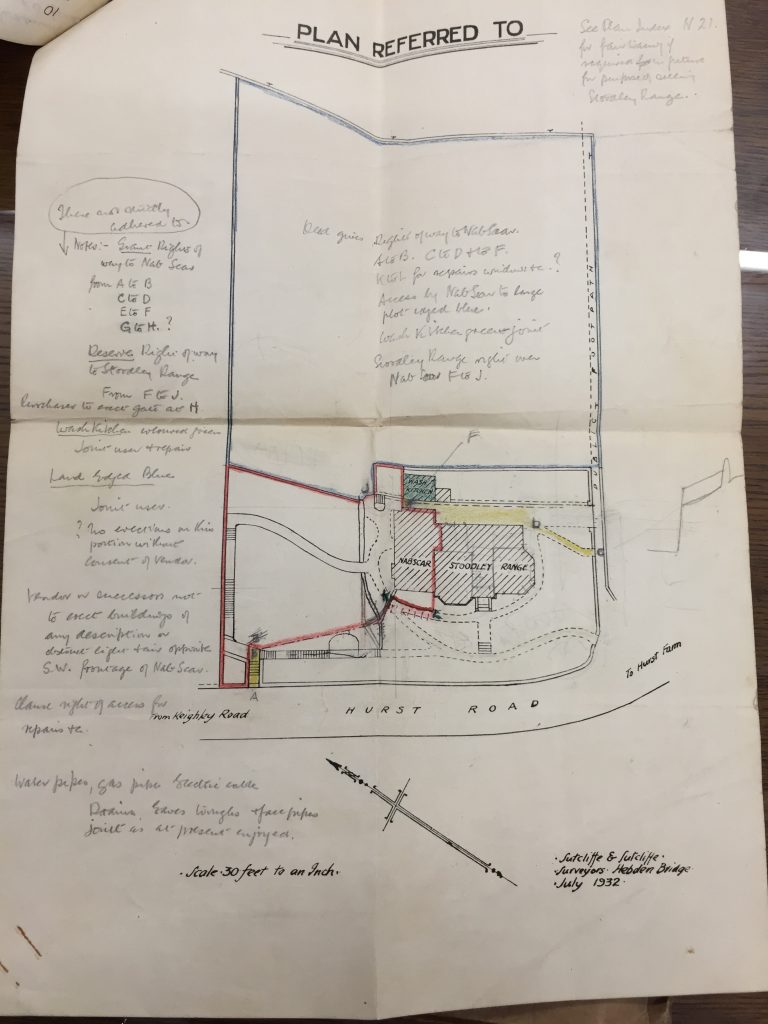
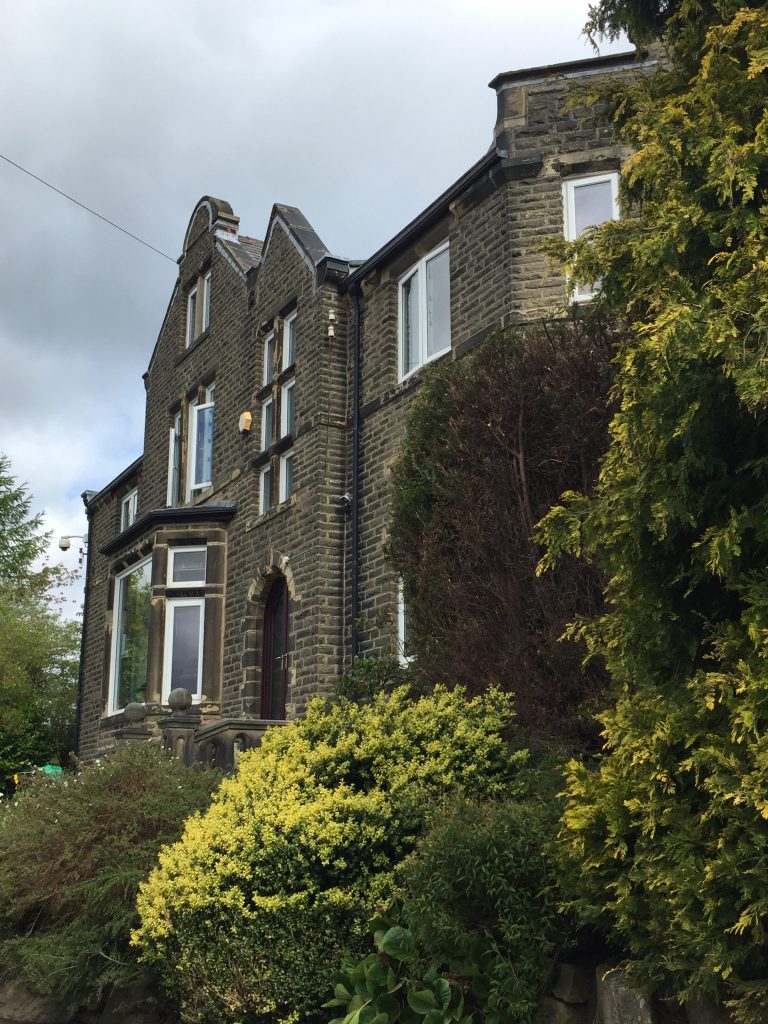
Thomas’s son, Edward Binney joined his father’s dental practice at Croft Terrace after graduating in 1908 from Manchester University, where my daughter Anna studied for a year as an exchange student from the University of California, Santa Cruz. Besides his day job he was a prominent member of the Hebden Bridge scene for betterment through education. During his many years (1909-1947) as secretary of the Hebden Bridge Literary and Scientific Society the members grew from 130 to 700 and the Saturday night lectures in the 300 seat Little Theatre drew capacity audiences. Edward was still living at Vine Cottage in 1933 but by the 1939 census he has moved to Stoodley Range with his wife and his father-in-law, Daniel Eastwood. He is still a surgeon dentist L.D.S. When he died in 1947 he left £6838 to his wife and son, Thomas Glynne Eastwood Gibson, a vet, who lived at Stoodley Range at least until 1951.
Recent Comments