Page 20 of 48

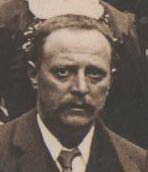
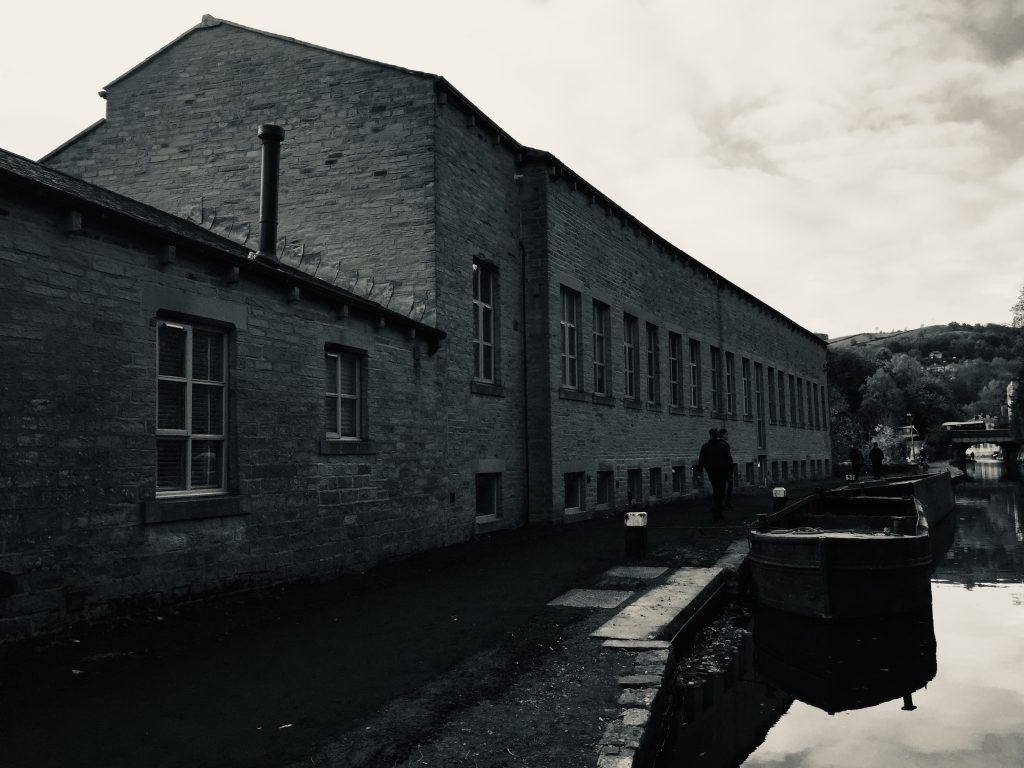
Thomas Wardle Gledhill – my great uncle.

Thomas Wardle Gledhill


Ever since I received a photo of my great uncle Thomas from a new-found relative on Ancestry.com I’ve been haunted by his gaunt face, staring out. It’s a face that tells of hardship and sorrow so I decided to delve a little more into his background, and perhaps find out if what I was reading in his face was born out by what I could find out about his life.

Sure enough I find that by the date of his baptism at Halifax minster, August 12, 1863 twelve days after his birth on July 28, his mother, Mary nee Peel, had already died. Within 2 years his father George remarried, this time to Charlotte Haigh. The turbulence of their marriage and George’s various prison sentence have been described in my chapter about George. However, Thomas’s middle name has puzzled me for a while now. It surely is a surname, possibly indicative of his ‘real’ father. And then I found ‘the missing link.’ I’ve just noticed that on the 1881 census that when Sarah Gledhill was living at 51 Battison St in Halifax the next door neighbour at # 61 was James Gledhill Wardle. There MUST be some significant connection here. It can’t be a coincidence. So possibly James was Thomas’s biological father. OK. But why does James have Gledhill as a middle name? Argh! The plot thickens. That requires more delving. So I spent an entire evening finding out about the life of James Gledhill Wardle, born in 1843 to mother Isabella who was born in Soyland, Halifax. I traced him from 1861 until his death in 1919 and there’s no accounting for his middle name being Gledhill. I do know that he was christened with that name but none of his siblings have that as a middle name. So I’m none the wiser. Getting back to Thomas Wardle Gledhill George and Charlotte subsequently had two children Abraham, born 1866 and Sarah, born 1868. Did they realize the biblical significance of these names?

By the time he was 8 years old Thomas was living with his grandparents John and Harriet Gledhill at 1 and 2 Regent’s Court, Orange Street in Halifax. This is now a car park though Orange Street still parallels a new road by the Orange Street roundabout. At 61 and 58 years old his grandparents were quite elderly to deal with an 8 year old. Their own children John 18, and Maria 15 were working. John as a drayman like his father, and Maria as a worsted twister.

On Aug 31, 1876 there is a record of Thomas being employed at Crossley carpets, one of 6 children between 13 and 18 years of age who took up employment that day in what was then the largest carpet manufacturer in the world, employing 5000 workers. John Crossley (1772 – 1837) founded the firm at Dean Clough in Halifax. By 1837 the firm had 300 employees and the fourth largest mill in Britain. Following the death of their father, the firm was inherited by his three sons, John, Joseph and Francis.

Francis Crossley (1817 – 1872) was responsible for the company’s rapid expansion throughout the mid-nineteenth century. He pioneered the development of steam-powered carpet manufacturing, which gave the company an enormous advantage in terms of cost of production. Licensing the use of their patents to other carpet manufacturers brought in substantial revenues from royalties alone. Unusually for the time, Francis Crossley operated a policy of paying women equal wages to men for doing the same job. Many of the Crossley family values were inspired by their Congregationalist faith.

By 1862 Crossley & Sons was the largest carpet manufacturer in the world. In 1864 the firm became a joint-stock company, with the primary aim of allowing its 3,500 employees to become shareholders. 20 percent of the company was sold to the employees at preferential rates. They were perhaps the first large industrial employer to profit share with their employees.

In 1868 John Crossley & Sons was the largest publicly quoted industrial company in Britain, with an ordinary share capitalization of £2.2 million (about £220 million in 2014). 5,000 people were employed. By 1872 the company had annual carpet sales of £1.1 million, including exports to the United States valued at nearly £500,000. The buildings at Dean Clough Mill covered 20 acres, where concentration of production at a single site lowered costs.
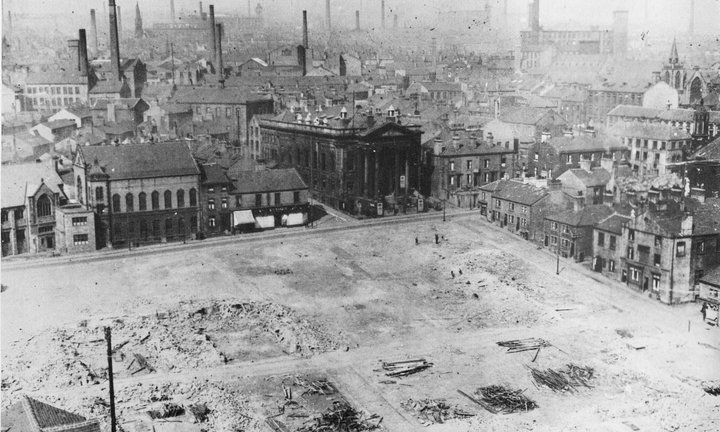
By the time of the next census in 1881 Thomas was living with the Thomases: his aunt Rachel and uncle George in Milk Street, Halifax. Milk Street was part of ‘the City.’ The City was a densely populated area at Cross Fields bounded by John Street to the south, Great Albion Street to the north, Orange Street to the east, and St James’s Road to the west.

It was built at the beginning of the 19th century, and became a slum area with a higher death rate than the rest of the district. There were an estimated 780 people living in a maze of back-to-back houses, courtyards, dimly-lit shops, and narrow streets. On 27th February 1926, the Ministry of Health approved the demolition of the area. The property was demolished in 1926. The site remained empty until 1938, eventually making way for the bus station and the Odeon. Thomas’s job appears to be ‘printer in carpets.’

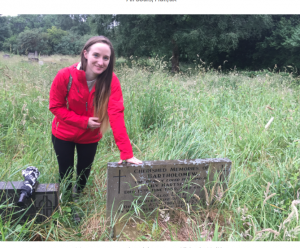
In Feb 6 1888 at Halifax Minster he married a widow Ruth Dean (nee Bates) both of Crossfield Halifax, another part of ‘the City.’ Thomas’s hand look very unsteady on his marriage certificate. I wonder if he was literate. The 1891 census finds the family at John Street, another part of ‘the City.’ Thomas is a tin plate worker. They had two children, Willie and Minnie but five years after their marriage Ruth died in 1893 at the age of 30 and a year later on 19th August 1894 Thomas married Sarah Jane Veal at St Thomas’s church in Charlestown, Halifax. Thomas was 31 but at 32 it was a very late first marriage for Sarah. However Sarah had already given birth to a son Frederick Horsfall Veal who was baptized on 12 Nov 1884 at All Souls, Haley Hill, Halifax. That’s the church where my great aunt Lil and her husband Bart are buried and Sarah and I went to find their grave in the summer of 2017. There is no father indicated on the baptism record meaning that Sarah wasn’t married. Presumably Frederick’s biological father’s surname was Horsfall.


Thomas was living in Fleet Street, and Sarah in Pitt street at the time of their marriage. Both streets are in the slum area of ‘the City.’ A year later their first daughter was born, Gladys (18895-1962). 1901 sees Thomas and his family at 10 James Street, also in ‘the City.’ His occupation is given as ‘scavenger’ (corporation) with three children Willie 13 and Minnie 10. Ten years later, 1911, the family are at the same address and Thomas is now a labourer on the road (corporation). Now Sarah Jane’s son by a previous relationship Frederick Horsfall Veal is living with them. He’s 26 and a fish fryer! Frederick went on to become a private, 2nd/6th Bn. in the Duke of Wellington’s West Riding Regiment, was killed in action on 3 May 1917 and is commemorated at Arras memorial cemetery in France. From army records I believe he saw action in France, Belgium, Germany and Gallipoli.

10 months later Thomas himself died, aged 54, at 20 Grant Street in the centre of Halifax and is buried at St James’s church in Salterhebble. It’s odd to realise that this man was my grandma Florence’s uncle, her mum’s step-brother, just like it’s so difficult to realise that Thomas’s father, George (of Wakefield jail fame) was my grandma’s granddad. There was always tension at family get togethers between my mum’s mum and my dad’s mum. My dad’s mum lived in a semi and my mum’s mum lived in a terraced house but I was also aware that my mum’s mum thought that her sister-in-law lived ‘above her station.’ I wonder if she knew about George’s prison time and the poverty that affected Thomas’s family.


Thoughts in a Café

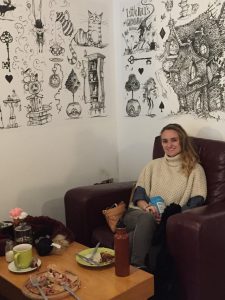
The Loom Cafe – art by Chris Mould

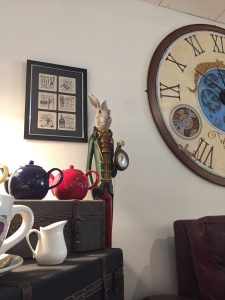
The White Rabbit offers his pocket watch to me

As Alice looks on bemusedly.

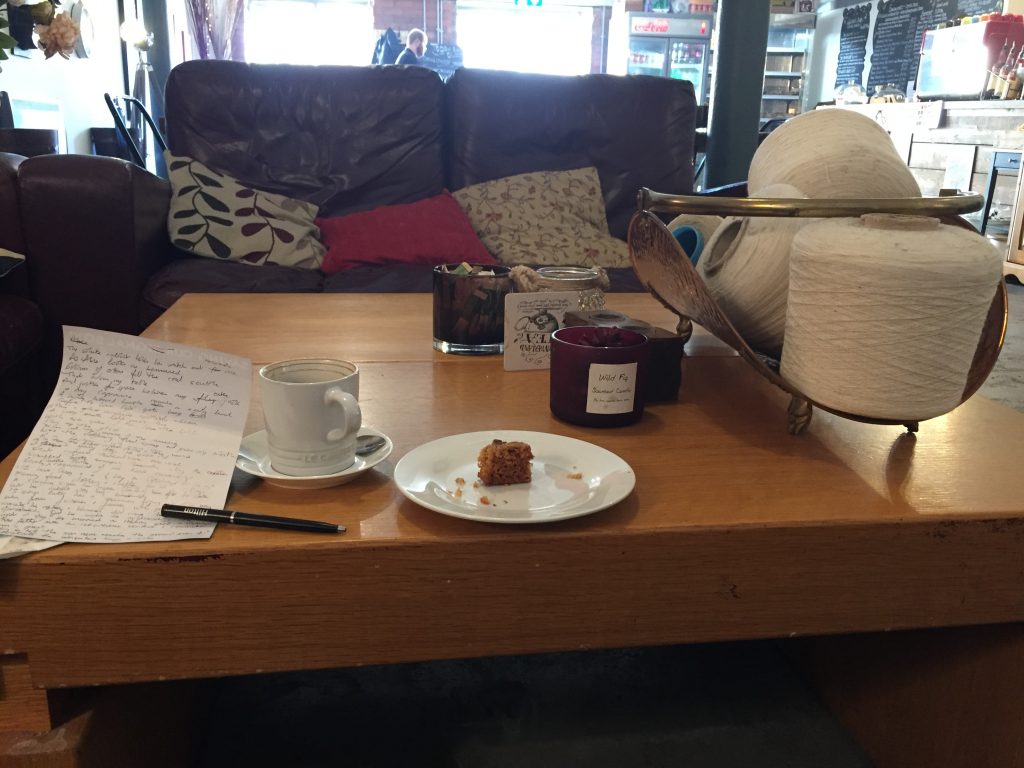
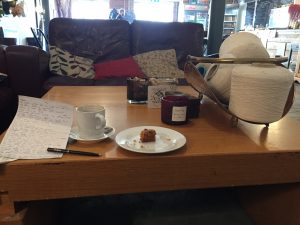
Bobbins of spun cotton fill the coal scuttle that adorns my table

As jostles for air between cake and cappuccino.

Through glass, spotlessly clean, a crisp winter light pours in,

But, with eyes wide open I dim this light, cloud this glass, drown the music

And I’m in a dark forbidding place, a basement, where deafening thuds,

Piercing whistles and earth-shaking stomps

Transport me to a former time.

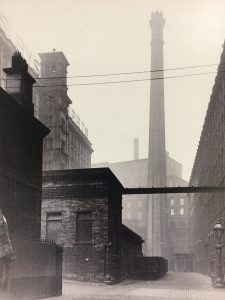
I glimpse a young boy, ten years old, flat-capped,

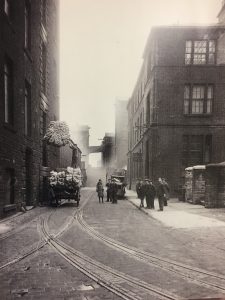
With thread-bare overcoat and scuffed clogs trampling along the shit drenched cobbles

Barely awake, barely cognizant of his surroundings

Where he s dwarfed by buildings so tall

That the sun never reaches the ground

Even in those times when, just for a brief moment,

It penetrates the ubiquitous smog and grime.

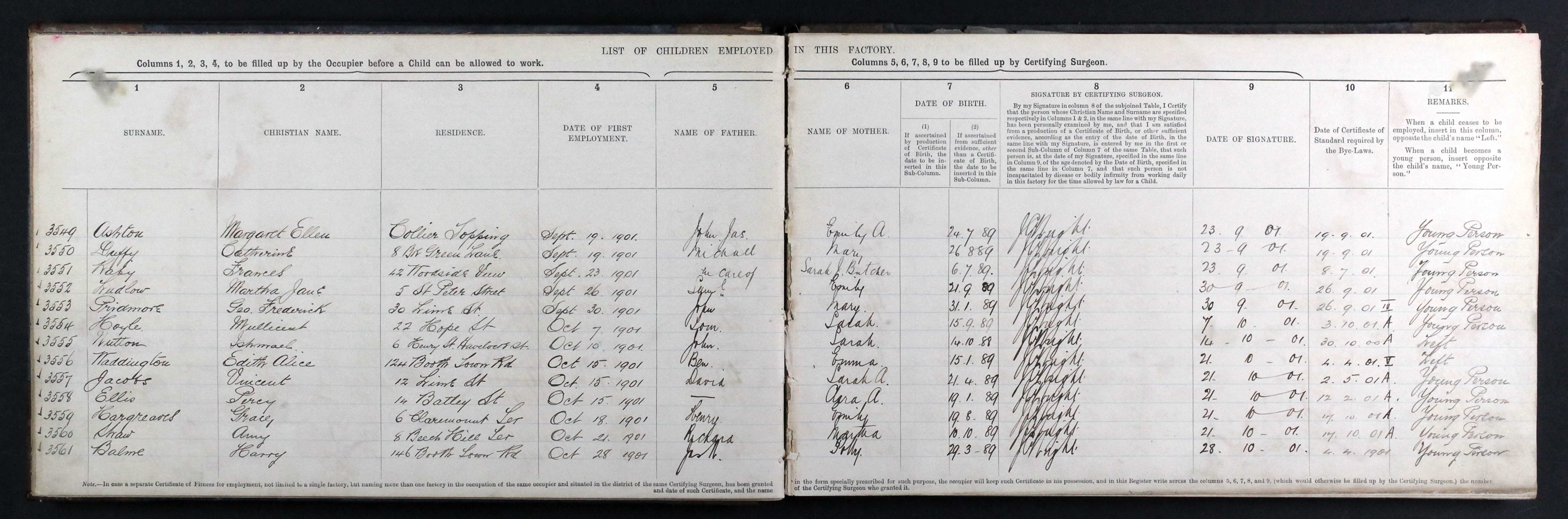
A surgeon signed his papers – he’s fit for work.

But he doesn’t stay long, and next time I meet him

He’s a gunner

Taking aim at other young men from factories and farms and homes

Where anxious loved ones await them.

Ishmael returned home,

Was he devastated?

Did he scream in nightmares in the living daylight?

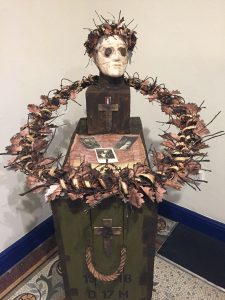
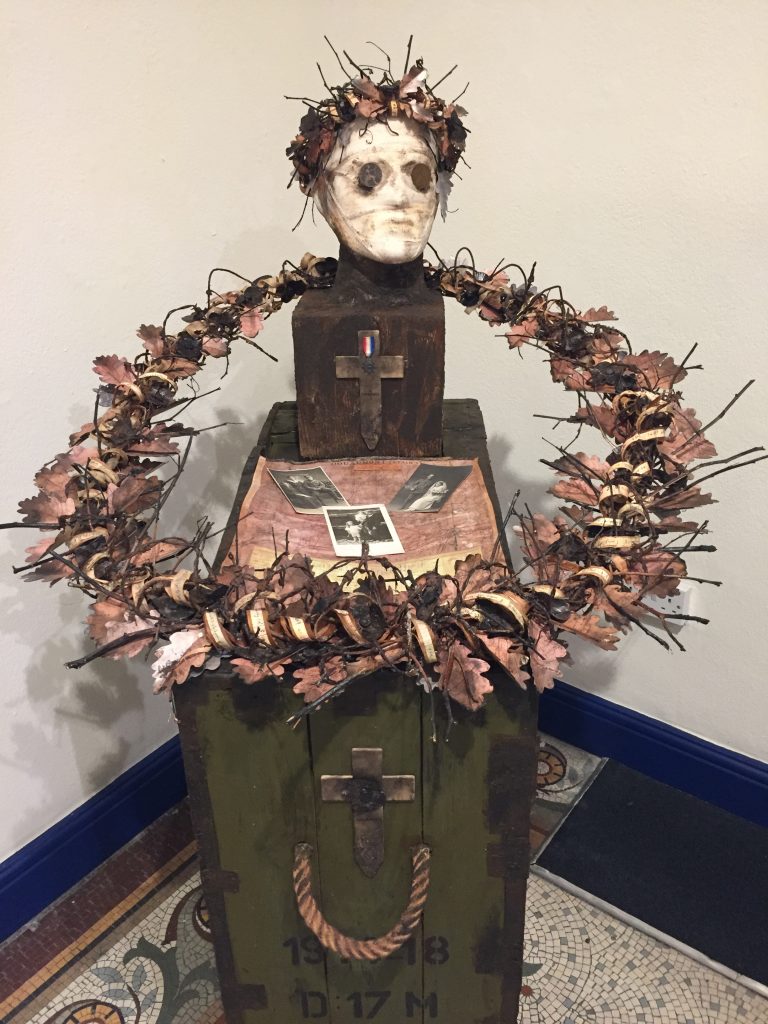
In a gallery above me a striking wreath takes my breath away:

The dead eyes covered with pennies

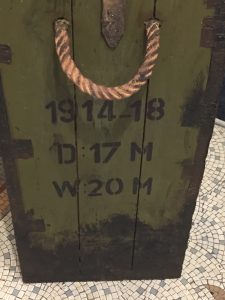
The kit-box stenciled with numbers

Beyond my comprehension.

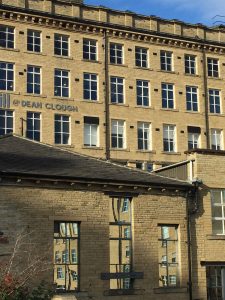
Dean Clough Mill, Halifax

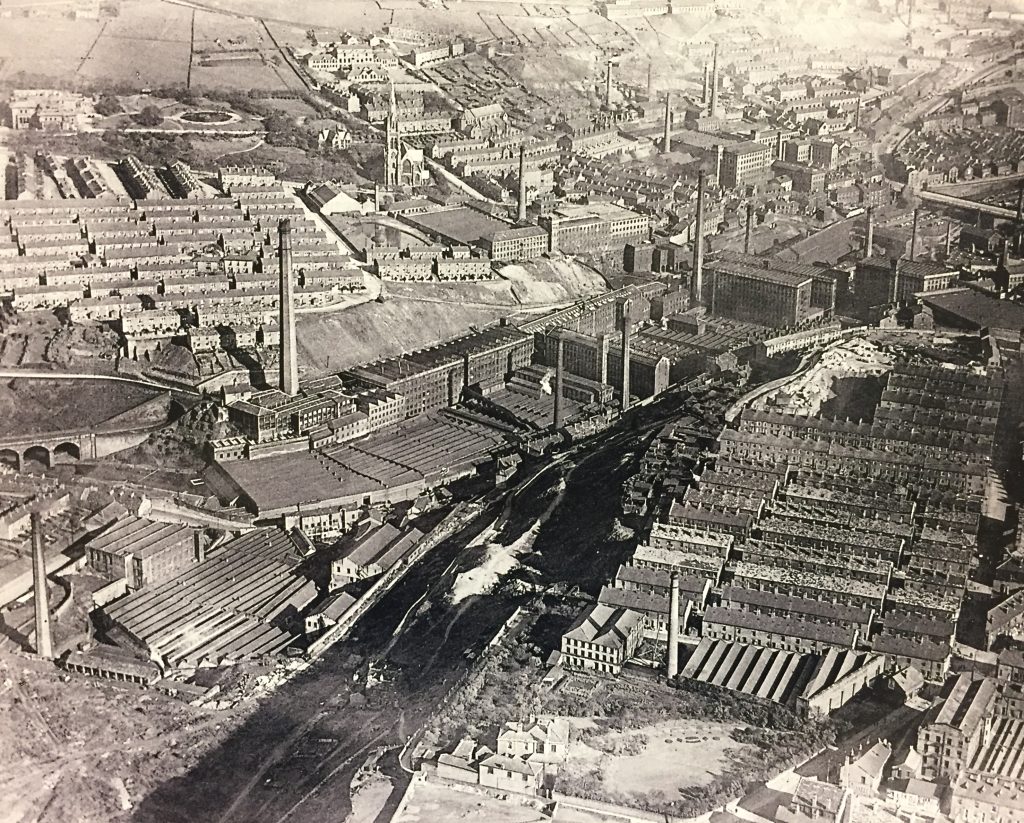
My great uncle Ishmael worked at Dean Clough carpets which was, at the time, the largest carpet manufacturer in the world. Today it houses, art galleries and the Loom Café, decorated with Alice in Wonderland paraphenelia.

Remembrance Sunday: Halifax and Blackshaw Head

Remembrance Sunday: Halifax and Blackshaw Head


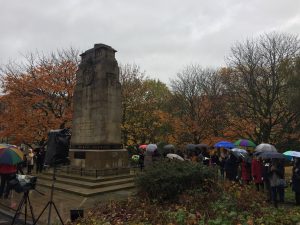
As The Last Post sounds

A multi-coloured caterpillar stands to attention

Its rain-booted feet silent and still.

Above it towers the church, proud of her coat of black grime

Stares with unseeing eyes at the vast hills that encroach upon her

Threatening to overcome her once dominant position.

Rain pours from the sky and my eyes

As ‘Jerusalem’ resounds as if in irony –

“England’s green and pleasant land.”


Out of the rain now

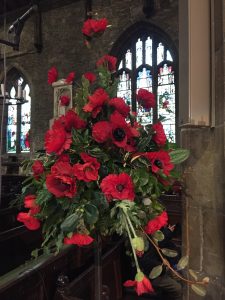
Into the vast echo chamber punctuated with blood-red bullet points

As a thousand people gather to sing, to cry, to remember

Not just the fallen

But the damaged, in this, the war to end all wars.

As I leave the church the sun peeks out from behind her shroud

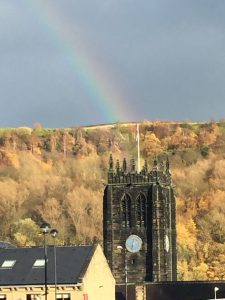
And a rainbow arches through the sky

Coming to rest directly over the black tower


In the dark of the evening

A beacon is lit high on a remote hilltop

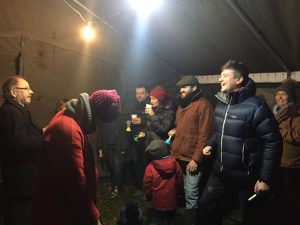
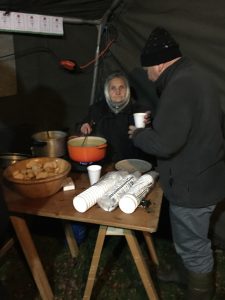
Here, handbells ring out from a tent

Where poppy quilts and paper gravestones bump elbows with

Hot soup tureens and tea cups. Fussy toddlers and excited canines

Join the nationwide remembrance.

Outside, high above me, in a silent night

The spirits of the fallen soldiers

Shimmer in a cloudless sky,

Remembered but not forgotten.


In honour of Giles Sunderland (1886-1916) a distant relative of mine, who lived in the village of Blackshaw Head, near Halifax, Yorkshire.

Another ancestor with ‘a story’ – George Gledhill

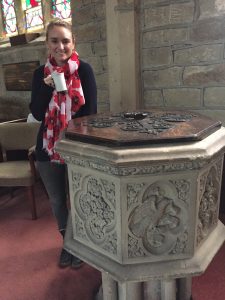
Anna at the font at Christ Church, Sowerby Bridge, Nov 2017

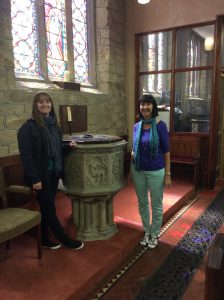
Rachel and I on our first visit, 2015

George Gledhill, my great great granddad was born May 26th, 1837 and baptized at Christ Church, Sowerby Bridge on June 25th along with 22 other children! In 2015 on my trip to England with Rachel we visited the church in order to see where George had been baptized. We attended a coffee morning and were greeted with open arms by the parishoners and the minister, Angela Dick. I was even able to play the organ in the church. Since then the Tuesday morning coffee mornings have become  frequent entries into my diary and I keep in touch with what’s going on at the church. It transpired that one of the ladies I met, who is another person interested in geneaology, is actually a distant relative of mine, through our common Barraclough ancestors.

Christ Church was opened on the 24th May 1821, (my birthday) but its roots go back much further in time, nearly 300 years before, to 1526. In that year a chapel of ease was built to serve the people of the townships of Warley, Norland and part of the township of Skircoat, in the ancient Parish of Halifax. It was situated on low-lying ground just opposite the junction of the Ryburn stream with the River Calder, between a fulling mill to the east and Sowerby Bridge to the west. I’ve recently been to find the site but nothing remains.

At the end of 1828, a mere seven years after the church opened, it was found that the roof of the nave was unsafe. The ridge had sunk eight inches  in the middle pushing the crenellations and upper parts of the walls outwards, on the north side to the extent of four inches. The church was closed for two months whilst the roof was propped as a temporary measure. Repair work eventually began in August 1830, the church being reopened on Sunday, 20th March 1831. So when George was baptised there the church had been in its present state for only 6 years.

Cote Hill. I go along this road every time I go into Halifax and didn’t know that this area was called Cote Hill until I did the research about George

Warley, photo taken 2015, with Rachel

At his baptism his address is given as Warley. Warley is a large tract of  beautiful rolling hills, with a small village on the hill inappropriately named ‘Warley Town.’ Ir’s a lovely little village where the author Phyllis Bentley lived in a house once lived in my Rev Patrick Bronte, father of the famous Bronte writers. On the 1841 (aged 4) census he is living at Coat, now Cote Hill.Cote Hill is the area around the Burnley Road, near Warley, between King Cross and Sowerby Bridge.  With George is  father John, 30, a cart driver, and mother, 25 and 2 younger siblings, Thomas, 2, and James 4 months. Before the next census, in 1851, 4 other siblings were born, Robert, Rachel, David and Nancy.  By 1851 the family is  living at 1 Regent Court, Orange Street, Halifax. Father John is a drayman. A drayman was historically the driver of a dray, a low, flat-bed wagon without sides, pulled generally by horses or mules that were used for transport of all kinds of goods. In 1846 his brother James died, aged 5 and in 1853 his 4 year old sister Nancy died. Two other siblings were born before the 1861 census, John and Maria.

On June 17, 1857 I have him marrying Mary Peel at St Peter’s in Birstall, both George and Mary living at Flush in Liversedge. This just doesn’t seem correct since it’s so far away – well, for those days! Actually I just looked it up and it’s only 8.8 miles from Halifax. Birstall is 3 miles from Flush. Flush is described in Wikipedia as ‘the place where the mills of the woolen industry stood.’ The 1881 census lists the following – all born at Liversedge. I think this proves that it’s a different family in Liveredge – not ‘mine.’ George Gledhill 43, Mary Gledhill 41, Arthur Gledhill 21, Albert Gledhill 17, Thomas Gledhill 7, Elizabeth A. Gledhill 5.

Ancoats, 1904

Henry Street, Ancoats, 1900

George is now an ‘overlooker’ presumably in one of those mills. Samuel Gledhill was a witness, and again that makes me unsure since I don’t have a Samuel in George’s immediate family. 1861 finds the newly weds living as boarders at 15 Henry Street, Ancoats, Manchester. Historically in Lancashire, Ancoats became a cradle of the Industrial Revolution and has been called “the world’s first industrial suburb”. For many years, from the late 18th century onwards, Ancoats was a thriving industrial district. The area suffered accelerating economic decline from the 1930s and depopulation in the years after the Second World War, particularly during the slum clearances of the 1960s. Since the 1990s Ancoats’ industrial heritage has been recognised and its proximity to the city centre has led to investment and substantial regeneration.

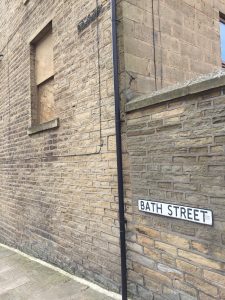
In 1861 George is a porter with both wife Mary and himself born in Halifax. 2 years later their son Thomas Wardle Gledhill was born on July 28th. Wardle sounds like an ancestor’s surname but I haven’t  found anyone. Soon after the birth, between July and September of that year Mary died. Two and a half years later George remarried 1865 Dec 18  Register office, Halifax which means that he had moved back to Yorkshire after Mary’s death. His second wife was Charlotte Haigh. I know this is correct because George was a widower, aged 28. He was a drayman. Father John Gledhill was also a drayman Orange Street, Halifax. Orange Street still exists but it’s just roads and car parks. The following year their son, Abraham was born in Rastrick. Two years later a daughter was born in Salterhebble, Sarah who was my great grandma. The census of 1871 see the growing family living at 4 Bath Street,Halifax. I’d found Bath Street in June 2016. It’s adjacent to the station but the houses on it were demolished when the land was bought by the railway. The baths after which it was named were an elegant affair with formal gardens, modeled on Roman baths, a place to be seen, not the slipper baths which were a necessary function of everyday life without bathrooms in homes. Also known as Halifax Baths and Pleasure Grounds, and by the rather boastful title of Greece Fields these

Bath Street today

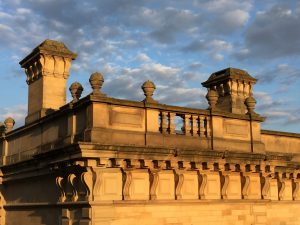
This imposing building was once Halifax railway station where George worked. When I took this photo the glowing stone and the style of ornamentation reminded me of India

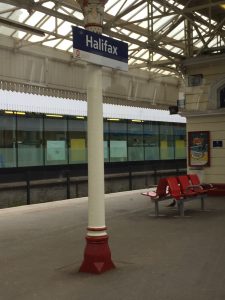
Platform at Halifax station today

extensive facilities were developed by Thomas Rawlinson at Coldwell Ing near the Hebble Brook at Lilly Lane. They opened in 1793 on the east side of Hebble Brook. They were the only local public baths at the time. The facilities were said to be the finest and most extensive suite of baths in Yorkshire, including bowling greens, quoits area, shrubberies and landscaped gardens with sculpture, a dining room, shower baths, swimming baths, medicated and sulphur baths, and hot, cold and tepid baths. A membership fee was charged for the use of the facilities. The baths were supplied by fresh-water springs which rose in Greece Fields. The privately-owned baths, which were built of red brick, closed in 1853 and were sold to make way for the railway. This makes perfect sense because on the census of 1871 George, now 32, is  a railway porter. His wife Charlotte, born in  Rastrick is a dressmaker. Their children are Abraham Gledhill 5, and Sarah Gledhill 3.  Samuel Appleyard 26 is a lodger. Their daughter Ann was born in 1875.

However, in the meantime, George was getting up to no good. On 30th April 1879, at the age of 41he was sentenced to 6 months imprisonment at Wakefield prison for threatening Charlotte Gledhill. It’s difficult to read the sentence since it’s buried in the fold of the prison record book but it definitely records that George was issued with a fine of £20 plus something else. At the time George was 5 ft 4 ½” with brown hair. Date of discharge is October 29, 1879. Less than 2 years later George’s name crops up in the Bradford Daily Telegraph on Saturday March 26, 1881:

George Stott, wire drawer, of the same place, was charged with making use of provoking language Charlotte Gledbill, wife of George Gledhill, Battison Road, tending to create breech of peace, on the 19th inst. The defendant was ordered to pay fine of 5s and 9s 6p costs , or in default serve ten days.

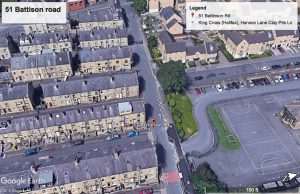
On the 1881 census Charolotte is living at 51 Battison road Halifax

Wakefield prison as seen from the railway platform

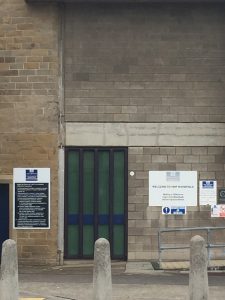
The prison entrance I got a little too close to.

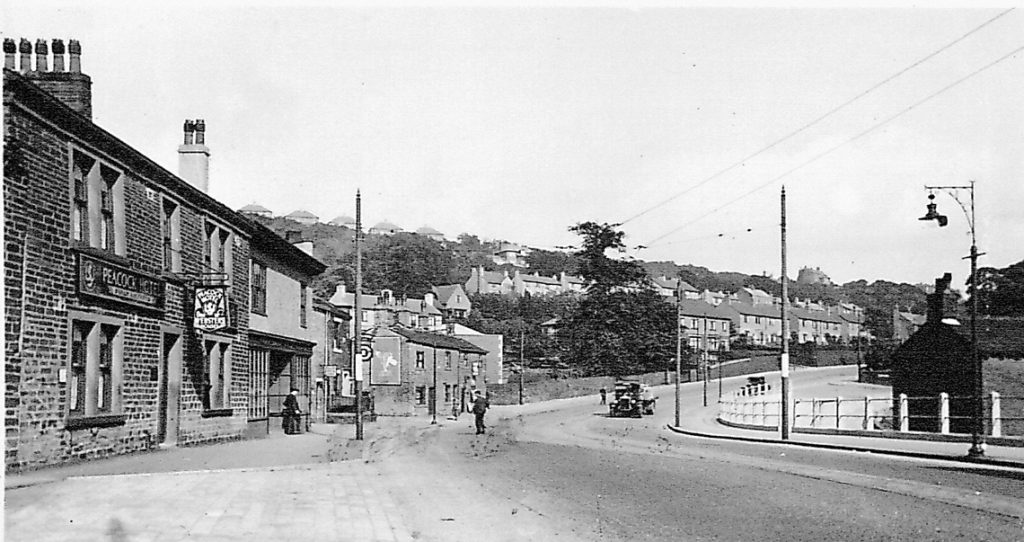
Battison Street runs vertically on this photo. Presumable #51 would have been situated where the school now is

and  is the housekeeper for William Wolfenden, a 30 year old widower with 3 small children. Note: at #61 Battison lives James Gledhill Wardle!  He is aged 37 of  and was born in  Soyland. He’s married to Mary, 39 of Barkisland. Since George’s son , born 1863, is called Thomas Wardle Gledhill I’m sure there must be some connection but I’ve been unable to trace James Gledhill Wardle on any other documents so far!  On the 4th of July George was again in trouble, this time for being a ‘rogue and a vagabond’ and he’s sentenced to 14 days in Wakefield prison, though he was committed at Dewsbury. This time he’s recorded as 5 ft 6 ¾” with brown hair ‘with a boil mark on the back of his neck.’ He’s listed at being 46 (in 1881). In June 2016, I had successfully, but inadvertently,  managed to get myself into Wakefield’s top security prison. Having learned of George’s incarceration there I wanted to document my visit by taking a photo to commemorate the occasion. I looked around carefully for ‘No photography’ signs but couldn’t see any so I began taking photos of the entrance. Within 30 seconds a prison guard came running out demanding my cell phone! As I explained that there was nothing to say I couldn’t she shepherded me into the prison itself. Yeah! Just what I’d hoped for , but not quite in this way. Explaining myself to another guard he told me it was fine to take photos from across the street, which I duly did. The prison is mainly Victorian, though parts date back to the 1500’s. There’s a mulberry tree in the center of the exercise yard and legend has it that this accounts for the nursery song Her We Go Round the Mulberry Bush.

Meanwhile back at the ranch there is this account of what is befalling Charlotte:

Sheffield Independent – Wednesday 09 April 1873 entitled A Brutal Fellow

George Harris, 23, carpet printer, was sent to gaol for six months, for unlawfully and maliciously wounding Charlotte Gledhill, at Halifax, on the 26th of February. Mr. Wilber- force prosecuted. The man, who lived with the prosecutrix as her husband, had a quarrel with his paramour, and knocking her down, kicked the woman on the legs and face, until her jaw was broken, and her body seriously bruised. It’s obvious that George and Charlotte were living pretty rough, tough lives. I find it very poignant to look into the eyes of Sarah, their daughter, in photographs and know just fragment of her parents’ story.

For a long time I’ve been unable to find further references to George. I’d had no luck finding him on an 1881 or1891 census, neither could I trace his death. In November, 2018, I contacted roger Beasley from the Calderdale family history society and he also drew a blank. I decided to obtain a death certificate from the General Registry Office. It was a shot in the dark because there are many George Gledhills but luck was with me because recorded as being present at ‘this’ George Gledhill’s death was his son T. W Gledhill. Since I know that one of George’s sons was Thomas Wardle Gledhill then the death certificate must be from my George. Success! His place of residence at his death is given as 5 Fleet Street, Halifax, a place previously unknown to me – therein lies some more research needed.

Update: May, 2019

Fleet Street was in a part of Halifax known as The City, just north of the town centre. This was a densely populated area at Cross Fields with an estimated 780 people living in a maze of back-to-back houses, courtyards, dimly-lit shops, and narrow streets.

An ancestral distraction – or two!

Did Ishmael read this sign?

Ishmael’s employment record at Crossley Carpets

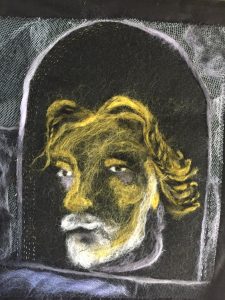
My needle felted gargoyle

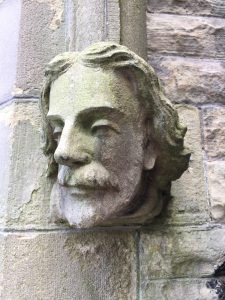
The gargoyle on Crossleys almshouses. I wonder if its a portrait of Joseph Crossley himself.

Cake and a cappuccino in the Loom Cafe

The Alice theme in the Loom Cafe

At Lil and Barts grave, All Souls. Haley Hill, 2017

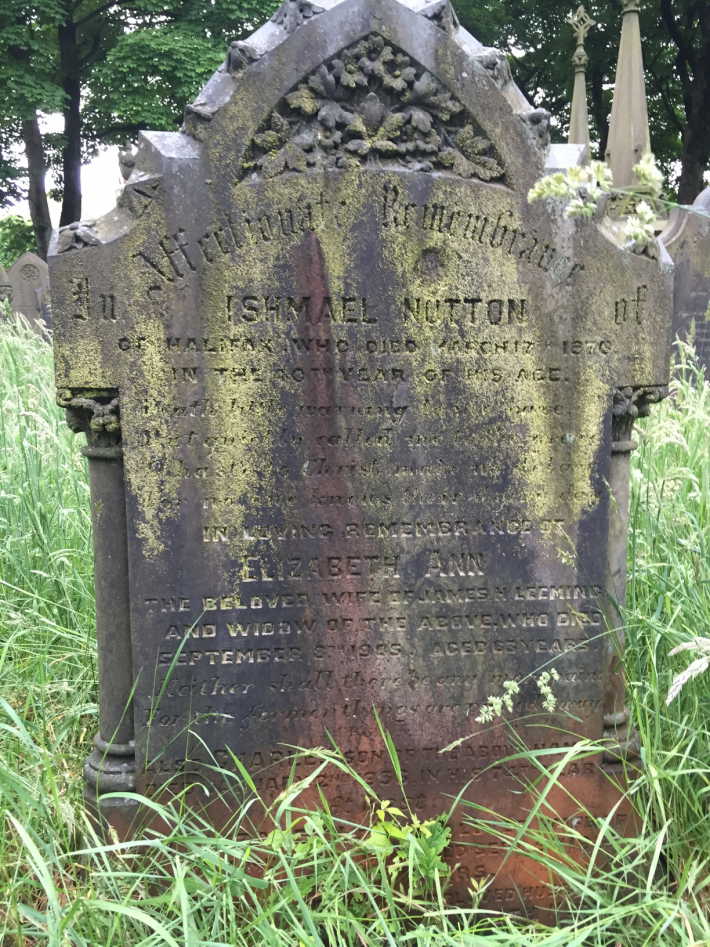
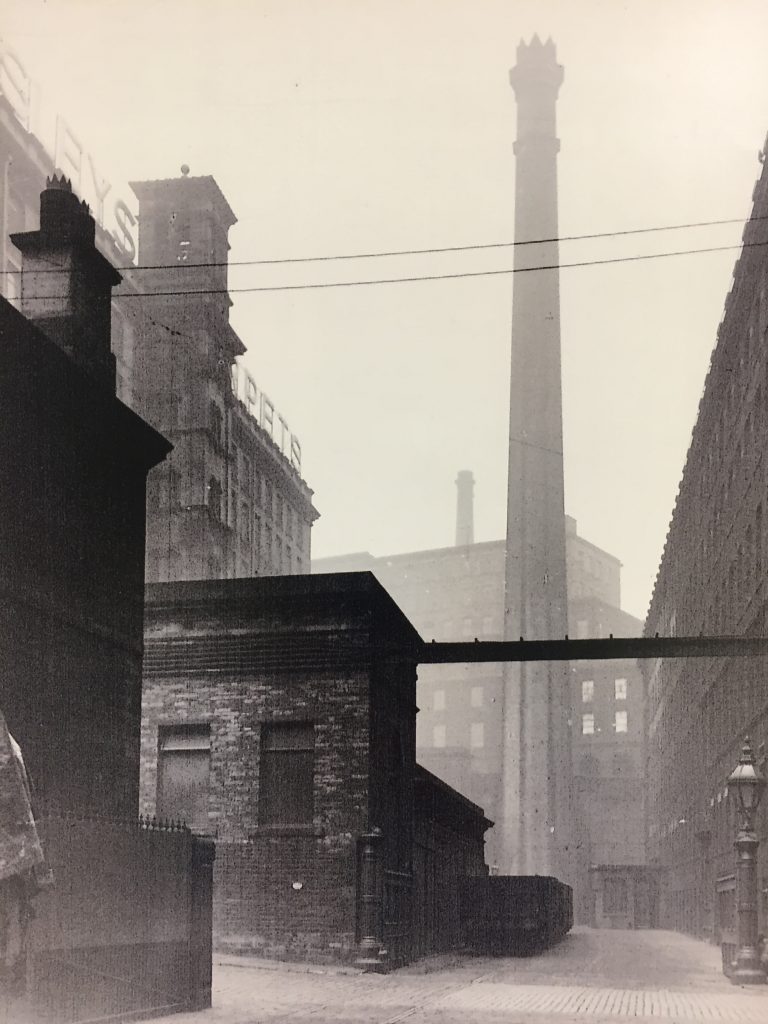
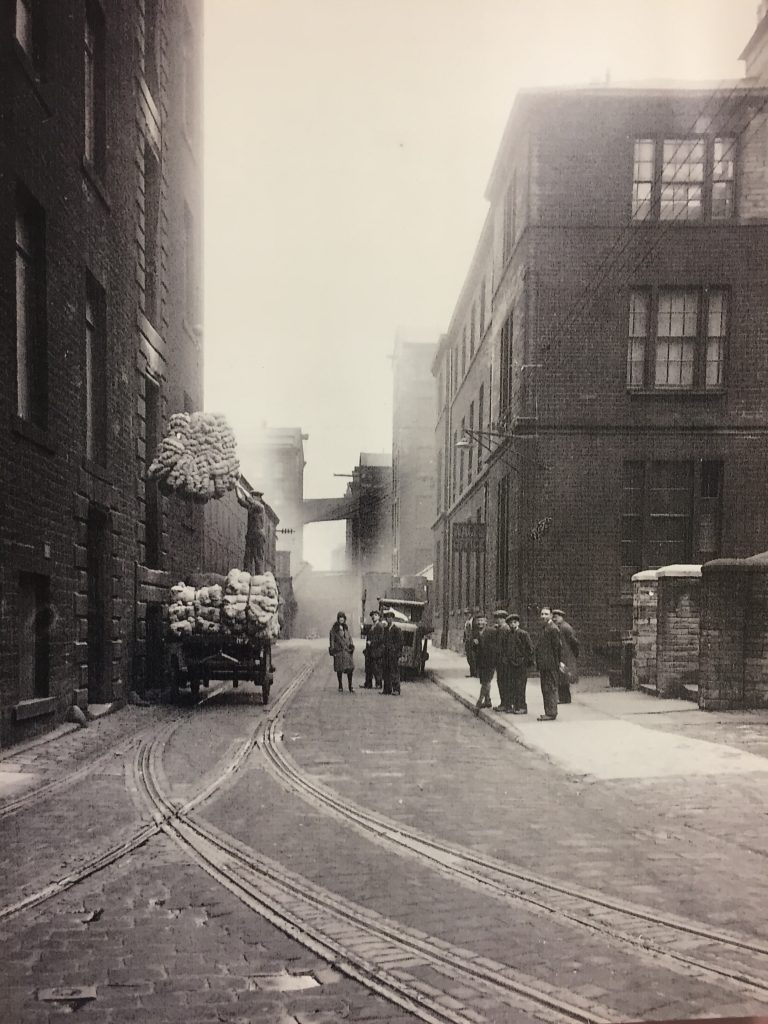
The first email I found in my inbox this morning was from .  . . .drum roll, please  . . .  none other than the first Wrigley relative I’ve been in contact with. She is the grand daughter of Willie Wrigley, the architect. How wonderful! I responded right away, despite this being – for me – an ungodly early hour! This immediately got me digging through previous emails, ones that I wasn’t sure I’d catalogued precisely and this led me on to Ishmael Nutton, my paternal grandmother’s brother. I have a very, very faint recollection of meeting him at my grandma’s on Thorns Road, Astley Bridge which is where the Denton family gatherings were always held. Ancestry provides ‘hints’ and one of the hints that popped up this morning was this:Here was the very document that showed that my great uncle actually worked at Crossley’s Carpets in Halifax, which was the largest carpet factory in the world. John Crossley built almshouses and a couple of weeks ago I’d visited them and taken a photo of an interesting gargoyle. Just last night I’d finished a felted fabric art piece I’d made from that photo! Back to Ishmael. He’d  been certified by the surgeon to be fit for work. The year was 1901 and he’d be 11 years old. I’d suspected that his sister Lily had worked there. Possibly I’d heard her mention it but for the last few years when I’d visited Calderdale with my daughters we’d usually visited the Dean Clough site which once used to employ 5000 people. Many of the individual mills have been revamped providing art galleries, a theatre, cafes, restaurants, even a cooking school – all of which I’d visited. And now, I find that my great uncle actually worked there. It looked bright and sunny outside with a thin film of frost on the roof tops. It’s half term this week which means my classes aren’t running so off I popped to Dean Clough, just to go and sit in the Loom cafe with its Alice in Wonderland theme, and taken photos of some of the views Ishmael may have known.


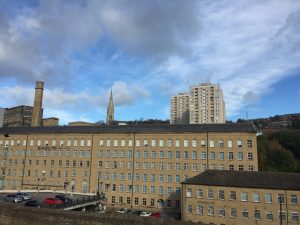
The tower block where Auntie Lil, Ishmael’s sister lived and the spire of All Soul’s where she is buried, with the mill complex in the foreground

In the first photo the original cobbled street leads to the mill complex. The spire of All Soul’s church towers above the blocks of flats. My Auntie Lil and her husband Bart lived in one of the flats and I visited her there. They are now buried in All Soul’s cemetery and Sarah and I managed to find their grave last summer, 2017. The mill complex is also the place where I bought my


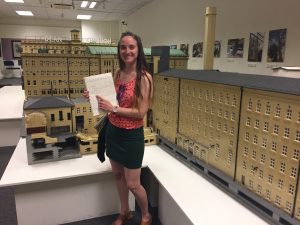
Anna at the lego model of the mill complex in Nov 2017

Anna in the Loom Cafe

Sarah in 2017 finding her comment from 2016  in the visitors’ book 

current digital piano from! I took a brief look in the book shop and found cards created by Valerie Wartelle. I did a day workshop about felted fabric with her in Hebden Bridge last winter. Through the Crossley Gallery to the Loom cafe where I was the only mid-morning customer –  a perfect place to collect my thoughts about Ishmael and others who had returned from WWl  but how their experiences had affected their lives and that of those close to them can only be imagined. Last  night I’d watch a rerun of one of the episodes from Blackadder set in the trenches, and in the Loom cafe I find fliers for the upcoming production next week in the Viaduct Theatre in the mill. Yes, you’ve guessed it. It’s Blackadder!

********************

My Thoughts in a cafe

The White rabbit offers his pocket watch to me

As Alice looks on bemusedly

Bobbins of spun cotton fill the coal scuttle that adorns my table

And jostles for air between  cake and cappuccino

Through a glass window, spotlessly clean, a crisp winter light pours in,

But, with eyes open, I dim this light, cloud the glass, drown the music,

And I’m in a dark forbidding place, a basement, where deafening thuds, piercing whistles and earth shaking stomps

Transport me to a former time.

I glimpse a young boy, ten years old, flat capped, threadbare overcoat and scuffed clogs tramping along the shit drenched cobbles

Barely awake, barely cognizant of his surroundings where he is dwarfed

By buildings so tall the sun never reaches the ground

Even in those times when, just for a moment, it penetrates the ubiquitous smog and grime.

A surgeon signed his papers – he’s fit for work

But he doesn’t stay long, and next time I meet him he’s a gunner

Taking aim at other young men from factories and farms

And homes where anxious loved ones await them.

Ishmael returned home. Was he devastated?

Did he scream in nightmares in the living daylight?

In a gallery above me a striking wreath takes my breath away.

The dead eyes covered with pennies,

The kit box stencilled with numbers

Beyond my comprehension.

*********************

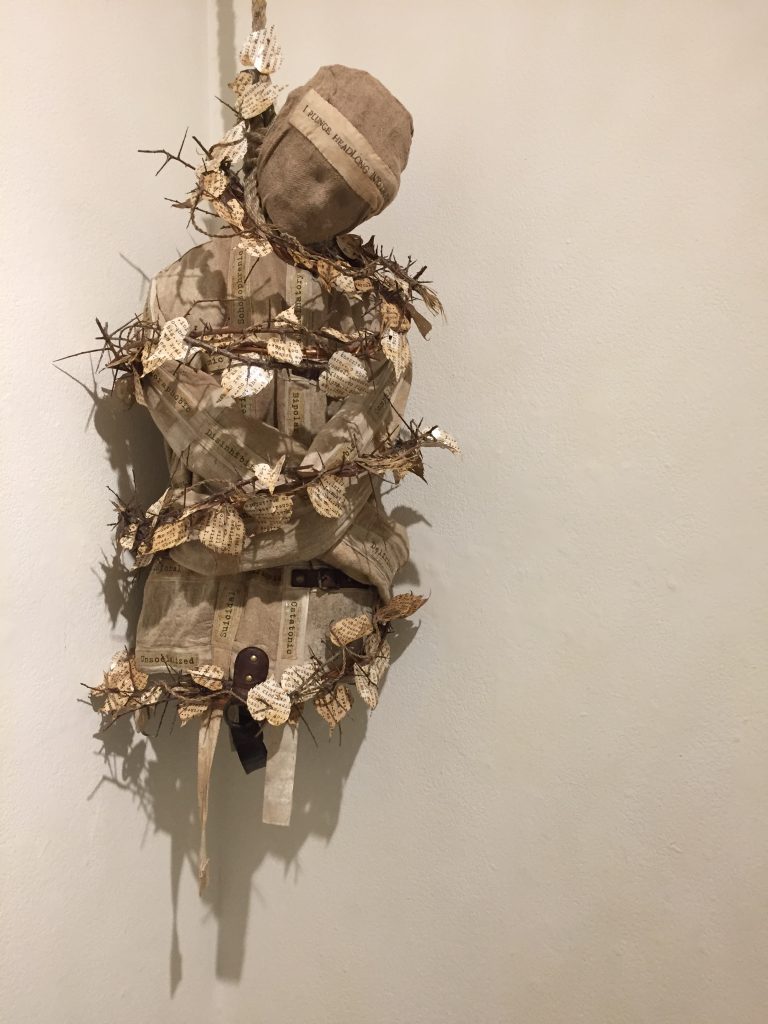
After my cappuccino and cake I wandered around the galleries for a while and my eye was taken by a new exhibit. Well, that’s a mild way of putting it. I was stunned by it. The subject was wreaths, which, in my books, didn’t sound too interesting, but these celebrated the living, the dead, the lost. One included display included objects that mothers attached to babies they left on charity doorsteps. Another was a wreath wrapped around a hanged man. The one that took my attention was one about a fallen soldier, including family photos, and old pennies to close his eyes. The kit box supporting him listed the number of people killed and wounded in WWl.
On Giles’s trail again – this time at Blackshaw Head chapel

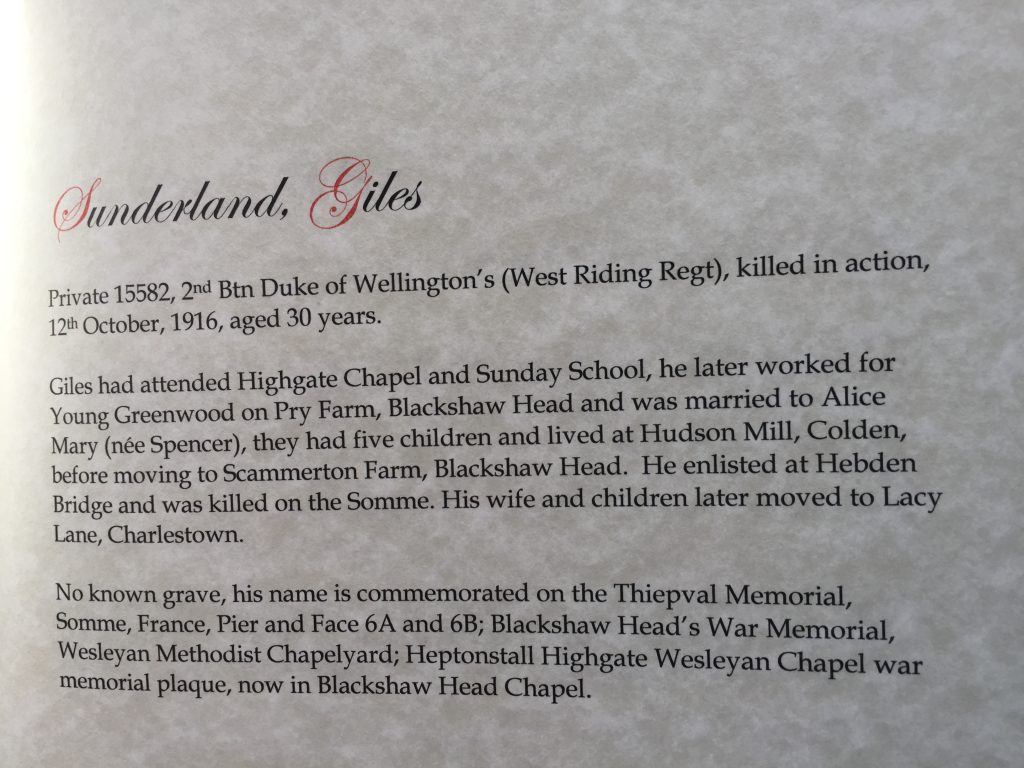
In the memorial book


Thiepval memorial, France

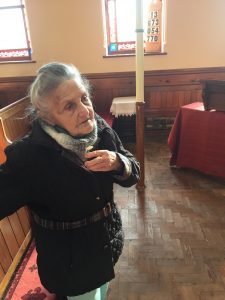
I’d discovered that Blackshaw Head chapel where Giles Sutherland is named on the WWl memorial is open occasionally but when I used the ‘contact us’ page on the website I hadn’t got a response. Anyway, after a bit of to-ing and fro-ing I received  welcoming invitation from someone called Roger who told me that the chapel would be open this morning for an arts and crafts class and I should ask for Dot. The morning dawned bright and sunny so I took the bus up to Blackshaw and arrived at 11.30, in time for the start of the class. My heart sank, however, when both doors into the building were well and truly locked, so I walked around to the back for the chapel, where an extension has been added and sure enough that door was open. I headed for a room from where I could hear voices and found half a dozen ladies just getting organized for a craft workshop. “I’m looking for Dot.” “I’m Dot, and you must be Heather. Roger said you might come. Bye ladies. You’ll have to manage the class without me. I’m going to show Heather around the chapel,” and with that settled we were off. Dot was the most wonderful raconteur, and before I knew it an hour and a half had passed by!

The incomparable Dot

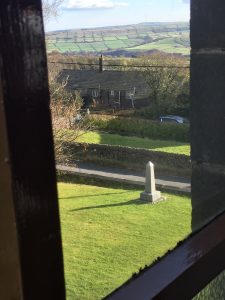
WWl memorial from the chapel balcony window – with the Erringden Grange’s model farm walls in distance

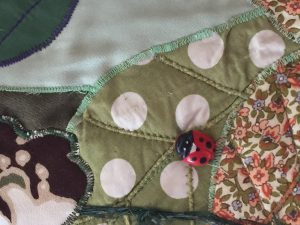
Ladybird on the quilt

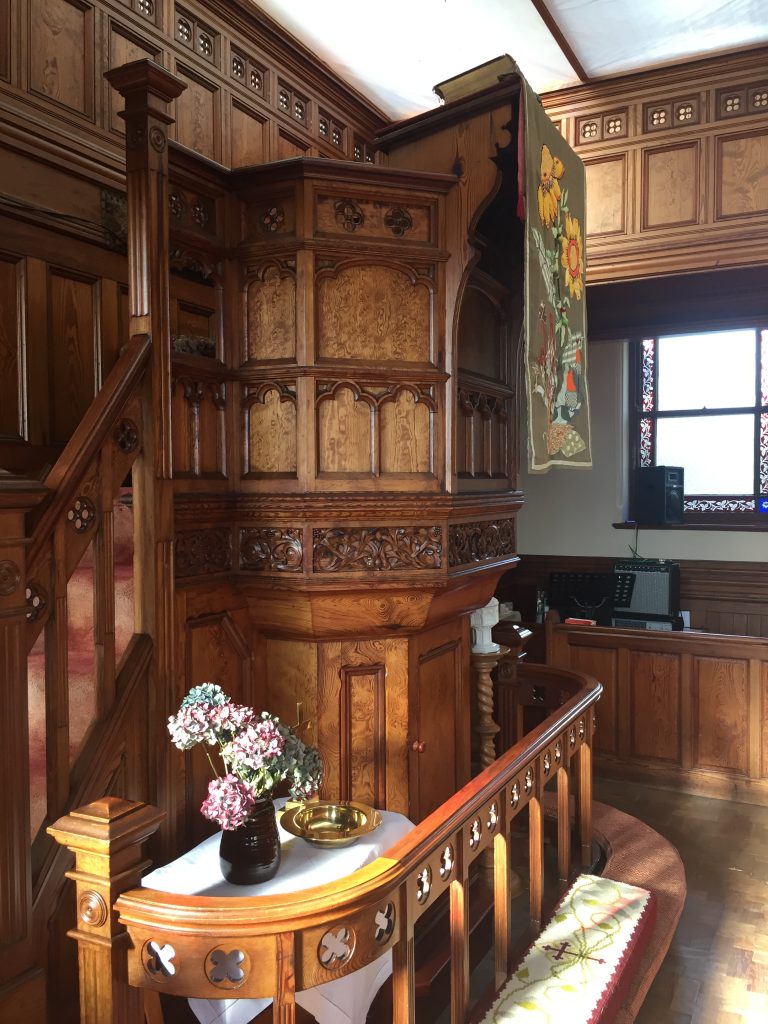
Magnificent pine pulpit

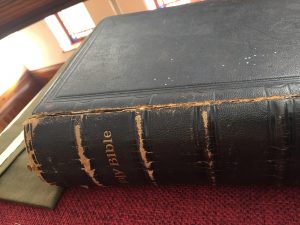
This bible in the pulpit dates from 1901

It turns out that Dot is an honorary life member of the Hebden Bridge Historical society – of which I am a paid up member! It’s the only branch of the Literary and scientific society that still exists. An early founding member and secretary was none other than one of my Gibson ancestors. “Ah, Eddie Binney Gibson,” said Dot without a moment’s hesitation. I told her that I’d ‘found’ the birdbath in his memory in New Street gardens. She knew all about it –  of course she did!

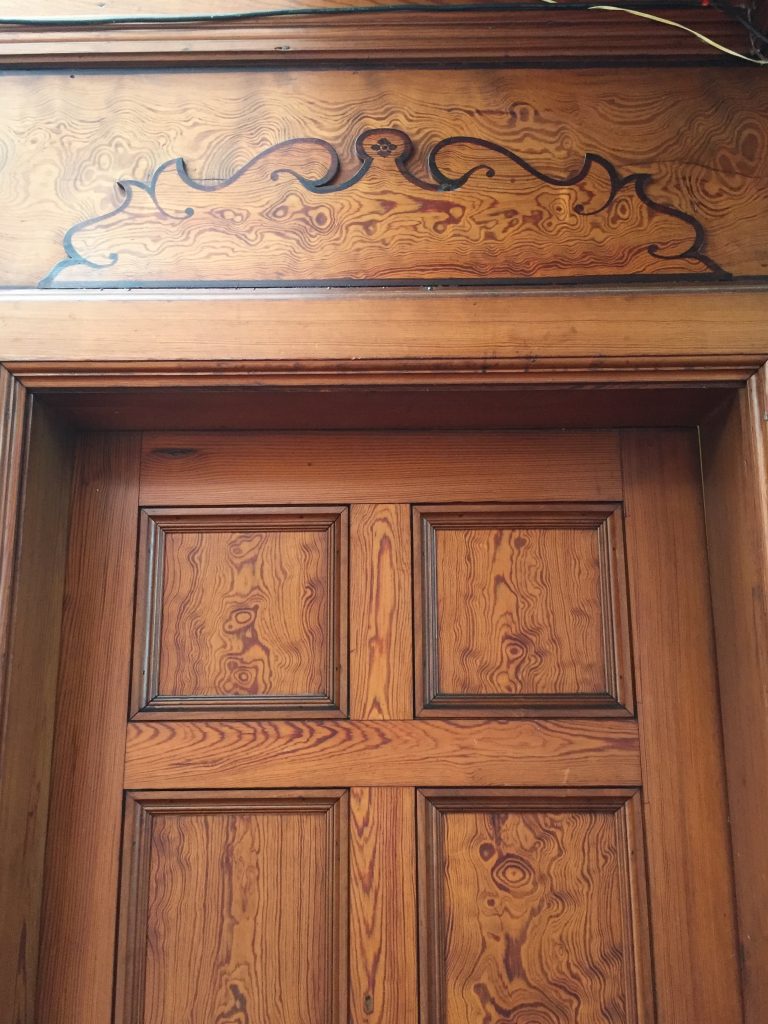
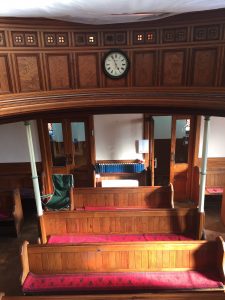
The chapel’s classroom reminded me so much of Affetside Sunday school that I attended both on Sundays but also doubled as the two room classroom where I went to school until I was eleven. Even the screens with the class upper panels were the same –  and the row of hooks on the wall for hanging your coats. The chapel itself was smaller than Affetside but it had a balcony but the layout and just the feel of the place was very familiar. The woodwork is highly polished and quite ornate. I thought it was walnut but Dot assured me it is pine. Like Affetside the pulpit is a very ornate affair. It had an applique banner that the arts and crafts ladies had made and three ladybirds were featured. An improvised roof had been added to the lower floor to help conserve heat, but Dot explained that for special services, especially at Christmas the plastic sheet is taken off and it’s standing room only. In the vestry is a book. There’s no record of the name of the author but it’s a recent book, with half a page about each member of the village who was involved in WWl. Here I found a couple of paragraphs about Giles, all of which, I was comforted to know, supported my own research and just added a couple of facts. From the gallery I could see the War memorial in the cemetery below, and also look across the valley to Stoodley Pike. I mentioned that I hiked up to the Pike on Sunday. “Did you go through Horsehold?” dot asked. “Yes, the first farm at the top of the hill from Hebden Bridge.” “My husband grew up there,” said Dot proudly. We chatted about the big farm further on, the one that had been part of the model farm, Erringden Grange. I’d taken photos of this farm complex before. It turns out that her husband’s family had lived there, but now it’s occupied just by one lady.

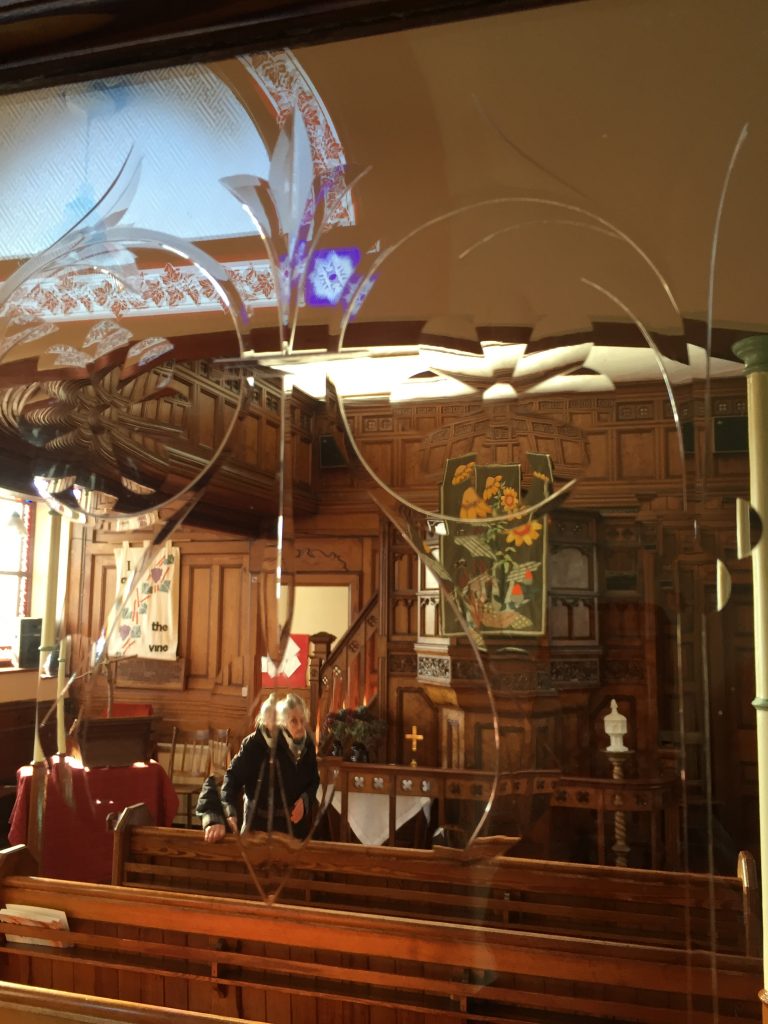
Having fun taking photos through the cut glass door panels

At one time the chapel’s roof leaked badly and services were conducted in a classroom -“like the Black Hole of Calcutta” Dot said. The church was going to close its doors forever, just like all the hilltop chapels around Calderdale – Highgate and Slack (built by my Wrigley ancestors) being two that closed. So Dot and a lay preacher, Roger, had decided to do something to keep it open and they spear-headed the fundraising that renovated the building. I asked if they’d been given special funding like the Octagonal chapel in Heptonstall. I mentioned that I’d once had a lovely chat with the lady who does the flowers in the Heptonstall chapel. “Oh, Jesse?  That’s my sister in law.” “No. We’re not a listed building.” I was surprised. “Well. I knew the man who was going around doing the ‘listing’ and the doors to this chapel were locked that day. It looks austere and dull from the outside so he didn’t list it. Thank goodness! If we’d have been Grade 1 or Grade 2 listed we wouldn’t have been able to do all the things we have done – like build the extension on the back.” As we chatted a man came in to collect some posters and as Dot explained why I was there he invited me to a special celebration of the people of Blackshaw who returned from fighting in WWl but then had to deal with ‘a living hell’ for the rest of their lives. He introduced himself as Tim, and he also told me about A  Beacon of Light  that’s going to be lit on Great Rock above Eastwood featuring a handbell choir on the evening of Armistice Day. “I’ll see if I can arrange transport, if you need it” he offered. When he’d gone Dot explained that ‘Tim’ is none other than Mr Timothy James Pitt, Vice Lord Lieutenant, one time High Sheriff of West Yorkshire whose  interests include ‘country pursuits, classic cars, gardening, golf, breeding Alpacas.’  http://www.westyorkshirelieutenancy.org.uk/vice-lord-lieutenant/
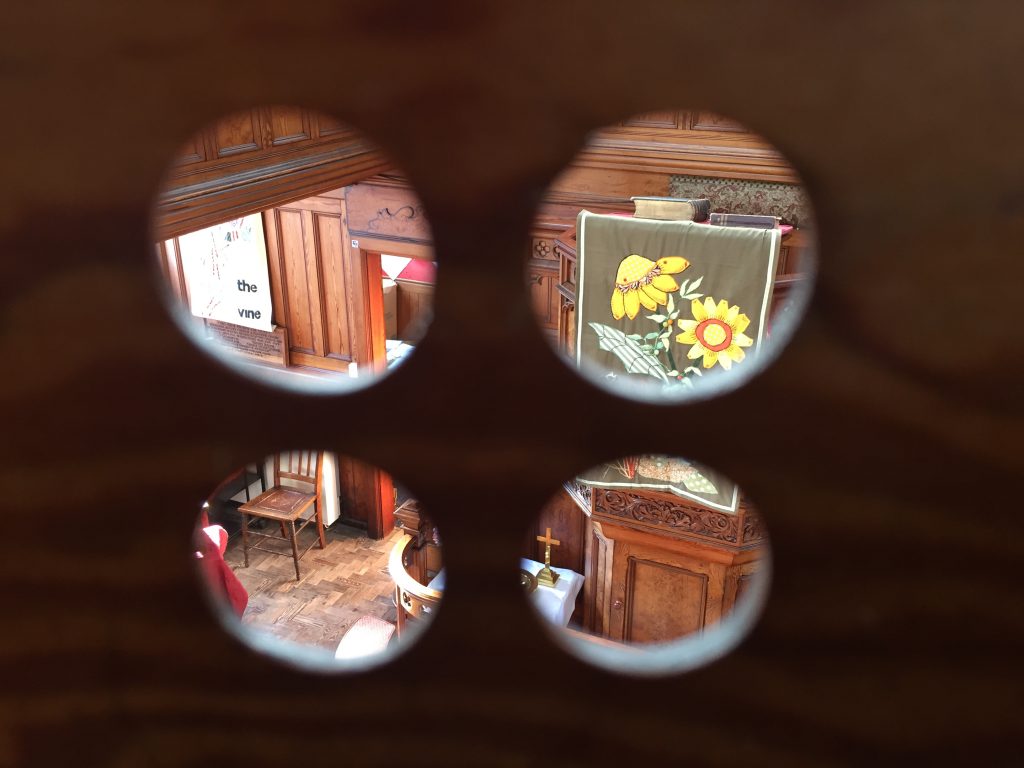
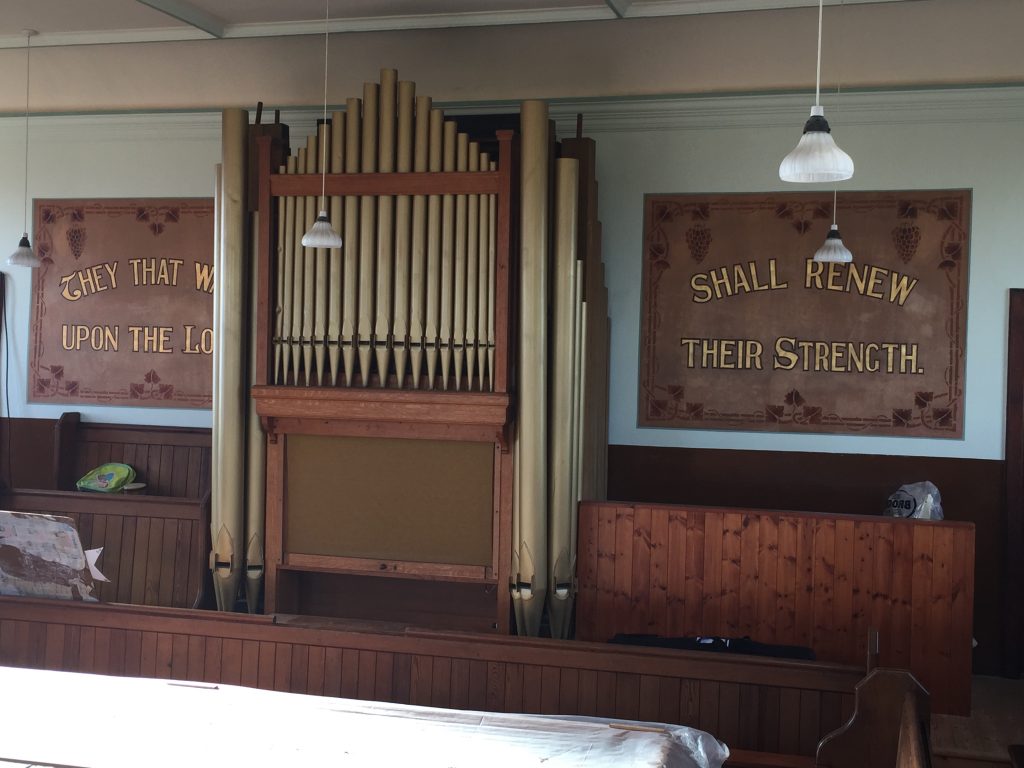
View from the balcony

Beautiful stencil-work that Dot has lovingly preserved. Originally all the walls and ceiling were covered in stencil-work. A stencil artist has offered to redo it for free.

View from the pulpit

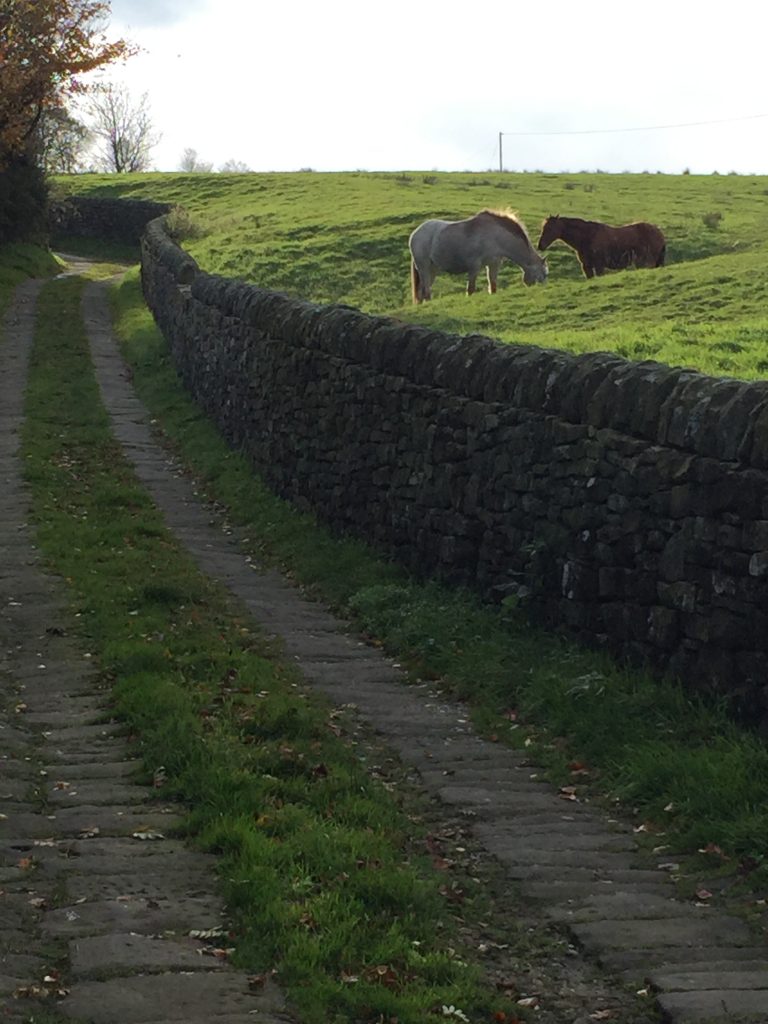
Old cobbled cart road

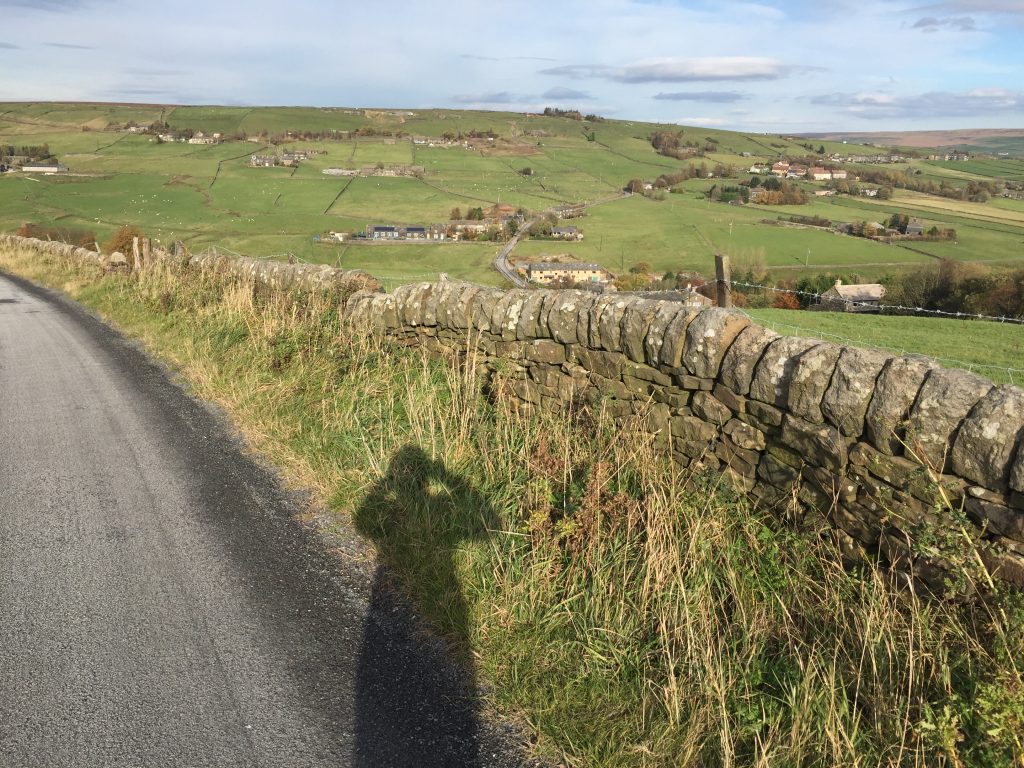
On the walk home I took photos just to show what an isolated  community Blackshaw Head is.

Looking over to Slack


In the middle of March, 2020, when the government ordered everyone to stay at home because of the Corona Virus I read Birdsong by Sebastian Faulks. Much of it is set in Thiepval where Giles was buried. What a long way from Blackshaw Head.

Can there be too many coincidences?

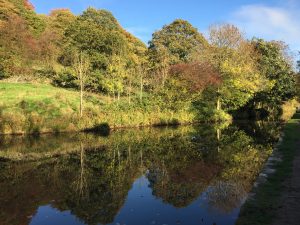
The canal between my apartment and Ted Hughes’s birthplace

Last weekend it was the Ted Hughes festival. I’d signed up to attend events on Friday, Saturday and Sunday. It was my twin daughters’ birthday too, and I thought this would be a good way to celebrate . . . . I’d purchased two tickets for the poetry reading on Friday evening but at the last minute the friend who was to attend with me couldn’t make it. I advertised the ticket on Hebden Bridge’s facebook and it was quickly purchased. The reading was to take place in Hope Chapel, literally the next building to where I live, and one that my Wrigley ancestors had had a hand in renovating – but that’s another story. I met my companion for the event on the steps of the chapel and we decided to sit on the balcony. The downstairs area was pretty full but there were only a dozen or so people upstairs to enjoy readings by Ted Hughes’s daughter, Frieda, and one of my favourite writers, Simon Armitage who I had met at Haworth Parsonage last year. Listen to Simon reading ‘Thankyou for Waiting’ with which he opened his reading.


Frieda was on first, introduced by a member of the Elmet Trust who demonstrated as much pizzazz at introducing the evening’s edification as the squashed spider outside my kitchen window. Luckily, my escort had a great sense of humour, and I related how, on attending a meeting with the Elmet Trust with Sarah I had been told to ‘wash out my mouth’ on mentioning something about the Bronte family (and it wasn’t said in jest!).

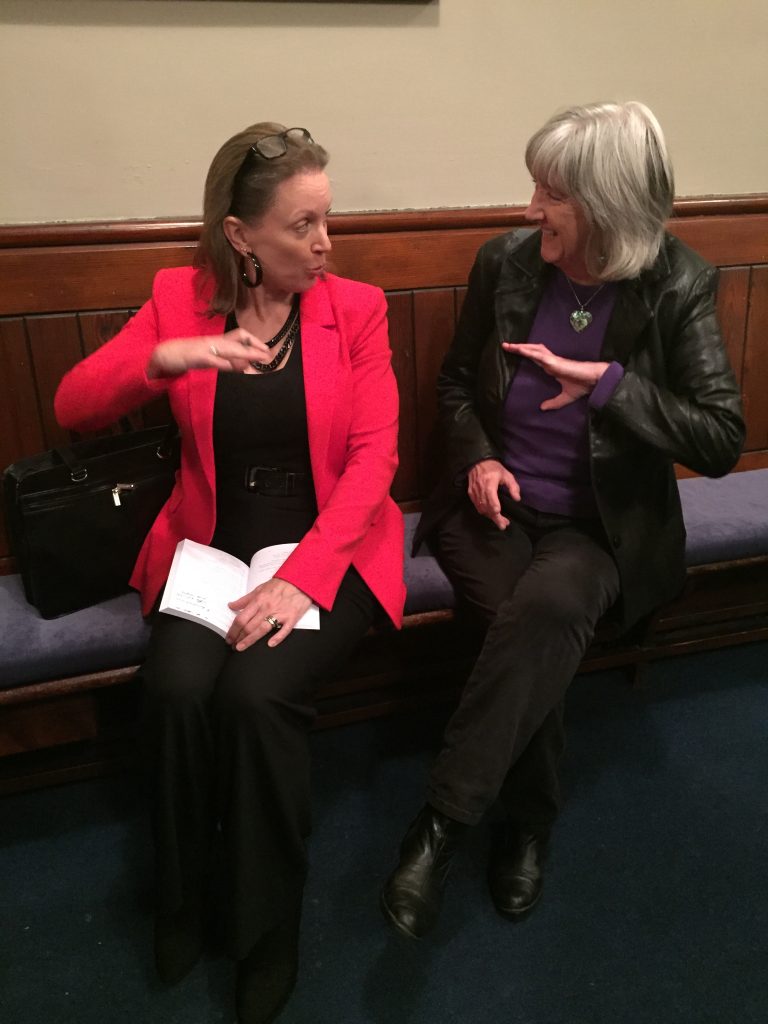
Chatting with Frieda Hughes

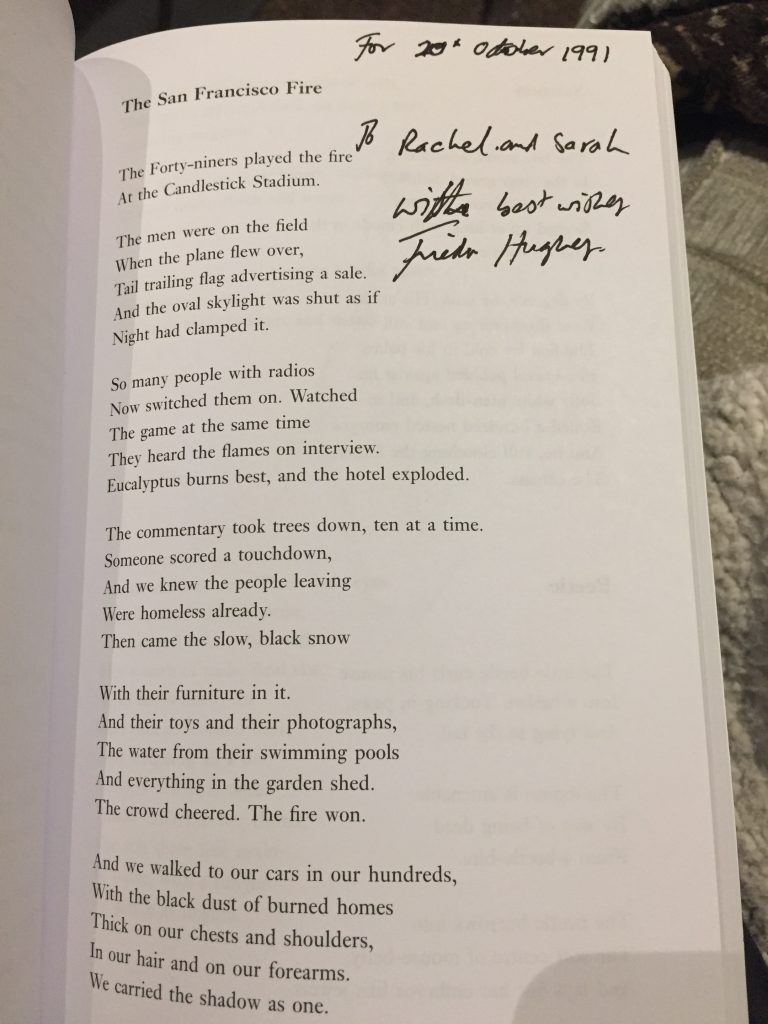
Dedication!

Simon Armitage reads Poundland

One poem that Frieda gave a special introduction to was ‘The San Francisco Fire’ which she commented that she still finds it difficult to read without a surfeit of emotion. The poem tells of her attending a 49ers game in San Francisco on the day of the Oakland  Fire, October 20th, 1991, and realising that, as the ash fell, she realised that many of the spectators would discover that their house had been burned down in the fire. It was highly significant day in my family too. It was Rachel and Sarah’s 6th birthday and we’d arranged for a magician to entertain at the party we were hosting that afternoon at our home in  Walnut Creek. During the morning, however, the house where the magician had been doing a similar party had had to be evacuated in the fire and his box of magic tricks had literally gone up in smoke – not a day to forget, though we were decidedly fortunate compared to many people. After the reading I asked Frieda to dedicate the poem to my daughters in honour of their birthday – the following day. Simon’s selection of poems was more upbeat than the ones he had chosen for the Haworth reading, and his super-droll reading of Poundland was hilarious. By the time I left I was animated and inspired by meeting and chatting to Frieda, the daughter of Sylvia Plath and Ted Hughes. She seemed very approachable and easy to talk to.

Hughes’s birthplace

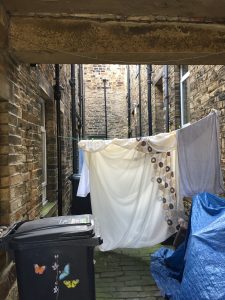
The following day I took a tour of Ted Hughes’s birthplace. It seemed pretty amazing to me that I could walk from my apartment to the house in Mytholmroyd where England’s poet laureate  (from 1984-his death in 1998) was born. I’d visited the house before but hadn’t been inside. In 2008  it was purchased and turned into a bed and breakfast. Rachel and I had thought about staying there a couple of years ago but we decided to stay in the Old Dairy in Heptonstall instead. Simon Armitage, as president of the Elmet Trust, had presided at the opening ceremony. This time I, along with 5 other ladies, got the whole tour of this tiny three storey house with outside ginnel, where next door’s washing was on the outside line. I found it rather uncanny to hear a recording of Hughes himself reading a poem about the room we were sitting in. We were able to see the view from his room of Scout Rock, and see the site of Zion chapel which dominated the street, cutting out all light from Ted’s window.
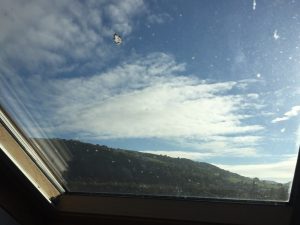
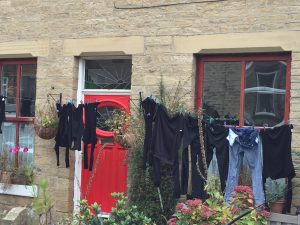
View of Scout Rock from Ted’s room

He lived there until he was 8. His father was a carpenter for a building company in Hebden Bridge. My ear perked up. Could he have worked for my Wrigley forefathers? They had the largest construction company in Hebden Bridge. I read  previously  that Ted’s mum was a Farrar from Heptontall. I too, have Farrar ancestors from Heptonstall! The visit made  me eager to read about Hughes’s life. His father had fought both at Ypres and Gallipolli and suffered from PTSD. The centenary of the end of WWl is coming up in November and there is a tremendous amount of work being done in Calderdale and beyond to commemorate the local  fallen soldiers. I have knitted scores of poppies which will be added thousands of others and form a perimeter to Lister Lane cemetery in Halifax. My own grandfather took his own life after returning from Belgium, when my mum was only 13. Giles Sunderland, one of my distant ancestors died in France in 1916.

Ted’s uncle’s house was at the other end of the street

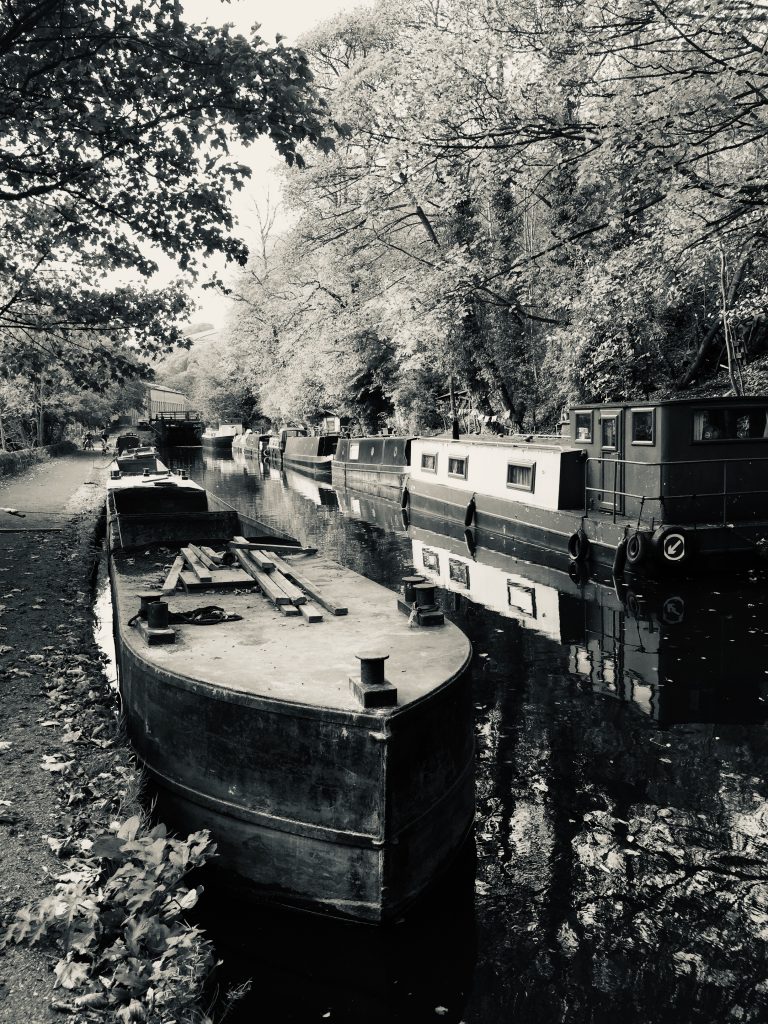
This looks as if it was taken years ago. The barge is currently being used for transporting stone for the renovation of the canal tow path. Mayroyd Mill is in the distance.

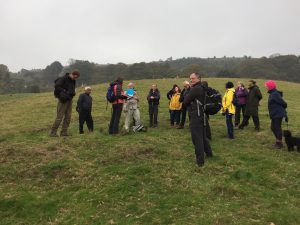
The next day had been forecast for rain but it was dry when I set off, again to Mytholmroyd, to take a guided tour of places that Ted Hughes wrote about in his poetry. The guides were two members of the Elmet Trust who Sarah and I had met before. It was advertised as a 4 hour walk, bring lunch and wear boots. That was about it. For the first hour and a half we strolled leisurely along the canal, seeing the imposing Southside house where one of Ted’s uncles had lived, the spot where Ted and friends used to fish close to the long tunnel (where marks  showed where the horses’ ropes had worn away the stone), again visiting the house (just the downstairs) and the site of Zion chapel. At each stop our guides read excerpts from Ted’s poems and showed old photos about the particular places. One photo was a  class picture of Ted at Burnley Road junior school – built by my Wrigley ancestor yet again!

Lunch stop

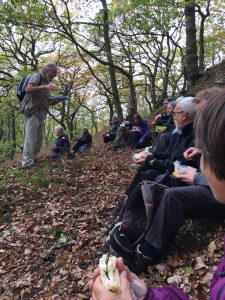
Then we headed up. Up. Up and more up – almost vertically through Red Acre wood where the site of Ted’s various camping trips were pointed out to us. It had begun the drizzle slightly, but I found this sort of weather much more evocative than had it been a bright sunny day. But . .  . and this is where I feel the guides needed some guidance. They set a very, very fast pace up the hillside, stopping for our lunch break with a great view of  Mytholmroyd sewage works!

Ted camped here!

Ted’s uncle’s house farther along Aspinall Street

There seemed little regard for the pace of the group, and it was virtually impossible to stop to take photos. I inquired how much further to walk, how much longer the walk would last for. Neither question could be answered by the ‘sweeper’ and the guides were mere specs in the distance a hundred feet above us. This was the point of no return so, with a rehearsal back in Hebden looming, I headed back down to the valley. I arrived back ten minutes before the planned finish time of the guided hike. I wonder what time the rest of the group got back!

Heading back down

Down

Three days later I went into my favourite quilting supply store in Halifax. I got chatting to the assistant about a project I’m working on – Hardcastle Crags. “Ah, I live close by,” she said, “in Heptonstall.” We swapped stories and business cards! She and her brother used to take things to be repaired by a clogger who lived at Lily Hall in the mid to late 1960’s. She used to swim in the mill pond at Hardcastle Crags – where, according to an article in the newspaper,  a former young resident of Lily Hall had drowned. And then she said “And I went to school with Frieda Hughes.” She described how they would make cardboard swords together and pretend to be pirates. Her parents (or grandparents had also known the Hughes family in Mexborough, where they moved to when Ted was 8). Ted wrote two poems about local Heptonstall characters, ‘Granny Riley’ and ‘Donald Straight Up’. The assistant has some family heirlooms given to her by the daughter of these two, and she intends to pass all this information on to Frieda, who might be unaware that these two were real Heptonstall village characters.

Ready to eat

From the quilting store I went for a coffee to read the next chapter in the book I began reading this morning – Nimrod: the story of Ernest Shackleton’s Antarctic expedition. I’d visited a pub in Ireland lined with photos about his expedition. However, I’d never connected the name Shackleton with Yorkshire until the book recounted how, 4 generations before Ernest, the Shackletons had moved to Ireland from Yorkshire. When I explored Eastwood a couple of weeks ago I’d been given a tour of the little hamlet by John Shackleton. There’s a prominent hill above the Calder valley called Shackleton.  . .  . another connection that might provide interest on a dark damp evening in Hebden Bridge!

The walk home


Autumn colours


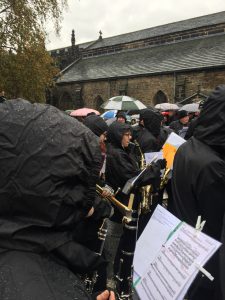
Later . . .playing with the Halifax Concert Band at St Mark’s, Siddal

Giles Sunderland and Pry Farm

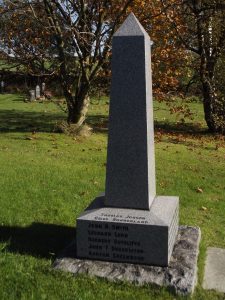
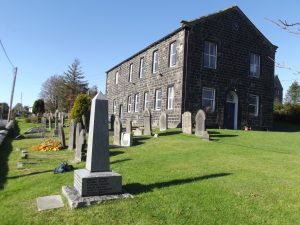
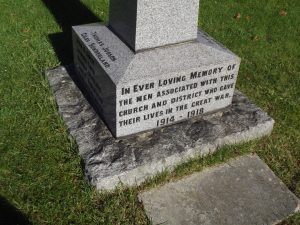
WWl memorial at Blackshaw Head chapel

Another bright sunny day. As people greeted each other in the outdoor market in Hebden Bridge, the weather was their first topic of conversation. ” Eee, mustn’t grumble ’bout weather,” and “We don’t deserve this,” “Can’t believe it’s October. Feels more like’n summer.”

Chapel

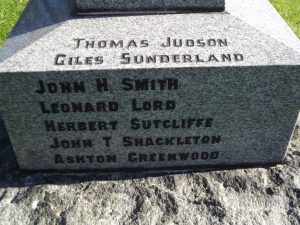
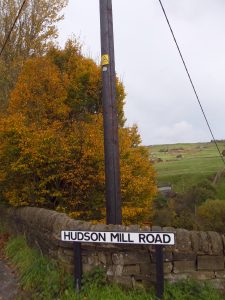
Spurred on by the aforementioned fine weather system currently hovering in the stratosphere above Calderdale I decided to go on what has become one of my favourite walks, meaning that you can do it on slippery leaves, and even in the snow. I got off the bus in Blackshaw Head, having passed the road to Hudson Mill where I was tramping around yesterday in search of Giles. today I was off to see another place where he had lived, Pry Farm. This is next to Scammerton farm, where he also lived, which I’d visited a couple of weeks ago, chatting to the current farmer who has been there since 1985. Just by the bus stop is Blackshaw head chapel, surrounded by the graveyard and as I looked towards it a memorial to local victims of WWl caught my eye. Now, I’ve been past this spot probably ten times before, but, today I was drawn to it. after all, Giles was killed in action in 1916, and he had lived just along Badger Lane from here. At first I thought the gate into the cemetery was locked but no, it was just on the latch. I headed over to the marble memorial which is about 6 feet high, and sure enough, there was the name of Giles Sunderland! As I stopped to take a photograph the gate opened and an elderly man approached me. “I always ‘ave a look ’round cemeteries when I guz past ’em.” Ah, I thought, a man after my own heart. We chatted happily in this remote spot. It was rather surreal. He organises weekend youth hostelling trips for the over 50’s and had just led a trip that included 3 nights at Haworth YH and three nights in Mankinholes YH. He’d led a walk up to Stoodley pike and the mist had been down and until they were within a couple of yards of the tower they couldn’t see it. Then the sun came out and they had perfect visibility for the rest of the day. Yes, I have ancestors buried at Mankinholes, and when my mum used to tell me tales of her youth hostelling days the strange name of Mankinholes always stuck with me. I’ll look into finding out more about the group. The next weekend is at Hathersage Youth Hostel.
Scammerton Farm

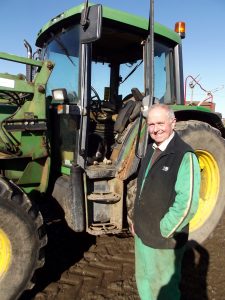
Farmer and sheep dog at Pry Farm

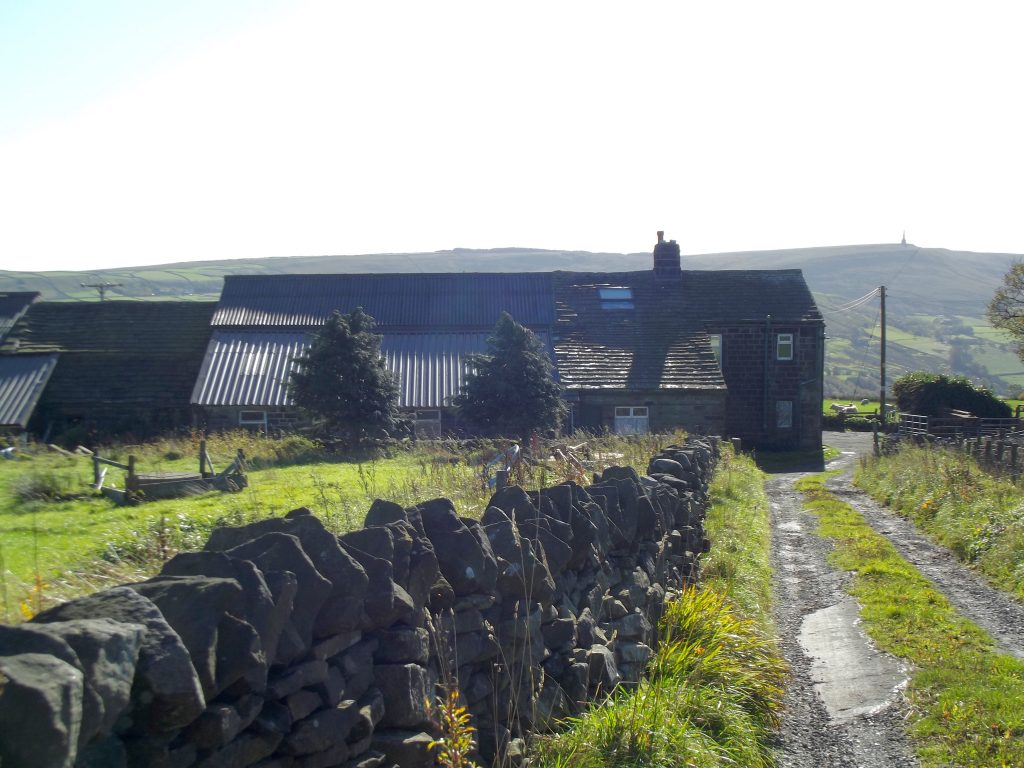
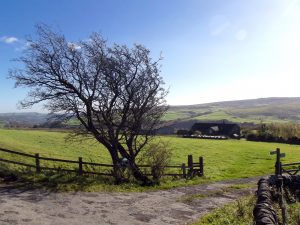
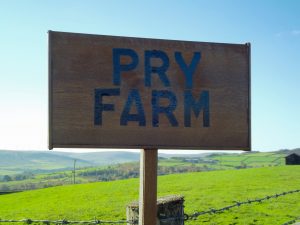
I passed Scammerton Farm where Giles had lived, and came to the next farm, Prye, where he was living before he deployed for the army. Just like Scammerton it’s set back off the road. In fact a farm track joins the two farms. I was debating with myself if I was going to be brave enough to knock at the door and introduce myself: “My ancestors lived here,” when I saw a tractor heading into the farmyard by way of another track. OK, here goes. I hope there are no vicious dogs. My path led to the back of the farm so I went around to the front and rang the doorbell in order not to surprise anyone. No answer so I headed for the tractor which had just parked. I introduced myself and had a lovely conversation with the current owner David Ingrams. He’s lived there for more


Pry Farm with Stoodley Pike in the distance

Just love this scene

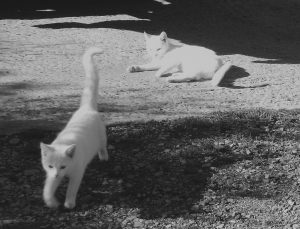
than 50 years, a few years before he married and then he’ll be celebrating his 50th wedding anniversary in January of next year. He jumped down from his tractor with great agility and introduced me to his beloved sheep dog who was eager to make friends with me. He also introduced me to two all white kittens, whose mother, apparently was totally black! His brother lives in the adjacent farm which I think must be High Rawtenstall. neither of his sons intend to take on the family business of cattle and sheep farming. I told him what I know about Giles Sunderland, and we discussed the fact that Hudson Mill is a short walk over Prye Hill from Prye farm, but considerably more by modern day roads. The layout of the farm and barn is almost identical to Scammerton. I need to see if I can find out the building’s history.

Approaching Pry Farm. Heptonstall church tower is on the left

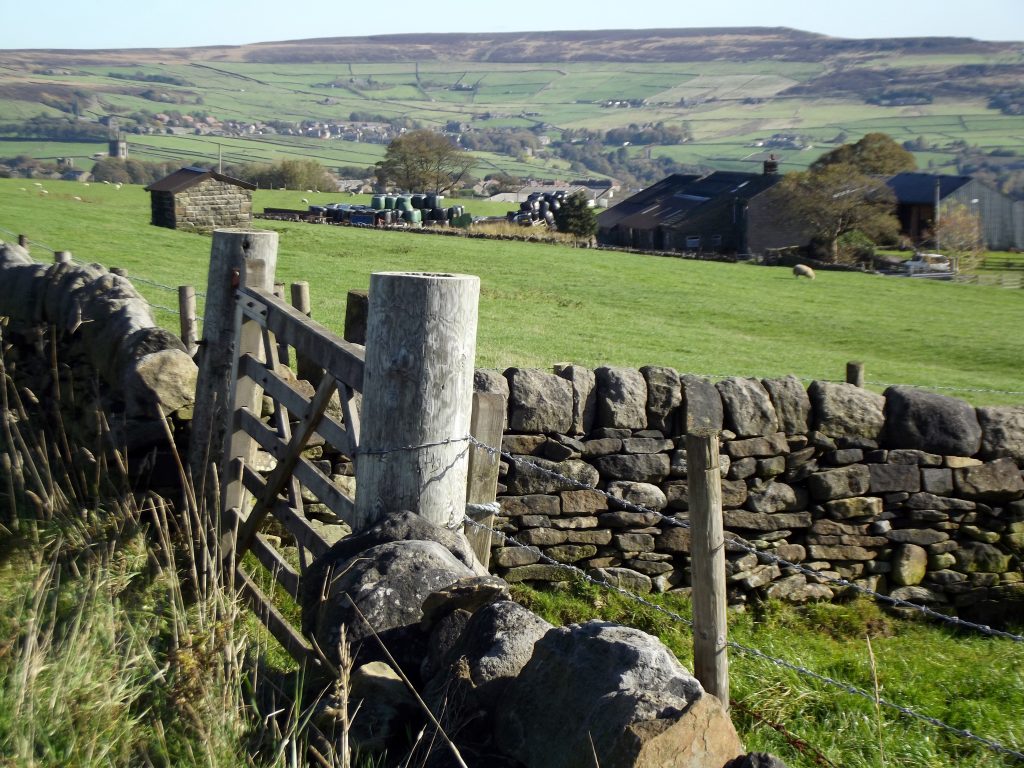
Continuing on my way I passed sheep and cows on Prye Hill which must belong to David. I’d taken several photos of them on previous visits because there’s a sign which says Badger Field, and I thought that was quite funny!

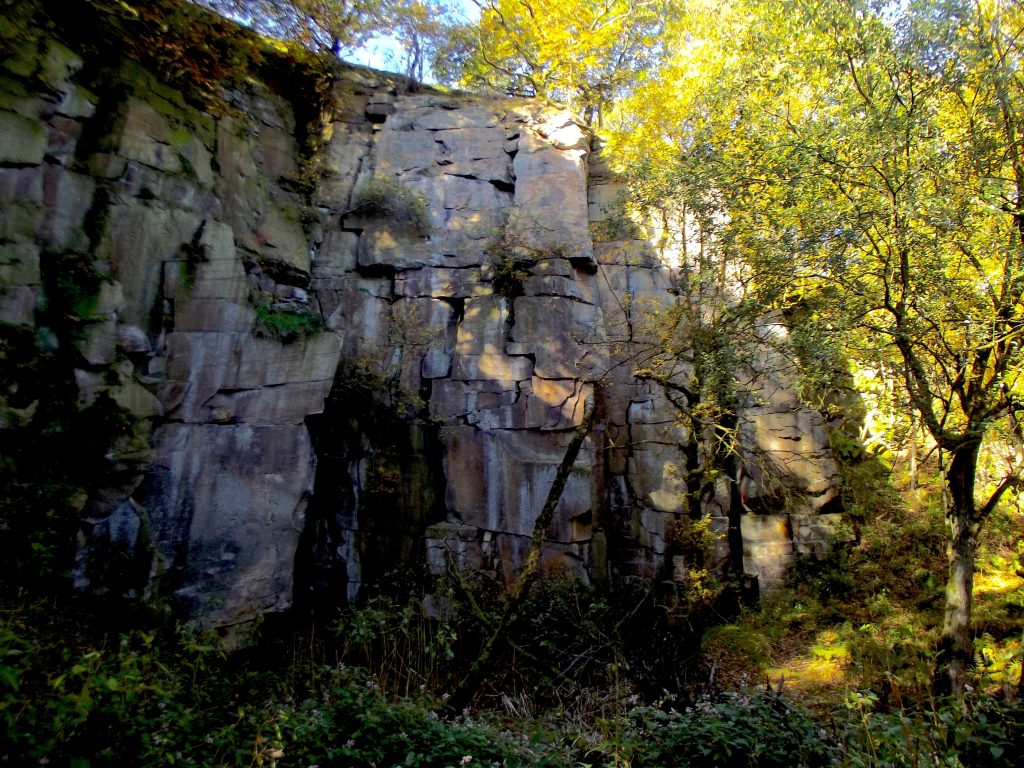
The quarry

The road down from Blackshaw head is very, very steep. I passed a quarry where the light through the autumn leaves was beautiful. It is a remote spot and when a motorbike suddenly pulled in behind me I was quite startled. The guy got off, came over in my direction and asked me if I was taken photos of wildlife. He seemed to be a photographer too, lamenting the fact that he only had his compact camera with him.

Back down in Hebden I learned two new interesting facts on my weekly trip to the  market. First of all Paul, as in Paul’s fish truck, gets up at 2 a.m. 4 days a week to collect his fish in Fleetwood. it’s half term in the schools next week so he won’t be at the market so I had to double up on my order. His “bagger and money lady” wife wasn’t there. I asked after her and was told that she’d gone home at 10 a.m. because she was too cold. “She hadn’t checked the weather report,” he smiled. True. I’d definitely noted sections of hedgerow up ont’ tops that had obviously been frozen overnight. The butcher told me about his long walk of the Pennine way which he’s doing in stages at the weekends. Last weekend he walked the 41 miles from Edale to Hebden Bridge, 30 on Saturday and 11 on Sunday!

Hudson Mill

Giles Sunderland (uncle of wife of my 3rd cousin 2x removed)  and his family were living in a house at Hudson Mill in 1910. So yesterday I set off to discover it. I got the Blackshaw Head bus to Jack Bridge on a lovely sunny Autumn morning, I’d passed through this little hamlet several times before, both on the bus and in the car when my daughters had visited, and in fact, I’d walked up the Colden Valley to the bridge in 2016, little guessing that I would one day be able to walk to this beautiful spot from my living room! The bridge itself is very narrow. the bus only just fits over it. There are steep, well worn steps to one side and a cat was happily sitting and lazily drinking from various puddles.
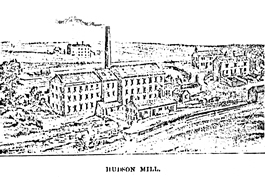
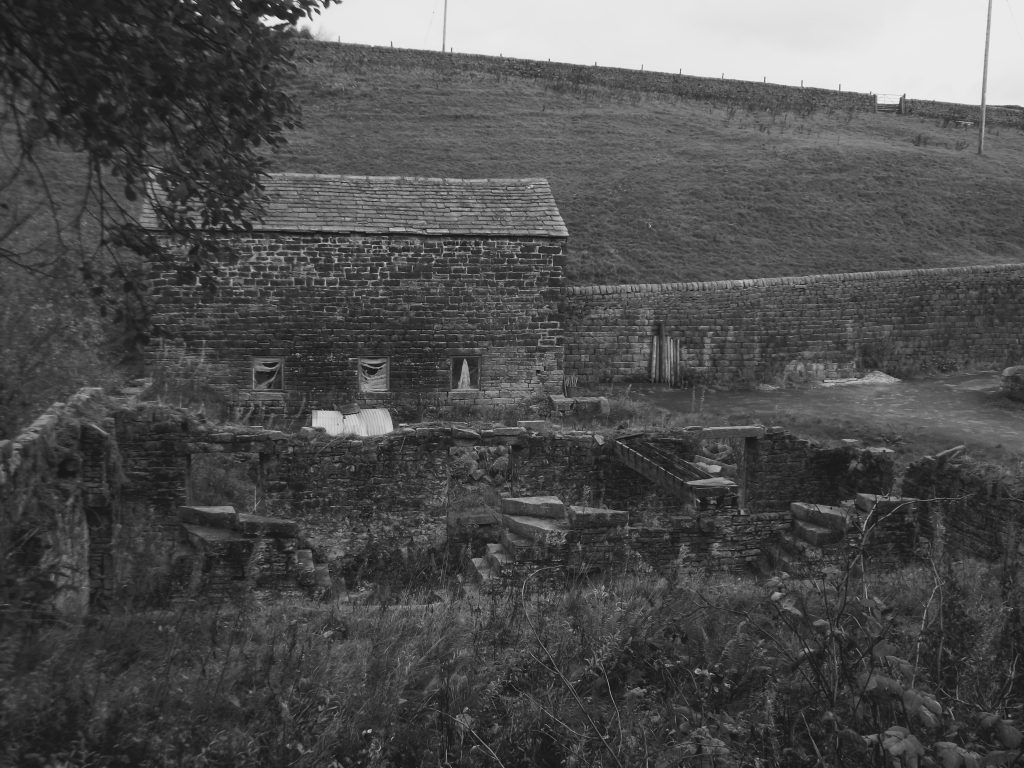
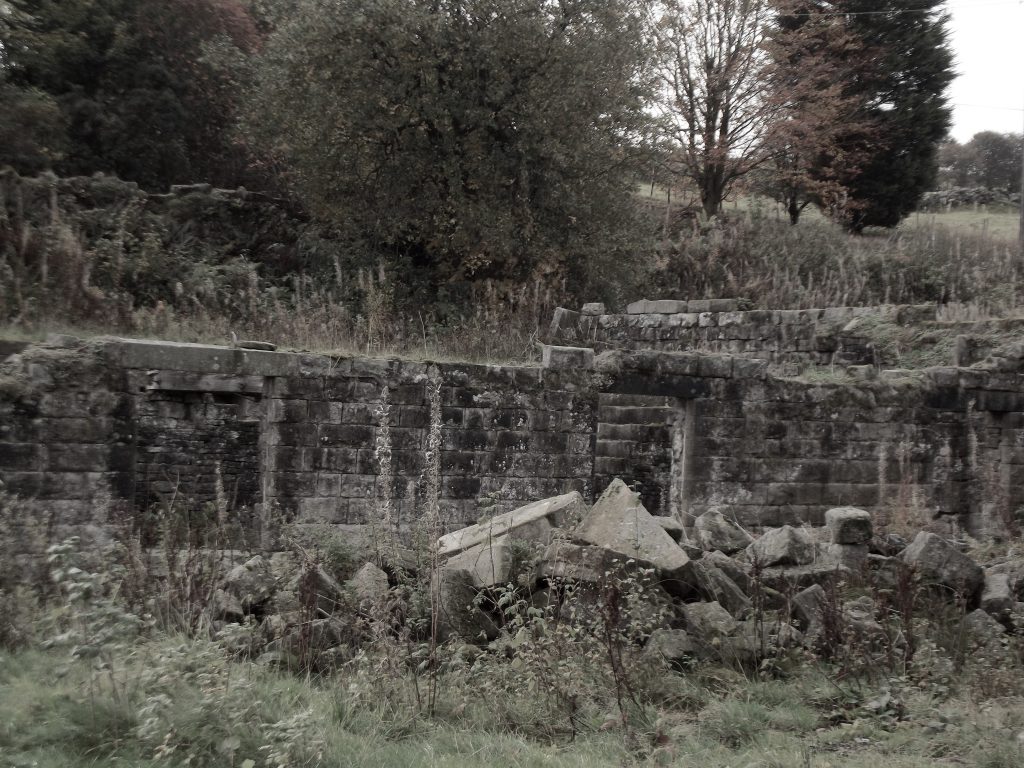
Hudson Mill road is just past the bridge and I’d been told by several people that at one time, not so long ago, cars could negotiate it, but now it’s closed to cars, but makes an easy footpath. The road past the mill was closed to traffic in January 1911. Hudson Mill itself closed in about 1908. With the Colden river on my left the path clung to the valley side and soon I came to a building that was obviously once part of Hudson Mill.

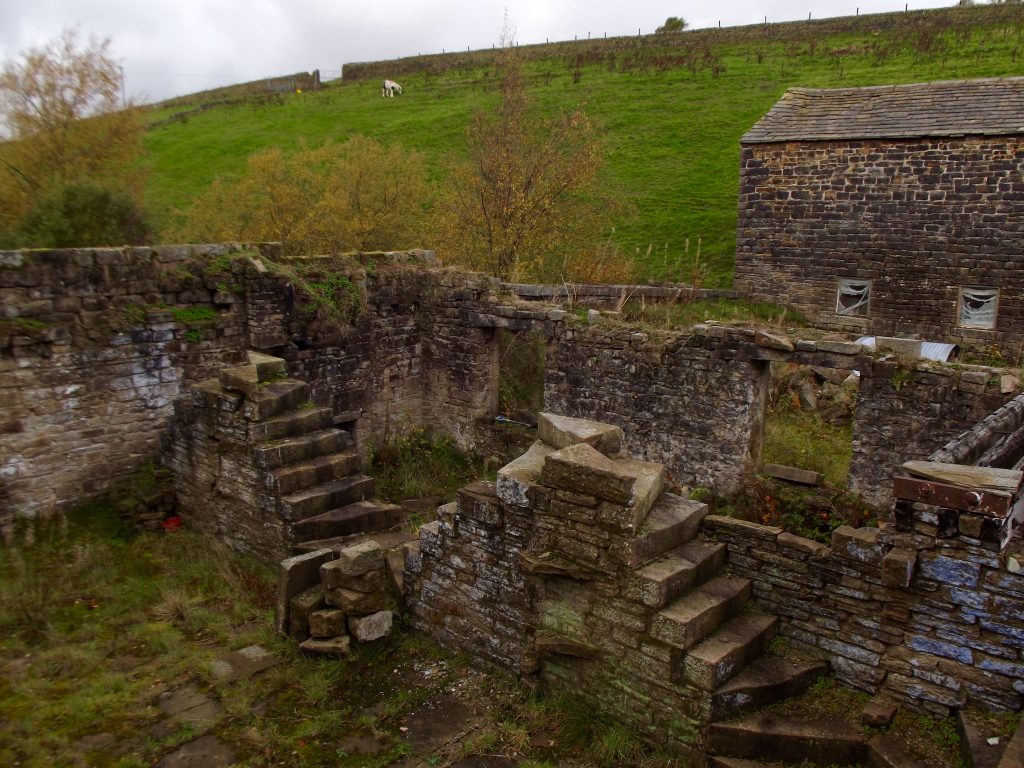
Remains of 6 cottages and the barn/stables

Front doors of the cottages

Stone stairs leading to the second floor of the cottages

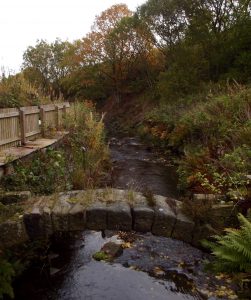
I knew the mill itself had been demolished and the site was now a private house. Just as I approached two people were just coming up to my path from the building? “Is there a public footpath through the mill site?” I asked. “No.” “OK. My ancestors used to live here.” And that was that.  The lady was very knowledgeable but told me that her husband was the one I should be talking to. He’d done lots of research on the house and mill. Perhaps I’d like to see “a whole load of papers” he’s assembled. With that we exchanged contact info and she proceeded to take me on 20 minute tour of the site. She pointed out the flat area where the actual mill had stood. I could even see the footings of the gully that had held the waterwheel. Cool! There are the remains of 6 cottages, and from our vantage point on the hillside just above we could see into their kitchens one of which still had blue painted on the wall and tiles close to where the sink once was. Her husband had grown up in the currently occupied cottage and remembers riding his bike on the flat ground that once would have been the floor of the living room. A largely intact barn overlooked the ruins, which might possibly have provided stabling. The current cottage is in the process of renovation. foot access is over a tiny plank of wood over the Colden stream and there’s a very narrow wooden arched bridge too. Access to the top storey was once by a very elaborate pathway wide enough to drive a horse drawn cart along, and it led directly to the stable/barn. This path necessitated the building of a high retaining wall with two elaborate vaulted archway, now used for storage. As we chatted further about our ancestry we joked that we might be related.   I discovered that the lady’s husband was a Cockroft and that rang a bell. Cockroft is a very common name in this area. There are hundreds of them in  church records. Then it dawned on me the context I’d heard Cockroft: a Cockroft had designed the trestle bridge at Blacke Dean. “Ah, that was my husband’s great great grandfather,” she said. “He was on the first train that went over the trestle bridge when it was completed.” When I visited the trestle bridge footings about a month ago I had borrowed a book from the library and copied a photo of the people on the first train across! And here I was  doing research into my own family and finding myself chatting to Cockcroft’s great great grandson’s wife! Small world. It’s this feeling of connection that I sorely missed living in the US.
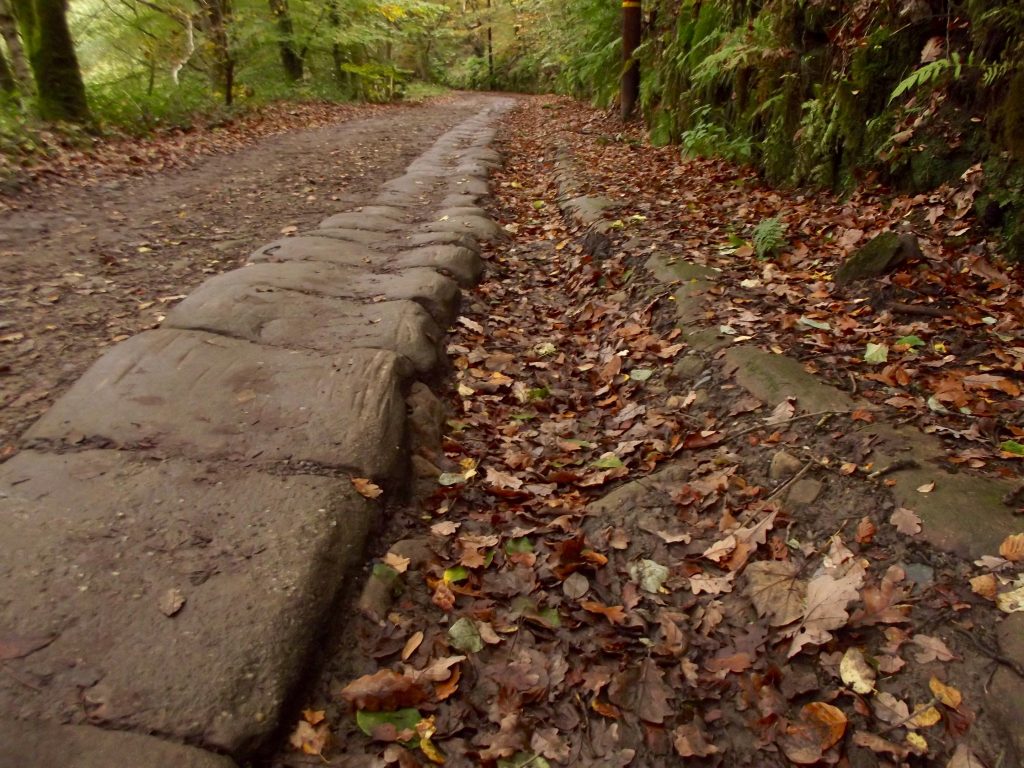
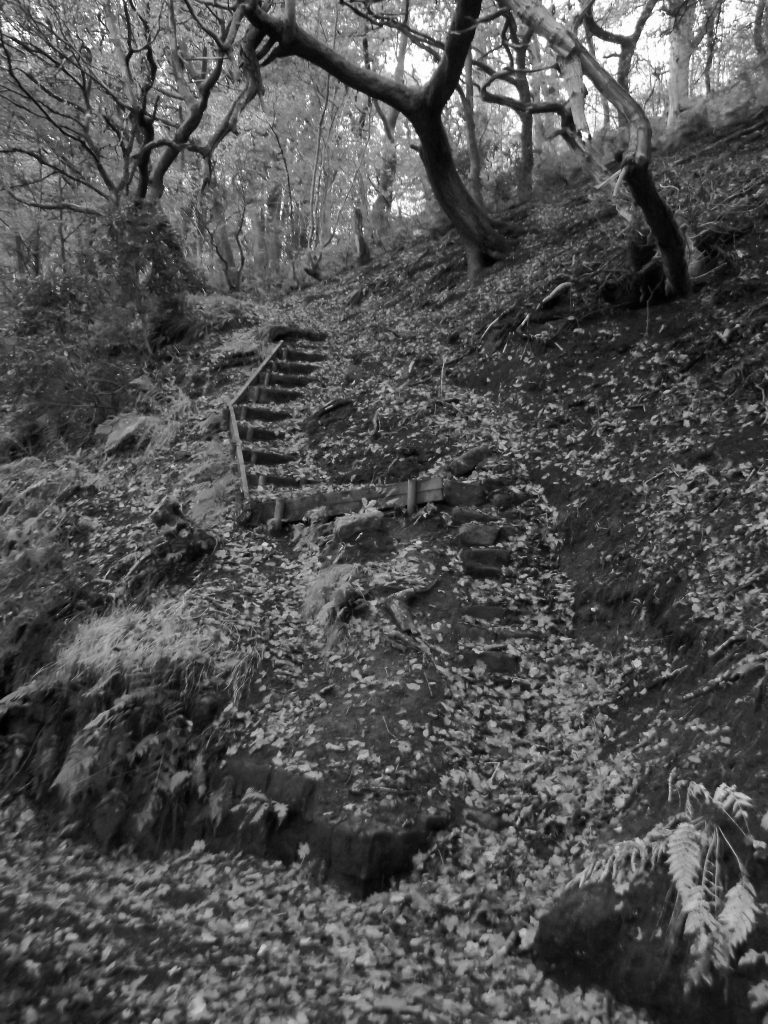
The original stones of Hudson Mill Road

The pathway to the mill. Imagine going up and down this wearing clogs on pitch black mornings and evenings.

Horse trough built into the roadside for the thirsty horses as the trod back up to the mill to collect another load.

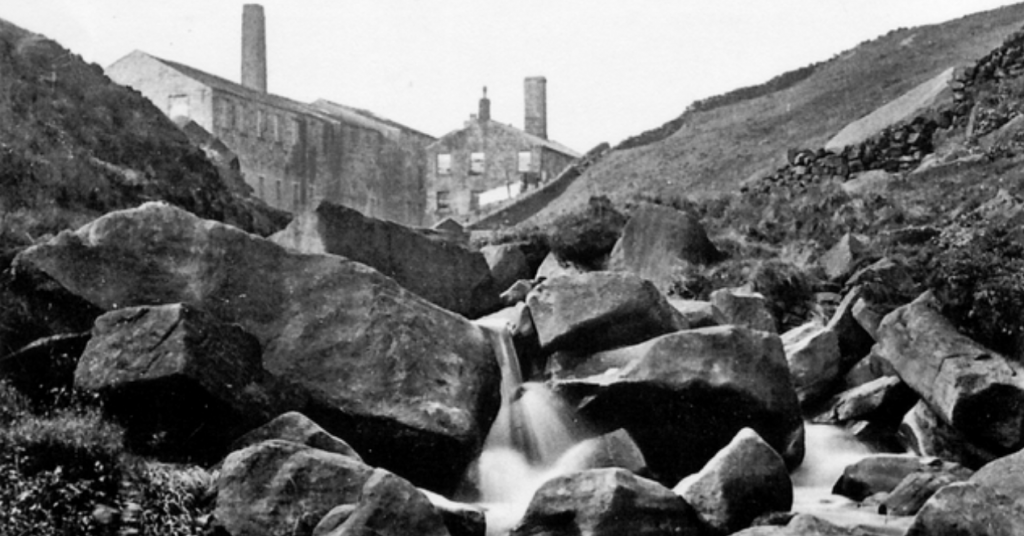
Hudson Mill goes back a long way. In fact, here was a medieval corn mill here which was first mentioned in a document dated 1353 when it belonged to John de Sothill. There was also a fulling mill nearby where woollen cloth would be cleansed close by. In 1571 Thomas Hudson left his eldest son John ” 3 roods of land and … a fulling mill near the Goosehey … and the mill dam, with license for digging and casting anew the said dam on the water of the Colden”. It is Colden water (a river) which runs through the valley.

Photo from Wild Rose arts – Hudson Mill – no date. Is that Giles’s washing on the line?

In 1705, the mill  Hudson mill, or Stansfield as it was sometimes known, was granted by Sir George Savile to Thomas Greenwood, yeoman.  The lease of the water corn mill was for 20 years “the yearly rent of eight pounds of lawful money of England at the feast of Pentecost and Saint Martin the Bishop in winter”. The mill was used for the shelling of oates in 1802 but when the mill was rebuilt after a fire an agreement was made between George Savile and Turner Bent and Co., cotton spinners. Turner Bent and Co. “were to have the use of the chambers over the waterwheels at the east end of the corn mill called Hudson Mill”.
The mill must have been in a dilapidated state by 1840 because in that year Thomas Barker asked the agent for stone and six good trees to rebuild the mill and dam.  He comments “the cotton trade is very low at this time.  The mill ought to be at a low rent, especially with the present depressed trade. The prospect in cotton is very gloomy.” By 1845 it was agreed that he could set up a steam engine and replace the old water wheel with a new water wheel of improved capacity as the old wheel was for corn grinding.

Williams Barker had gone into partnership with Thomas Barker (there was no close family connection) in about 1845, weaving and finishing fustian at Hudson Mill.  This was to develop into a prosperous business, which continued under the same name until 1890s. In 1890 ‘Industries of Yorkshire’ lists William Barker fustian manufacturer, dyer, finisher and wholesale clothier, fustian manufacturing at Hudson mill with 135 looms, power both steam and water, 50 hands. William Barker also owned mills at Wood Top (which I’ve climbed to across the river in Hebden Bridge) and Mayroyd Mill, which has been converted into town houses and  where I spent the summer of 2017!

Mayroyd Mil was owned by William Barker who also owned Hudson Mill

‘The Outfitter’ in an article published in 1893, cloth was taken from Hudson Mill to Wood Top for dyeing and finishing, and then to be made up into garments at Mayroyd Mill. Barkers’ trade mark was well known and they were described as ‘the first house to introduce the making up of garments for working men into the locality’. (From ‘Power in the Landscape’)

Harry Greenwood, whose reminiscences were published by the Arvon Foundation (owned by Ted Hughes) in 1976, was a weaver at Hudson mill in about 1904. The mill ran with a gas engine and had a plant for making gas and it had a water wheel which ‘ran away’ sometimes. The mill was three storeys high and they were weaving fustian by weight.

The site of the water wheel

Florence Sunderland and her brother Giles

Florence Sunderland

4 Melbourne Street

This week I discovered a new line of research in my ancestry. Ok, it’s tenuous in that I don’t share a direct bloodline with my new-found relatives. The connection is through marriage but just how close I now live to these relatives is amazing. Yesterday I went out in search of where they lived. In genealogy terms Florence Sunderland is the mother-in-law of my 2nd cousin 3x removed – 1883-1942. She was born in Blackshaw Head from where I’ve taken several walks along the tops. By the time she was 8 she was living in a cottage just at the far end on Heptonstall, Spink House next to .Colden Wesleyan ChapelHighgate. Recorded on 20th June 1891, when the corner-stones were laid for a new Chapel and SchoolI couldn’t find it on the map, but a posting to the Heptonstall Facebook site soon elicited several responses, one from someone who used to know the family that lived there at one time. Her father was cotton manager secy (secretary?) Mother is Sarah, and siblings John Smith (14), James (13), Ben A. (12) Annie (9) and younger brother Giles, (5). In the census Spink house comes directly after the baptist chapel.  Then there are 4 more Spink houses before Colden. Florence married a man whose surname was the same as her maiden name. Sunderland is a common name in this part of West Yorkshire and I’ve visited the ruins of Sunderland Hall, which most Bronte experts believe was the genesis for Wuthering Heights. In 1901 she was living at Mytholm Lane, at what appears to be the last house on the census route before it reaches King Street. She’s living with her 5 siblings and widowed father, Abraham Crabtree Sunderland, an insurance agent. All the siblings work in the cotton/fustian mills, and her youngest brother, Giles, aged 15 is a cotton twister. Surprisingly there is no employment listed for Florence herself.

Florence married at St Thomas’s Heptonstall on November 24, 1906 (just a month after the big earthquake in San Francisco). At the time of her marriage her father gives his job as mill manager and they were living at Prospect Terrace, Savile Road, Hebden Bridge. Her new husband was James Arthur Sunderland of Melbourne Street, Hebden Bridge,though his father is named as John Greenwood, cotton weaver. Present at the wedding were Hannah Sunderland, (Florence’s sister)and John Smith Sunderland (Florence’s brother).

12 Brunswick Street is the first house in the terrace

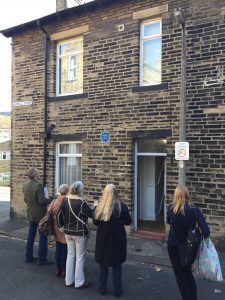
1911 sees Florence, husband and young daughter living at 12 Brunswick Street, so off I went to find it. There it was, a four storey end of terrace only one street away from where I spent the summer in an AirBnB two years ago! She is listed in the 1911 as working as a wholesale clothier (fustian). In the late 19th century, fustian production was one of the most important industries for Hebden Bridge and the Calder Valley – so much so that the town became known as Fustianopolis. Fustian is a variety of heavy cloth woven from cotton chiefly prepared for menswear. Corduroy is a fustian fabric.

Melbourne Street clothing works built by the Wrigleys, now apartments

1939 she is still living at 4 Melbourne Street employed as a wholesale clothing machinist, and husband James Arthur, is a dyer’s labourer.  Brunswick Street is the next street to Melbourne Street. This was the street that led to my AirBnB two years ago, so I passed her house every day.  Melbourne Street was the site of a large fustian mill that has now been converted to apartments, so I would presume she and her husband worked at that mill. I haven’t found a record of her husband’s death yet, but Florence remarried at the aged of 56, dying two years later in the house on Melbourne Street. The next thing I discovered was that my Wrigley ancestors actually built the clothing factory on Melbourne Street!


Giles Sunderland

Hike to Scammerton farm

Scammerton. This building was originally the barn

View from Scammerton farm

Chickens in the barn

This area of flat land was the site of the original farm house

Current owner

Cross Stone church

Overgrown

Her brother, Giles, died in WW1. He is remembered on the Thiepval Memorial, France. It seems unthinkable that a young man who lived at Scammerton farm in Heptonstall should die on the battlefields of France. 418 men from Calderdale lost their lives in WW1. Hope Chapel, next door to me, is honouring them all in November and a display is being organised with as many photos as possible. I wonder if someone will share a photo of Giles. Ah ha. I found one in the local newspaper! Three years later Florence’s other brother, John Smith Sunderland, died, aged 42. He’s buried at Cross Stones church, Todmorden, a church set high on the hill above the town – a hill that I haven’t yet climbed! Ah, ha! Have now!  It’s a couple of weeks later now, and, in possession of a new camera the first place I tried it out was Scammerton Farm, Blackshaw Head. I was fortunate that the farmer was at home and interested to share his knowledge about the history of the farm, from its origins on property owned by Lord Saville, to his own purchase of it in the mid 1980’s. It’s set back from the road, a road I’ve walked quite a few time during the last year, and he explained that what is used as the farmhouse now was originally the barn. He pointed out a flat area of ground closer to the road which had been the original location of Scammerton Farm.

Stoodley Pike from Cross Stone cemetery

From the Todmorden News, Oct 7, 1910

24 Nov, 1916. Todmorden and District News

Todmorden and District News Nov 10, 1916

Todmorden and District News 10 Nov, 1916

Giles was born in 1886, the youngest of 7 siblings, and closest in age to Florence. Though I find a registration for his birth in the first quarter of 1886 in Todmorden records I haven’t located a baptism yet, neither for Giles or Florence. 1891 see the family living at Spink House, just above Heptonstall, next to the baptist chapel, and the year after, when Giles was only 6 years old his mother Sarah Hannah nee Smith died. 1901 finds 15 year old  Giles living with his family on Mytholm Lane as a cotton twister. The next house in the census list is King Street so presumably the Sunderlands are living in the first house on Mytholm lane. Giles married Alice Mary Spencer in Halifax Minster on October 7th 1905. I’m playing for the Remembrance day service in Halifax Minster this year on November 11th. How serendipitous to think that my relative married in that building 11 years before his was killed in WWl. Giles was 19 and Alice was 25. They had two daughters and a son over the next three years, Arthur, Maud and Hilda. 1910 sees the family living at a house at Hudson Mill. The mill has been partially demolished and rebuilt as a residence, but it’s next on my list for a photo shoot! (See next posting)They are still there in 1911, with Giles still employed as a cotton twister, most lively in Hudson Mill itself. However, by 1915 the family have moved from the steep narrow darkness of the Hudson Mill valley to the bracing air on’t’tops, living at Scammerton farm, Blackshaw Head. That information is from the 1915 electoral register. He was a private in the 2nd Battalion of the West riding Regiment when he was killed ‘in action’ on 12th October, 1916. His widow Alice is named as the sole beneficiary of his effects. He was buried at Thiepval, Departement de la Somme, Picardie, France – a long way from Scammerton farm, both physically and metaphorically.

I found several newspaper articles commemorating Giles, one making reference to Giles and his family living at Pry. I’d never heard of the place so I put a call out on Heptonstall facebook and within 24 hours I had several helpful comments including these two from people who had connections with Pry: Clive Oldfield “Half way up Mytholm steeps. Ingram’s live there. Off to your left as you go uphill, just after the short steep bit of road. My grandad moved from the south as a young man to work at Pry Farm,  and from  Linda L Sayerwas Howorth “A lot of my Sunderlands were born at Spink Houses in the 1800’s.” I was also informed that David and Linda Ingram currently live there. After, knowing roughly where to look on the map I found Pry farm, and lo and behold it’s the next farm along Badger Lane from Scammerton Farm. I suppose it’s just possible that the records are confusing Pry with Scammerton since they are adjacent. 

« Older posts Newer posts »