This was to be my day to explore Kendal itself but the unexpected sunshine made me want to jump onto an open top bus. But I stuck to my plans – at least for the morning. I chatted to the owner and her daughter – the first time I’d met them. She’s planning a trip to Las Vegas and I recommended she read the book that I recently finished: Lost in Manchester, Found in Vegas.
Kendal’s parish church
I decided to visit the church – which is ‘not to be missed’ according to the Trails of the Unexpected. It’s one of the widest parish churches in England. To one side is the Parr chapel, built in the 14th century. A tomb with a much disfigured marble effigy is reputed to be that of Catherine Parr’s grandfather.
Behind the locked door of the rood screen was a very old bible, complete with its chain and an ancient bible box. It’s possible that this bible belonged to Catherine Parr herself. The light in the church at this early hour was wonderful, casting wonderful colours through the stained glass windows onto the stone floor.
Was this Catherine Parr’s bible?
Catherine Parr’s grandfather
I was struggling to get a good place to take photos of the bible from when the assistant priest came over and offered to go and find the key so that I could get into the small chamber. Very obliging. The helmet hanging above the Vestry door could have belonged to a member of the Bellingham family, but tradition has it that it was the helmet of Robert Philipson (Robin, the Devil) knocked off his head after riding into the Church one Sunday on his horse in pursuit of his enemy, Colonel Briggs, and being chased out of a lower door by the congregation.
Beautifully preserved brass
I decided to follow one of the online Trails of the Unexpected and set off towards the castle. Though set on a hilltop you can’t see the castle from the town because of the all the trees on the hill slopes. The first part of my walk passed through an enormous cemetery, one of the largest I’ve seen
Onwards and upwards
, and then climbed steadily upwards, still through dense forest so it wasn’t until I reached the now dry moat that the remains of the castle came into view.
Kendal castle from the now dry moat
I saw people preparing for the big art installation of giant inflatable figures that would be displayed and floodlit around the castle and was sorry that I’d miss the actual event which starts tomorrow. A couple of families were exploring the grounds with its rampart which is almost two metres wide in places. The old wine cellars with their arches ceilings are still in place. From the top of the tower I could see distant hills but the area around Kendal itself is very flat and I wondered why the castle hill exists. Thankfully an explanation board answered my query. It is a drumlin – scoured by glaciers. I still remember my O level geography, at least the physical. I found that I was much more in touch with the feeling of history in this place since I was alone, rather than chatting to someone as I explored.
Back in town I crossed the bridge over the river Kent and saw some inviting looking tables on the river’s edge. Tea and a toasted teacake beckoned. I didn’t reckon with the wasps though! It was obviously a popular place with mums of preschoolers and 6 baby buggies were parked outside.
Hey, guys. That’s mine!
Morning tea by the River Kent
I followed the Riverwalk, which is an ancient track though now it’s lined with ugly 1960’s flats and made my way to the Abbot Hall Art Gallery. The exhibition I’d come to see was ‘Ruskin, Turner and The Storm Cloud’ which I’d missed seeing in York by one day. Now, on this trip, I’d already been immersed in Ruskin and Turner for several days, including visiting Ruskin’s house, playing his piano, and seeing his collection of Turner’s paintings.
Abbot Art Gallery and Museum
Dr Richard Johns, from the University of York’s Department of History of Art and co-curator of the ‘Ruskin, Turner, and The Storm Cloud’ exhibition, said: “Taking Ruskin’s ‘Storm Cloud’ as a point of departure, this new exhibition explores the importance of the work of JMW Turner for Ruskin’s understanding of the natural world.With Turner’s vibrant landscapes running through his mind, Ruskin encouraged his audiences to pay close attention to the world around them, and to consider the impact of human actions on the environment at a local and global level.”
Larger than life portrait – part of a triptych – unusual in that its subject is secular, not religious
I returned to the hostel to decide what to do for the remains of the day. It was now 3 o’clock as I set off again determined to get an open top bus when it wasn’t pouring down.
On the upper deck at last . . . and then the bus broke down and I had walk the rest of the way into Bowness!
I decided that my destination should be Bowness-on-Windermere, perhaps the most touristy town close by. And sure enough the boat launching area was packing with people taking advantage of the dry weather.
There were lots of food stands and bars and I contemplated taking a short 45 boat trip. However, while on the bus I’d had a call from the Kendal Theatre to say that there was now a ticket available for the stand up comedy show that I had been on the waiting list for. So I headed back to Kendal, collected a frozen lasagne from Iceland and after dinner headed over the 20 steps to the Arts Centre. I’d no idea who I was seeing, but a sign in the foyer told that this was the last of 4 shows today and that tomorrow he’d be doing 7 shows! It was crowded as I waited for the doors to open and collect a beer that had actually been brewed at that brewery. I’d certainly lucked out on my seat – second row. I asked the man sitting next to me where the performer was from.
“Ireland, of course! Don’t you know him? ” I shook my head. “It’s the star from Father Ted – Father Dougal.” Now I’d heard of Father Ted, a British sitcom about 2 catholic priests (1995-1998) and so I just about knew who he was talking about, Ardal O’Hanion. As I chatted to my neighbour he mentioned places that he’d visited around the world. ” Think I’m getting too old for Machu Picchu,” he quipped. I really enjoyed Arlan’s humour. He was trying out new material for a world tour beginning in the Spring. Part of it centred on Bucket lists, and how young people as well as old now make bucket lists, though young people often prefer to go glamping than traditional camping on the cheap. My favourite line of his is that rather than make a bucket list, he’s made a Fuck-it list; Learn Mandarin? Fuck-it. Climb Macchu Picchu? Fuck-it! It was great fun . . .and I was back in the hostel to catch the latest Brexit mess: Boris Johnson’s brother resigned.
Having checked the weather forecast the night before I was surprised to see that the sun was shining when I first looked out of the window.
A ‘yard’ in Kendal
I took the bus to Keswick but by the time I reached Lake Windermere it was not only pouring down but a strong wind was driving the rain horizontal. Lots of people were in the streets, all wearing suitable clothing for the weather – colourful kagools, boots and sporting bright umbrellas. The bus was surprisingly full, all retirees. It’s hard for me to accept that I’m one of these! I observed the people in the 90 minute journey. A couple my age never spoke to each other once. I was the only woman travelling alone.
Open top bus
Despite the weather I wanted to explore Keswick’s lake, Derwentwater, and I soon saw a footpath sign to Friar’s Crag. Suddenly bells were ringing in my head. I remember my mum talking about Friar’s Crag.
Ambleside from the bus
It’s a promontory on the lake, famous for its view of the lake and its islands. Streams of rain were falling as waterfalls from the rain-soaked branches as I followed the path, first through a colourful garden, and then continued through the trees, as the wind blew even more water at me which it had gathered from the lake.
Friar’s Crag and Derwent Water
I reached the Crag and its strategically placed bench. I wonder how many people get to be here without hoards of tourists. I only had a share my view with a raven! I climbed a small hill and discovered a monolith with a sculpture of Ruskin and a comment from his diary – that his first ever memory was a trip to Friar’s Crag with his nurse.
Derwent Water from Friar’s Crag
Back in the centre of town I was ready for a coffee but I wanted to people watch too so I wandered around the central square and eventually found a coffee shop with some outside tables facing the Moot Hall. A couple of people were already sitting on the only umbrella covered table but a few chairs were covered in blankets and after I’d wiped as much rain off the chair as I could it provided me with the best seat in town!
Outdoor coffee break with the Moot Hall
I needed to keep my eye on the time. The Moot Hall clock was showing 5 minutes past 1. My bus to Grasmere left at 1:30. Must hurry with my coffee. For a few moments I focused on watching the brightly coloured kagools shop window gazing, many pulling ragged, smelly dogs along – or ragged, less smelly children. I checked the time. Well, time passes slowly in these northern towns. The clock seemed to still be showing 1:05. Time’s probably passing slowly because I’ve been on the go non-stop for three days, I explained to myself. I checked the clock again. Yep. 1:05. I checked my watch – 1:20. The moot hall clock was stopped – and I’d missed my bus.
I had an hour to wait for the next one. I’d noticed that the Moot Hall was advertising an art exhibition so this seemed to be the perfect plan B.There were several items I’d like to have taken home with me: Ceramic sculptured brooches of faces, ceramic wall plaques with knitters.
Ceramic knitters
Ceramic brooch
Surprisingly I fell in love with a large – 3 ft wooden sculpture of an alien. Not my thing at all, but I really liked it. I could imagine it standing in a corner of my living room and the sort of comments it would generate at my At Homes. I told the gallery volunteer that I’d take the alien home with me if I had come by car. “Take him home on the train” she said. “Just imagine the comments you’d get!” Next to the exhibition was the visitors’ centre which told the story of the moot hall – and how it’s famous for its clock having only one hand. Ah, 1:05.
Grasmere church
Now onto the 2:30 bus to Grasmere my first decision was where to find some lunch. The wind and rain hadn’t let up in the slightest, and I found a creperie on my way down to the lake shore. I ordered an Indian spice crepe, which was basically a veggie curry in a pancake. Nice one. I passed the church where lots of members of William Wordsworth’s family are buried. Adjacent is a daffodil garden – minus daffodils, of course, at this time of the year. But it was a lovely, quiet (very wet) spot and thought of the reading of Wordsworth’s ‘Daffodils’ that we had selected for my mum’s funeral service. The church had a tower that was unusual in that it is painted cream. The interior is surprising too, in that it had all its roof timber exposed and looks more like a medieval manor house than a church.
In Wordsworth’s daffodil garden
I had chosen the River Walk and again, I had the path all to myself. There were lots of little bridges crossing back and forth over the little stream and the entire walk was lined with big trees overhanging the river – but it felt more like a stream than a river to me. Again the fells above me were ‘obscured by clouds’ – cue the Pink Floyd soundtrack. Pictures of my walk in Grasmere:
Back in the village I popped into the famous Gingerbread Shop where two servers dressed in maid’s outfits were busy serving a constant stream of customers – well, more like a river, actually – in the tiny 8′ x 6′ shop. Only 4 customers could fit in the buildings at once and despite the weather there was quite a queue outside waiting to get into this famous shop. The smell of the freshly made gingerbread was wonderful.
The gingerbread shop
My bus back to Windermere was an open top affair though the weather was too wet to sit in an open air seat. Then I changed buses at Windermere to a regular bus and, of course, at that point the sun came out and as we approached Kendal a slight rainbow was visible over the town.
Rainbow over Kendal
It was 5:30 when I got back and I opted for a Thai takeaway on the recommendation of my concierge. I spent the evening writing my journal and then watched two history programs on the TV in the lounge – one about Mary Queen of Scots, and the other about the archaeological finds at Sutton Hoo – while the only other guest played with the hostel kitty.
I looked out of the window. The mist was so thick I could hardly see to the end of the garden in the brewery complex – and it was pouring down. It’s not called Lakeland for nothing. Undeterred I helped myself to a continental ‘help yourself’ breakfast and was on my way.
Coniston village is overshadowed by the Old Man of Coniston
I’d collected a bus timetable from a helpful lady at the tourist information office yesterday. I asked which day she suggested I spent outdoors, weather-wise that is. “Well, me ‘usband’s got ta go under t’ car one day this week, and ‘e’s gooin under tomorra so . . .” So I decided to take the hop on hop off bus to the farthest place I’d be visiting, Coniston. It was a direct bus from Kendal, a little zippy one, just like the buses up to Heptonstall and Blackshaw Head in Calderdale. And boy, did we need such a bus. The journey as far as Ambleside was along the main road but once passed the bigger town we were on narrow, winding, steep roads where the bus had to pull over every few minutes to let cars pass. As we passed Lake Windermere I could only just see the hills on the other side of the lake.
Undeterred! These kiddies are well equipped for a day at the beach
At almost 10 miles long and a mile wide at its widest it is England’s largest lake, though it’s comparatively shallow. Many of the photos I took during the day’s adventure appear to be in black and white, so dark and gloomy was the sky the whole day.
The Gondola
I’d decided to go to John Ruskin’s House, Brantwood, on the far side of the lake from the village, and I was going to arrive in style – on a famous steam driven boat, powered by logs, called Gondola which had actually spent several years at the bottom of the lake before being hauled out in 1978 and completely renovated by the National Trust. It had first been launched in 1859 to specifications approved by John Ruskin. I knew the time of the boat’s departure and I didn’t have time to wander around Coniston, so I headed straight down to the water’s edge where I could just make out the gilded dragon of the Gondola through the driving rain. There were only a handful of travellers on this, the first sailing of the day. The interior was beautifully upholstered and the captain kept us informed of things to see, though it was impossible to see out of the rain drenched windows, and it was too wet and windy to stand outside. We passed the site of Donald Campbell’s fatal crash as he attempted to break world water speed record. I remember seeing the crash on TV in 1967. His body was discovered in the lake in 2001, 34 years after the crash.
My buddy – from Santa Cruz
At one point the captain pointed out a house, almost hidden by trees on the far side of the lake. It had been the home of Arthur Ransome, author of Swallows and Amazons, one of the books that my children had relished. Apparently he had been married to Trotsky’s secretary, something I didn’t know. In fact, the only thing I knew about him was that he’d based the books on scenes of the Lake District. Just then the purser passed and I commented that my children would love to see his house. “Well, bring them here,” he replied. “It’s rather a long way from California!” I quipped. “California?” he exclaimed, and continued, ” I used to live in a place called Santa Cruz! Do you know it?” Small, small world. We chatted about Santa Cruz for the rest of the journey.
Smoke from the steam engine blends nicely with the clouds above the lake
We docked at a perilously long pier that was barely above water level. Another lady alighted with me and we had to be very careful not to slip into the water – I guess that’s why it’s called a slipway. She was enjoying her ‘free day’ on her Holiday Fellowship tour. My mum used to belong to the Holiday Fellowship and made many friends from that group. I’ll have to find photos of this when I get home.
Sumptuous elegance aboard the Gondola
I approached the large house, Brantwood, through the lower garden, designed by Ruskin, and for a large part, actually planted by him, where the flowers were often taller than myself. The estate is 250 acres and he lived here for the last 28 years of his life. A call of nature rarely warrants a record in a travel journal but for once this one did. The walls of the washroom were covered in large mosaic flowers and the toilet seat was made from clear perspex into which shells had been floated. Amazing. I want one!
View from Brantwood
Toilet seat!!!
Inside Ruskin’s home the rooms were not roped off, like they are in most museum homes, and many of the chairs had Please Sit On Me signs. Even Ruskin’s study was not off limits for wandering through. The turret which he had built became his go to place for one of the best views in England, right across Coniston Water to The Old Man of Coniston. He’d also had an expansive dining room added for the many guests he entertained. There were 3 pianos, 2 were Broadwood uprights and the third was a grand, a Wolkenhauer with a sign encouraging people to play it. Of course, I took up the offer, remembering that the last piano I played in an author’s home was Elizabeth Gaskell’s. I soon had a large group of people gathered around me and I asked the docent to take a video of me playing. The view I could see as I played was particularly special for me because this view was part of my earliest memory. Unfortunately, when I’d finished playing another group of people had assembled and I was encouraged to keep playing again and so I didn’t check the video . . . and it transpired that it wasn’t on my phone. Shucks!
The dining room
The piano I played
Ruskin’s bedroom was filled with 18 Turner paintings, though now they are all reproductions. As in the other rooms Ruskin designed his own wallpaper – and the fire shovels! He was truly a polymath, collecting fossils and sea shells, over 2000, painting and writing. His ideas inspired the Pre-Raphaelites, William Morris and the Arts and Crafts movement and his beliefs influenced the formation of the National Trust, the NHS and education for women. Gandhi was influenced by him too. He was also one of the first people to become aware of climate change.
I had a Ploughman’s lunch in the lovely cafe on the lakeside and then wound my way back through the gardens to the jetty where a group of rain-coated humans were fighting losing battles with umbrellas and trying to stay afloat on the almost submerged pier. All rather fun! It’s probably more like a zoo on a sunny day.
Rather than explore Coniston I took the bus to Hawkshead where I had stayed in the Youth Hostel with my mum when I was 14. On one of the windy roads the bus came to a juddering halt as an ATV pulled across the road, followed by a flock of sheep.
Once in Hawkshead I’d hoped that I’d remember something and sure enough I recognised the Minstrel’s Gallery where the second storey forms an arch over the road. I also remembered Ann Tyson’s cottage where William Wordsworth lived when he attended the grammar school in the village.
Memories of Hawkshead
I recall seeing his initials that he’d carved on his desk when I stayed in the Youth Hostel in the village with my mum when I was 14. Many of the picturesque cottages are painted white and begonias seemed to be the preferred flower of the hanging baskets and window boxes, though, of course, they were somewhat water laden today.
Colour – despite the rain
Since I had half an hour to wait for the bus I bought an ice-cream from the famous ‘Little Ice-cream Shop’ and chatted to a lady at the bus stop. It was quite a short ride to Ambleside, which, as a larger village, was packed with tourists.
One of the ‘must see’ things in town is the house on the bridge so I headed in that direction to take the required photo. Ambleside Youth Hostel where I once stayed is out of the village, and perched right on the bank of Lake Windermere. I remember thinking it was very grand and posh at the time.
The bridge House, Ambleside
Back to Kendal on the bus where I had a quick supper and headed out to the movies to see Mrs Lowry and Son. I was glad it was only 20 strides from my room because rain was still pouring down. The movie was superb. I’m a great fan of Timothy Spall. By way of coincidence one of his previous roles had been that of the painter Turner, whose work I had been surrounded by earlier in the day at Ruskin’s house. There were only a dozen people in the theatre, and I was back in the hostel soon after 10 to catch the latest Brexit shenanigans on the 10 o’clock news! A long and varied day.
BaaaMy first visit to the Lake District. Here I am at Red BankWith my mum. Not sure if this is lake Windermere or Rydal WaterFrom my 1992 journal
With the new school year just about to begin I decided, at quite short notice, to take myself off to the Lake District for a few days. I’d been working on an art project involving torn maps and so I’d been going around the local charity stores to buy ordinance suvey maps I could tear up. A few of them happened to be maps of the Lake District, and as I used them in my torn paper art project I saw that several were of the Lake District. I’d first gone there as an 18 month old, and stayed in a converted bus with my parents. This memory is my first memory and when I described the inside of the bus to my parents much much later, not believing that it could possibly be correct, my mum had assured me that it was right. The bus had been converted into a caravan and I remember my dad saying that if I didn’t stop crying the Old Man of Coniston would come – and sure enough he tapped on the door soon afterwards! (The Old Man of Coniston is the name of the extict volcano that overshadows the small town!) My mum had spent some very happy happy times in the Lake District with various hiking groups and I have photos of her at Youth Hostels there in the late 1940’s.
The first vacation I had with just my mum was Youth Hostelling in the Lake District when I was 14, I think. Somewhere in a storage unit in California is my journal that trip! Then in 1984 Colin and I hiked the western half of Wainwright’s Coast to Coast walk, hiking over some of the toughest terrain in England from Richmond to St Bees – yes, over Striding Edge on Helvellyn and up to the top of Great Gable. Again, we’d stayed at Youth Hostels.
Dining room
Lounge
The hostel
So on this trip I was to stay in an independent hostel, though on inquiry I was told that it had once been Kendal Youth Hostel. It’s part of a collection of buildings in the centre of the town that had once been a brewery. It’s now an arts centre, cinema, theatre, exhibition area, bar and cafe – and hostel in an imposing Georgian house. The perfect spot for me! Though it had taken me three trains to get from Hebden Bridge to Kendal it had only taken three hours, and I kept wondering why, in the almost two years that I’ve now been back in England, I hadn’t been up to the Lake District before.
The covered entryway, part of a network of over 100 alleys leading off the main street traditionally to artisan workshops. Many of these alleys have buildings above them, and are now colorfully painted with street scenes, portraits, pop icons – you name it, it’ll be there. It all reminded me of the place Rachel and I stayed at in Iceland where the alley was painted with a giant kitty and ball of wool.
Entrance to the hostel – 12 yards!
My room had a lovely view of the arts centre and garden, and I hoped that before I left I’d be able to sit and admire the garden. As it was, it had rained incessantly on my journey and the sky was heavily laden with more rain clouds. I’d been sent the check-in code and my room number through the AirBnb site and when I arrived I had the whole place to myself. There are 16 rooms, a large dining room, self catering kitchen, with free tea, coffee, milk, and a nice lounge with TV, snooker table and piano. Oh yes, and also a lovely kitty who visited me in my room from time to time!
Useful sign post in case I got lost in town
I unpacked, had a cup of tea and set out to explore Kendal. Nothing was familiar, though I think I had been there with my mum.
A ‘yard’
I wandered through several of the artisan yards, wishing for better light for photos, explored a shopping area called Wainwright’s yard after the man who wrote ‘the’ book that we’d followed on our coast to coast adventure, and soon I found myself by the river Kent, one of the fastest flowing rivers in England. The tapestry museum was close by and Jane had recommended that I take a peek. I had expected a collection of tapestries, ie woven designs, but this was tapestry as in Bayeux tapestry – embroideries. “Journey through the Quaker influence on the modern world: explore the industrial revolution, developments in science and medicine, astronomy, the abolition of slavery, social reform, and ecology; and delight in the detail of the stunning needlework and the craftsmanship involved in its creation.” 77 panels, 15 years and 4000 people were involved in this. What impressed me the most about the work was the sense of movement in the panels, both in people’s clothing and in the furs of the animals depicted. I would love to take a lesson (a distinct possibility) and learn the stitches involved to make such flowing images. Beside these cross stitch seems very angular.
Dinner was a Chinese take away from a shop along the street and later as the lights came on at the arts centre it all looked very pretty from my room. I’d discovered that Mrs Lowry and Son, a film that I wanted to see, was playing at the arts centre the following night, and on Thursday night a well know standup comedian was performing. I booked a ticket for the movie and was added to the waiting list for Ardal O’hanion who made his name staring in Father Ted, a program beloved by many Brits, but one I’d never watched.
It’s bank holiday Monday and I was looking forward to going on a guided hike to Lumbutts and Mankinholes. I mean, you have to give it to these Yorkshire folk. They sure know how to name a village! A blue sky had allowed the sun to shine in the early morning and the town soon filled up with holiday makers, dawdling along the pavements as they window shopped, making it virtually impossible for residents on a mission to pass them on the narrow sidewalks. A bouncy castle had appeared in the park a couple of days ago in readiness for the festive occasion and loudspeakers carried muffled voices to my windows. By 8 a.m. the ice-cream van was already parked outside my apartment anticipating good business. But I had seen the weather forecast. In fact, I had followed the weather forecast hourly and there was 80% chance of rain my 1 p.m. and so I abandoned my plan for the hike since those two wonderfully named villages lie way high up on the moors above Todmorden, highly exposed to wind gusts. Just before 1 the rain arrived in the valley and I could only suppose that on the hillsides it was falling horizontally. So I opted for a day of quiet contemplation – ancestry stuff and another embroidered door for my current textile project.
For the last two weeks I’ve been on the trail of Samuel Gibson, 1793-1849. Who’s he? Well, if you must know he’s the father-in-law of my 4th great aunt. Are you any the wiser? A few weeks ago in April 2019 I was invited to a friend’s house in Warley and as I hiked back down the steep hill to Burnley Road I went in search for Butts Green cemetery. Yes, I know: another wonderfully named place. I recalled that one of my ancestors had been laid to rest there but certainly couldn’t remember which one which didn’t surprise me since I have over 8000 people in my family tree. I knew that the chapel which once stood adjacent had long since vanished but I did manage to find the cemetery almost hidden by brambles and years of tree debris. In fact, if I hadn’t have noticed the elaborate wrought iron gates, invitingly ajar, I probably would have missed the cemetery all together. It’s completely overgrown now. I doubt if anyone ever enters its silent recesses. I glanced at the names on the upright plinths to see if any jogged my memory. All the flat stones were covered with mosses and dead leaves. I took a couple of photos and thought the iron gate might inspire a panel in my door project.
When I arrived home I discovered that the name of the ancestor buried there is Samuel Gibson, and so I set about finding out more about him than the scant information I’d already entered on his profile on ancestry.com. I knew that he’d been a collector of fossils and mosses and that at one time he’d opened an inn/museum in Mytholmroyd (yep, another interesting name) where he showed off his collection. Even that wonderful source of information about Calderdale, Malcolm Bull’s site, asks, ‘Does anyone know the name of the pub?’ So I set about trying to answer this call for help. I discovered that Sam’s collection had been a vast, that he was renowned throughout the North of England, and beyond, that his collection in now housed in the Manchester Museum, that he hobnobbed with the leading British collectors of his day, that there were over a dozen articles about him in newspapers of his day, and that there was even an entry about him in The Oxford Dictionary of National Biography! Italics are extracts taken from this dictionary:
Gibson, Samuel (1793–1849), smith and naturalist, was born at Sowerby Bridge, Yorkshire. His father was a whitesmith and Methodist preacher at Butt Green chapel. Ah, ha. I only knew that his father was a Mr Gibson, minister.I found a book listed in Halifax archives listing the events at Butts Green Chapel and have an appointment to go and view it tomorrow. Gibson attended Sunday school briefly before beginning to work as his father’s apprentice. He soon became a skilled whitesmith and mechanic, and in 1814 was employed by a maker of spindles and flies in nearby Hebden Bridge. Hmm, I think I know what a spindle is but I’m not sure about a fly. As I dug around online to find out what these devices were used for and what they looked like I came across the Queen Street textile Mill in Burnley and decided I’d take a trip there. I checked and it was possible to get there by bus, and a day out in Burnley travelling over the Pennines seemed a good idea. As it turned out a planned walk had to be cancelled due to the nasty weather – again – so I spent a wonderful two hours at the museum where, apart from one school group, I had the undivided attention of the two docents who had both worked in the weaving mill, as had their parents. I found out a lot about weaving, fascinating, but on asking about spindle and flies I was told that they belonged to the spinning mills, not the weaving shed. Hmm. My mum worked in a spinning mill. She’d have known. He set up his own whitesmith’s shop in 1820 and was established as a ‘tinman’ in Hebden Bridge when Richard Spruce first consulted him about the botany of mosses in the late 1830s. Mr Spruce (1817-1893) spent 15 years exploring the Amazon from the Andes to its mouth. Wikipedia lists 11 publications that he penned from 1841-1850, and he corresponded with some of leading biologists of the nineteenth century. My ancestor was indeed in elevated company. Later, Gibson was more commonly described as a blacksmith. He married in 1812 and had a family of nine children.
Gibson became interested in botany in 1813 and pursued it his entire life, keeping, in later years, a much used and grimy copy of William Jackson Hooker’s British Flora (1830) on his workbench. Mr Hooker was none other than the Director of the Royal Botanic Gardens at Kew, London. One of his collecting trips took him to Iceland in 1809. On the trip back the ship caught fire and all his notes and specimens were lost but his prodigious memory allowed him to still write about his findings. He soon established himself as an excellent discriminator of plants, particularly the difficult groups of sedges and mosses, as well as of insects and fossil shells. Gibson’s skill was primarily manifested in his large collections. He was a lively and sometimes controversial contributor to the popular botanical magazine The Phytologist (1841–4). Most of his discoveries, however, were encompassed in the works of others, notably John Phillips’s Illustrations of the Geology of Yorkshire (part 2, 1836); Henry Baines’s Flora of Yorkshire (1840); Thomas Brown’s ‘Description of some new species of fossil shells’, Transactions of the Manchester Geological Society (1, 1841, 212–35); Edward Newman’s History of British Ferns (1844); and Richard Buxton’s Botanical Guide (1849).
Gibson’s local knowledge of botany and geology was sought by the surgeon and Methodist Robert Howard, and included in his publication A history of the typhus of Heptonstall-Slack … together with a sketch of the physical condition of the hand-loom weavers (1844), a pamphlet describing the harsh living conditions of working people of the area. I managed to find a copy of this online. It’s a paper describing the ‘History of the Typhus of Heptonstall-Slack which prevailed as an endemic during the winter of 1843-4 accompanied by remarks of the Sanatory (sic) state of that village; together with a stitch of the physical condition of the ?Handloom weavers by /Robt Howard, surgeon, etc. Two letters are appended upon the geology and botany of Heptonstall hill and its vicinity by Mr. Samuel Gibson.’ What’s remarkable to me is the language of these letters. To realize that the only schooling Samuel received was likely to have been a very brief time in Sunday school, perhaps given by his father, the minister, makes the reading of these very scholarly letters remarkable. Many place names that I’ve come to know are mentioned in the letters: Midge Hole, Crimsworth, High Greenwood, Slater Bank, Eaves, Mytholm. By 1845 Gibson himself faced destitution when he had to abandon his craft following a fall from a building. It’s strange that I can’t find any newspaper reference to this fall. If he was such a pillar of society both for his naturalist work, and as a whitesmith and blacksmith in Hebden Bridge I would have certainly expected some newspaper reference to his fall, but perhaps the seriousness of his fall and its result was not at first recognised. His injuries were considered the cause of his subsequent poor health and cantankerous nature. Following his accident, he took over an inn, the Royal Oak, in Mytholmroyd in which he established a museum. According to Richard Rainbow’s lecture the Royal Oak narrowly avoided being demolished in 2003. It’s located on a rise from the centre of Mytholmroyd known as Pismore Hill which name is, according to Richard, derived from the smell issuing from the stables attached to Sam’s pub. Others in the audience at Richard’s lecture to the Hebden Bridge historical society offered another derivation! The smell of ant hills!
Although living in an isolated area, Gibson associated with gentlemen and artisan naturalists from Manchester as well as from nearby Todmorden and Halifax. He also corresponded with several eminent botanists. The Manchester Geological Society elected him an honorary member in 1843. He had become more widely known to men of science in the previous year, when his fossil shells were exhibited at the Manchester meeting of the British Association for the Advancement of Science, which Gibson was allowed to attend, but in 1847 he was forced to sell this collection to the Manchester Natural History Society because his pub–museum failed to attract sufficient customers.
This sale allowed Gibson to leave the inn and move to a nearby cottage in early 1848. Probably suffering from heart disease, he soon became bedridden and during a long illness had to sell all his specimens of fossils, land and fresh-water shells, and birds. Edward William Binney, geologist and warm supporter of artisan naturalists, became aware of Gibson’s plight in May 1849 and immediately made appeals for his support. By the end of the month Adam Sedgwick, William Buckland, and Lord Fitzwilliam had sent contributions and Binney was investigating ways of selling Gibson’s remaining collections. EDWARD BINNEY was born on December 7, 1819, and died in December, 1881. He was three times president of the Literary and Philosophical Society of Manchester, was president of the Manchester Geological Society, and in 1856 was elected a fellow of the Royal Society.Samuel’s grandson had been named Thomas Binney Gibson. I had been a little confused by the Binney name since it sounded like a surname. I suspected it had been his mother’s maiden name but I knew that wasn’t the case. In my notes a see that Barbara Atak of the Hebden Bridge Historical Society had told me that Thomas was given that middle name because of a family friend. Now I know that it was none other than the founder of the Manchester Geological Society. Again, these are the circles in which this unschooled ancestor thrived. In August 1849 Gibson’s almost complete British herbarium was bought for £75 by Mark Philips, MP for Manchester from 1832 to 1847; his entomological collection, consisting of thirty-four boxes of insects, was retrieved by Binney (with Sedgwick’s help) from a clergyman who had bought them from Gibson’s wife for £2, and was resold for £45. These funds became Gibson’s bequest to his family for he had died in Mytholmroyd on 21 May 1849; he was buried at Butt Green four days later.
Halifax Courier, Aug 12, 1939
SPRUCE VISITS SAM. GIBSON. Not all working: men were politically minded, and by way of contrast to the Chartists, there is a contemporary glimpse, though it is only at second or third hand, of the naturalist workingman in the person of Samuel Gibson, of Hebden Bridge. The district has bred a good many of them. Anyone who knew James Needham can recognise the type. Gibson’s visitor and friend was Richard Spruce, who later gained fame as a naturalist-traveller in South America. When twenty or so he was teaching mathematics in and near York, and sought help from Gibson in the first stages of his study of botany. His Notes of a Botanist on the Amazon and Andes were put into shape after his death by Alfred Russel Wallace in 1908; and in a slight sketch of Spruce, he pieces together these few fragments. The visit may be dated about 1839-40. 1839-1840—He tells in letter to Mr. Borrer that Samuel Gibson was his first adviser on the study of mosses. This Gibson was a whitesmith, or tinman,” at Hebden Bridge . . . and Spruce probably visited him during: his first residence near York, since Gibson soeaks of him as his friend in 1841. Spruce told Mr. Slater that he had seen Gibson in his workshop with Hooker’s “British Flora” on the bench by his side, and that it was in parts so begrimed and blackened to be almost illegible.
Bradford daily Telegraph, Jan 7. 1899
AN HOUR IN HALIFAX MUSEUM At this season of the year, when comparatively little can be done by the naturalist out of doors, few places arc more fascinating than a museum of natural history but unfortunately for the Bradford student, should be desirous of consulting a collection of birds, fossils, plants, insects, shells, etc., available to the public, must visit some other town, such as Leeds, Huddersfield, Derby, Leicester, Nottingham, Liverpool, Manchester or Halifax. For an important city like Bradford this is by no means a satisfactory state of affairs, especially in view of the approaching visit of the British Association; but probably ere that time arrives something will be done, and there will no longer need of complaint in this direction. During the recent holidays – we spent a pleasant hour the public museum at Belle Vue, Halifax, and were pleased to find that good progress has been made towards making it useful institution. As yet, it must be remembered that the museum is only in its infancy; in fact a few years ago most of the specimens were mouldering in the dust in the museums of the Halifax Literary and Philosophical Society, who generously offered the whole of the collections the town, on condition that suitable home be found for them. The offer was accepted, and the specimens have been overhauled, and now form a good nucleus towards a permanent educational natural history museum. Especially rich is the geological collection, which contains a beautiful series of fossil plants. from coal pits and quarries in the neighbourhood, in addition to examples of local erratics from Elland and Mirfield. There is also a good variety of interesting fossils from the Silurian chalk, oolite, lias. and other formations. The specimens are somewhat cramped for want of room, and were arranged by the late well- known geologist, Mr. J.Spencer F.G.S. A small room adjoining contains the botanical specimens, which include the âLeyland Herbarium, a large and almost complete collection of British plants; the âKing Herbarium.â valuable on account of the local examples It contains, and the Gibson Herbarium.â The latter was formed by Samuel Gibson, of Hebden Bridge, an eminent naturalist of 60 years ago. On his death a large portion of his collection was acquired for the Salford Museum where may now be seen. His herbarium ultimately fell into the Lady Trevelyan, who recently presented it to the Museum.
So yesterday I spent an hour at the archives in Halifax. The room opened last year after major reconstruction. It was once a church and it retains the bare stone walls and the amazing tracery on the rose window. It’s a nice place to study! I was looking at the book about Butts Green chapel. The first entry in the book is 1784 and read ‘In 1778 several persons in and about Halifax dissatisfied with the Doctrines and Ideas of Professors in general’ made it known and ‘Mr Johnson a minister in Liverpool made acquaintance with our situation.’ Malcolm Bull: A Baptistsect founded in the 18th century by John Johnson [1706-1791], a Baptist minister of Liverpool. In 1783 William Hill, a member of the church at Norwich came over from Manchester. St Albons was for sale at the time. Mr Hill stayed some months. A letter was sent from Roylshead to John Chambers on June 12, 1791, from signed by Abraham Dawson, John King, Joseph Robinson, Joseph Laycock, Betty Whitaker and. John Broadbent. John Chambers replied from Halifax on June 18, 1791 and on July 20, 1791 John Chambers was made minister and Abraham Dawson was made Deacon by the laying on of hands by Samuel Fisher, a minister from Norwich, being at Liverpool. But Abraham Dawson died Sept 30, 1791, John Broadbent died Dec 10, 1792, Betty Whitaker March 30, 1800 and Joseph Robinson Sept 26, 1800. “About this time the people called Methodists assembled at their meeting house in Luddenden, but the numbers had ‘dwindled to so very few that they are determined to give up their meeting house and also sell their pulpit and pews. They approached us to buy them. Accordingly that it being so very cold meeting at Roylshead (in the Wakefield manor book of 1709 Thomas Turner paid 1shilling and 11 pence to rent a messuage called Roylshead in Warley. It’s also mentioned in The Coiners connection. went down to Jos. Shaw’s and in his way thither was overtaken by Robt. Thomas
who was coming down Gibbet Lane, and asked to do a Penny at Jos. Shaw’s, saying
he had some Law to stop for some sort of a fellow. Tliat this was between 7 and 8
o’clock at Night and they went into Jos. Shaw’s and had 4 or 5 pints of Ale, then
came away about 8 o’clock, came both togeth’er up Gibbet Lane, over Roylshead to
Newland Gate|| then parted a little below, and this Examt, went over at Luddenden
Foot and directly Home. in the winter time that many of us were catching cold and being indisposed that it will be better for us to take the meeting house and purchase pews and pulpit. When the congregation at Luddenden increased they wanted to have their old meeting house back but we refused to leave it.” Members of Luddenden went to Pennystone (1 Hammerhead found at Robia Hood’s Penny Stone, Warley. by J. R. Edwards – from the Coners book) On Saltonstall moor […] Soon after I had left the moor, on the right side of the road leading to the village of Luddenden, I saw what is generally called Robin Hood’s Penny-stone, for the country people here attribute every thing of the marvellous kind to Robin Hood, as in Cornwall they do to king Arthur. Thus, for instance, he is said to have used this stone to pitch with at a mark for amusement; and to have thrown the standing stone in Sowerby off an adjoining hill with a spade as he was digging; but I confess, that some of the common people will smile when they relate these stories; they are not quite so credulous now as their great grandfathers were. This last mentioned remain is a stone of several tons weight, laid upon a massy piece of rock, with a large pebble of a different grit between them, which is wedged so fast, that it is very plain it was put there by human art, or strength. I could not learn whether this [p. 28:] would ever rock or not, (meeting with but one person to converse with,) but if it did, probably it was poised on this pebble, and might some time or other have been thrown off its center. (See No. 6. of the plate.)[9]to John Mills, the owner of the place, and offered him a great price without telling him that it was now the home of the ‘Butts Green’ congregation. The place at Roylshead had already been let as a cottage so they couldn’t return. So the people applied to James Bradley of Halifax who was willing to lend 2/3 of the sum a new place would cost to build, and they agreed to pay him 5% of the money he would lend us. We applied to Richard Whitworth of Saltonstall (steward of John Dearden esq.) to sell us Buts Field which is opposite Buts Green in Warley for 50 pounds. They began to get stone and build in May 1805. “During this time we continued meeting at Luddenden til June 1805 when the Methodists utterly refused us any further meetings there.” So on November 10, 1805 there was the first meeting with John King. On October 8, 1808 William Gibson (is he related to MY Gibsons?) Was received into this church by the laying on of hands and he received the supper. He had been baptized before he came to us.” On Feb 4, 1829 John Chambers, the pastor for 38 years died. That meant he became pastor in 1791. Where does this leave Samuel Gibson’s father who I understood to have been pastor when Samuel was a boy. Samuel was born in 1793! Brother King was offered the post. He turned it down at first, in a letter dated June 11, 1837 protesting his unreadiness for such an important position but then took up the position at the urging of the congregation. When he died on February 15, 1858 various visiting pastors took the services. When he died, aged 88, he been pastor for 21 years.
There’s a noticeable change in the handwriting in the book I was consulting. Chamber’s is a beautiful copperplate. King’s is barely legible in places.
The next day I spent the afternoon in the archives at Hebden Bridge historical Society assisted by the ever helpful Diana Monahan and David Cant who often leads guided history walks in the area. The archives had a copy of the Flora of Halifax, by Crump and Crossland, a book published in 1904. “ Gibson left large botanical collections. Some appear to be lost now, but the Royal Museum, Peel Park, Salford, contains his collection of seeds and seed-vessels of British and Foreign plants, mounted between glass slips of examination under the microscope. His herbarium of British flowering plants, said to have been valued at 75 pounds, was purchased after his death by Mr Mark Philips, M.P for Manchester. I was fortunate enough a few years ago to trace it to the possession of his daughter, Lady Trevelyan, of Welcombe, Stratford-on-Avon, and shortly afterwards, Lady Trevelyan, acting on my suggestion, presented it to the Halifax Corporation, and it was deposited in the Belle Due Museum in 1897. (This is none other than the Crossley House famous for its conservatory. It was built for Crossley of Crossley carpets – now dean Clough. My great Auntie Lil worked there. Elizabeth Ann Whitham, of Lily Hall, my gt gt grandma was a servant there. It was sold to Halifax corporation was was used as a library and in 1897 it became the Belle Vue Museum)This had enabled me to examine and re-arrange the herbarium and to record all the local records in this Flora. These represent about 230 species, gathered between 1823 and 1848.The specimens as a whole are in a fair state of preservation, but are not so well mounted, being merely preserved loose between sheets of paper, not so well labelled as King’s and Leyland’s.” The third herbarium at Belle Vue was formed by Samuel King. The youngest son of John King, he was born at Lane House, Midgley, on June 12th, 1810. Lane House was then a Harmon the way from Luddenden Foot to Luddenden and John King also carried on there the manufacture of plush cloths by hand loom. Samuel King looked after the farm in his younger days, but being passionately fond of flowers and wild plants, he made a nursery garden between the house and the brook, and used to show herbaceous and alpine plants at the flower show at Pye Nest. Ay new time he was gardener at the Hollins, Warley, when tulips were still in favor (‘!’) And the collection under his care was a valuable one. The nursery at Lane House he handed over to his nephews, William and Charles Eastwood, in the year 1860, as he was becoming incapacitated for work through failing eyesight. Eventually he became blind but in spite of his he remained for many years minister at Butts Green Baptist Chapel, Warley. Shortly after giving up the nurses King went to live at Bank Bottom, Luddenden. His Herbarium was presented to the Halifax Literary and Philosophical Society.” There follows a letter he wrote to the society.
David Cant pointed me in the direction of a publication by the Halifax Antiquarian Society, 1960, p. 15-22 about H. W. Harwood, a whitesmith like Samuel Gibson – A family of Smiths. John Smith 1786-1875 had a smithy at Rough Bottom. David told me that this is on the road between Old Town and Midgley where I’ve walked frequently. It was situated at the westerly bottom corner pf Rough Fields and Harwood lived in the one on. The left. The smithy was at the eastern end of the buildings, somewhat recessed, parallel with Heights Road (at Foster Clough). There was a suicide who was buried at Four Lane Ends. Edgar Harwood’s wife died falling off the trestle at Walshaw Dean. I went to the stanchions of the trestle last September. The trestle was designed by Cockcroft.
I’d set up a meeting with David Gelsthorpe, curator of paleontology at the Manchester Museum, to view Samuel Gibson’s collection of fossils and flora. I’d been looking forwArd to this opportunity for a couple of years – ever since I’d first discovered online that one of my ancestors was a famous collector of fossils. I remembered my own first foray into that interest: my mum had taken me youth Hostelling for the first time, to Slaidburn Youth Hostel, and we’d taken a walk around Stocks reservoir, where I’d found fossils corals, showing me, at first hand, so to speak, that at one time this part of Lancashire was a tropical seabed. That blew my mind. I think I was 11 at the time. I seriously considered becoming a paleontologist but my understanding of science was poor and by the time I came to do my ‘O’ levels I’d dropped the idea altogether and taken up music as my life’s work. When I left the U.S 18 months ago I placed a lot of my fossil collection in the garden, but I think some it it still remains in the storage unit in California. Some pieces I took to the Bolton Museum and was told they were fossil ferns in the shale/coal deposits. On a trip to the south of England with my mum and dad when I was 14, I was responsible for the planning and so a trip to Lyme Regis was high on the list of ‘must sees’ and I came home with many ammonites. Aust Cliff, under the Severn Bridge, also reaped rewards. Two books which remained on the bookshelf above my bed at Affetside were Fossils and Geology. I may still have the Fossils book.
I was at Hebden Bridge station in plenty of time. For the first time this ‘summer’ I was wearing sandals and only had a cardigan, no jacket. Under a totally blue sky sporting plane vapor trails galore, the train arrived. I boarded. So did a dog and its owner. We sat down. The train didn’t move. The dog whimpered loudly. The dog began to bark – very loudly. Still the train didn’t move. The dog’s minder apologized: we’re only going to the next stop. Eventually after 20 minutes the guard told us that Northern Rail apologized, but he couldn’t tell us what was holding us up. i thought that perhaps there was a problem with the rails to our West, but incoming trains proved otherwise. After 35 minutes, during which the dog just about deafened me, we were told to get off the train, it wasn’t going anywhere, and the next train to Manchester would be along in 15 minutes. Fortunately from then on everything went according to plan. The barking, whimpering dog, did, indeed get off, thankfully (for it and me!) In Todmorden and the ride into Manchester was uneventful. I. Now had only 10 minutes to get to the Museum for my appointment. I checked the buses, ones you pay on, free ones, Uber rides in the locality, and eventually had to plump for a taxi which delivered me to the museum only 5 minutes b behind schedule. The building is a grand affair – Victorian architecture at its finest. It’s connected to Owen’s college somehow – where Anna spent a year when she was a student at Manchester uni. The girl on the front desk called David and soon I was following him behind the scenes into the depths of the museum. On a table Samuel Gibson’s fossil collection was laid out, all ready for me to view. I was impressed. My experience of people’s organizational skills in my area hit rock bottom yesterday when, on my visit to a prison, the leader of our group had forgotten to email one of our volunteers of details of the day. She’d even taken the day off work in oder to volunteer! So to see the boxes of fossils all laid out ready for my attention was wonderful. Many of the exhibits were ammonite-like creatures called goniatites, precursors of ammonites with less defined whirls on them. Some of them were no bigger than a pin head. I was fascinated by how Samuel had even seen these tiny fossils. Many were labelled in his own handwriting and included the location from where he’d collection them The shales of Todmorden were mentioned frequently, and to my amazement so was Slaidburn! To think that these tiny fossils had possibly been on display in Sam’s pub/museum in Mytholmroyd between 1842 and 1849. I can’t really imagine that they would have attracted customers to his pub. To serious collectors they would have been very important. One goniatites is named after him Goniatites Gibsonii but it’s tiny, no larger than a 5pence piece. Some fossils were housed in tiny cardboard cylinders, less than an inch in diameter, that perhaps Samuel made himself. As I chatted with David about this collection I learned that he, too, lives in Hebden Bridge!
After taking photos and getting to hold some of the fossils myself David took me to meet Lindsay who is the curator of the Flora collection. We walked along corridors filled with deep green boxes which contain 650,000 specimens. Apart from Kew gardens and the British Museum in London Manchester’s collection ranks with those of Birmingham, Oxford and Cambridge in the size of the collection. I spent the next hour in the company of Samuel’s collection of plants as Lindsay and her PhD student gave me their undivided attention. We were in a lovely sunny room and at the long table a few volunteers were working on preserving some plant collections – herbariums. I had thought that a herbarium was a place – like a conservatory – but it means a collection of plants, either pressed on paper and catalogued in books, or pressed between glass to make glass slides. I was told the amazing story of how, in 2016, a large red corrugated box was discovered in the the midst of the 650,000 specimens and Lindsay asked her assistant to clean all the slides (8 boxes each containing 150 slides) and catalogue them. This took her from September til December. Along with the slides there are small glass boxes in which there are seeds which can move around in the box. Then, already set out on the long tables, ready for my perusal were Samuel Gibson’s books of pressed mosses and lichens. Each was labelled in his own hand, and again, like the fossils, one was named after him! The museum had obtained at least some of the collection from the Royal Museum and Library at Peel Park in Salford, so I need to find out more about that. It was wonderful to hold the slides with his tiny handwriting identifying the specimens. It reminded me of the juvenile Bronte books written in the tiniest of lettering. Many of the names of the specimens were printed and Lindsay suggested that these labels had been cut from books and/or magazines. I wondered how Sam’s dates filled in with those of Mary Anning, the fossil collector from Lyme Regis whose discoveries turned the idea of God creating the world and all living creatures in 6 days on its head. I had noticed that at the end of the two papers that Sam had appended too the Heptonstall Slack typhus epidemic that he makes reference to God’s world, demonstrating his faith.
After lots more photos I was taken to meet Dave Earl, one of the volunteers, who recently discovered a previously unnamed raspberry bramble. He’s had its DNA tested by someone in the Czech republic and lo and behold Dave had named it in honor of my ancestor – Gibsonii. I suggested it might be appropriate to plant it on Samuel’s grave if we can find it under the years of leaves and brambles at Butts Green Chapel. Wouldn’t it be amazing if that particular bramble was actually already growing in that cemetery? Dave travels all over this area in search of specimens and so he’ll be heading out to Warley sometime soon!
Mrs Gaskell’s ‘Mary Barton’ :”There is a class of men in Manchester, unknown even to many of the inhabitants, and whose existence will probably be doubted by many, who yet may claim kindred with all the noble names that science recognizes. I said “in Manchester” but they are scattered all over the manufacturing districts of Lancashire. In the neighborhood of Oldham there are weavers, common hand-loom weavers, who throw the stubble with unceasing sound – Mathematical problems problems are received with interest and studied with absorbing attention by many a broad-spoken, common-looking factory hand. It is perhaps less astonishing that the more popularly interesting branches of natural history have their warm devoted followers amongst this class. There are botanists among them, equally familiar with with the Linnaean of the Natural system, who know the name and habitat of every plant within a day’s walk from their dwellings; who steal the holiday of a day or two when any particular plant should be in flower, and tying up their simple food in their pocket handkerchiefs, set off with single purpose to fetch home the humble-looking weed. There are entomologists who may be seen with a rude-looking net, ready to catch any winged insect, or a kind of dredge with which they rake the green and slimy pools; practical, strewn, hard-working men, who pour over every specimen with real scientific delight.” From Millstone Grit by Glyn Hughes p 20-21.
Update: Sept 17, 2019
I’d read conflicting statements as to where Samuel was buried. According to the wonderful Malcolm Bull website Samuel was buried at Halifax Minster. There’s even a photo of his grave on the site but other sources say that he’s buried at Butts Green Chapel, Warley, so today i went to the archives in Halifax to discover the truth. Fortunately one of the historical societies have made a book of all the transcriptions at the now abandoned Butts Green and sure enough Samuel’s gravestone is recorded – and it’s the same one as pictured on the Malcolm Bull website. There was even a map of the plots so I can go and take a look to see if I can find it!
Update 2022
Richard’s exhibition featured my photos from the Manchester Museum
In August, 2022 a member of the Hebden Bridge History Society put me in contact with Richard Rainbow who was preparing an exhibition about early naturalists of the Calder Valley such as James Bolton, John Nowell and James Needham. Richard read my blog about Samuel Gibson and wished to use two of my photos of Carex Gibsoni that I’d taken at the Manchester Museum. The exhibition was staged at the town hall in Hebden and happened to be there when my daughter and grand daughter came to visit so I was able to take a photo of my photo of the fossils with my family, visiting from California.
Sarah and Daphne visiting from Santa Cruz and learning about their famous ancestor
A couple of weeks later Richard gave a lecture at the Hebden Bridge history Society so I was able to meet him in person, my photos also featuring in his presentation.
I learned a lot more about Samuel’s role in the natural history of the calder valley and see why he was such an important figure as to be featured in the Oxford Dictionary of National Biography. My thanks to Richard Rainbow for the following information that I learned from his lecture:
The first written record of a plant in the Calder valley was in a book published in 1666- the Pinax by Christopher Merret. It was the wintergreen pyrola at North Bridge 1/2 a mile from Halifax and it grew plentifully. Carolus Linnaeus, who is usually regarded as the founder of modern taxonomy and whose books are considered the beginning of modern botanical and zoological nomenclature, drew up rules for assigning names to plants and animals and was the first to use binomial nomenclature consistently (1758).
This classification by two words covering genus and species led to a vast increase in searching for plants all across Europe. Some divine order in the hitherto chaos of nature had been discerned. A great masterplan of nature was discoverable. This even led to Captain James Cook’s voyage of discovery on the Endeavour in 1768-1771. Walks and talks about the plant life were organised and people began to assemble herbariums, collections of preserved plant specimens and associated data used for scientific study. In 1775 The History of the Antiquities of Halifax was written by John Watson. It covered the local history of the Romans and Druids as well as much gossip. The appendix was a catalogue of plants in the Halifax area. This increased the recorded plants from 18-478! This appendix was likely written by James Bolton 1735-1791 whose parents came from Heptonstall. He lived in Warley. He travelled the countryside looking for plants and taught himself painting to be able to record his specimens. He even developed a new kind of painting on vellum in which he stained the vellum with whitener before painting the specimen with lamp black ( the soot from a candle) before he added the colours. He was probably a weaver by trade but he became one of the most celebrated artists of his time when Anna Blackburn, duchess of Portland, gave him the money to publish his book – the first British book of ferns. In the 1850s no home was complete without its ferns. Greenhouses were erected to grow them. These Victorians were voracious collectors and such was their interest that many species became lost from the valley. The lady’s Slipper, once common at Ingleton was thought to have been made extinct through over gathering until it was discovered again at Grassington in the 1930s.
Then Bolton produced another book, this time on Fungi, with patronage from the Earl of Gainsborough. “The parish of Halifax, deep dark glens, rocky precipices, rivulets, large moon of moss and heath – may be termed a natural botanic garden.” Bolton died in Warley in 1799. There’s no memorial to him and his work. We don’t know where he is buried. The only reference to him is the name of Bolton Brow in Sowerby Bridge where he sprinkled some seeds. When I’d first seen the name Bolton Brow in SB I’d wondered how it came by that name!
Sam’s pub on the left that narrowly escaped demolition
Samuel Gibson – ‘the best collector of specimens in the Calder valley – ever. He contributed to Baines’s Flora of Yorkshire. In 1840 he contributed to the Phytologist. He wanted a new specimen to be named after him – a Hawkweed genus of which there are over 200 species in the UK. It’s a yellow dandelion-like plant which he had found at Malham Cove in 1843 and also in Hebden Bridge on Sep 5th, 1843. Other naturalists identified it as the Carex pseudo paradoxa but Gibson was convinced that what he’d found was a new species. People wrote in to the Phytologist magazine and there was a ‘right Victorian ding dong.’ His neighbour Samuel King from Luddenden in 1844 was one of the dissenters. A note from the magazine’s editor said that they would be reducing any future input from Gibson. His dream of a new species was shattered. He closed his museum, sold his collection according to one, committed suicide in 1849. In 2018 the international plant names committee took another look at Sam’s Hawkweed and confirmed it as a new species- Hieracium hypochoeroides. Sam had been right!
Acceptance in 2018.
From Richard: Dr. Wood asserted that Carex pseudo-paradoxa was the same as Carex teretiuscula, albeit a poor specimen. The editors of The Phytologist came to the same conclusion, but in a more polite fashion. Gibson really should have swallowed his pride but instead stuck by his ‘discovery’ and lashed out a number of eminent grass-experts who had given their opinion. By the end of 1844, the whole grass community had turned their backs on Gibson. He must have found this page especially cruel:
Another collector’s name in the are is John Nowell 1842-1867 who studied Mosses believing this area was one of the best places in the world. He identified 250 species in the Colden Clough valley alone. He worked in a weaving shed and there’s an obelisk at Cross Stone church dedicated to him.
The remains of former dwelling at Fast Ends, Bride Stones from Roger Birch’s photos of Todmorden.
Samuel Needham 1849-1913 studied the fungi of the Hebden Bridge area.
or – a lovely 5 days in the Franconia region of Germany
Above the Rhine
Frankfurt from the train
The centre of the village of Dettelbach
Apricots for breakfast?
Yep!
A weed burner
Main street, Dettelbach
On the first day in town it poured
So we explored inside
Magnificent trompe d’oeil in Wiesentheid church
Angelika in Prichsenstadt
Interesting packaging for meat
Angelika gives directions to the Maserati driver
Note the bumper sticker!
Magnificent power station, Wurzburg. Almost as good as Battersea
Getting clever
Wurzburg bridge with the castle
Wurzburg market
Stiftung Juliusspital, Wurzburg. Try saying that with a mouthful of lamb. This is a full working hospital funded by wine! There’s even a beer garden in the grounds
Relief at the spital!
and the beer garden
It was getting quite warm
Beautiful evening light at Wurzburg castle
View from the fortifications
Nice place for dinner
Couldn’t resist
My bnb
Fall already?
Relaxing in a friend’s garden. . .
. . .before my day’s work in the vineyard
Mmmmmm
Yep
Surveying my handiwork from the nunnery – now a vineyard
Volkach
Ah, the man who founded the (wine) hospital
Just for Sarah
Cruise down the Main . . .
. . . .comes with beverages . . .
. . . and a place to bask in the sun
A feature of the region – beautiful wrought ironwork
Ummmm – stuck for choice!
Share my train journey back to the airport with an 80 year young lady and her fig tree
Train arrives in Hebden Bridge. Eric the dog is excited! Diesel to York, then pick up our steam engine.
Eric’s curly fur Accepts her gentle strokes As he falls asleep
Wedding anniversary celebrations get under way early in the day
8 years to the day A bottle of Prosecco Toasts their union
An inside joke
All the fun of the fair aboard our train. Every facet of human nature!
Off to the seaside Holiday day trippers sit and wait Patiently – or not!
Life aboard first class
We arrive in Scarborough – all 400 of us
Photo of The Grand Hotel inside the Grand Hotel
Haven’t I seen this somewhere before? Recently? Strange. I last visited Saltburn and Scarborough in 1982 when I hiked the Cleveland way between the two seaside resorts, and now, here I am, visiting both places within two weeks.
It’s SOOOOOOO British
Ditto
Ditto, ditto
Still a major fishing port
At the Spa
Imposing castle
Being a tourist
The obligatory selfie
A helping hand
Outside York station Waiting for our steam engine Scarborough bound are we
The next morning we headed out after breakfast and caught the bus to Whitby. The bus soon filled with people. I thought we’d be the only ones on board. everyone else were grandparents with grandchildren – not something you’d see on a bus in the U.S.
In Whitby we explored the other side of the river, climbing up the Khyber Pass (!) to the whale bone arches. The usual view of the abbey was barely discernible in the dense mist. Then it was on to the trains back to Hebden. as we waited on the platform we heard that the next train due had been cancelled because the rails had become too hot in the direct sunshine. We wondered where the train was coming from. The next announcement was that the next train was cancelled because the track was flooded! However, all three of our trains showed up on time and we had a lovely journey back.
Anna spent the evening in Manchester catching up with her Manchester Uni friend Kez. The TV news was full of news of flooding throughout the Calderdale valley.
The next morning we walked into Todmorden along the canal. at least, we tried to. About a mile from Todmorden the tow path had been washed away by the weekend flood and the path was closed. just before we reached the town a sudden tremendous downpour soaked us through. It lasted for about 3 minutes and then stopped! Crazy weather. We had lunch at The Little Bird cafe and dried out as best we could. Unfortunately the indoor market was closed but we explored the charity stores before catching the bus back to Hebden.
Lunch at The Little Bird cafeFlood damage in Todmorden over the weekendWalking along the tow path
Looking at my fabric book
For dinner we went to Il Molino’s, a restaurant I hadn’t been to before. It’s upstairs in the original corn mill just by the famous pack horse bridge over the river. It was a lovely way to end Anna’s visit. The taxi picked her up at 6 a.m. the next morning and whisked her away to Manchester airport for her journey to New Orleans for a bachelorette party.
The following morning we set off for Staithes. Anna had seen a lovely photo of this little town, almost hidden in a ravine on the coast of North Yorkshire and had suggested we visit. From that time on Staithes kept popping up all over the place for both of us. Just the week before her visit I had gone to some of the art studios that were showcased in the Open Studios weekend in Hebden Bridge and one of the first things that caught my eye in Kate Lycett’s studio was a little notebook – with her watercolour of Staithes on the cover. I asked her to sign a copy for Anna and I wrapped it in Christmas wrapping paper (!) and gave it to her as we travelled through Yorkshire on the train. The sense of the size of Yorkshire was definitely apparent on our trip. Our first train took us to Dewsbury, the next to Thornaby, the next to Whitby. It was very foggy all day. Our ride from Thornaby followed the River Esk and we stopped at many many station, just 3 or 4 minutes apart. One of the stations was for sale. Anna just loves these old buildings.
Exploring Whitby
Arriving in Whitby we spent a couple hours or so exploring the town. It was very busy with tourists, this being the second weekend of the school holidays. Even the 199 steps up to the abbey were scattered with parents with kiddies in tow, reminding me of how we used to take day and weekend trips like this almost every weekend when our children were small. We didn’t go into the abbey and there’s a high wall around it so we couldn’t see much of it, but it was founded by Hilda in 680AD.
The old Whitby Youth Hostel were I stayed
We wandered around the graveyard perched on the cliff top and remarked on the amazing patterns of the weathered sandstone – and its various colours too. We passed the new youth hostel that I’d taken a peak into when I visited Whitby in 2016 with Judith, and then we found the original youth hostel building that Colin and I had stayed in when we hiked the Cleveland Way in 1979. Back down the steps we wandered around the harbour with its tall ships and we passed many people in steam punk outfits.Whitby is renowned for its steam punk festival because Bram Stoker used Whitby as an inspiration for Dracula. Then it was on to Staithes, a half hour journey by bus. The bus was just like the bus from Hebden to Haworth. In the dense fog the driver seemed to go way too fast!
Whitby harbour
We had booked a room at the Captain Cook Hotel, which Anna had picked out. I later found that it had originally been built was the Station Hotel and the dining room had old photos of the railway viaduct that spanned the valley and was demolished in 1960 because for much of the time trains couldn’t use it because of the high winds. We could see the stanchion on the other side of the valley. The hotel was above the old town so we had great views of the town each time we climbed the hill. This was especially beautiful at night when the orange street lights gave a warm glow to the picturesque buildings. Our room was on the third floor and it was so foggy that we could barely see the ground.
Evening in Staithes
We were getting hungry by this time and so an hour after our arrival we set off the explore Staithes, passing the huge blue wire lobster! This village, often used by photographers and watecolourists consists of houses huddled together – higgledy piggledy. I read its like a set of child’s building blocks that have fallen down and scattered randomly.
Dinner at the Cod and Lobster
There is a homogeneity that comes from the red roof tiles and there must be some ordinance that people can only use a certain colour palette for painting their houses. It was much much quieter than Whitby and it was much more to Anna’s liking. She’d read the reviews of places to eat and had selected the Cod and Lobster that’s right on the waterfront. It’s so close to the sea that it’s been washed away three times! Again, we felt so fortunate to be able to have dinner outside and not be freezing cold. From our table we watched the tide leave the little fishing boats high and dry and as darkness fell the orange street lights of the town gave the houses a lovely warm glow. The colour of the lights always reminds me of the view of Bolton from my bedroom growing up at Affetside. American street lights are white, not orange – quite different.
We left the Cod and Lobster and climbed the hill, getting back around 9:30. Our actual journey on 3 trains and a bus had taken 6 hours.
Cleveland Way
Breakfast in the dining room was from 9 til 10 since this was a Sunday so we made our plans for the day and then headed downstairs. Anna wanted to do a hike.it was still incredibly foggy, but warm, humid and rain was not in the forecast fortunately, so we decided to walk along the cliff top, past of the Cleveland Way that I’d done in 1982. For the next few miles the cliff edge was a couple of feet on our left hand side and rolling corn fields stretched into the distance on our right. The entire path was covered in butterflies too. We could see the harbour at Port Mulgrave, just a few shacks and little boats before we reached Runswick Bay. This wasn’t anywhere near as pretty as Staithes but we stopped for coffee at the Cliffemount Hotel that I’d seen mentioned online. Again we were able to sit outside in the beer garden.
We headed inland to Hinderwell because when we’d passed through this little village on the bus we’d seen several scarecrows and wanted to take a close look. It reminded me of the Flower pot festival I’d visited with Rachel in Settle in 2015. People had gone all out on these from Laurel and Hardy to Elvis. Great photo opp. We had lunch at the Badger Hounds after finding that the Runcible Spoon was closed and the only other place serving food, The Brown Cow, was only serving BBQ.
How pleasant to know Mr Lear Whose written such volumes of stuff Some think him ill tempered and queer But a few think him pleasant enough
Scarecrow festival, Hinderwell
From Hinderwell we took the bus to Saltburn-by-the-Sea, a half hour journey. We’d already remarked on the high prices of the bus fares on our journey from Whitby to Staithes and this was just the same. As we were waiting for the bus we chatted to a local lady. As always, English conversations begin with the weather. she told us that the dense fog was unusual and that it had rolled in following the extreme heat last Thursday. She had been a teacher in several different countries in Africa and she made the same comments as we had done about British people sitting out in the full sun, wanting to get sunburned. She suggested where we should get off the bus in Saltburn and within minutes we found ourselves in the midst of the Saltburn food festival.
Saltburn Food festival
Hundreds of pop-up food and drink stands lined the streets. Bales of hay provided places for people to sit and enjoy live music. The National Health service has really fallen on hard times. They now provide bales of straw as people wait in line for an appointment in the surgery. Anna had read about the vertical tramway and we took it down the hill and then walked out along the pier. We were surprised to find that it had been ‘yarn bombed.’ Well, that’s what it’s called in Hebden Bridge. Delightful.
Around 4:30 we left Saltburn and headed back to Staithes on the bus. The seagulls were very noisy as they roosted on the cliff. We were trying to find the spot where Colin and I had taken the only photo of Staithes from when we were on ur Cleveland way hike. It wasn’t too difficult to find and it was the very same place that Kate Lycett had painted her picture from.
Anna had booked her trip to England in April so it had been a long time to wait for her arrival. She was to spend 8 days in England with me before flying back to San Francisco by way of a 4 day hen party in New Orleans.
A couple of days before she arrived I’d met my first Wrigleys. Let me explain. By chance someone had spotted a couple looking around the village of Heptonstall – with a New Zealand accent, by the name of Wrigley. Knowing that I had ancestors in the village named Wrigley, some of whom had emigrated to New Zealand, I’d been contacted and later that day I found myself in the company of a lady who shared the same great great great grandfather as me – James Wrigley, 1778-1846. Even better – we were in the house where he had lived! James Wrigley had been a cabinet maker in 1841 and his children and grandchildren went on to own a building company in Hebden Bridge, building about 50 of the largest buildings in town – including the one I currently live in. I was able to spend an hour with Ruth and Garth in Hebden Bridge pointing out the buildings and we spent a few minutes in my apartment too so that they could have the experience of being inside a Wrigley building.
The BBC proms are in full swing at the moment and I recorded the season. This oboeist had me in stitches!
I’d also just finished putting the final touches to photo books and my 30,000 word written journal of the trips I took in 2018. It seemed a good time to do it before I decide about any trips this winter and next spring.
I went to to Manchester airport to meet Anna just as I’ve done on the last two times she’s come to visit and we spent the afternoon getting reacquainted with my little town. Now I have a two bedroom place she was able to spread out rather than trying to sleep on the living room sofa and have her bags strewn all around.
We took a walk along the canal and through Hardcastle Crags and the next day we met with my brother-in-law and wife at the Piece Hall in Halifax. The weather was kind to us and we were able to sit on the patio for lunch at the Square Chapel, overlooking Gaol Lane where my great great grandparents, George and Charlotte Gledhill had lived.
In the evening Anna suggested we go up to Heptonstall to watch the sunset. We strolled around the hilltop village with its views over to Stoodley Pike and we wandered around the old ruined church where my gt gt gt gt grandparents are buried. Just as we were coming back onto the main street Anne and David just happened to drive past and so we met up with them and others at the Cross Inn. There aren’t many days each year warm enough to sit outside after dark and enjoy a beer.
The weather the next was forecast to be the hottest day ever recorded in England so we weren’t able to do very much in the way of exercise. Anna had visited the local gym where she could get a day pass and I was very surprised to find that it was air conditioned. Apart from the One Stop little market nothing else in the town has air conditioning. The temperature reached 97F. We took a little stroll around the shops in town and sat in the square where an opera singing was entertaining the people soaking up the sun. I was amazed that she could stand in the full sun for over an hour, singing beautifully. Just then I received a text message from someone asking if they could invite the opera singer on the square over to my At Home. I just love these crazy coincidences!
Next morning we set off on the bus to Haworth. It’s one of our favourite rides – over the hill tops, and we weren’t disappointed. We were doing some window shopping when a lady coming out out of a shop said, ” If you haven’t been in there it’s worth a visit.” So in we went to The Cabinet of Curiosities. The place had been a family business for 30 years and an amazing array of antique shop fittings has been assembled, many things from apothecary shops and museums. Next door is the Apothecary tea rooms which we ventured into for the first time. A deck at the back was a lovely place to have lunch , especially when a cloud covered the sun for a few moments.
After lunch we climbed Penistone Hill and had a good laugh at the name! Anna recognised it from an American podcast (like Todmorden!). This a true Bronte country and within 30 paces we were away from any tourists and out on the moors. Last time I came here it was with headphones from the Parsonage Museum, listening to a song cycle of Emily’s poems created by Unthanks.
On top of Penistone Hill
We spent the afternoon preparing for a little get together later that evening.
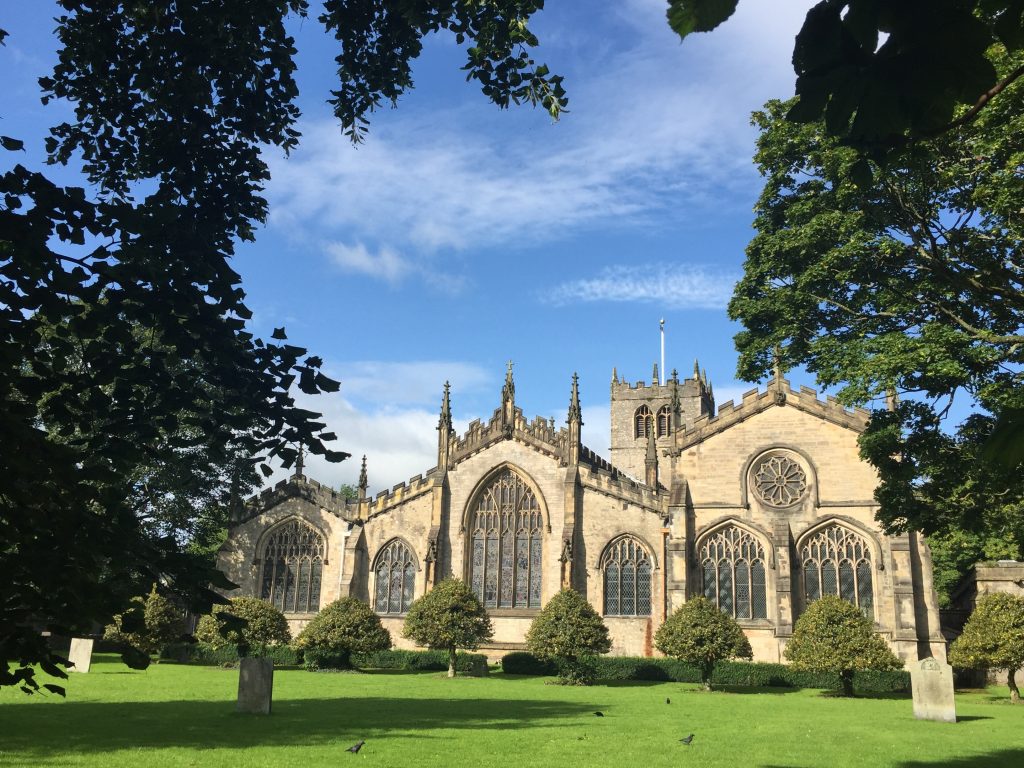
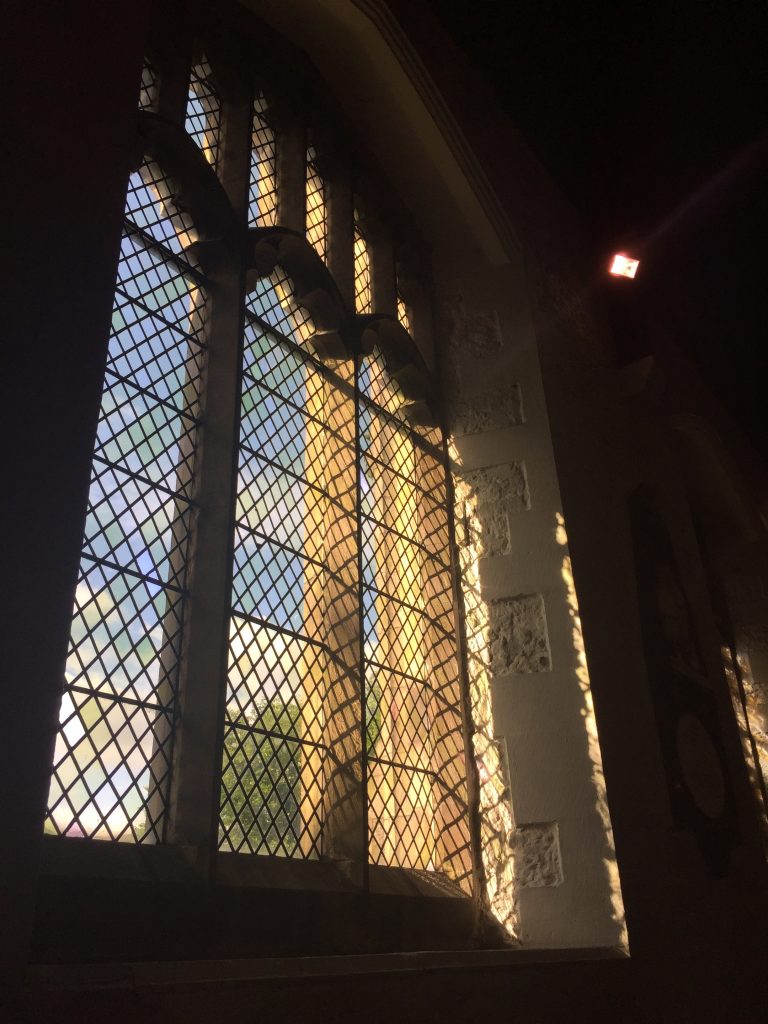
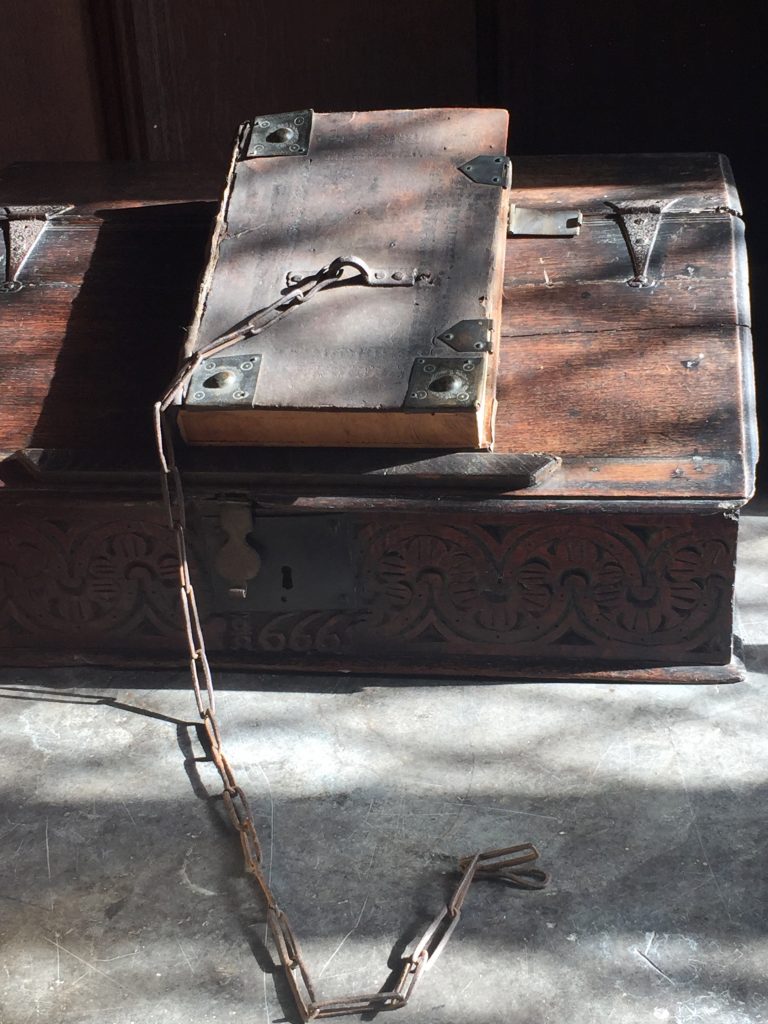
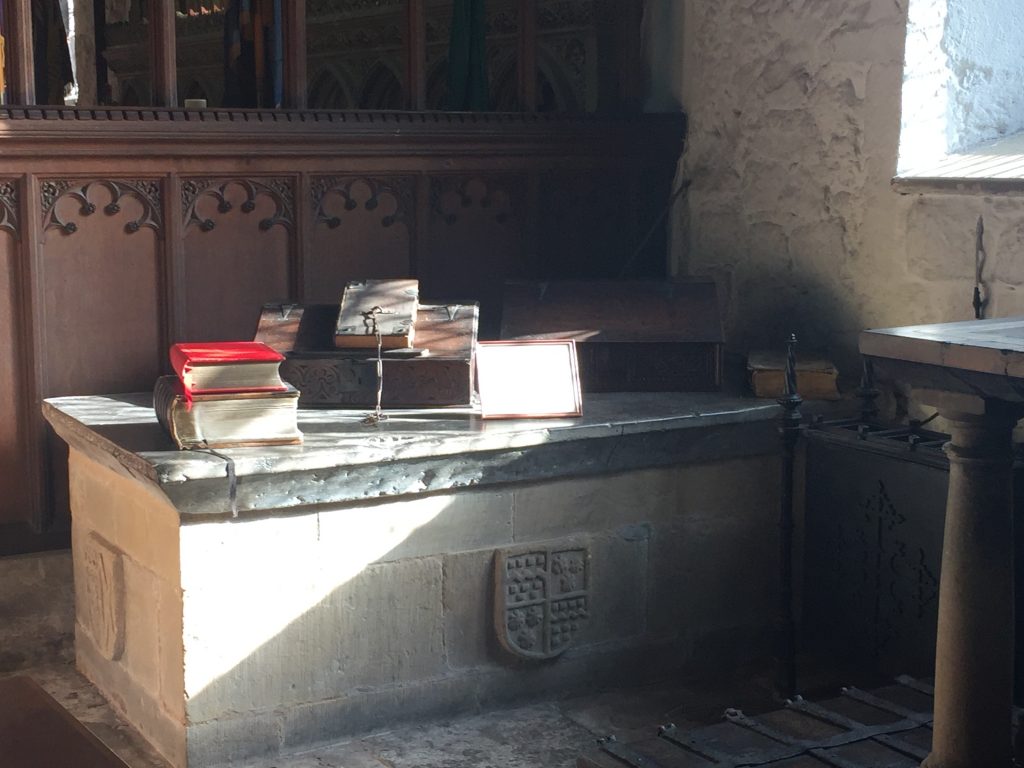
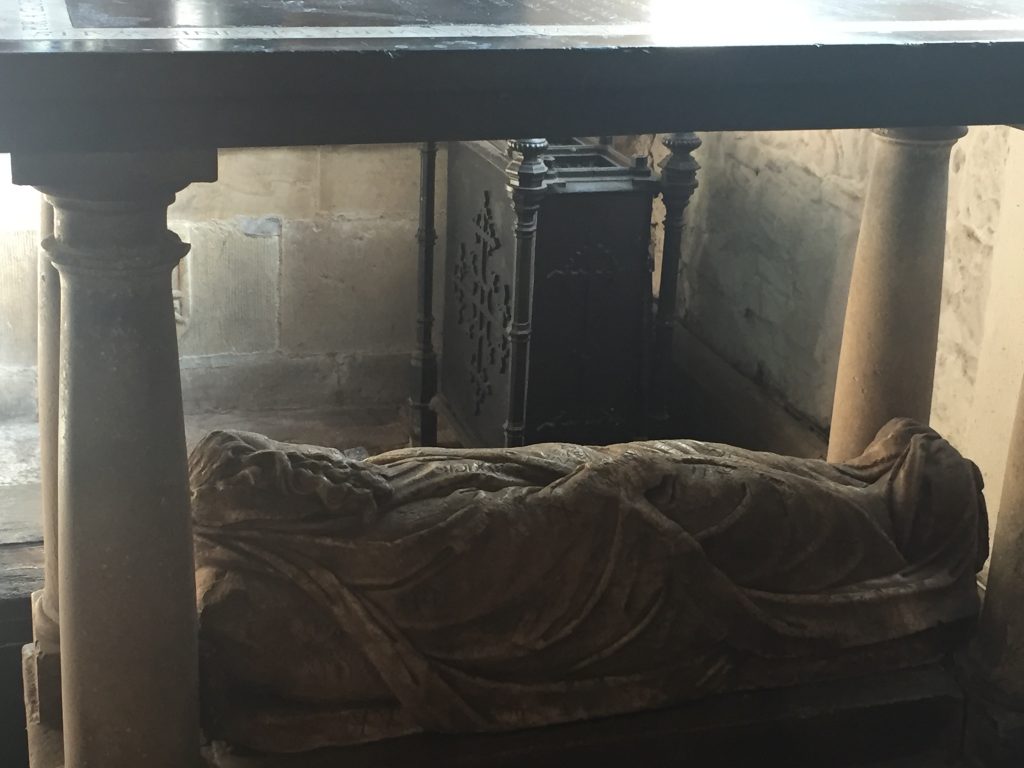
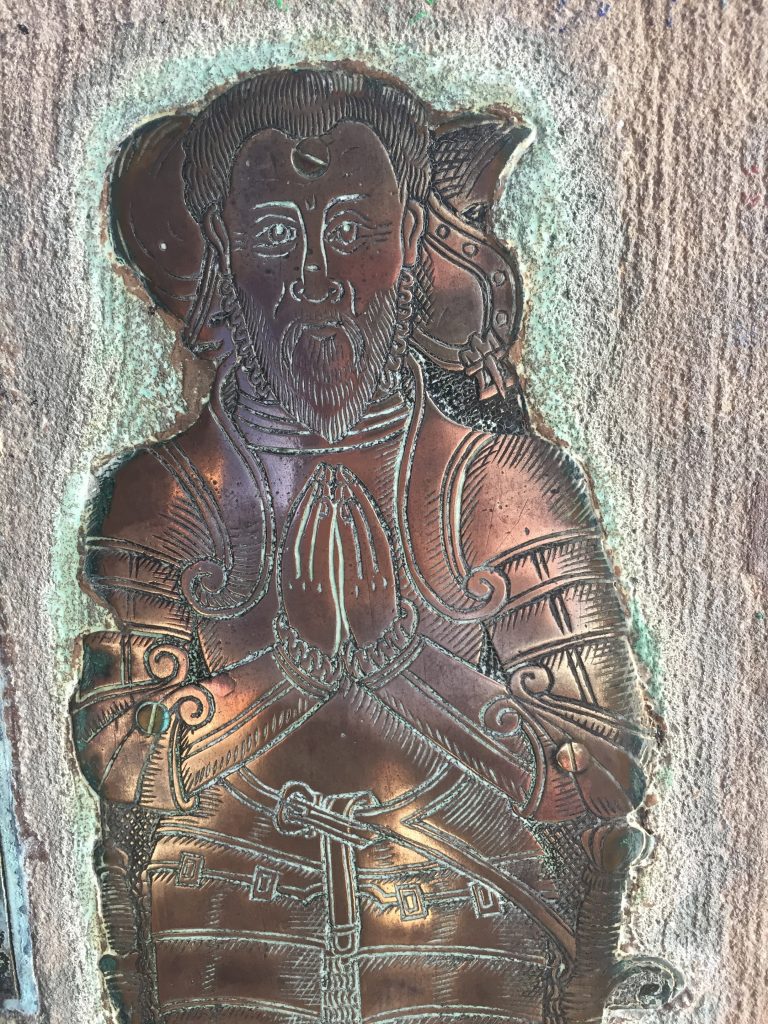
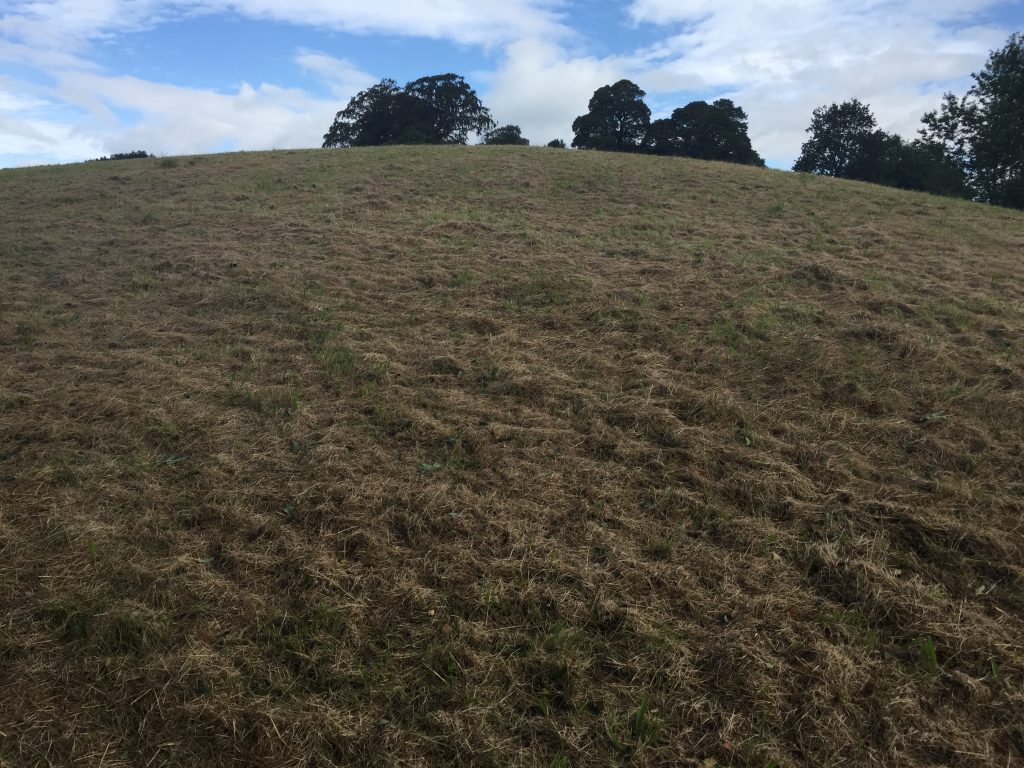
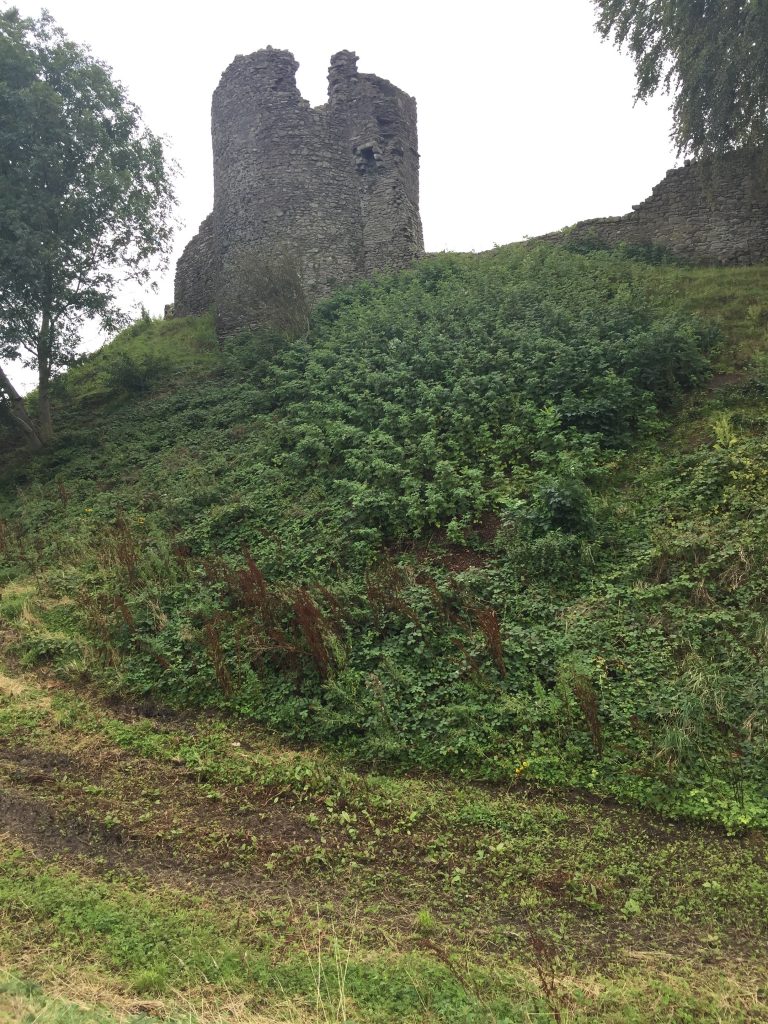
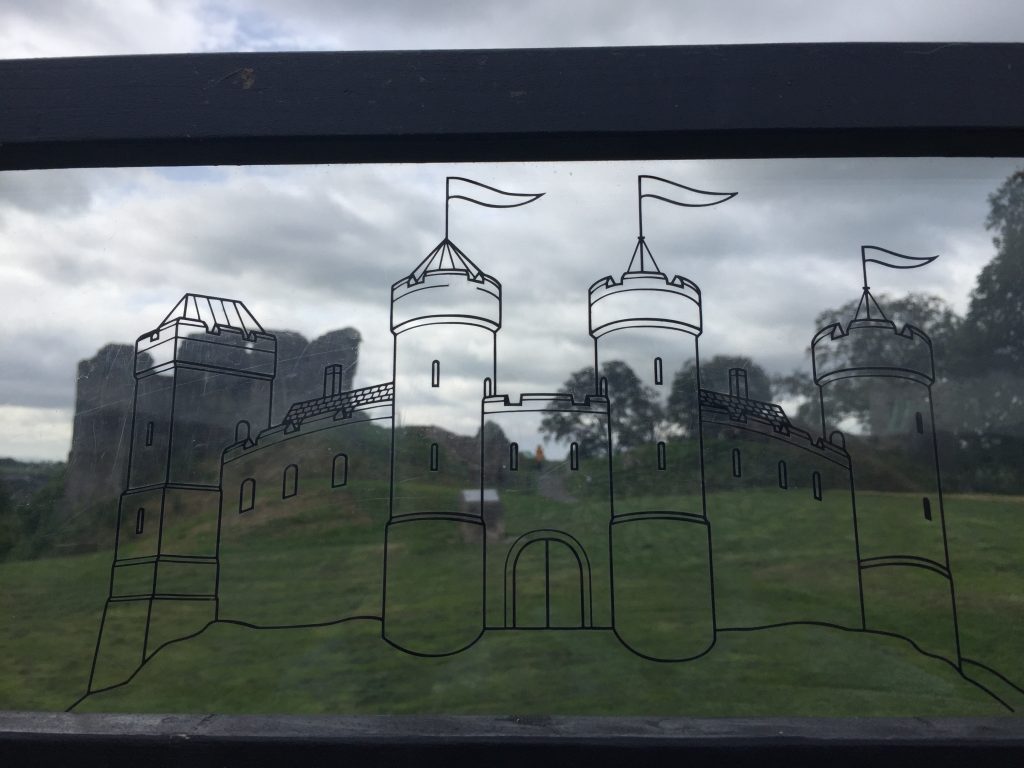
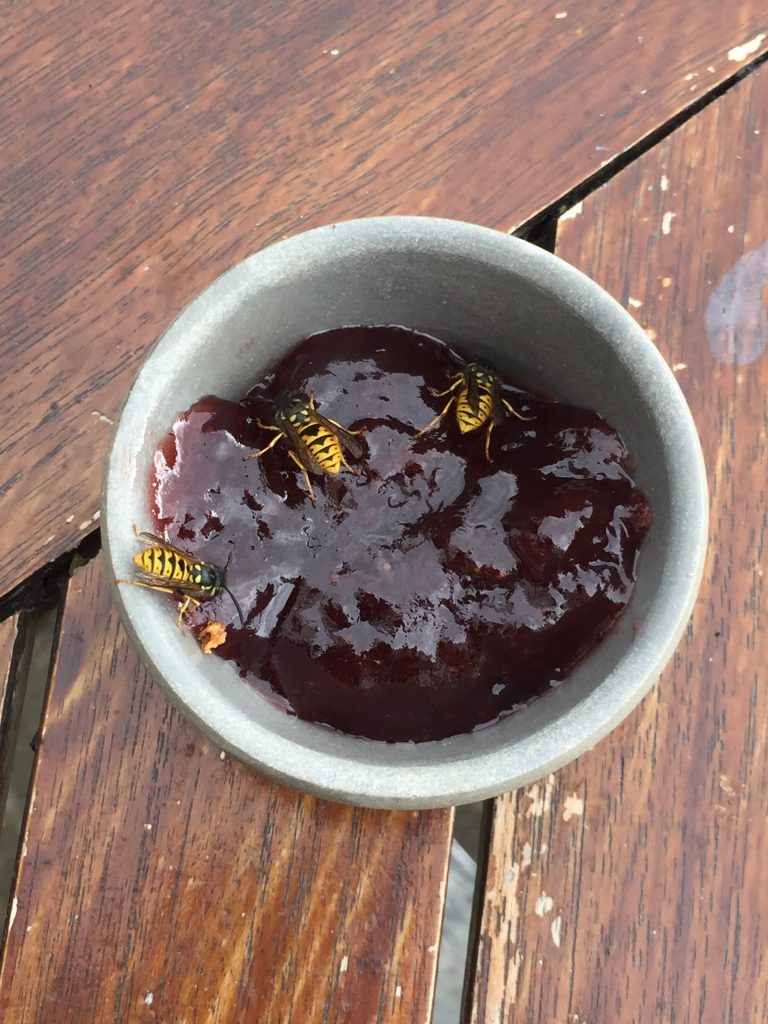
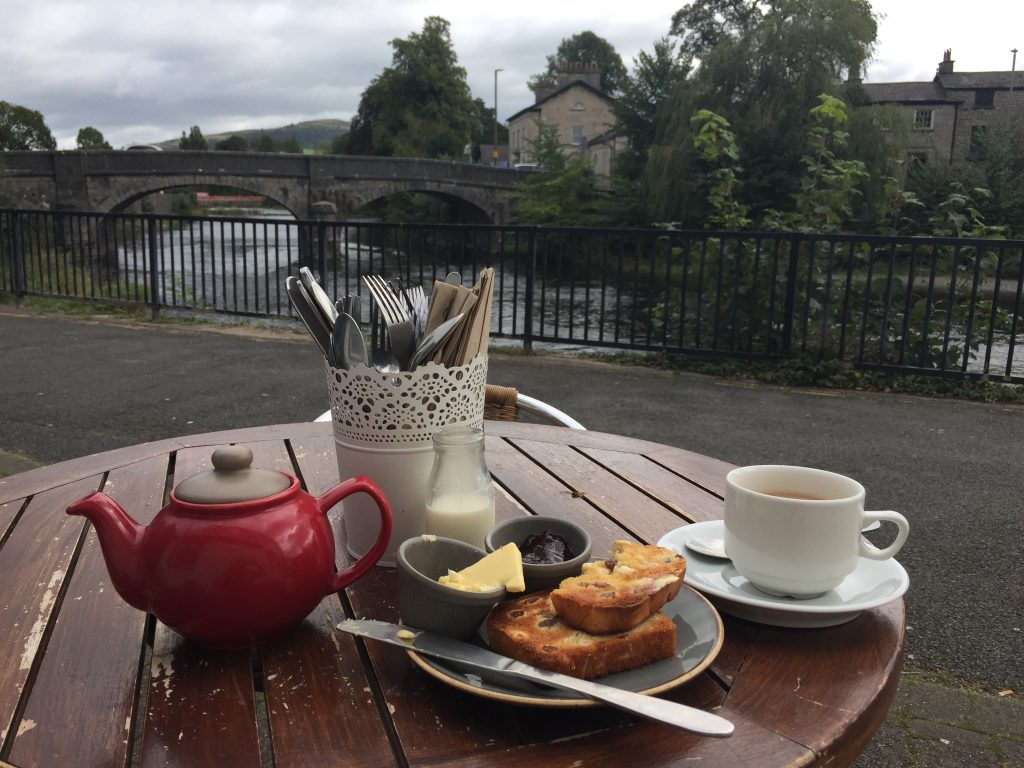
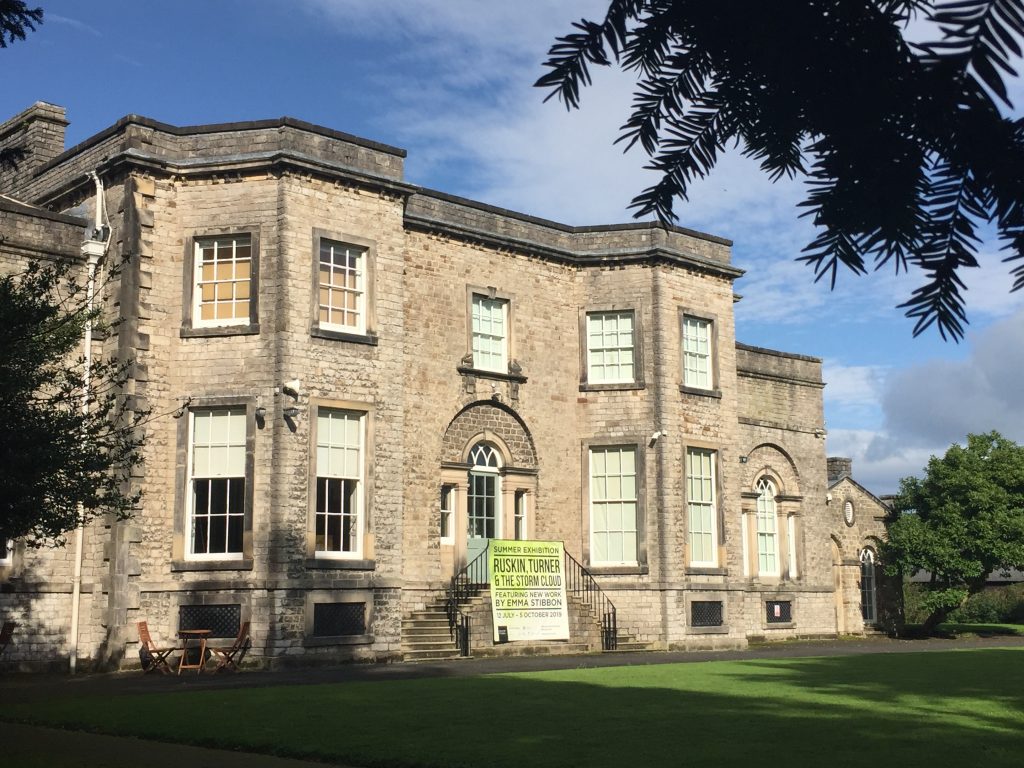
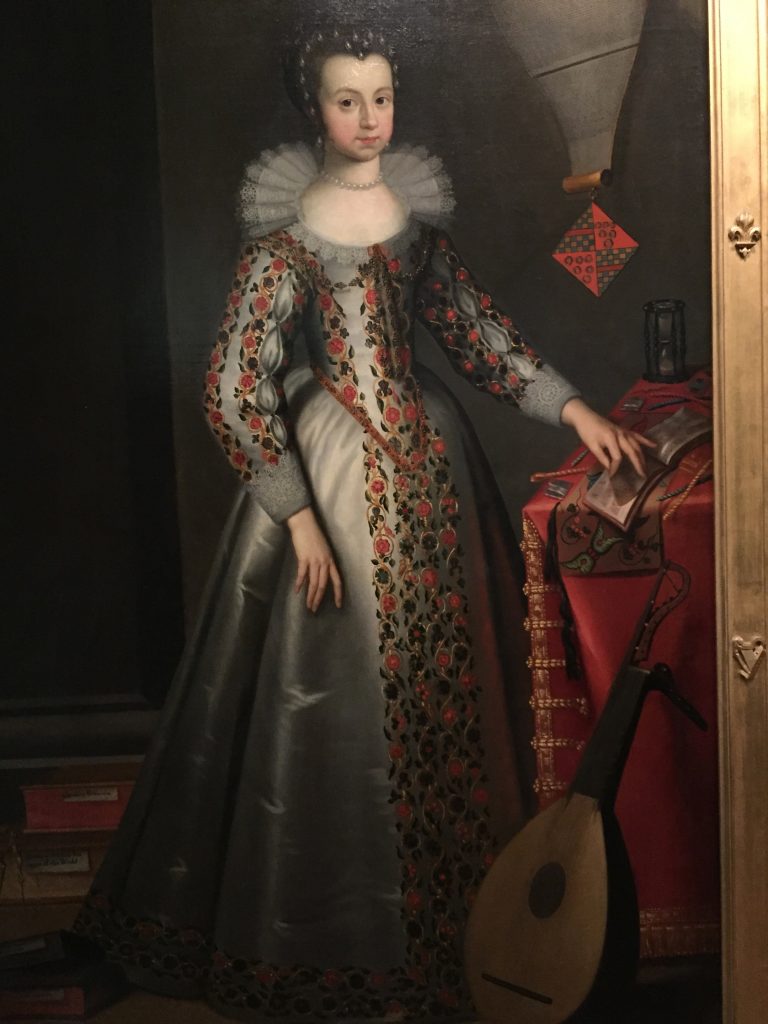
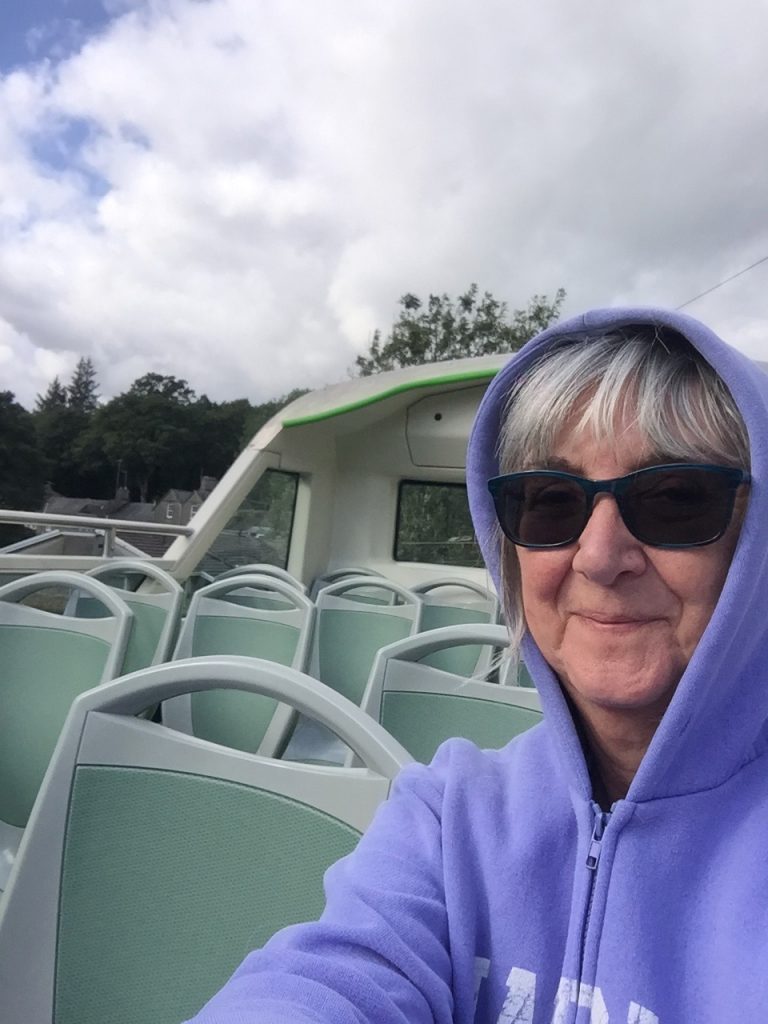
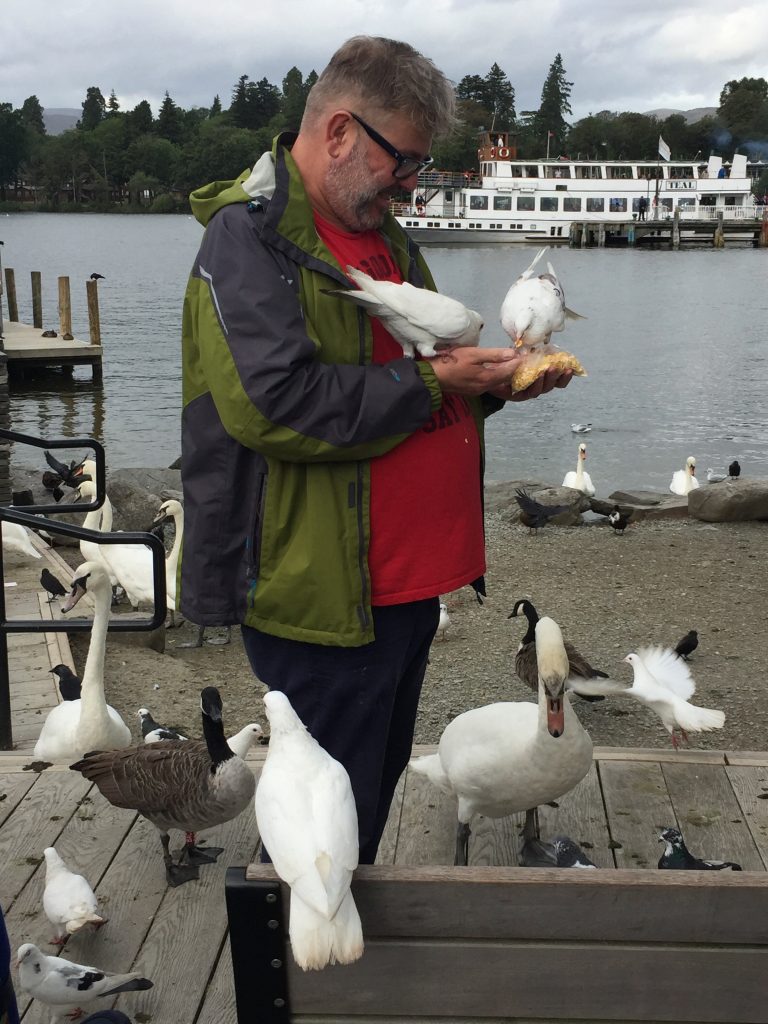
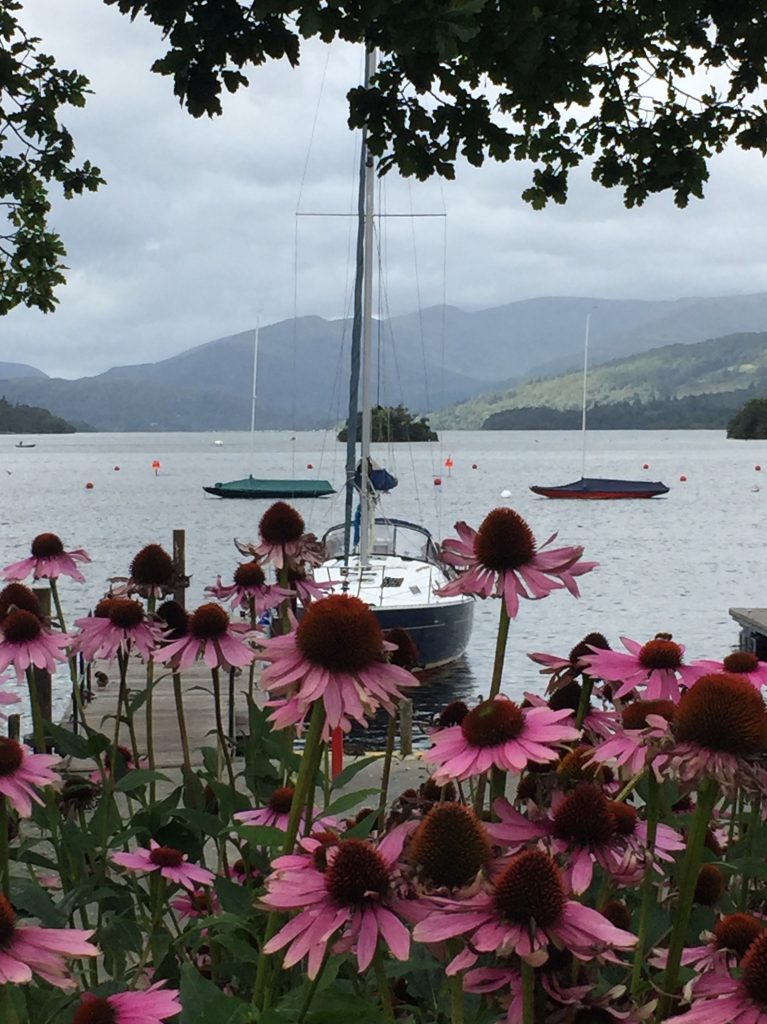

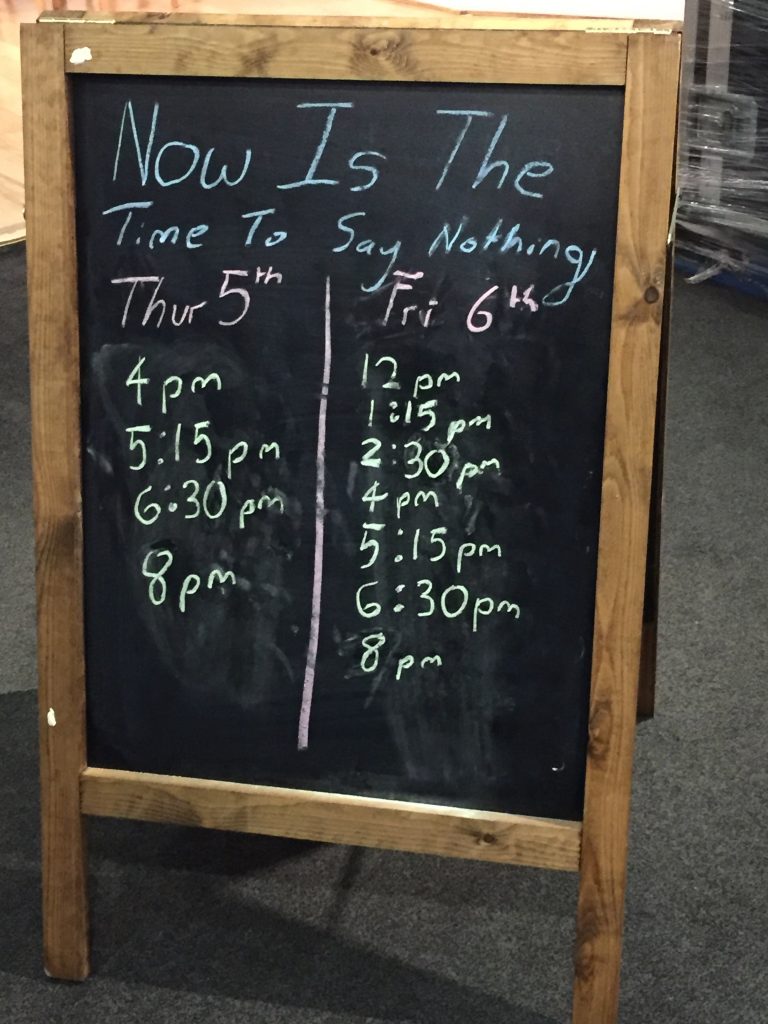

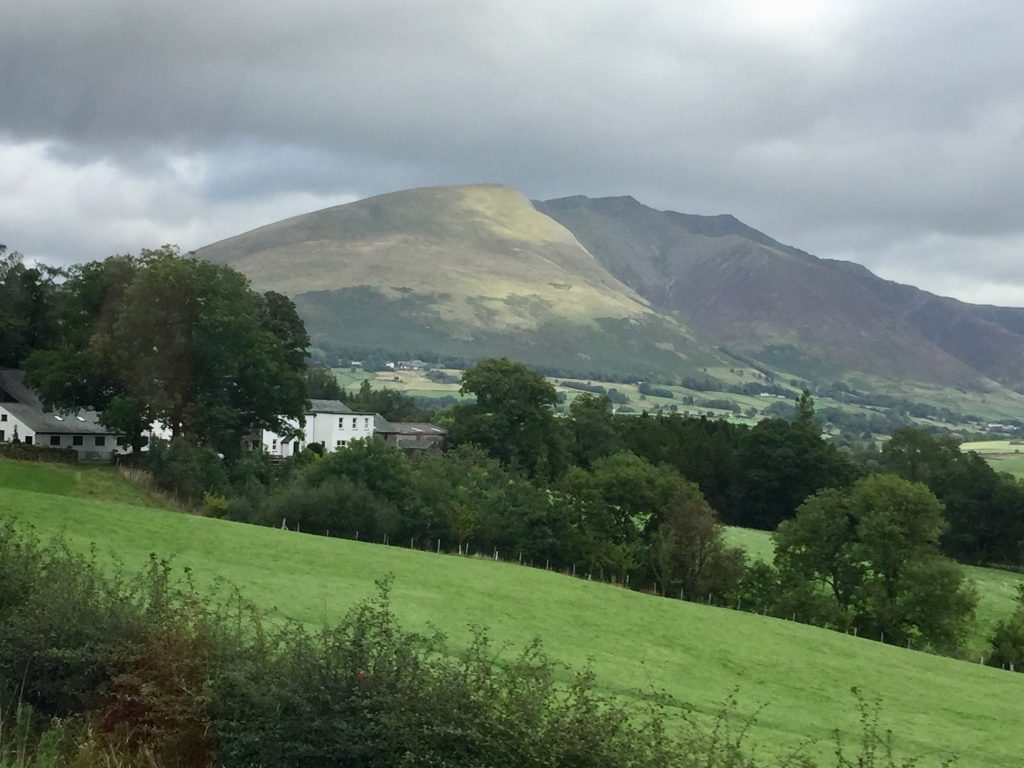
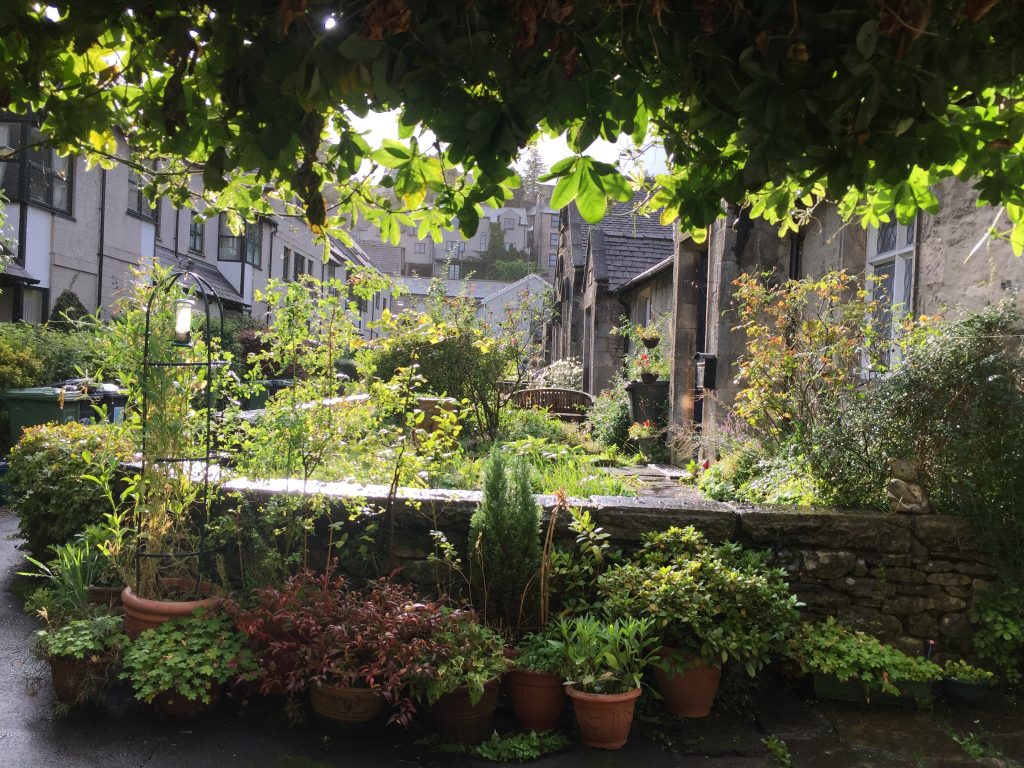
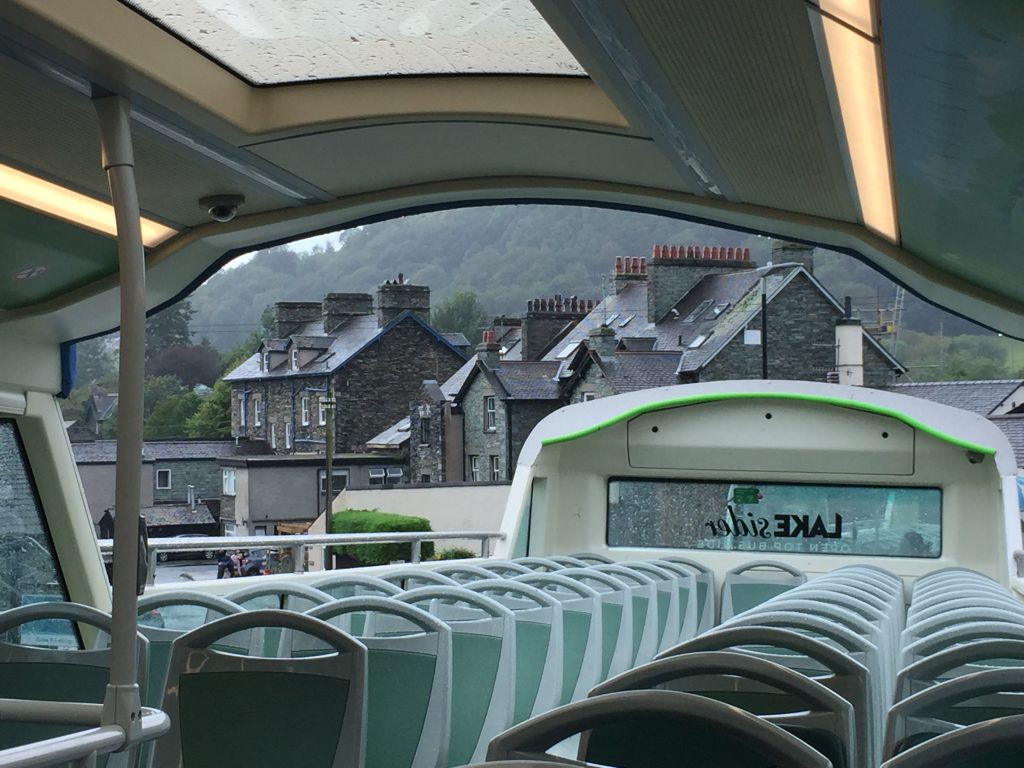
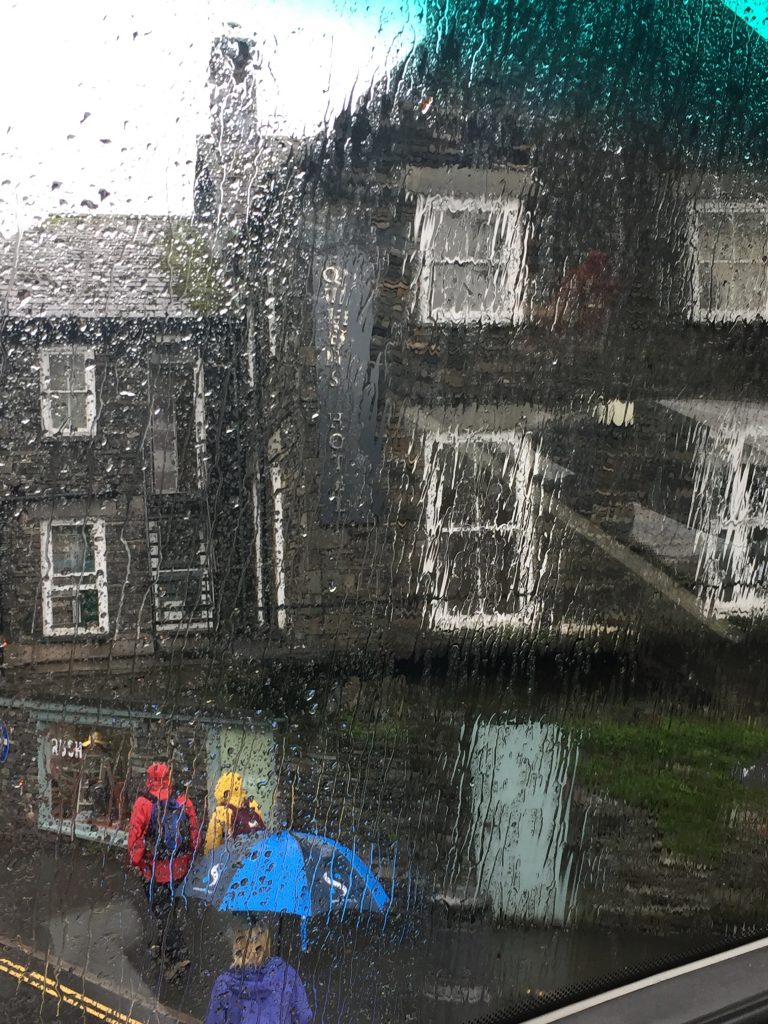
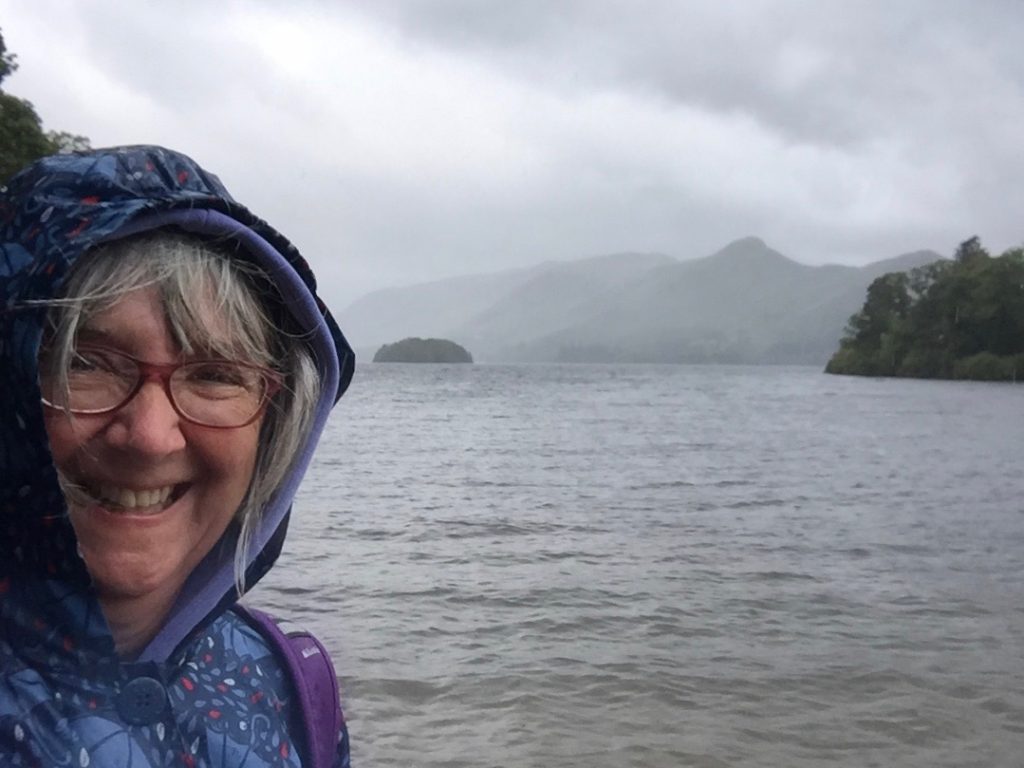
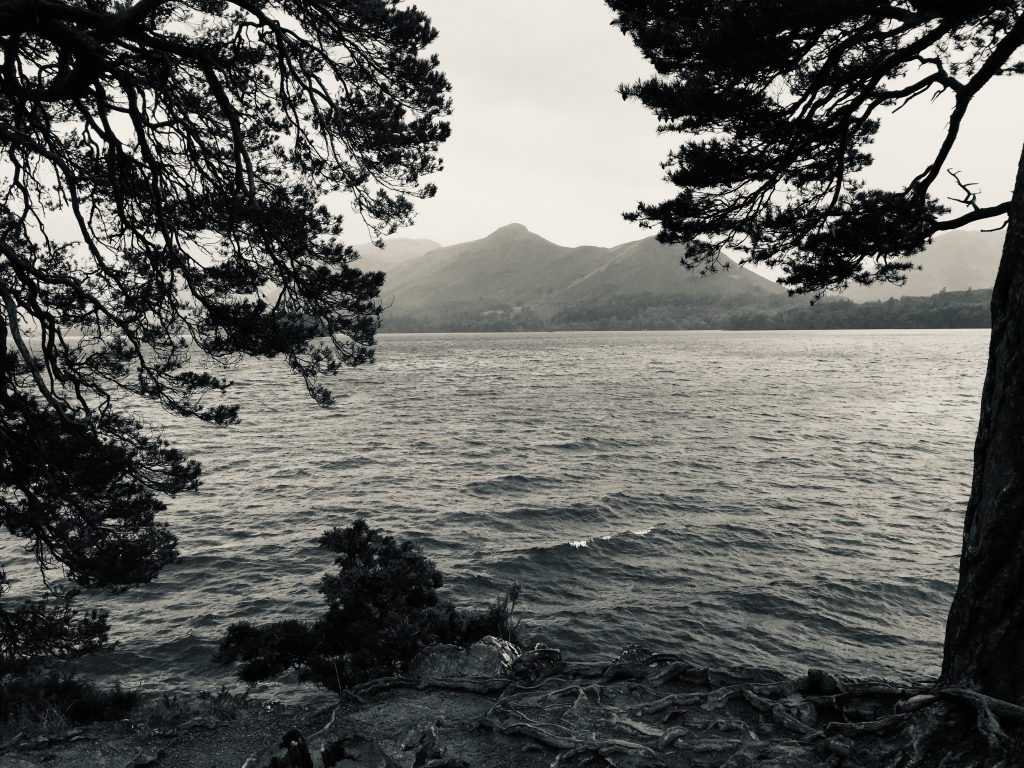
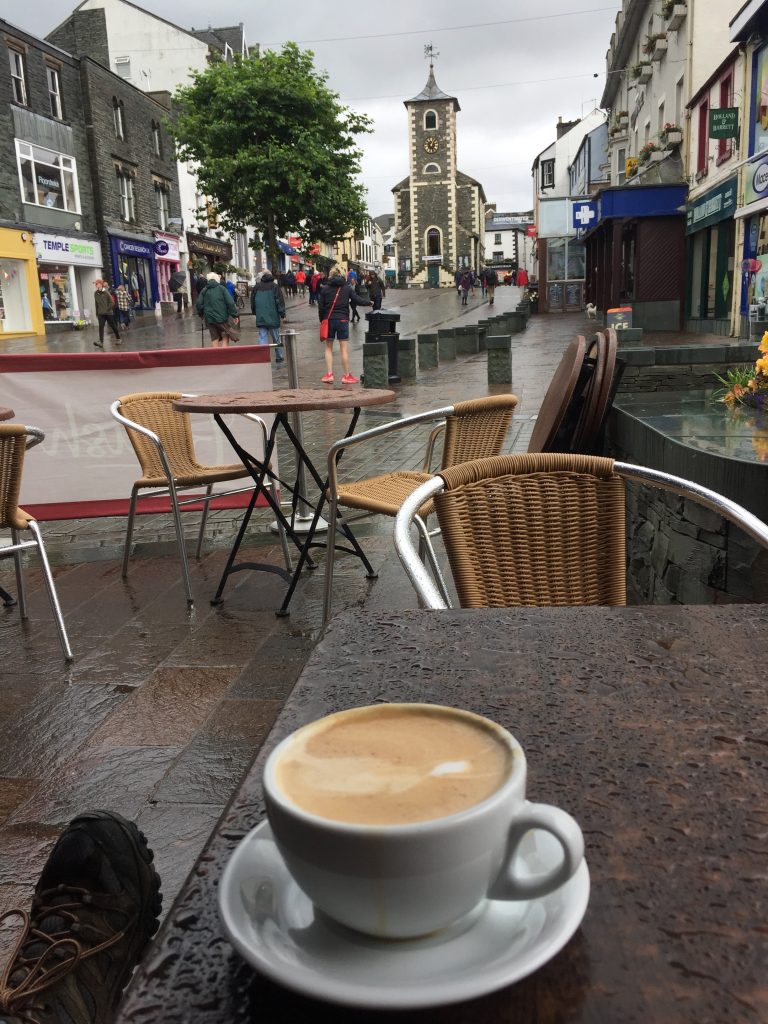
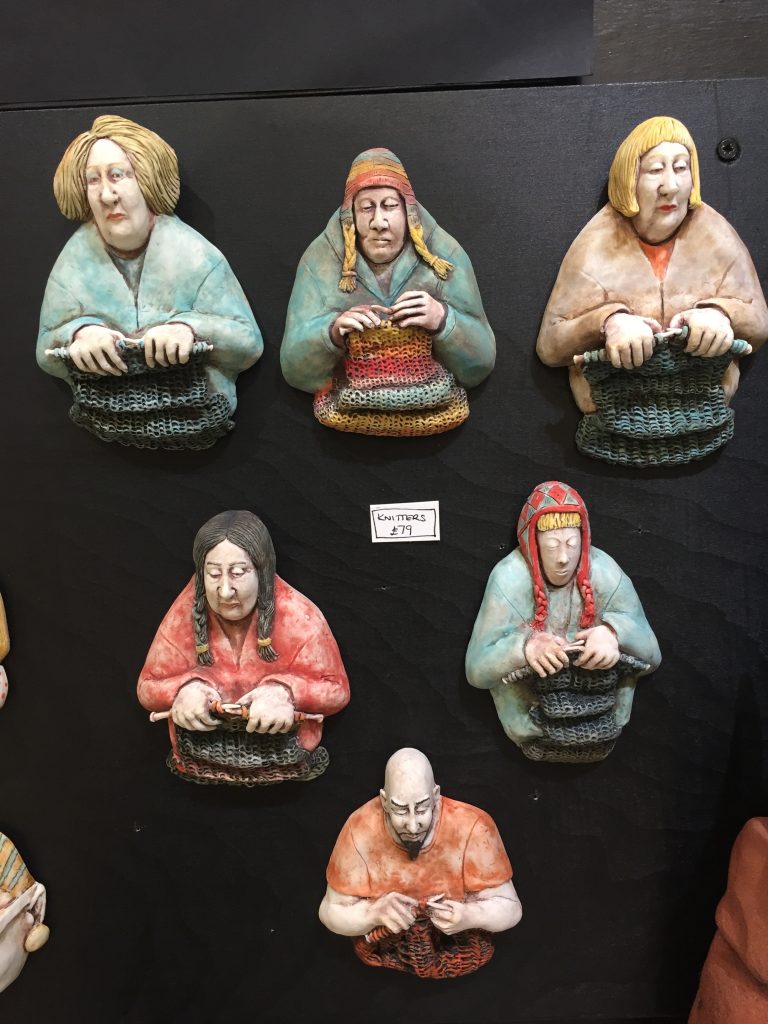
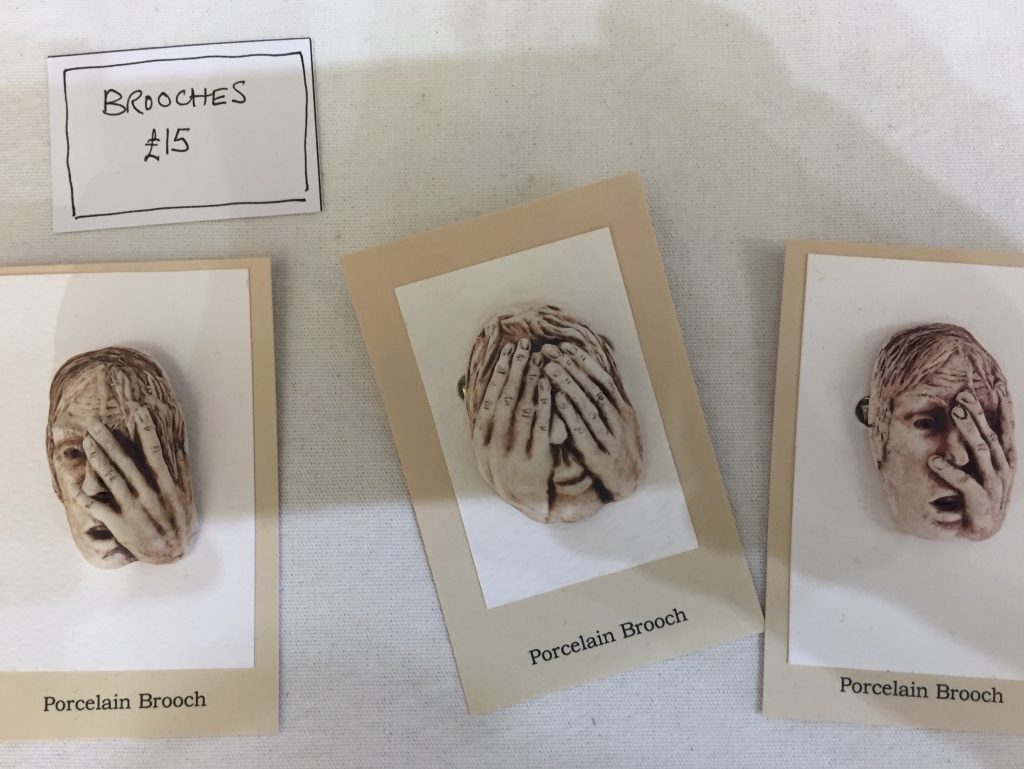
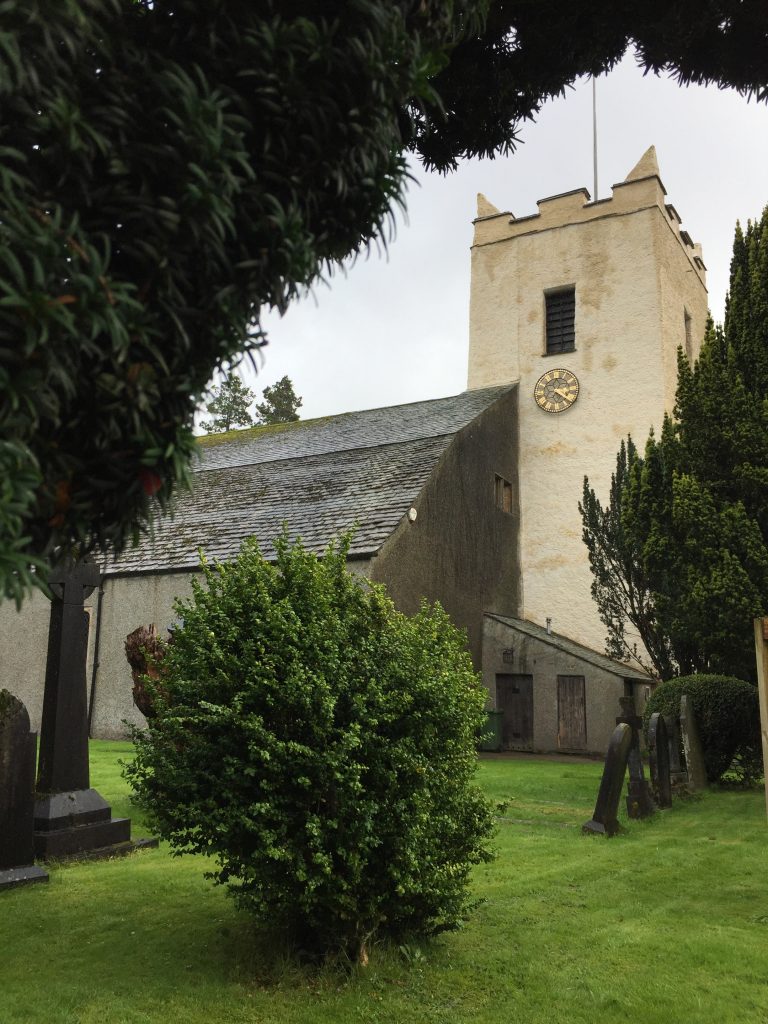
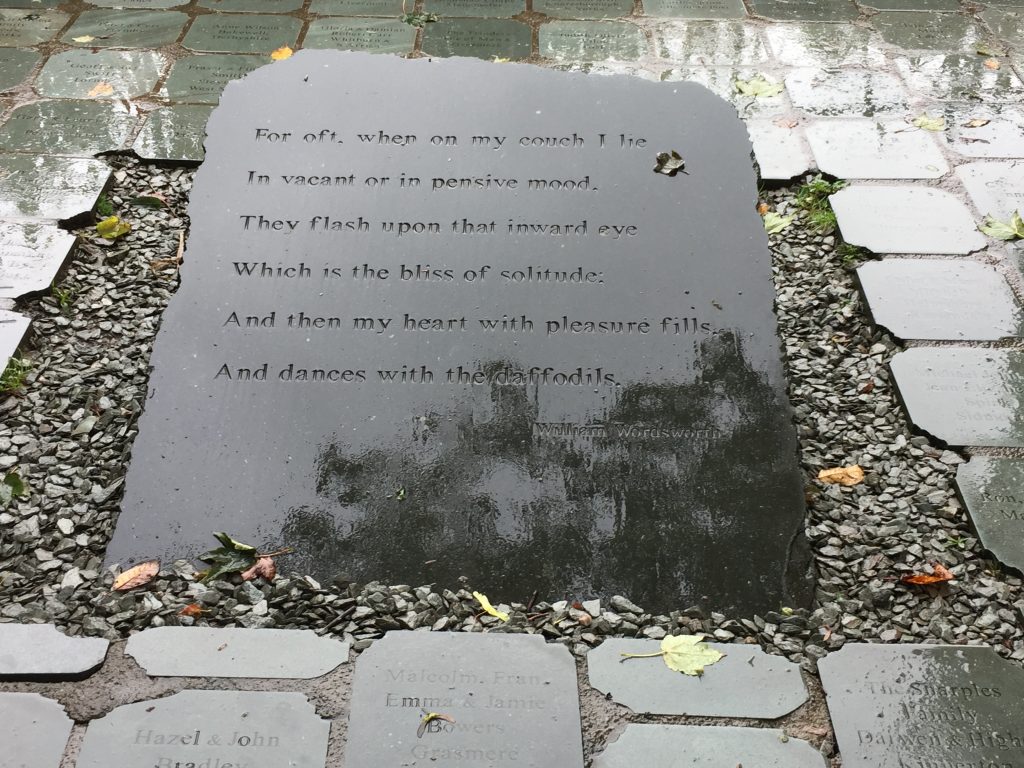
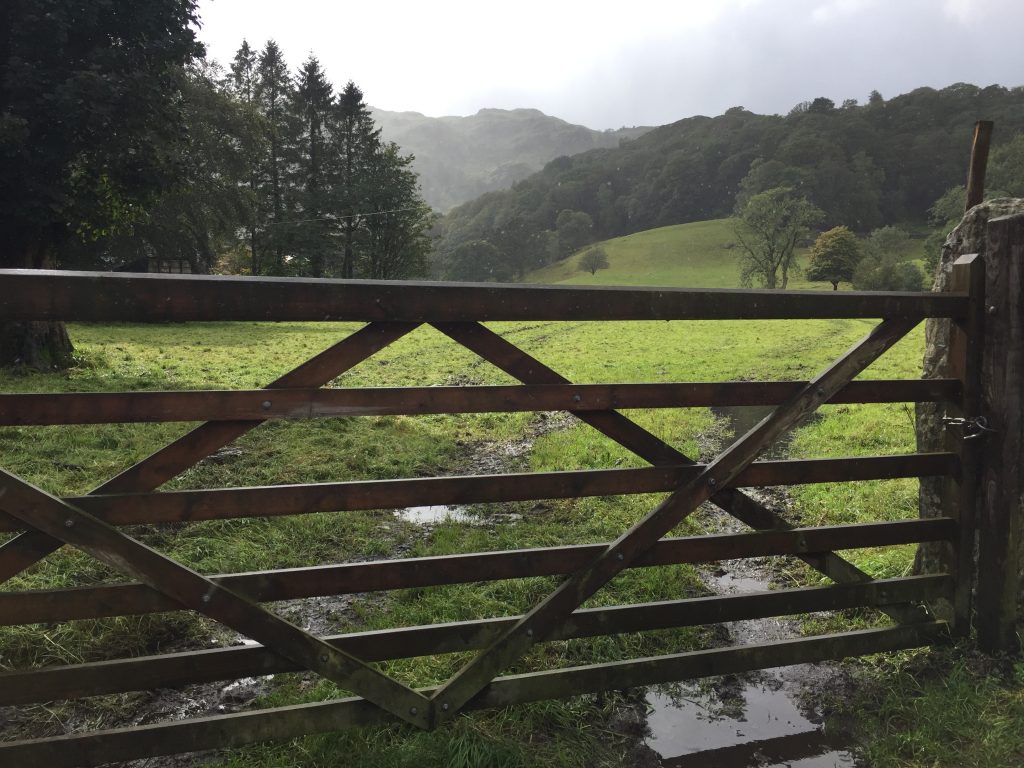
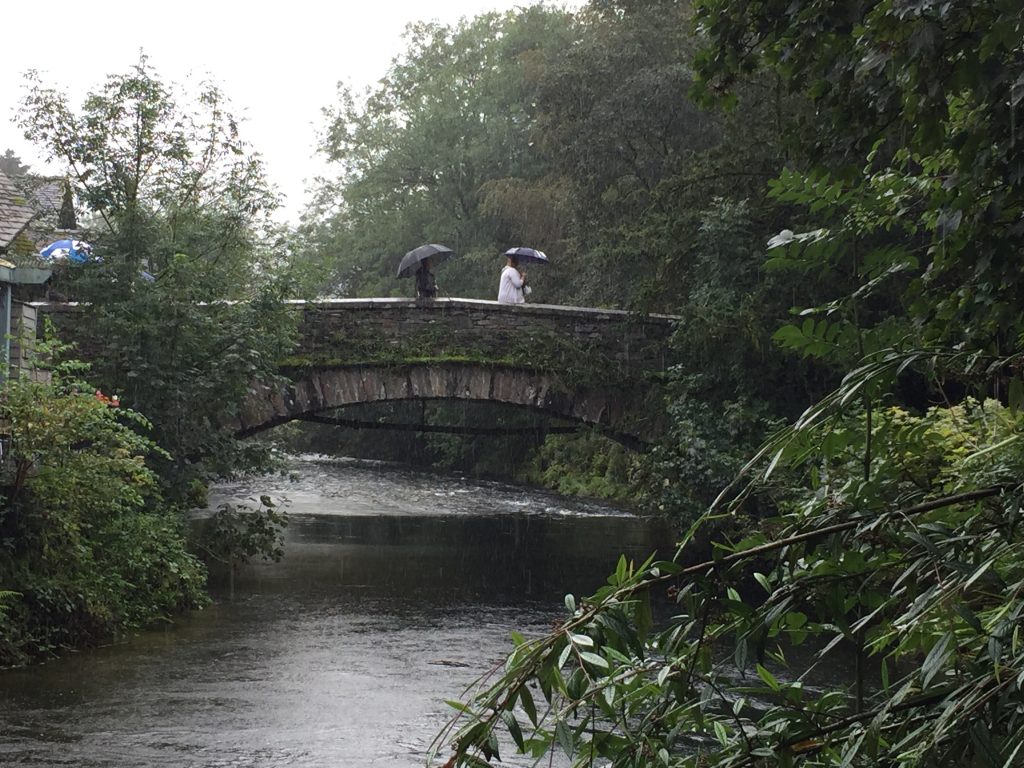
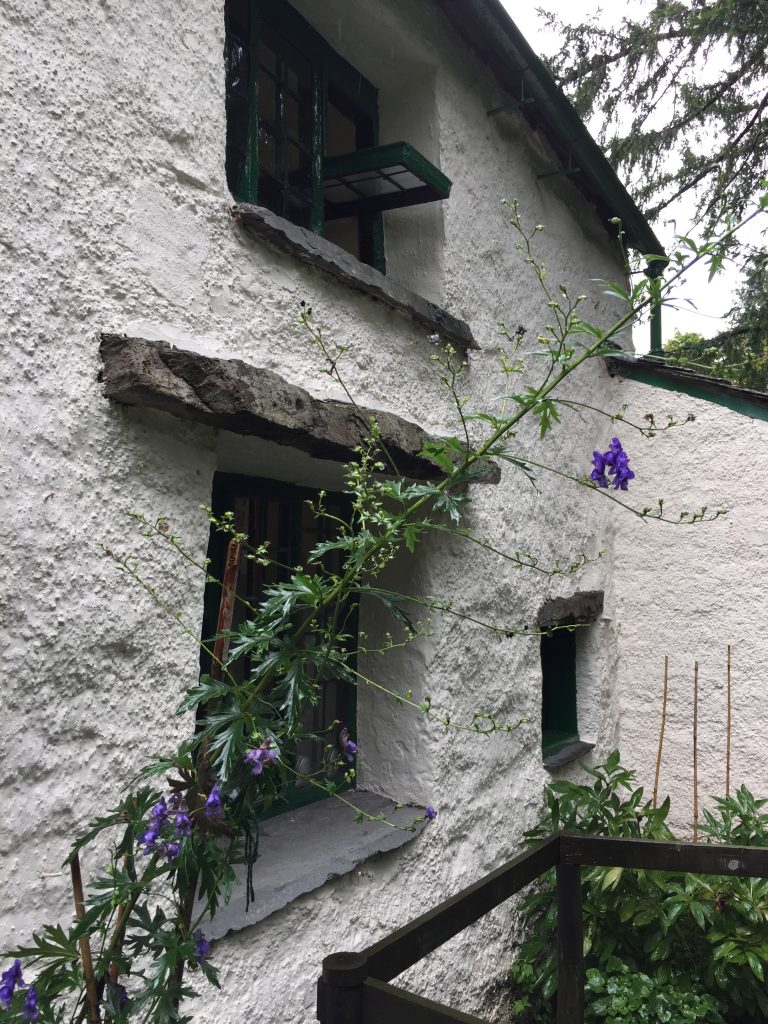
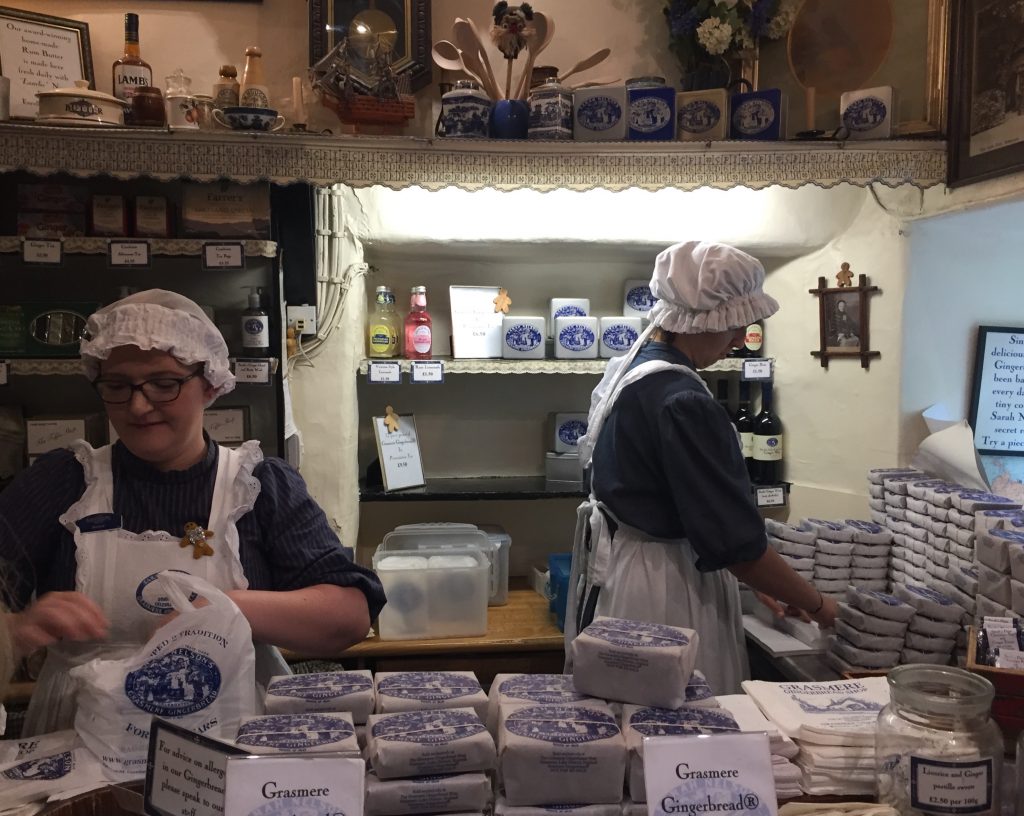
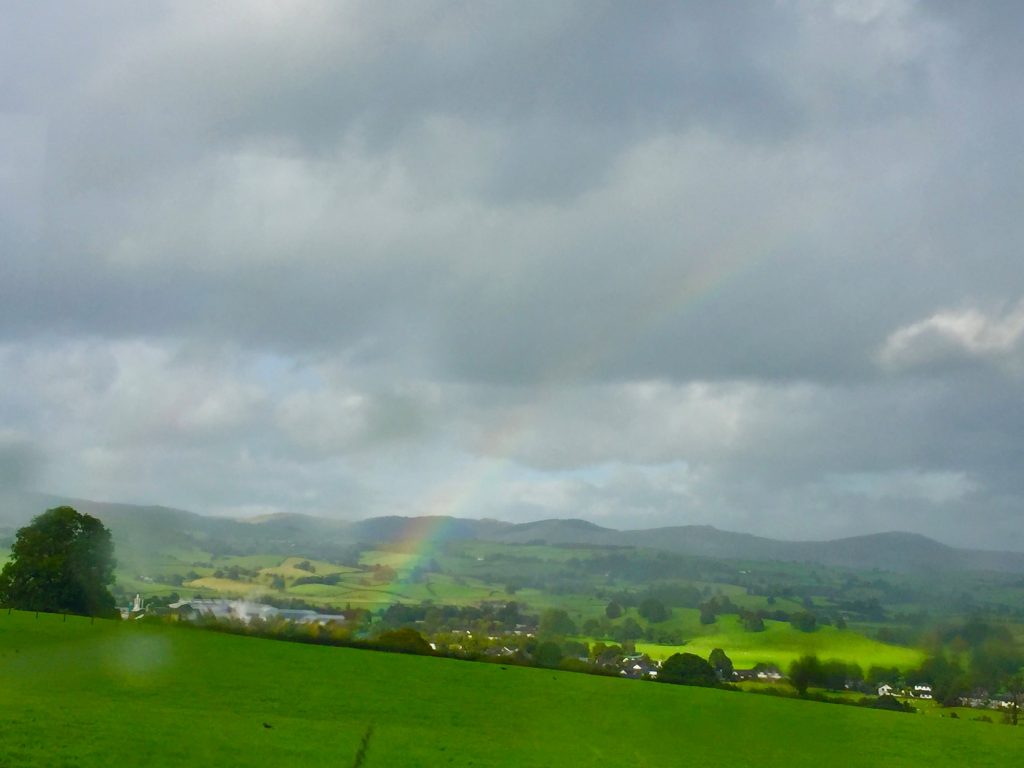
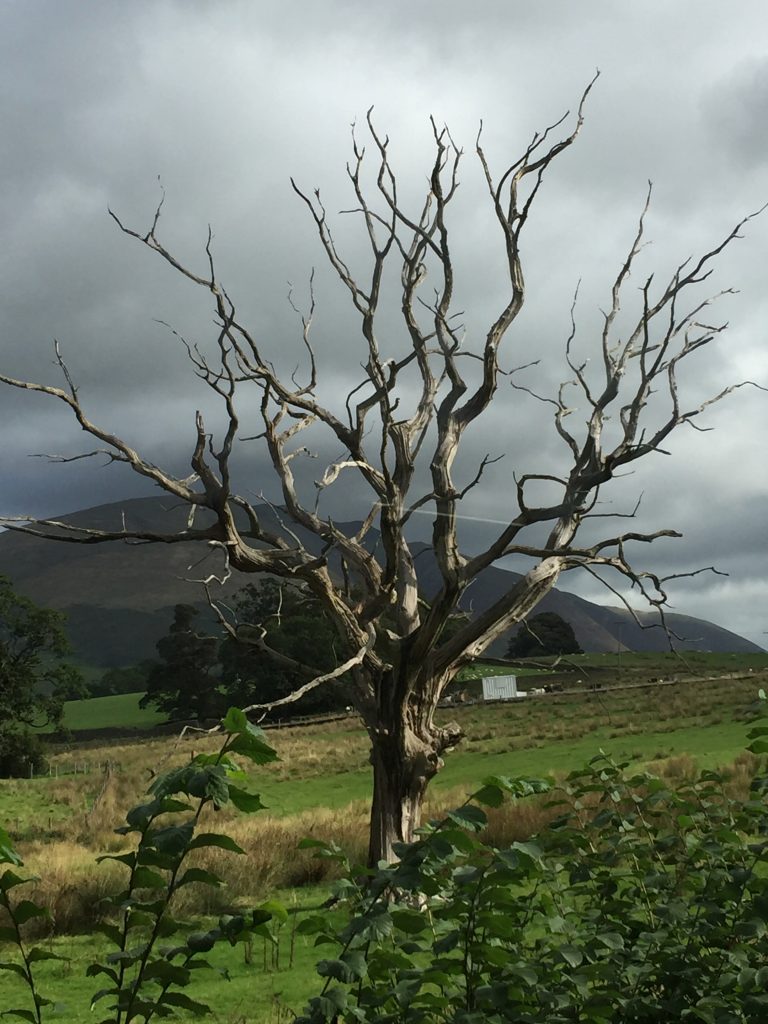
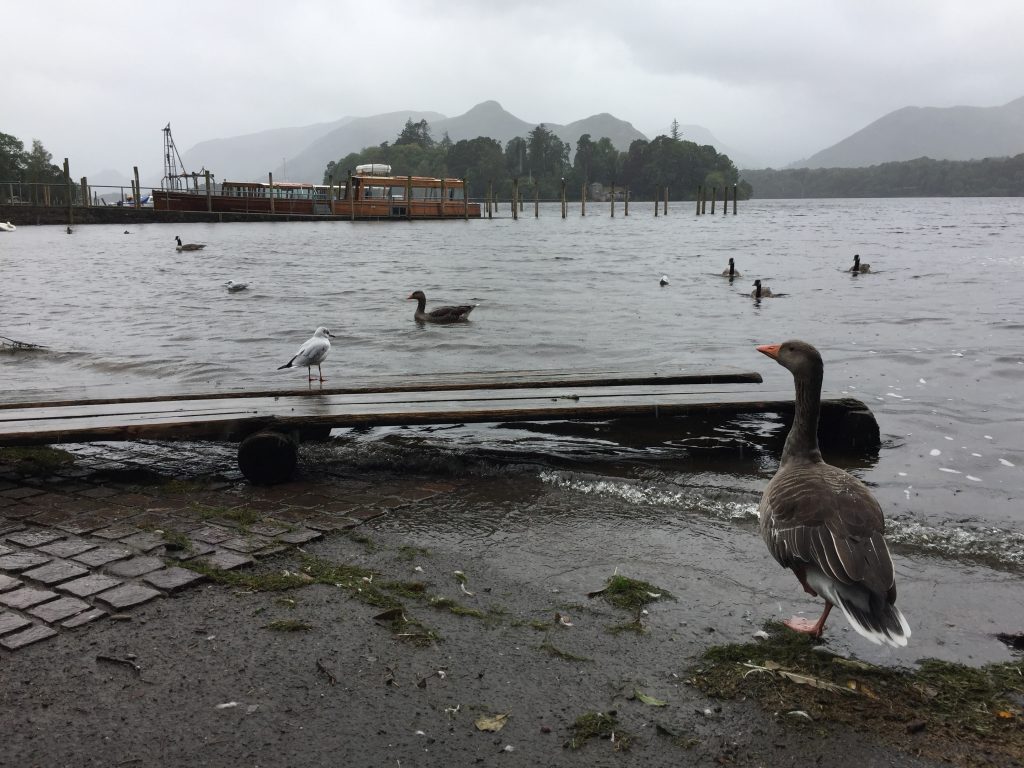
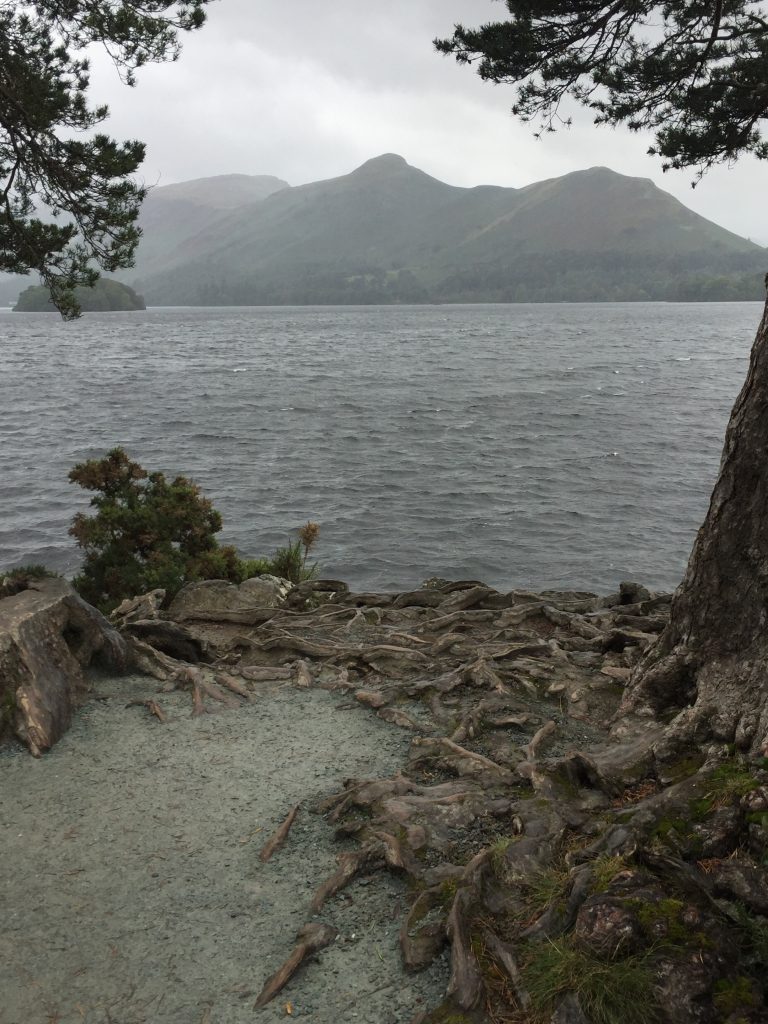
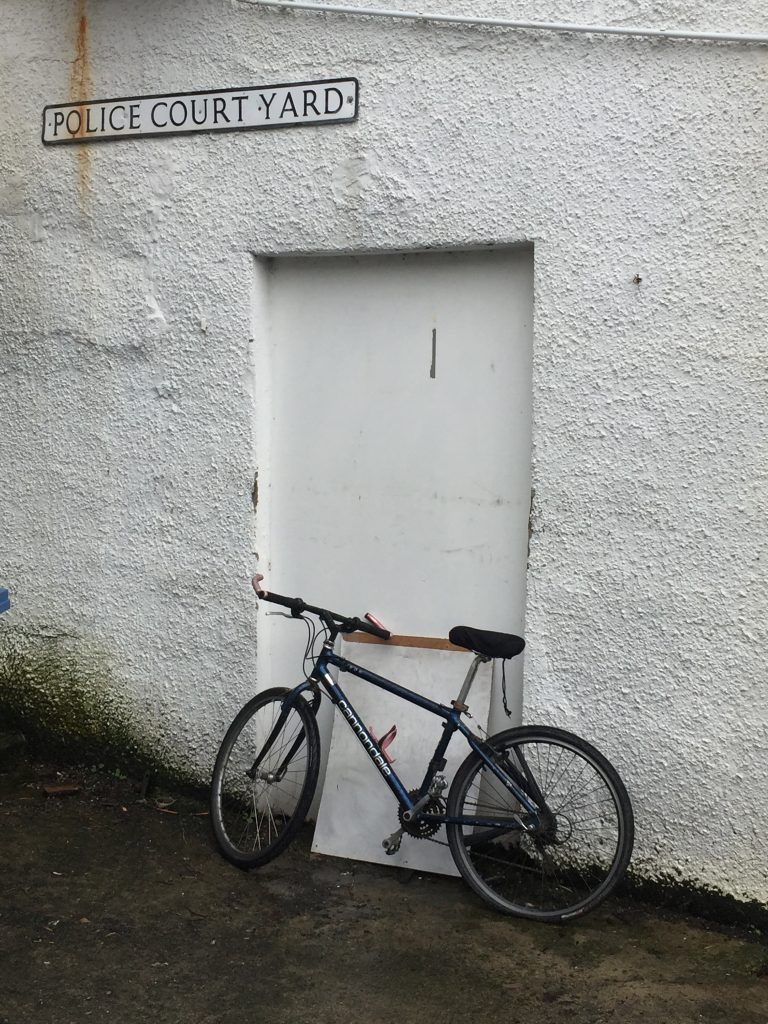
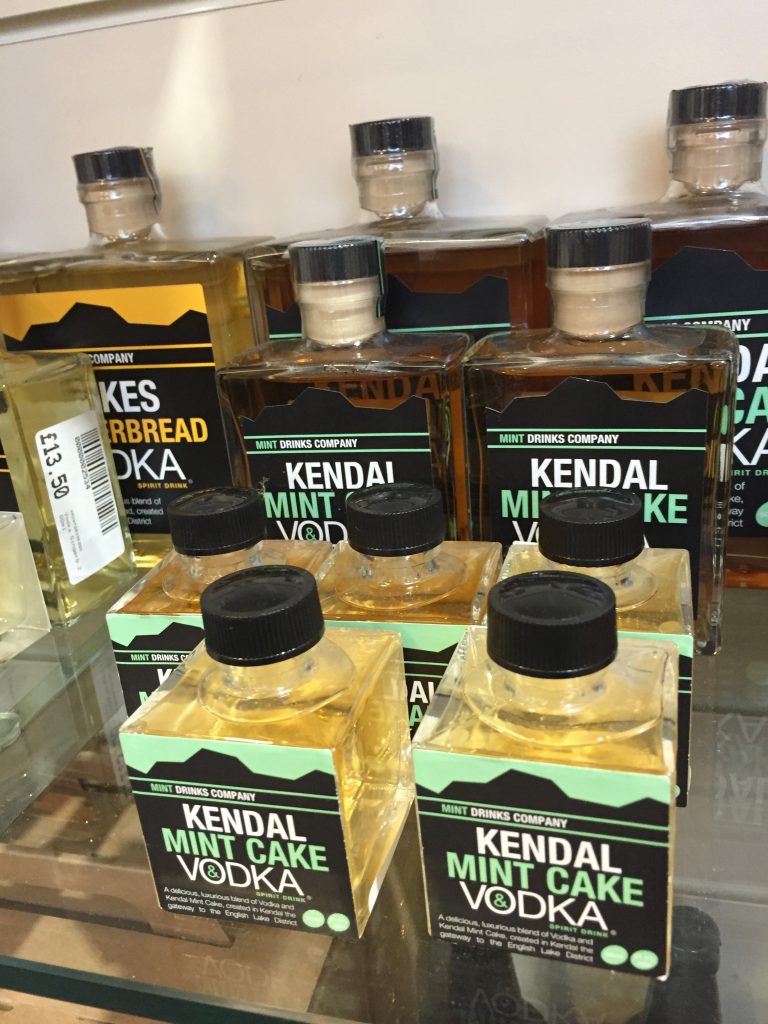
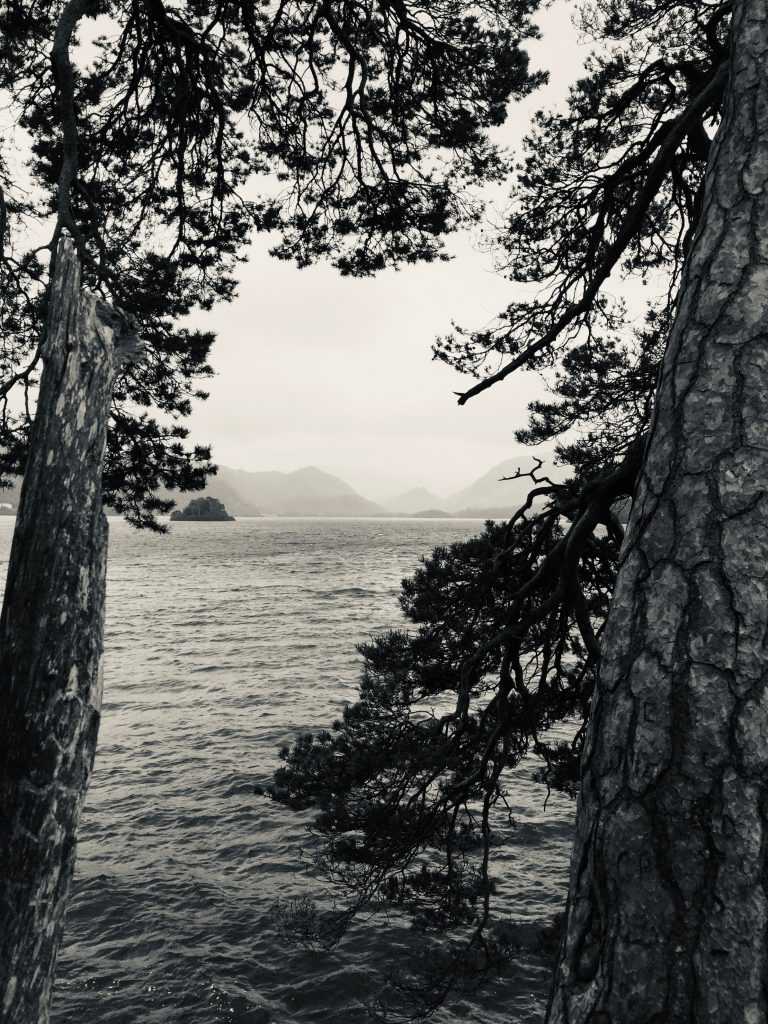
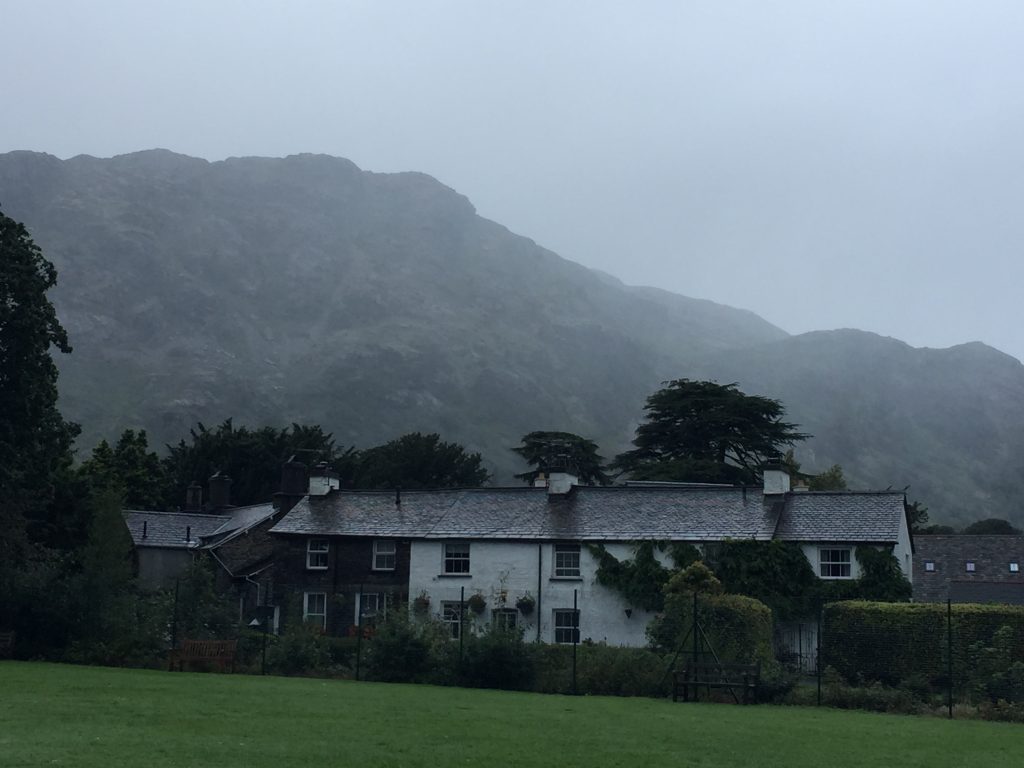
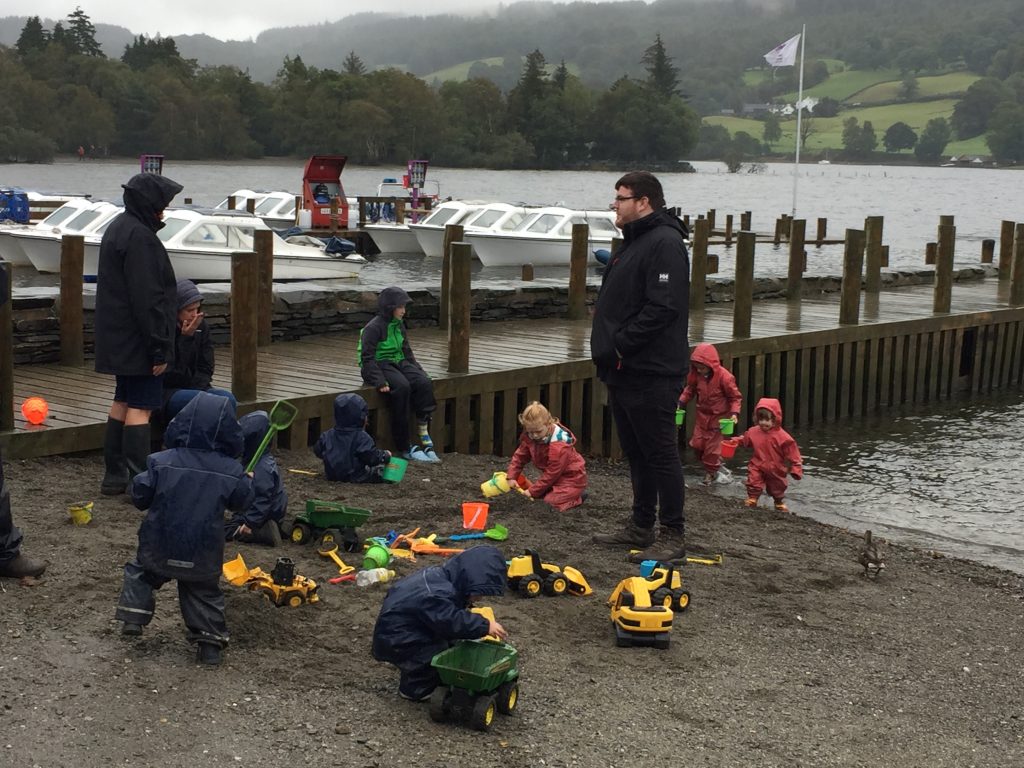
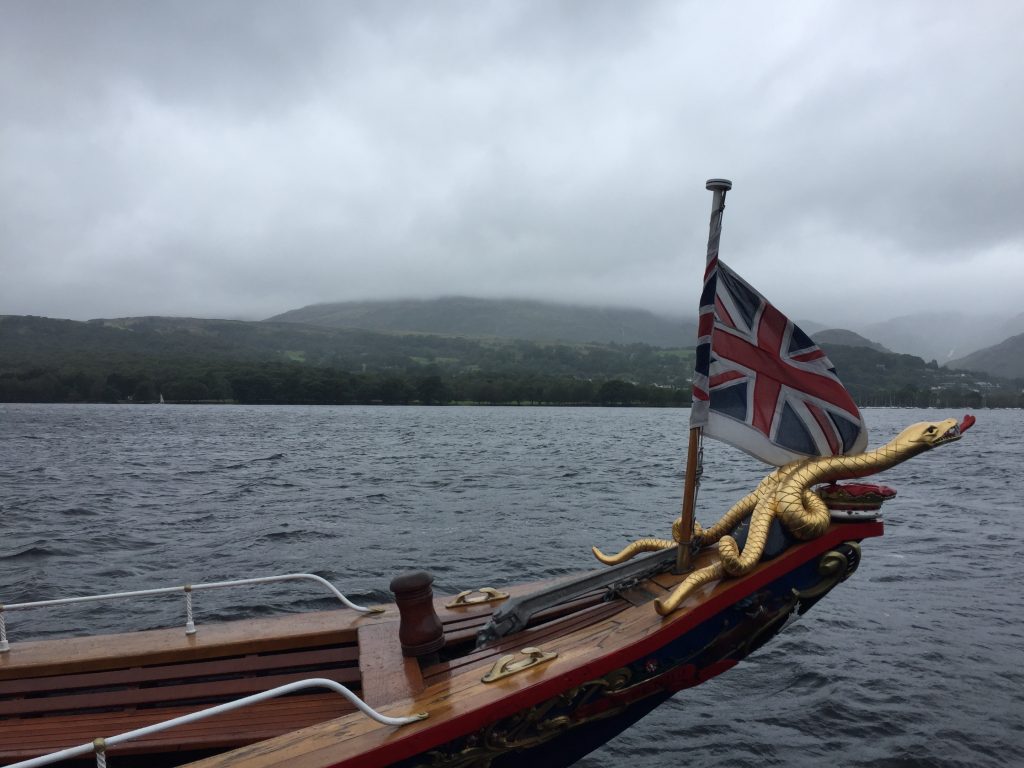
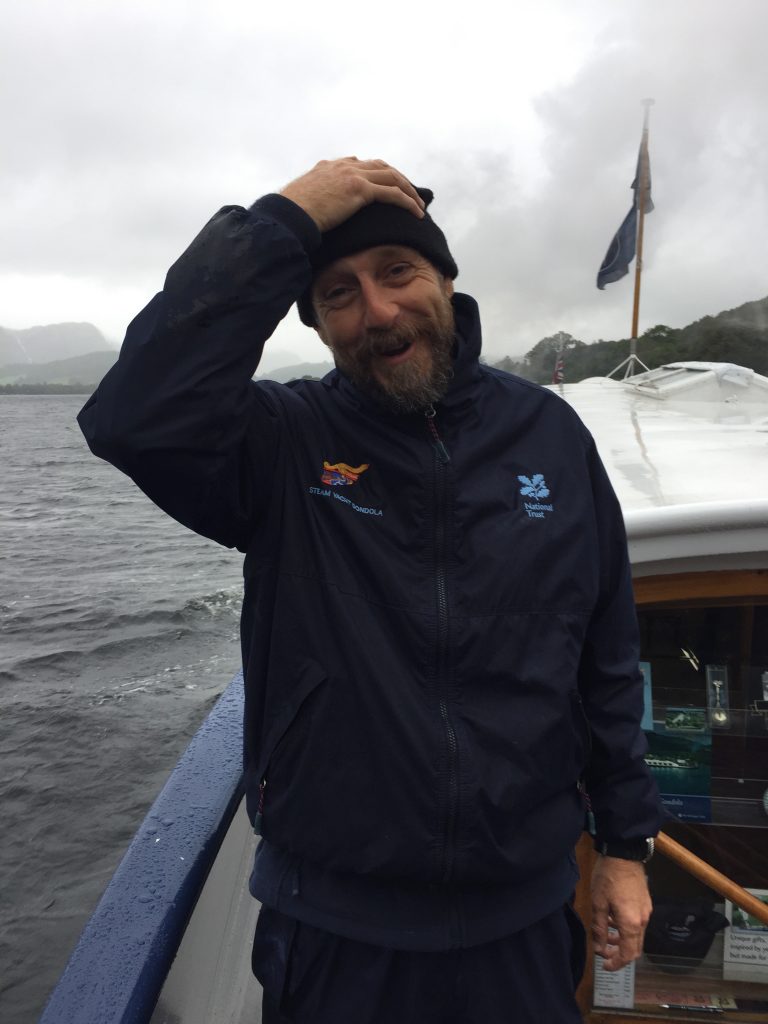
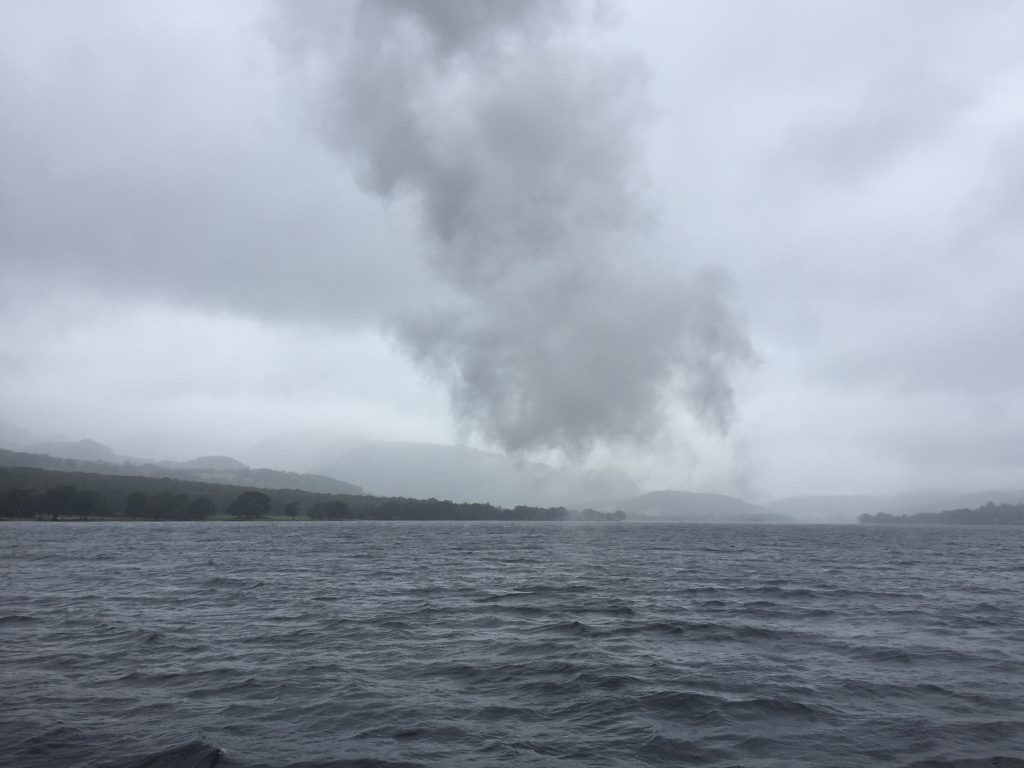
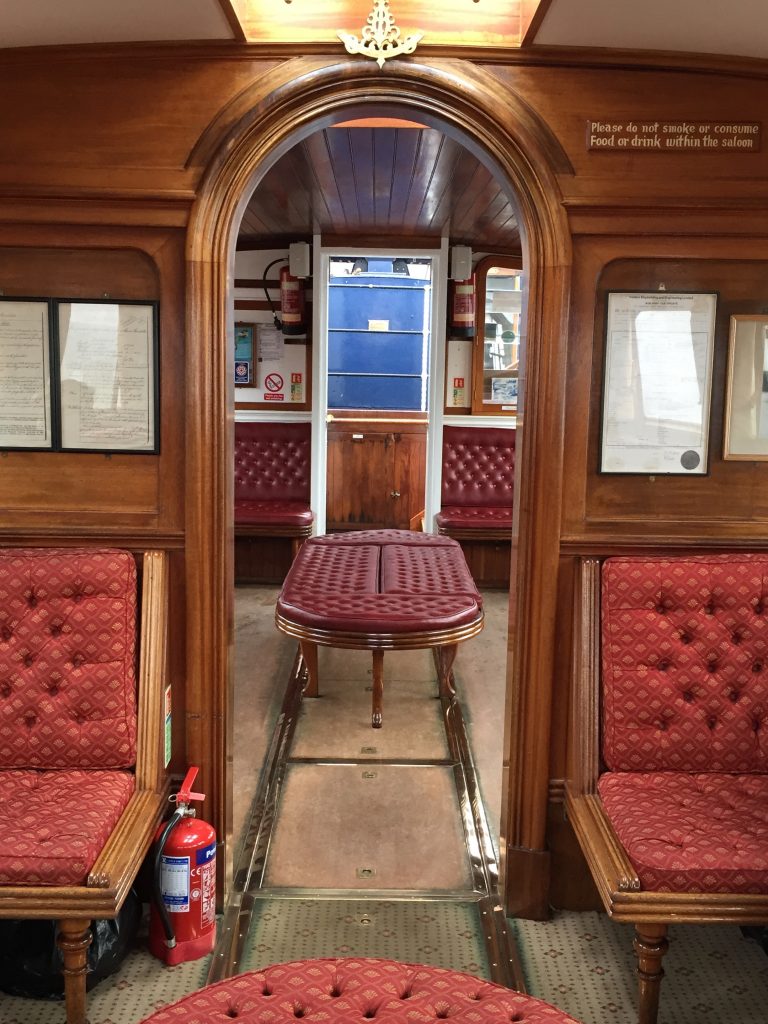
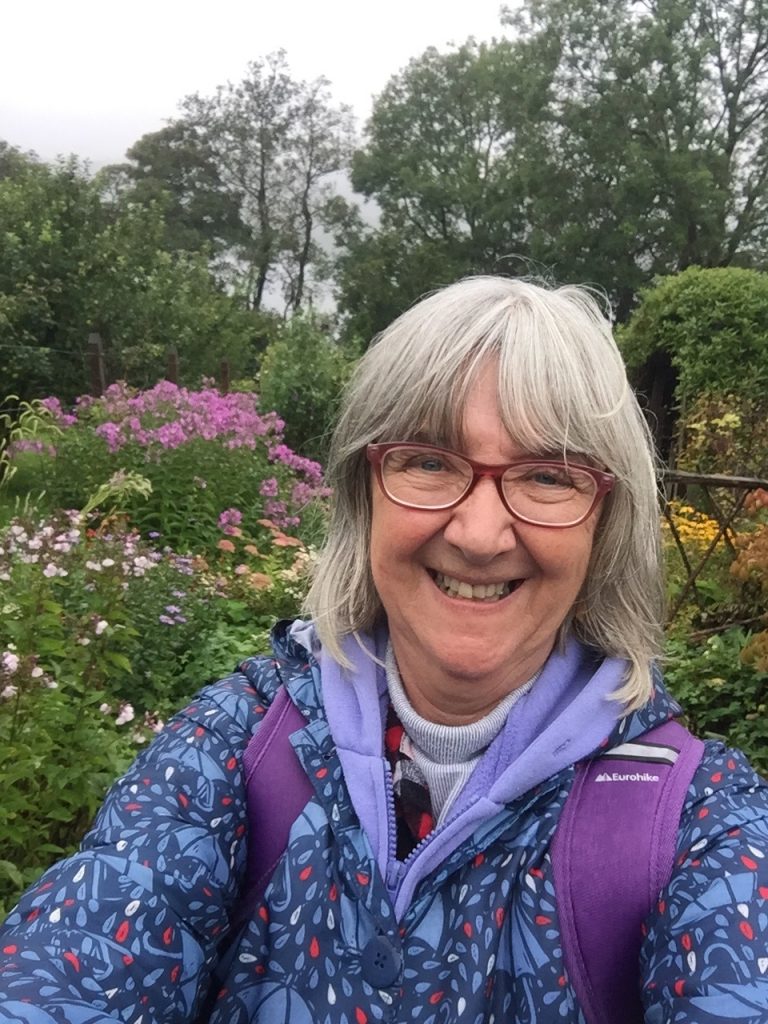
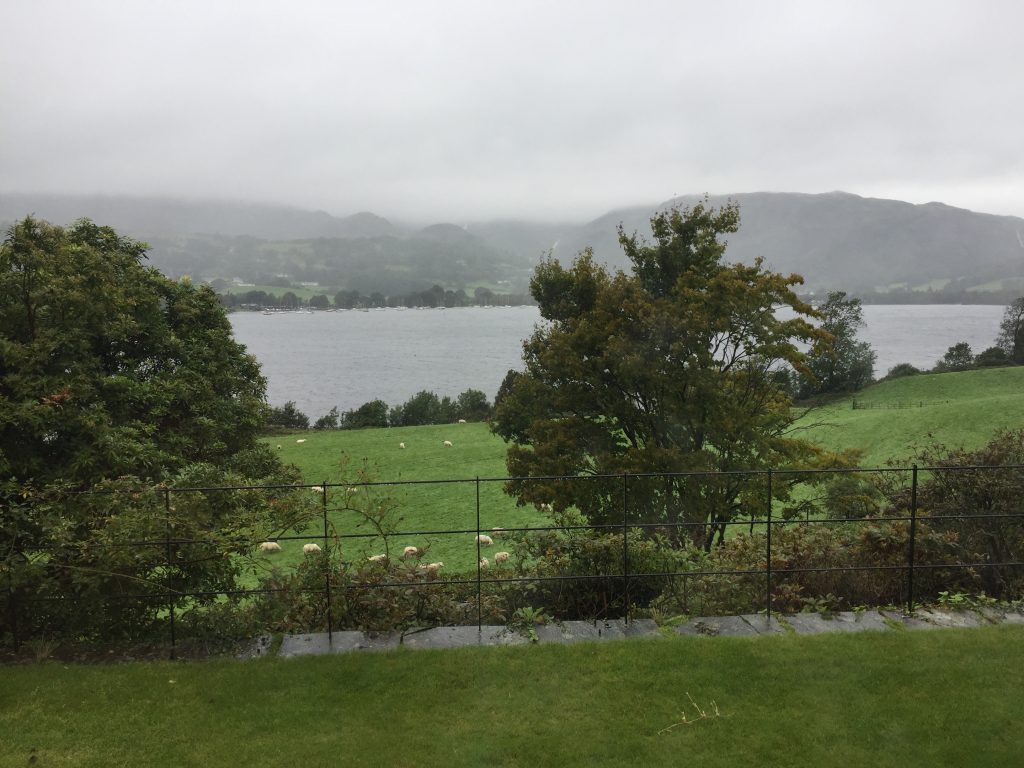
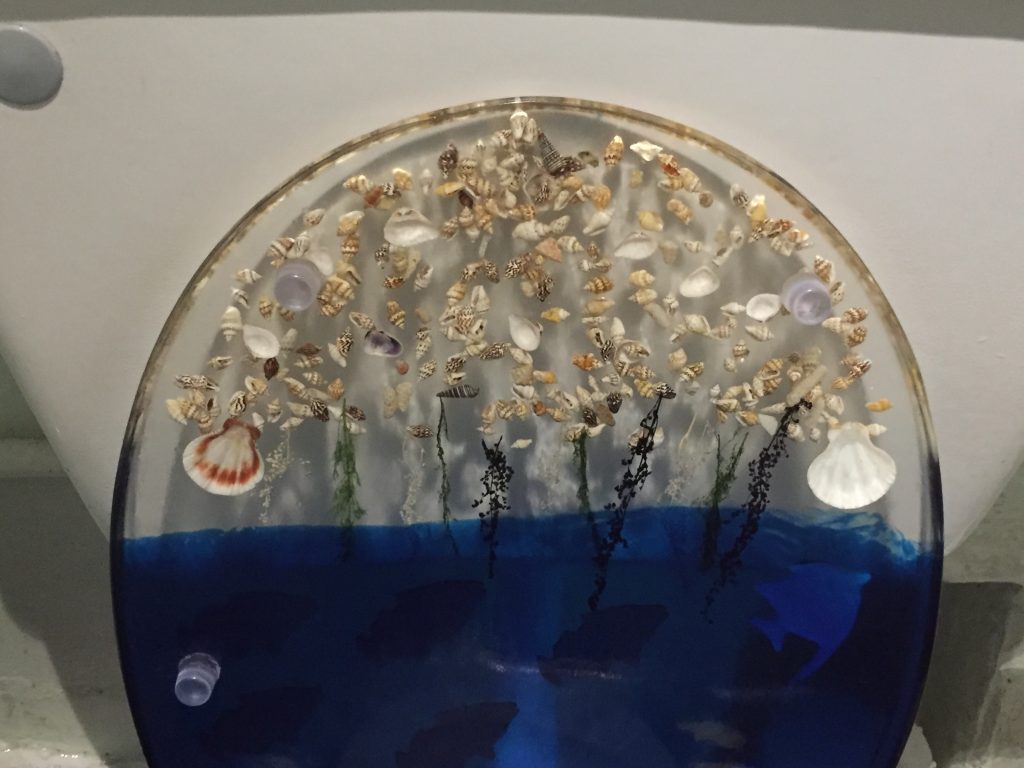
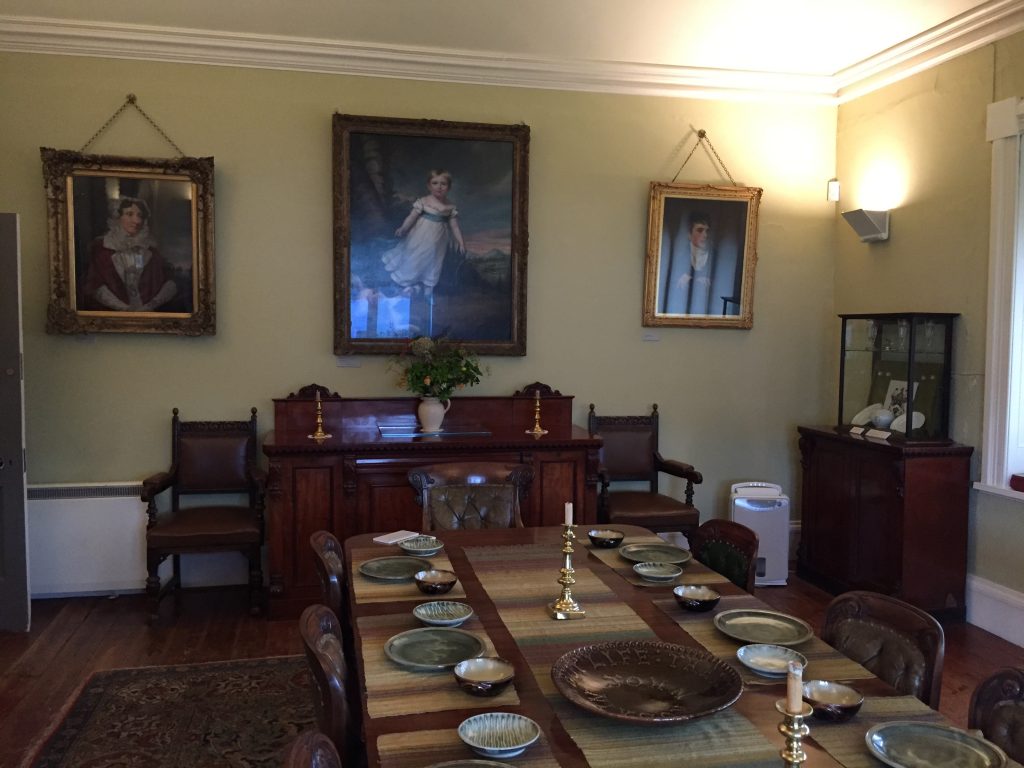
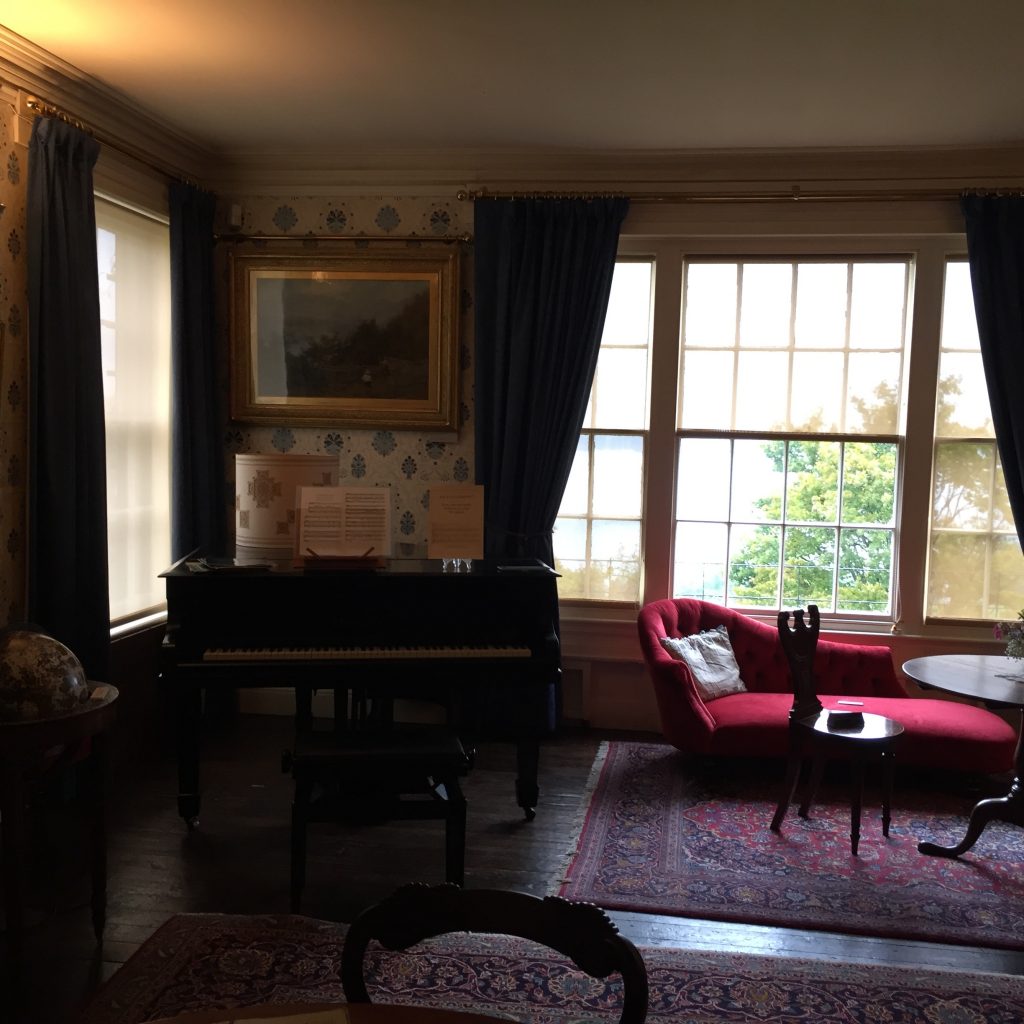
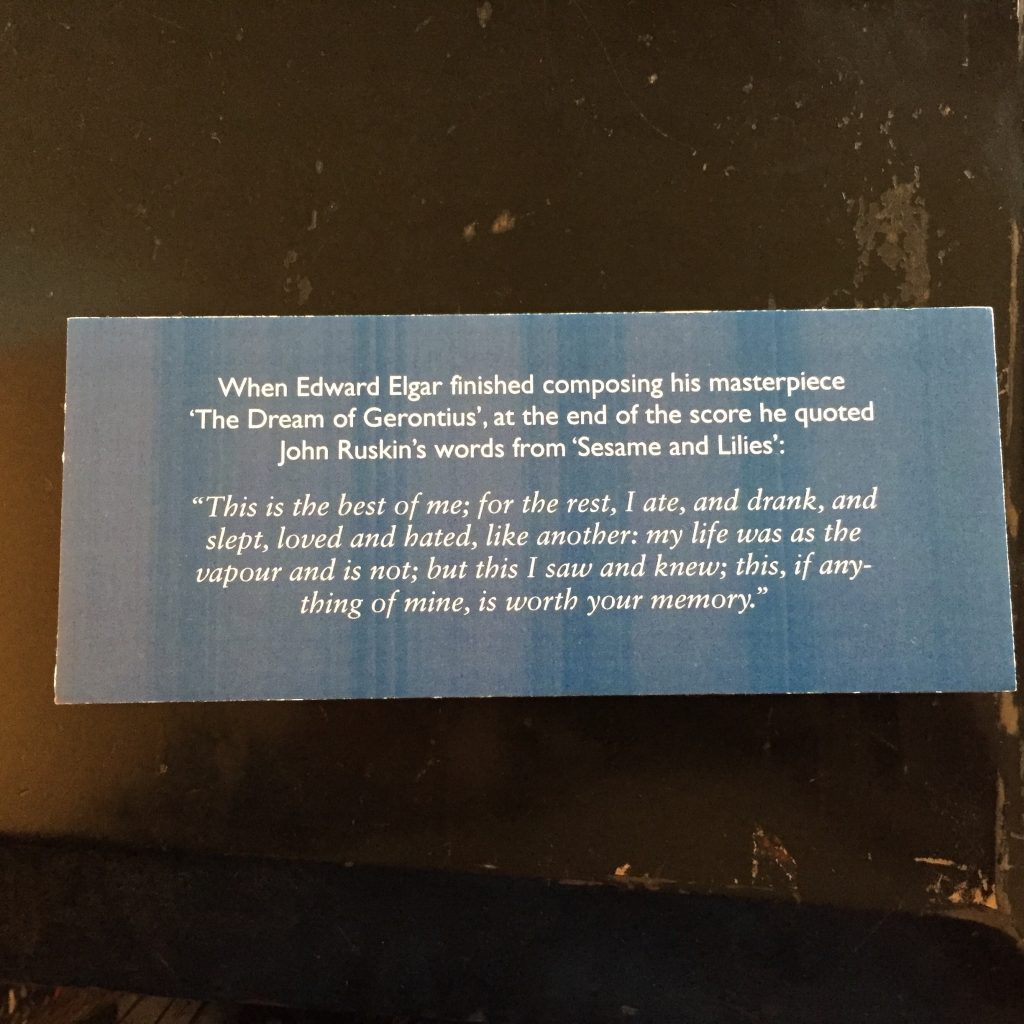
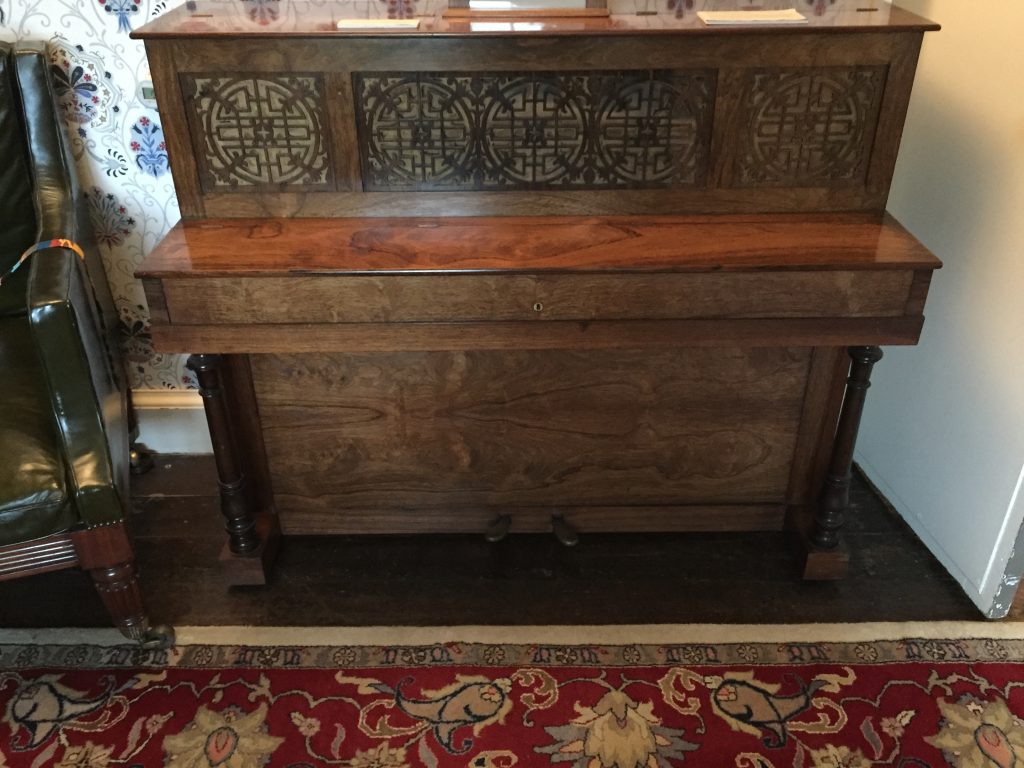
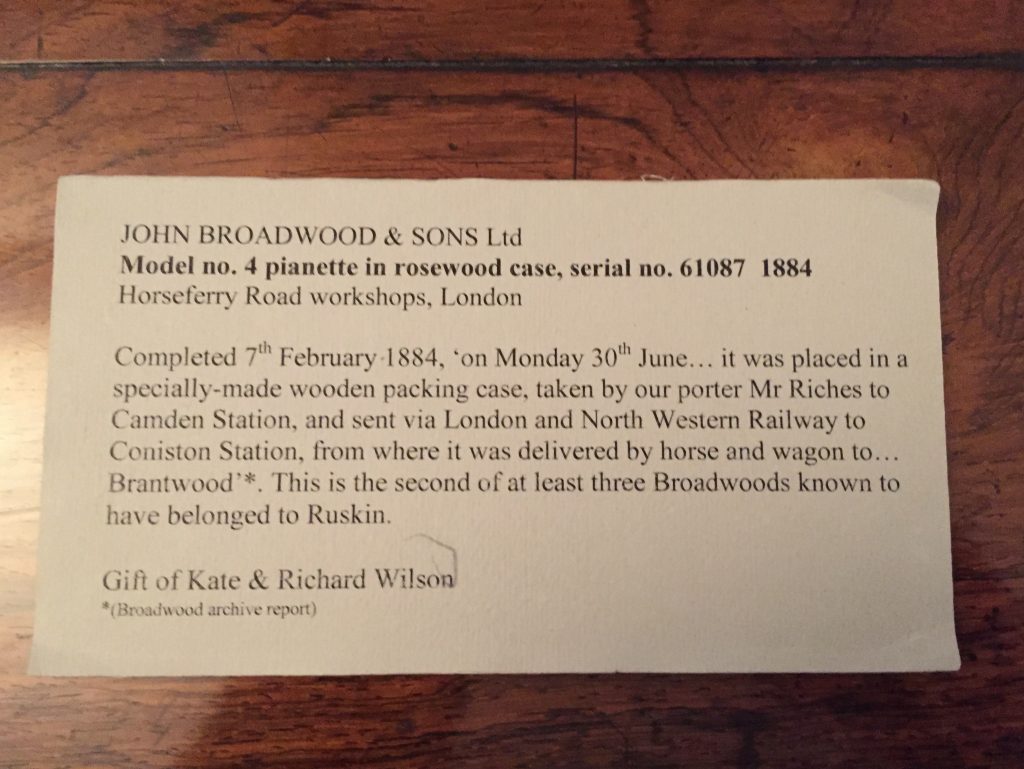
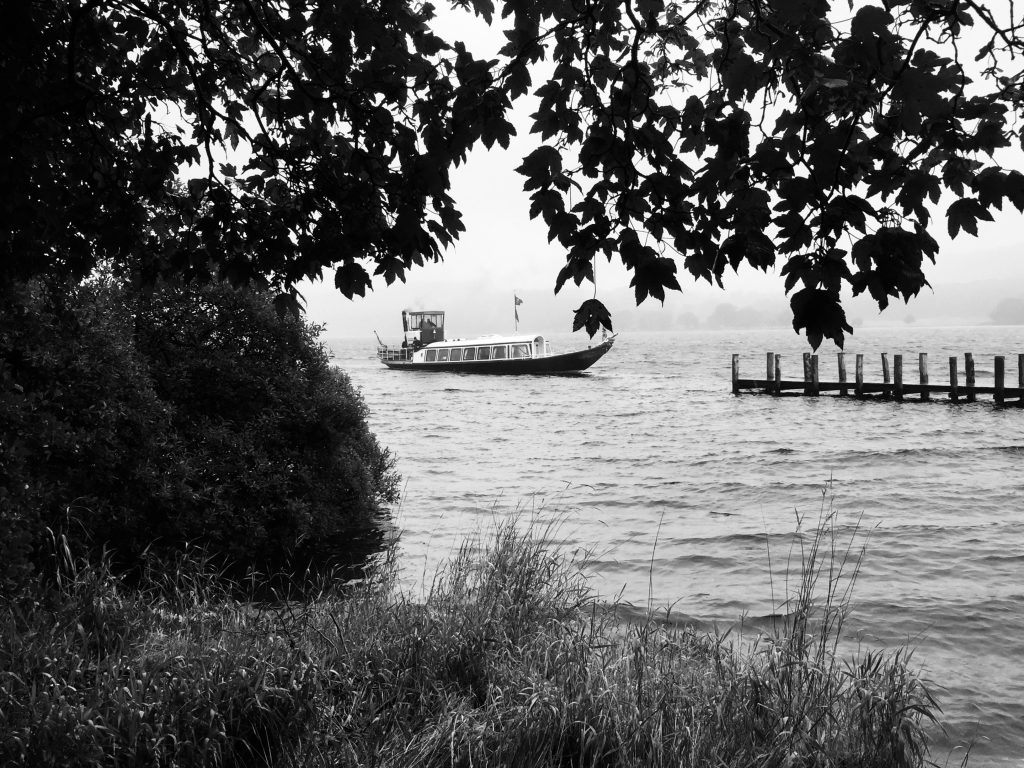
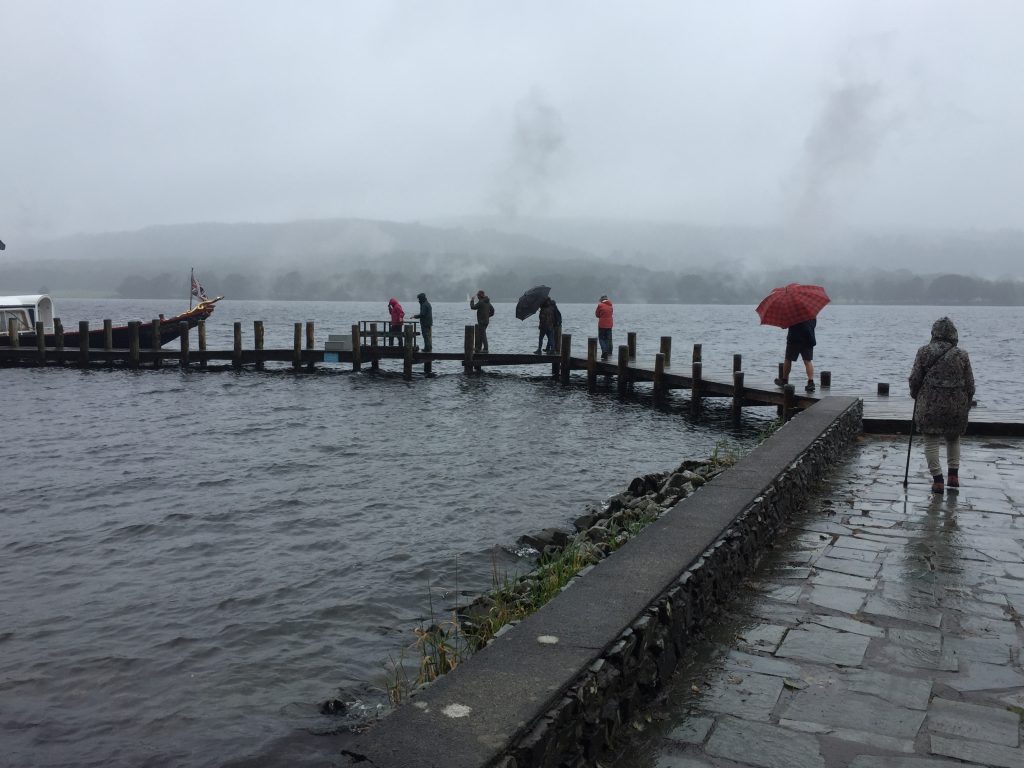
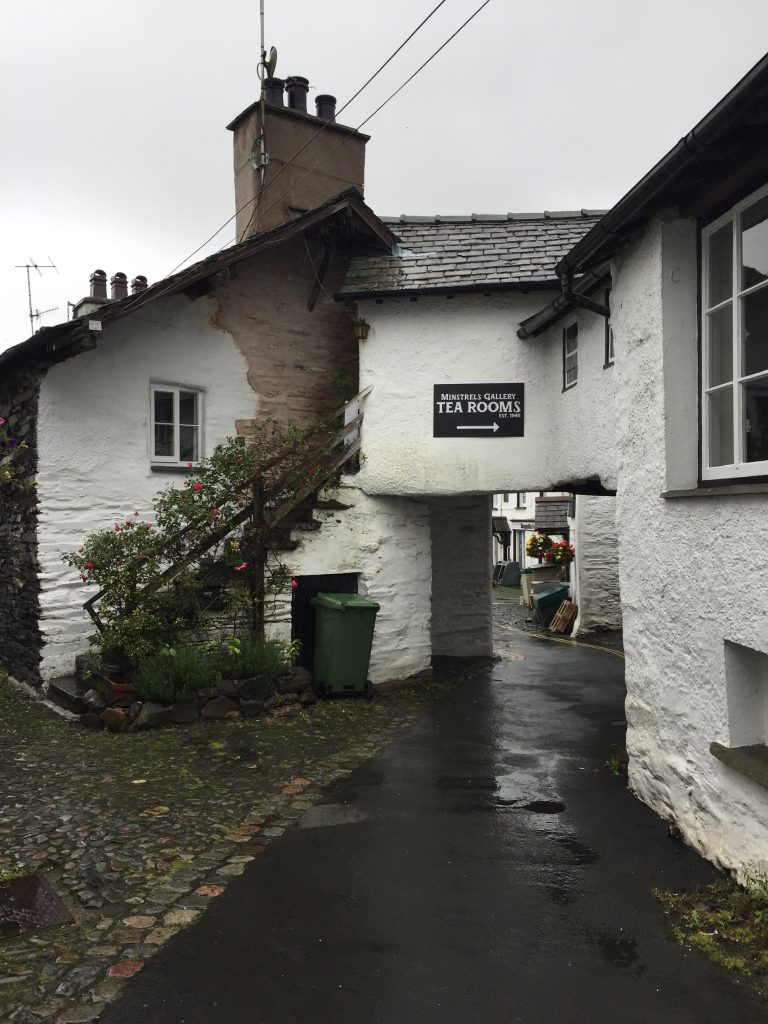
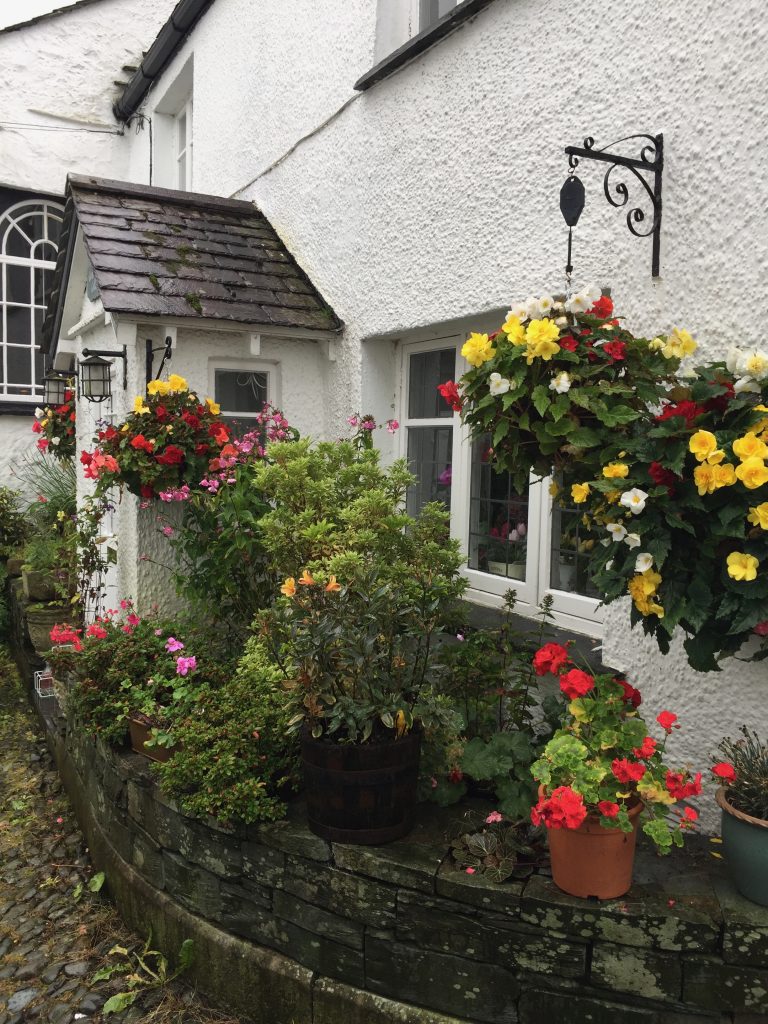
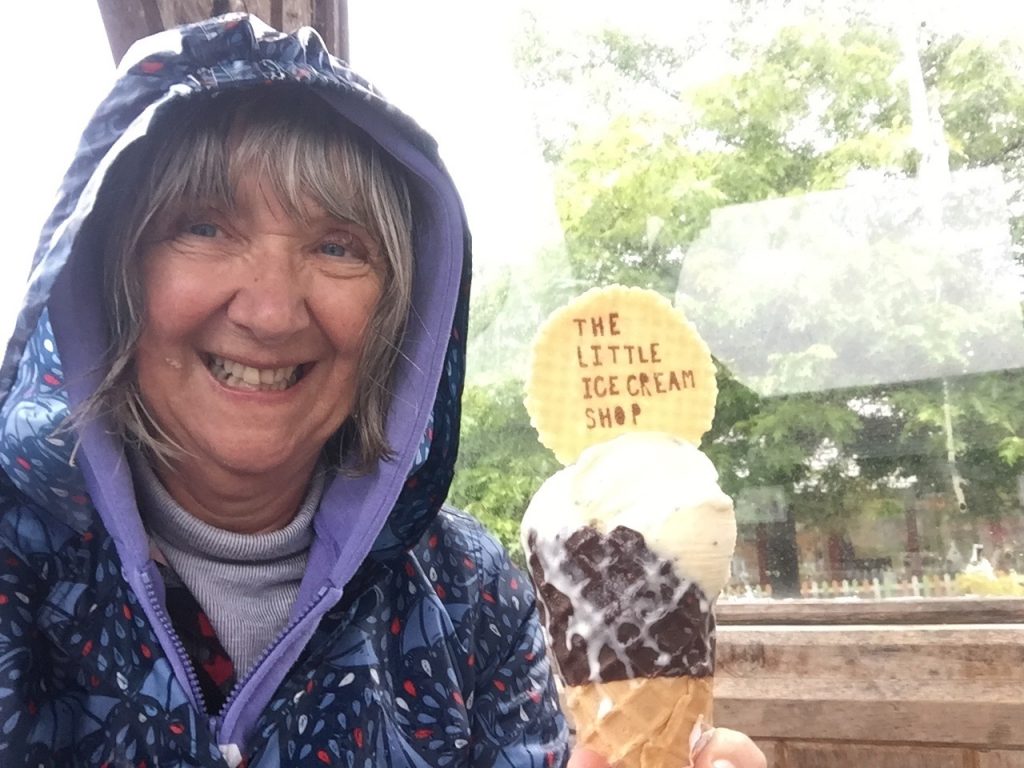
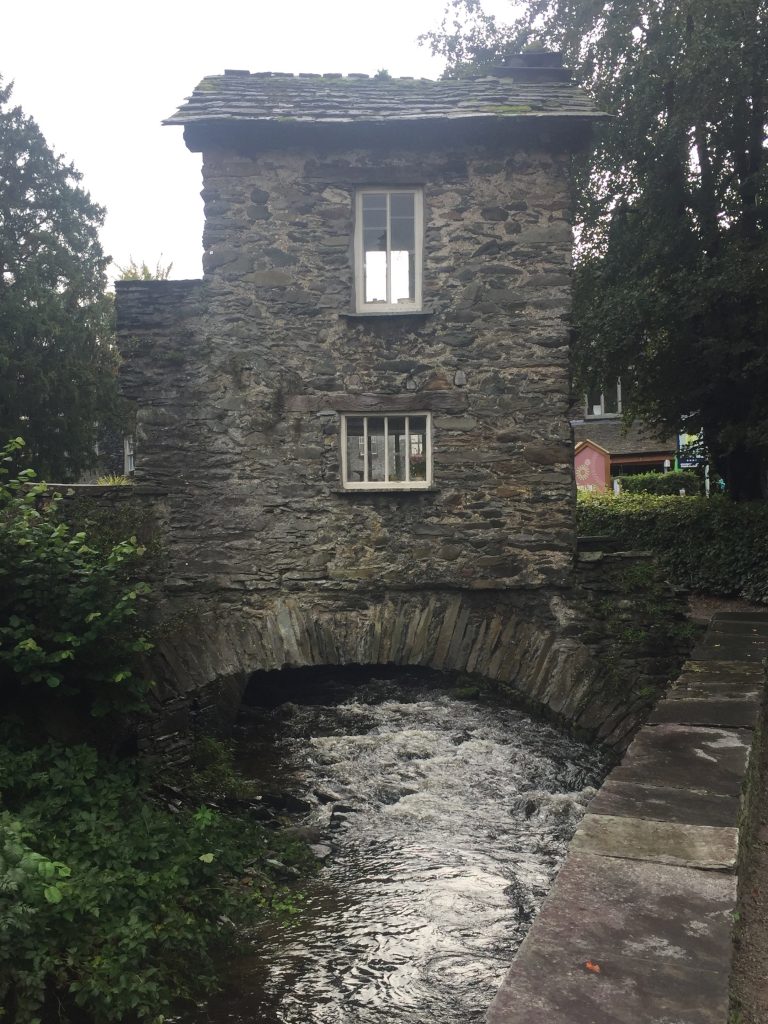
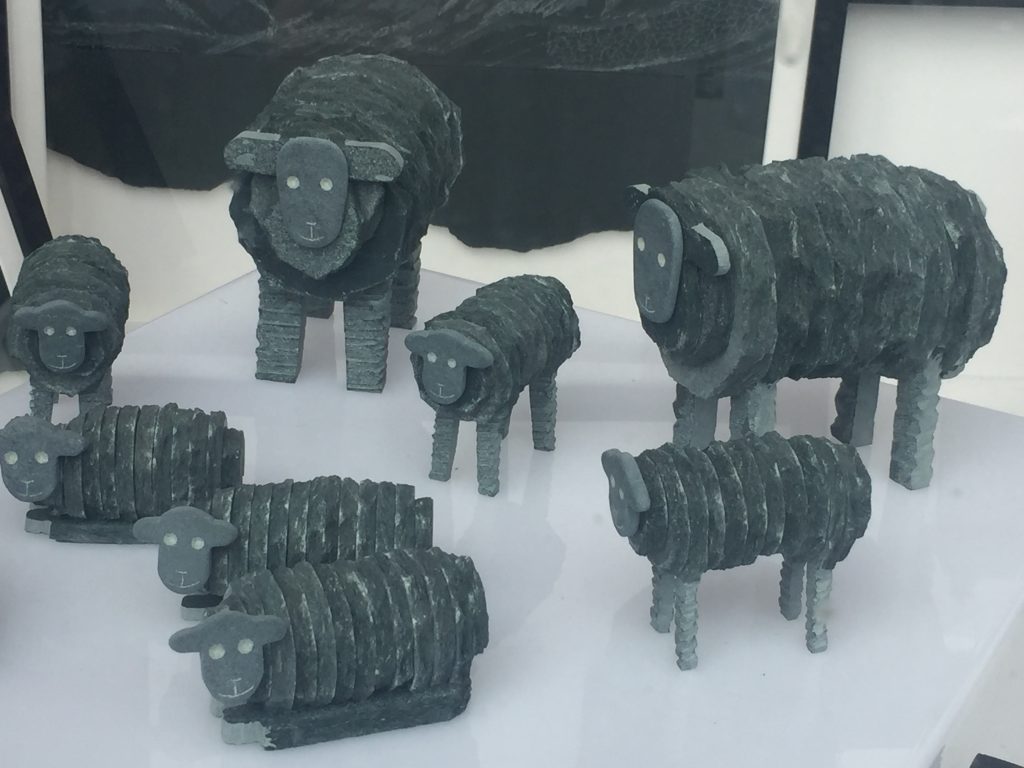
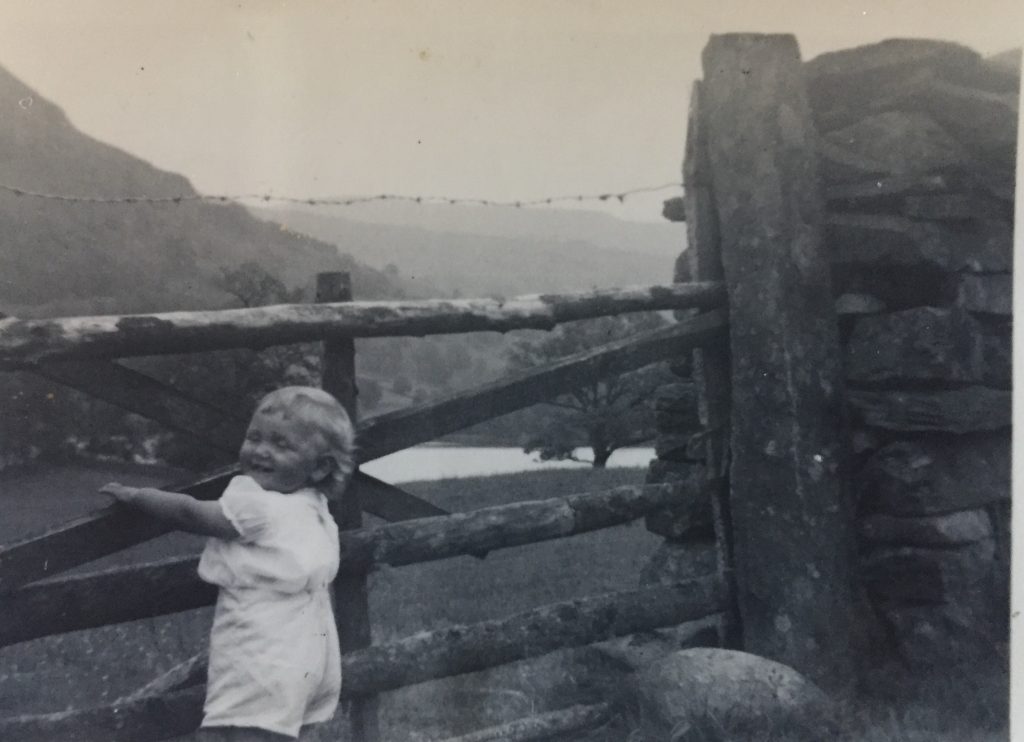
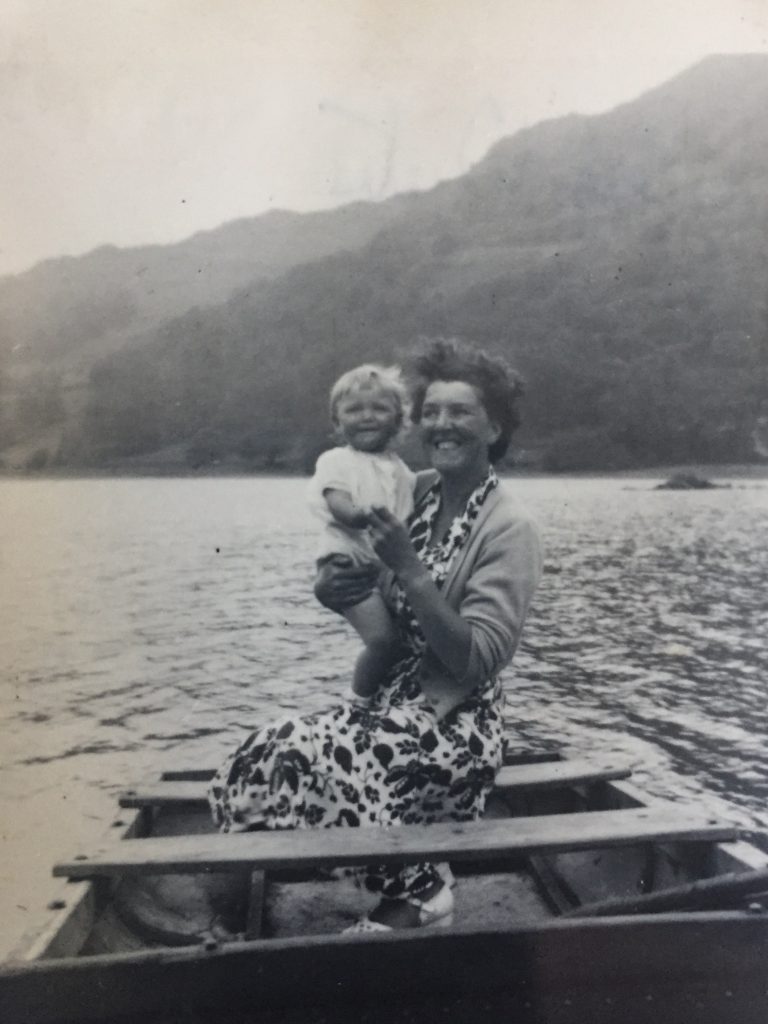
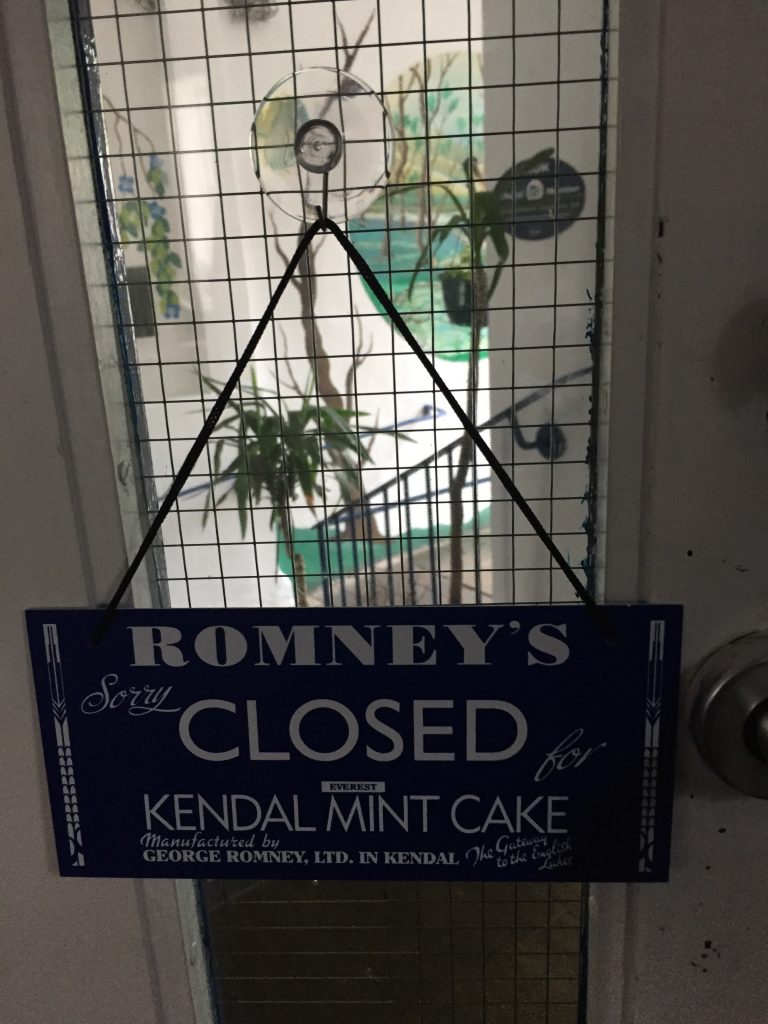
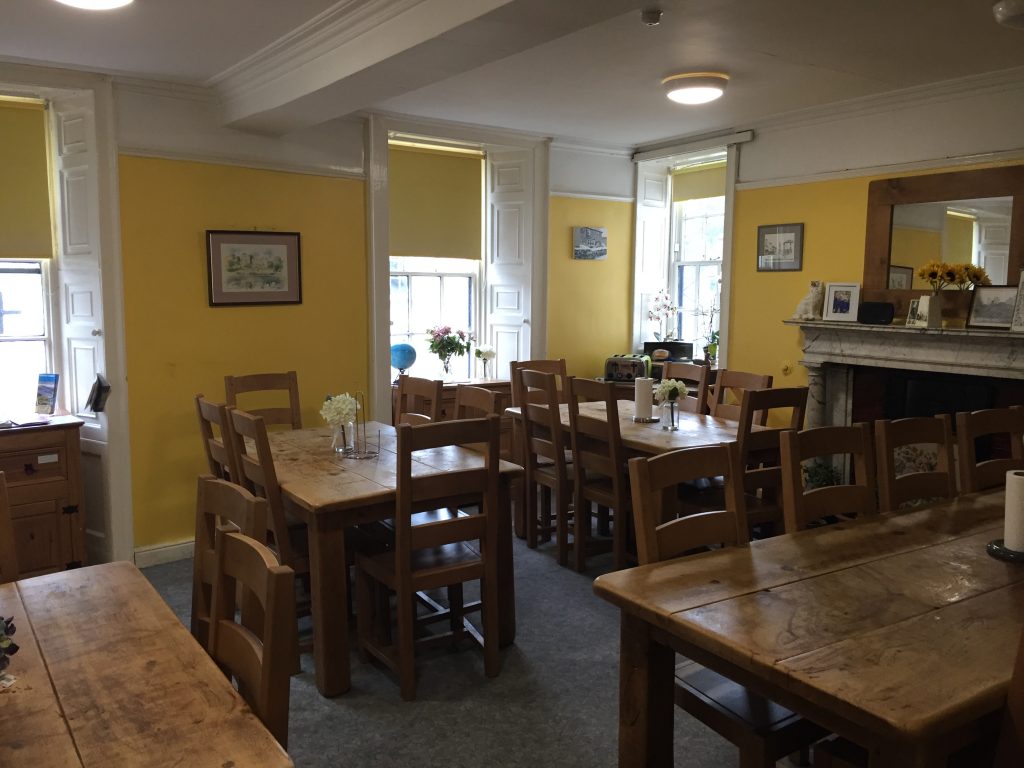
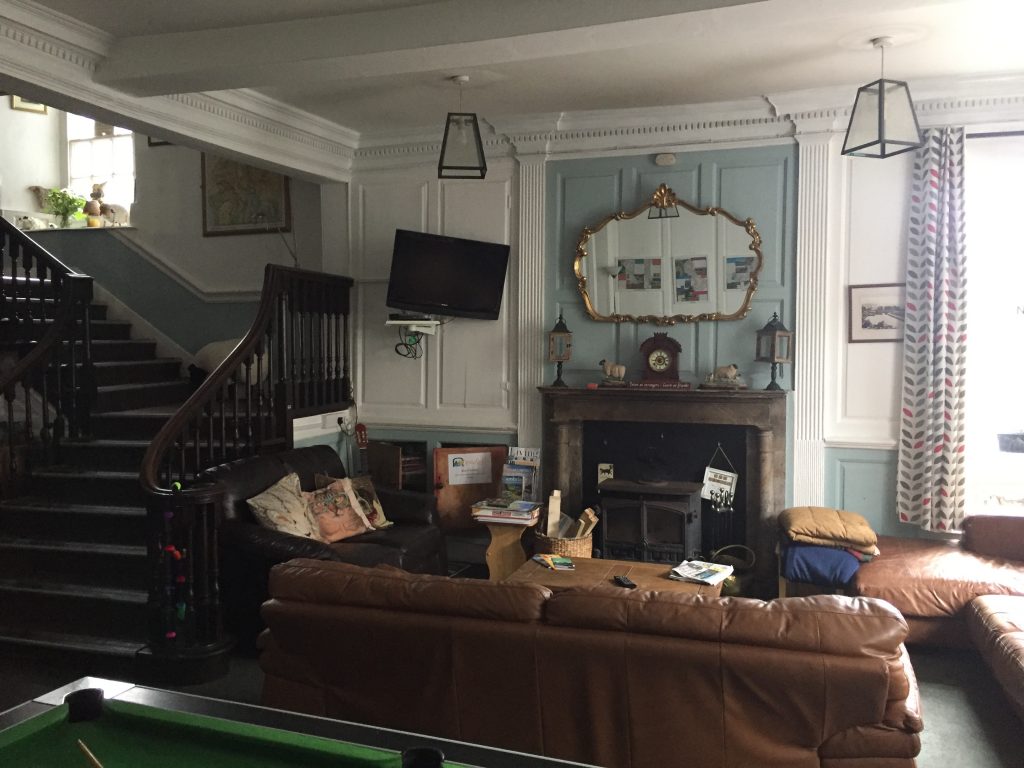
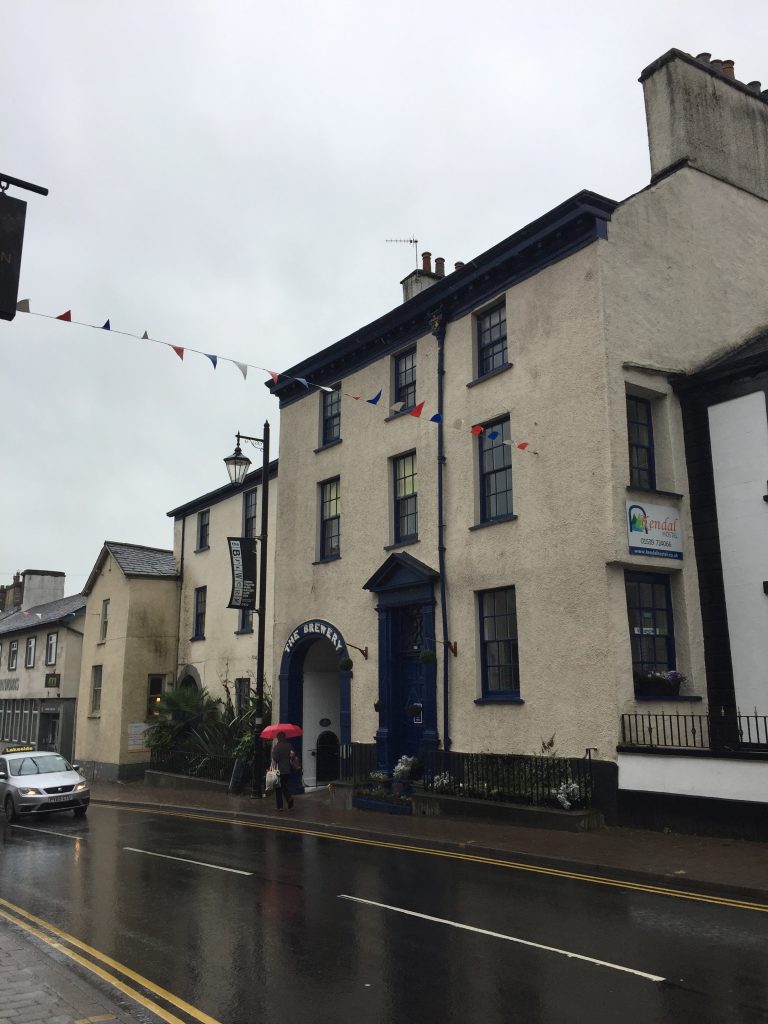
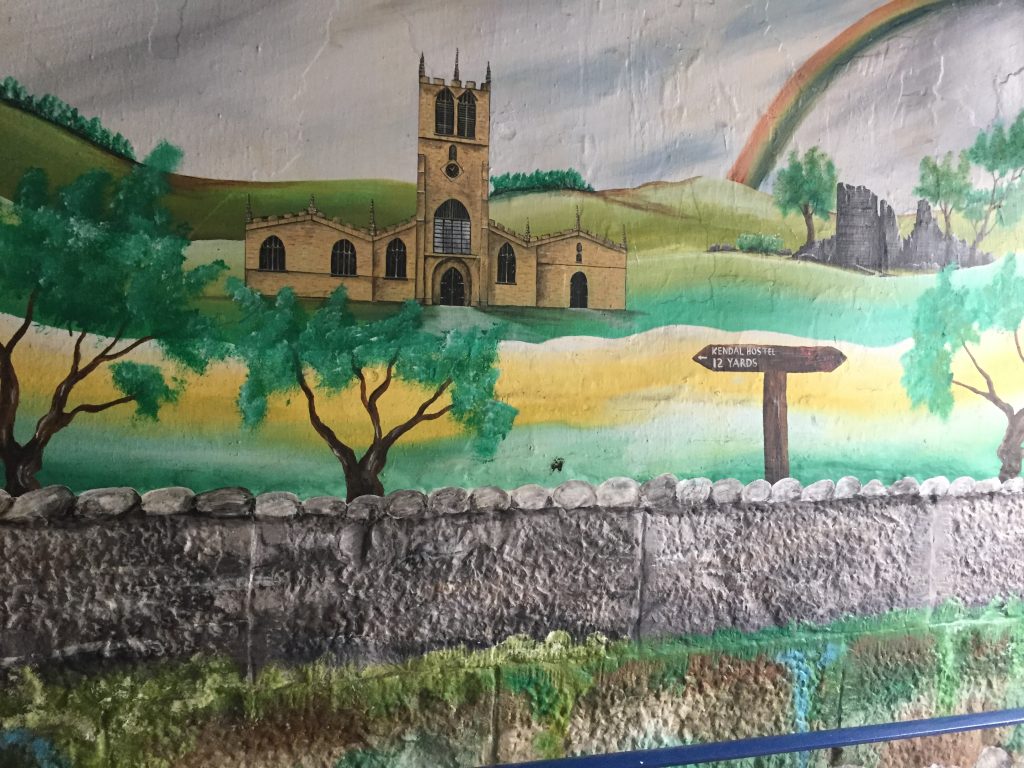
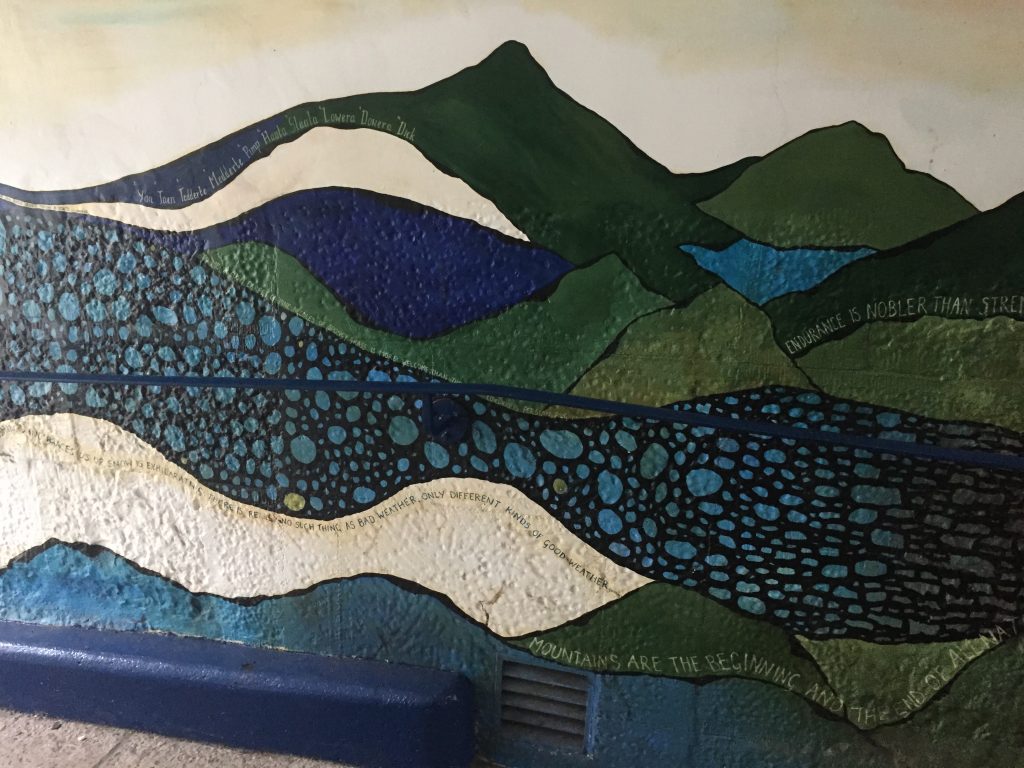
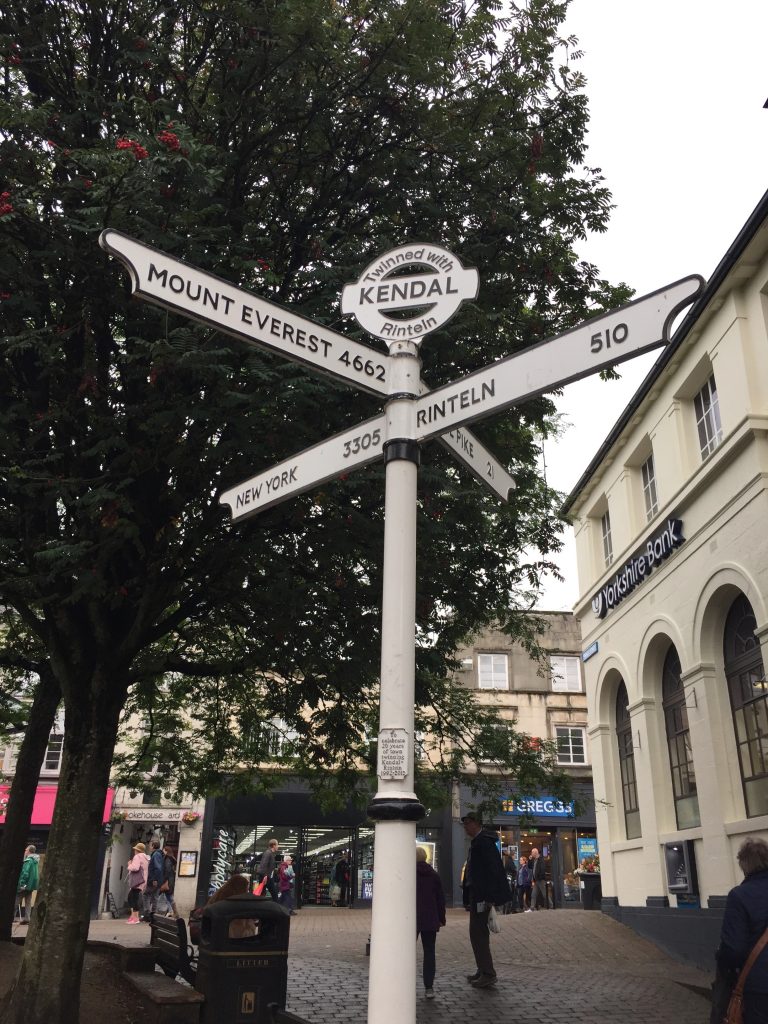
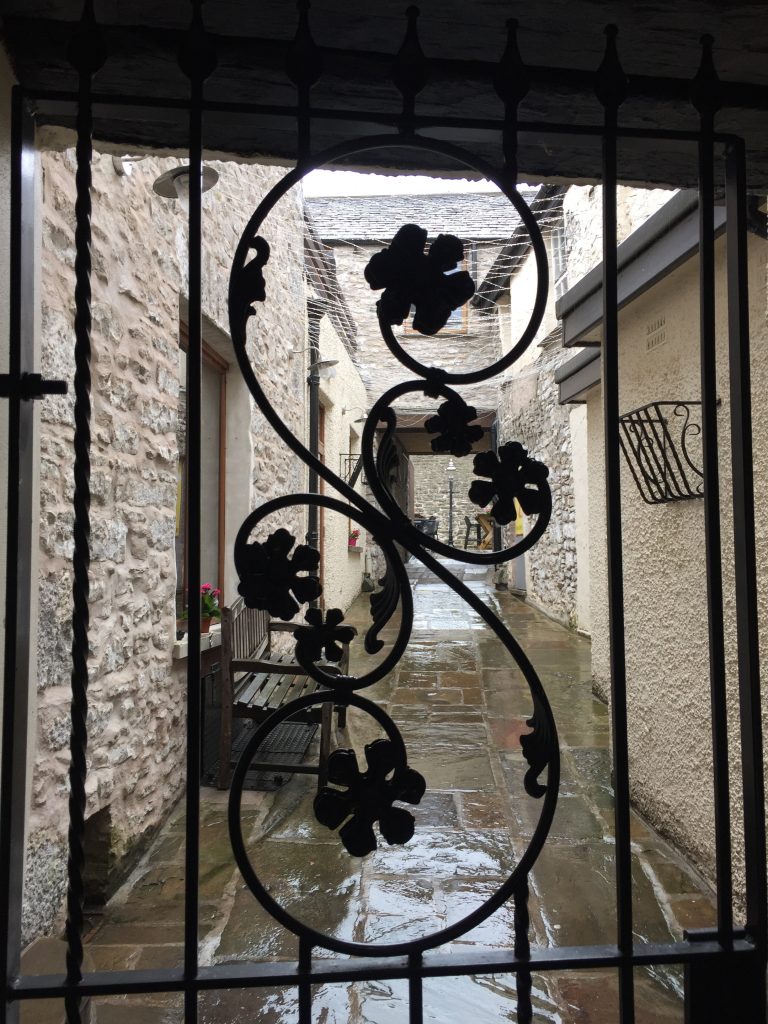
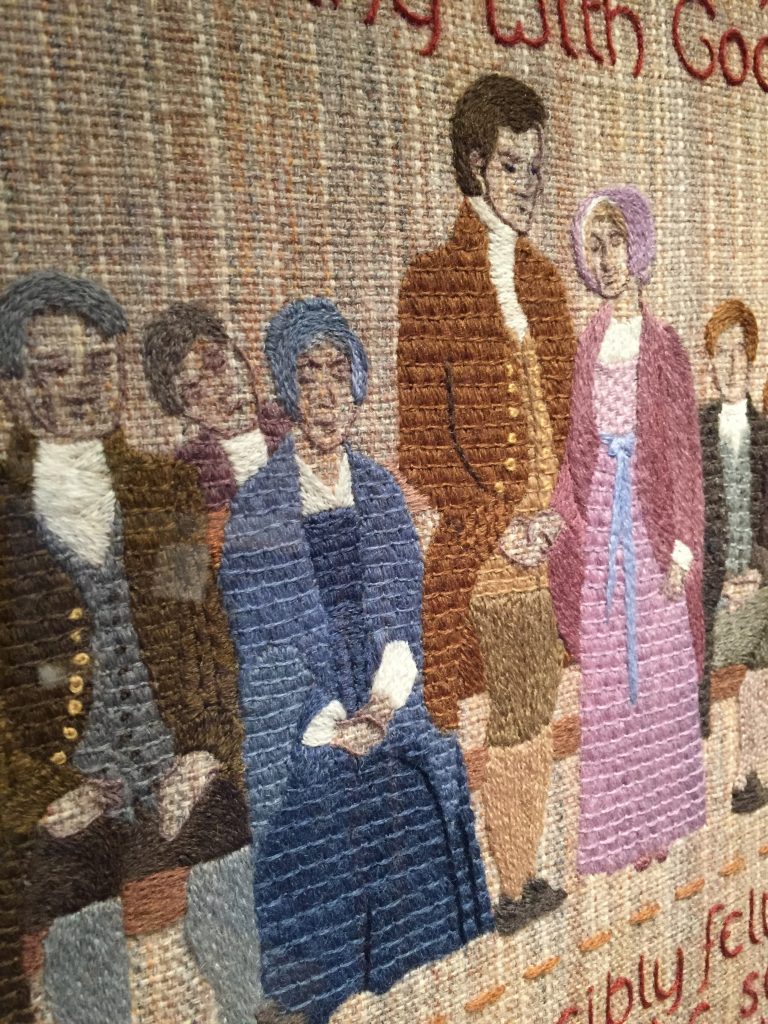
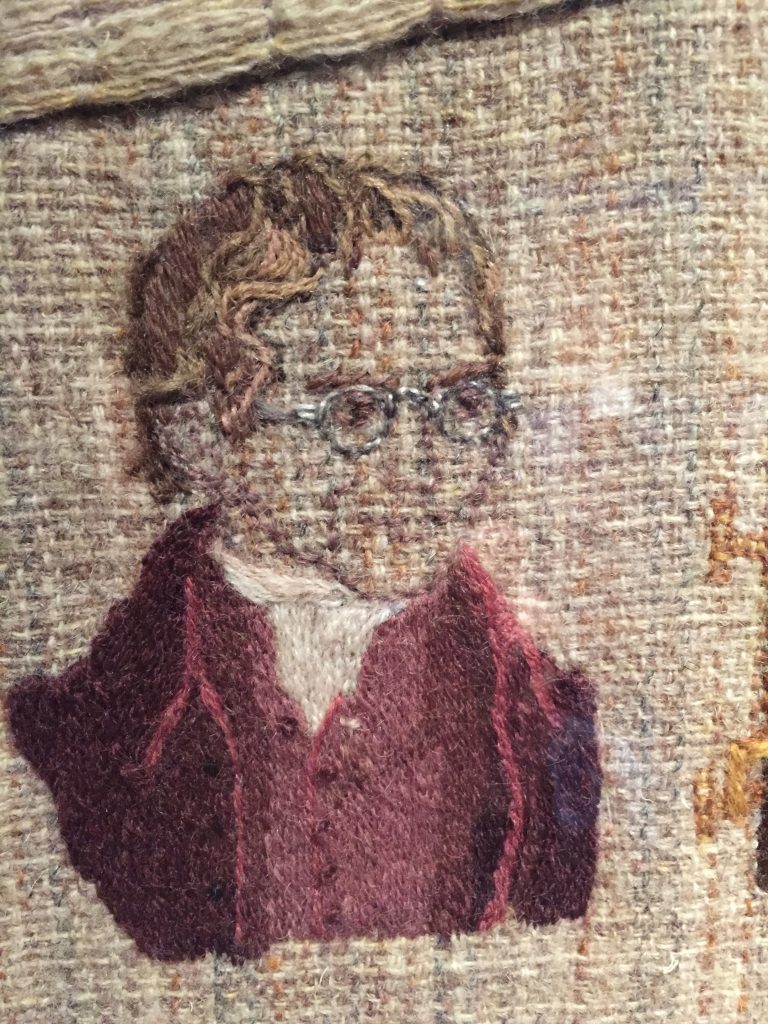
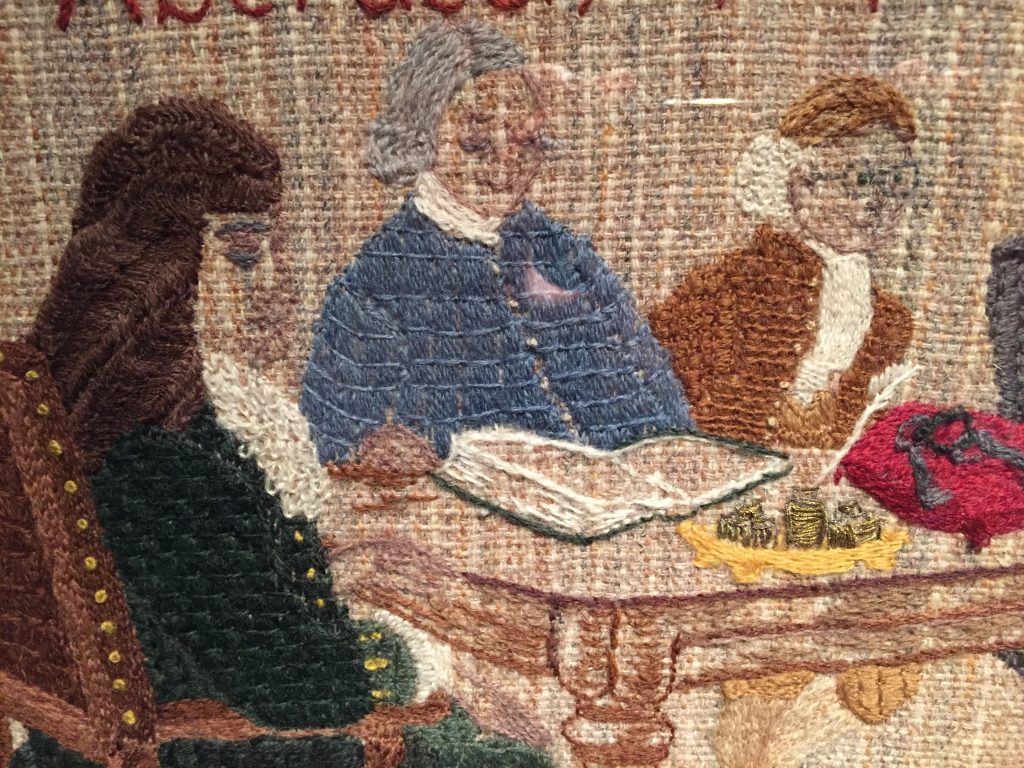
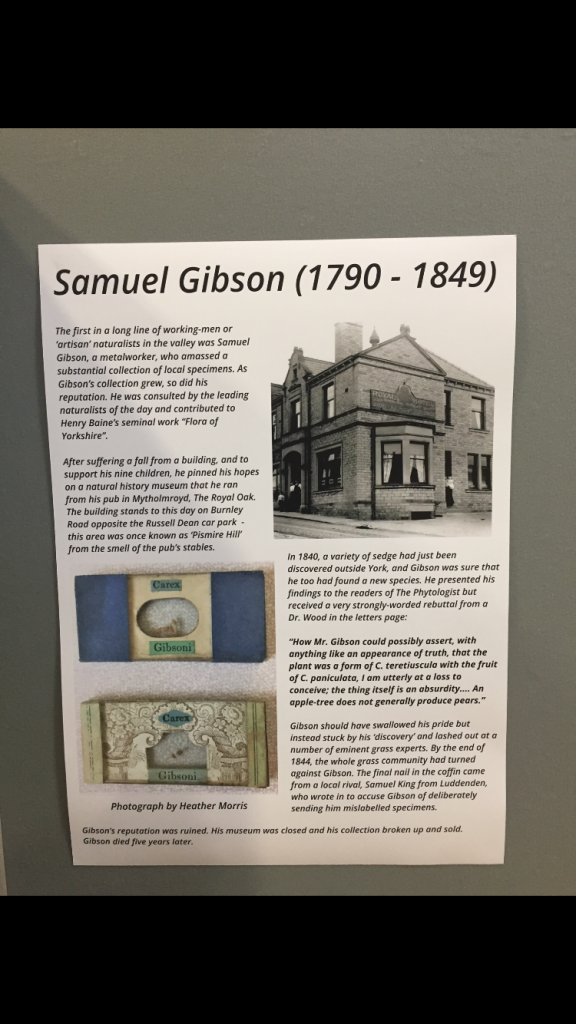
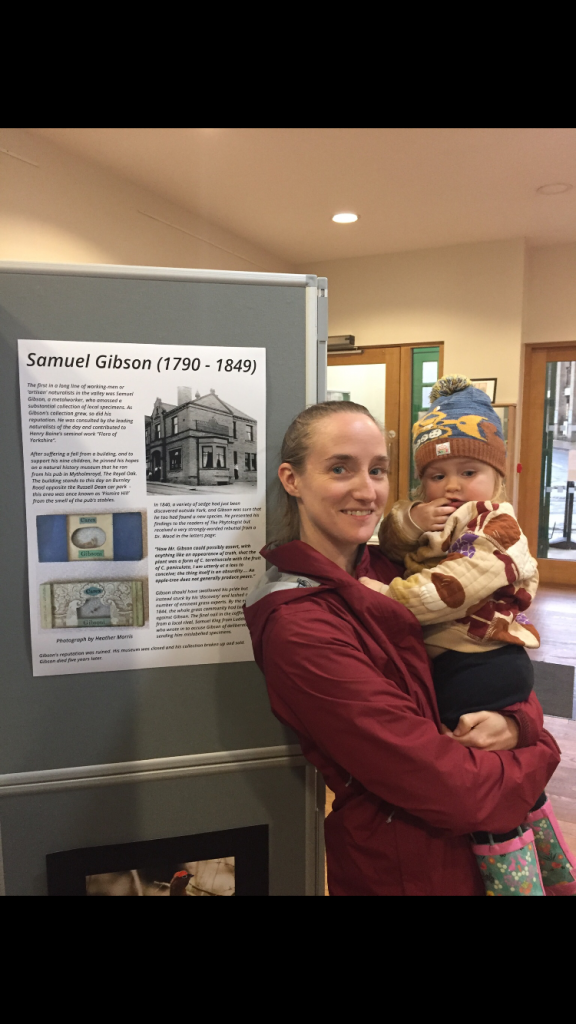
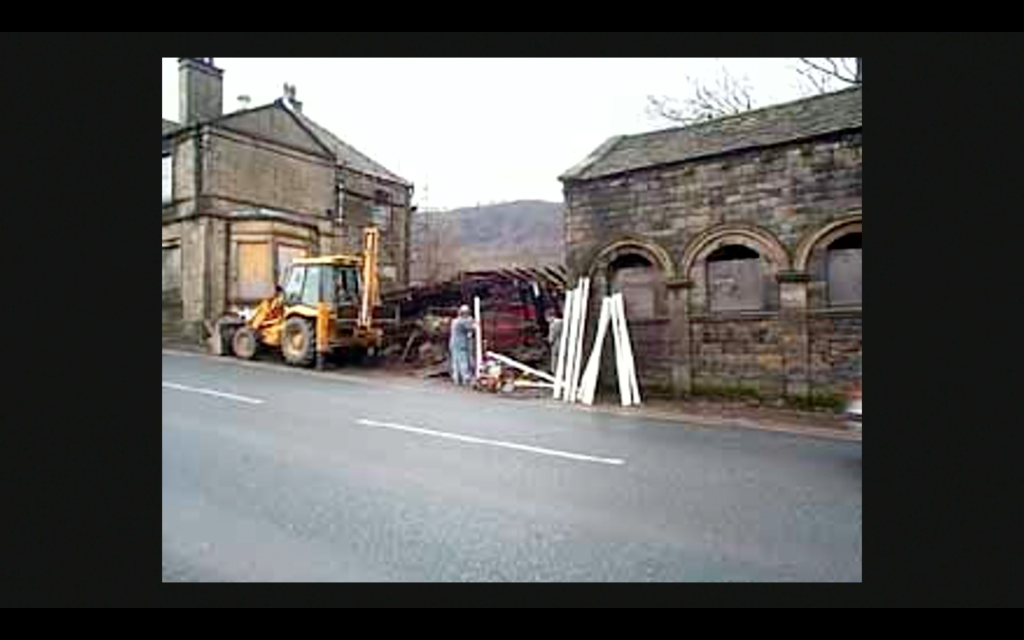
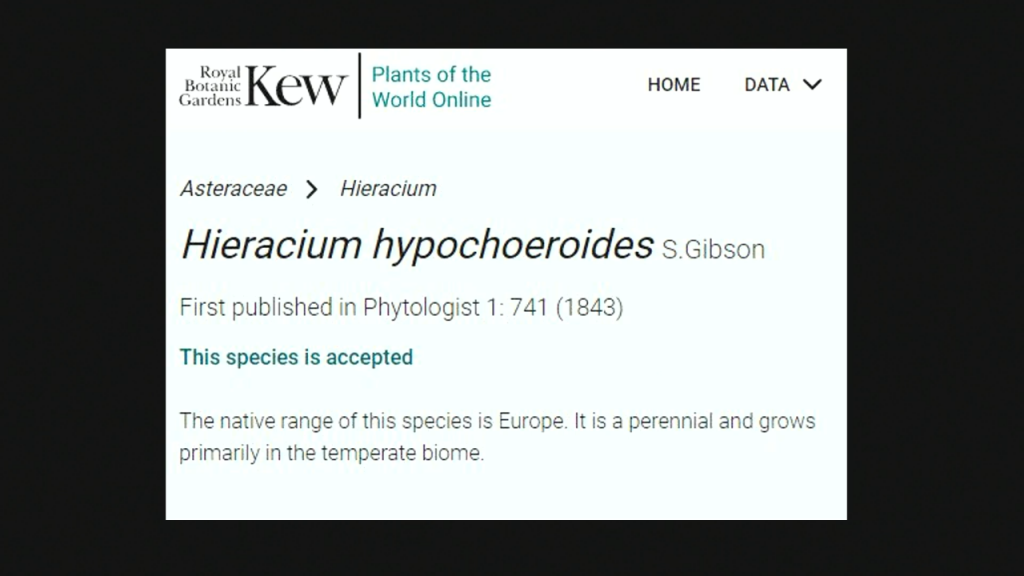
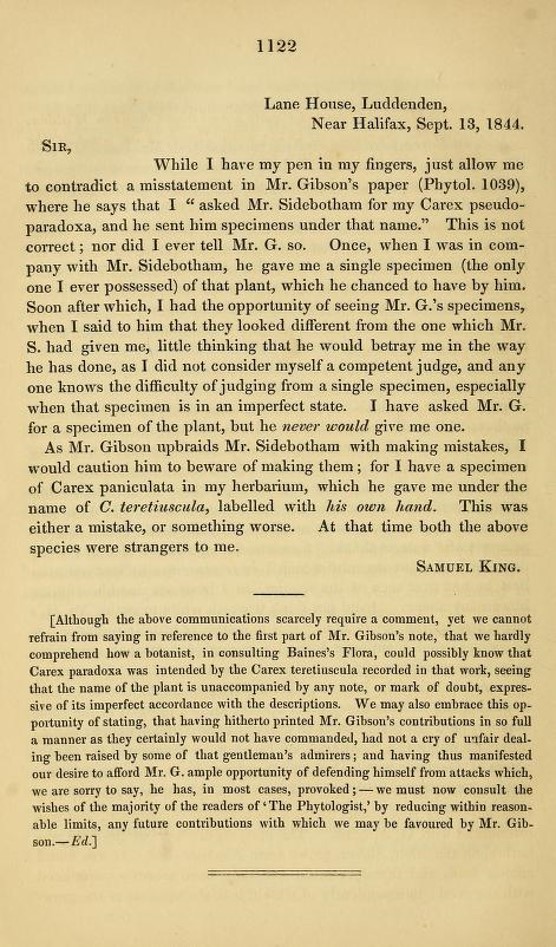
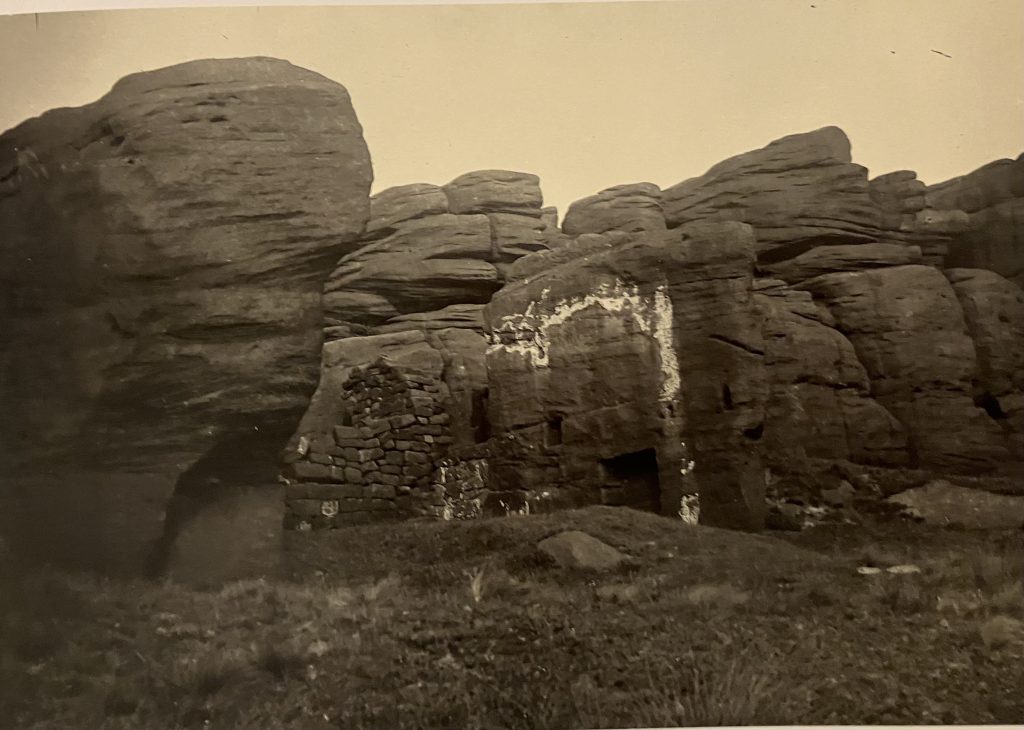
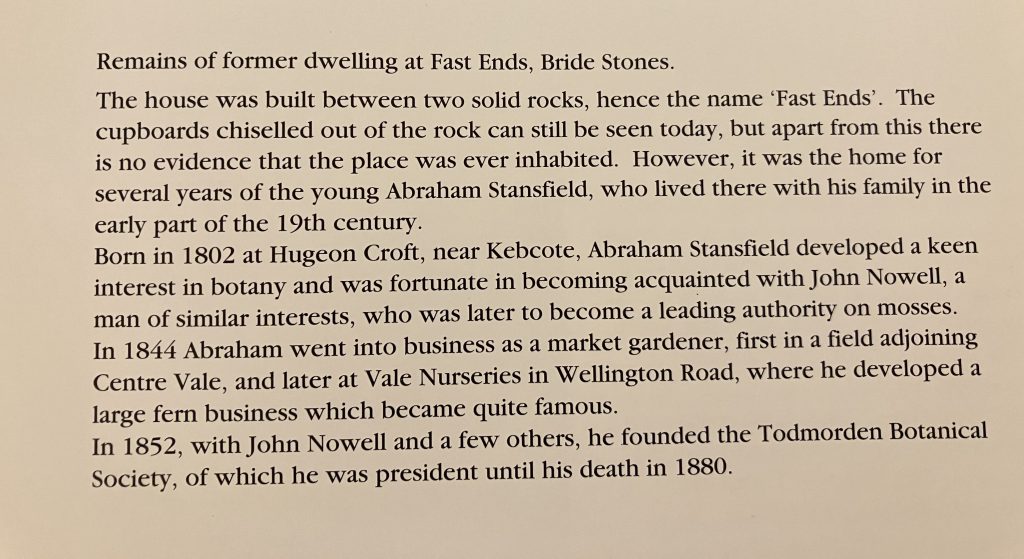
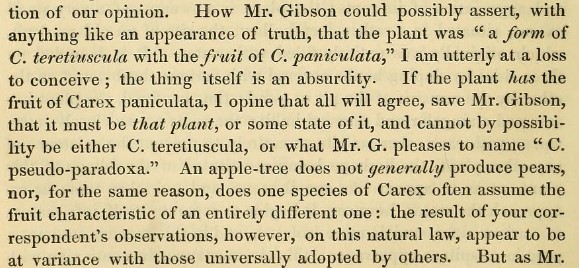
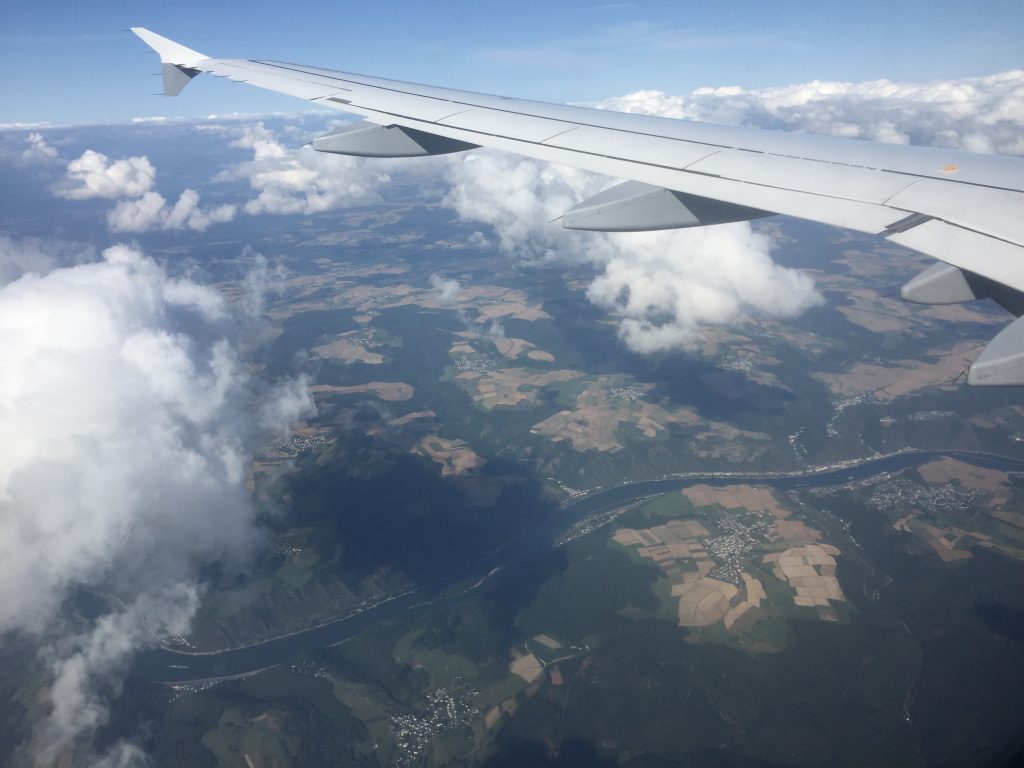
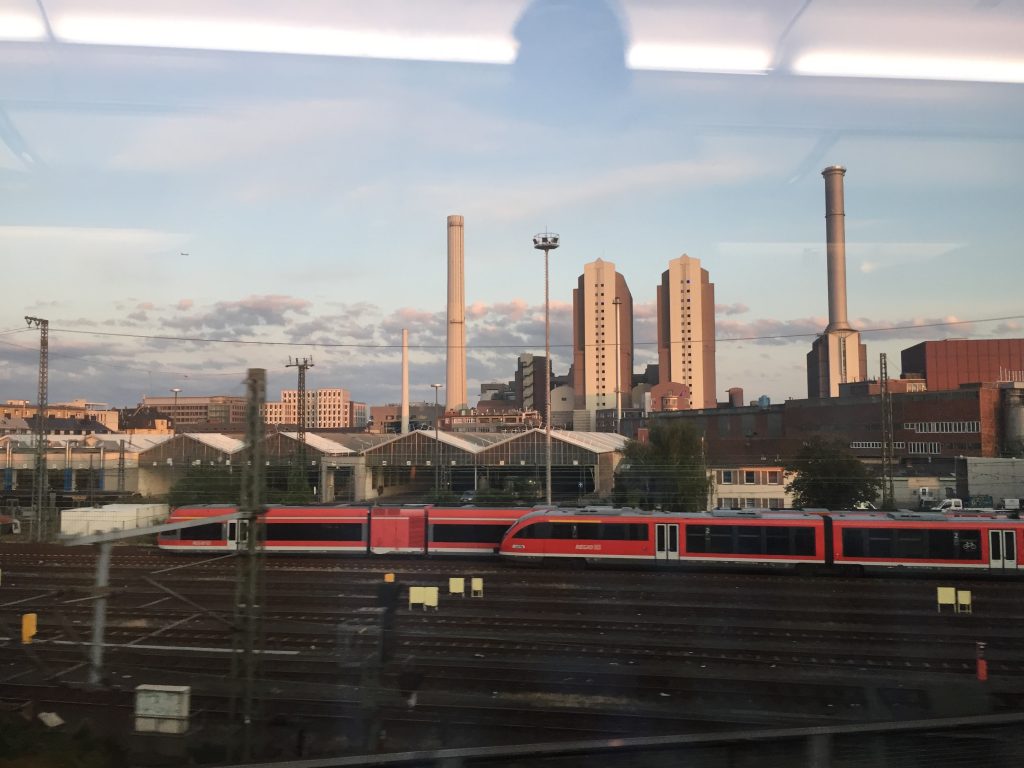
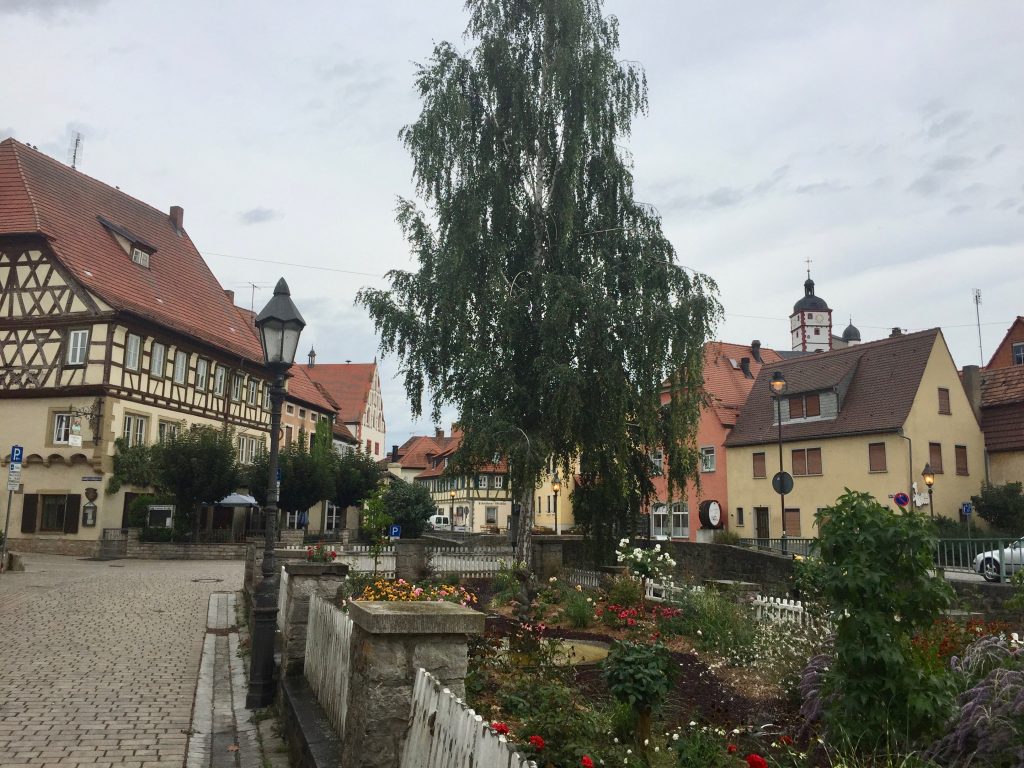
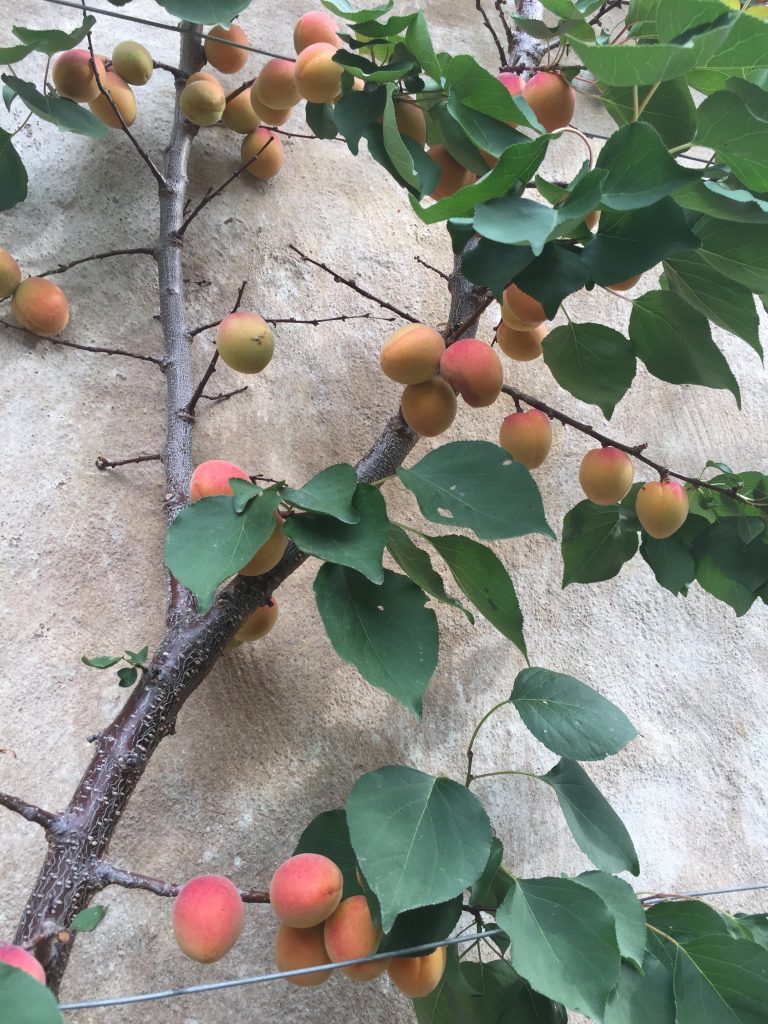
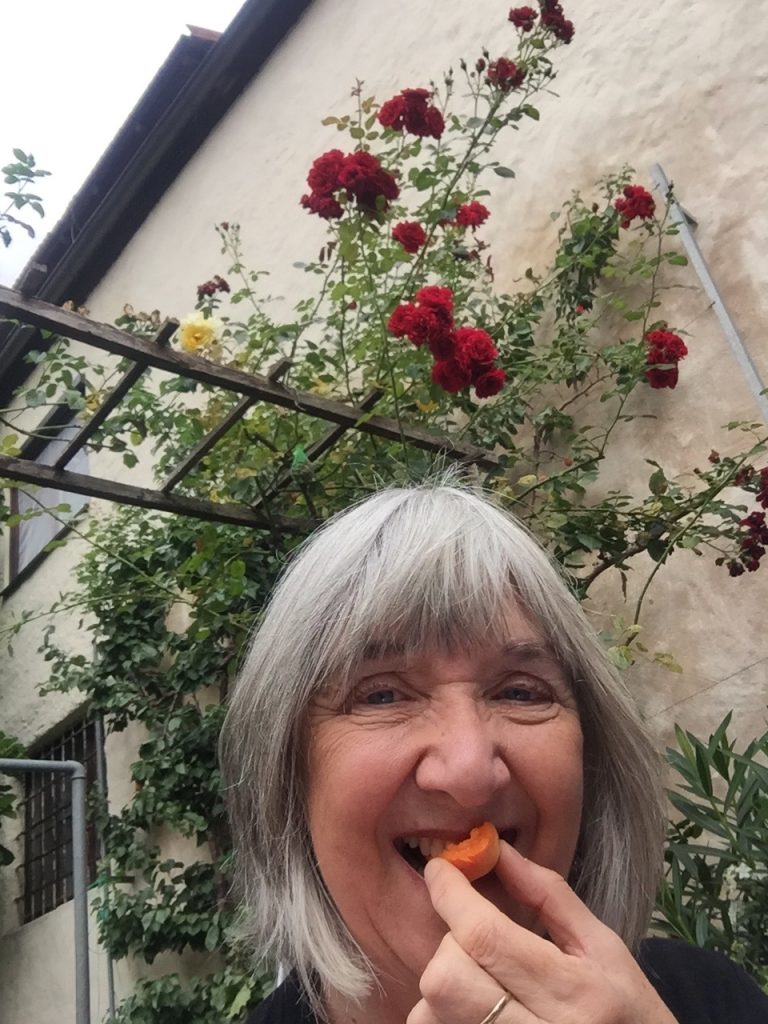
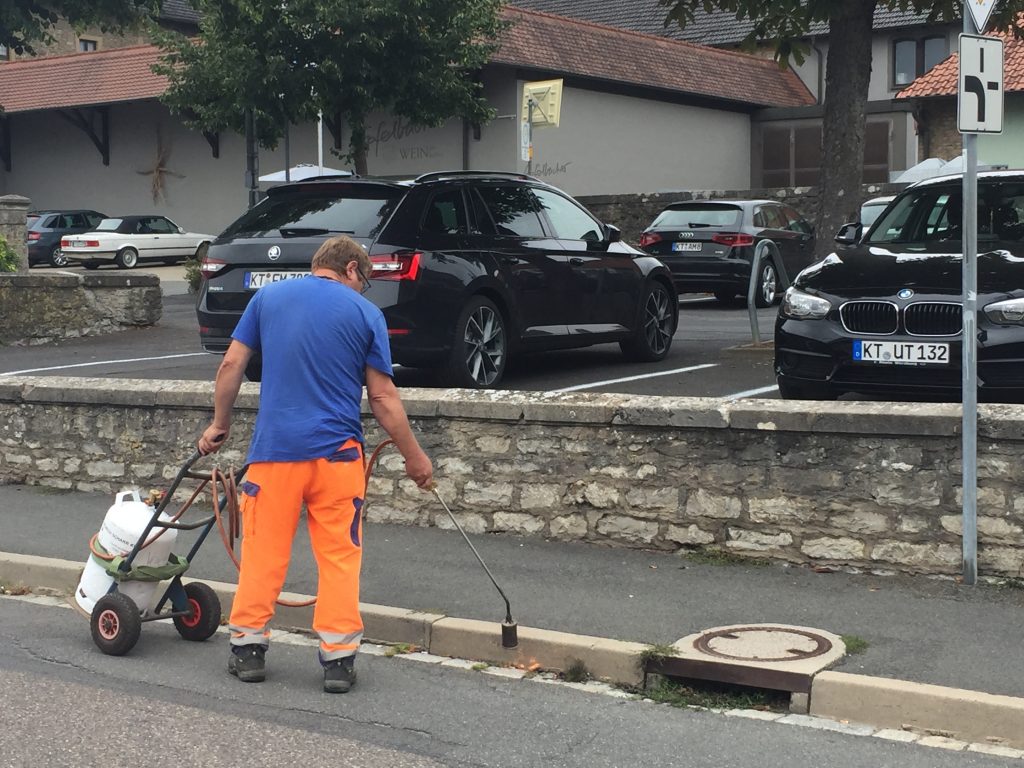
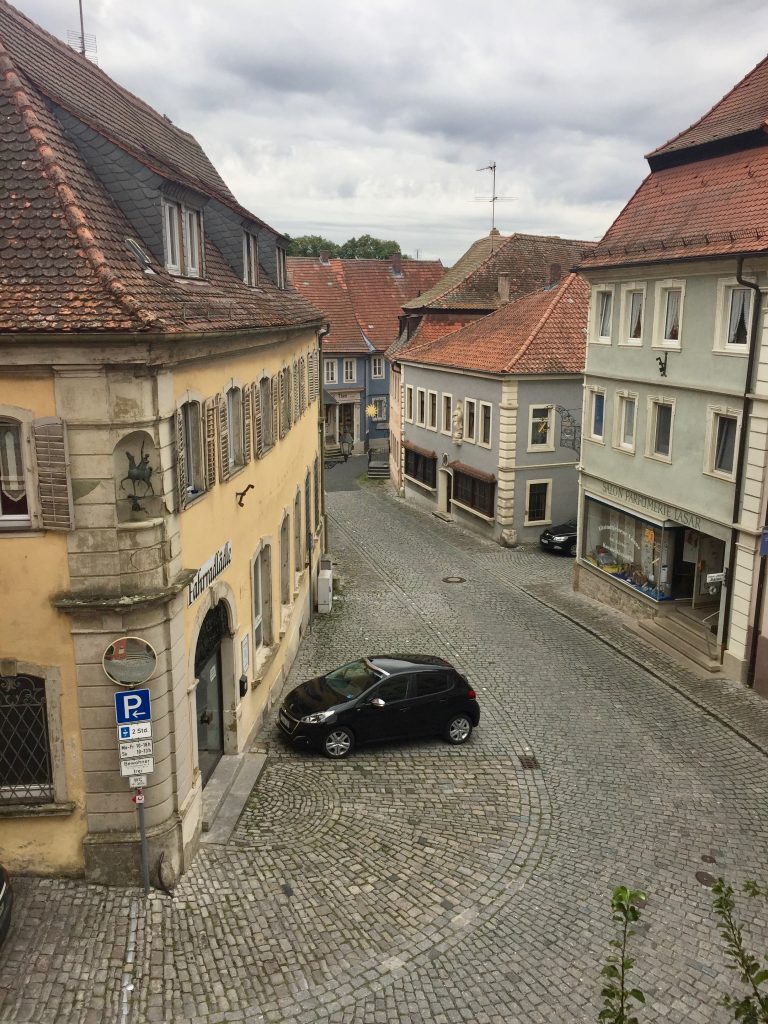
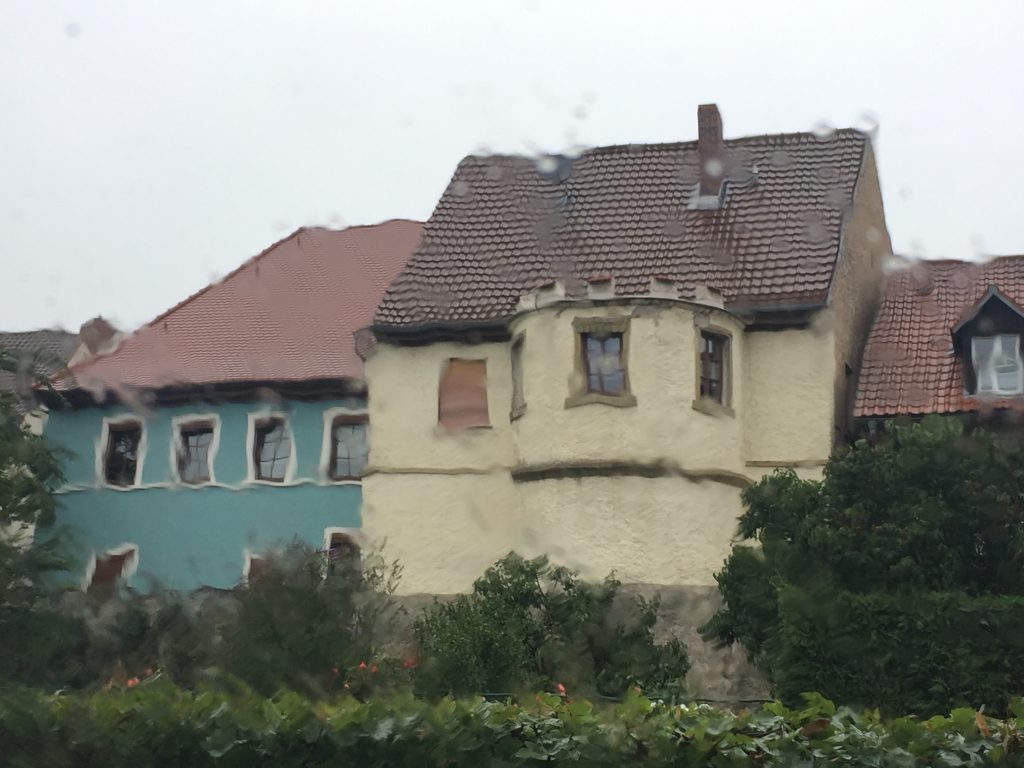
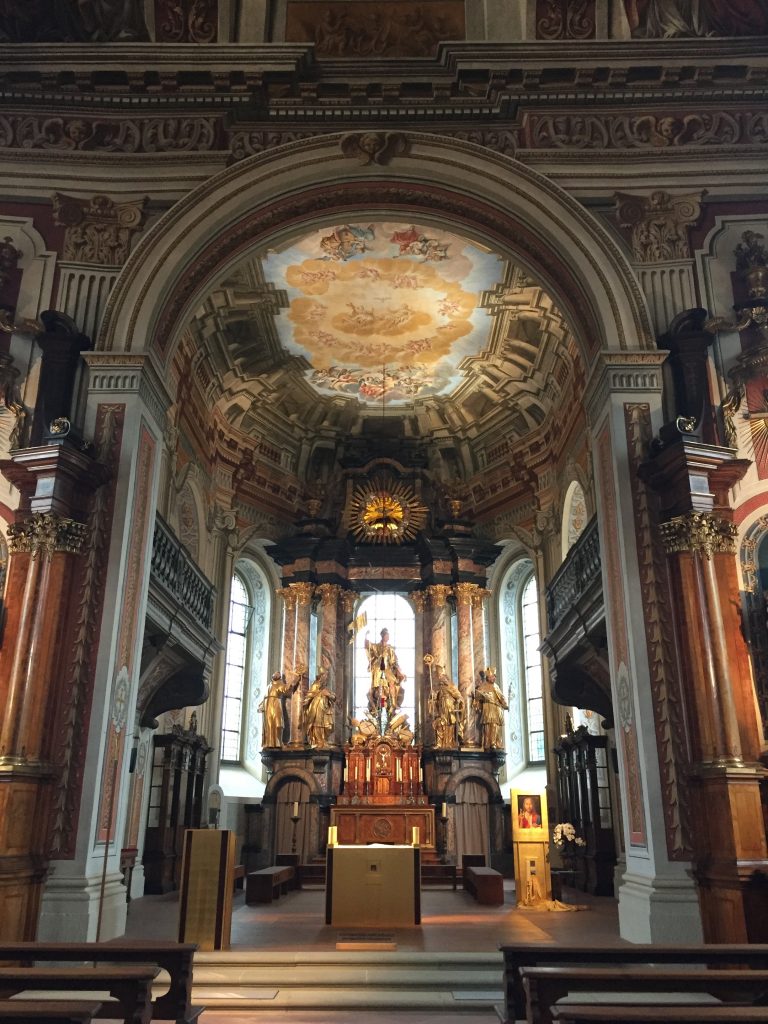
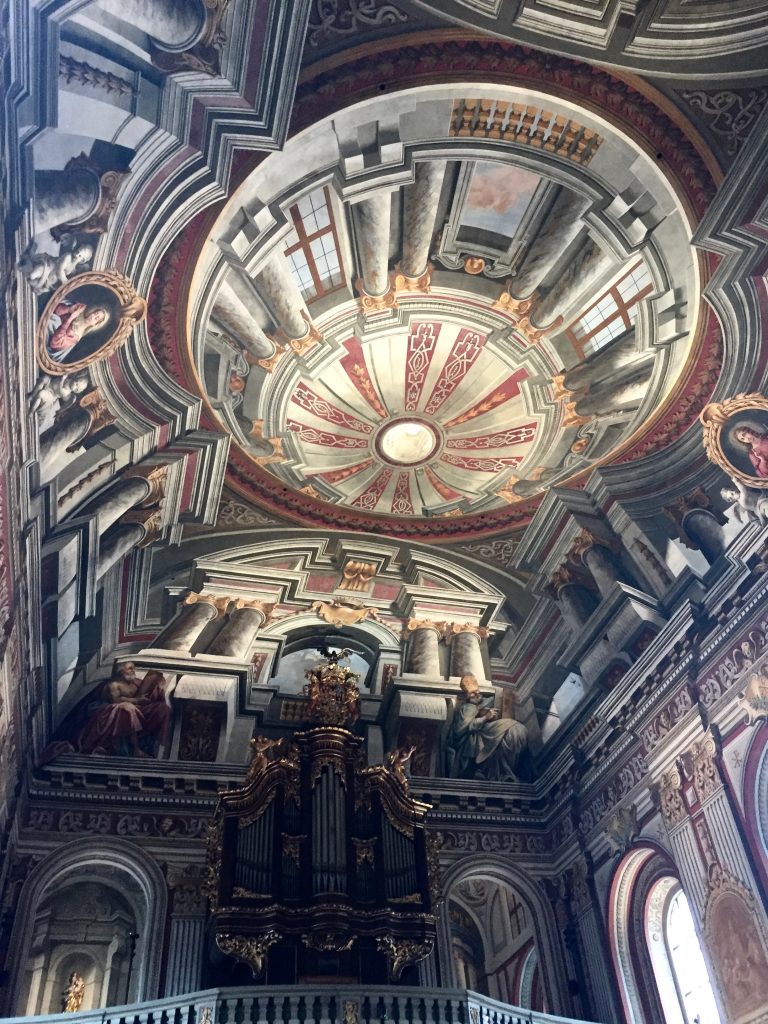
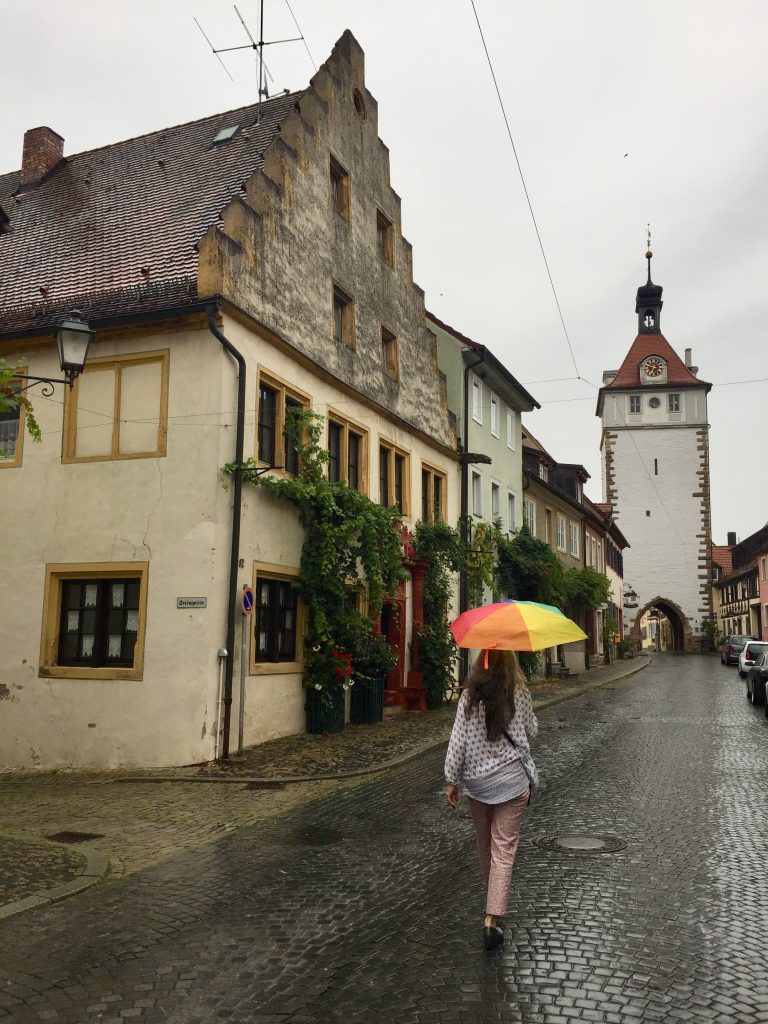
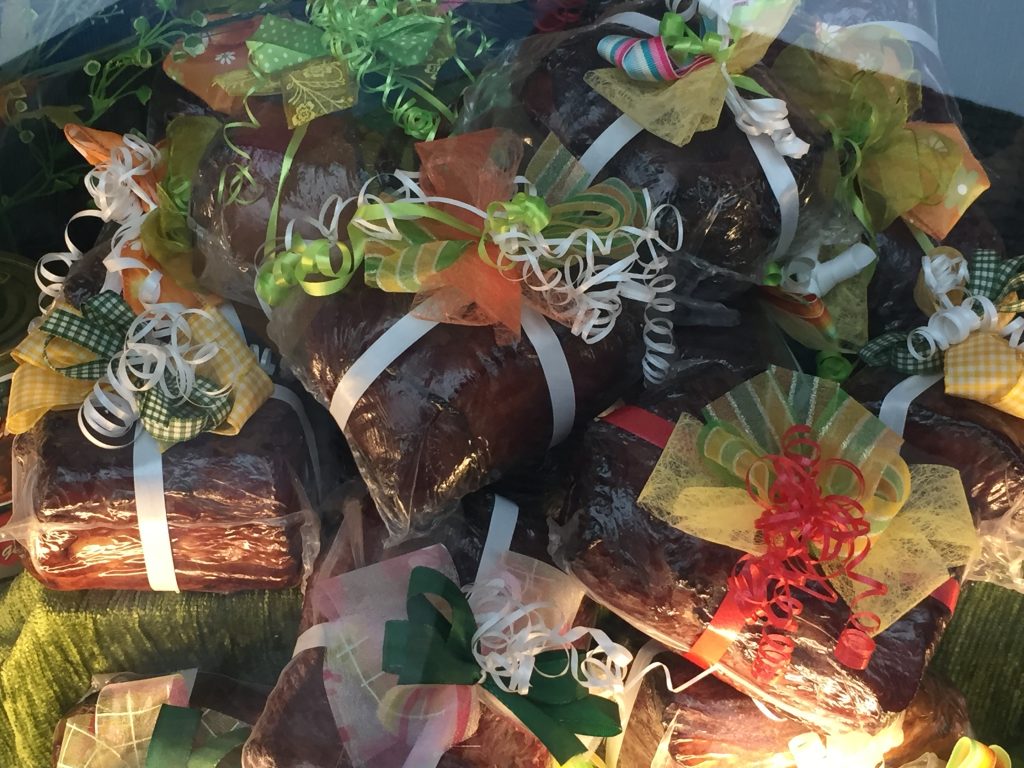
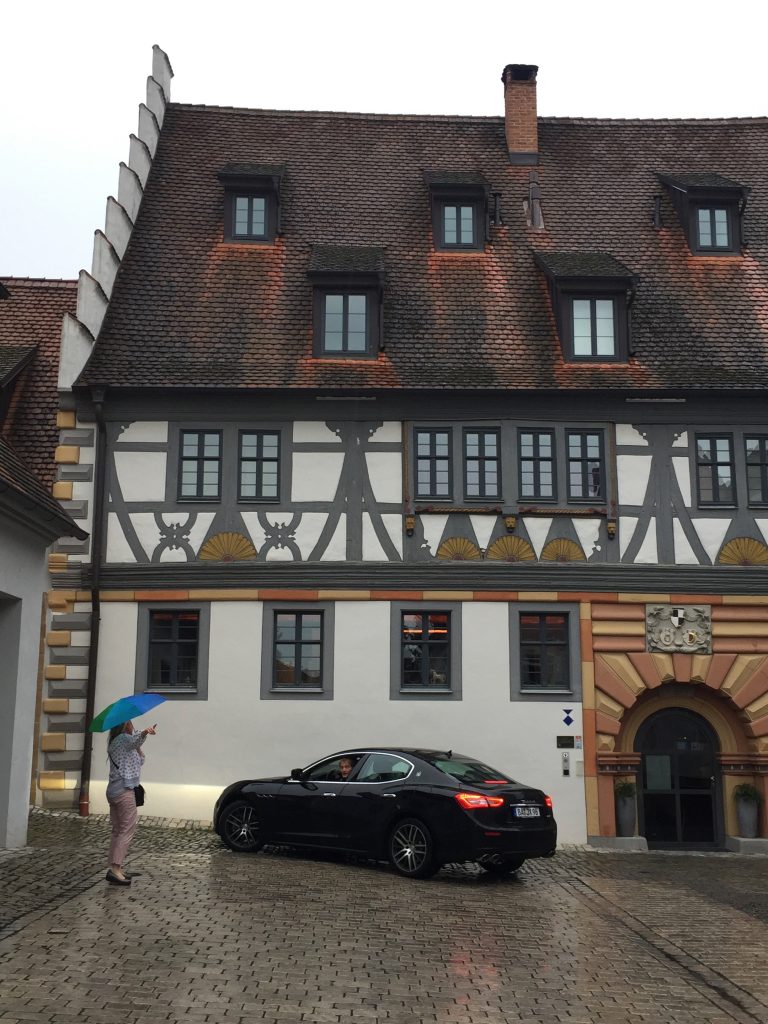
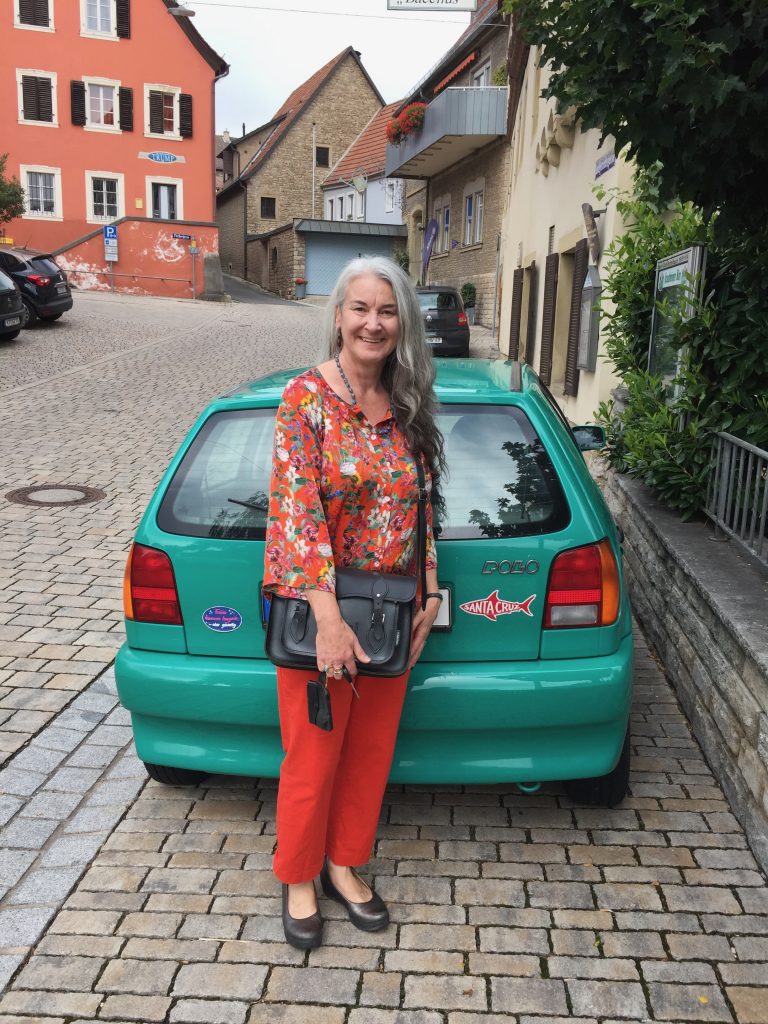
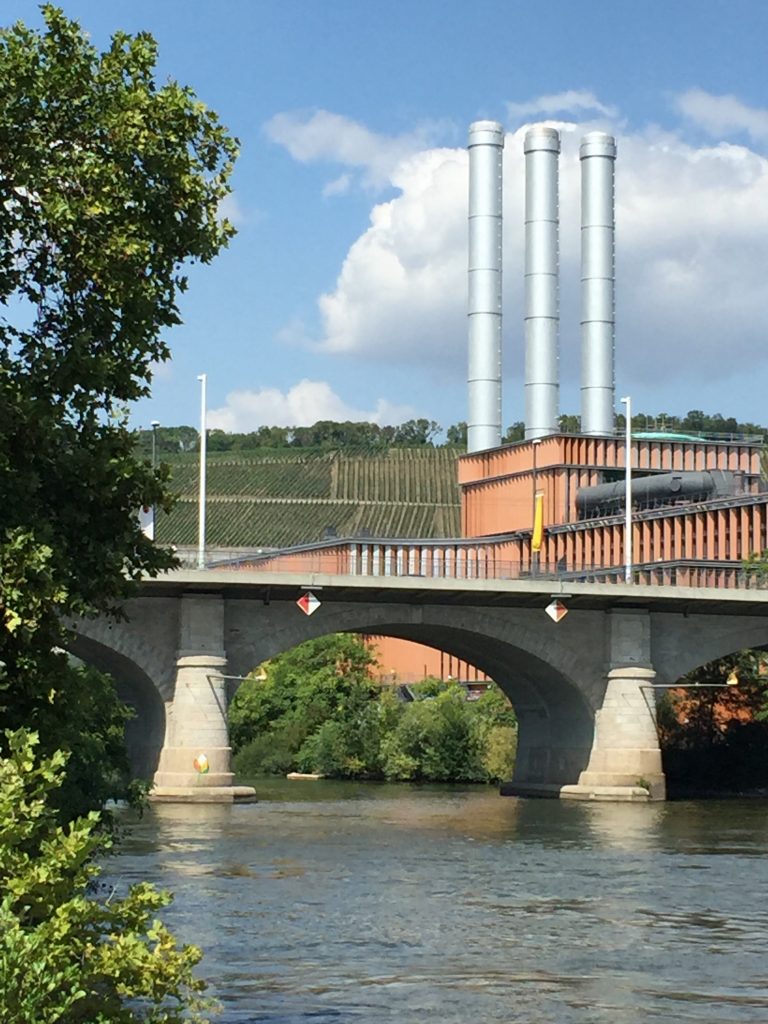
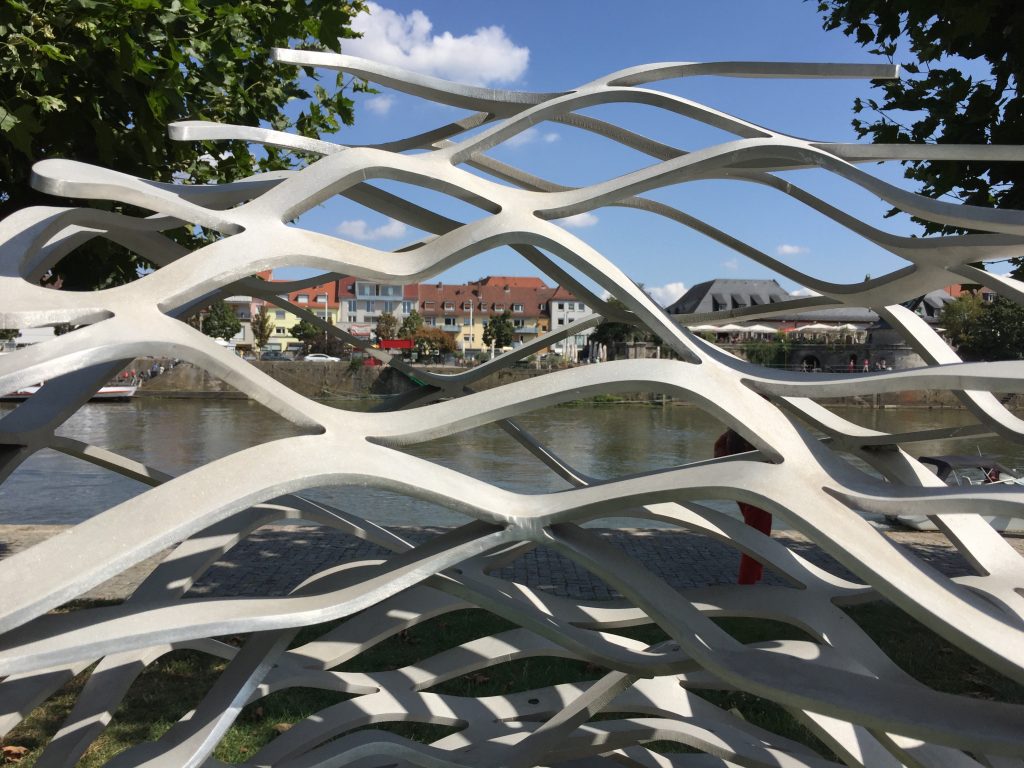
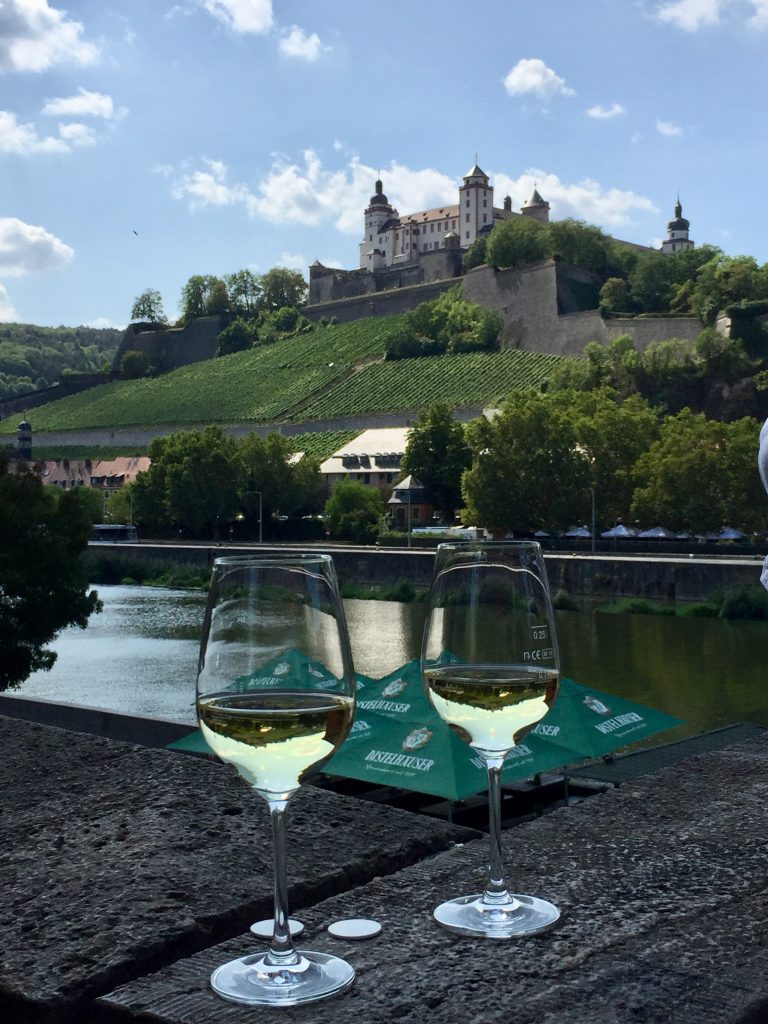
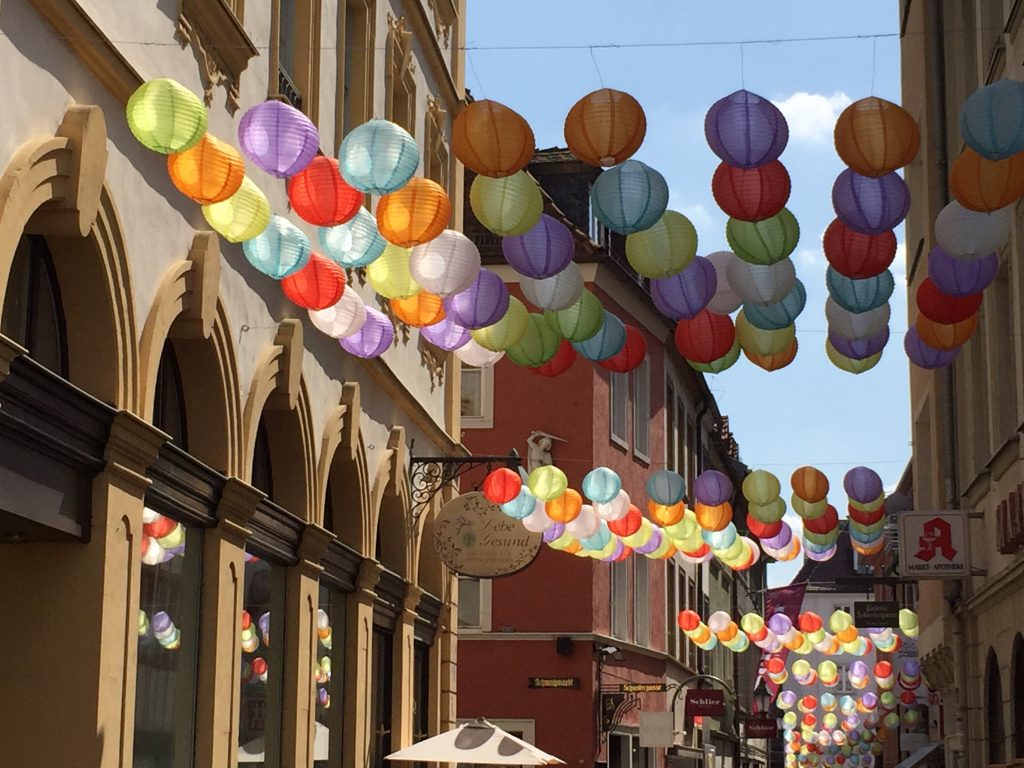
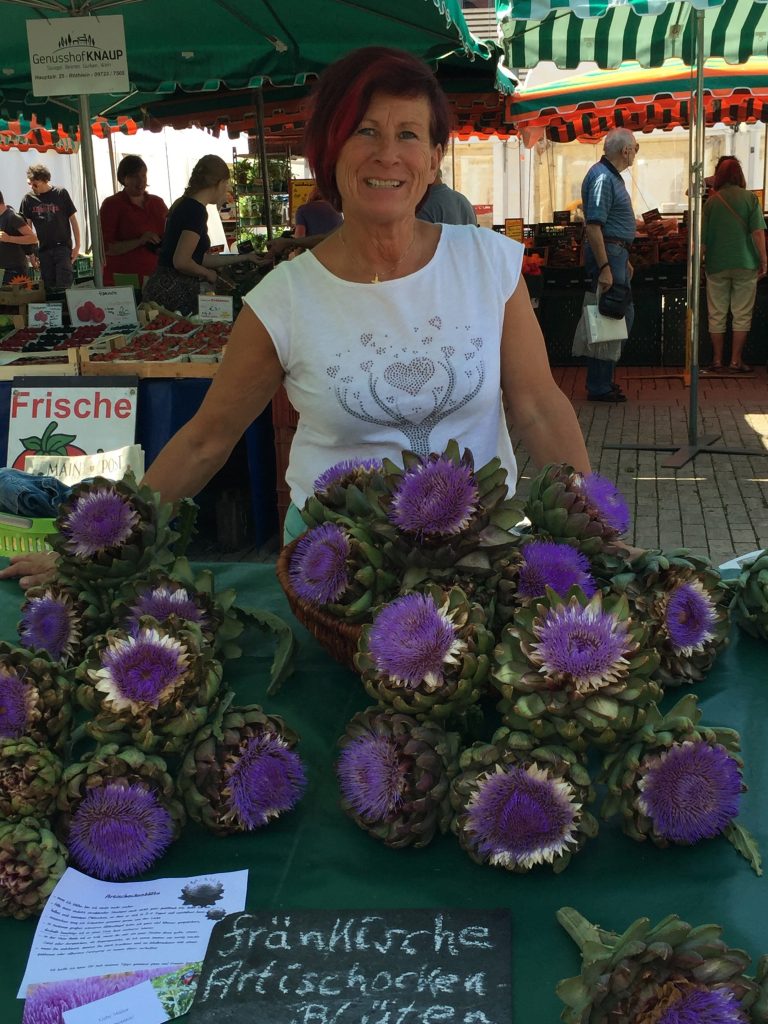
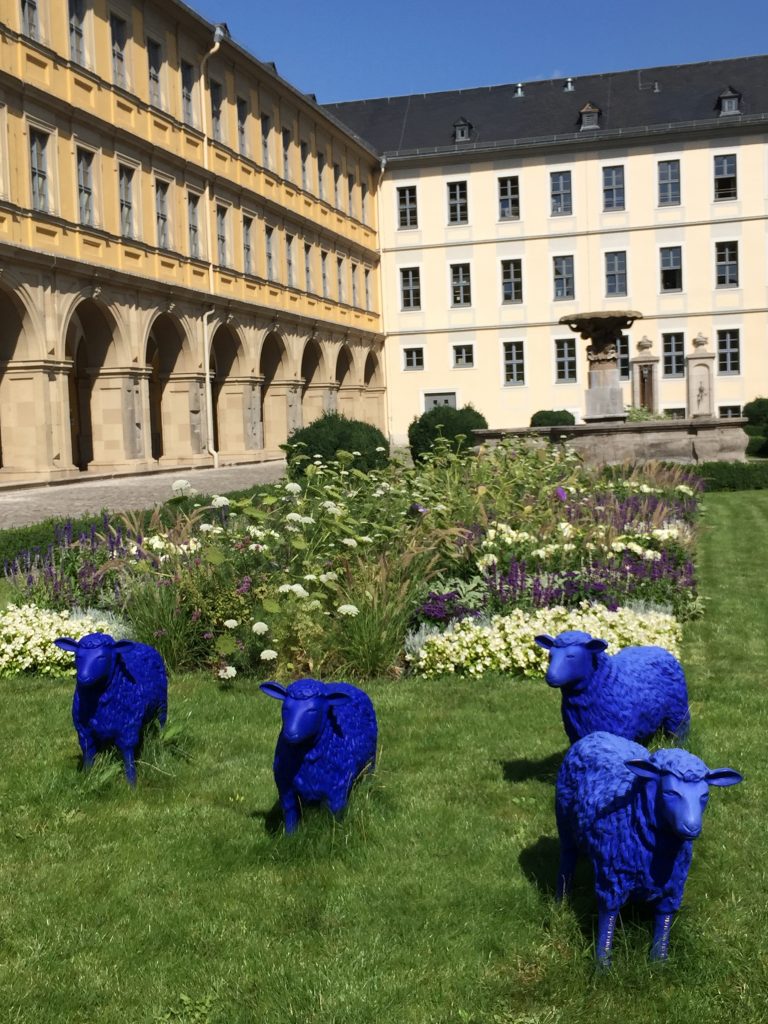
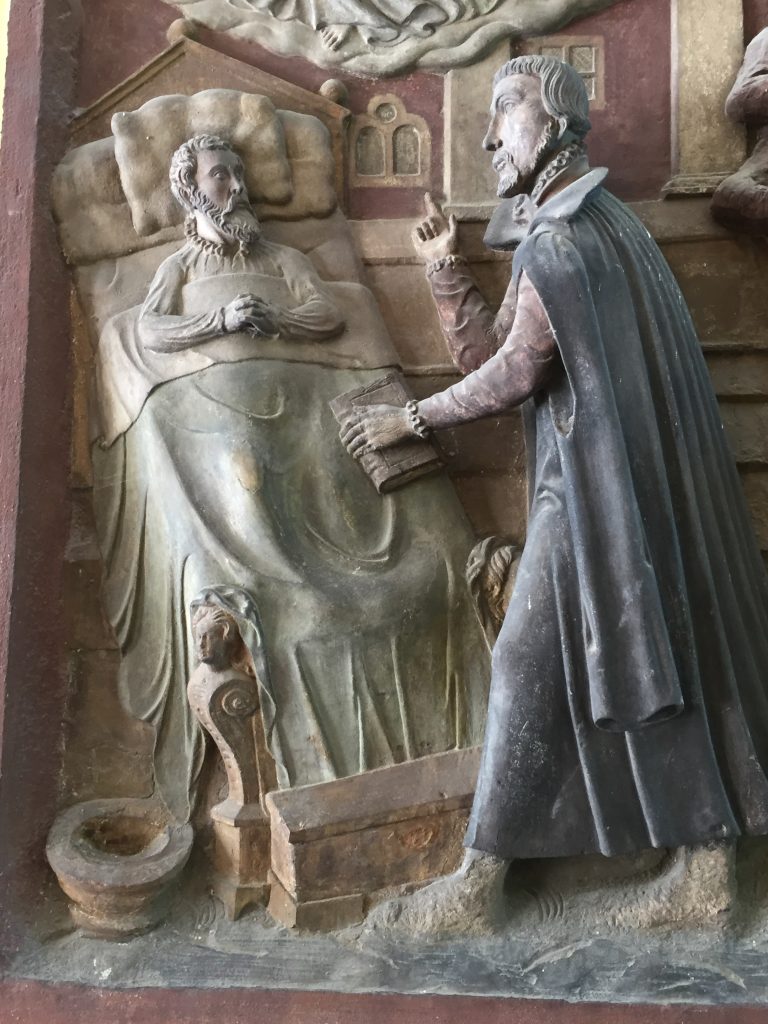
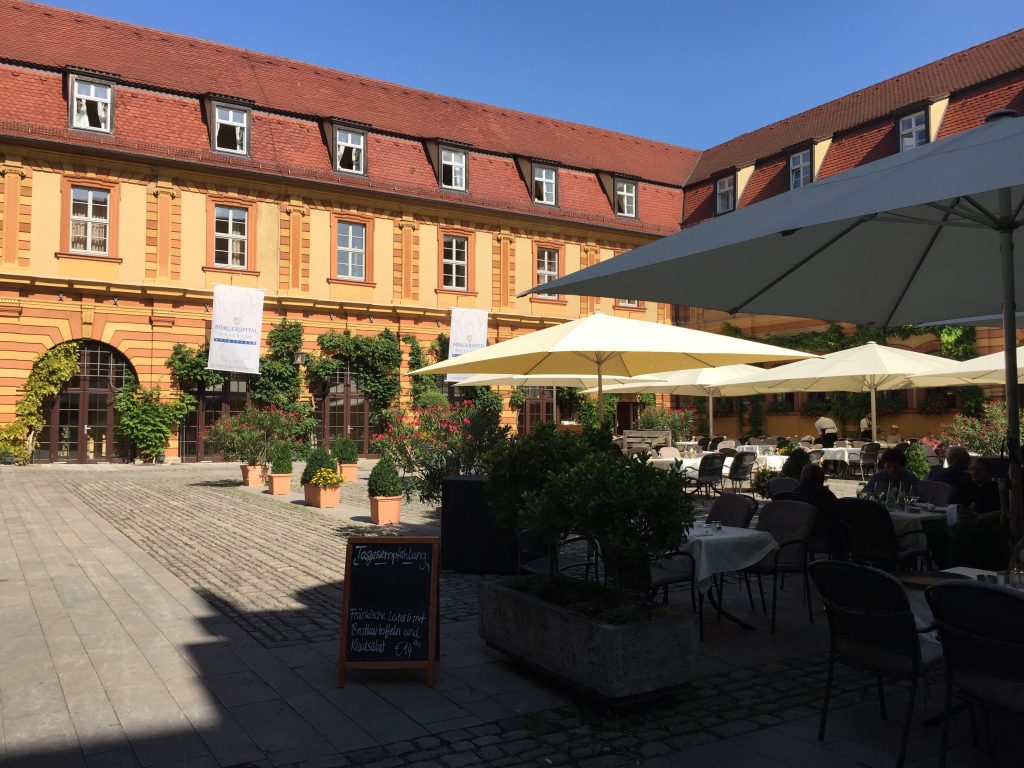
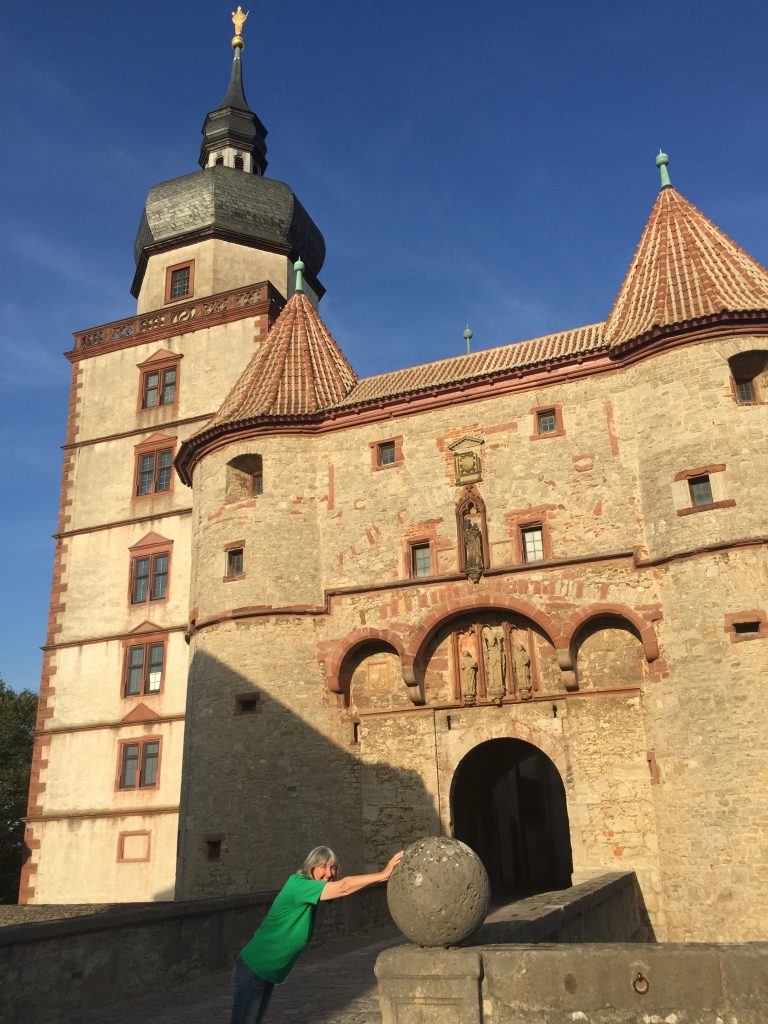
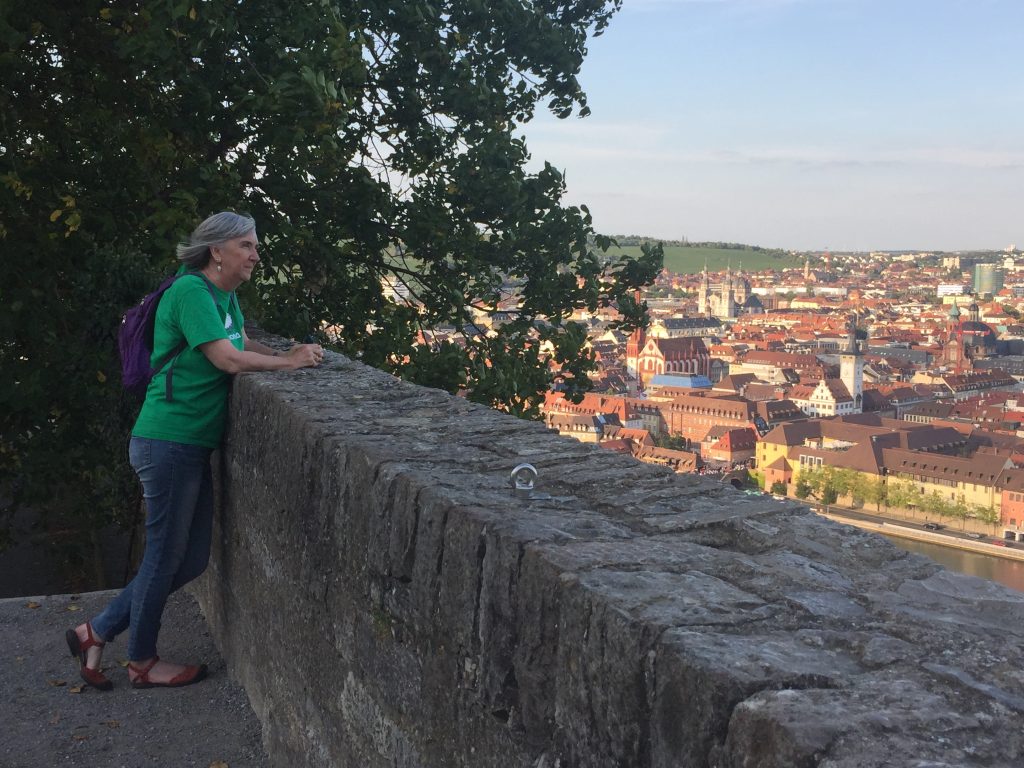
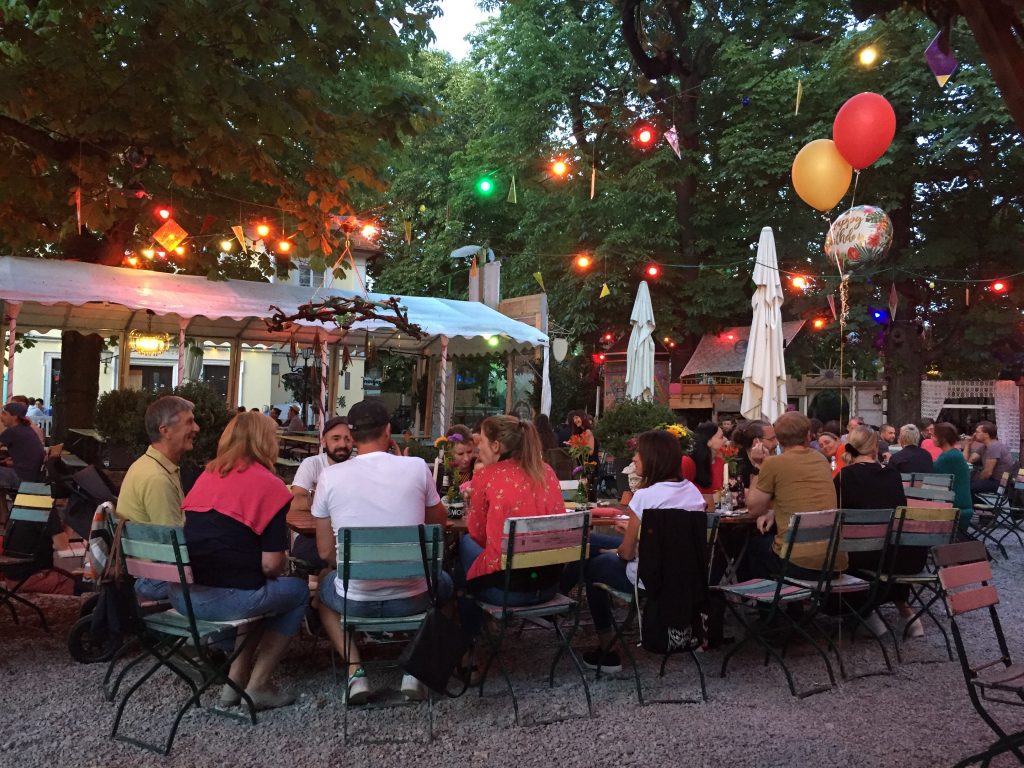
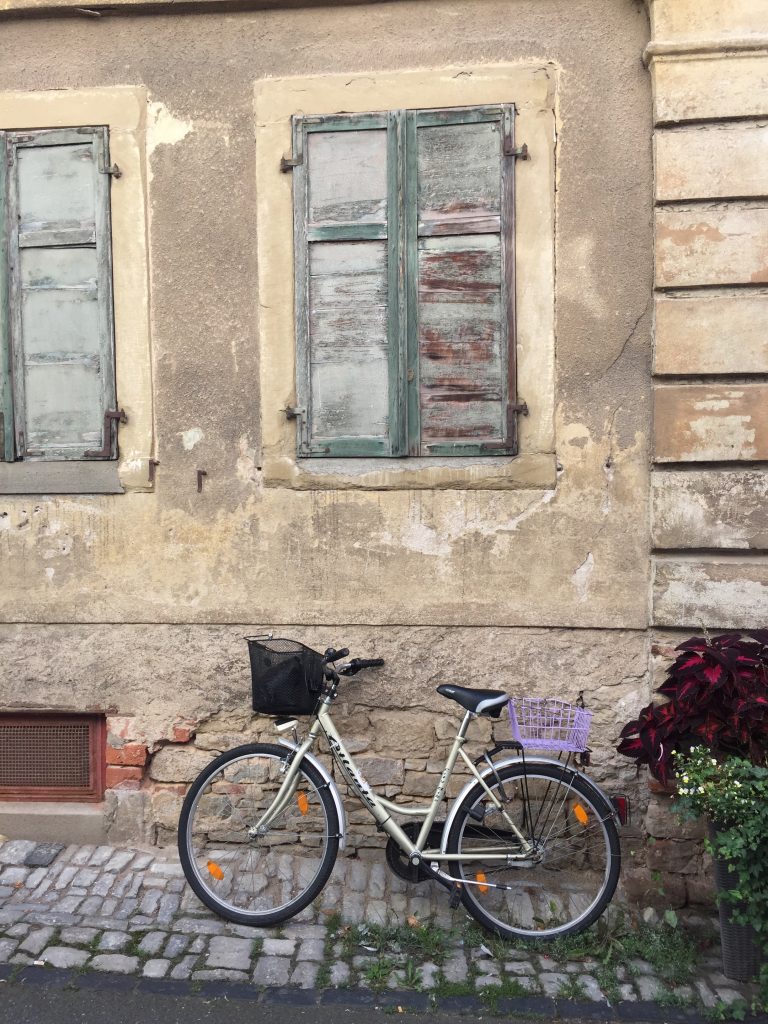
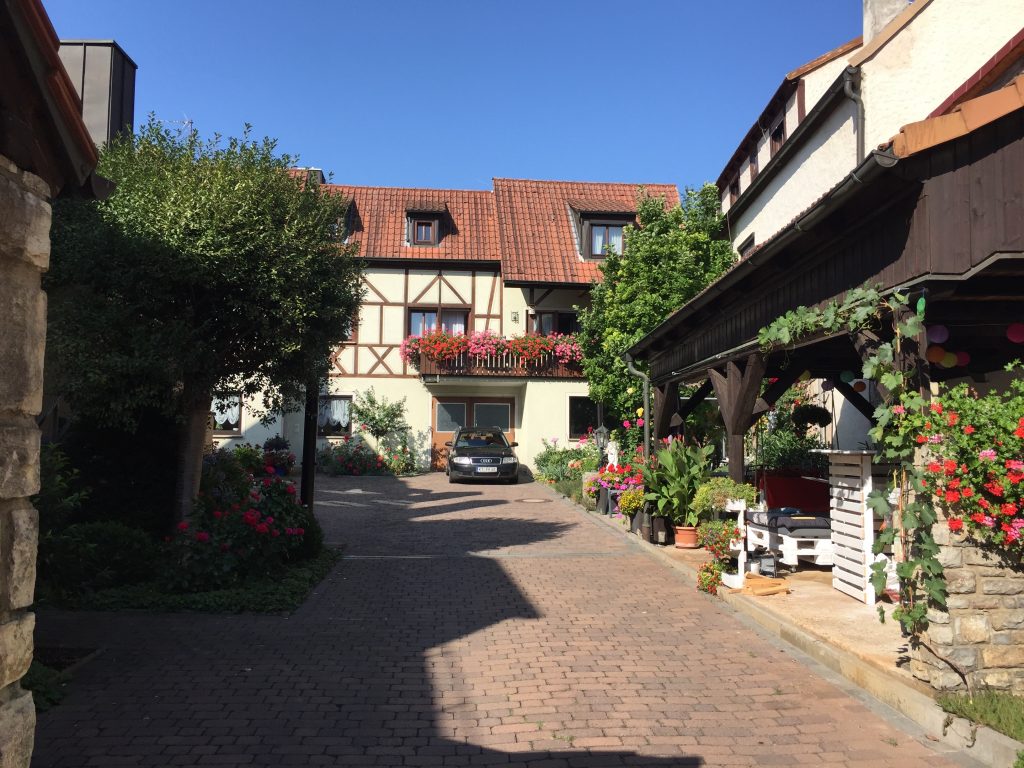
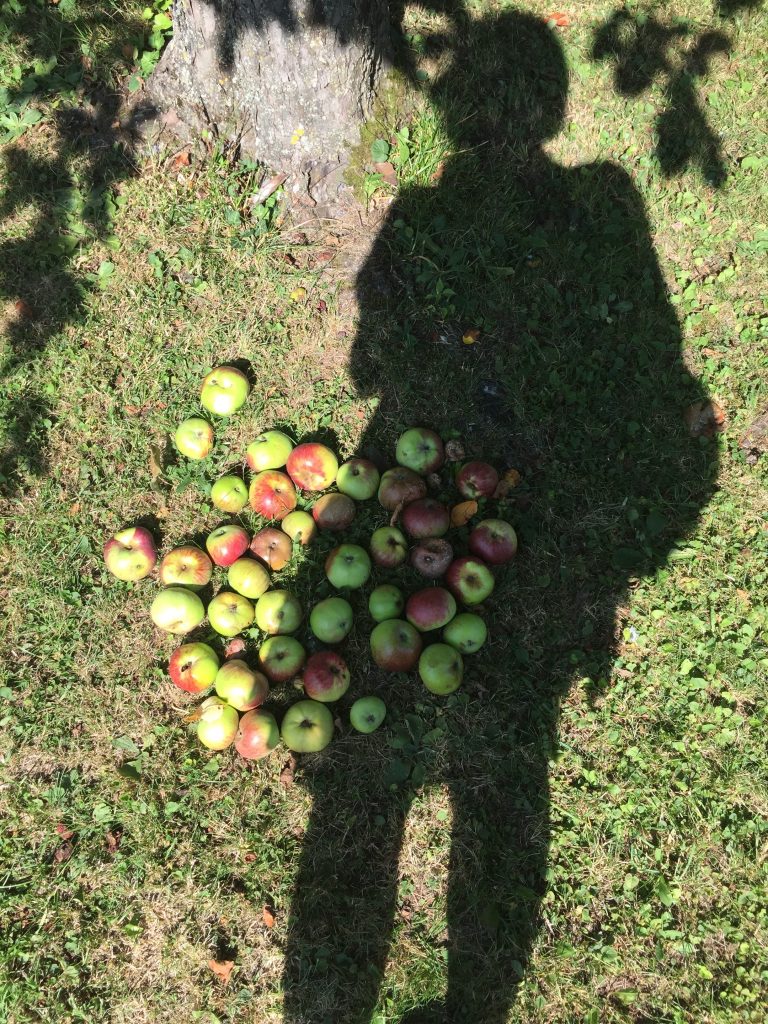
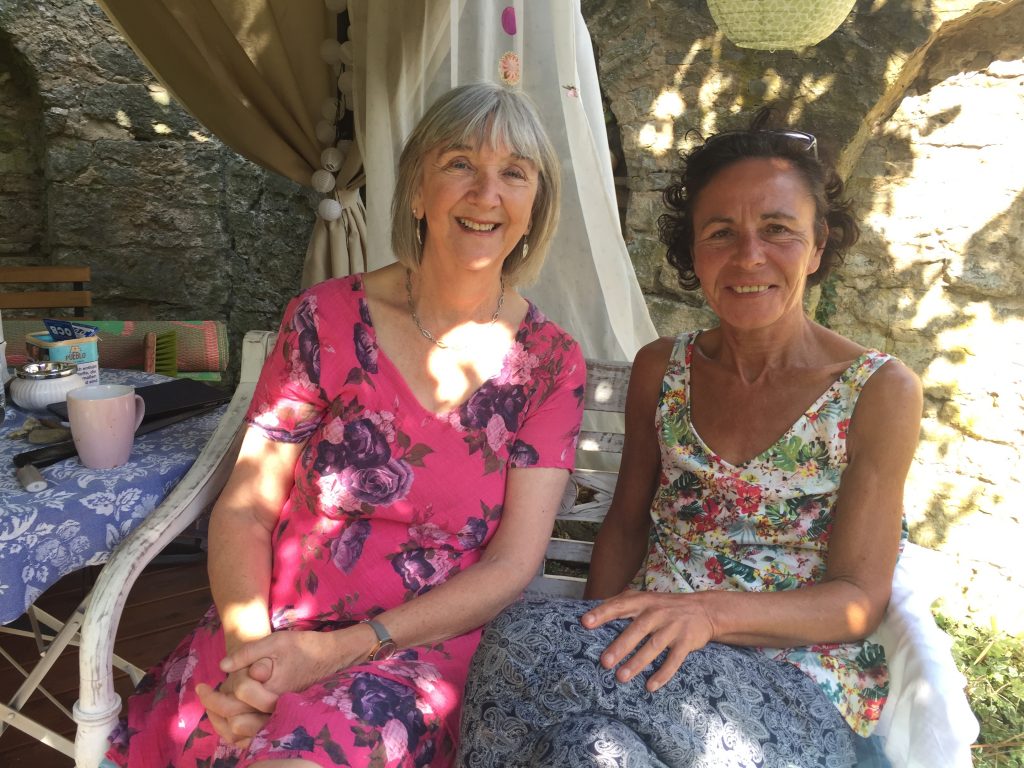
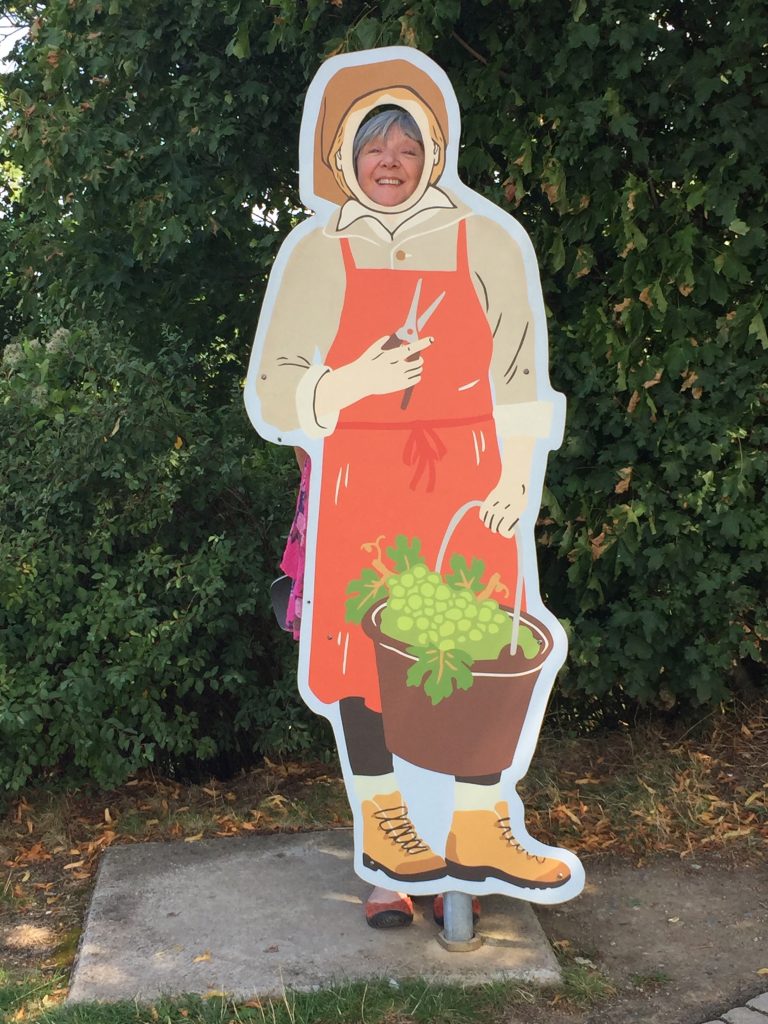
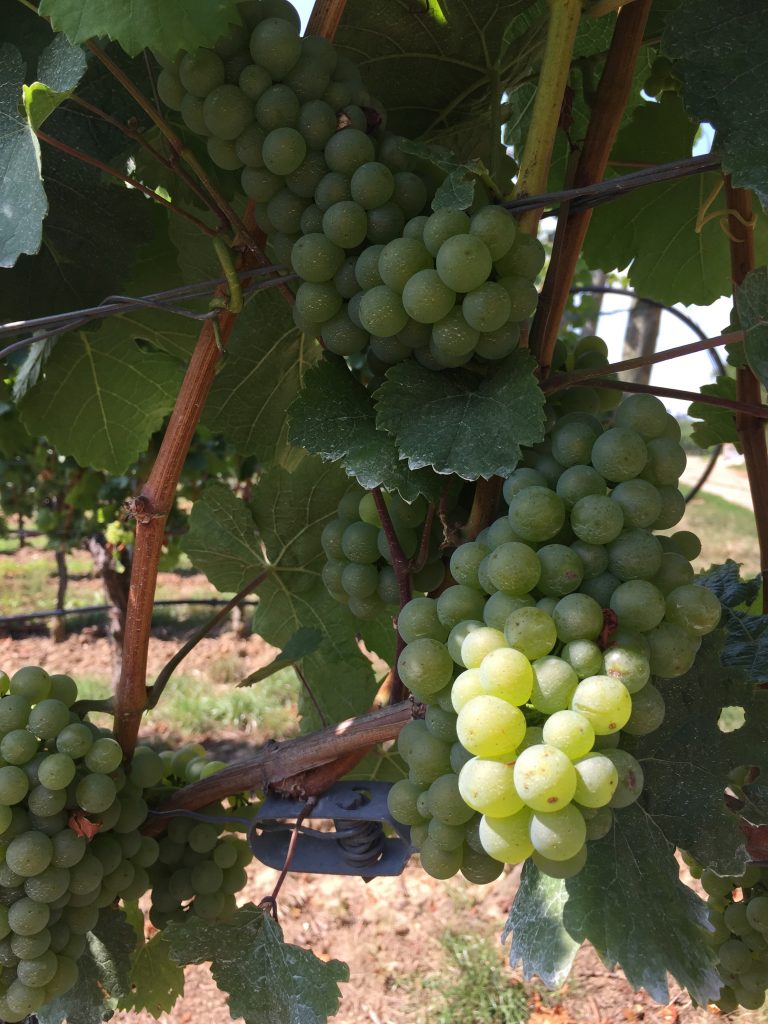
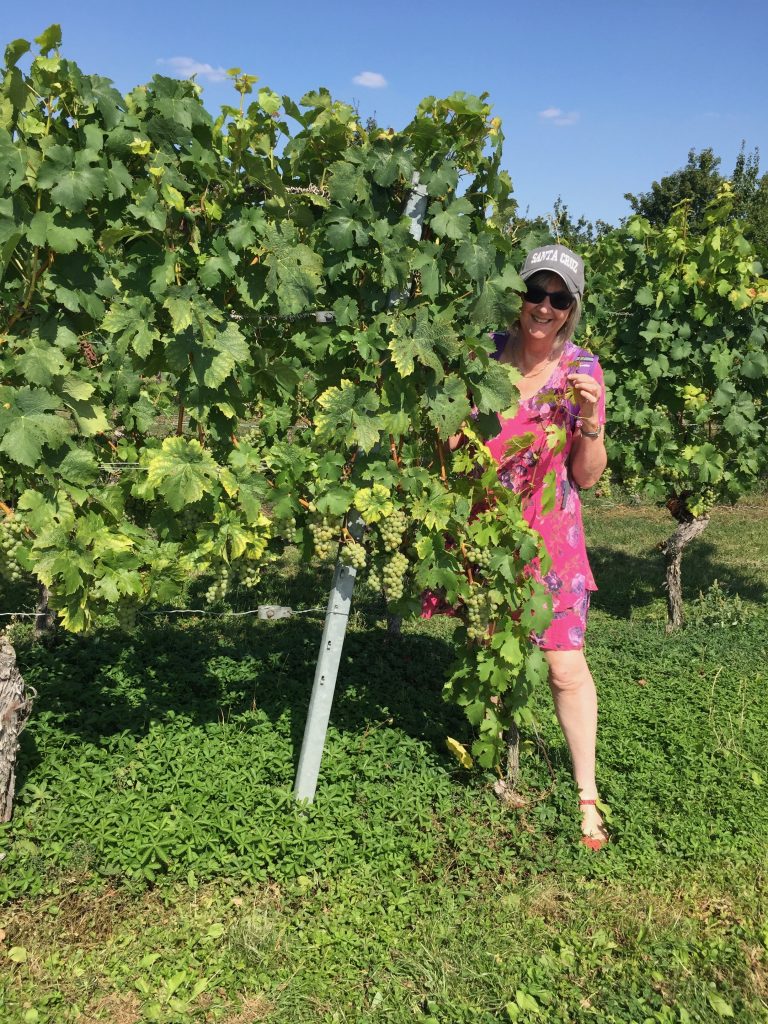
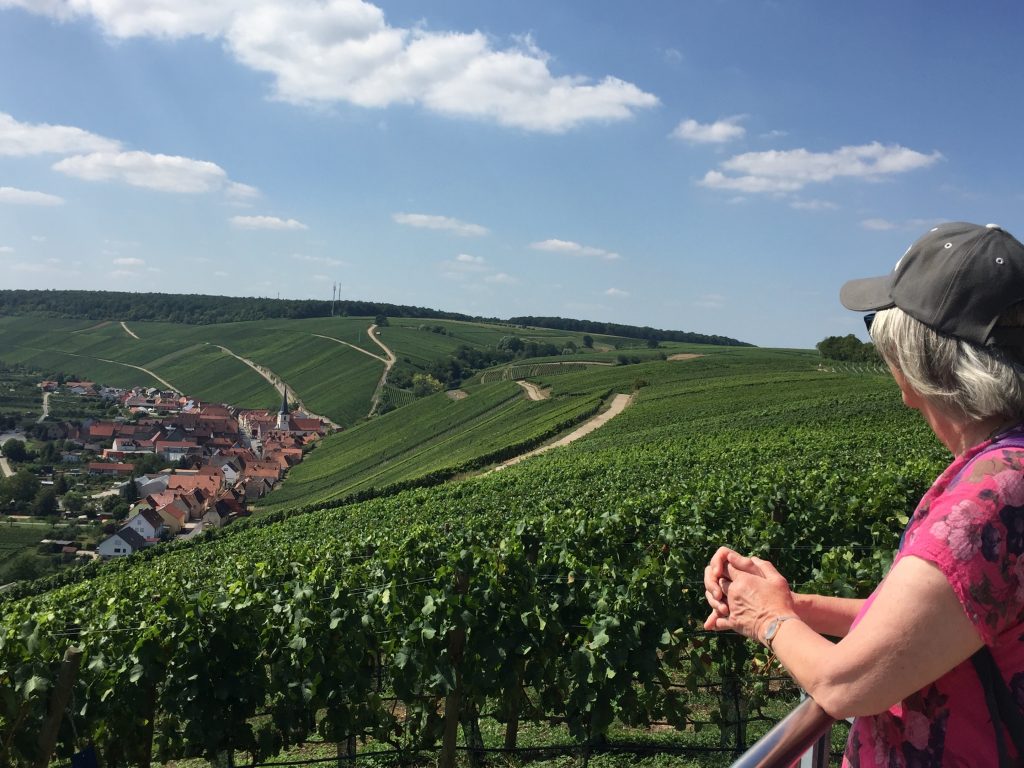
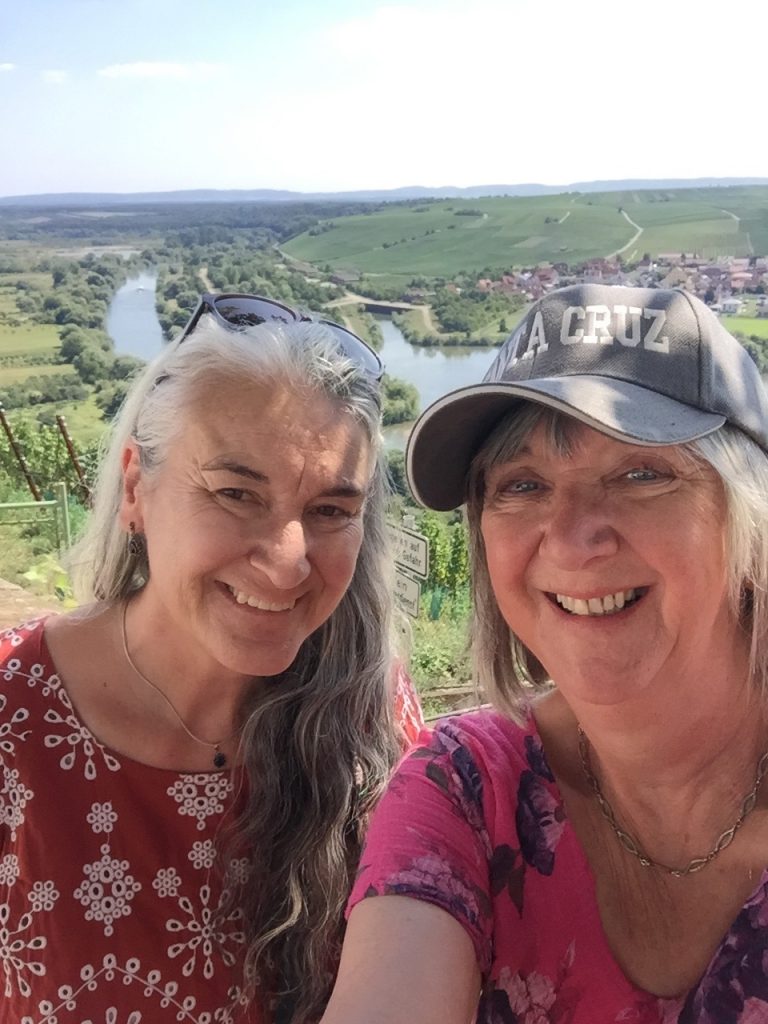
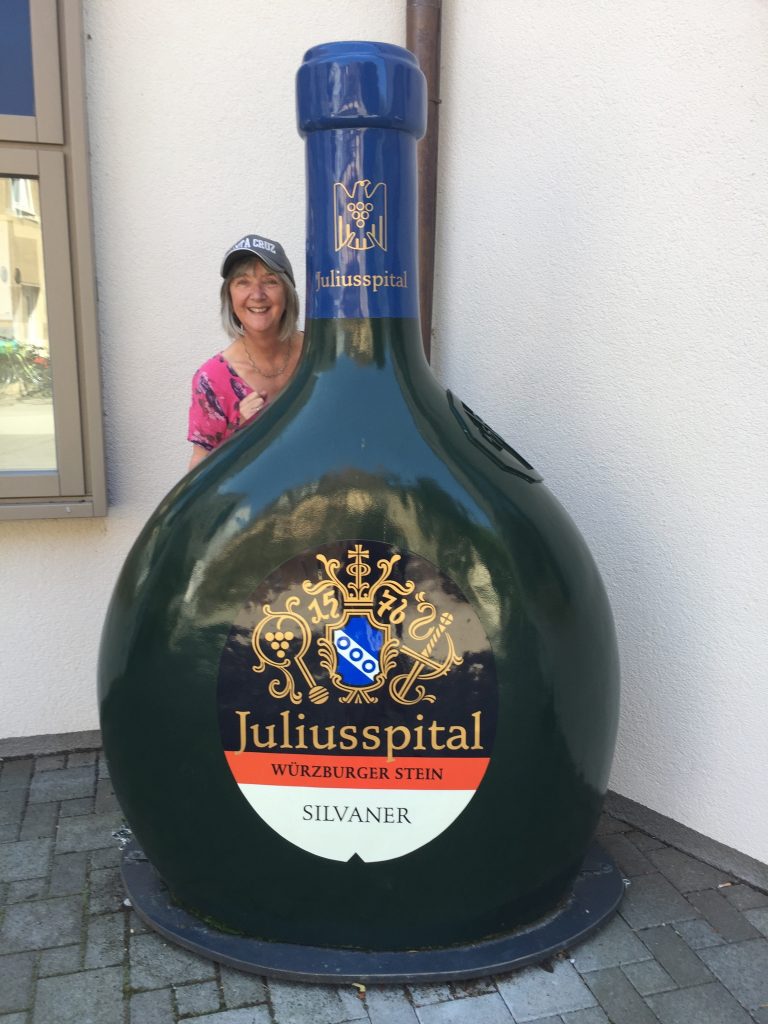

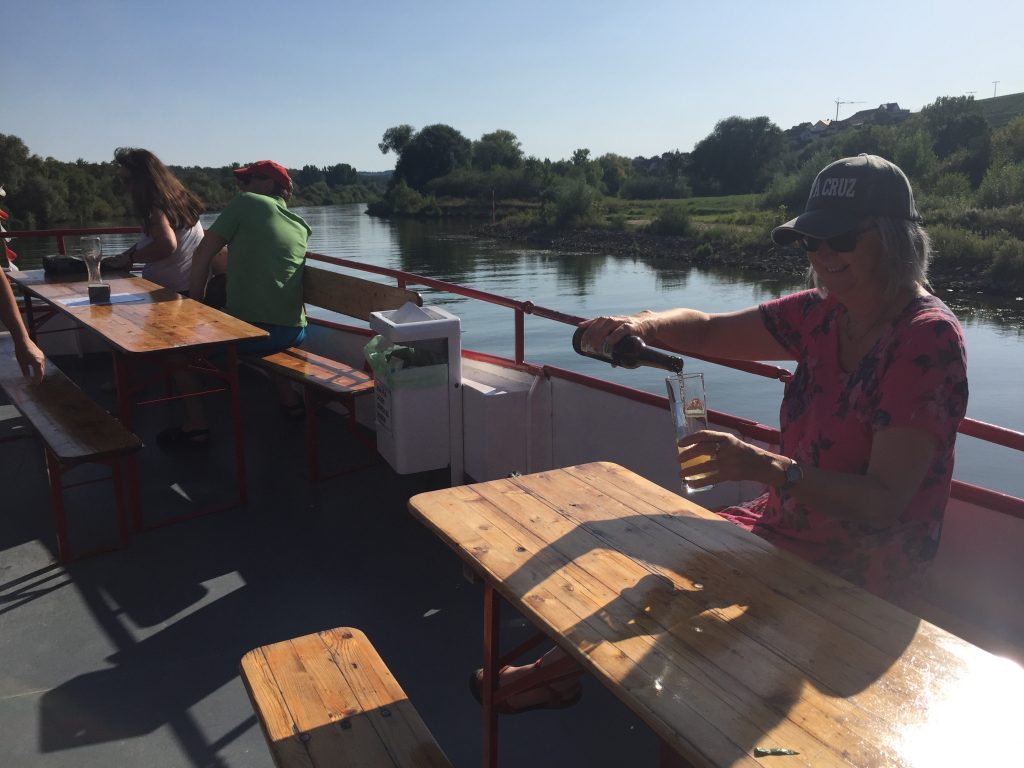
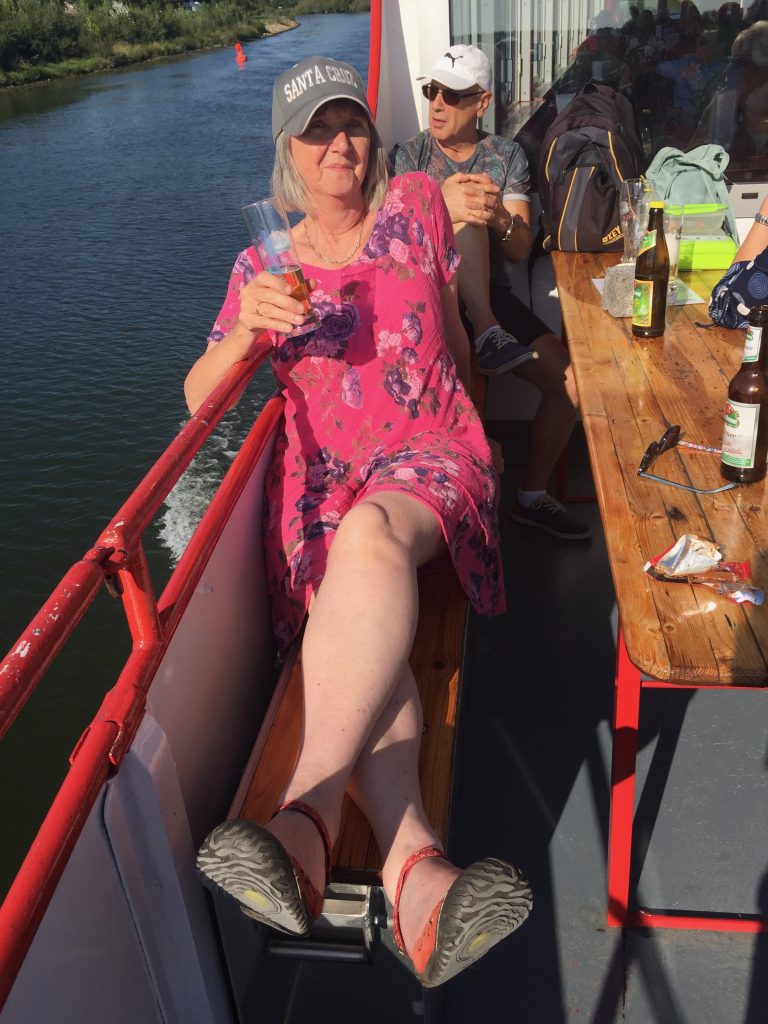
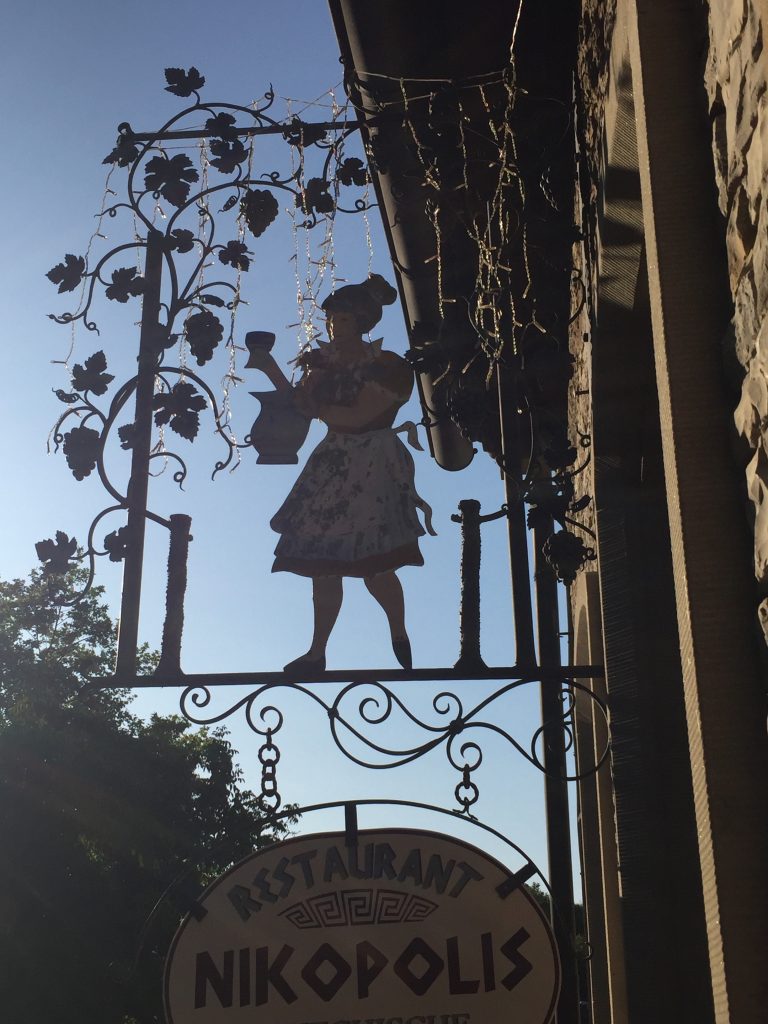
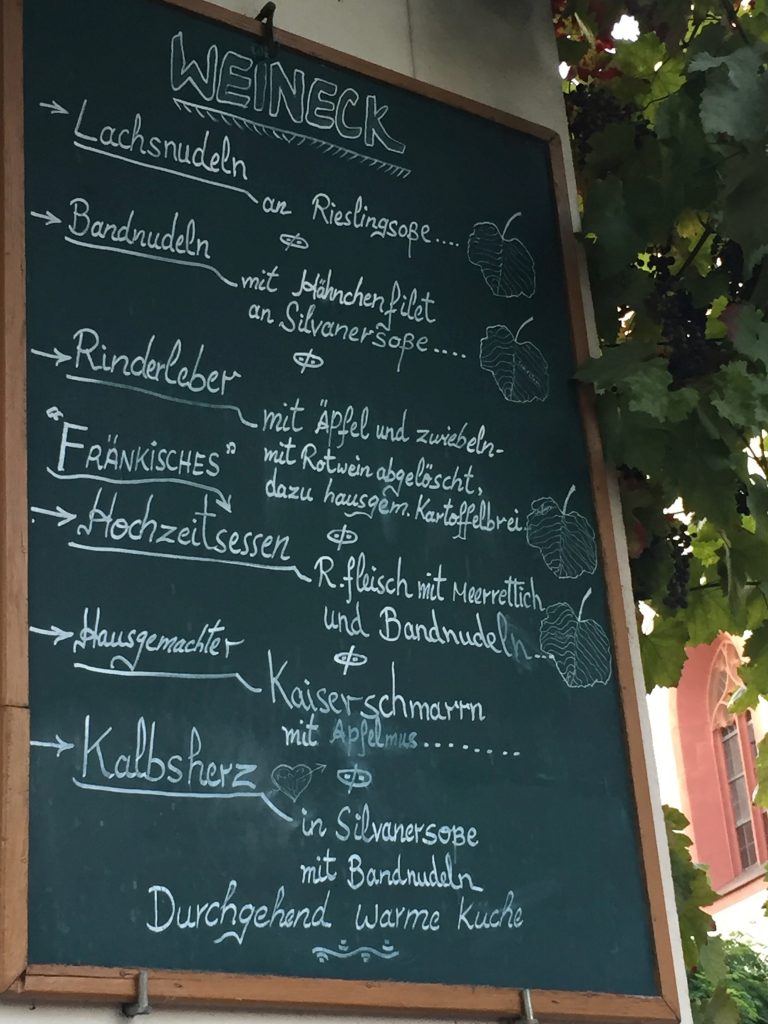
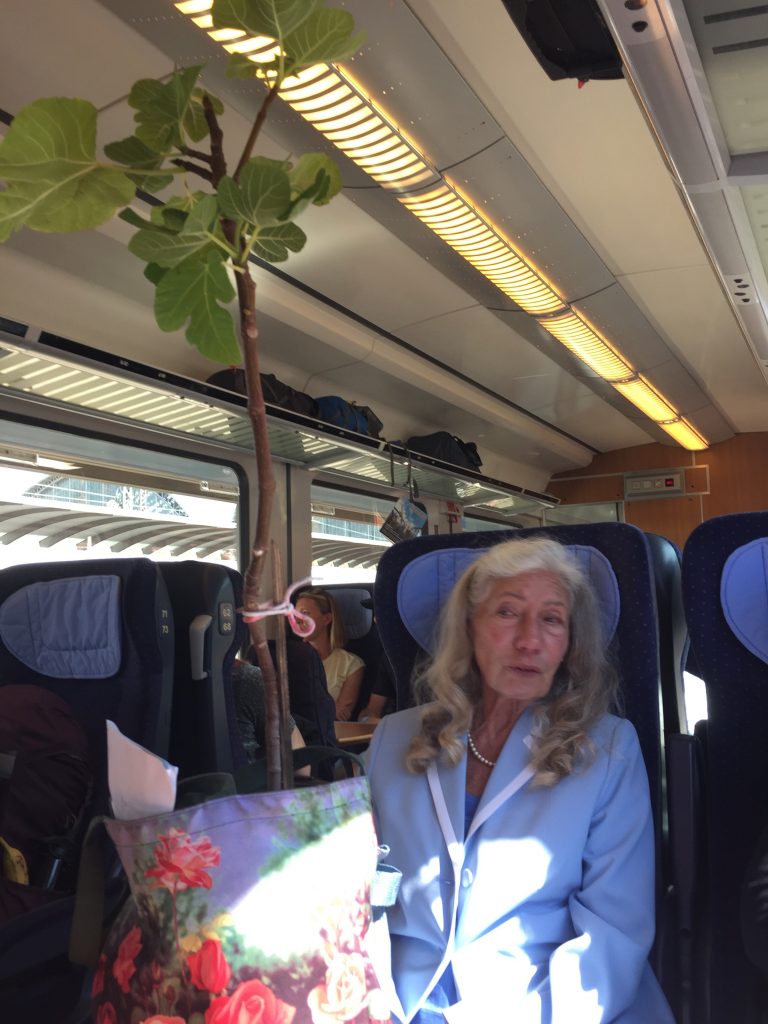
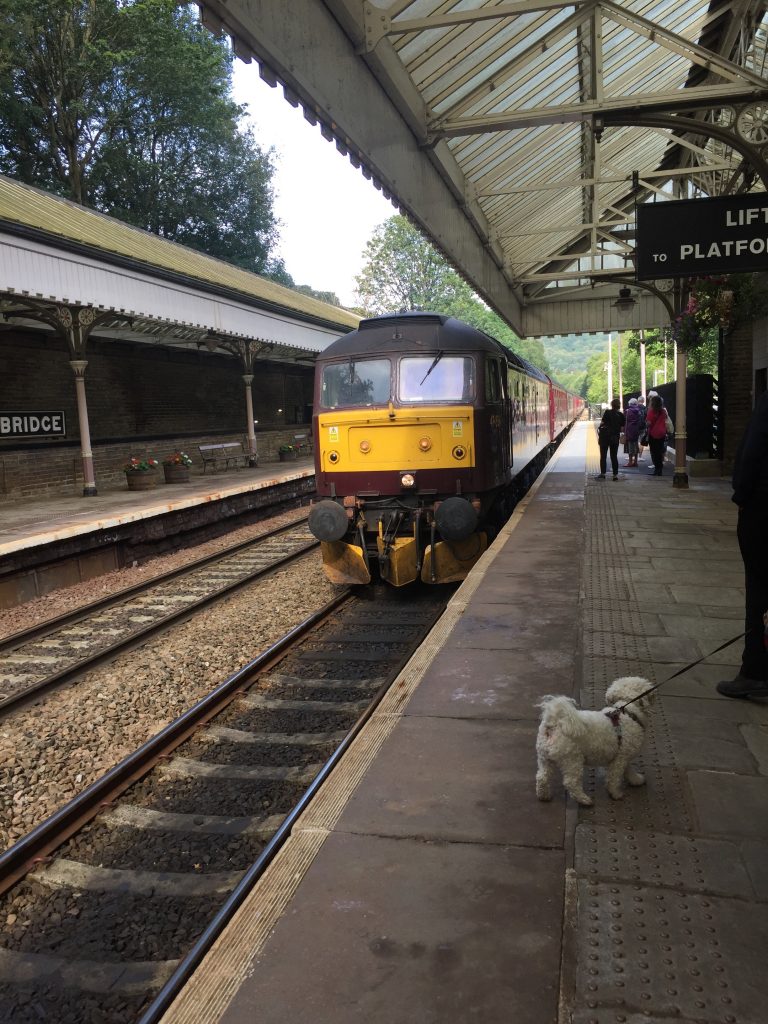
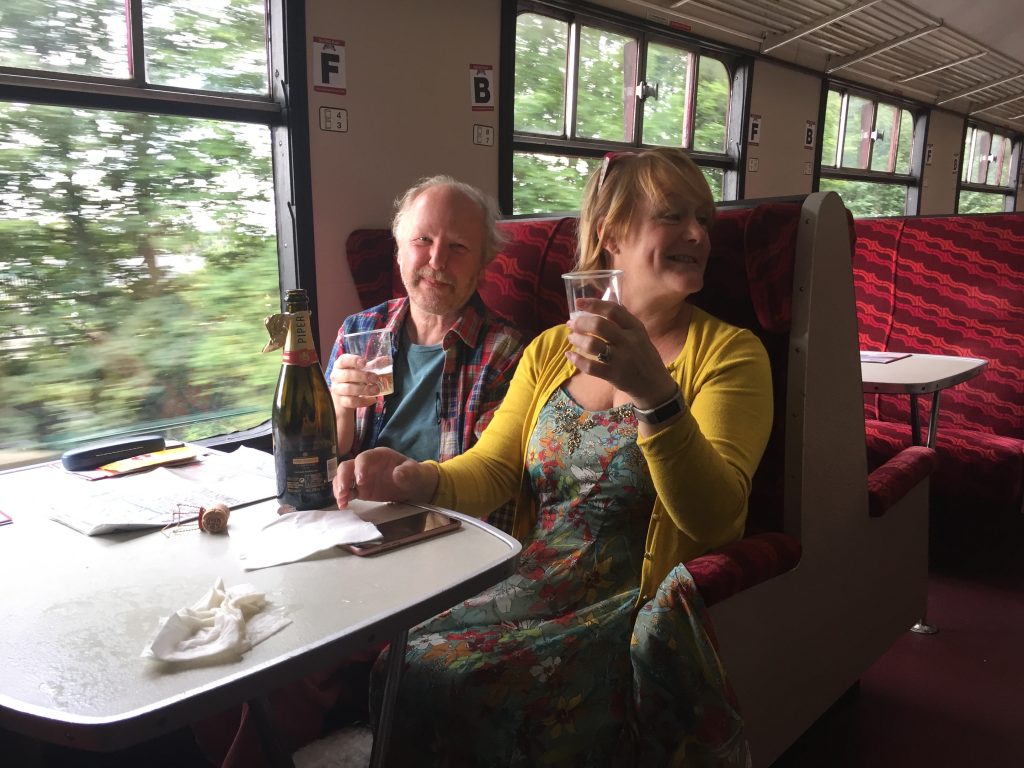
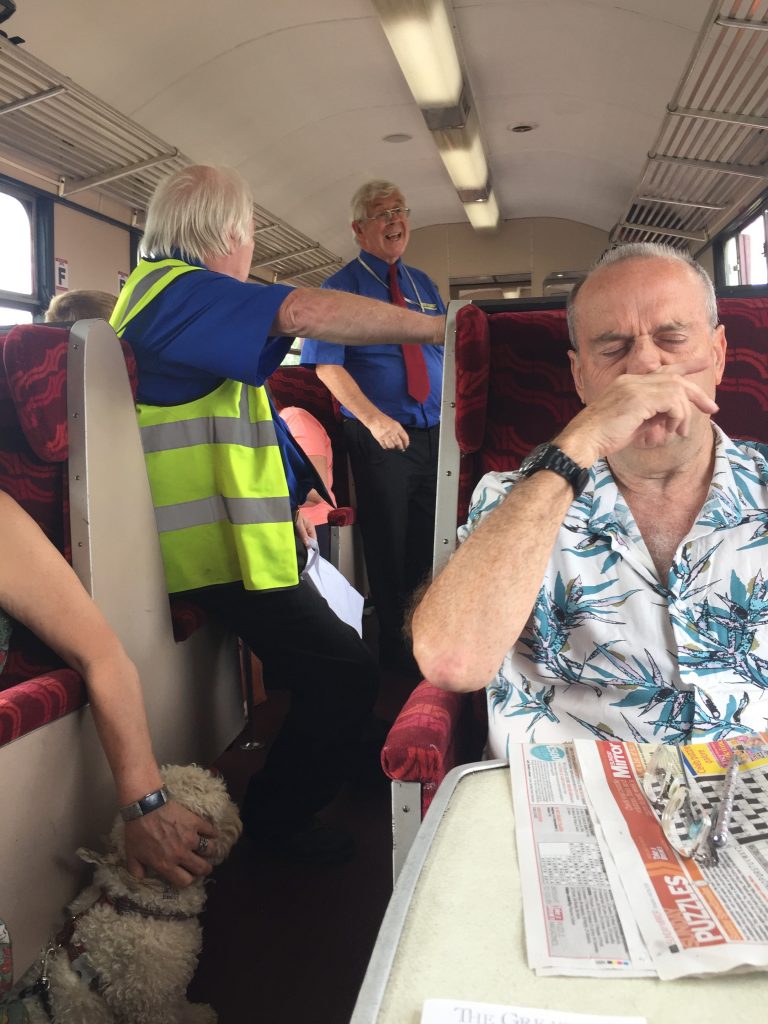
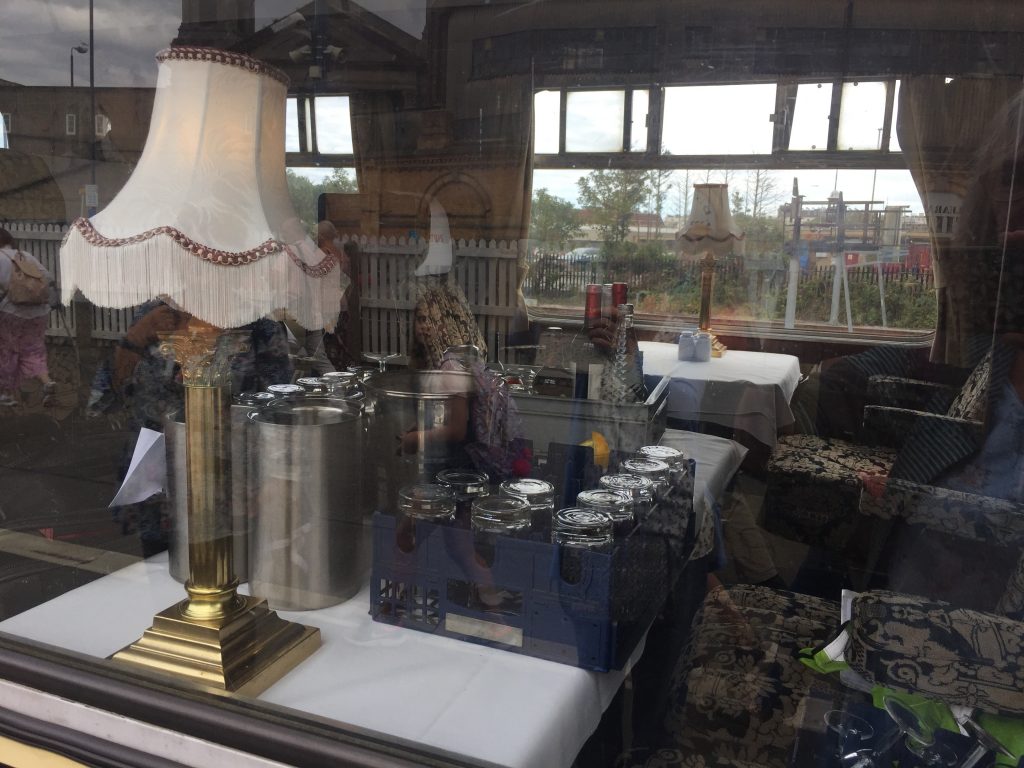
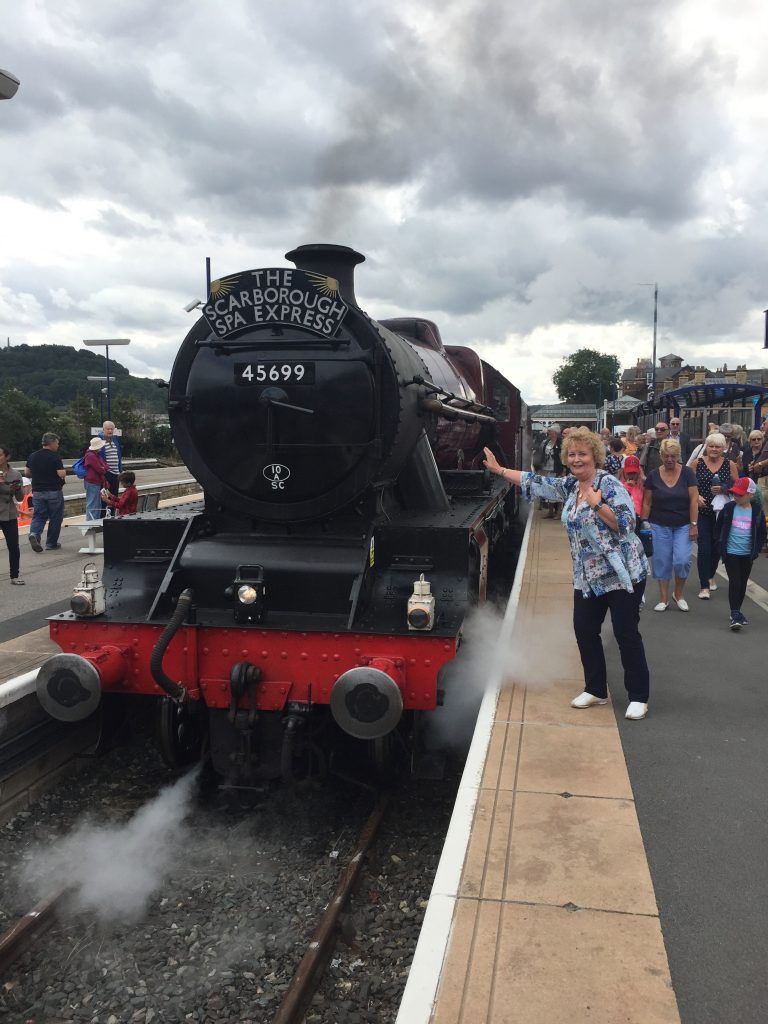
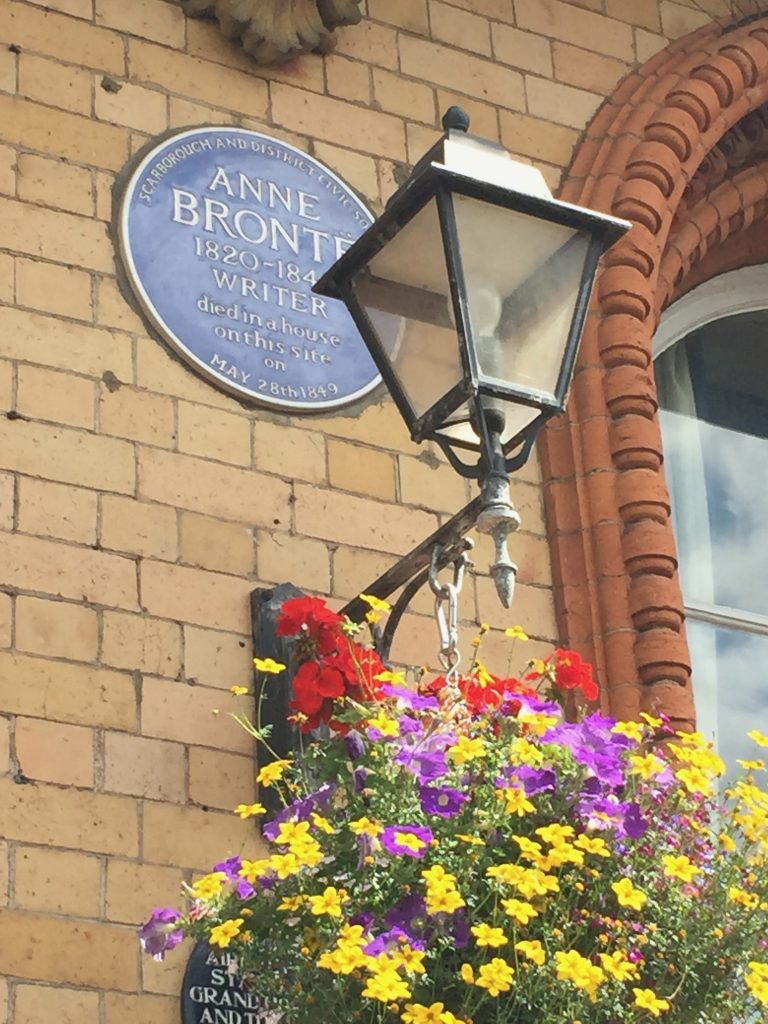
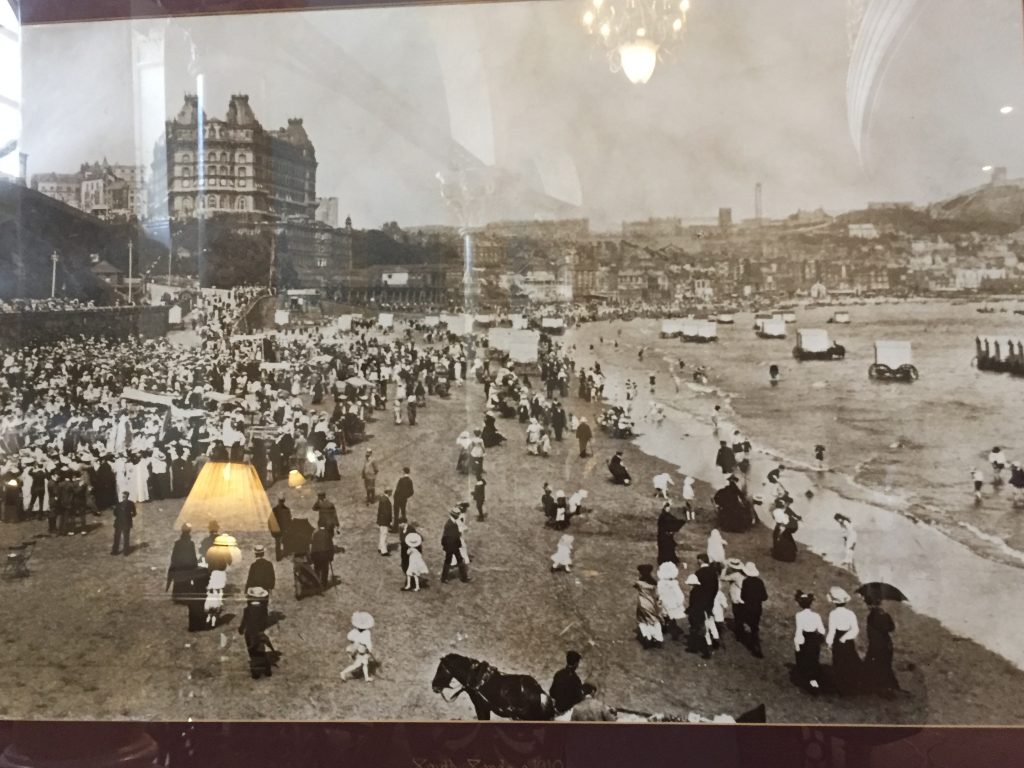
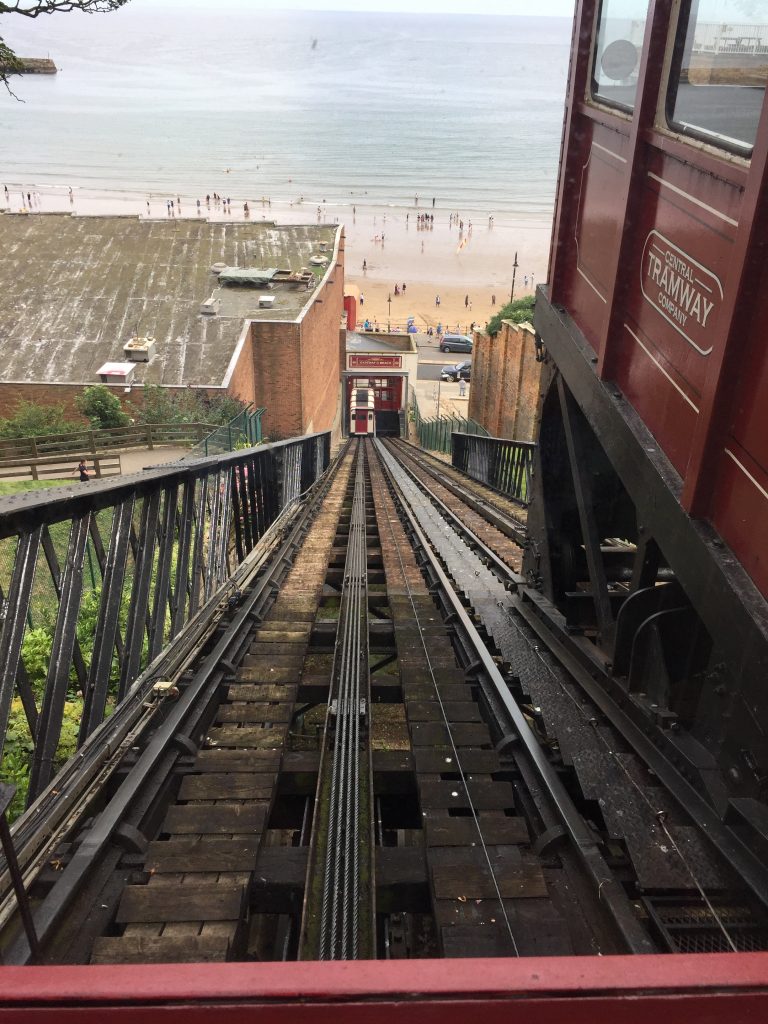
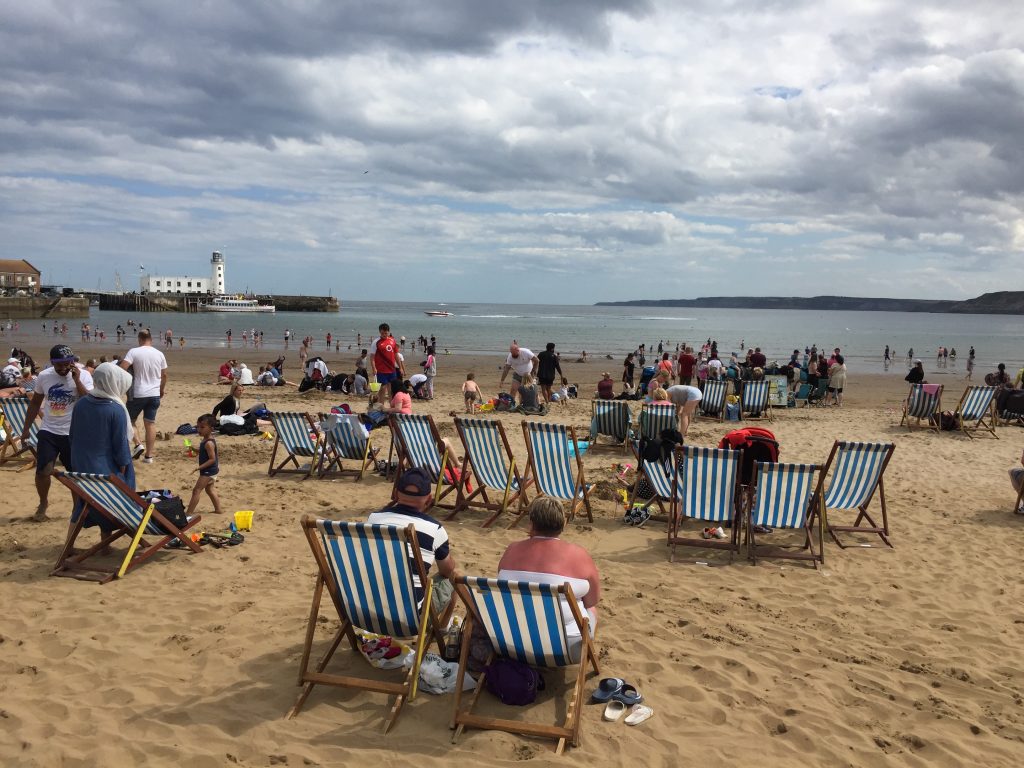
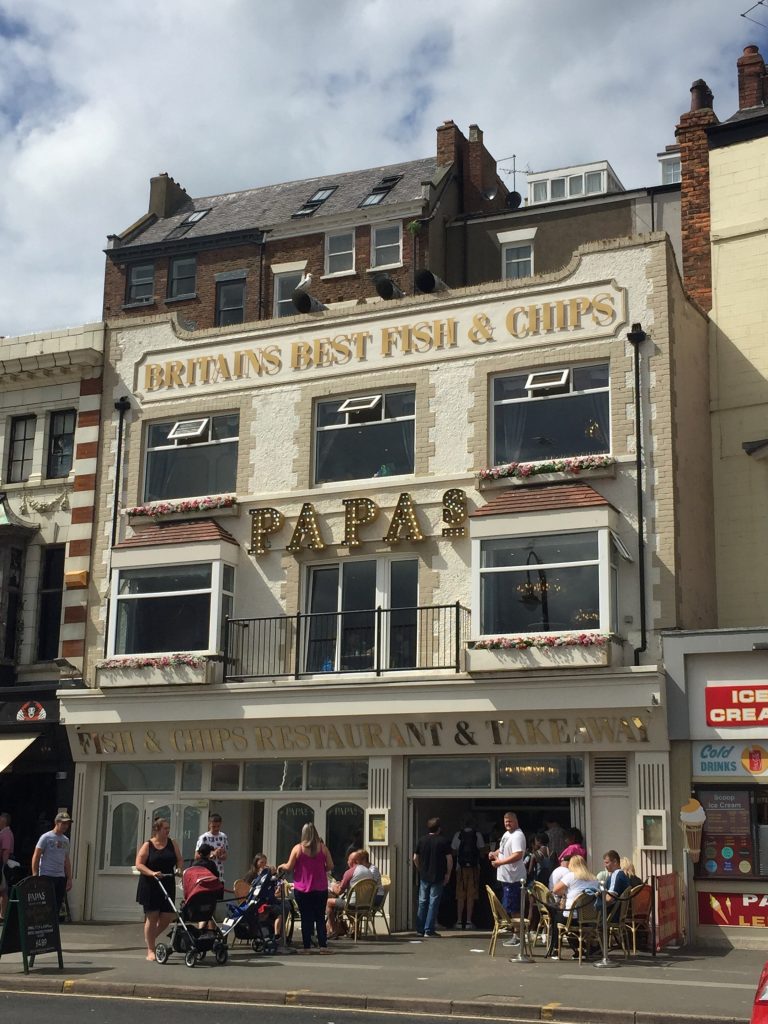
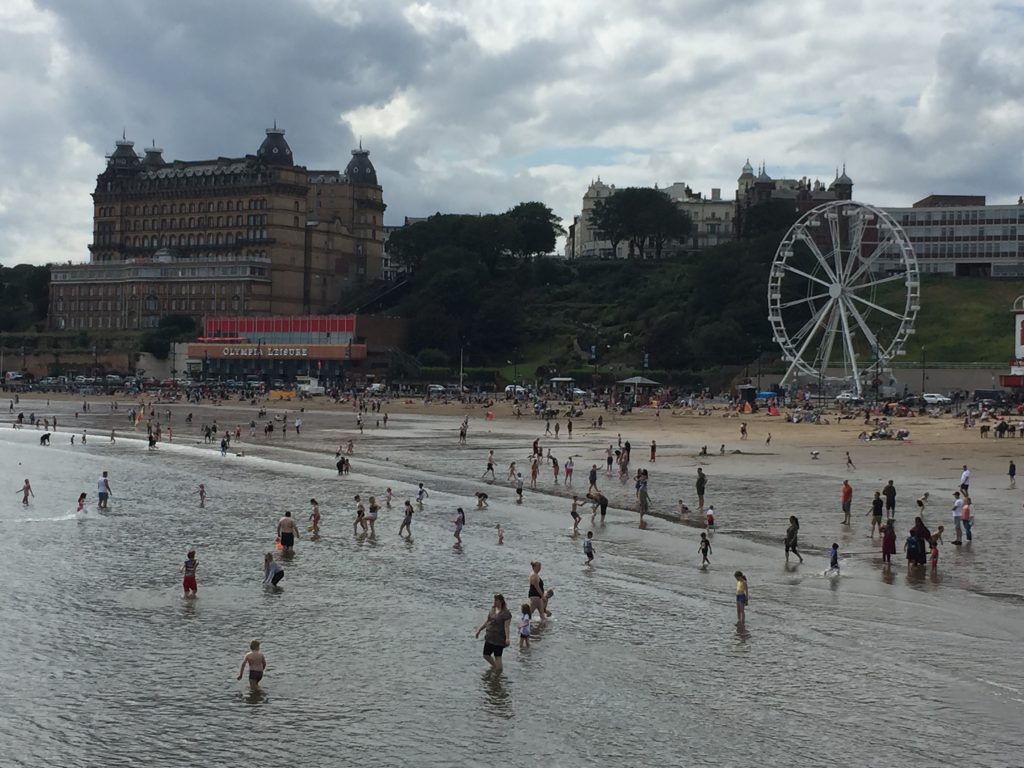
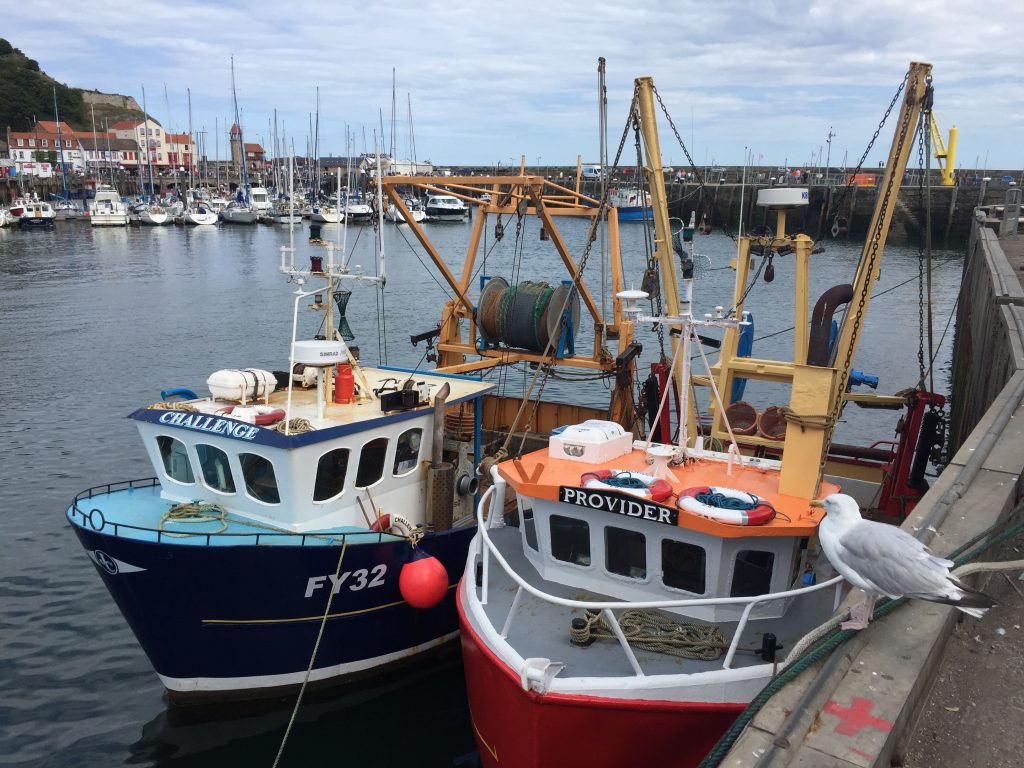
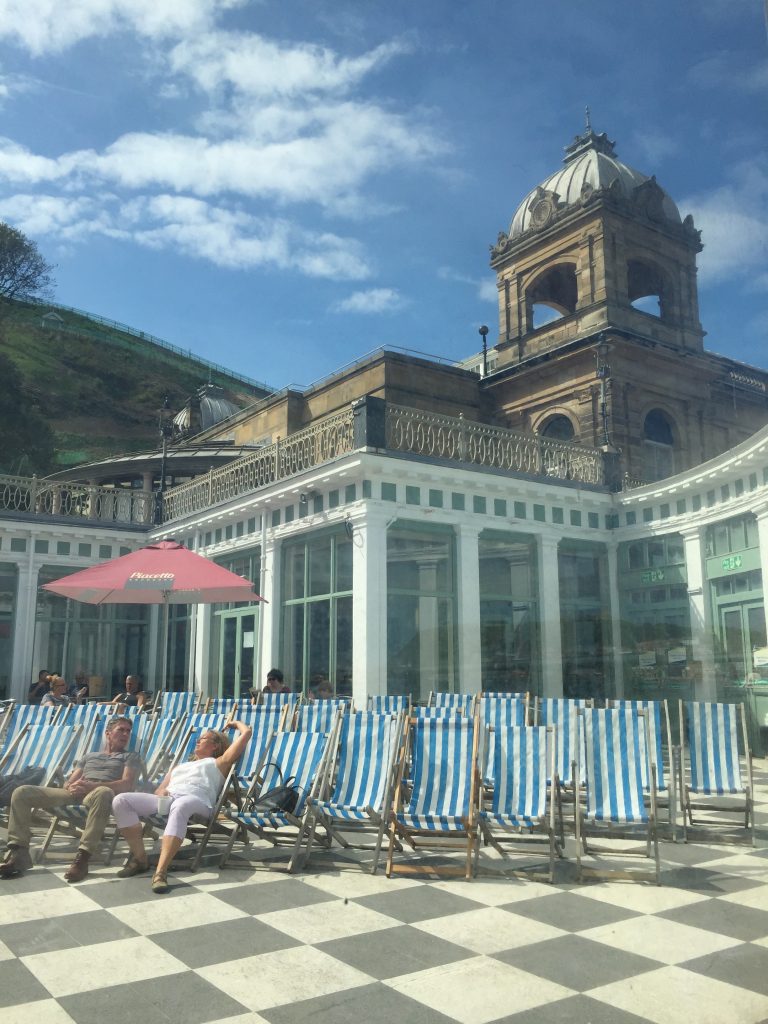
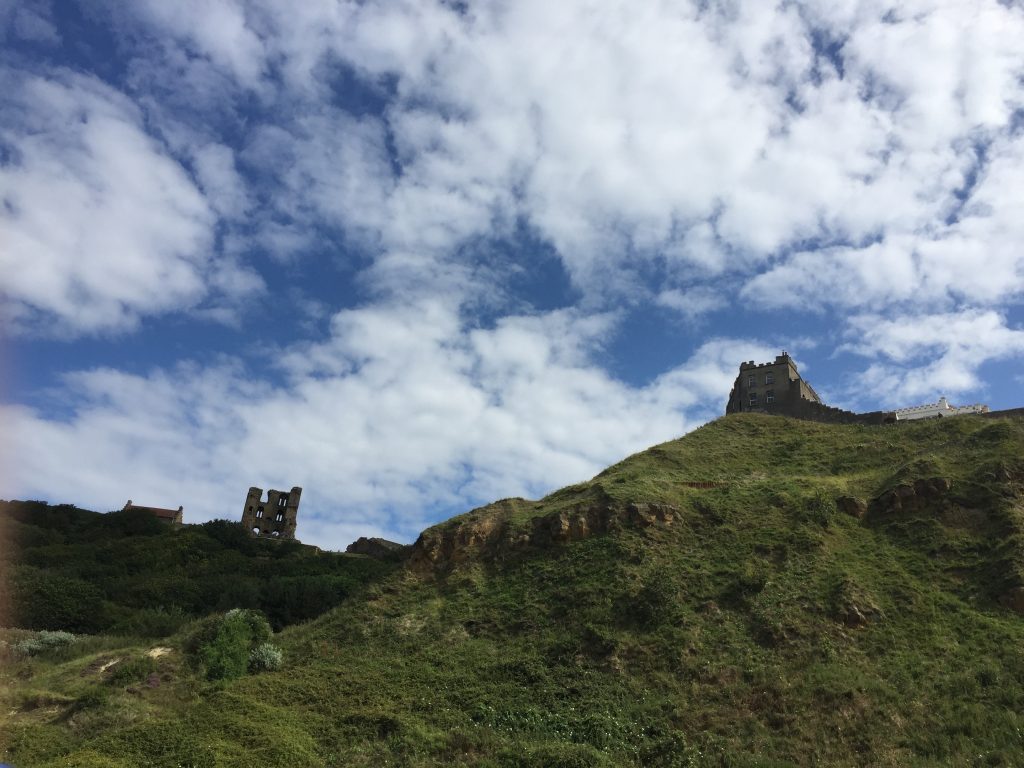
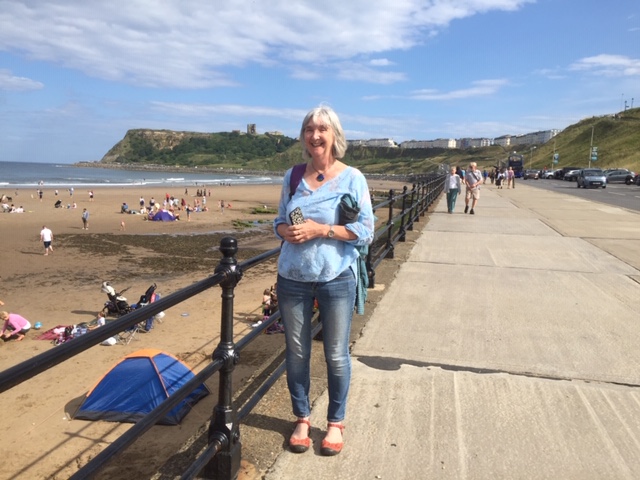
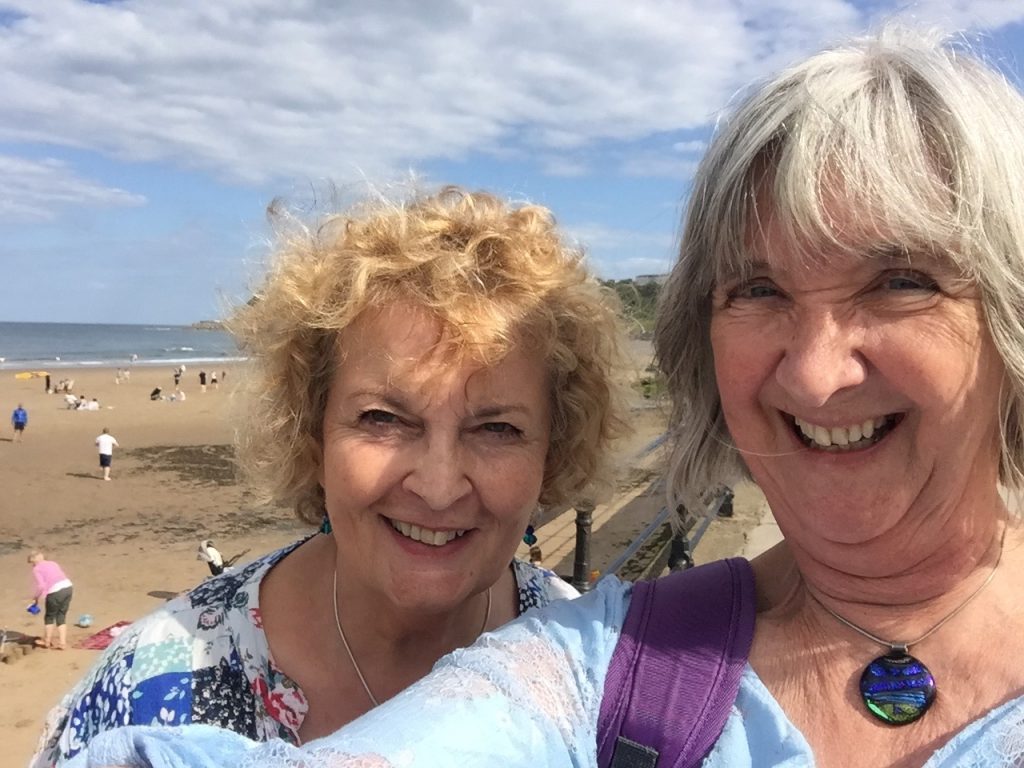
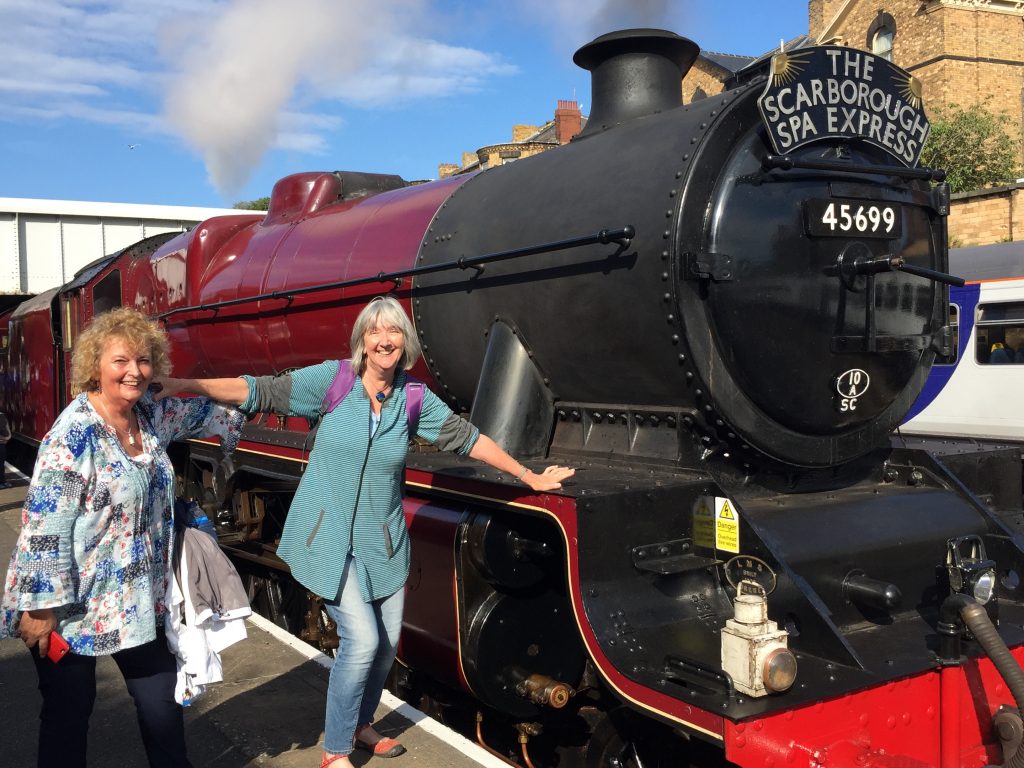
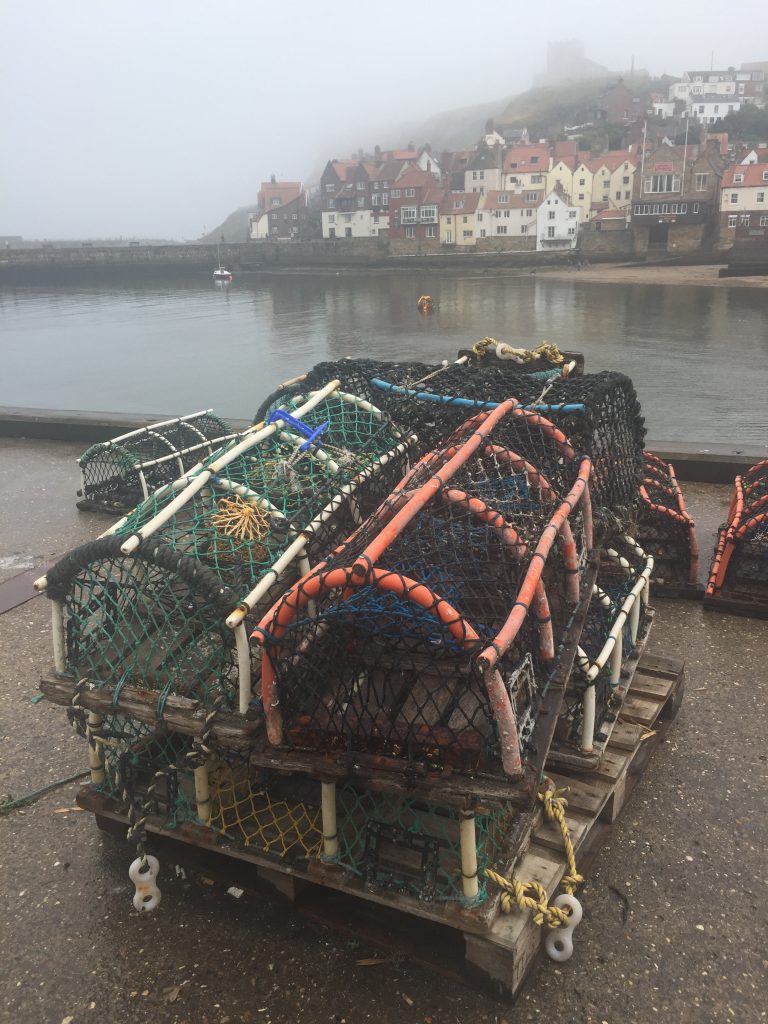
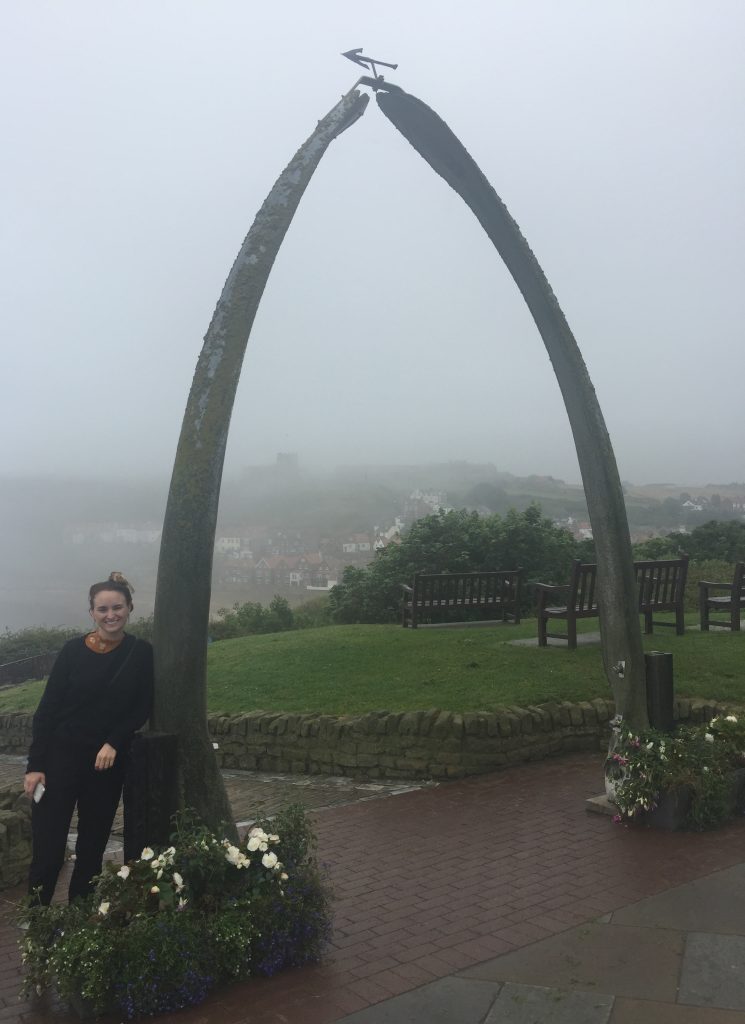
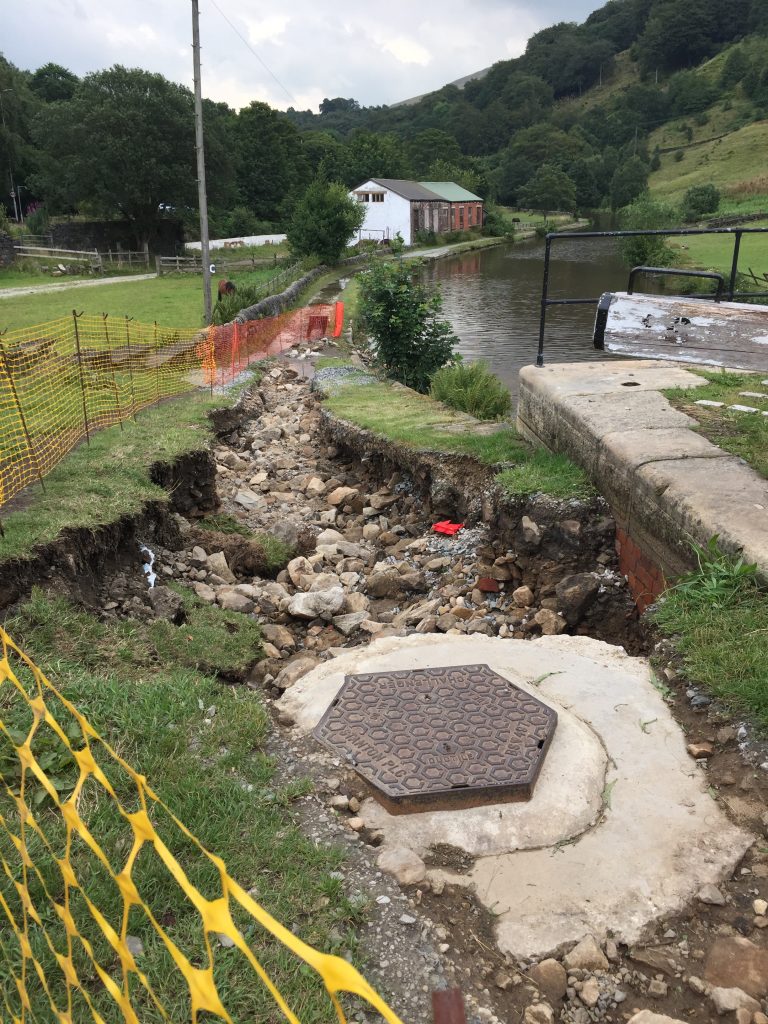
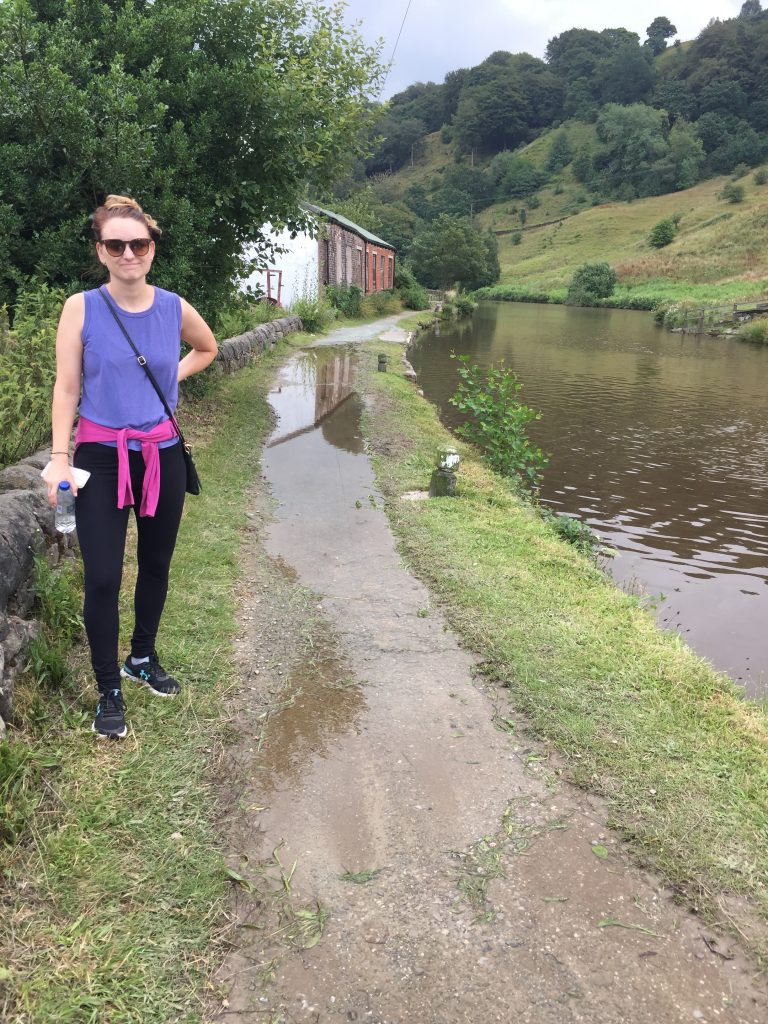
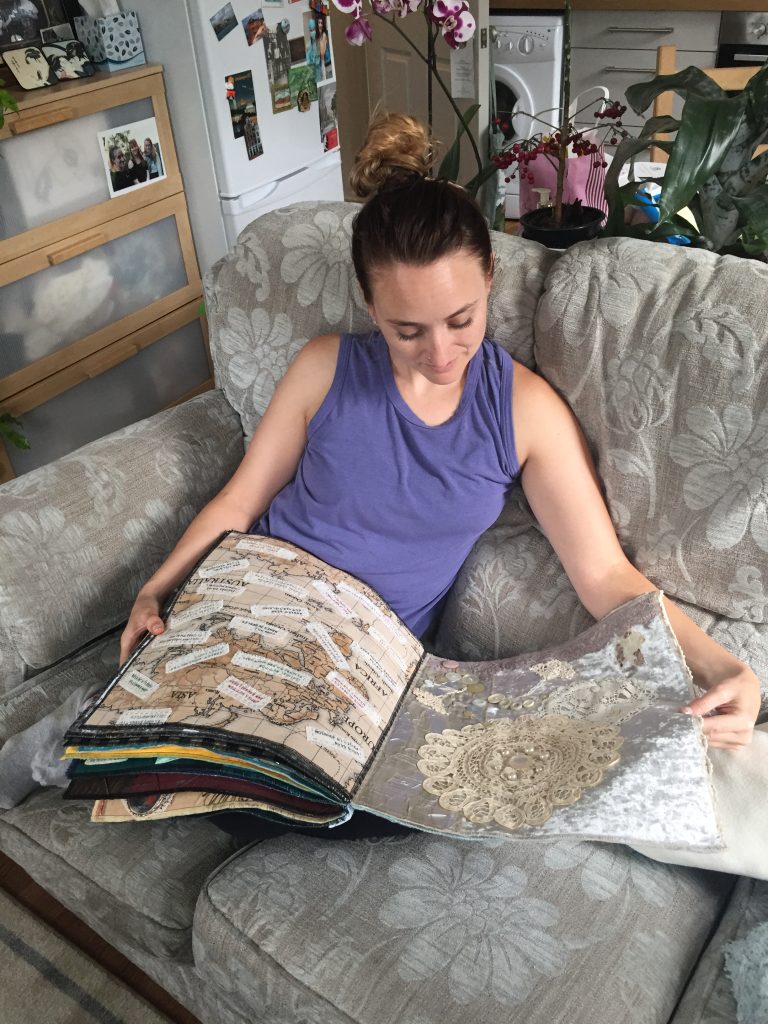
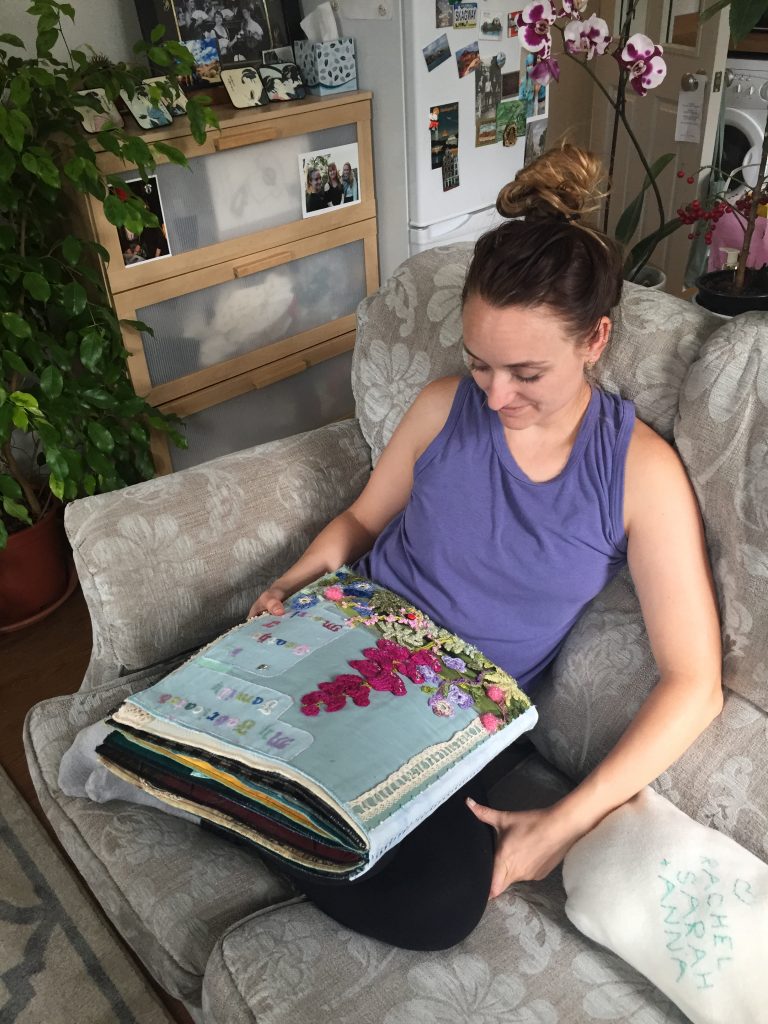
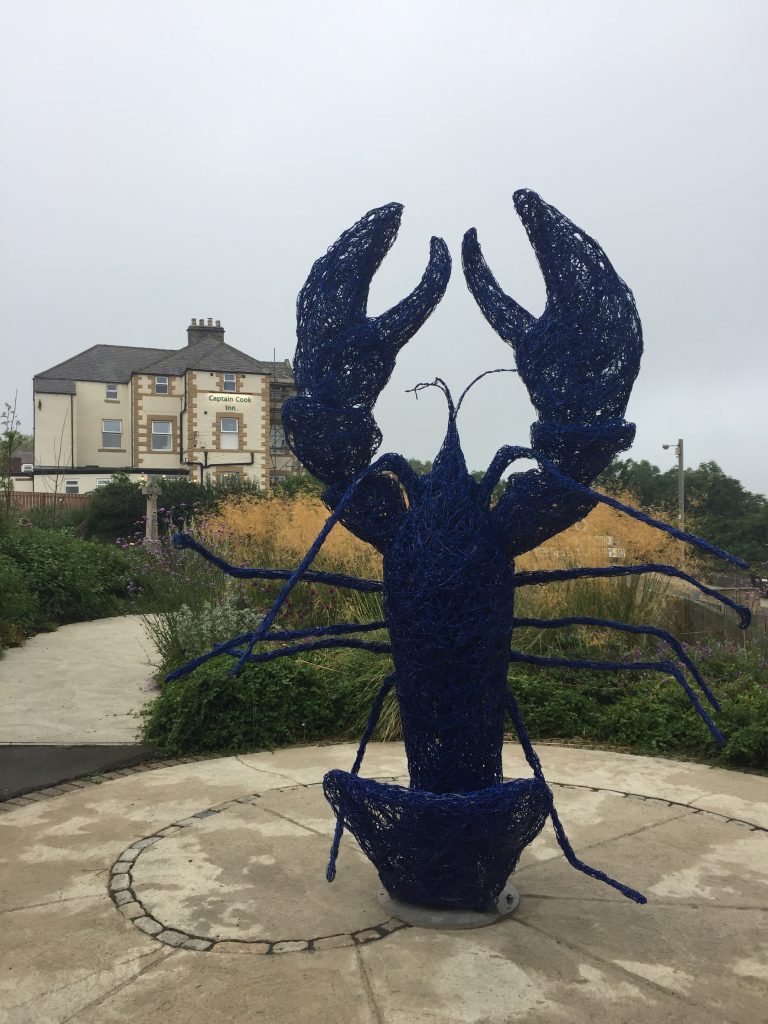
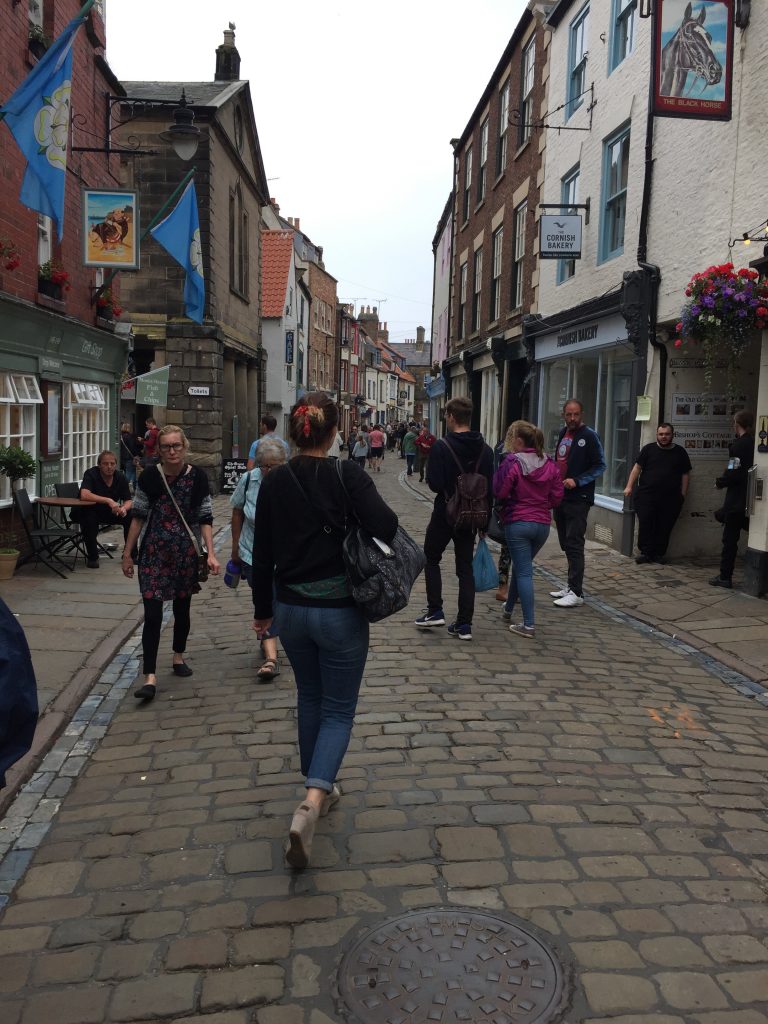
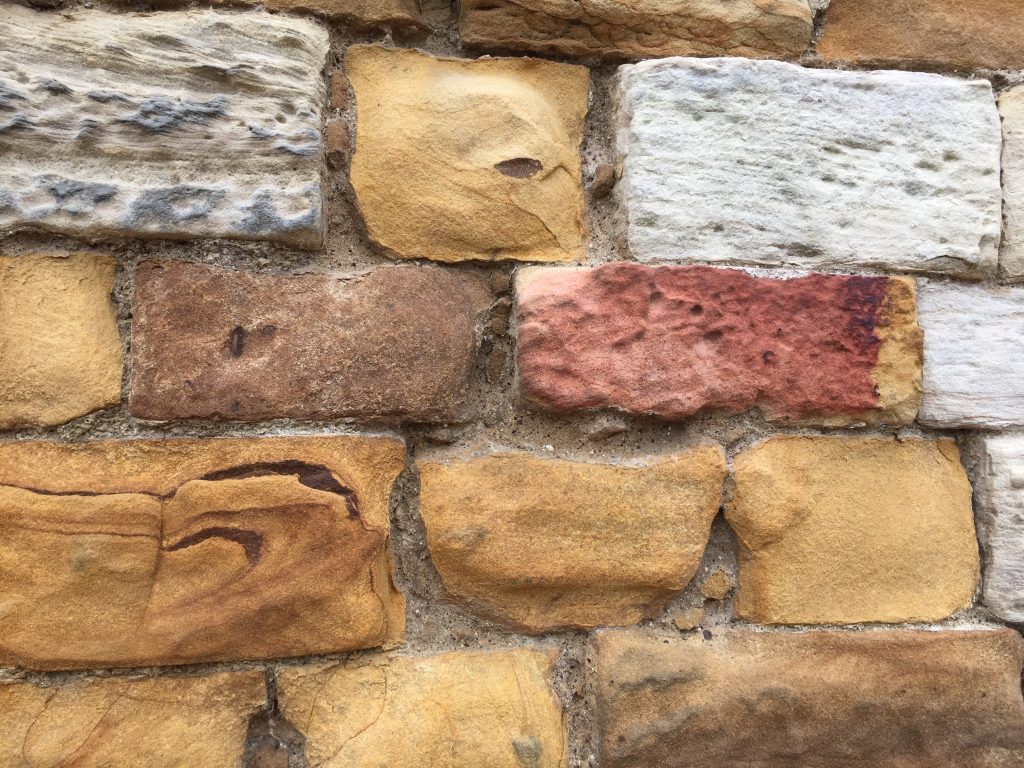
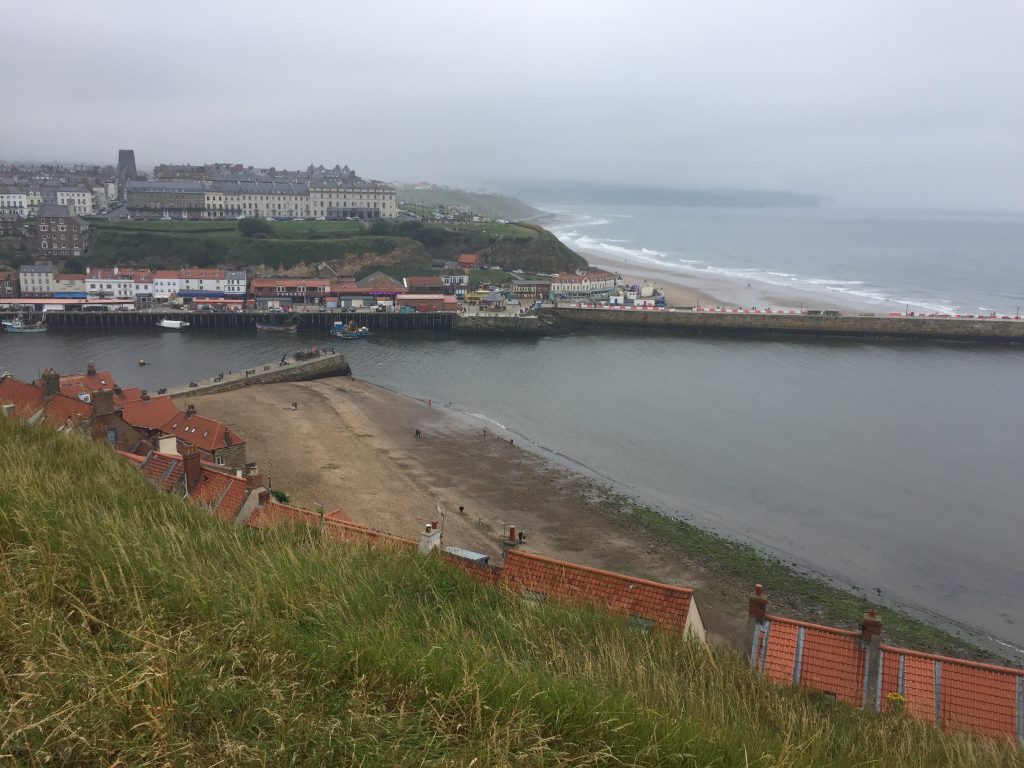
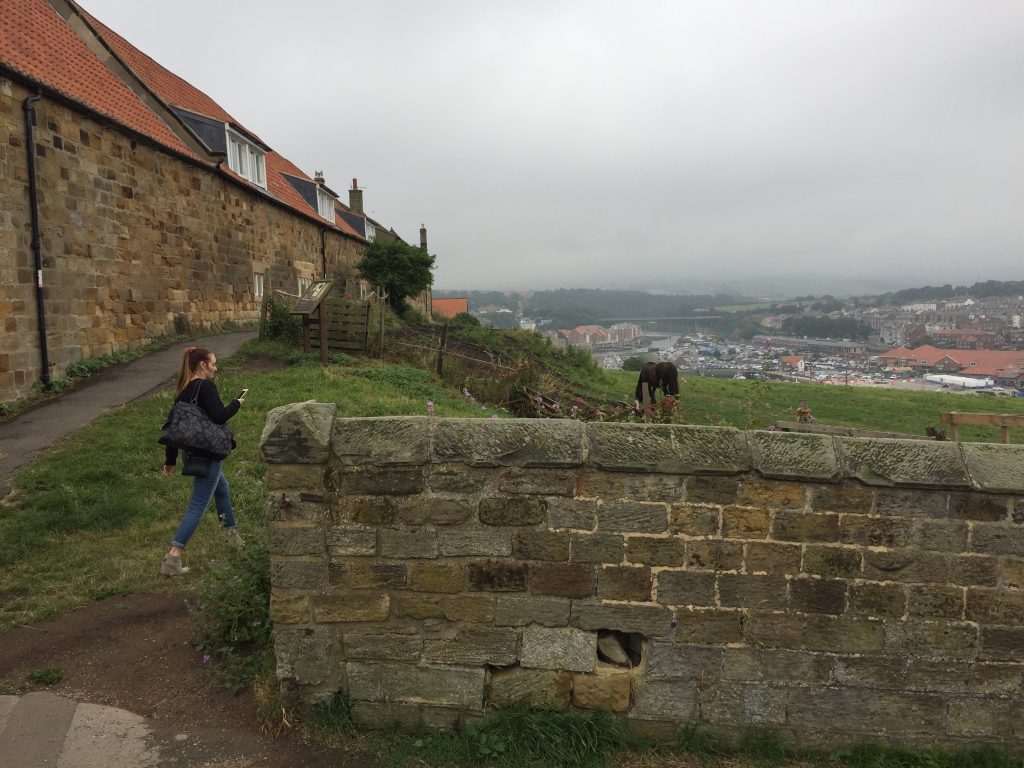
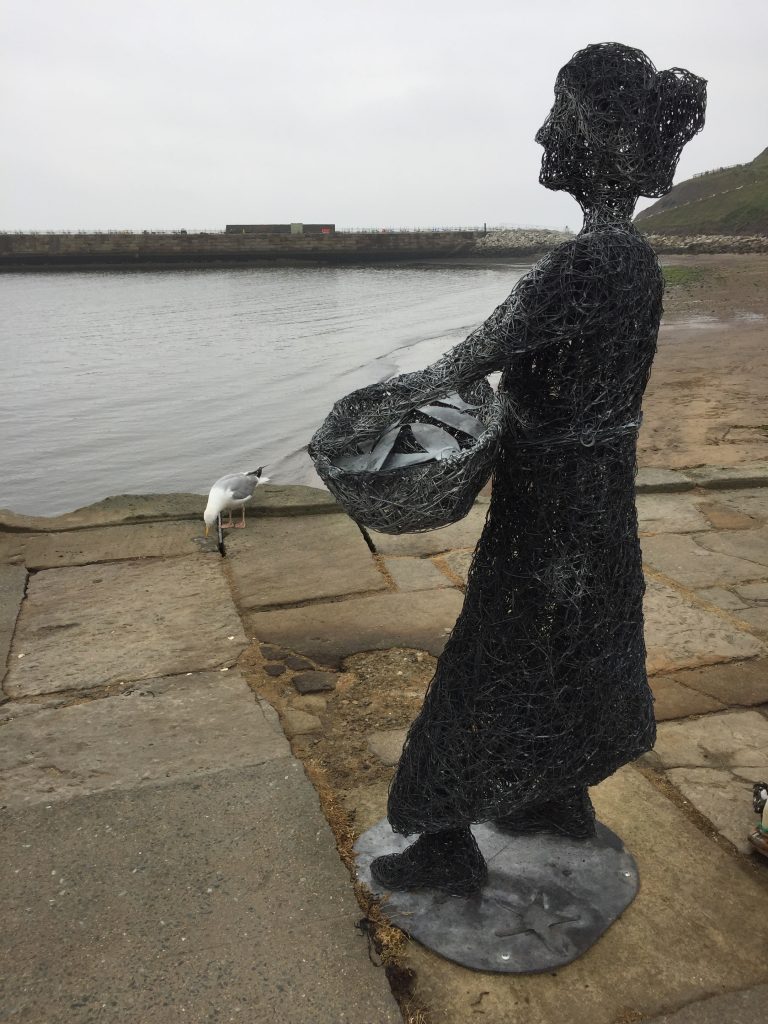
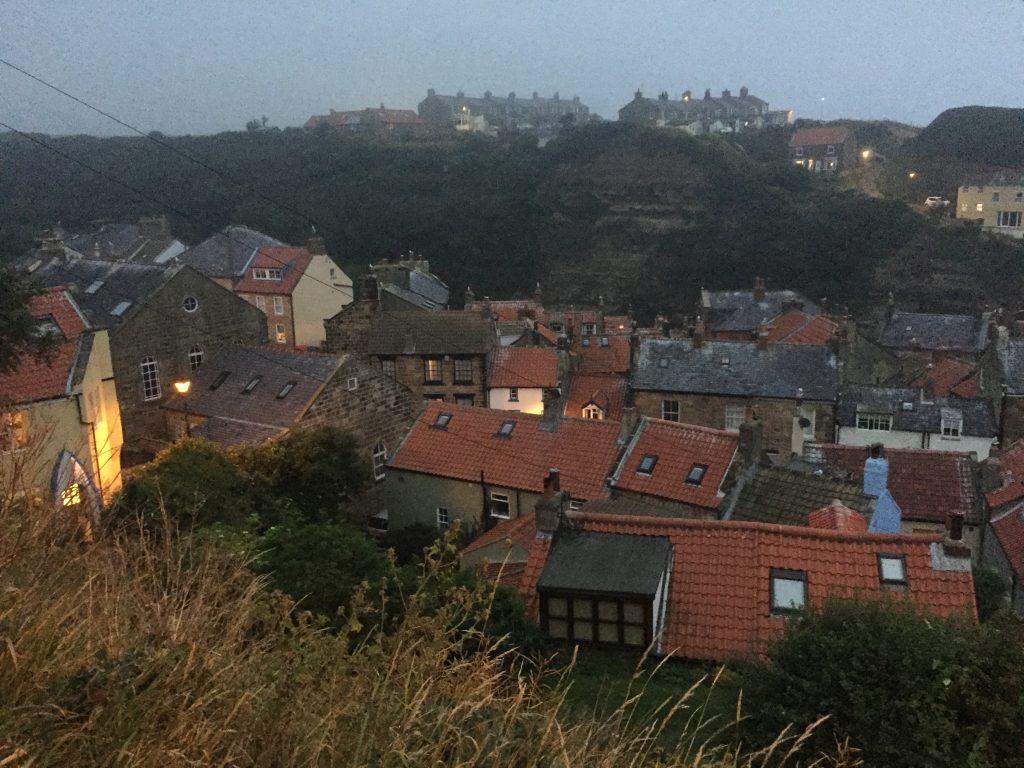
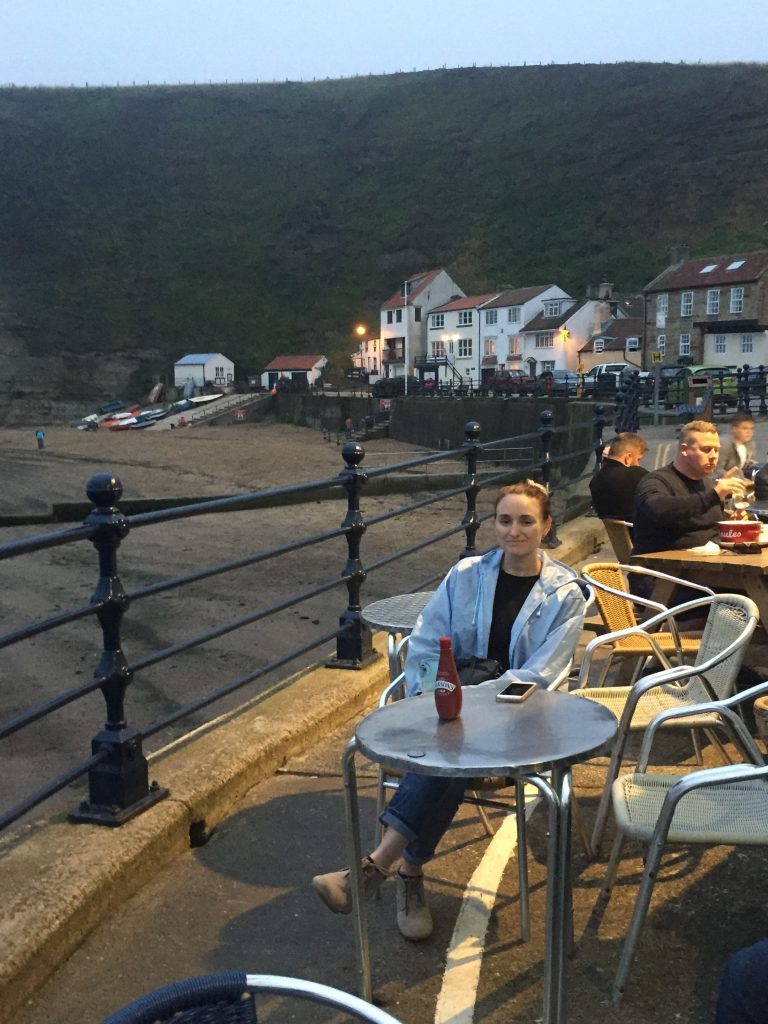
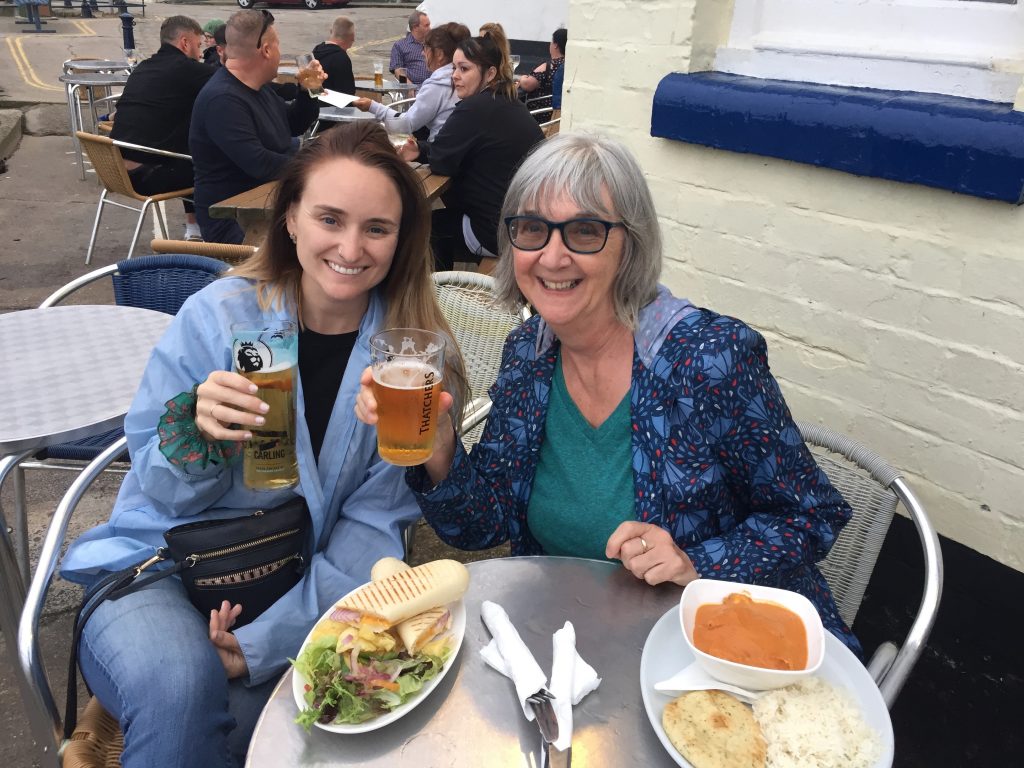
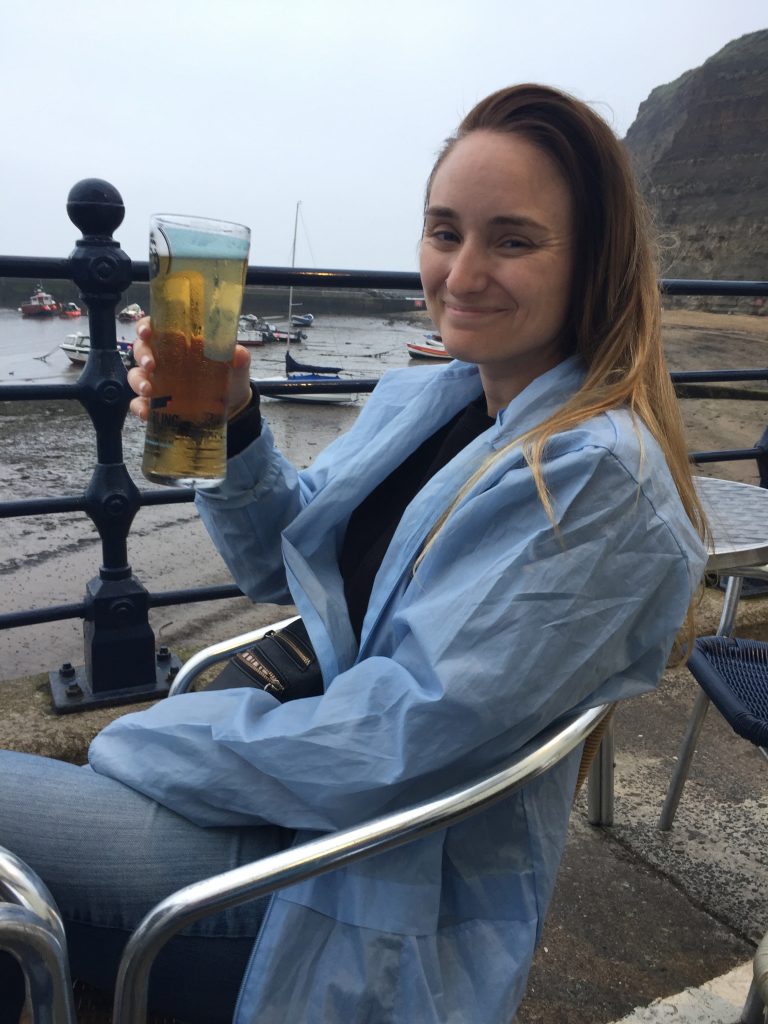
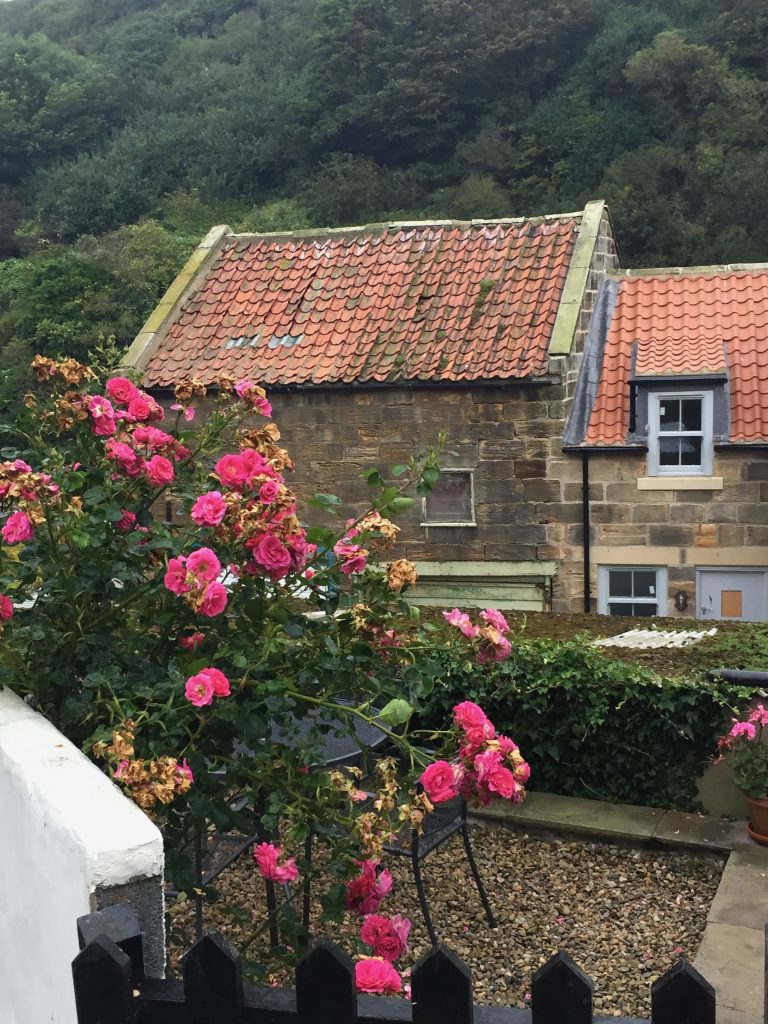
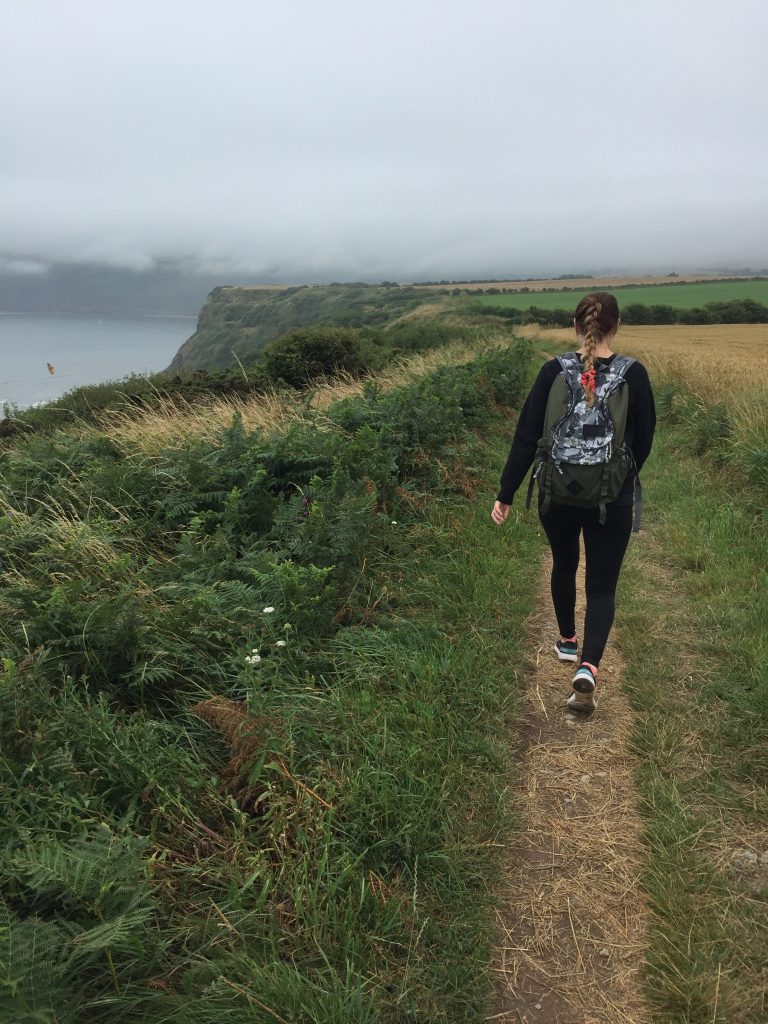
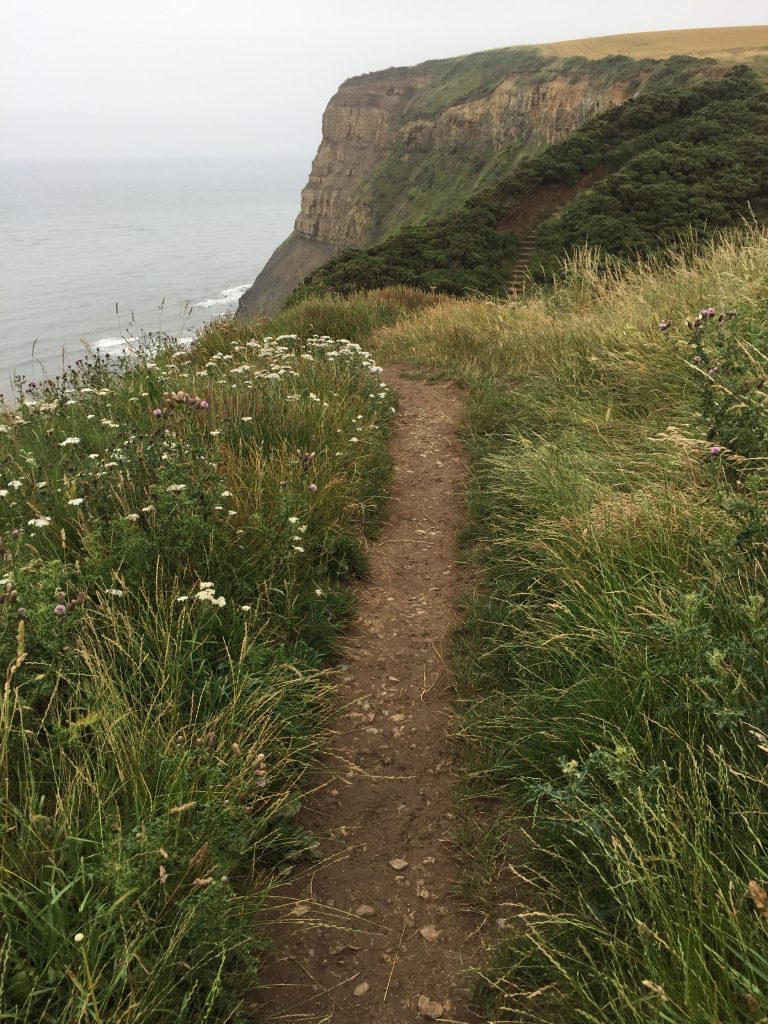
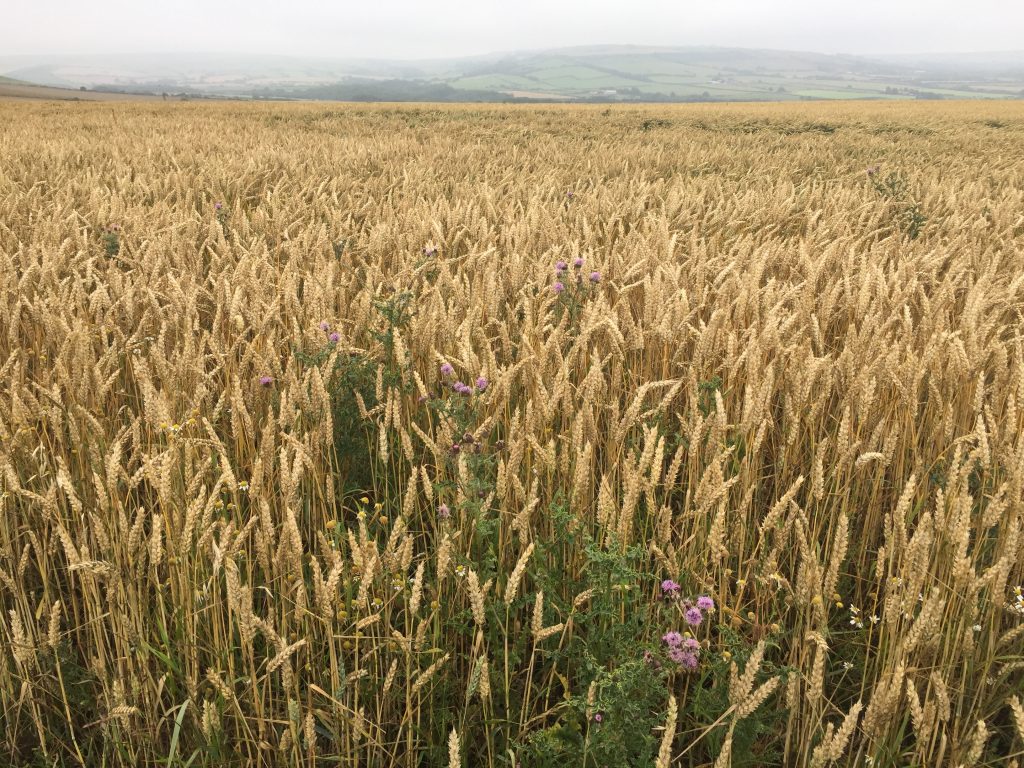
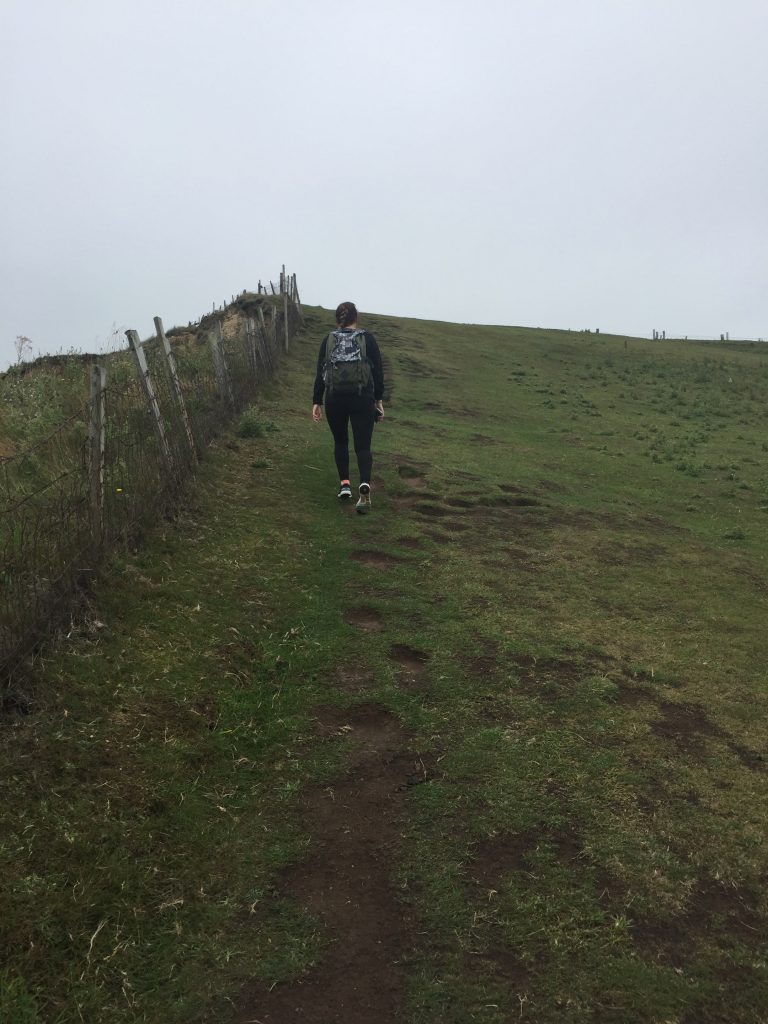
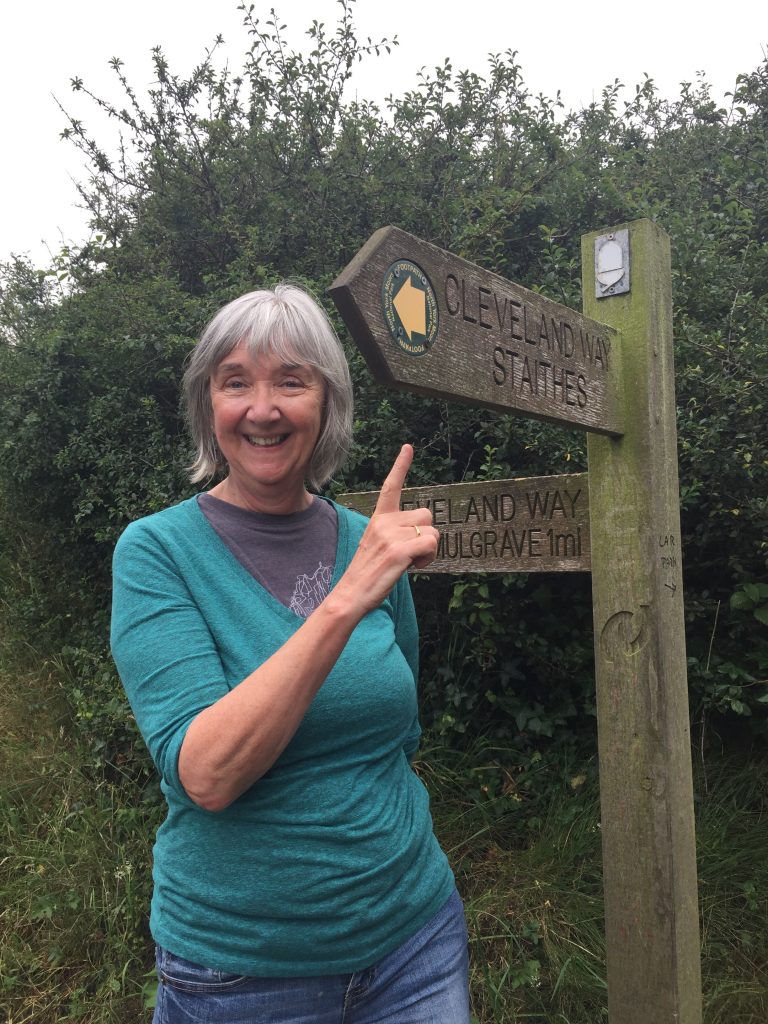
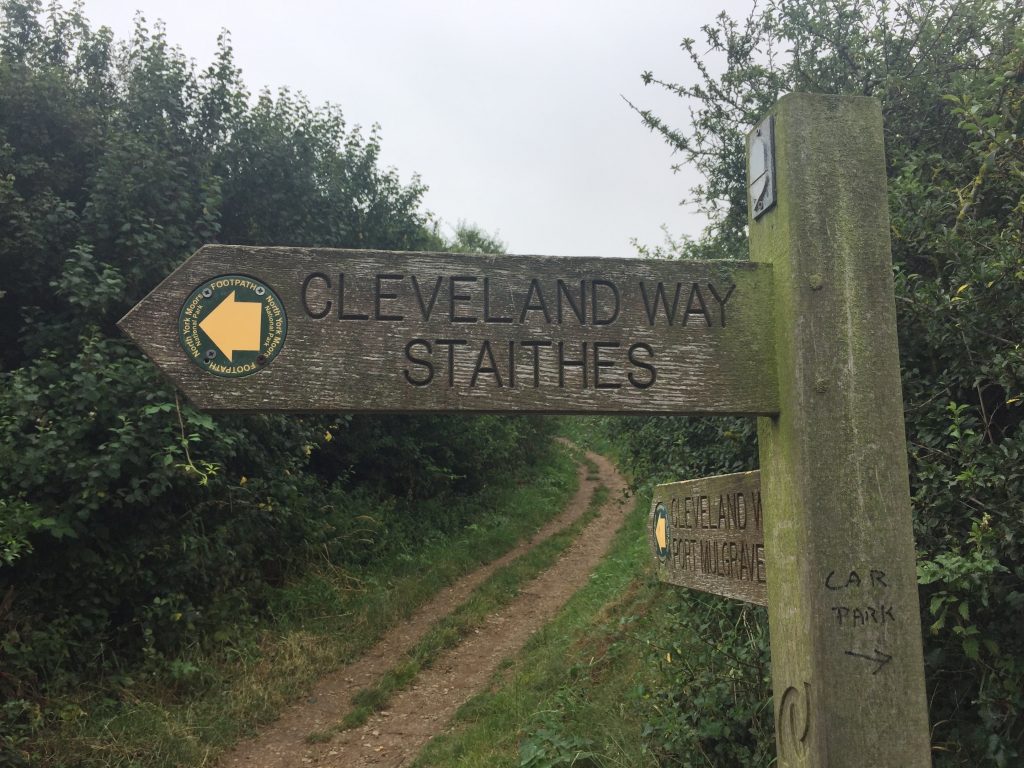
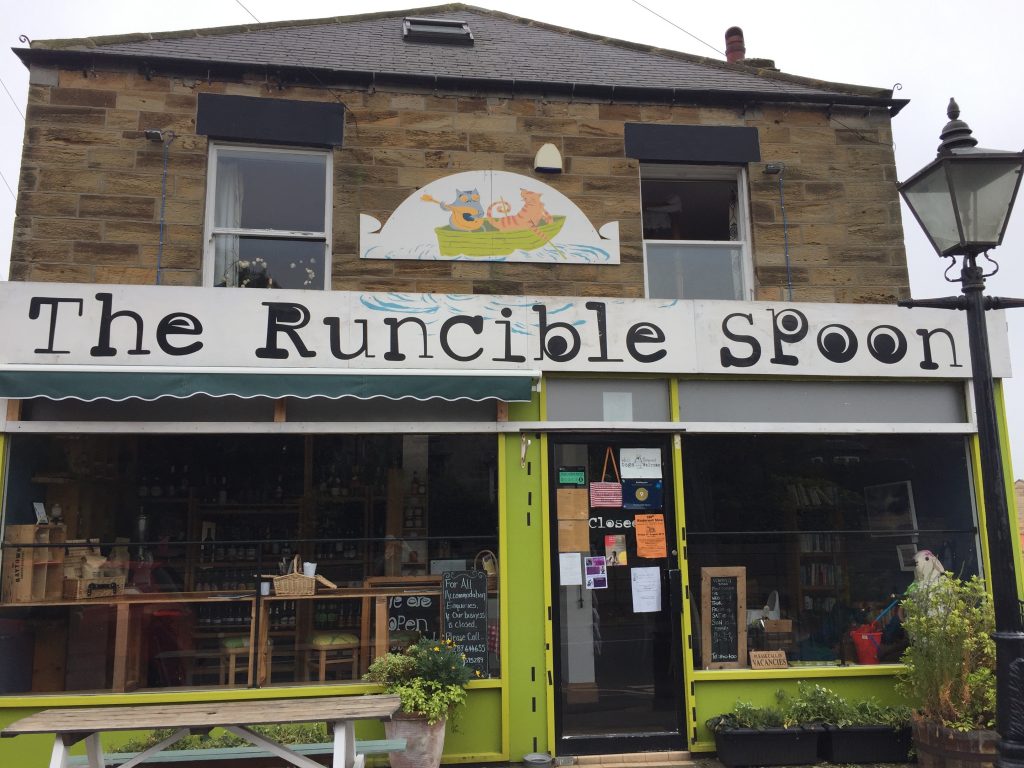
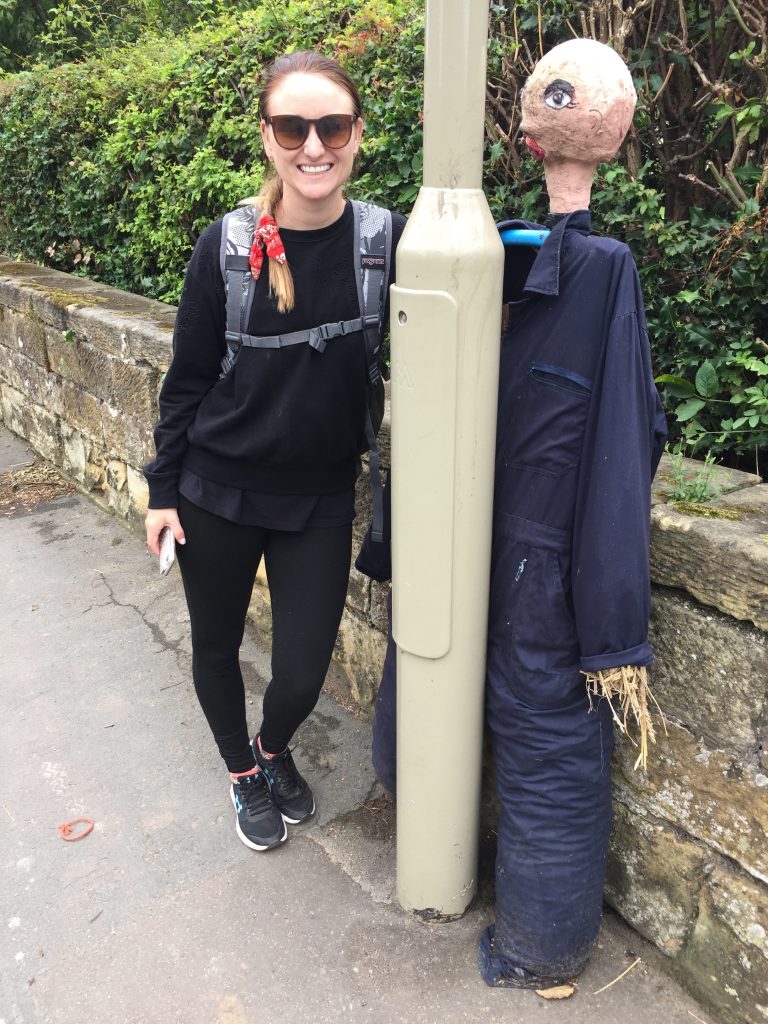
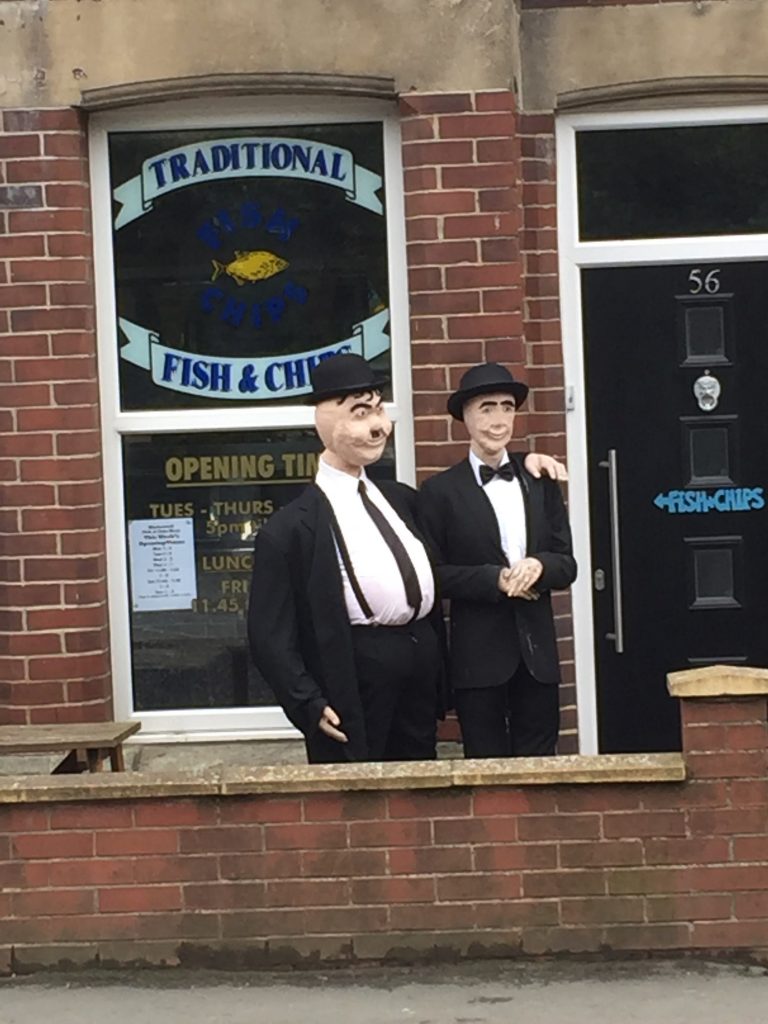
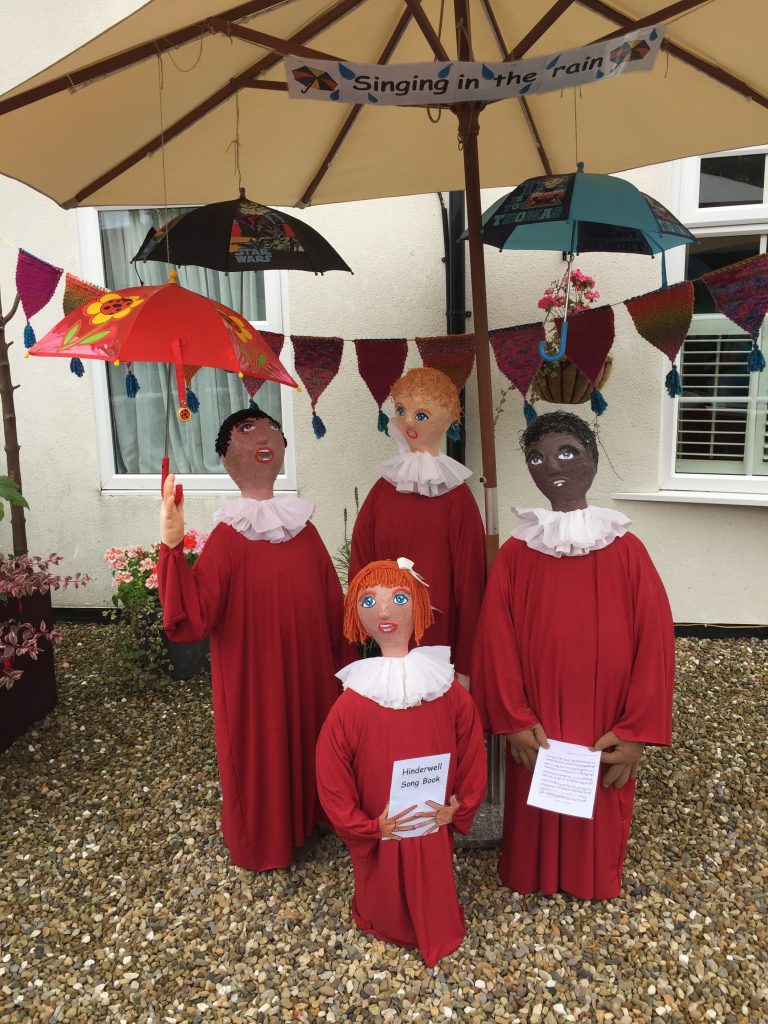
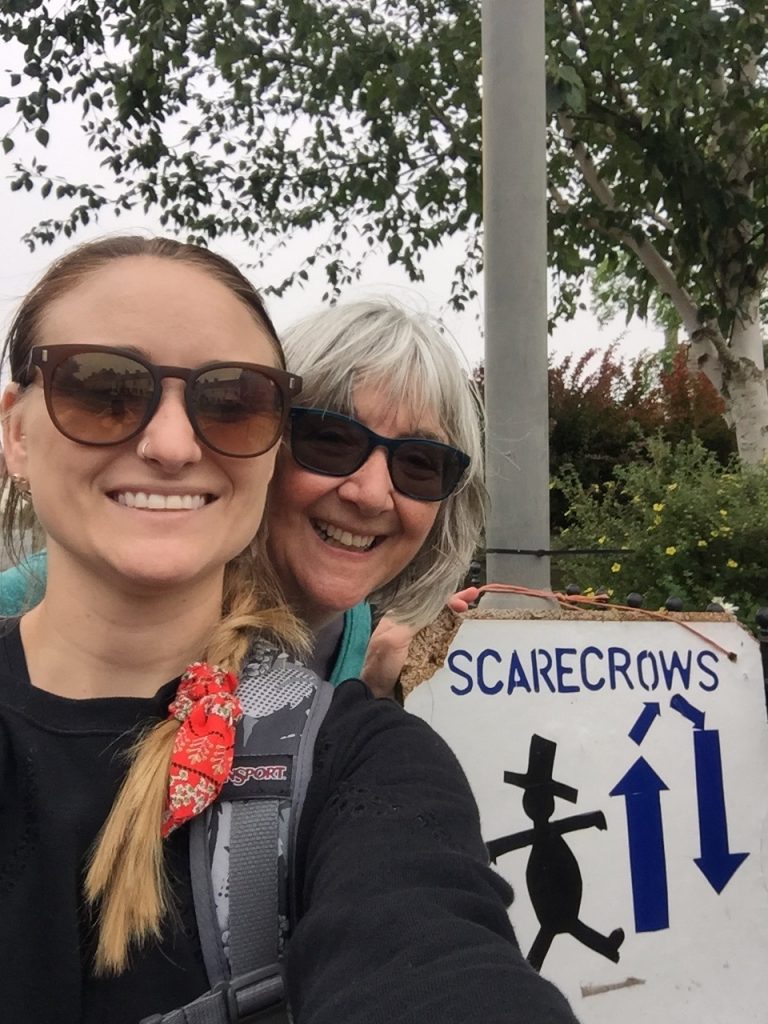
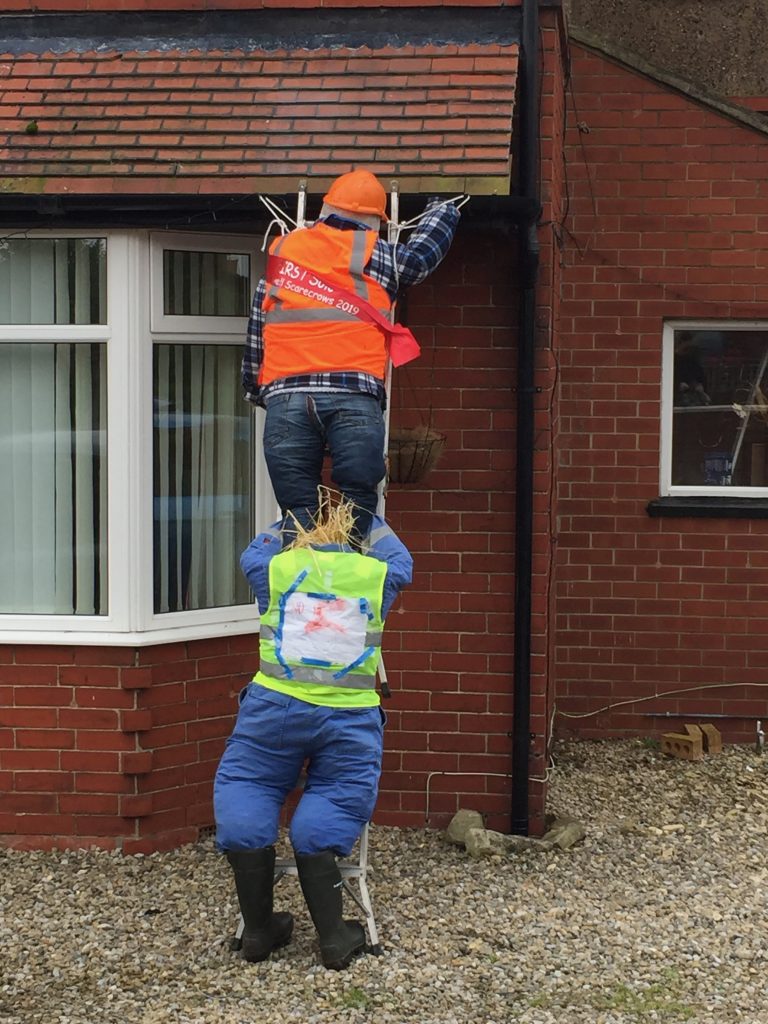
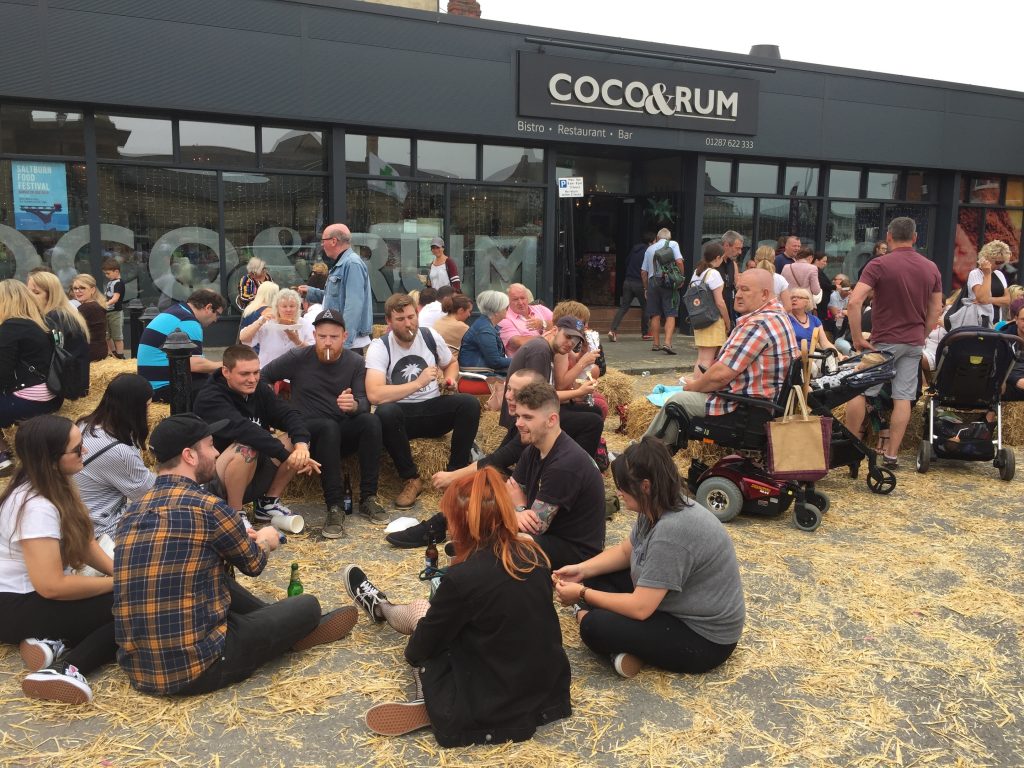
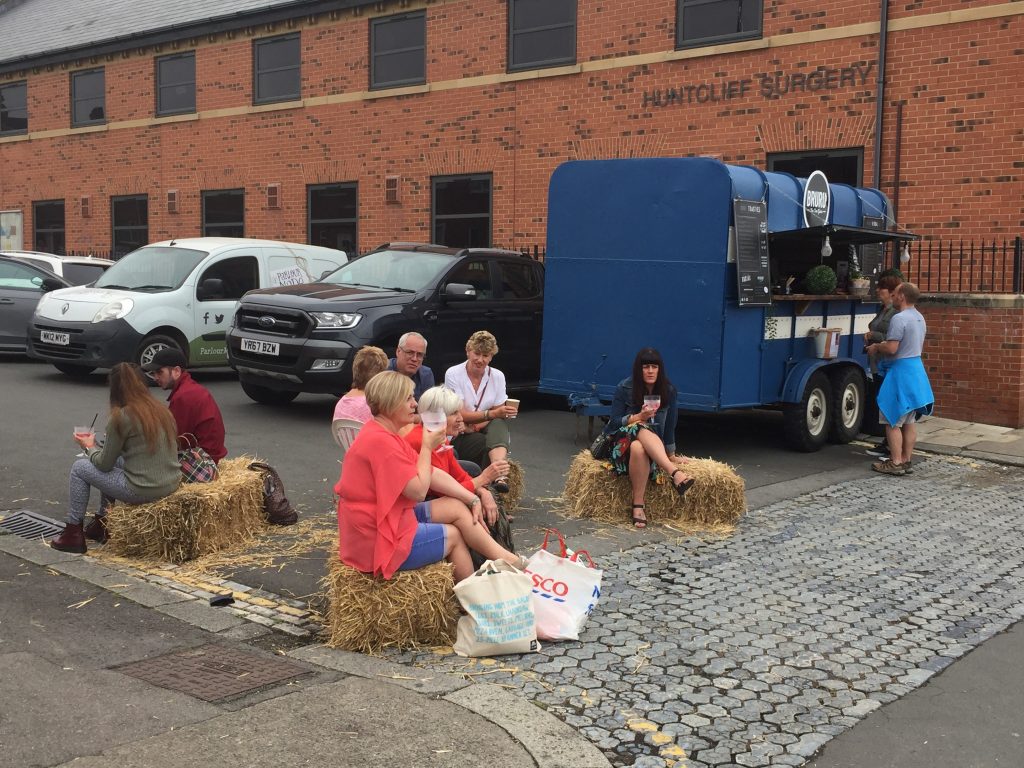
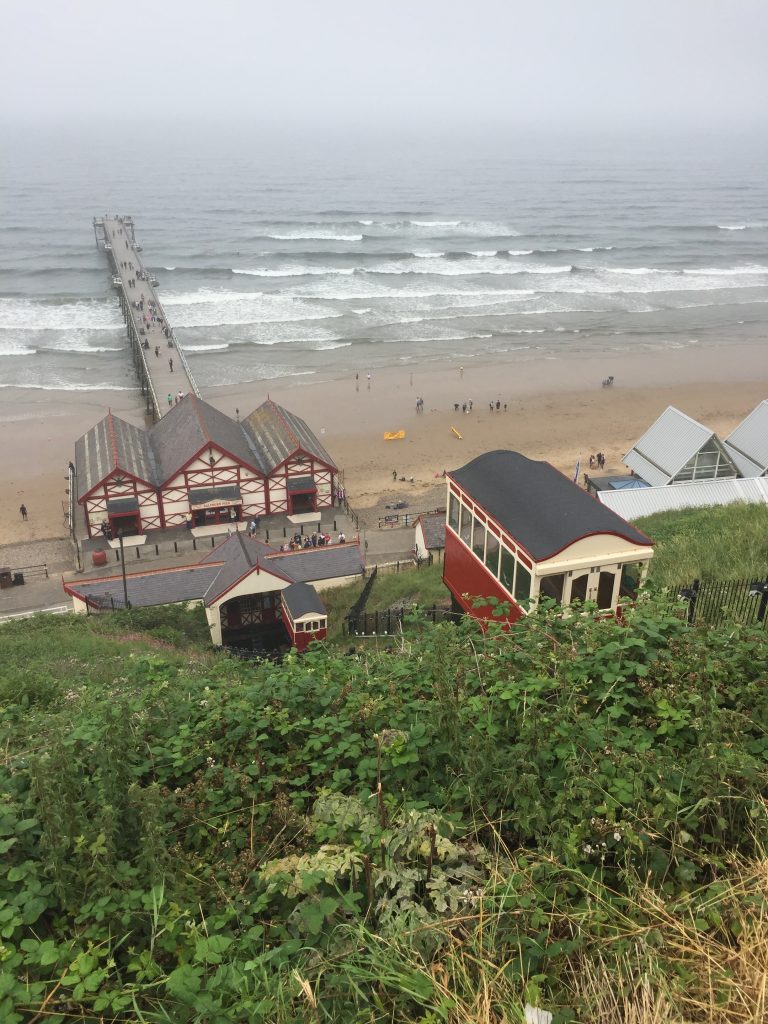
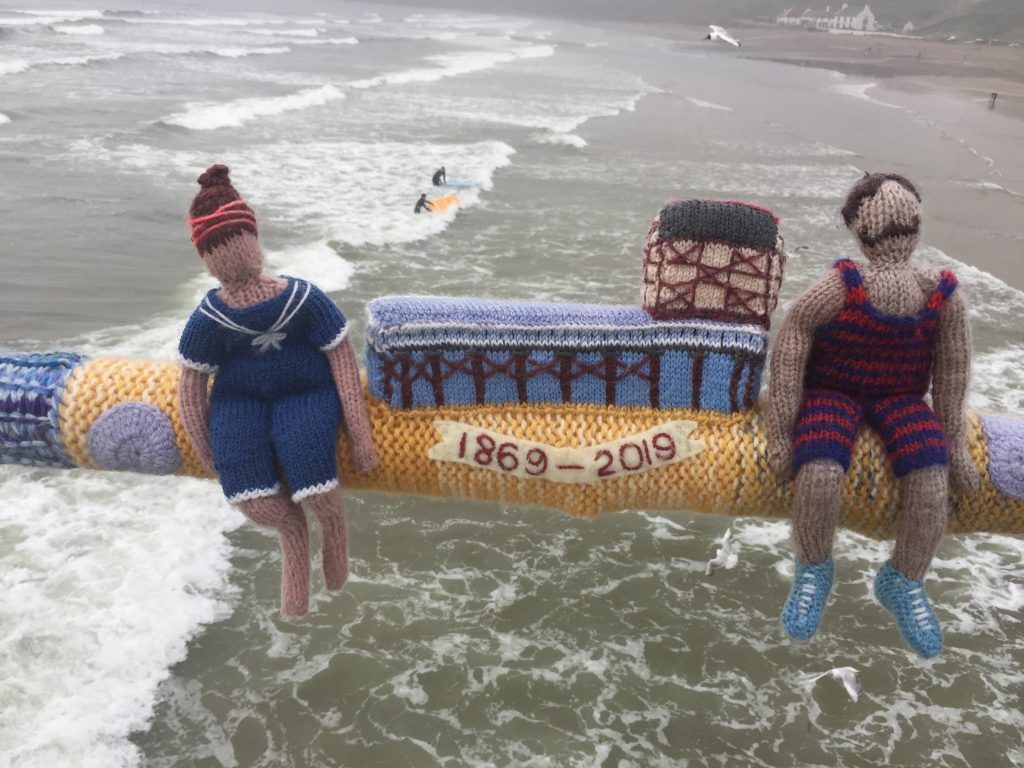
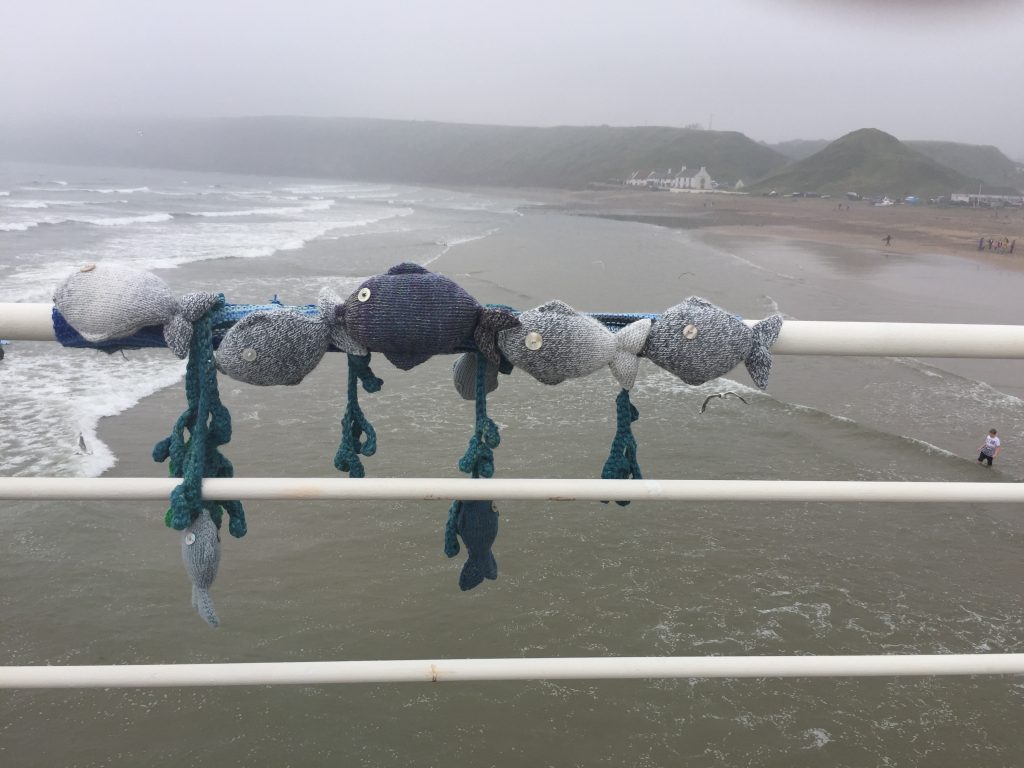
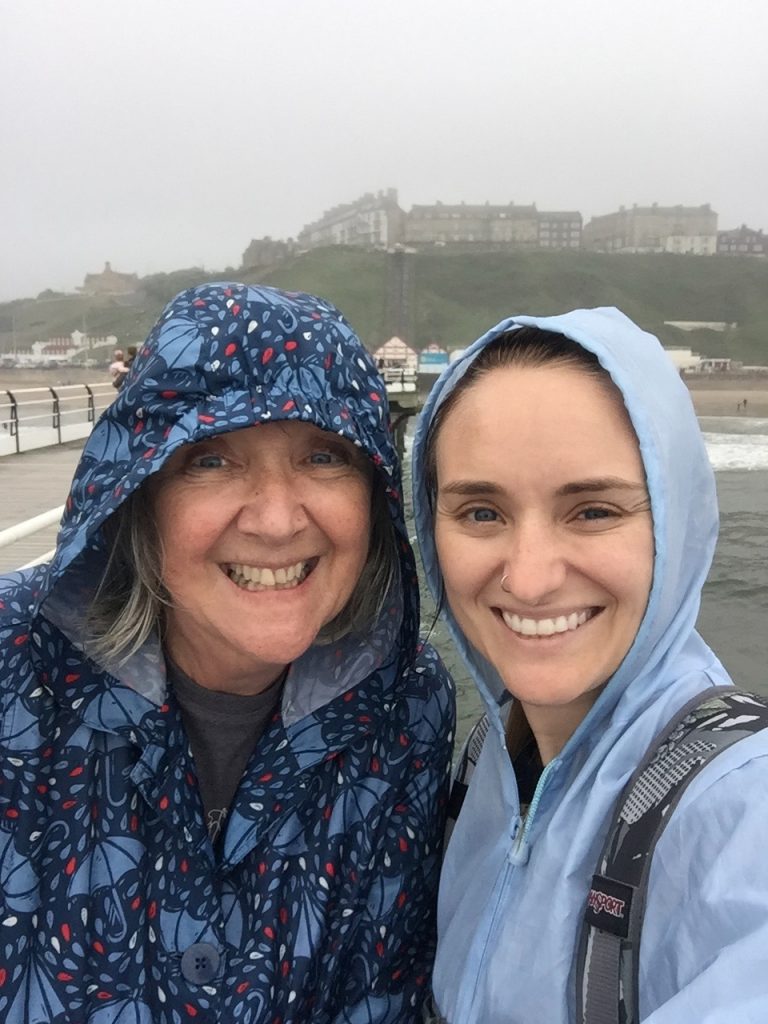
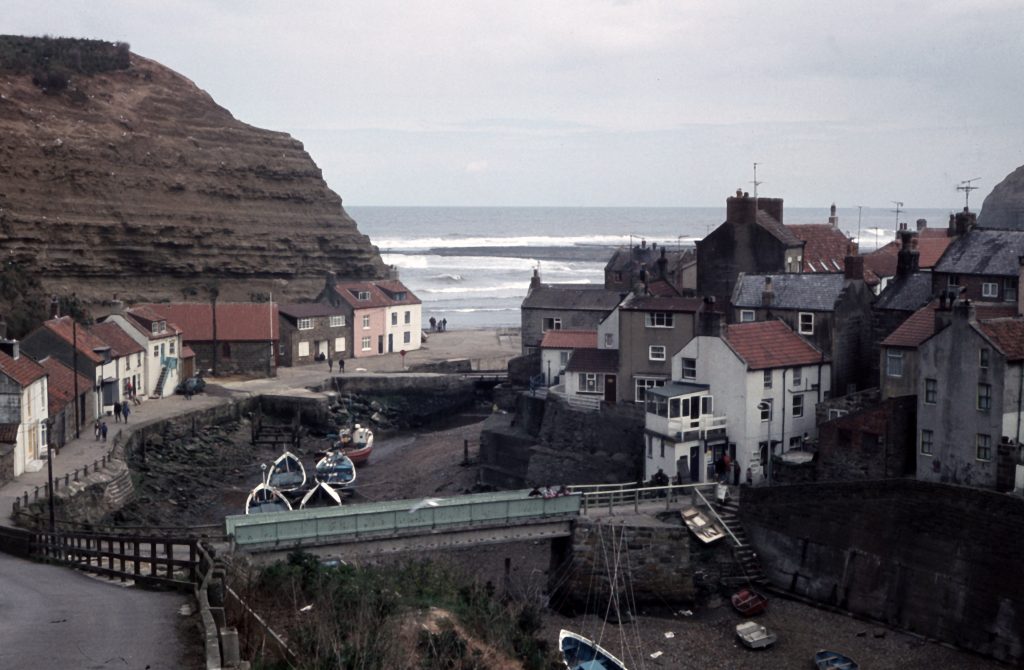
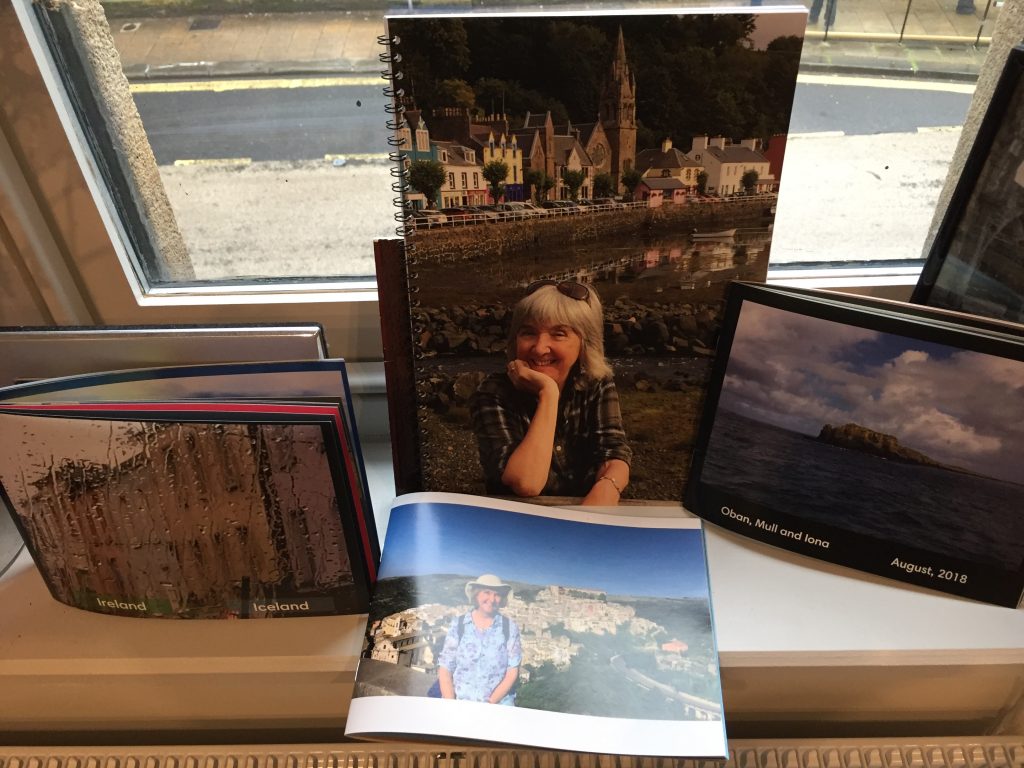
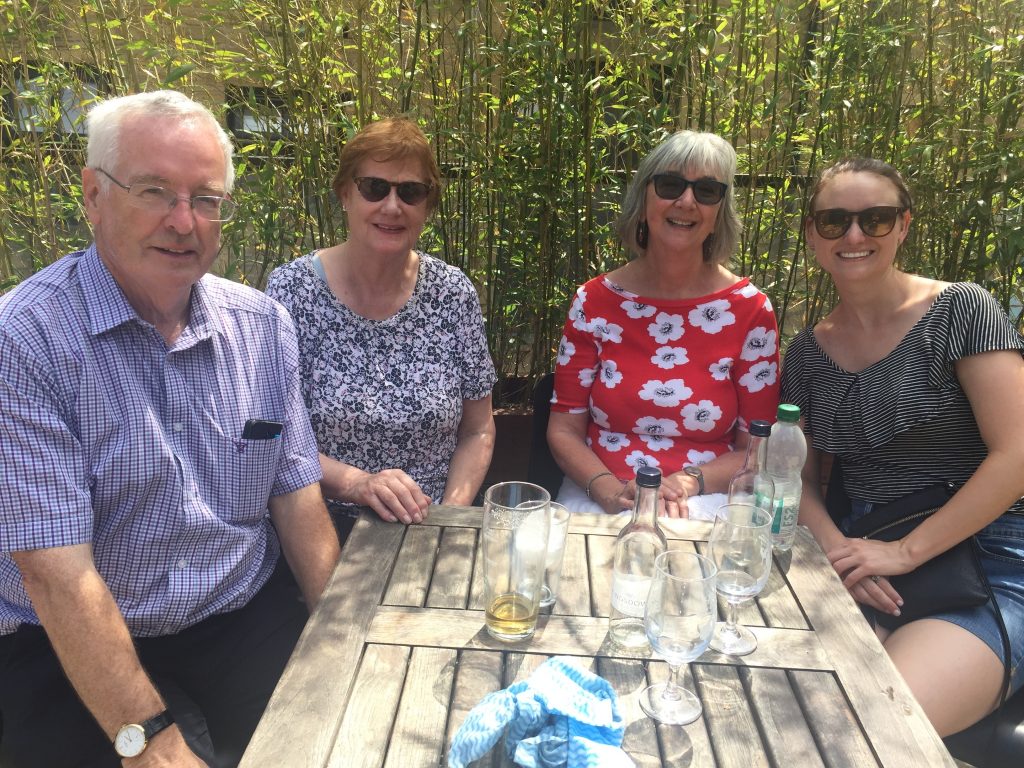
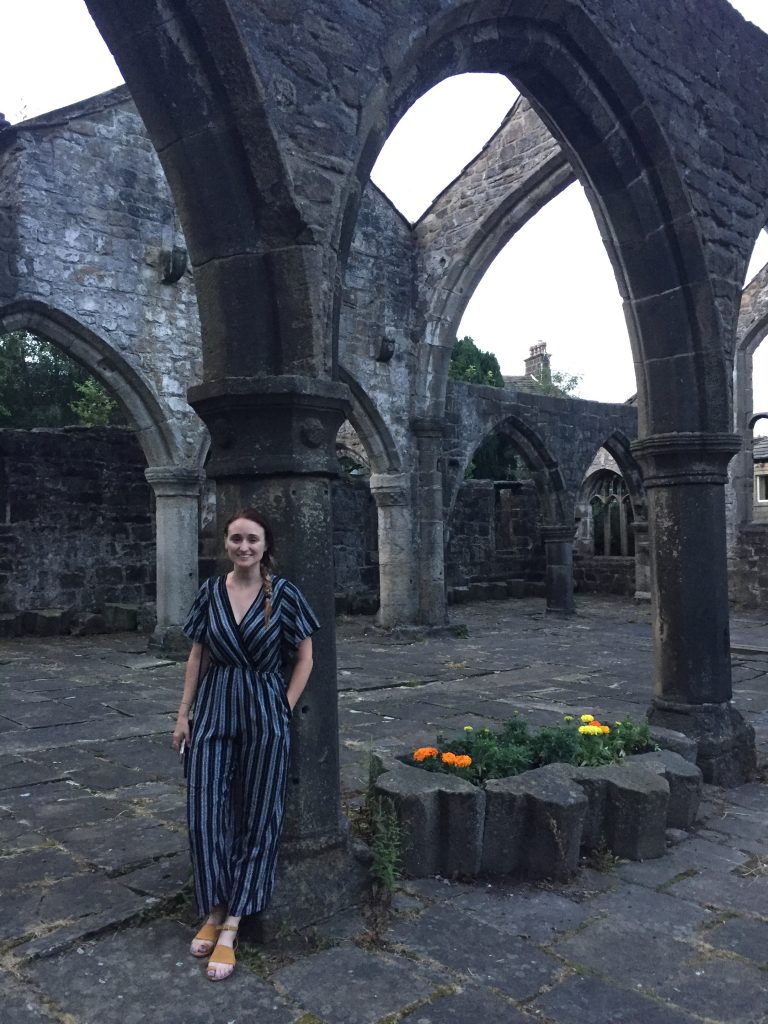
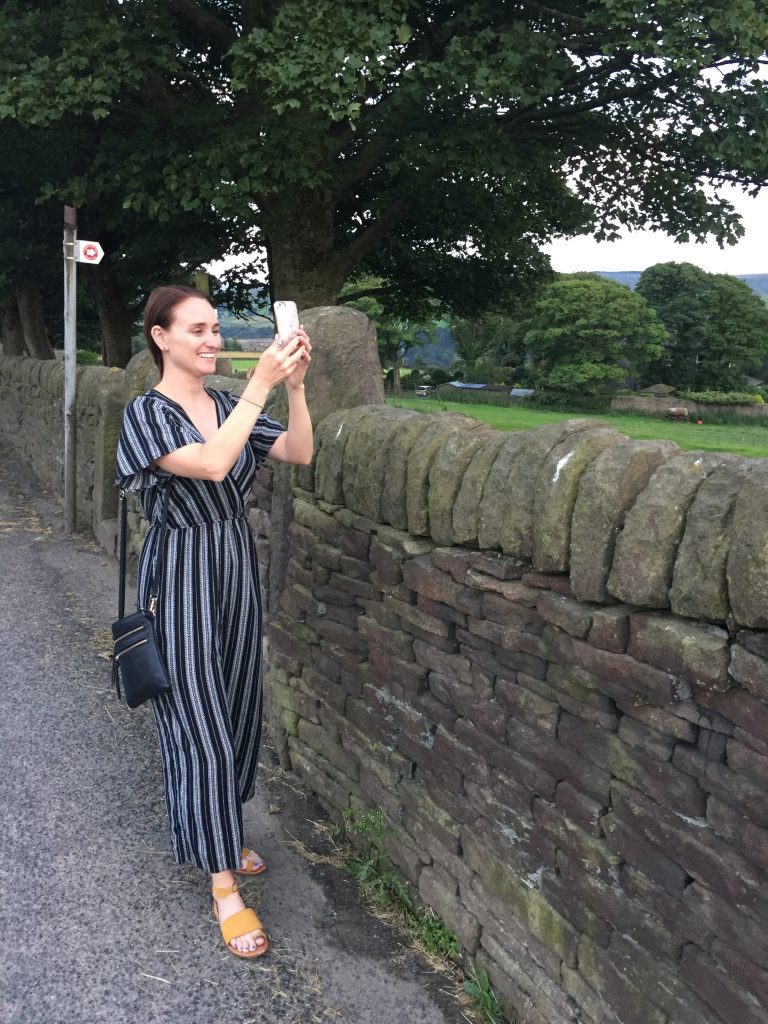
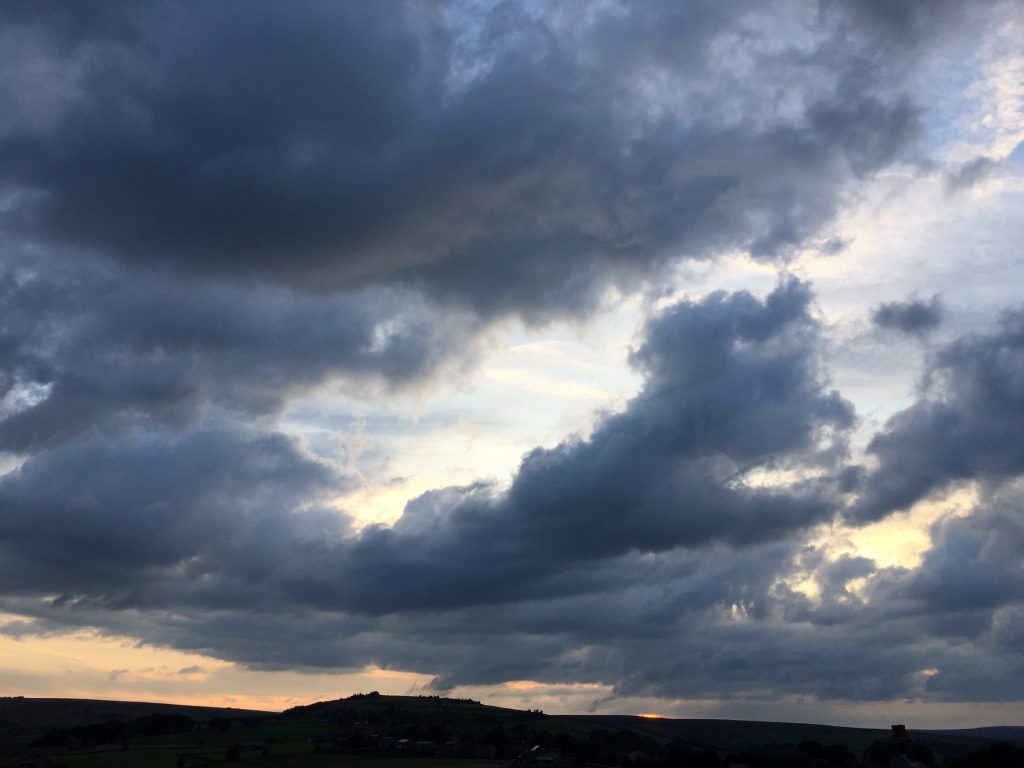
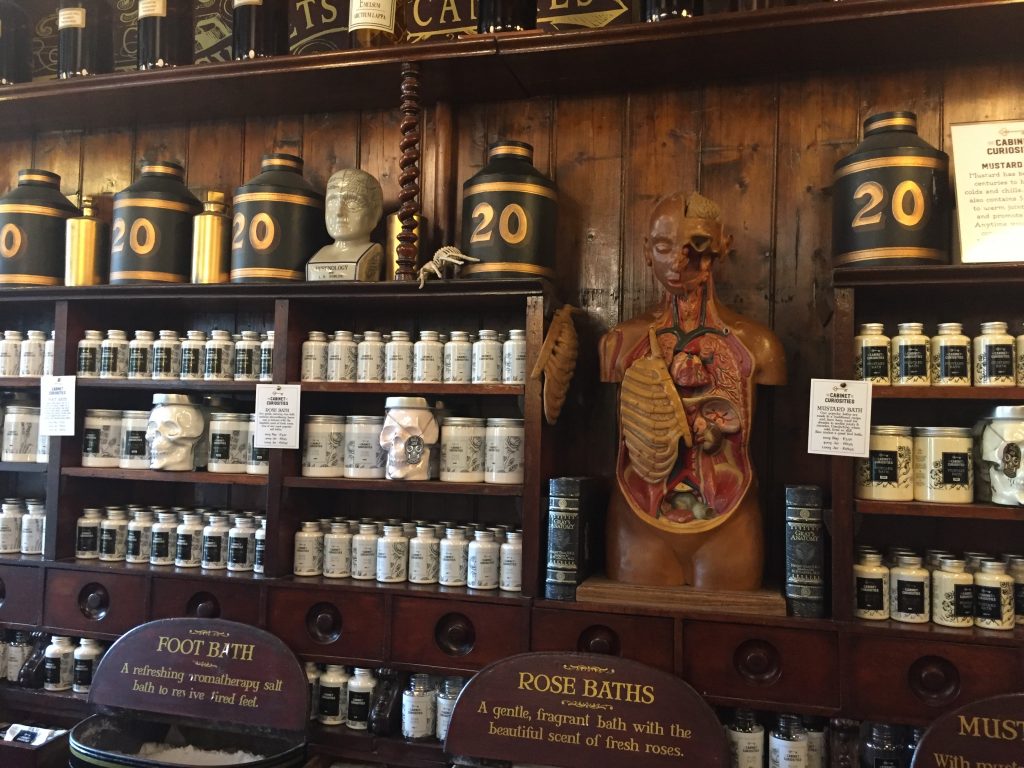
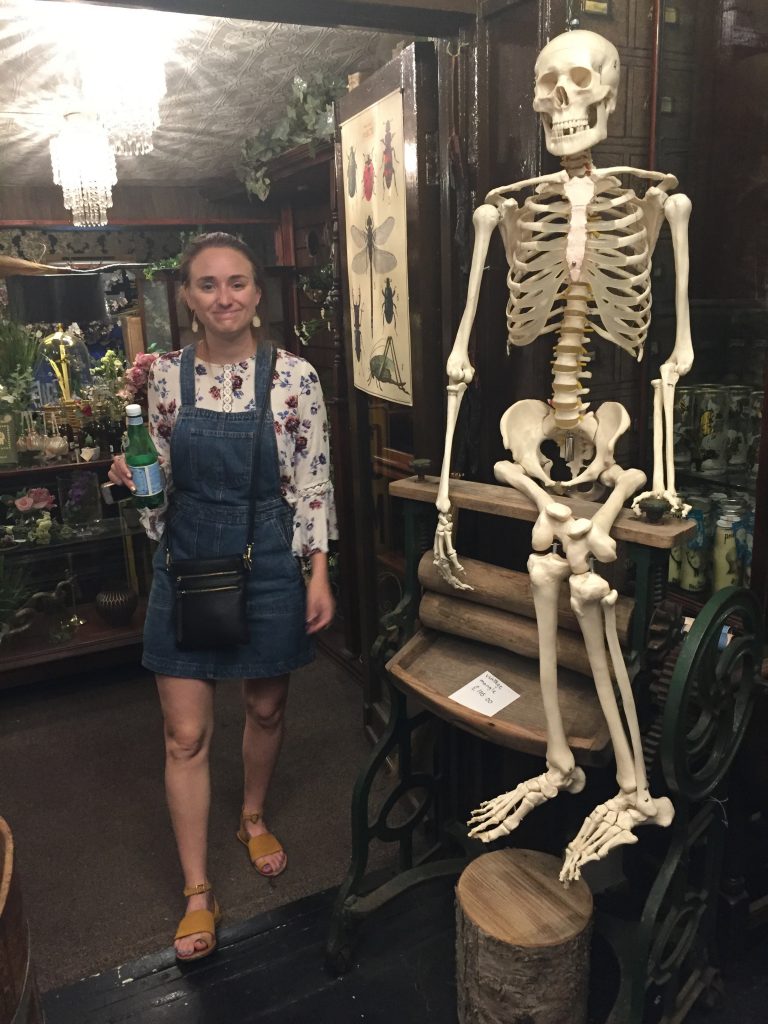
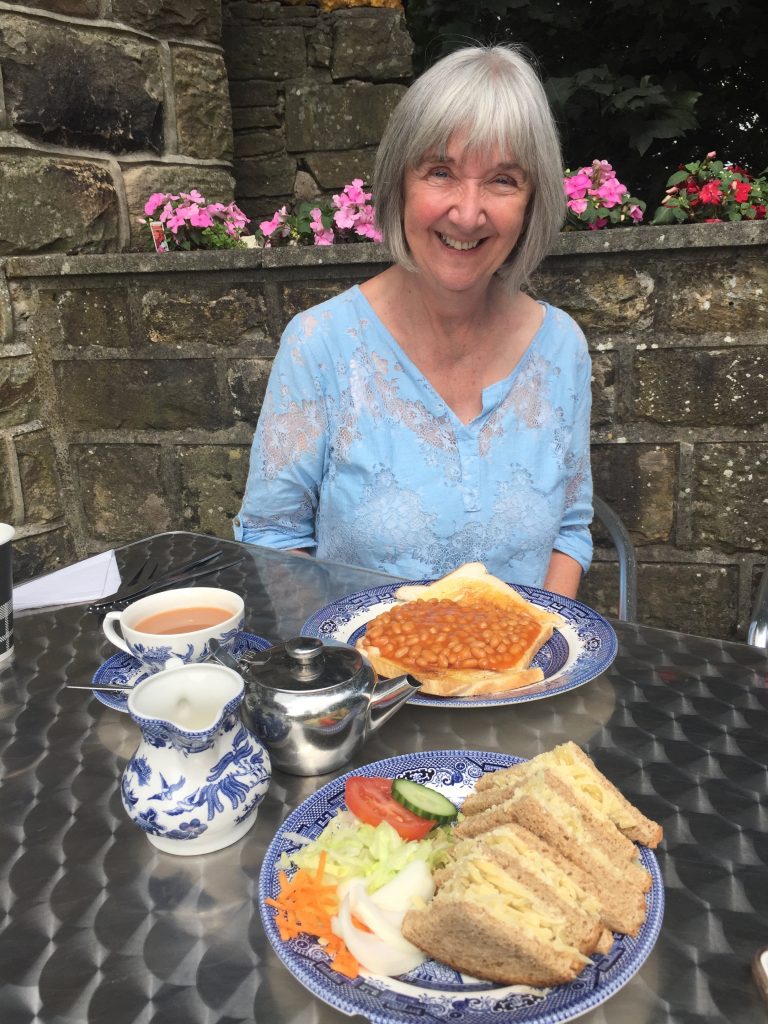
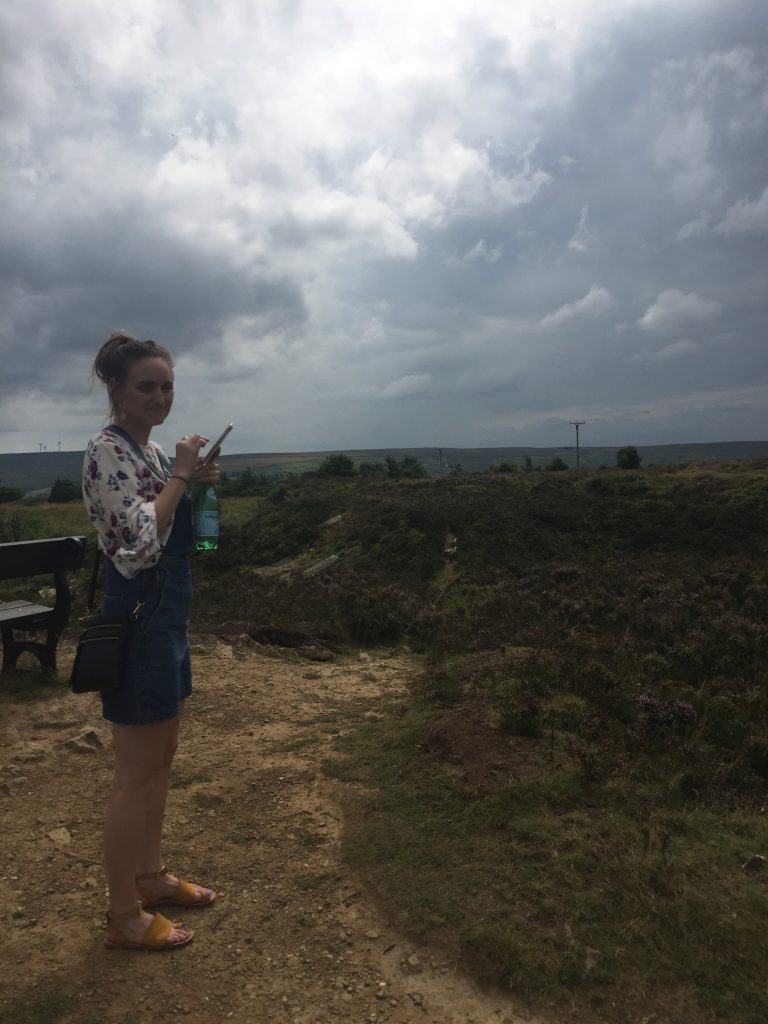
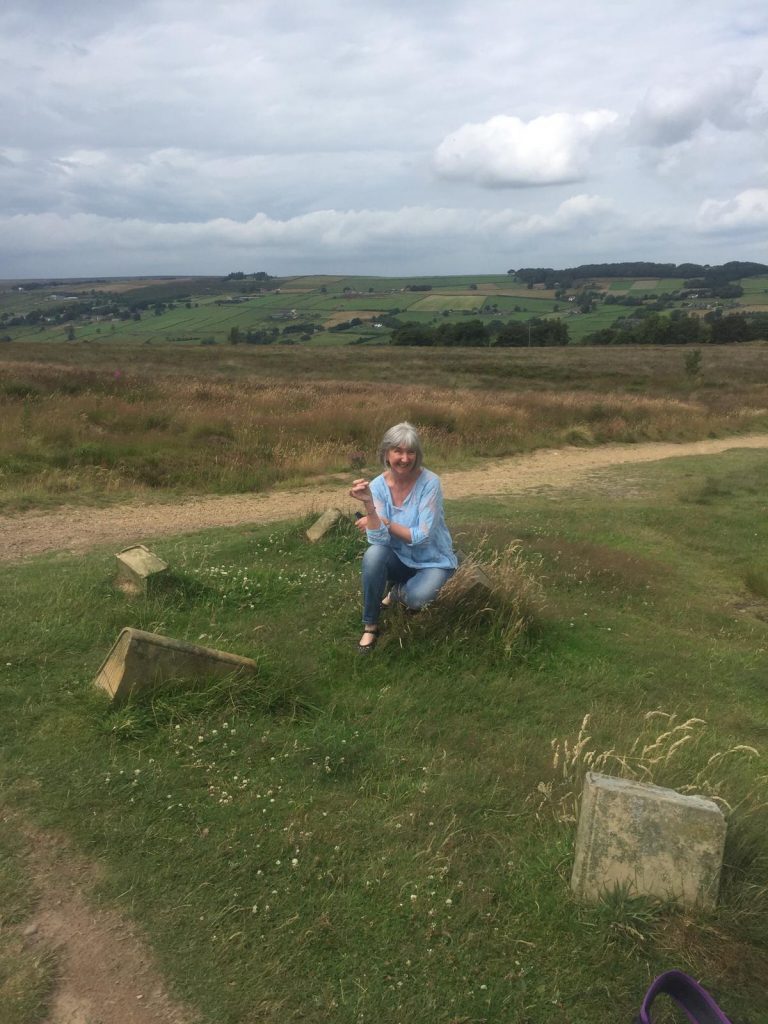
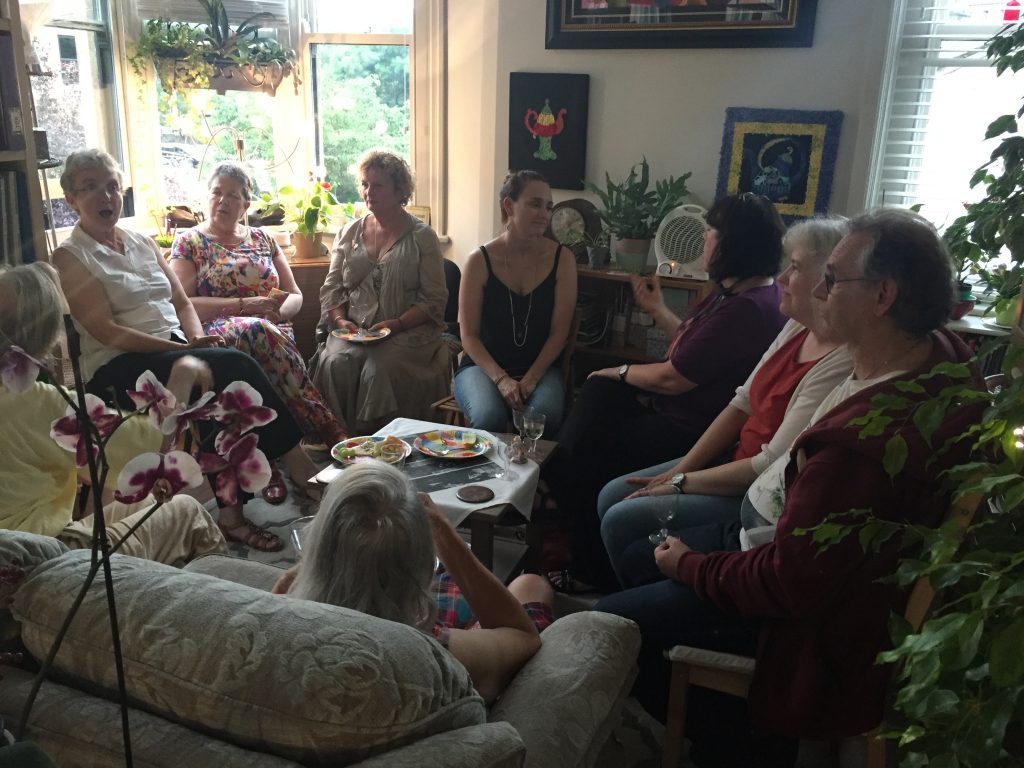
Recent Comments