Squelching sneakers skip over swift streams
Sweeping seaward, beneath sepulchral skies
Somnambulant surfers
Skim the stinging spindrift,
Solicitously circumventing the somber sea stacks –
Saturnine sentries surveying the sadness of the centuries
hmcreativelady
Squelching sneakers skip over swift streams
Sweeping seaward, beneath sepulchral skies
Somnambulant surfers
Skim the stinging spindrift,
Solicitously circumventing the somber sea stacks –
Saturnine sentries surveying the sadness of the centuries
The White Rabbit offers his pocket watch to me
As Alice looks on bemusedly.
Bobbins of spun cotton fill the coal scuttle that adorns my table
As jostles for air between cake and cappuccino.
Through glass, spotlessly clean, a crisp winter light pours in,
But, with eyes wide open I dim this light, cloud this glass, drown the music
And I’m in a dark forbidding place, a basement, where deafening thuds,
Piercing whistles and earth-shaking stomps
Transport me to a former time.
I glimpse a young boy, ten years old, flat-capped,
With thread-bare overcoat and scuffed clogs trampling along the shit drenched cobbles
Barely awake, barely cognizant of his surroundings
Where he s dwarfed by buildings so tall
That the sun never reaches the ground
Even in those times when, just for a brief moment,
It penetrates the ubiquitous smog and grime.
A surgeon signed his papers – he’s fit for work.
But he doesn’t stay long, and next time I meet him
He’s a gunner
Taking aim at other young men from factories and farms and homes
Where anxious loved ones await them.
Ishmael returned home,
Was he devastated?
Did he scream in nightmares in the living daylight?
In a gallery above me a striking wreath takes my breath away:
The dead eyes covered with pennies
The kit-box stenciled with numbers
Beyond my comprehension.
My great uncle Ishmael worked at Dean Clough carpets which was, at the time, the largest carpet manufacturer in the world. Today it houses, art galleries and the Loom Café, decorated with Alice in Wonderland paraphernelia by Chris Mould.
(West wall of Manchester Cathedral) A writing workshop with Manchester Cathedral’s poet in residence
A first view:
Black, pitted,
Scored by aeons of weather
Scared by centuries of man.
Man and horse struggled
Through the penetrating precipitation
Of a Mancunian winter to carry that once-golden stone
Masons left their marks
Gauged with chisels, struck with hammers, polished it until smooth.
Set in stone implies ‘forever’
Yet here the ravages of time, be they made by man or Nature’s serendipity
Have destroyed those chiseled lines,
Blurred those straight edges,
Roughened those smooth surfaces until
Only scattered remnants of fine tracery peak out with blinded eyes from beneath its wretched face.
And now, like an ancient mummy the once-smooth skin is black and pitted,
A volcanic crater of aging epidermis.
But wait,
A second viewing, now informed by a Father
Garbed in mockery of the knights that lie prostrate beneath our feet.
That ancient wall that spoke to me of medieval masons
Whose marks I’d traced with hesitant fingers,
Yearning to connect across the centuries,
Its marks are mutilations, wounds wrought by virtuous Victorians
Intentional disfigurements of medieval craftsmanship
By prim men in straight-laced garb
Yearning to cover the ancient disorder with modern clarity of line.
This wall, with its pock marks and scuffs bore witness to my forefathers,
Their birth, their love, their demise.
Music shrouds their spirits for
Without them I wouldn’t exist.
“That wall needs a face lift.
Cover the blemishes, obliterate the scars,” the renovators had said.
Today that white wash has flaked away into its own oblivion
Leaving the pitted West wall to conjure its own convoluted saga.
As the Last Post sounds
A multi coloured caterpillar stands to attention
Its rainbooted feet silent and still.
Above it towers the church, clad in her coat of black grime,
Staring with unseeing eyes at the vast hills that encroach upon her
Threatening to overcome her once dominant position.
Rain pours from my eyes as well as the sky as Jerusalem resounds
As if in mockery of ‘England’s green and pleasant land.’
Out of the rain now
Into the vast echo chamber punctuated with blood-red bullet points.
A thousand people gather to sing, to listen, to cry, to pray
To remember
Not only the fallen
But the damaged, in this, the war to end all wars.
As I leave the church the sun peeks out from behind her shroud
To cast a glittering eye through her own tears
A rainbow arches through the sky
Coming to rest directly over the black foreboding tower
As if to say ‘You have my blessing.’
In the dark of that evening
A beacon is lit high on a remote hilltop
Here, handbells ring out from a tent,
Where poppy quilts and paper gravestones bump elbows with
Hot soup tureens and tea cups,
Fussy toddlers and excited canines,
Joining the nationwide remembrance
On a more intimate scale.
(On performing at the Piece Hall for the Overgate Hospice candlelight vigil)
With rain streaming from my eyes I gaze up at Beacon Hill
Where a lone car’s headlights trace the tortuous road plunging into Halifax,
The vantage point had provided a favourite photo op on the way back from Southowram with Rachel
In this vast courtyard Anna had dressed up in period costume
And I’d wondered what it would be like to play music in this cradle of textile history.
Now I’m here, wearing 4 layers to keep out the cold and rain,
Squeezed together with other musicians
Beneath a leaking canopy which performs, unscored, Halifax’s own Water Music.
Two hundred candles glow in unsteady hands as nurses, volunteers and doctors
Relate heartfelt stories of comfort to the bereaved and grieving.
A surly-looking man in a high viz jacket wipes a tear from his eye as he stands motionless
While a press photographer tip-toes judiciously between the congregation.
A beautiful version of Somewhere Over the Rainbow renews the tears in my own eyes
As I recall my visit to Lily at the Overgate Hospice in Elland just before she took her place ‘beyond the rainbow.’
Thinking of her reminds me of the visit that Sarah and I took to her grave
And my distance from my own children is so painful that the floodgates open once more.
The baton is raised and the tips of my fingers emerge from their thermal blankets.
As we finish our set the clatter of dismantling music stands and stacking chairs replace the serenity of the carols
While tree lights twinkle like the headlights of that car high above, reflecting on the web cobbles
And lighting my approach to the railway station and my journey home.
Did you love him, Sally,
You know, the man who lived next door?
A moment of passion
A stolen hour of comfort
That changed my life forever.
You were hardly a spring chicken
Newly widowed
Three young children
And him, newly wed
With a bairn on the way.
You took him to court
Made him pay for his deed
Support this new daughter
Miss Elizabeth Ann
Did he hear her cry in the night
Through the partition walls that divide Lily Hall?
Or did his wife’s child’s whimperings
Obliterate that constant reminder?
She took her dead father’s name
And didn’t call James her father
Until she married for a second time
Barely clinging to the hillside
Defying gravity
Lily Hall’s window eyes survey the town
Keeping a watchful eye
On the terraces below
As they seemingly slide down the hillside
You watched the mill chimneys soar
New manufactories rise from the ashes of old
The streams diverted, the sluices opened
And the millponds enclosed.
James came from a family of builders
Plasterers, carpenters, cabinet makers
The business grew
Schools, churches, banks and factories.
Now, today, you keep your watchful eyes on me
As I explore the buildings
Where you lived, that you built,
Roads that you traversed
And paths where you once walked.
(Sally Whitham was my great great great grandma)

I stop for a moment to gaze intently at the fluorescent pink of the Himalayan balsam plant that lines my path, adding a welcome burst of color to this rolling sea of green. Yes, this plant’s an invasive import and is considered a menace by many, and I actually know people that walk these very paths scything it down, violently uprooting its stems – but it’s a beautiful menace just like the rhododendron. I step closer and peer into the flower’s very being as it gazes back at me with its hidden jewels. Its elongated body is hat shaped and cavernous as if to shade and obscure its innermost secrets. Above me the tousled heads of thistles, once proudly purple, now bow their shriveled heads, now grey with age, bowing to the earth, where they soon will come to rest. Above them the mountain ash forecasts the onset of winter with polished berries, as eye catching as Hawthorne’s scarlet letter.
The insistent singing of Hebden Beck navigates my scattered thoughts back to my morning’s reading, Glyn Hughes’s The Rape of the Rose, in which he describes the throstle machine which spun the cotton onto cones. A couple of manufacturers actually built child size versions of these machines so that children as young as five could be employed. Yes, employed, but disfigured, lungs ruined, fingers severed and lives cut short by this work in the new manufactories. The machines were named after the song thrush whose song they recalled. Residents of Lily Hall had been throstle spinners and throstle doffers, so it’s yet another link with my ancestry.
Passing Dog Bottom I imagine packs of wild dogs rampaging the steeply sided river bank before every inch of the river was imprisoned by walls, whose outlines are now softened, sculpted by stitches of moss into weird and wonderful creations that glint in the morning’s sunlight where a break in the trees allows the morning’s sunlight to penetrate the secret recesses, a green blanket gently enfolding and softening the brutal sharpness of life in Foster Mill. I have ancestors who worked at Foster Mill. I have ancestors who lived at Dog Bottom too. Above me the cold, weeping stone spine of Heptonstall stands atop the ridge like a watchful sentry perched above the two valleys, leafy trees now hiding their dastardly deeds. I loved Hughes’s description of the people going home after work up the stone steps with their lanterns radiating from the glowing mill like a starfish. A rustling in the bushes to my right startles me for an instant, but I smile to myself and console with the thought that it’s just the ghost of a wild dog. Then “Pie or crumble?” comes an utterance, unexpected but unhindered by the beauty of the balsam or the sighing willow herbs’ fleecy down. It rose from the darkened cluster of trees beyond me. I froze – unsure of my response. But I was saved by a reply from behind me, where I’’d heard the rustling branches. “Jam.”
‘What is this life
If full of care
We have no time
To stand and stare.’
(W.H.Davies)
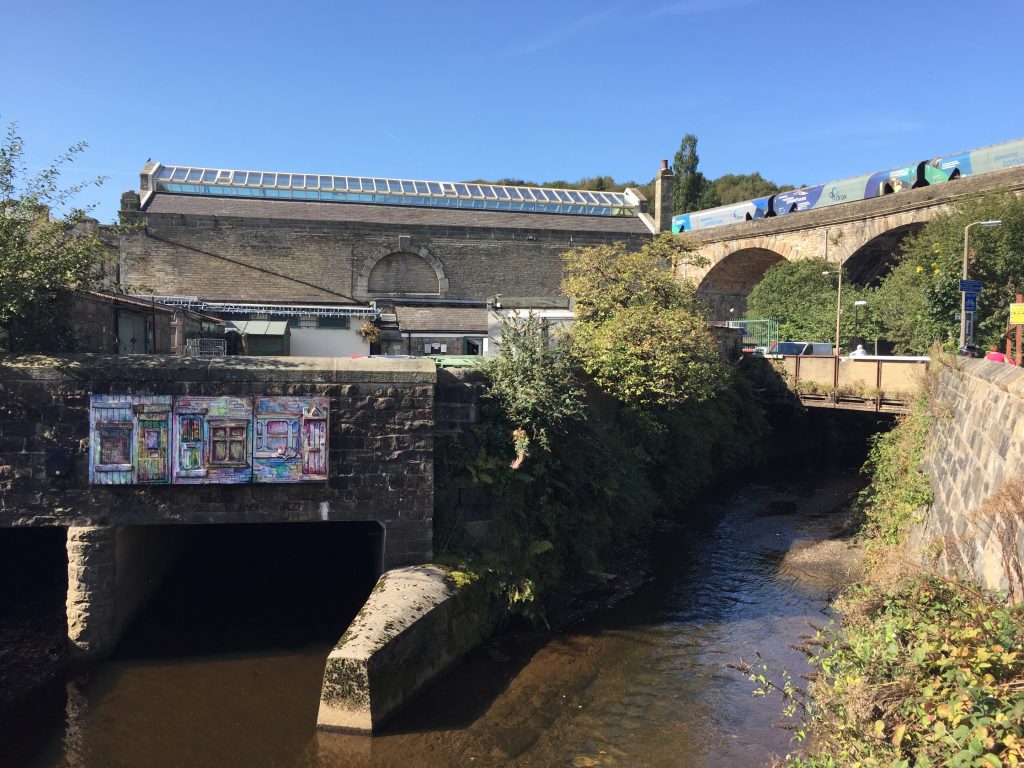
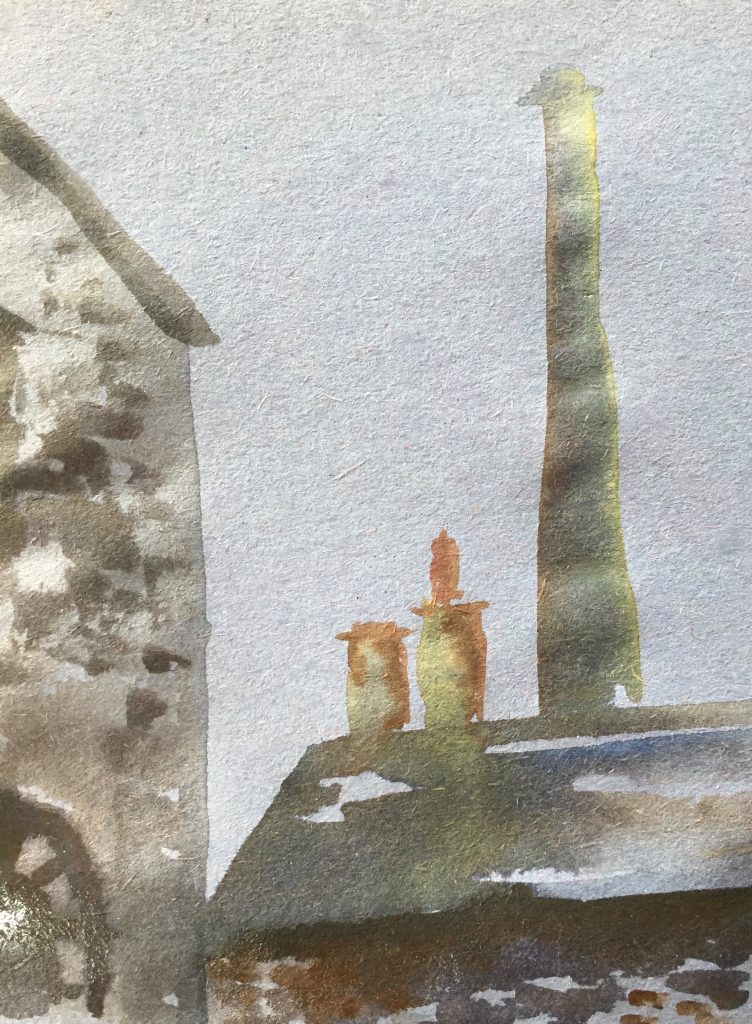
Thwarted. Today I missed the bus. Literally. Despite the cloudless sky and Indian summer temperature there’d be no walk along ’t’ tops for me this morning. So a change of plan was called for – a walk along’t’ bottoms. I got the bus into Tod intending to walk back along the tow-path. I alighted at Lidl’s and tried several streets to access the canal towpath. But, horror or horrors, the towpath is still closed. ‘No access, towpath closed’ read the sign. Thwarted again I found myself in a no man’s land of half ruined manufactories, spectres of the industrial revolution where broken off chimneys stand like sentinels over modern metal warehouses. A bike factory has pedaled its way into a derelict factory site. There’s even a wasp factory. No kidding.
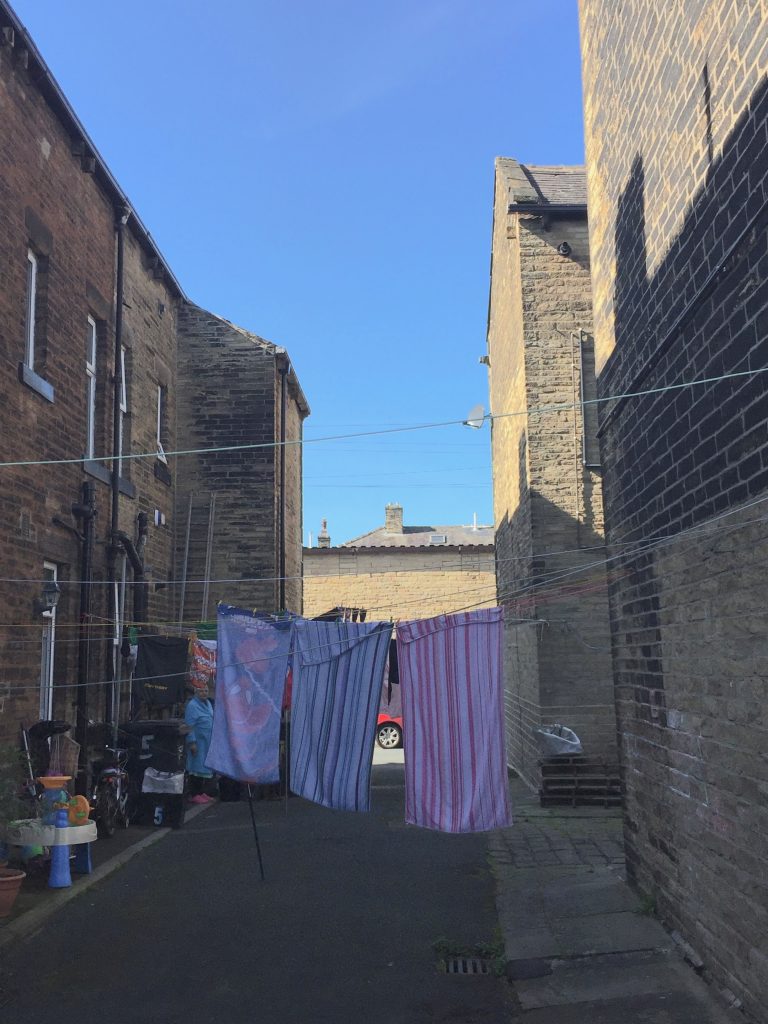
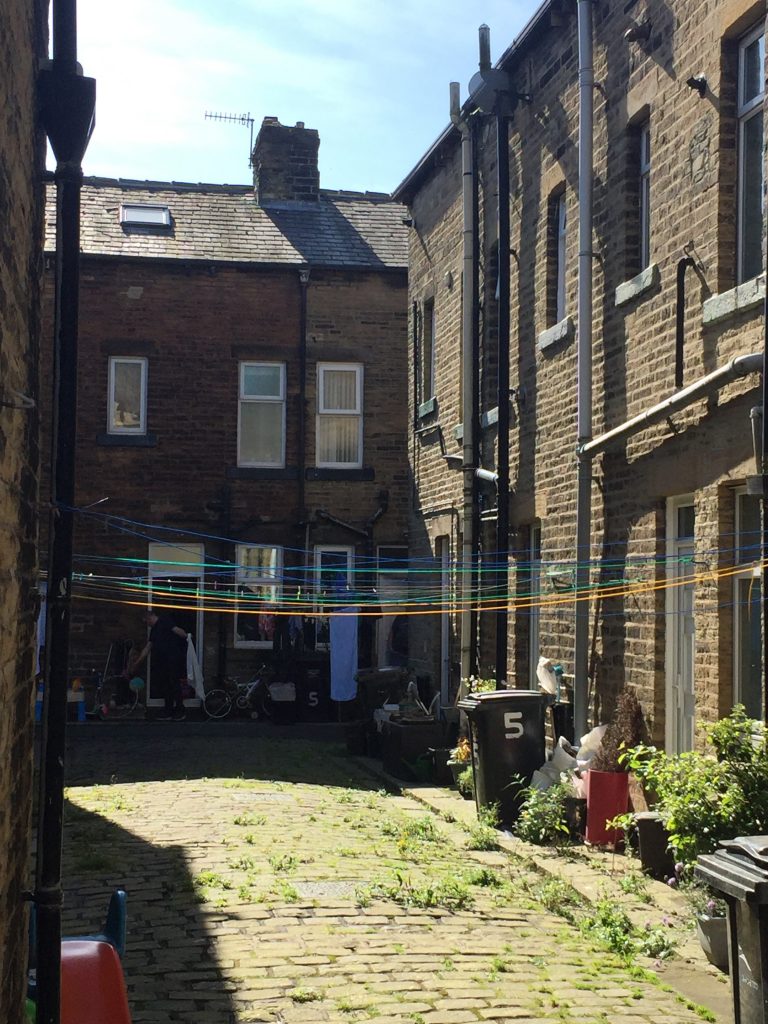
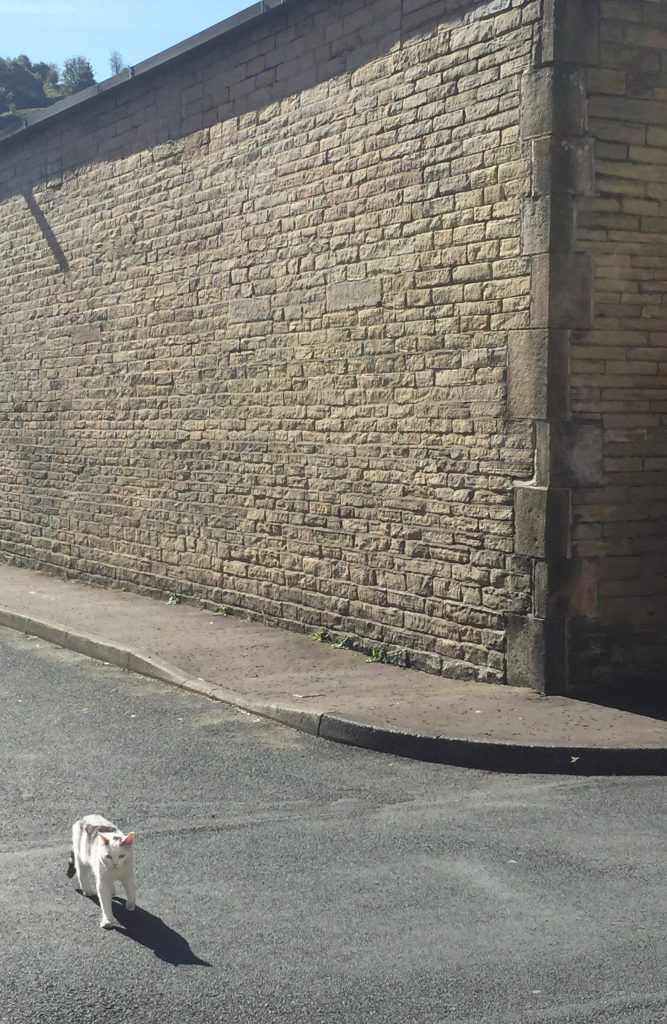
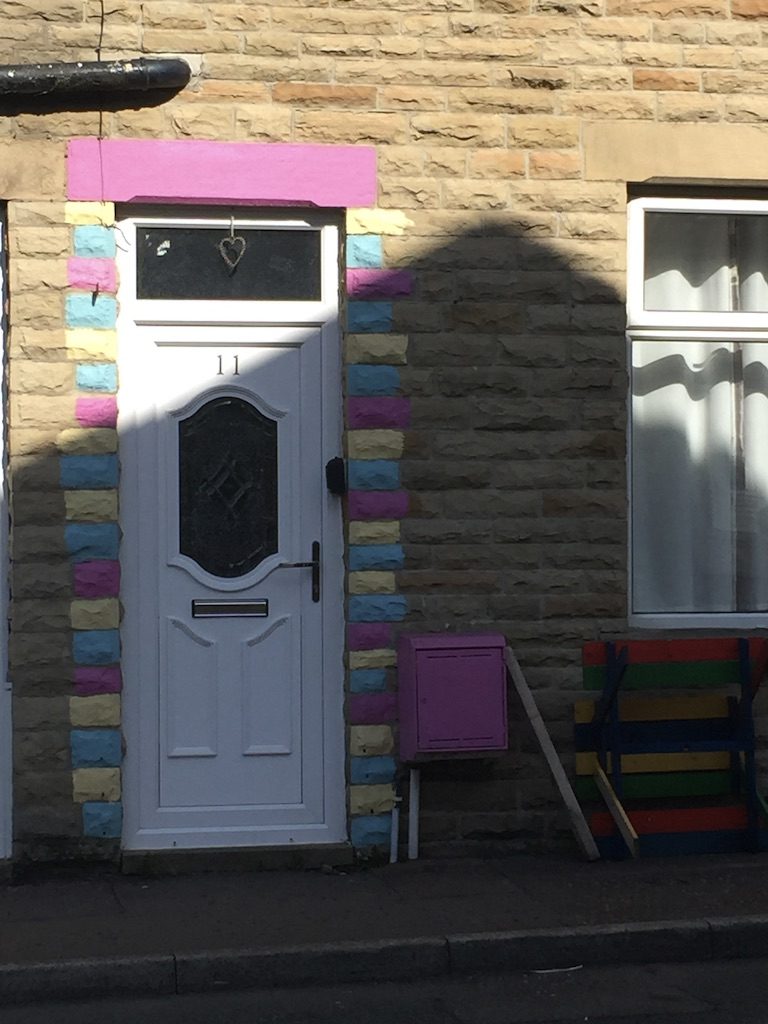
The houses are still wedged tightly between these remnants of a bygone age and the streets are huddled together as if for protection from the grime and whirring of monster machines. Streets cower under the heavy burden of surrounding hills whose ancient mass weighs down onto the frailty of humanity. The houses here are snail shells where the sun never penetrates their exoskeleton, and from where the people venture out only to return quickly, recede, seek shelter and close the curtains on the outside world. Houses where the gentle, healing sunlight never penetrates, where Helios can never stroke his warming hand to soothe the savage breast, the bent and broken limbs of weavers, old before their time. Here where back to back houses with serried ranks of wheelie bins and bicycles cover their eight foot frontage there’s not enough room to swing a cat, and there are plenty of felines available, slinking around doorsteps that, once weekly proudly polished with donkey stones from the rag and bone man now rest, worn, grit ridden, cloudy with algae. One family have sought to bright things up a little! (see photo).
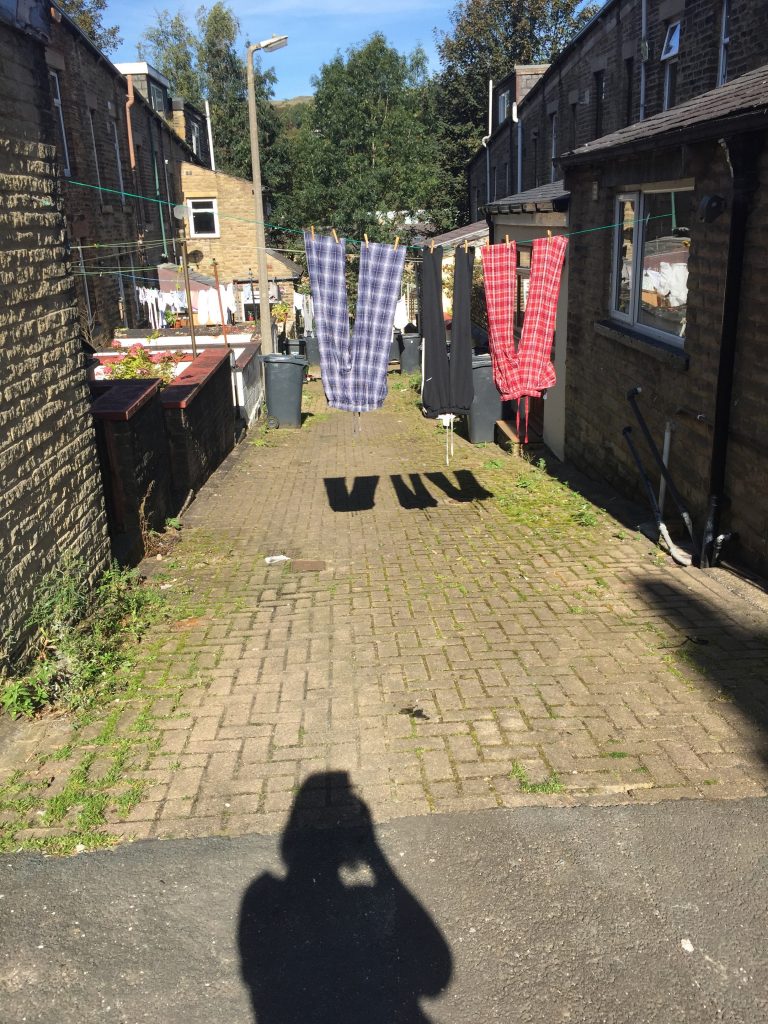
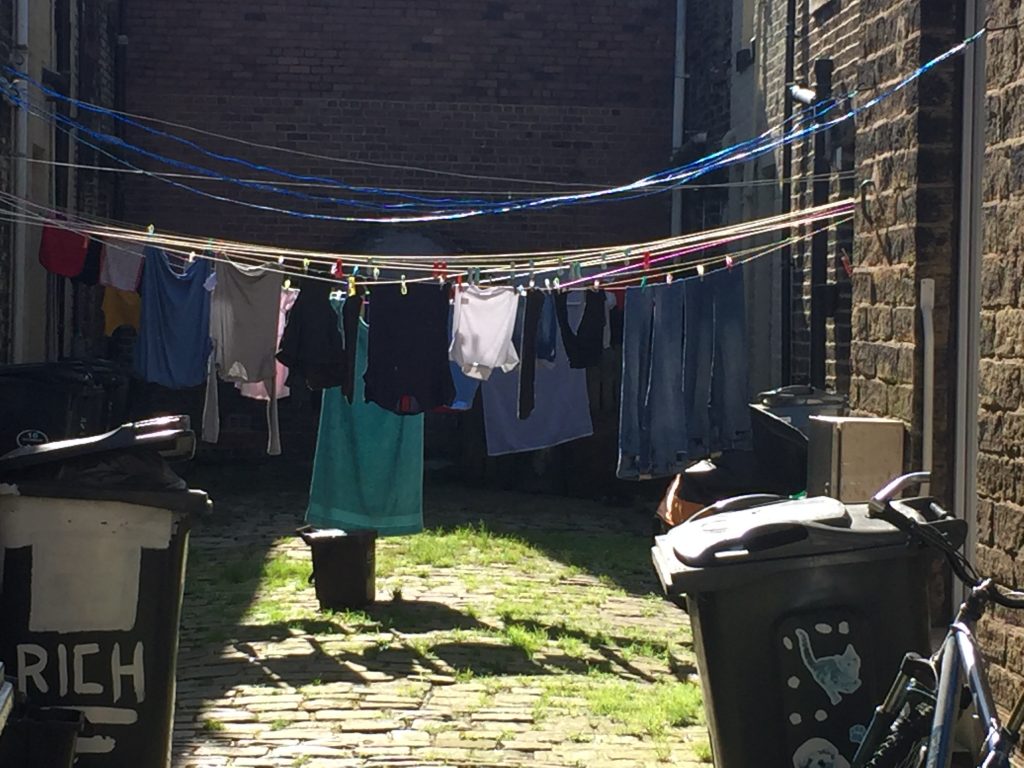
You take your life in your hands as you walk the back street in danger of being garroted by a dozen neon plastic washing lines perfectly positioned at neck height. Many of them display next week’s attire dancing in the breeze like a tormented ballerina on hot coals. I reach the last street, blinking for a moment as I emerge into the sunlight.
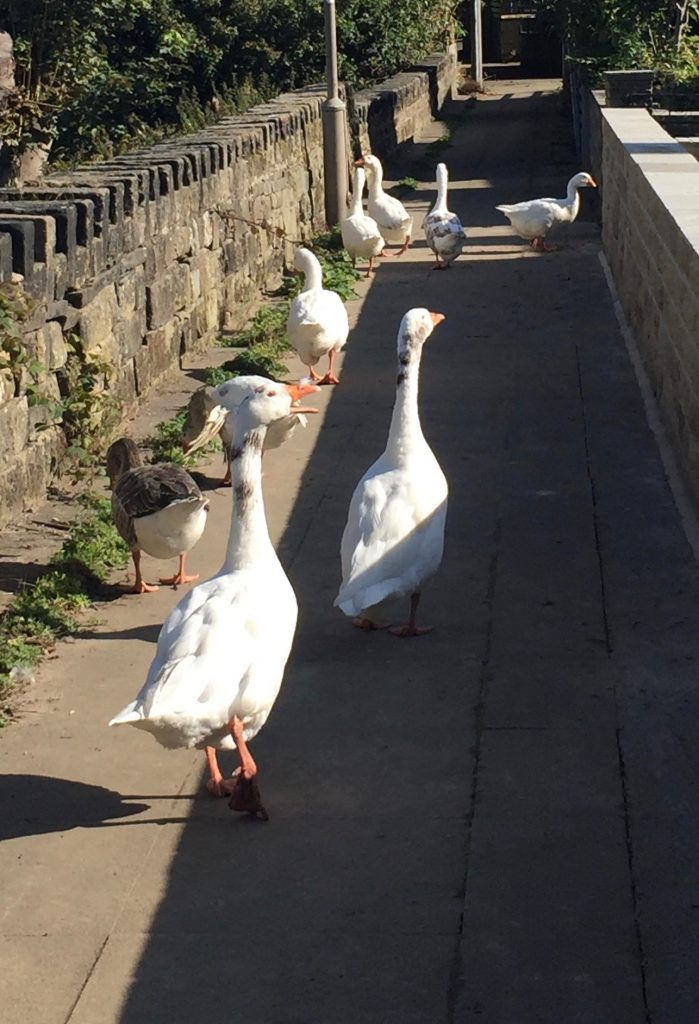
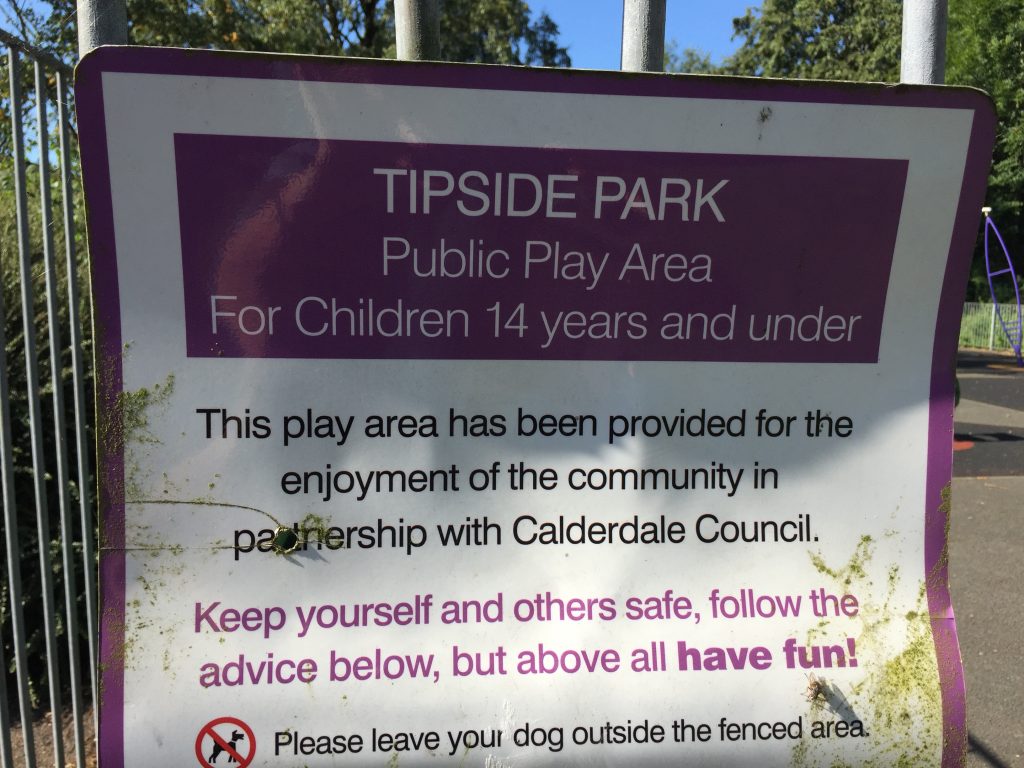
I find myself confronted with a tiny bridge over a small stream. As gaggle of geese shoo me over the bridge. From my elevated vantage point I look back at the back-to-back streets and think What a tip! In front of me, leaving the geese to waddle down to the water, a wooded pathway leads to a playground. A rotting piece of paper tacked to a notice board exhorts me to look out for Water figwort, Knapweed, and purple loosestrife. It’s only then I notice the name of the park: Tipside Park. For real? But of course. They don’t mince words in this neck of the woods!


This was to be my day to explore Kendal itself but the unexpected sunshine made me want to jump onto an open top bus. But I stuck to my plans – at least for the morning. I chatted to the owner and her daughter – the first time I’d met them. She’s planning a trip to Las Vegas and I recommended she read the book that I recently finished: Lost in Manchester, Found in Vegas.

I decided to visit the church – which is ‘not to be missed’ according to the Trails of the Unexpected. It’s one of the widest parish churches in England. To one side is the Parr chapel, built in the 14th century. A tomb with a much disfigured marble effigy is reputed to be that of Catherine Parr’s grandfather.

Behind the locked door of the rood screen was a very old bible, complete with its chain and an ancient bible box. It’s possible that this bible belonged to Catherine Parr herself. The light in the church at this early hour was wonderful, casting wonderful colours through the stained glass windows onto the stone floor.


I was struggling to get a good place to take photos of the bible from when the assistant priest came over and offered to go and find the key so that I could get into the small chamber. Very obliging. The helmet hanging above the Vestry door could have belonged to a member of the Bellingham family, but tradition has it that it was the helmet of Robert Philipson (Robin, the Devil) knocked off his head after riding into the Church one Sunday on his horse in pursuit of his enemy, Colonel Briggs, and being chased out of a lower door by the congregation.

I decided to follow one of the online Trails of the Unexpected and set off towards the castle. Though set on a hilltop you can’t see the castle from the town because of the all the trees on the hill slopes. The first part of my walk passed through an enormous cemetery, one of the largest I’ve seen

, and then climbed steadily upwards, still through dense forest so it wasn’t until I reached the now dry moat that the remains of the castle came into view.

I saw people preparing for the big art installation of giant inflatable figures that would be displayed and floodlit around the castle and was sorry that I’d miss the actual event which starts tomorrow. A couple of families were exploring the grounds with its rampart which is almost two metres wide in places. The old wine cellars with their arches ceilings are still in place. From the top of the tower I could see distant hills but the area around Kendal itself is very flat and I wondered why the castle hill exists. Thankfully an explanation board answered my query. It is a drumlin – scoured by glaciers. I still remember my O level geography, at least the physical. I found that I was much more in touch with the feeling of history in this place since I was alone, rather than chatting to someone as I explored.

Back in town I crossed the bridge over the river Kent and saw some inviting looking tables on the river’s edge. Tea and a toasted teacake beckoned. I didn’t reckon with the wasps though! It was obviously a popular place with mums of preschoolers and 6 baby buggies were parked outside.


I followed the Riverwalk, which is an ancient track though now it’s lined with ugly 1960’s flats and made my way to the Abbot Hall Art Gallery. The exhibition I’d come to see was ‘Ruskin, Turner and The Storm Cloud’ which I’d missed seeing in York by one day. Now, on this trip, I’d already been immersed in Ruskin and Turner for several days, including visiting Ruskin’s house, playing his piano, and seeing his collection of Turner’s paintings.

Dr Richard Johns, from the University of York’s Department of History of Art and co-curator of the ‘Ruskin, Turner, and The Storm Cloud’ exhibition, said: “Taking Ruskin’s ‘Storm Cloud’ as a point of departure, this new exhibition explores the importance of the work of JMW Turner for Ruskin’s understanding of the natural world.With Turner’s vibrant landscapes running through his mind, Ruskin encouraged his audiences to pay close attention to the world around them, and to consider the impact of human actions on the environment at a local and global level.”

I returned to the hostel to decide what to do for the remains of the day. It was now 3 o’clock as I set off again determined to get an open top bus when it wasn’t pouring down.

I decided that my destination should be Bowness-on-Windermere, perhaps the most touristy town close by. And sure enough the boat launching area was packing with people taking advantage of the dry weather.


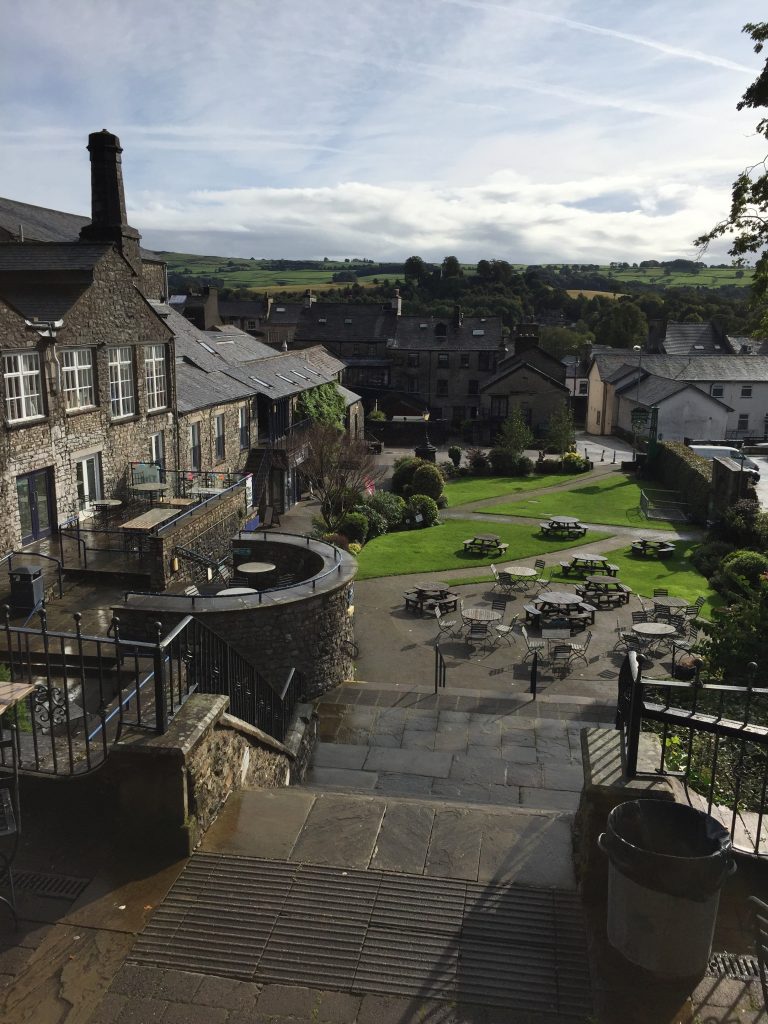
There were lots of food stands and bars and I contemplated taking a short 45 boat trip. However, while on the bus I’d had a call from the Kendal Theatre to say that there was now a ticket available for the stand up comedy show that I had been on the waiting list for. So I headed back to Kendal, collected a frozen lasagne from Iceland and after dinner headed over the 20 steps to the Arts Centre. I’d no idea who I was seeing, but a sign in the foyer told that this was the last of 4 shows today and that tomorrow he’d be doing 7 shows! It was crowded as I waited for the doors to open and collect a beer that had actually been brewed at that brewery. I’d certainly lucked out on my seat – second row. I asked the man sitting next to me where the performer was from.

“Ireland, of course! Don’t you know him? ” I shook my head. “It’s the star from Father Ted – Father Dougal.” Now I’d heard of Father Ted, a British sitcom about 2 catholic priests (1995-1998) and so I just about knew who he was talking about, Ardal O’Hanion. As I chatted to my neighbour he mentioned places that he’d visited around the world. ” Think I’m getting too old for Machu Picchu,” he quipped. I really enjoyed Arlan’s humour. He was trying out new material for a world tour beginning in the Spring. Part of it centred on Bucket lists, and how young people as well as old now make bucket lists, though young people often prefer to go glamping than traditional camping on the cheap. My favourite line of his is that rather than make a bucket list, he’s made a Fuck-it list; Learn Mandarin? Fuck-it. Climb Macchu Picchu? Fuck-it! It was great fun . . .and I was back in the hostel to catch the latest Brexit mess: Boris Johnson’s brother resigned.

© 2025 In Search of my Yorkshire Roots
Theme by Anders Norén — Up ↑
Recent Comments