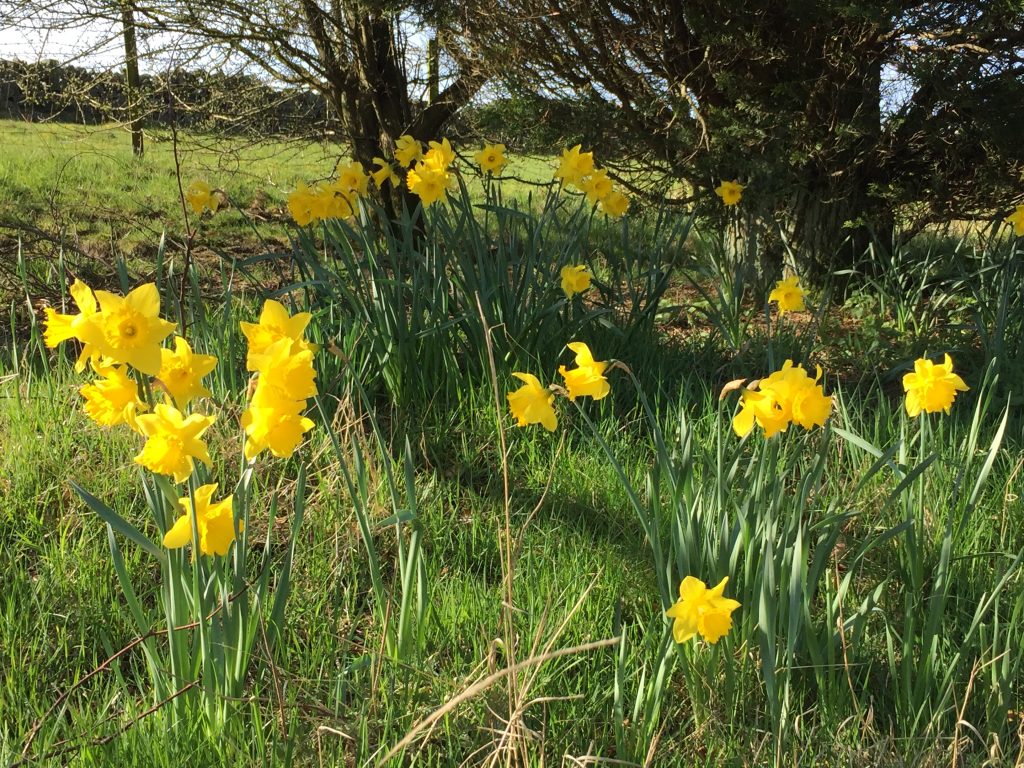
I wasn’t sure how I was going to cope with this weekend. It ‘s the anniversary of my mum’s death, nine years ago, and I had planned to participate in an alumni weekend at Sheffield University. I’d gone last year and had thoroughly enjoyed the Music department’s alumni get together of rehearsals, meals and good conversation culminating in my participation in a wonderful concert in Firth Hall, scene of my graduation ceremony. But a couple of weeks ago I got word that the weekend’s events had been cancelled – so what to do?
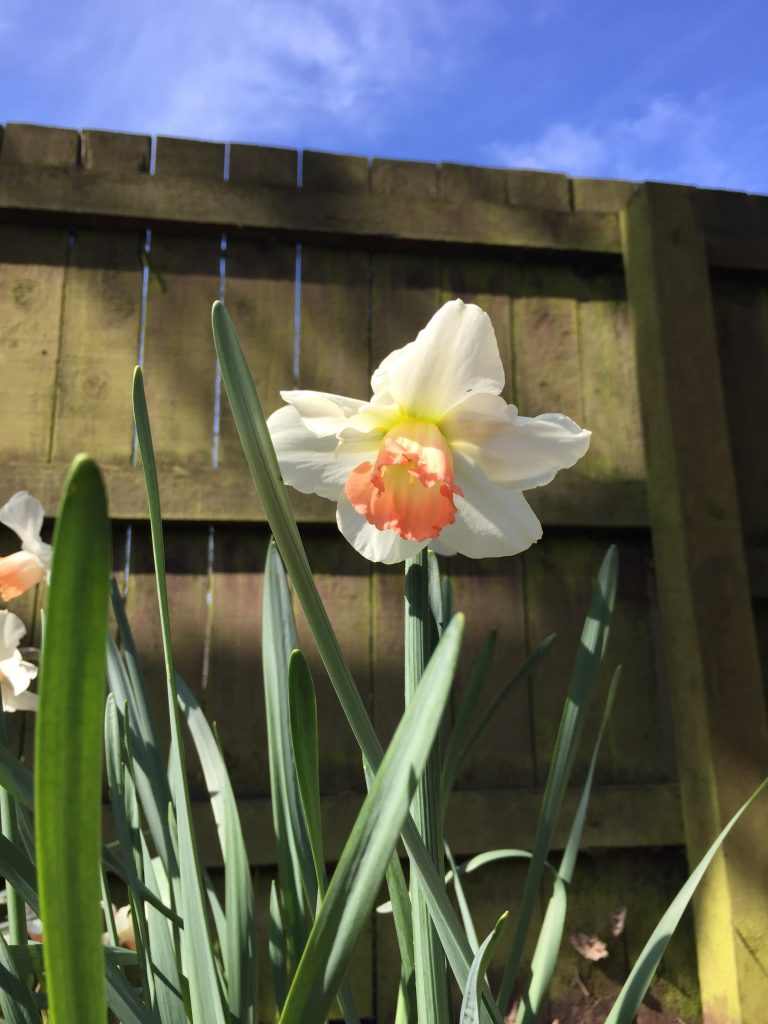
Last year on April 6th I had surprised myself by setting out from my apartment to go to the Coop in town to buy some pasta, and had somehow found myself climbing up to Stoodley Pike. 8 miles later I did, in fact, call in at the Coop for some pasta. I had decided on that rather strenuous hike that I would celebrate my mum’s life each year by going on a hike.
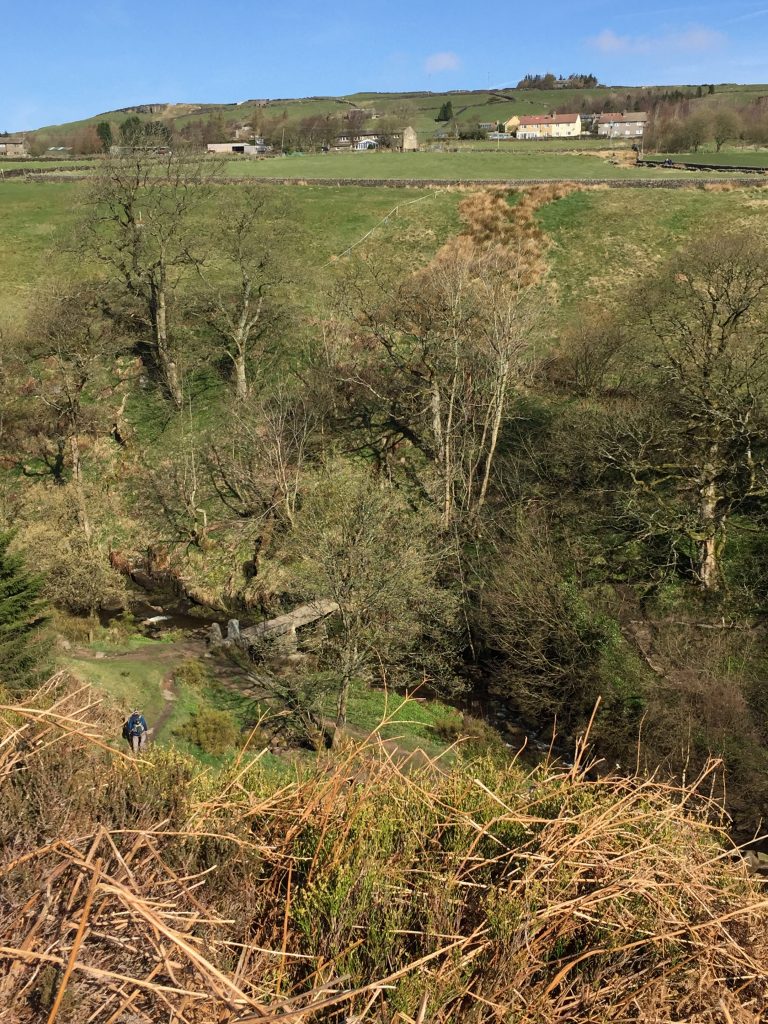
Looking across to Heptonstall 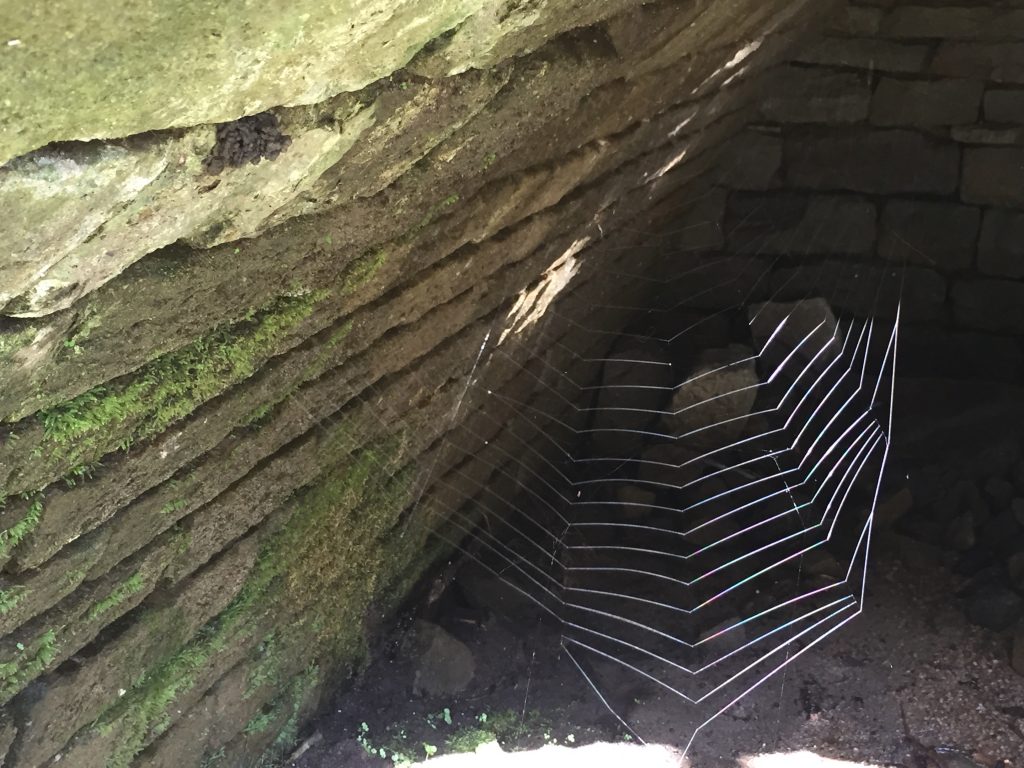
Web in a culvert
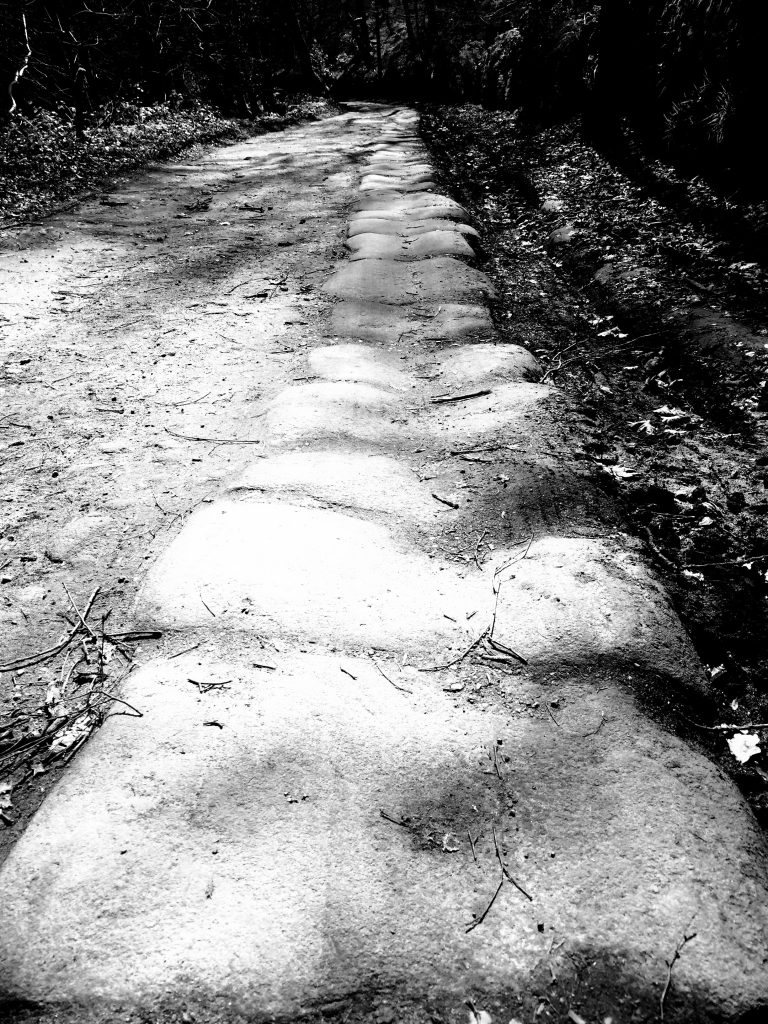
The old Pack Horse trail 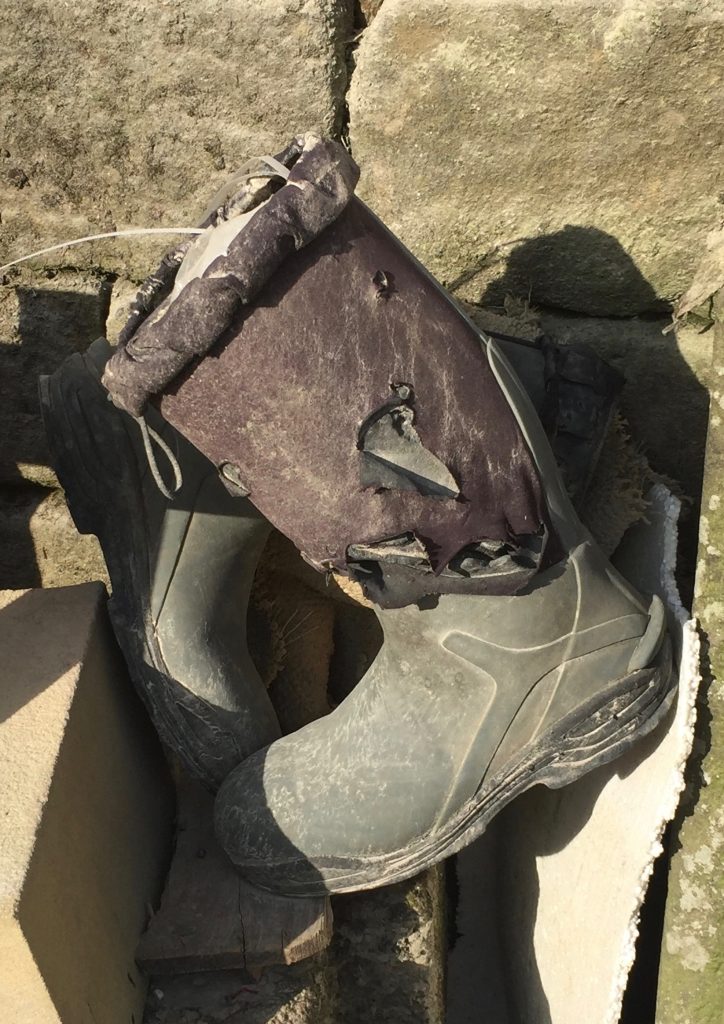
Abandoned boot, Mayroyd Mill
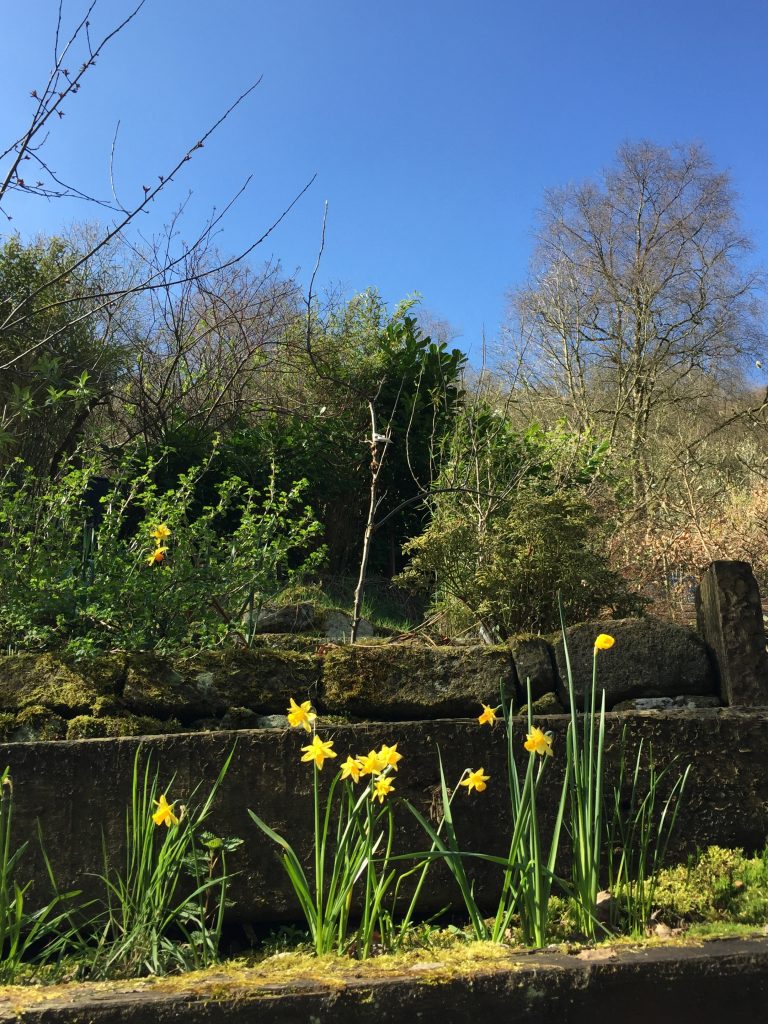
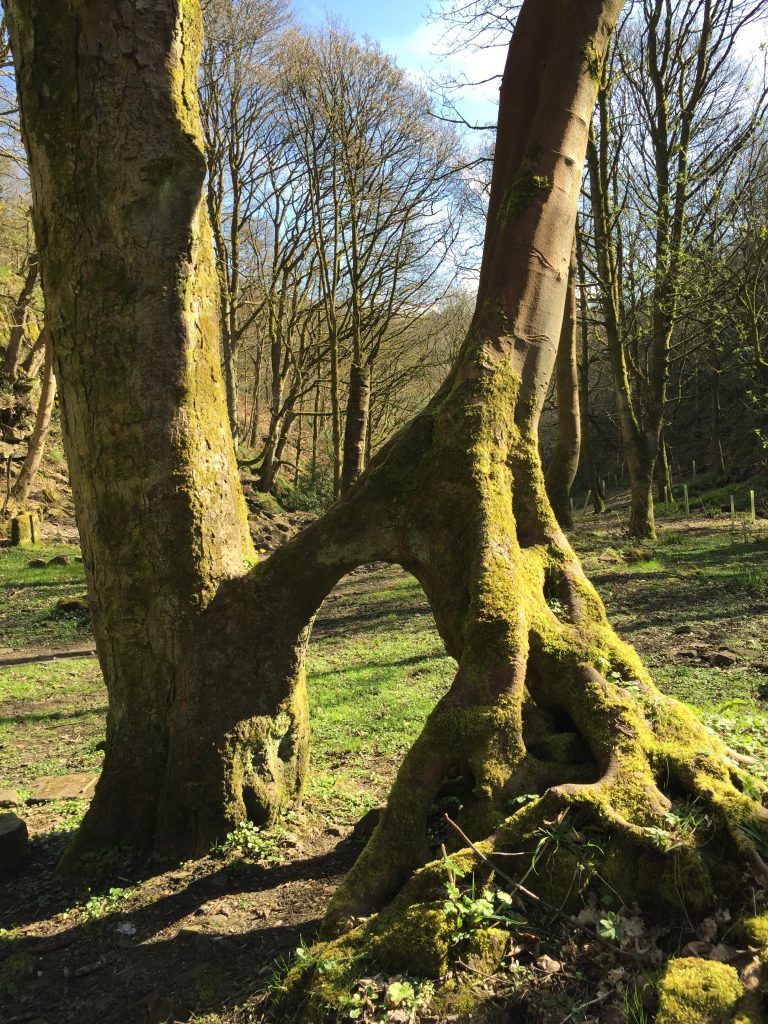
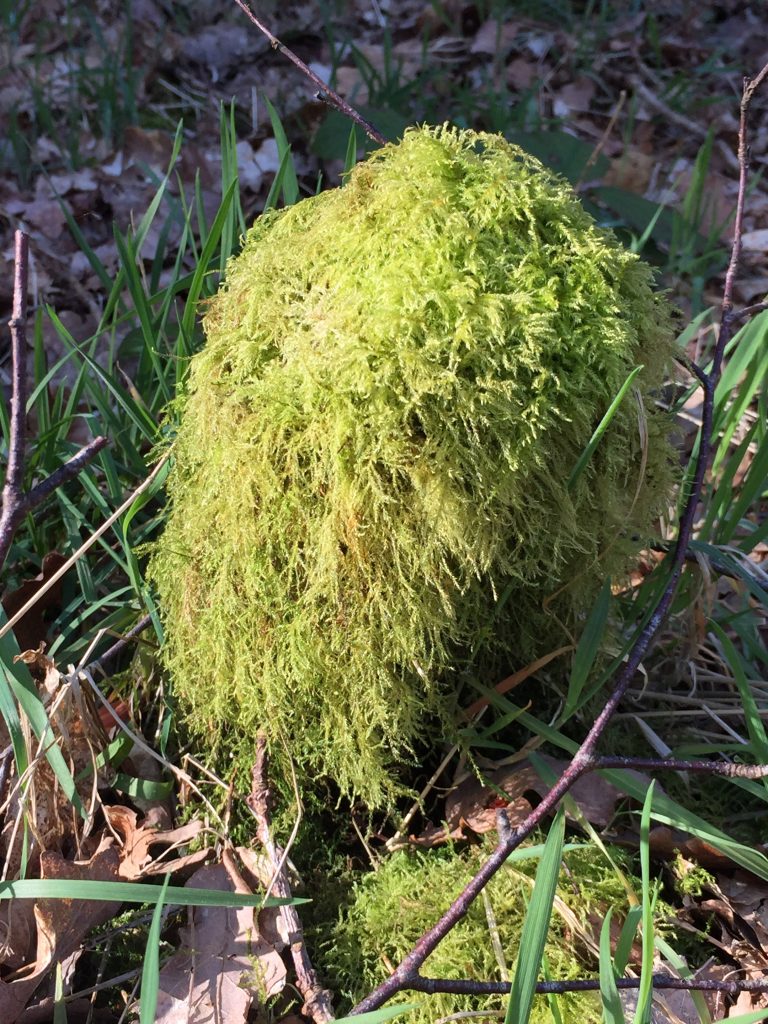
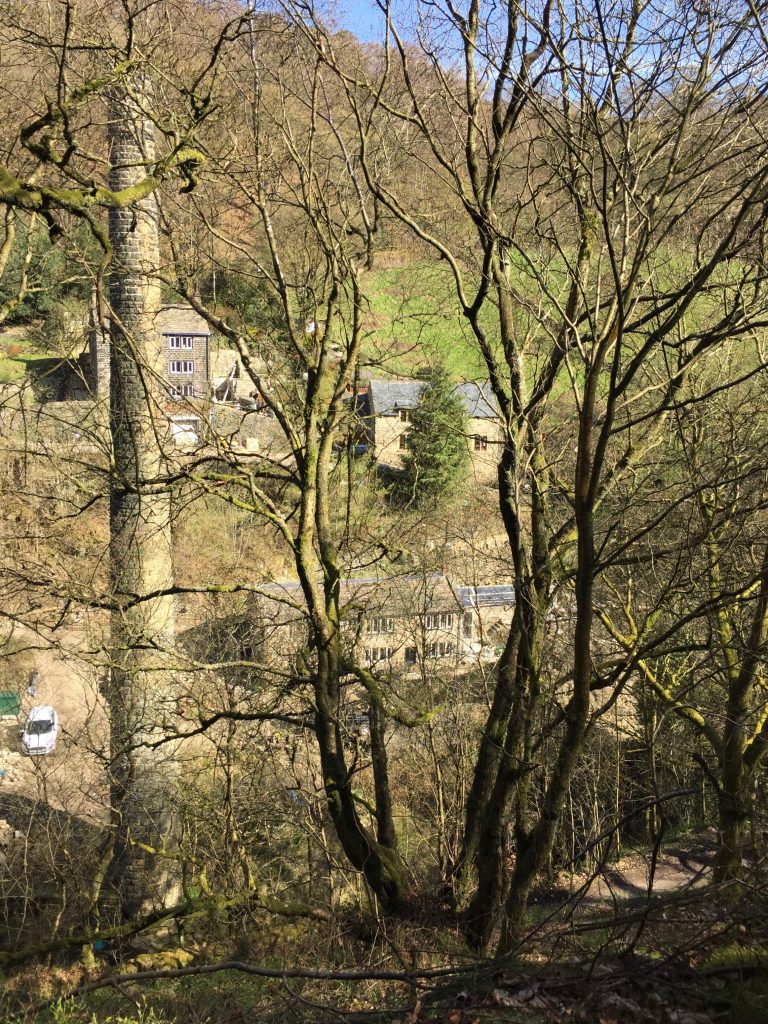
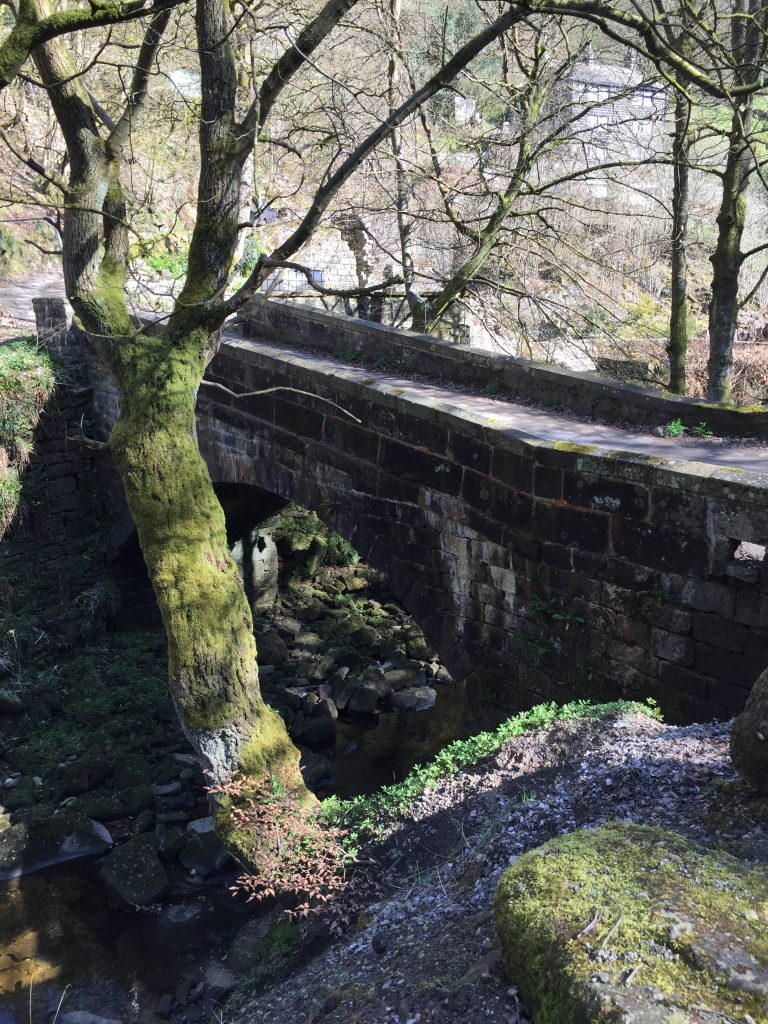
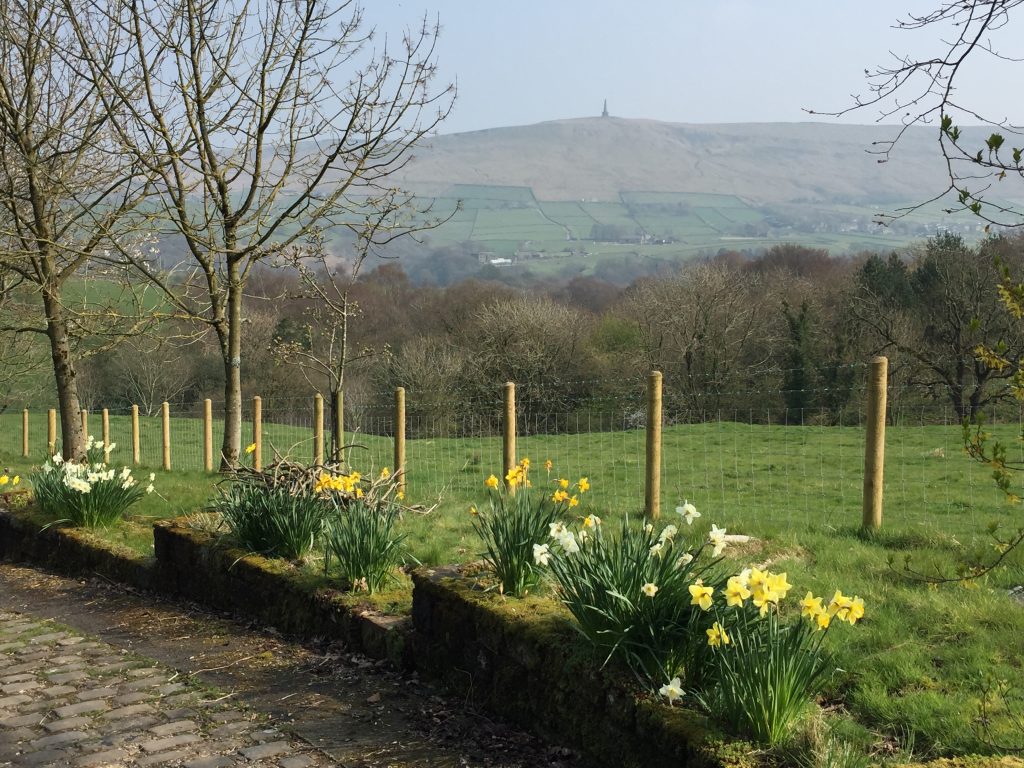
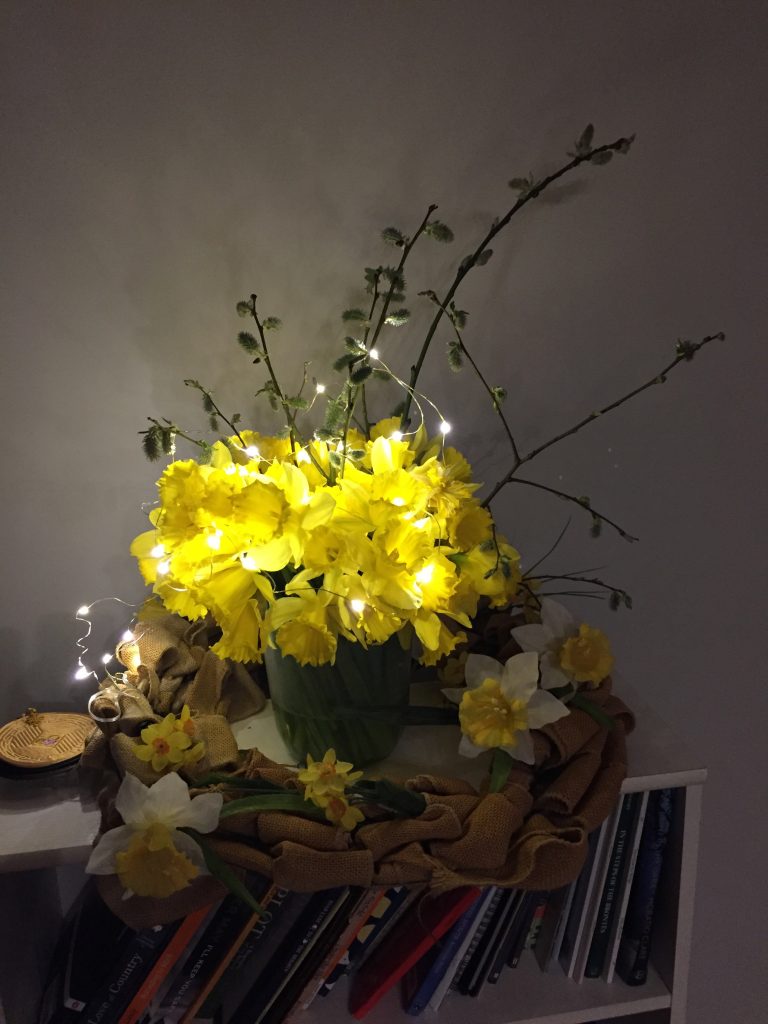
Now my mum loved taffies, as she affectionately called the, and she was never prouder than when her daffies in her font garden in Tottington came in to flower, so I decided it would be very appropriate to go a ‘Daffy Hike.’ Fortunately it was a glorious sunny day and I decided to re-travel my steps through the Colden Valley, a walk I’d first done last Autumn when the fall colors were at their height. I had ancestors that lived at Hudson Mill so I took the bus to New Delight and retraced my steps in search of some daffodils. I certainly wasn’t disappointed and found lots of flowers seemingly planted at random along the old pack horse trail or scattered like yellow stars in the woods lining the track. High above Jack bridge I stopped to watch a couple of hikers crossing the narrow slab bridge and thought that next time it would be fun to be on the far side of the Colden Beck. The path was lined by trees and stumped that were covered in a feathery almost neon green moss that was so long it gently wafter in the little breeze. It reminded me of something from a Tolkien story, As I grew close to the two chimneys of Lumb Mill I decided to go and have a closer look. I was able to get right up to the base of the towering chimneys and even reach out to touch them. There’s a lot of building work being done there. It looks like a sizable house is under construction in the remains of the former mill. There were several picturesque bridges and fantastically shaped trees, and even a large spider’s web that was half concealed under a bridge.
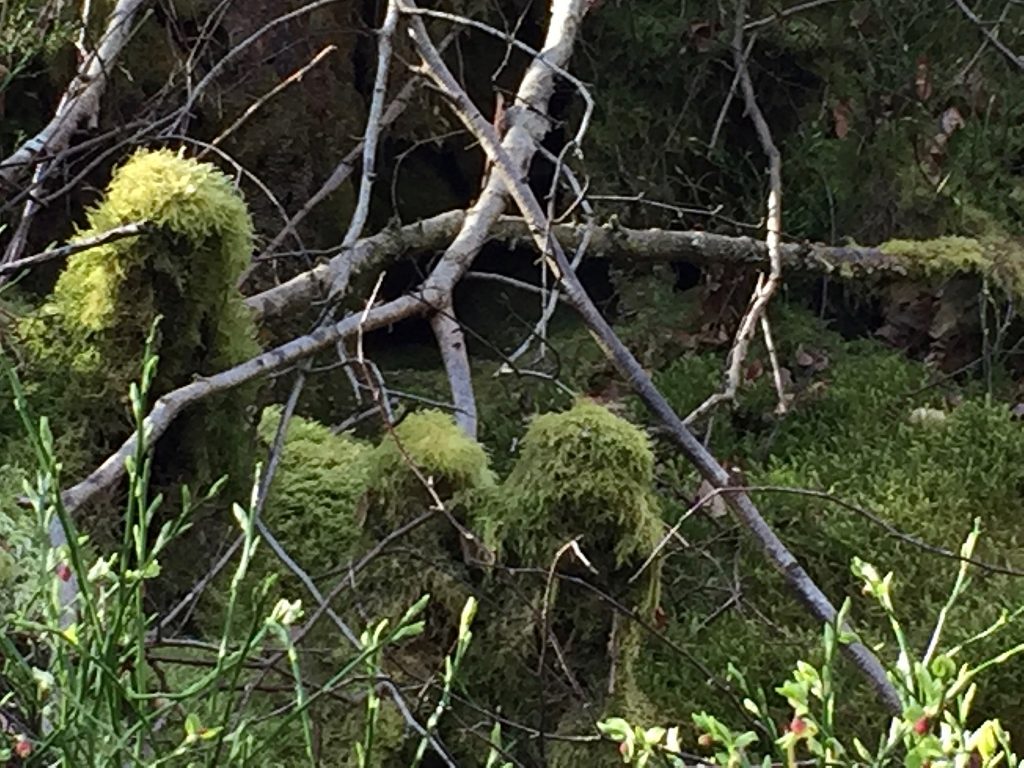
Tolkien land
Reaching Mytholm I took a wander around St James’s churchyard, where many of the graves were bedecked in lots of daffodils in pots and jam jars.
Sunday dawned dull and dreary and although I had planned to possibly go on a guided walk about transportation in Sowerby Bridge the overcast morning didn’t inspire me to get up and go. So I settled for a while, engrossed in Enduring Love by Ian McEwan which I’d begun yesterday, and found was a real page turner. However, by 1 o’clock the sun was shining and I had itchy feet to be out and about. I got the bus to Blackshaw Head and headed along Davy Lane, a new path for me, so one I would mark on my OS map in pink when I got home. Blackshaw Head, as its name suggests is perched on t’tops and so I had extensive view in all directions. I could see Pry Farm and Scammerton Farm where some of my ancestors had lived and one, Giles Sunderland, had left the farm in during World War 1, never to return.
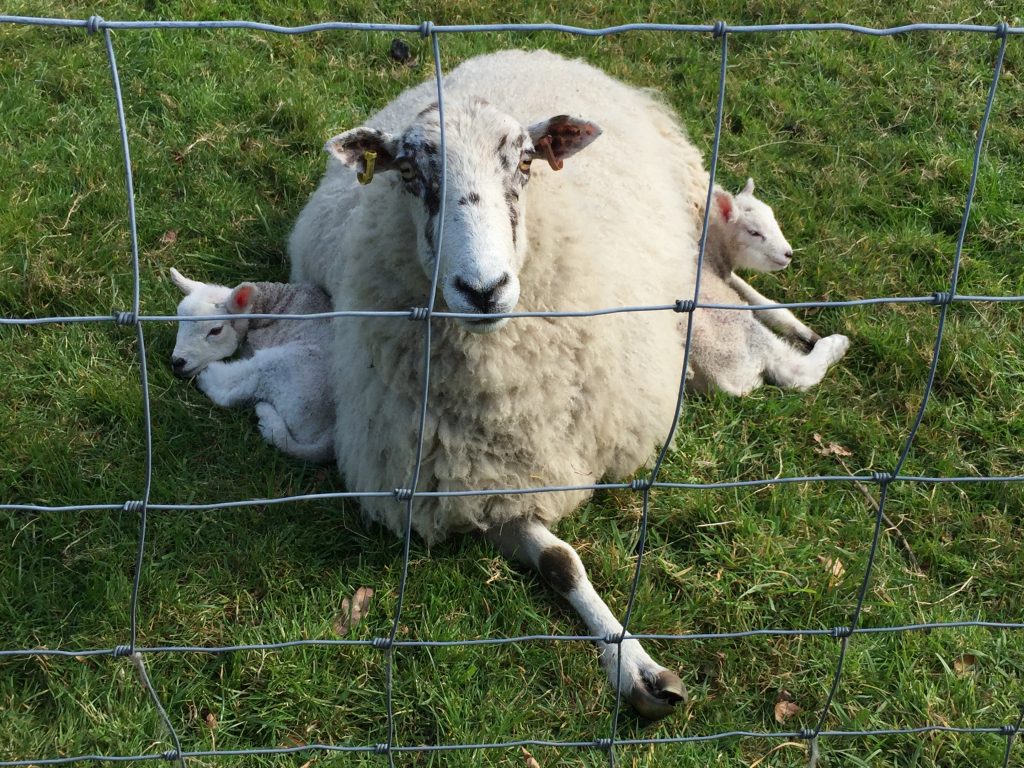
I passed by lots of newborn lambs. It’s usual for sheep here to give birth to twins, but occasionally triplets will be born. Next into view across the valley was a field of alpacas – yes, alpacas. You can take an alpaca trail – that might be fun!
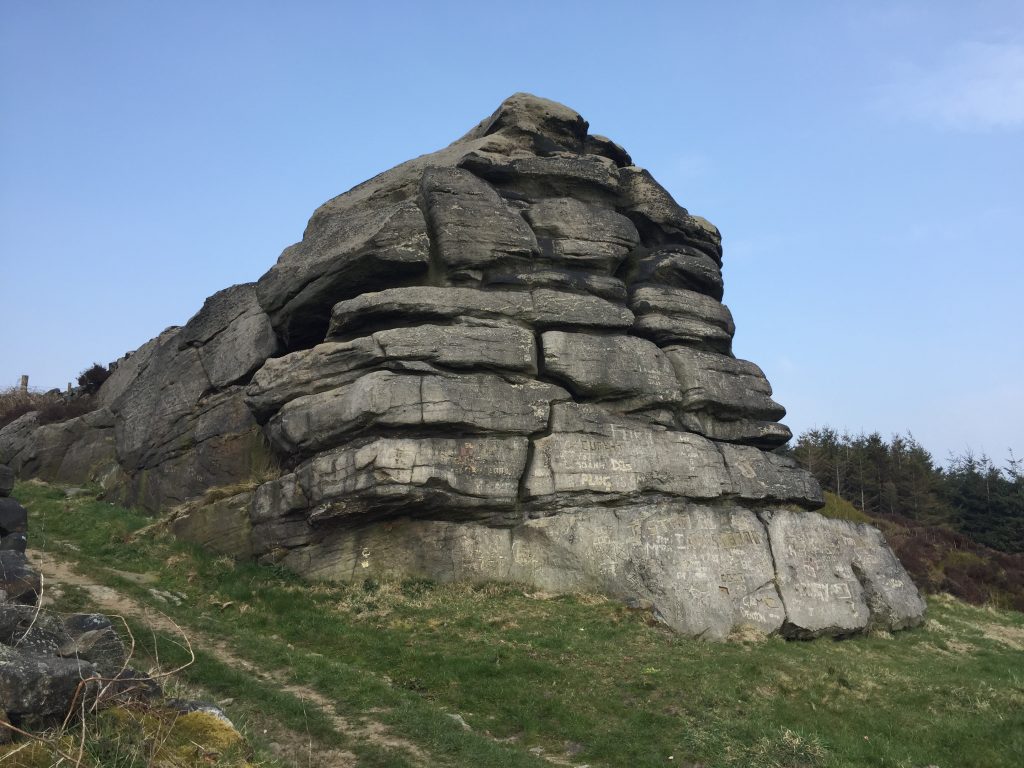
What else but Great Rock?
Next came Great Rock – hmm, that’s its name. It’s a huge single boulder of granite. On bonfire night I came to Great Rock farm from where I could see other bonfires across the valley, but it was totally dark and I didn’t quite know where Great rock itself stood, but now I found it. Of course it’s covered in graffiti because it’s close to the road, but at least it’s antique etched graffiti rather than spray painted. I was enjoying being on t’tops so rather than take the track down to Eastwood I continued along the top road. I one point it dropped down sharply to cross a stream, then climbed up again. I could just see the top of Cross Stones church where I have ancestors buried. I’d only been on this moor once before (apart from bonfire night) and the views are fantastic, right across to Stoodley Pike. I could clearly pick out the trail that we’d used when my daughters came to see me last May.
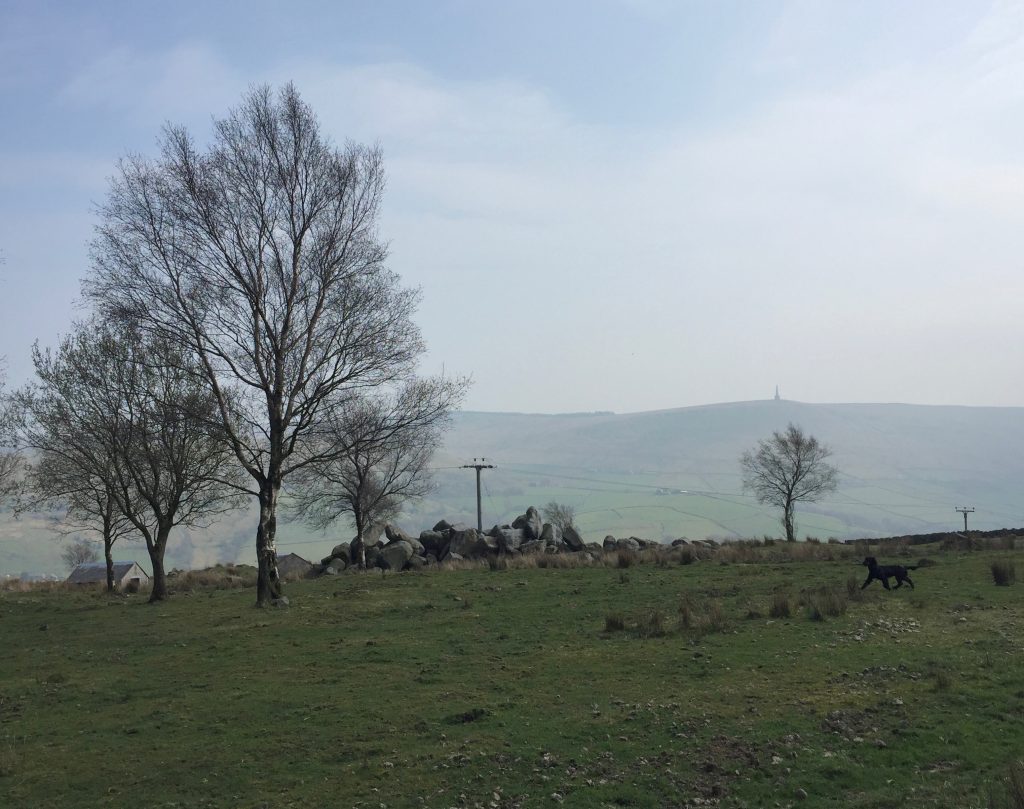
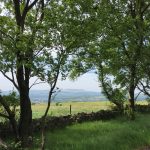
View across the Calder Valley to Stoodley Pike 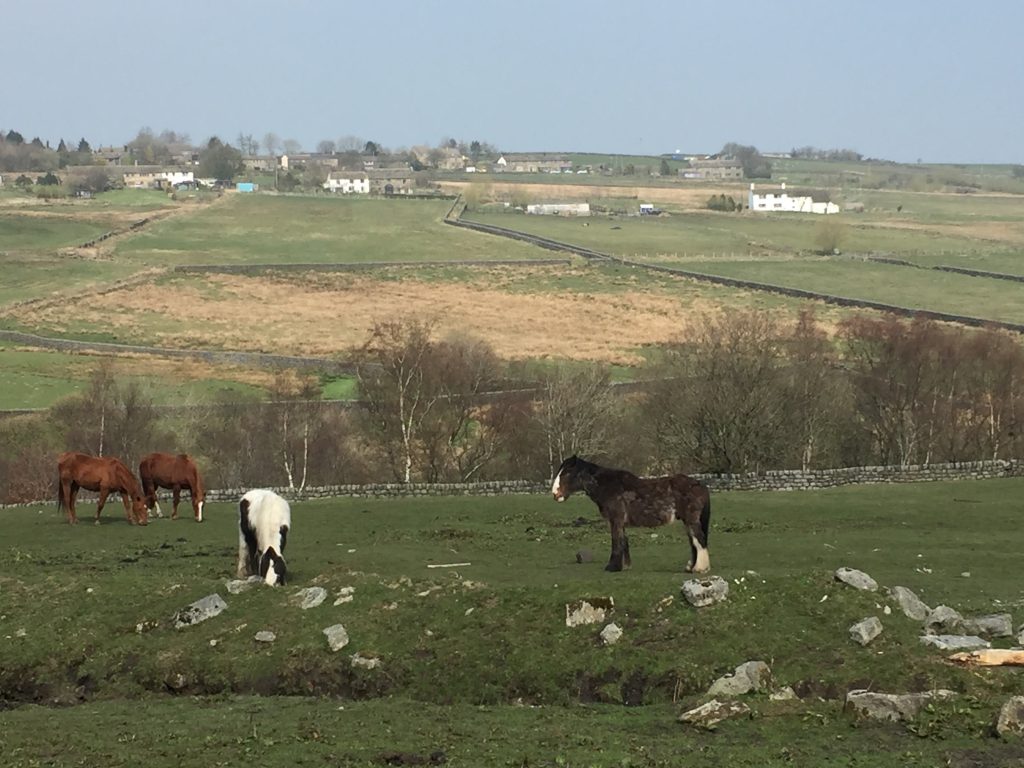
Looking back to Pry Farm and Scammerton farm 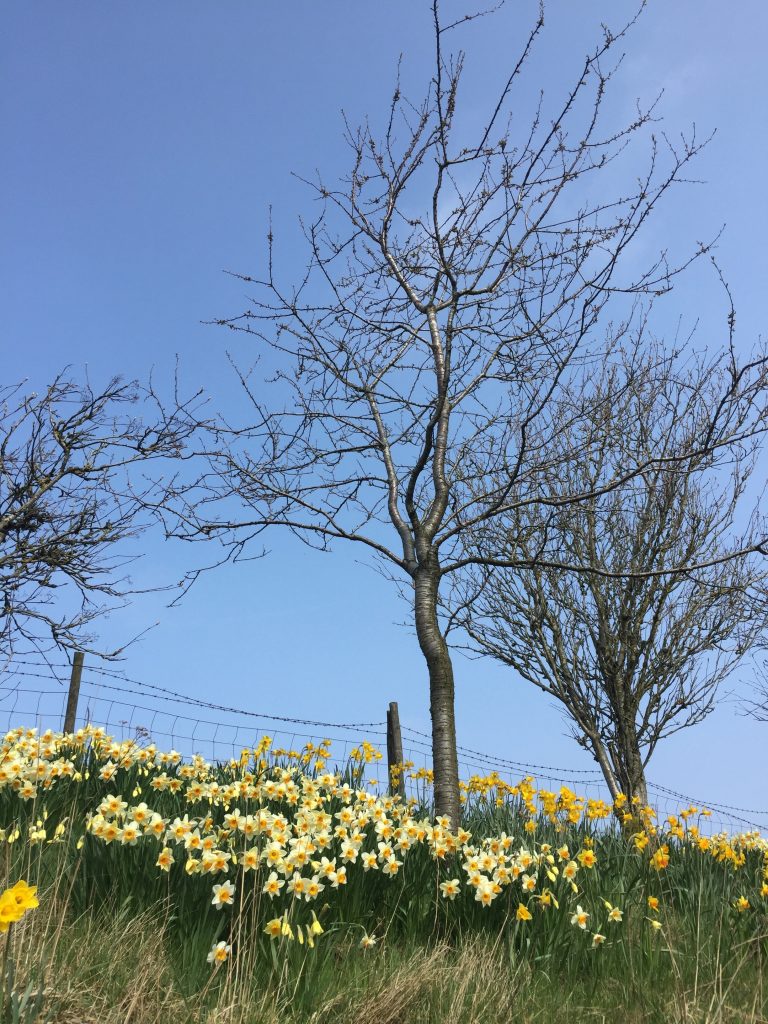
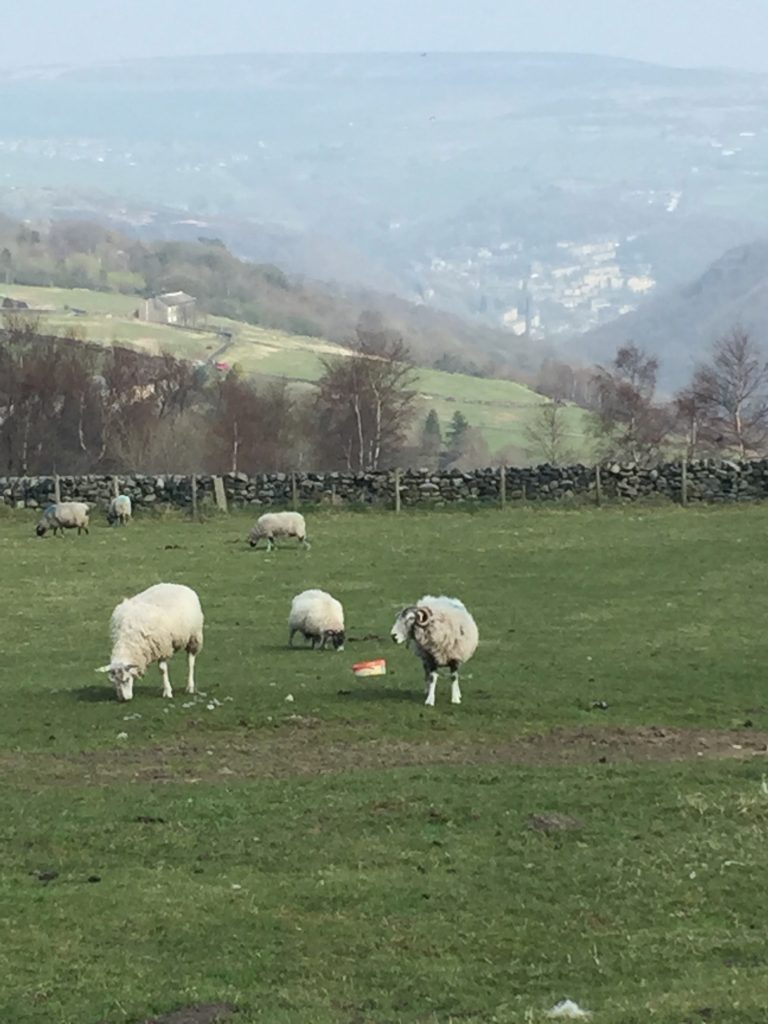
A new view of Hebden Bridge
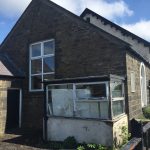
Eventually I came to Martin’s Lane, marked on the map as a Public Bridleway and it was very well maintained as it led down towards the Calder Valley. I was most surprised when I came to the back of a large building with three arched doorways, now closed with iron doors but it looked very much like a church. Sure enough as I rounded the corner and the front of the building came into view I could see the house name was Chapel House. A man was gardening and I asked him about the building. apparently the first chapel on the site was built,t in 1707 but this one dates from the 1890’s. At various times it’s been both a Quaker and a Methodist chapel. But who attended? I was halfway up a hillside with no – I mean no – buildings around. Hmmmm. Something for a rainy day’s research!
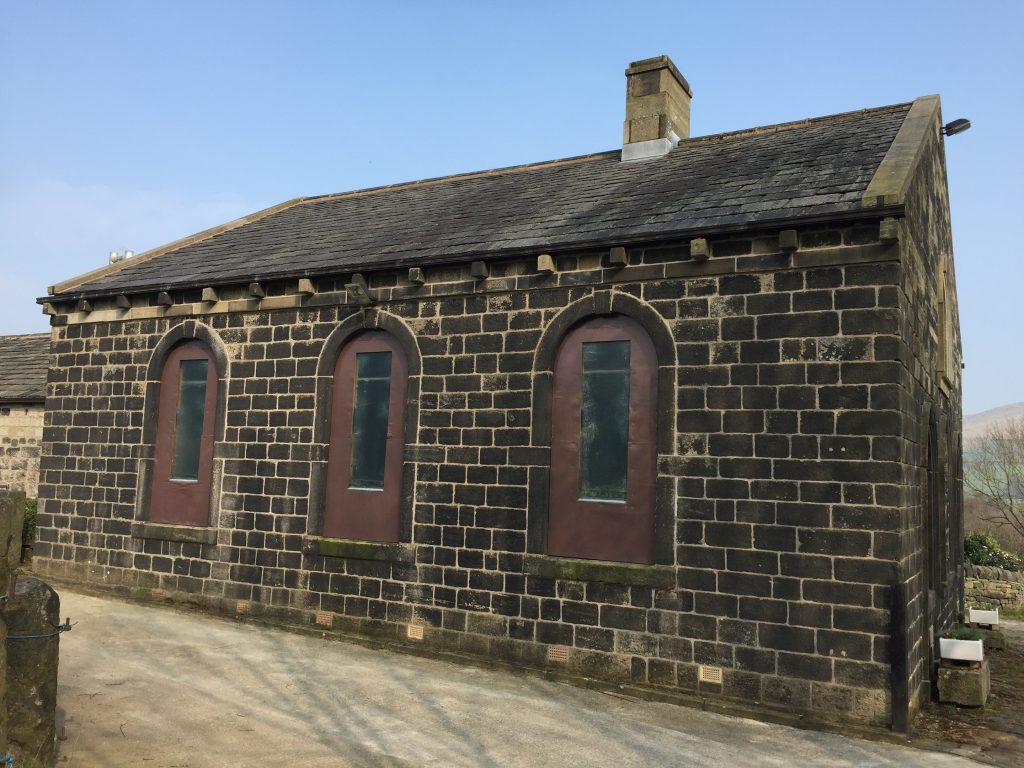
The bridleway petered out at the chapel but the man assured me that the narrow track in front of me continued down into the valley. Oh, but my. it was soooo steep. I edged my way very slowly being careful not to slip on the loose stones. At one point there was a small memorial garden just off the path with several Bury Football Club scarves wrapped around the overhanging tree. Just below the site was the railway line and the path regained the main road by way of a tunnel underneath the track. I had planned to get the bus back to Hebden but I was so enjoying my adventure that I decided to walk back to Hebden Bridge by way of the canal towpath. It took me a little while to figure out an access point for for a little while I was on the far side of the canal but I was able to cross a bridge in Eastwood and returned to Hebden along the towpath. It was so warm that I had to take off my jacket for the remainder of the walk home, around 3 miles. When I reached the Coop where I’d planned on buying something for dinner greeter at the door informed me that they were closing in line one minute – at 5 o’clock.

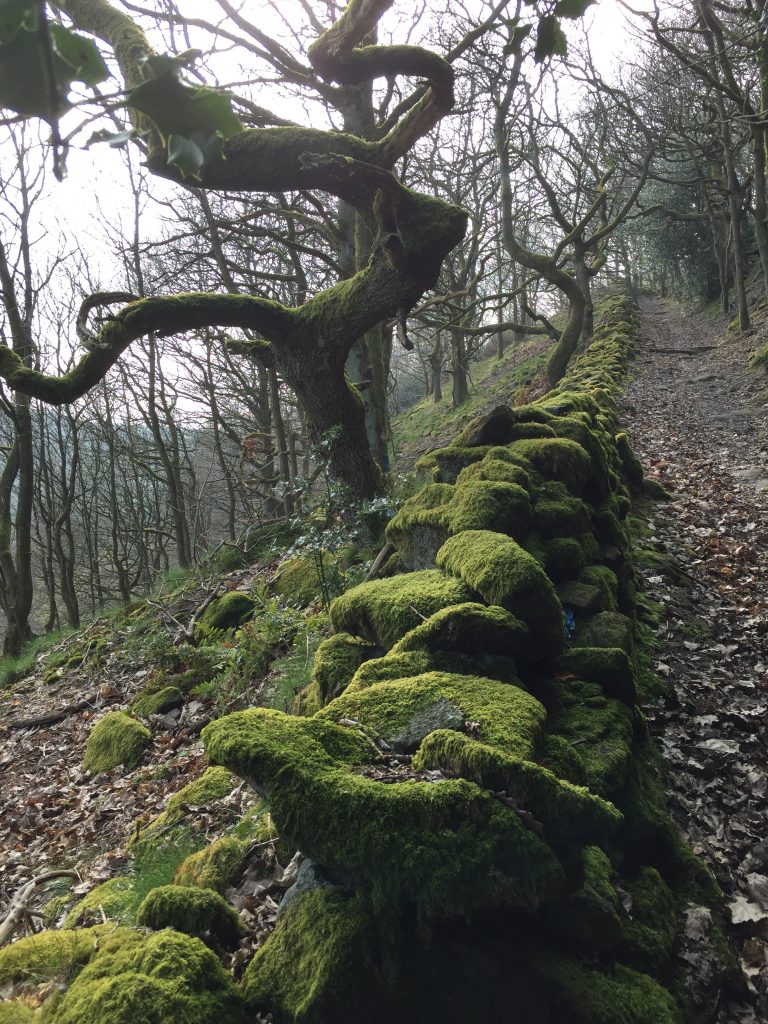
Steep path down into the Calder Valleu 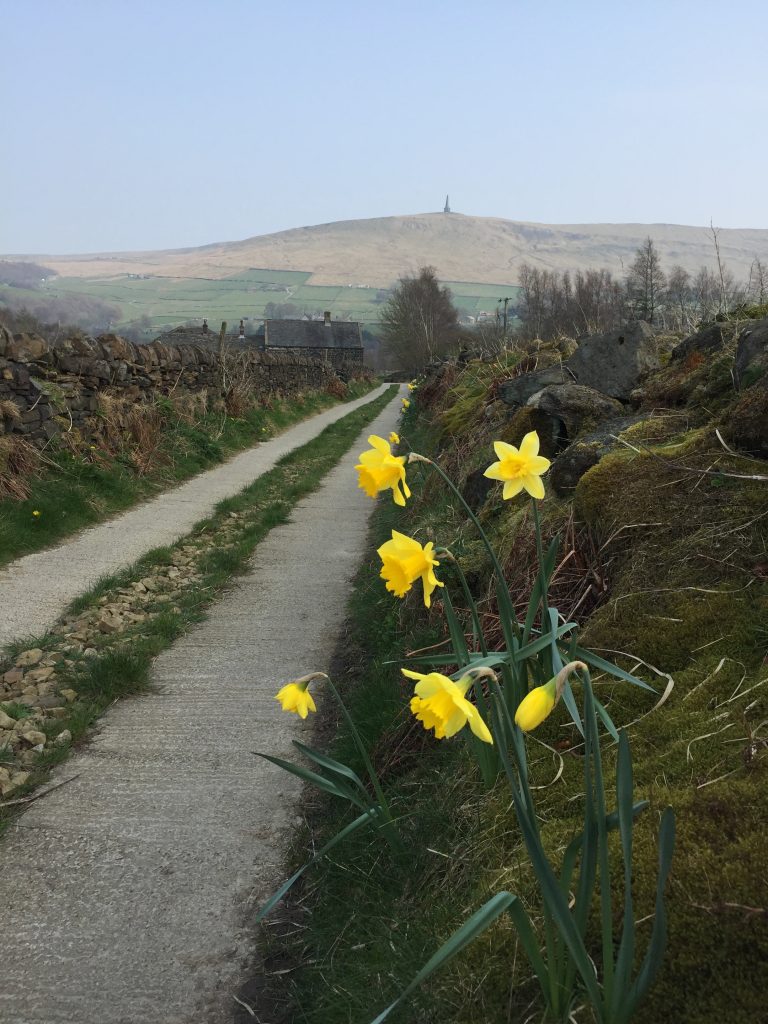
5 miles yesterday, 6 miles today.
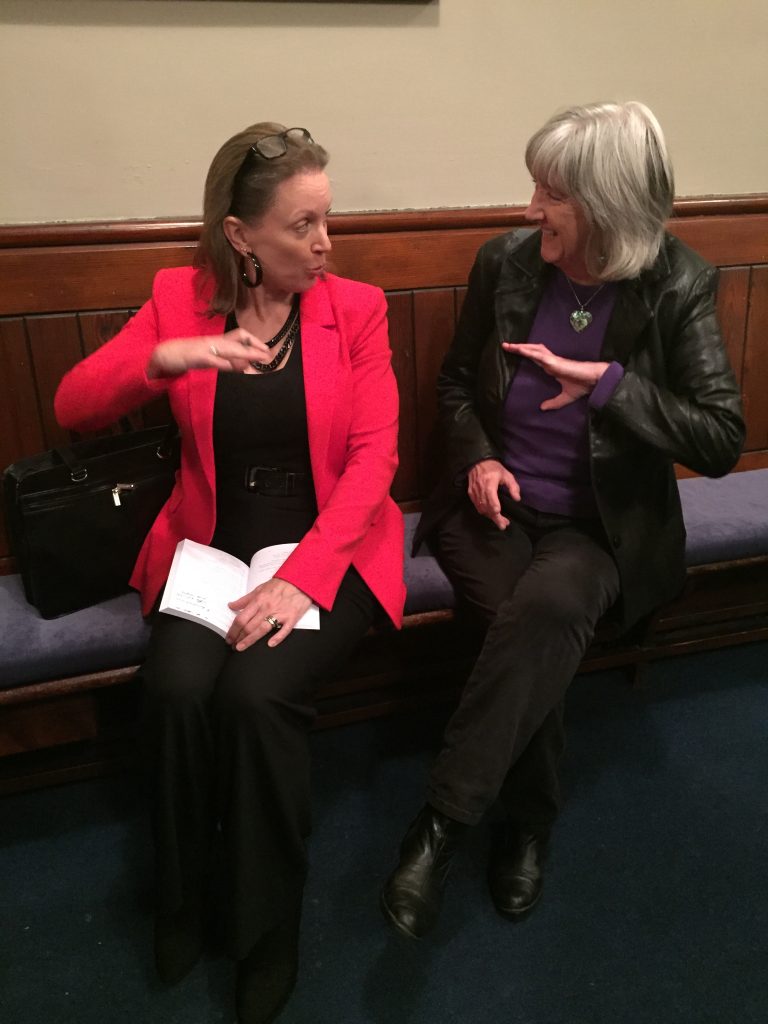
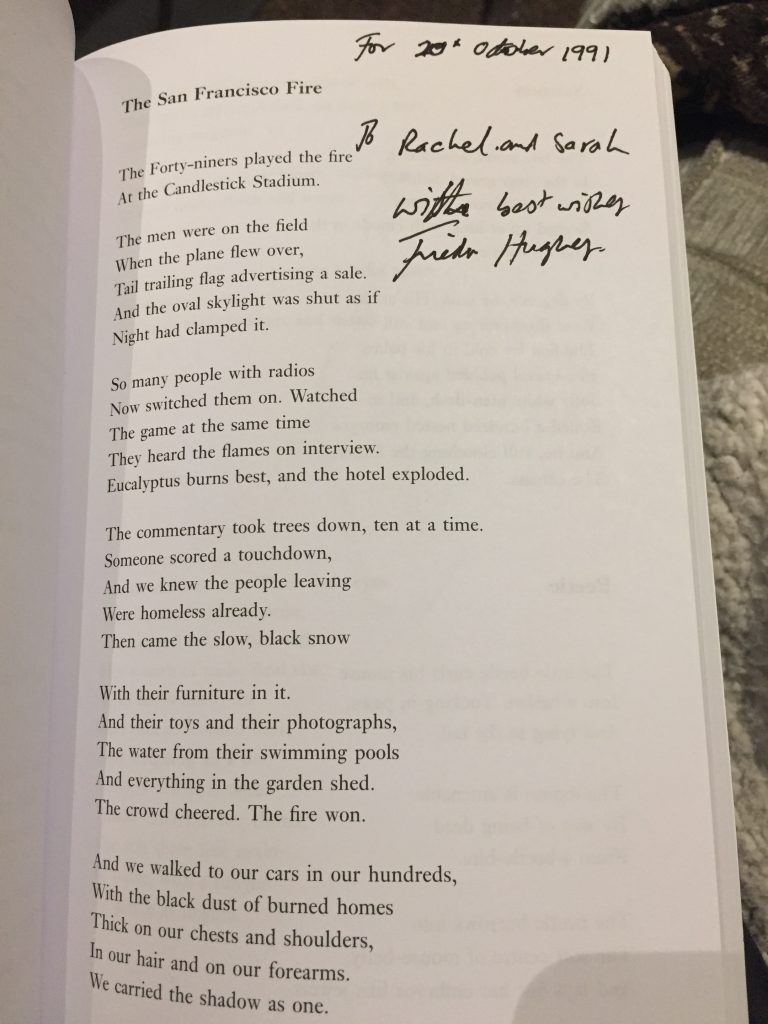
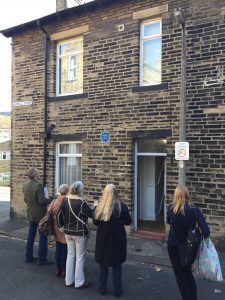
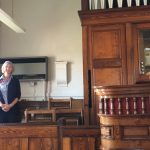
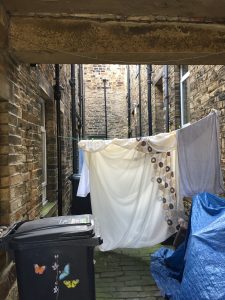 I found it rather uncanny to hear a recording of Hughes himself reading a poem about the room we were sitting in. We were able to see the view from his room of Scout Rock, and see the site of Zion chapel which dominated the street, cutting out all light from Ted’s window.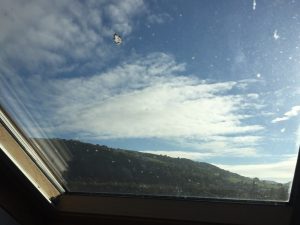
 r
r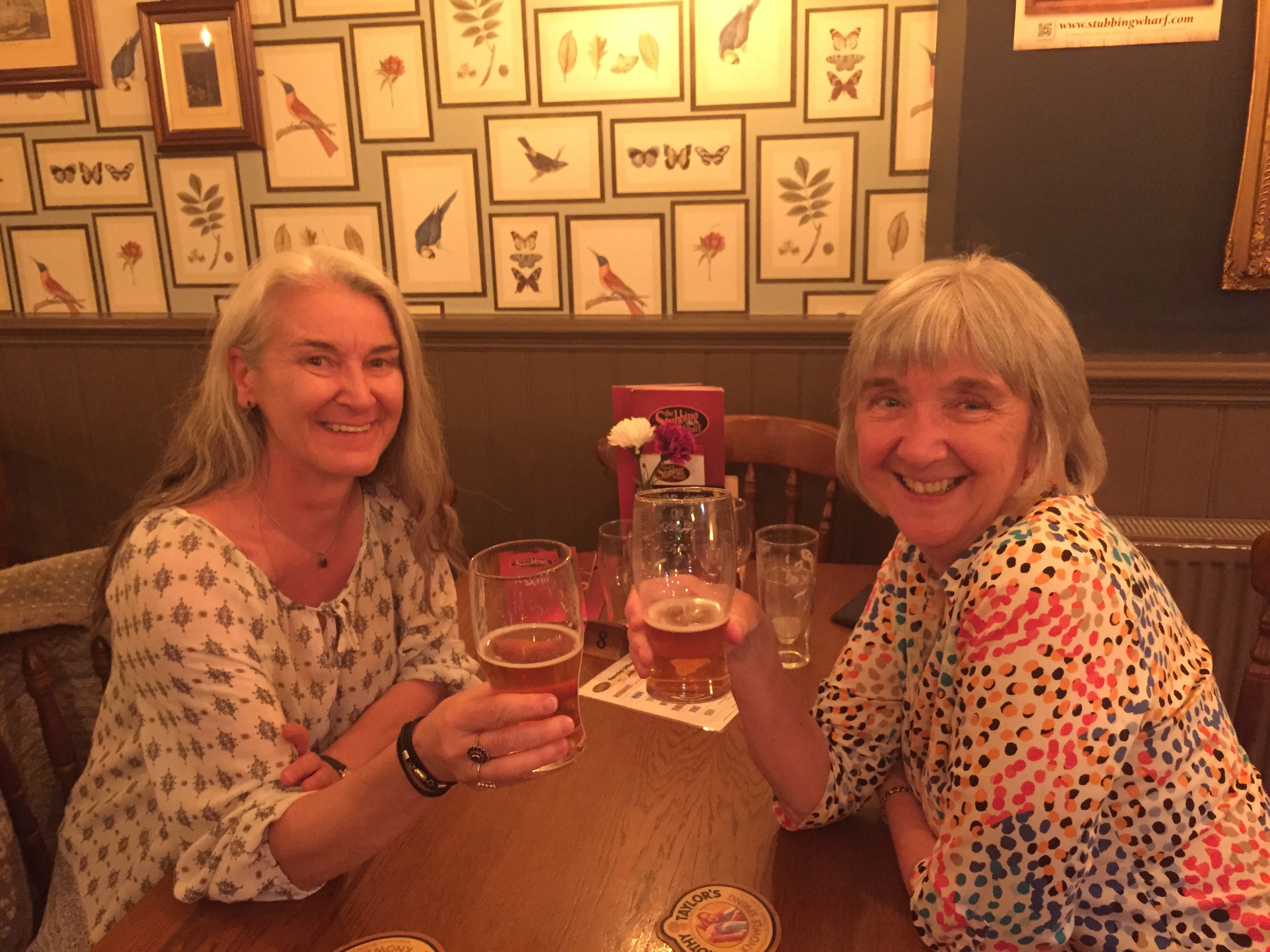
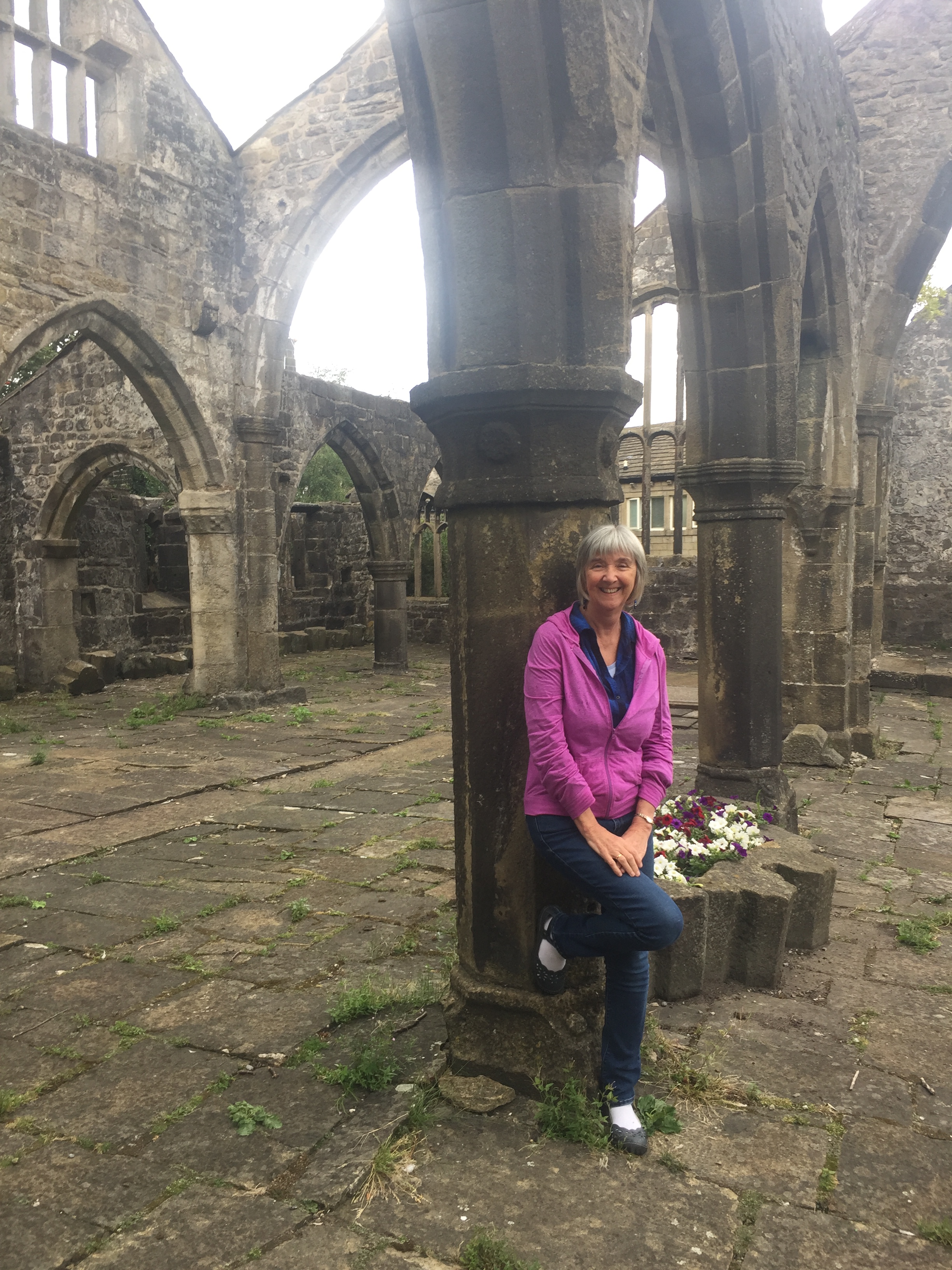
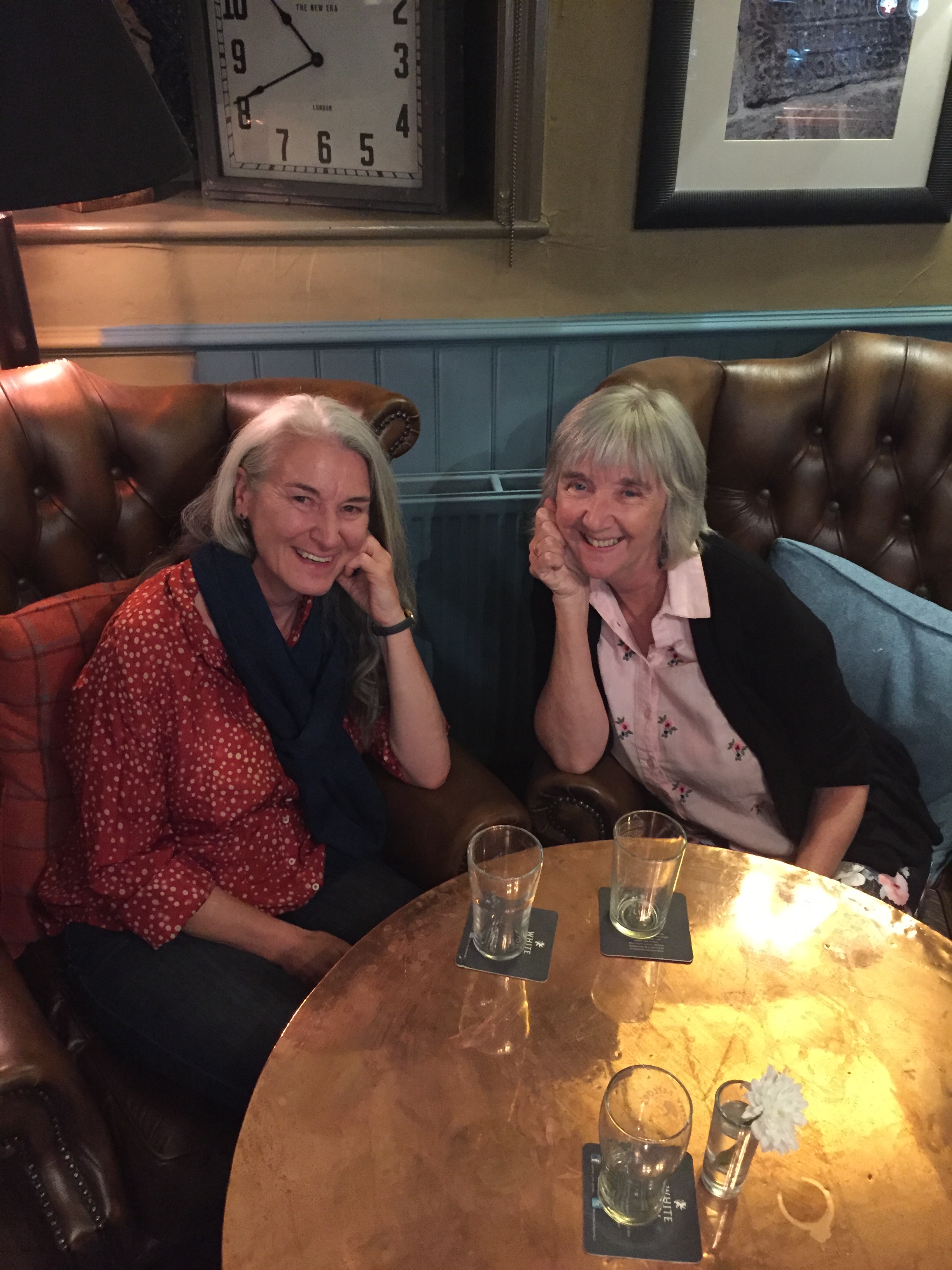
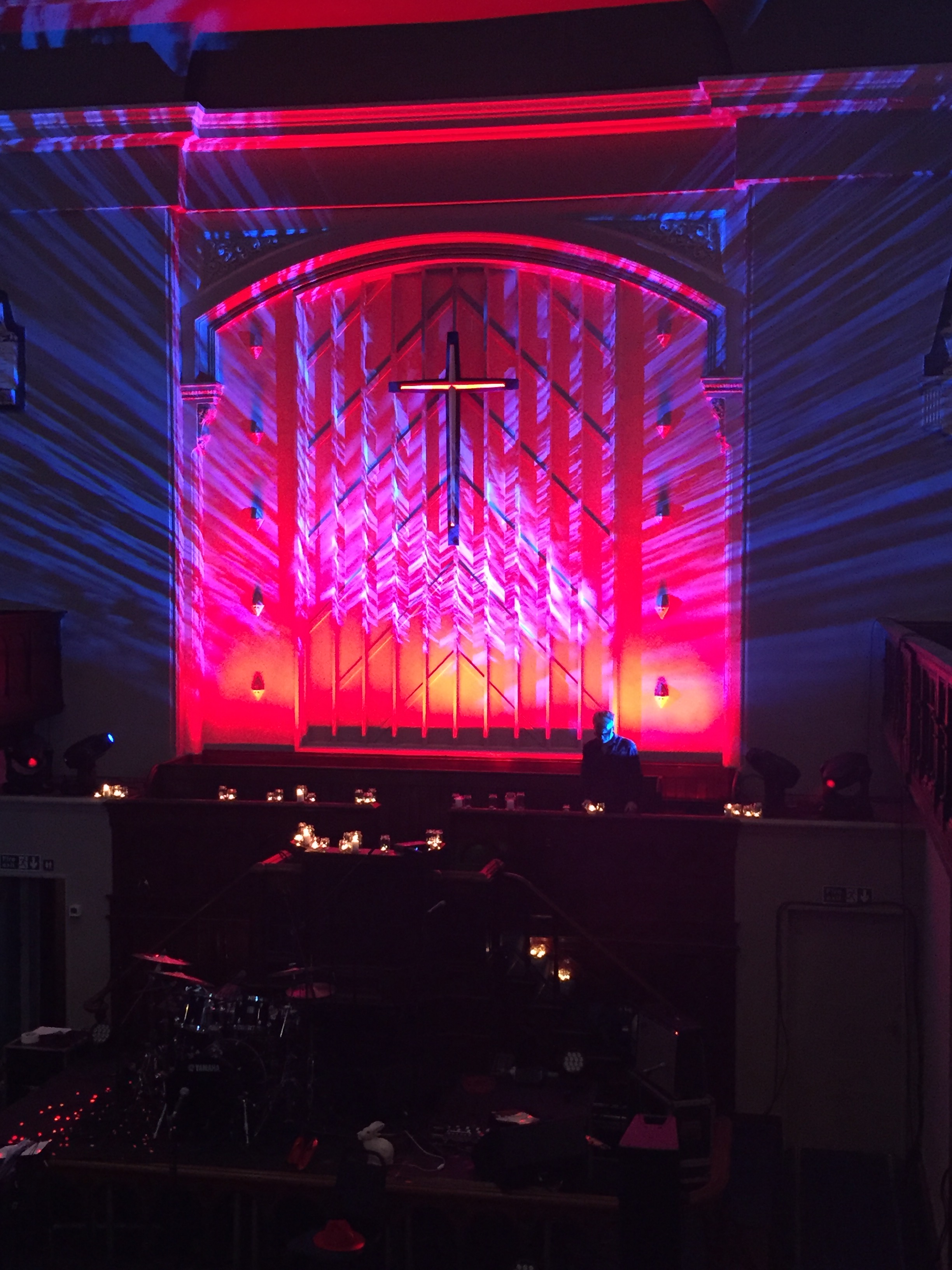
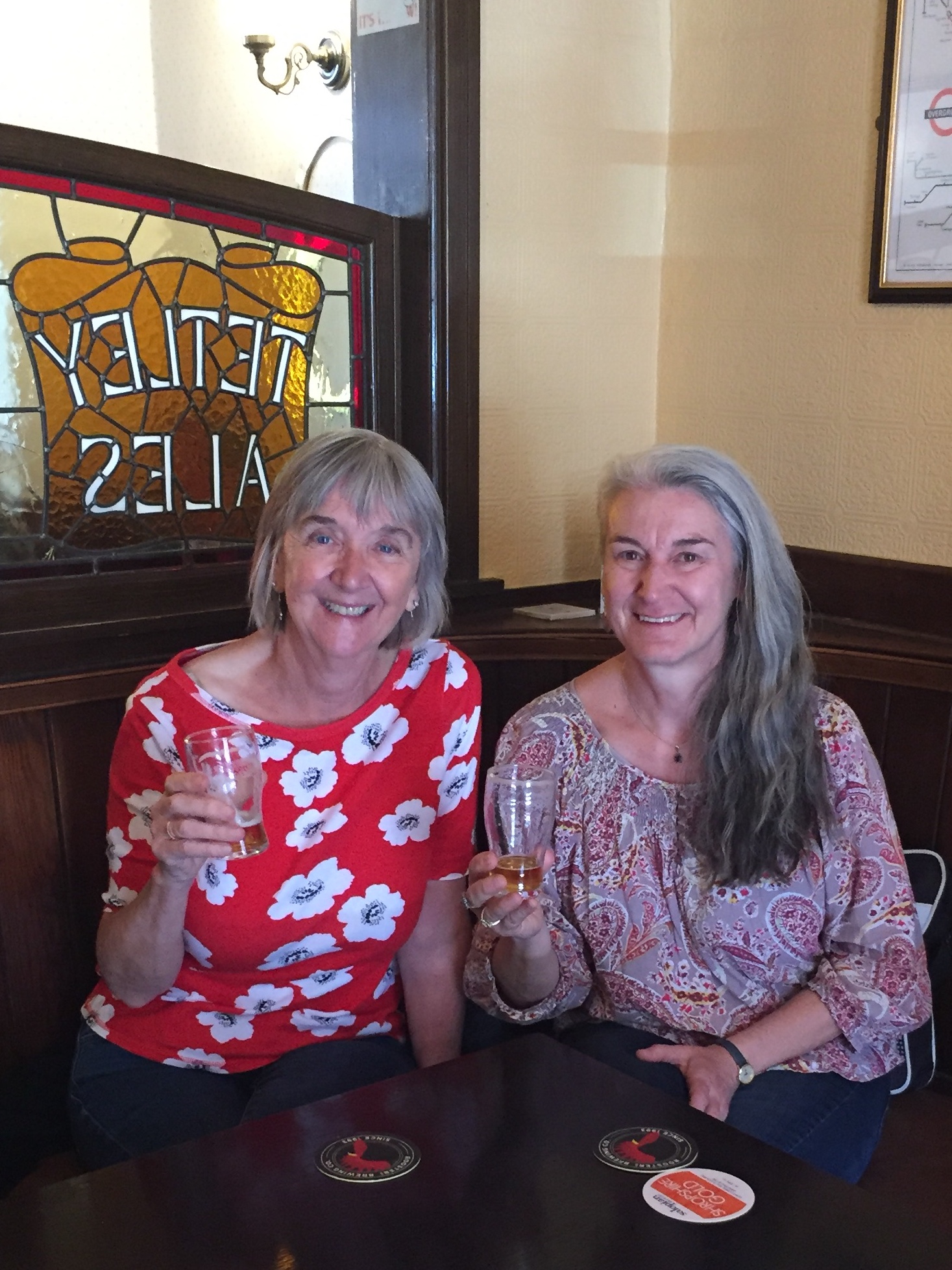
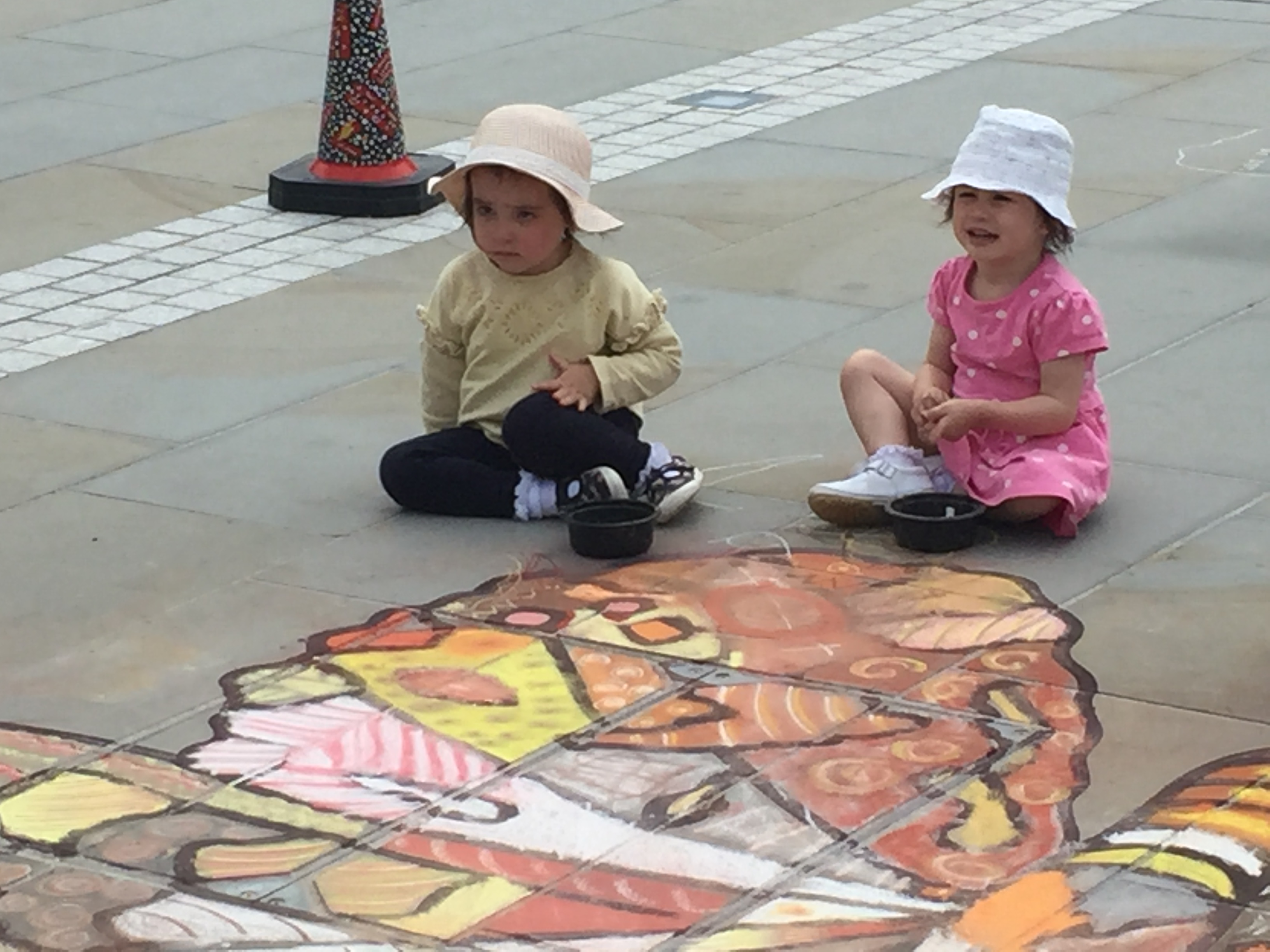









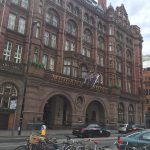

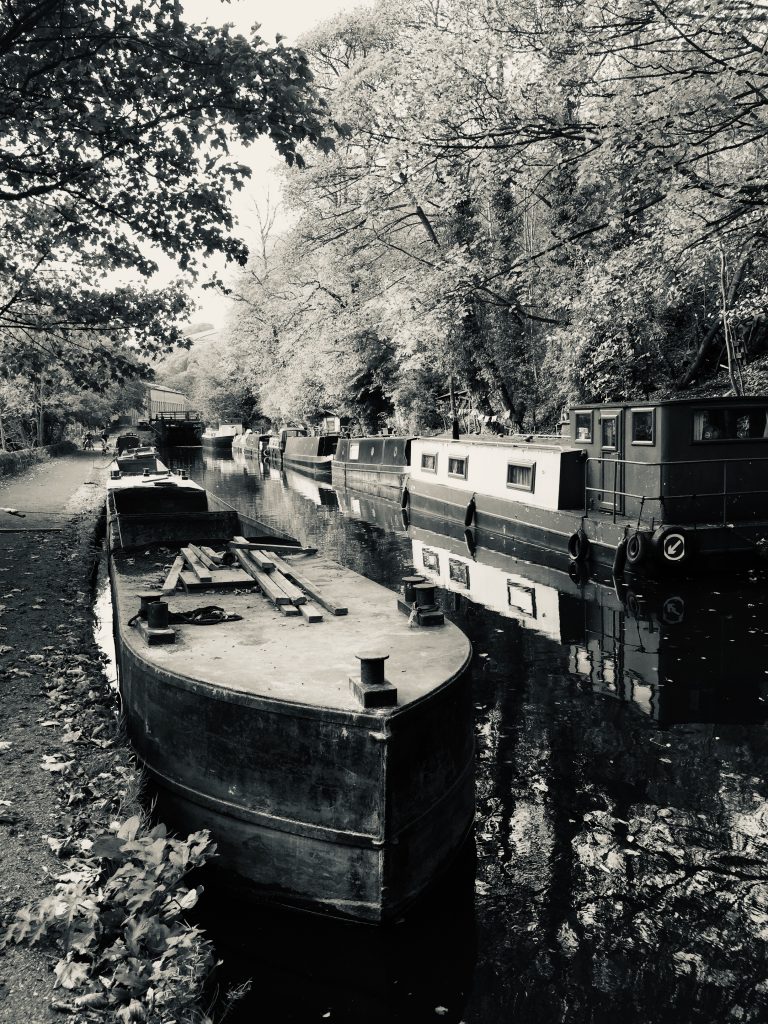
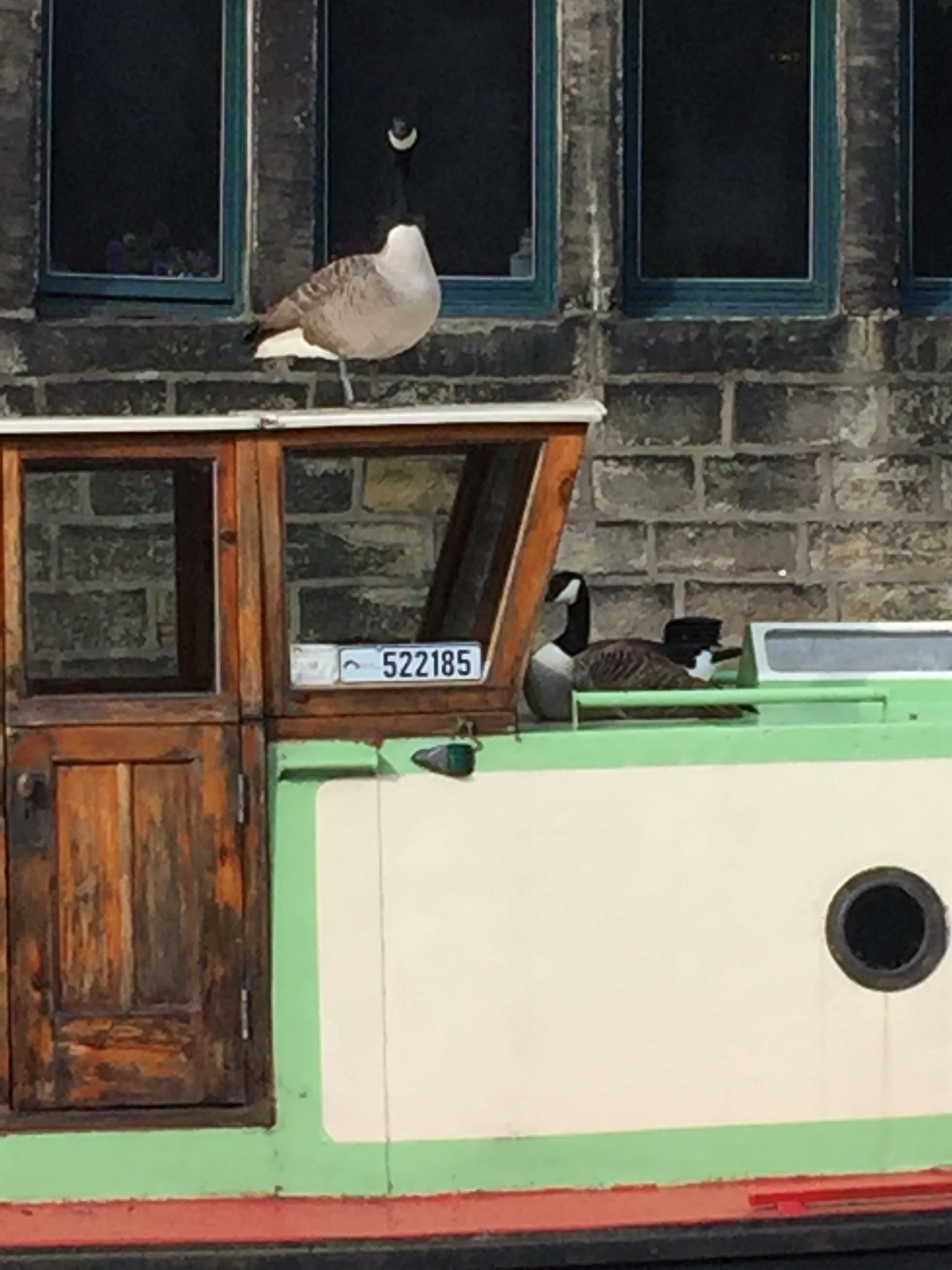
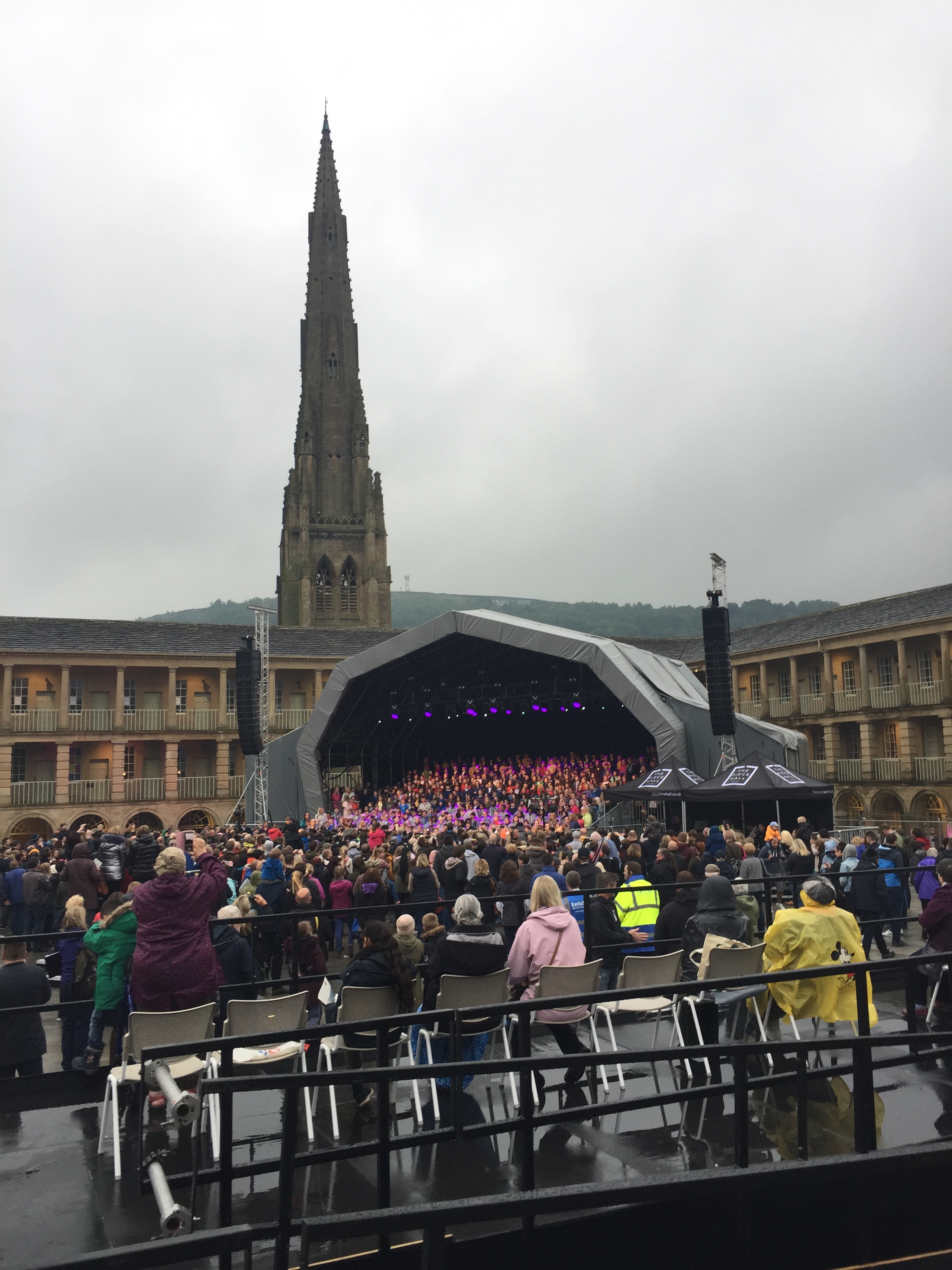 The girls had been given the opportunity to spend a night on Nicola’s canal boat and were very excited by the prospect. She warned them about the pitfalls – being woken by cackling geese or crowing roosters but they seemed to sleep through all the commotion. We spent the next day driving around the tops, having lunch at Brosters Farm shop with an amazing view out over Halifax, and stopped for refreshments at the Wetherspoons in Brighouse which is located in a church – a Methodist church at that! But its a lovely idea, and the organ is still in place in the gallery.
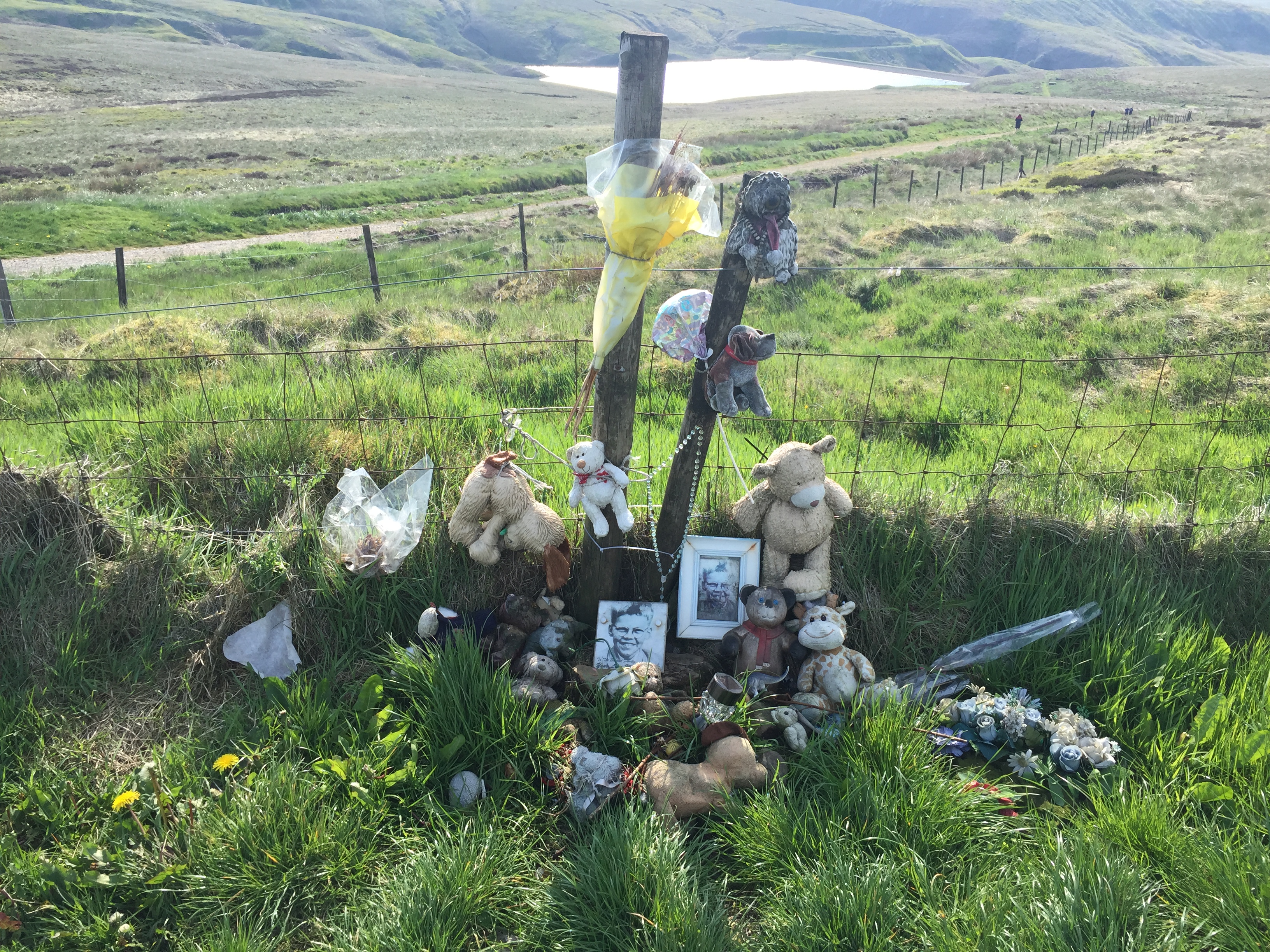 We drove next to Lumbutts. My mum had mentioned Mankinholes Youth Hostel to me many times. I’m not sure if she had stayed there or was just intrigued by the name! We stopped at the Top Brink pub for a drink and then crossed the street to see the grave of Abraham and Mary Wrigley. Abraham was my great, great, great, great uncle. His daughter, Mary, died aged 13. One of his sons, John, emigrated to New Zealand in 1863. It seems almost incomprehensible to move from Todmorden to New Zealand at that date. A lot the information I have about that side of my ancestry comes from a distant relative who I ‘met’ through Ancestry.com. She lives in New Zealand, and sent me some photos of the Wrigleys.
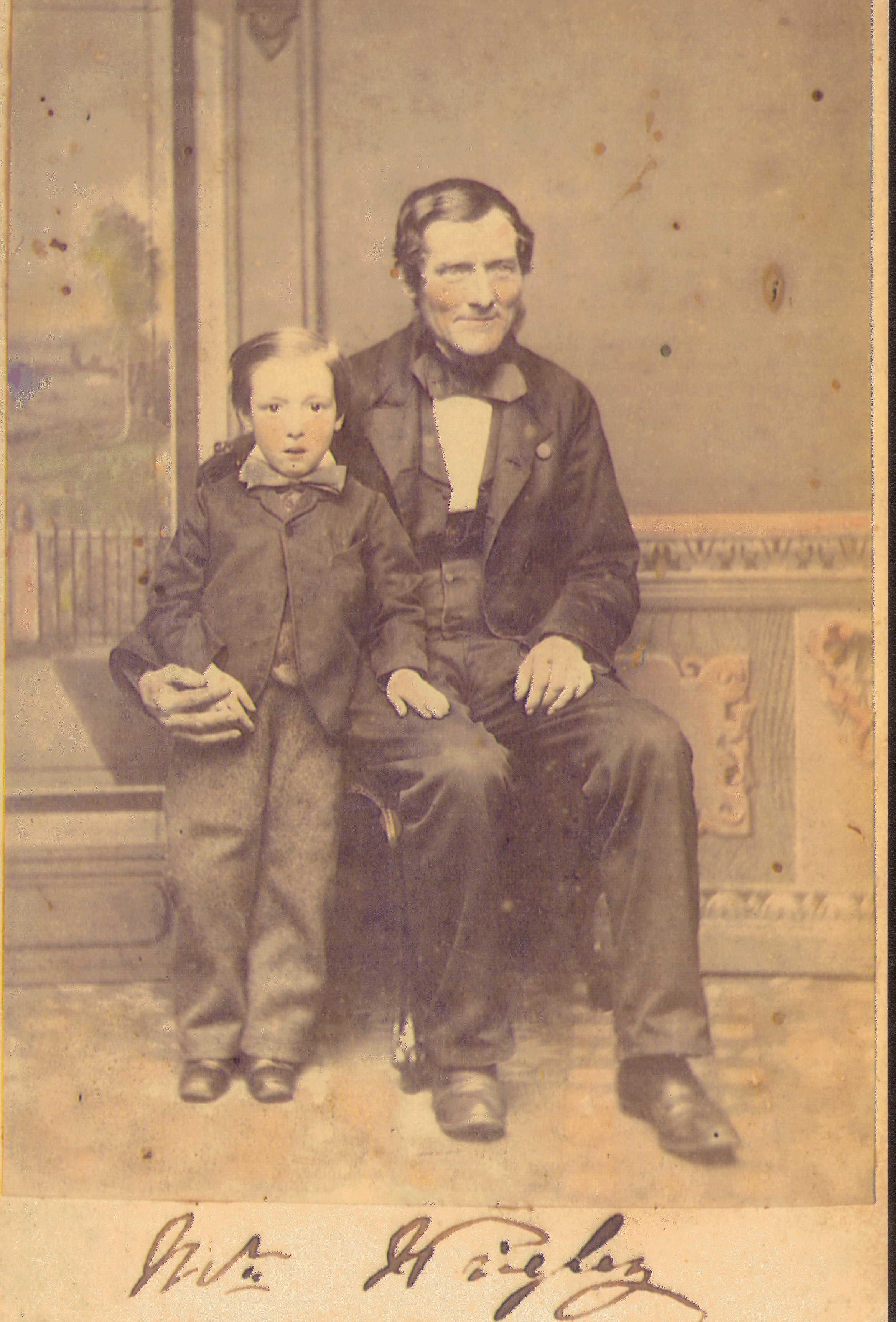 This is Abraham, who is buried at Lumbutts and his son, John who emigrated to New Zealand.
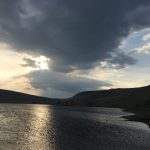
 In the evening Sarah and I went to explore Widdop Moor and reservoir. There’s a bus out to this remote spot that just runs on summer weekends, but I’d not been on it so since we had a car it was the perfect time to go on a recce. We timed our evening drive just right for some great light. We walked across the dam and a little way along one side of the reservoir.
 Then it was a clamber up the 369 steps to the top of Wainhouse Tower. It’s only open a few day each year so this was a first for me too. We all received a certificate to commemorate our visit.

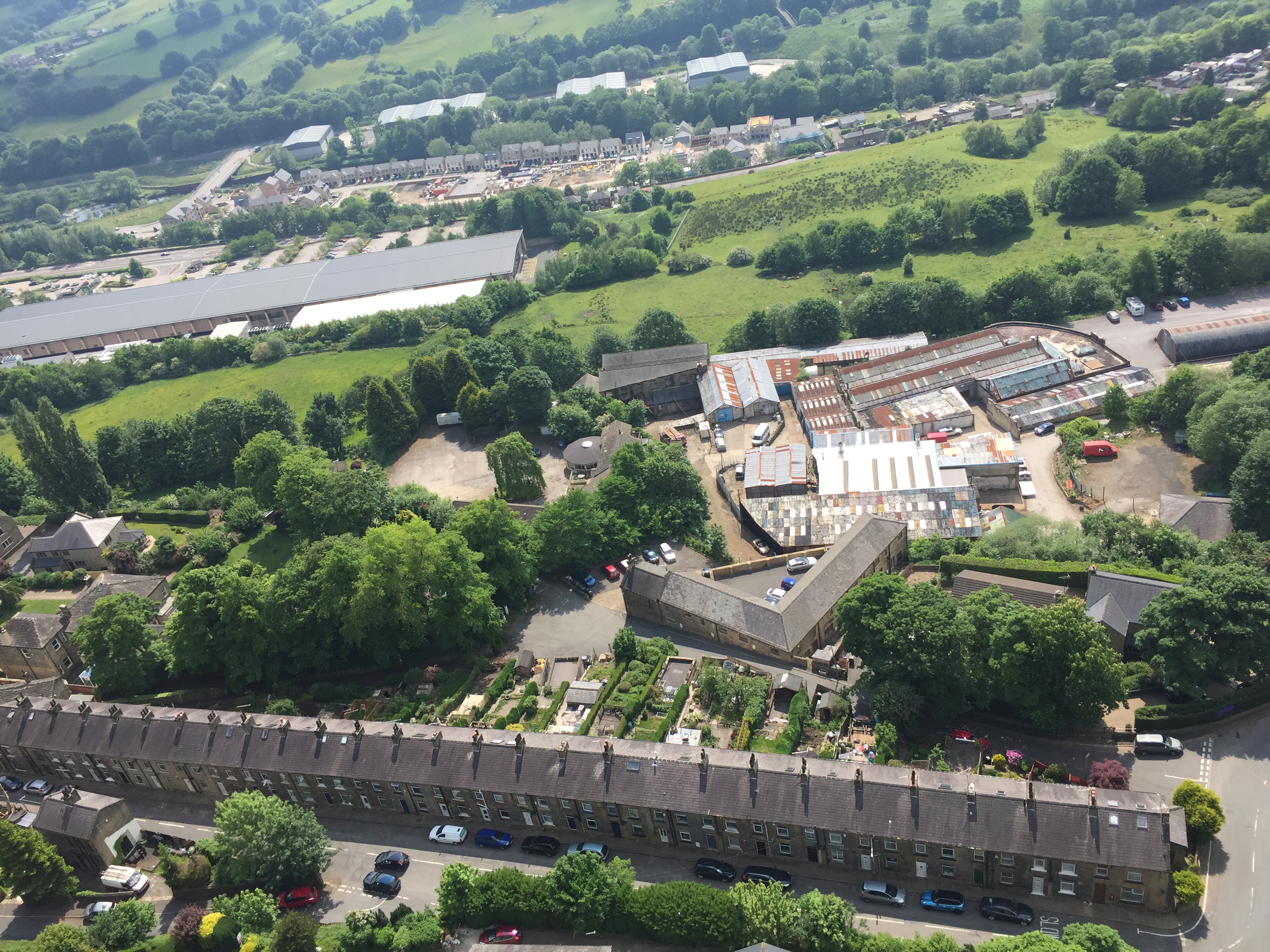
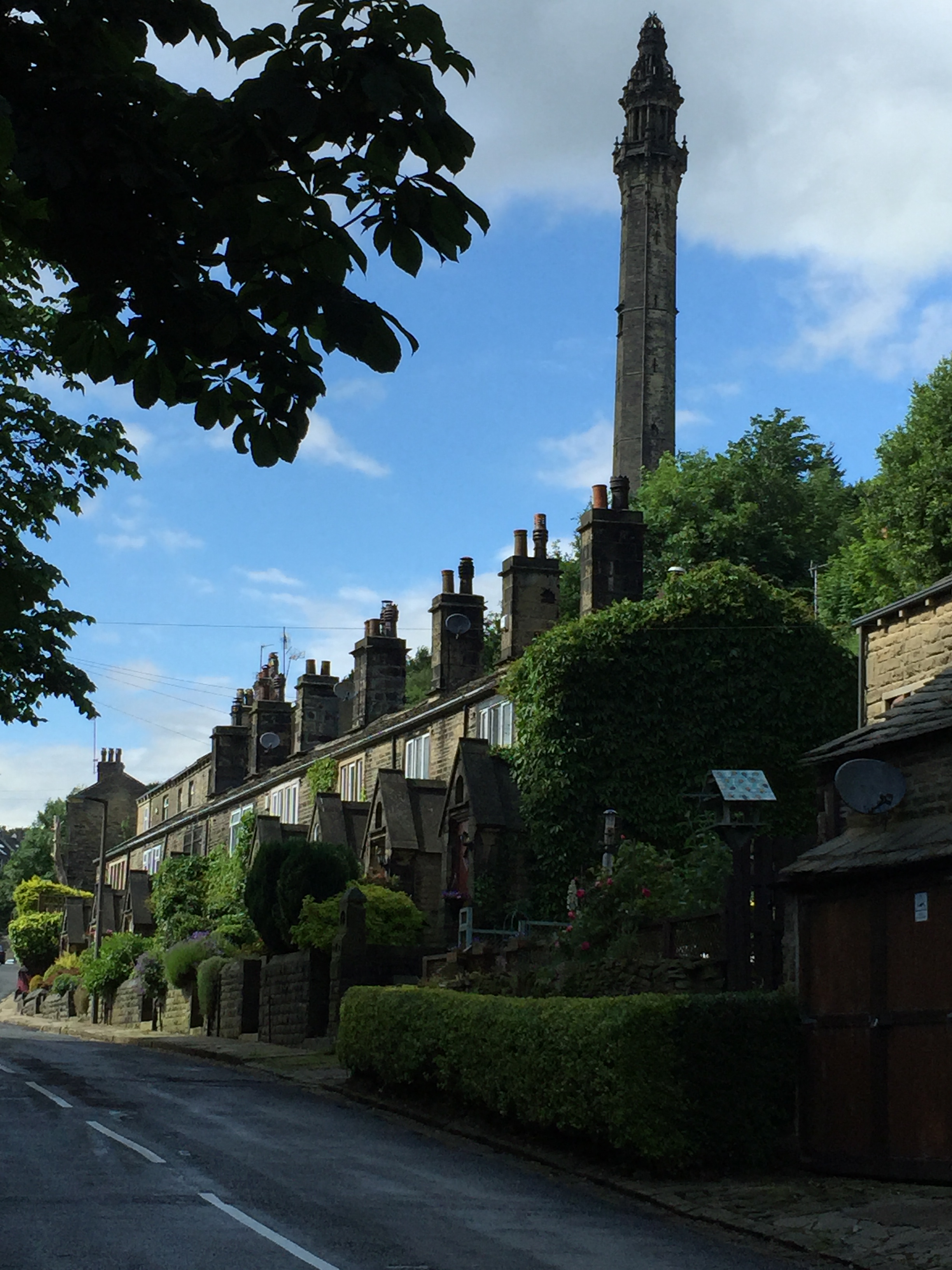 Mr Wainhouse built many houses for the people who worked in his dye works. Not content with climbing one tower we hurried on to Heptonstall where the church tower was supposed to be open for the public to view. As far I can gather this is a very rare occurrence and there were several people who’d lived in the village for 20 years and had never climber the tower. I’m not surprised! The health and safety people in the US would never, NEVER, have allowed us up. By the time we got to the top we had to climber through a window and then clamber onto the roof itself. It was wonderful – even though I’m not particularly comfortable with heights. Looking down onto the graveyard where my great, great, great, great grandparents are buried and onto the village where they lived for several generations was a wonderful experience. Our guide explained the workings of the bells and the clock too.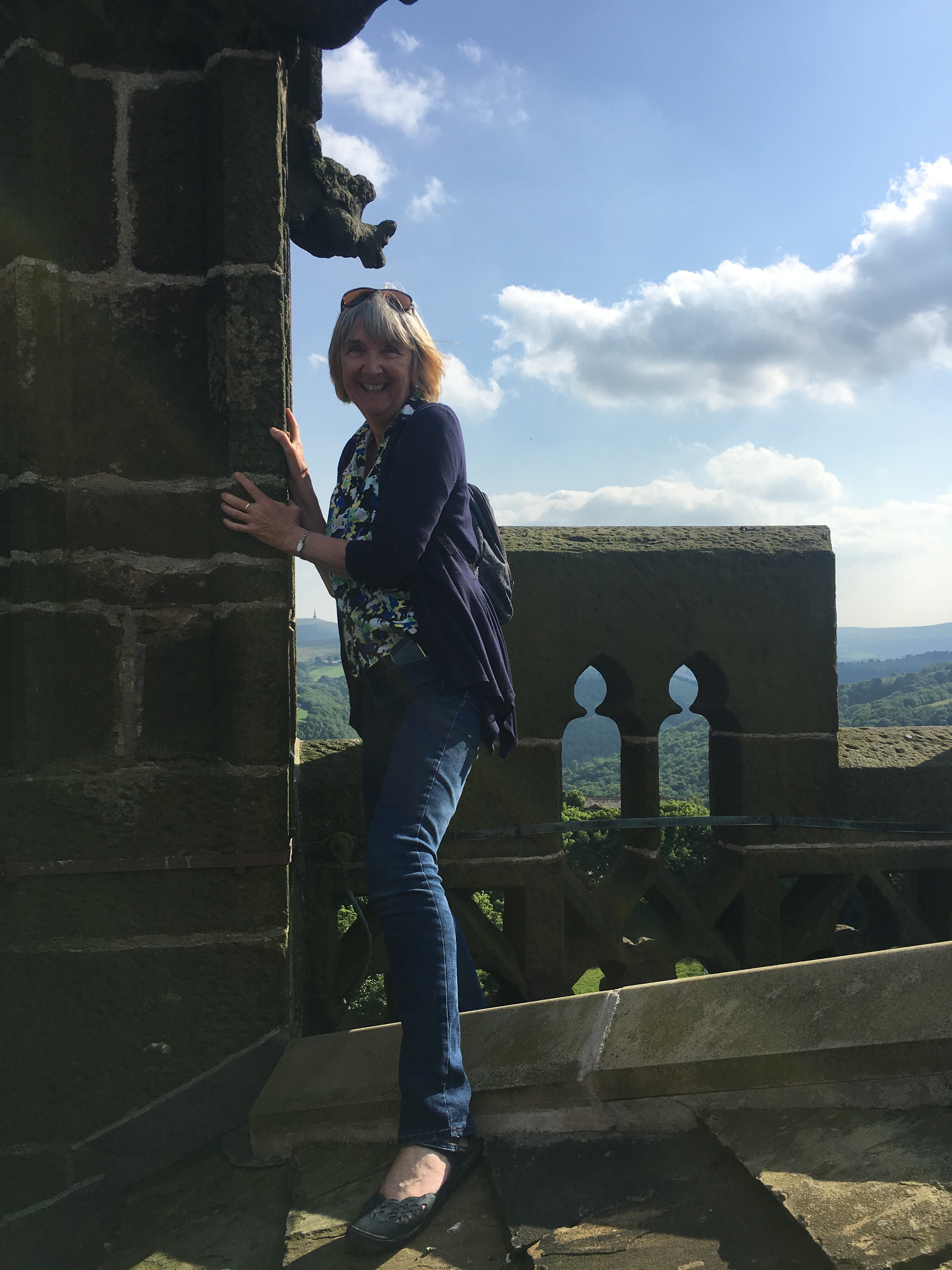
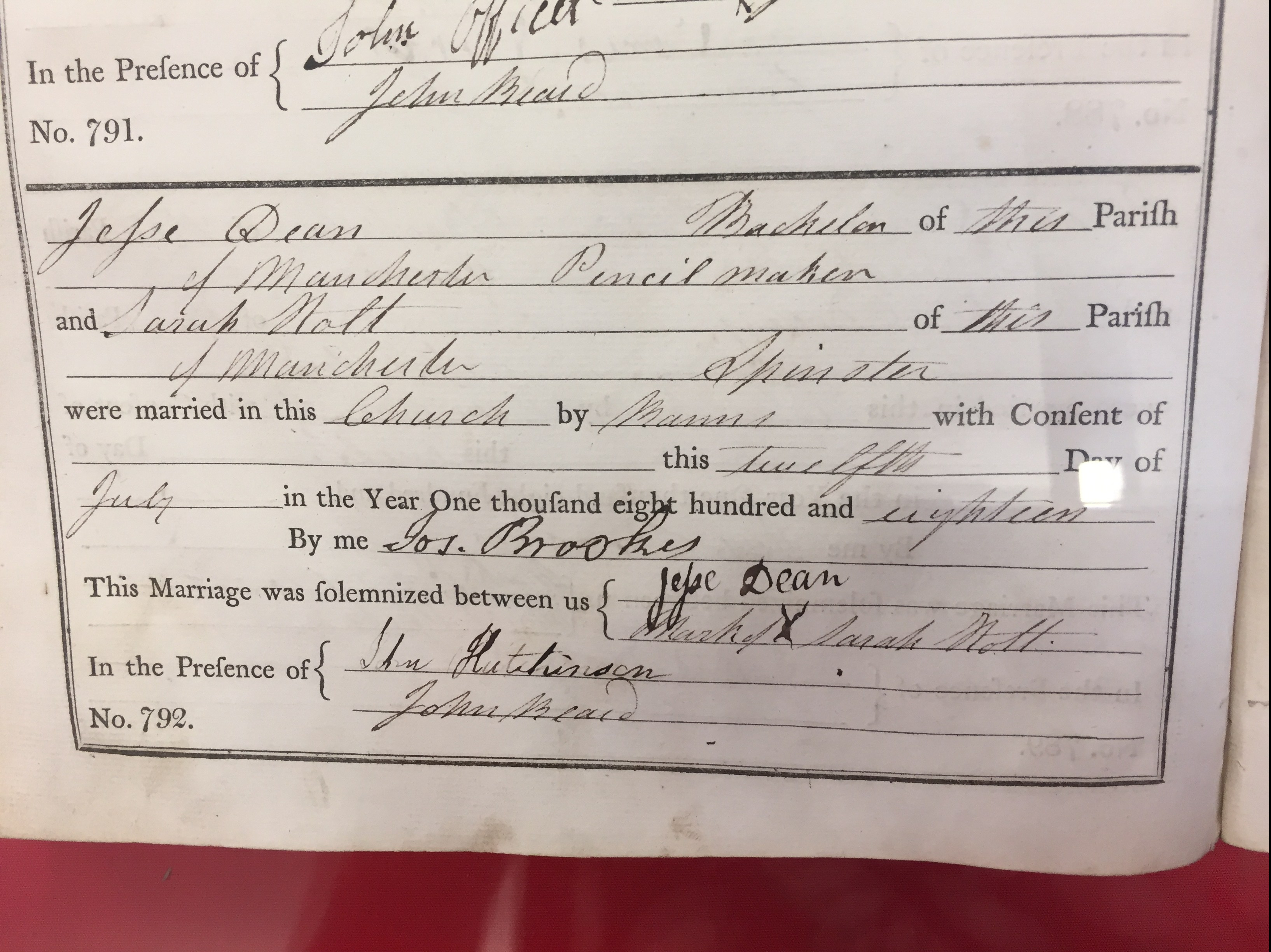
 It just happened that David from Lily hall was taking the tour too and he invited us back to Lily Hall. Now all the girls have stepped inside the building where, in 1842, Elizabeth Ann had a child with the young man next door, after her husband had died from ‘alpaca wool poisoning’, thereby connecting my family with the Wrigley family (some of whom emigrated to New Zealand, and others who built a lot of buildings in Hebden Bridge, including the one I’m living in).
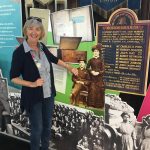
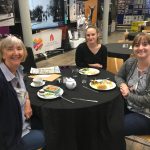
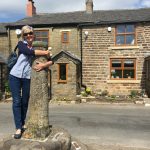

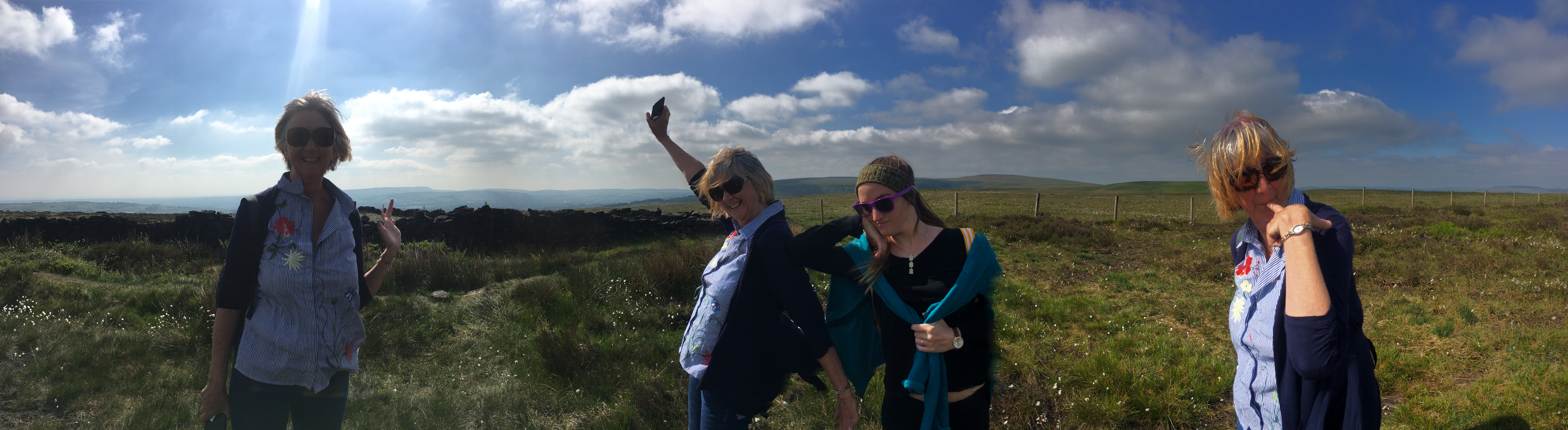
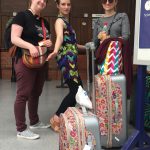
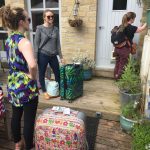
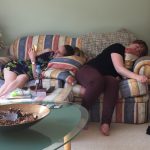
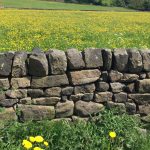
 The girls brought me lots of family photos that I’d not had room for in my boxes when I moved to England. We had fun in Stubbings Wharf looking at the old photos.
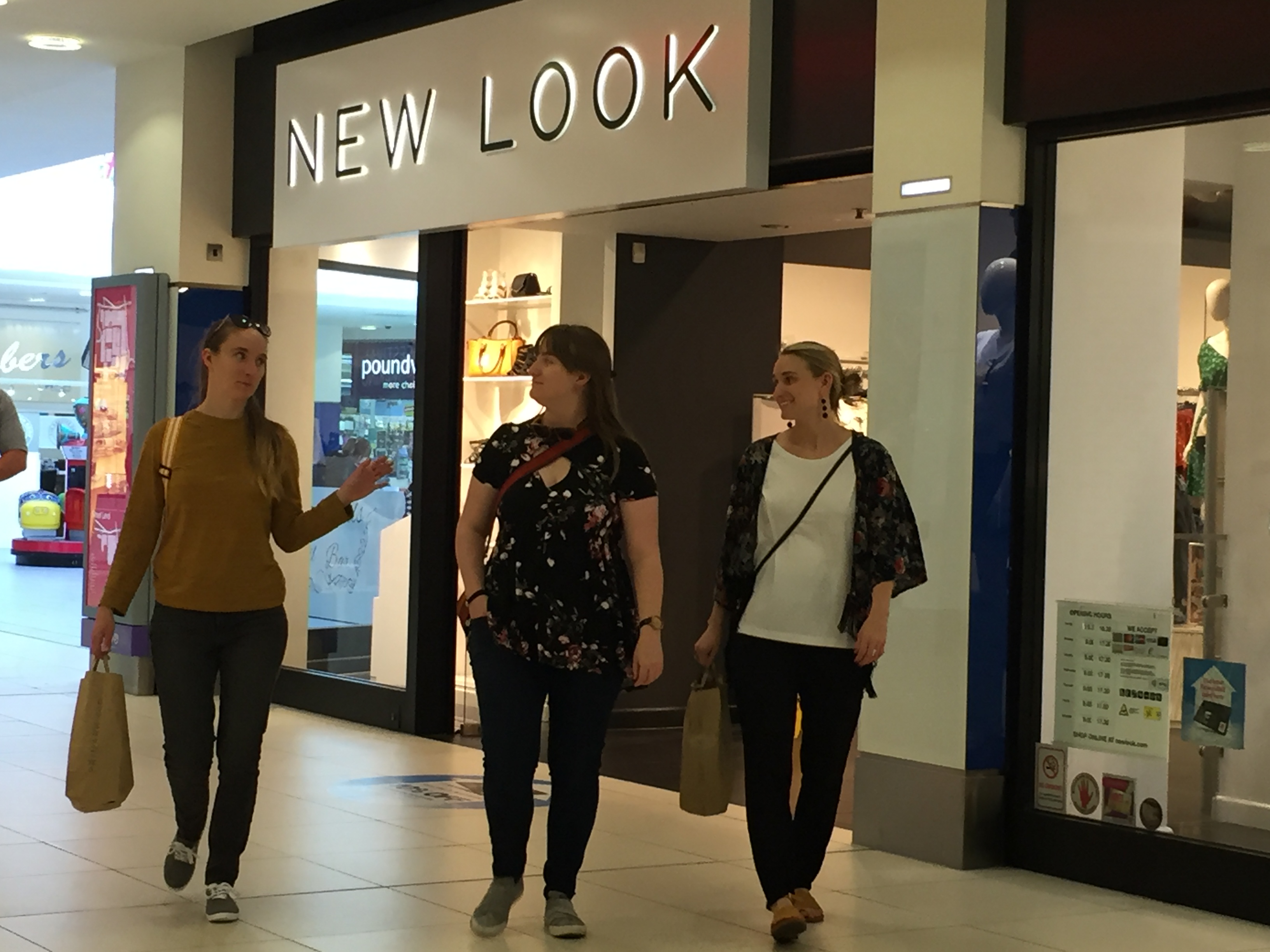 Shopping featured high on their ‘to do’ list. We went to explore Blackburn market one morning.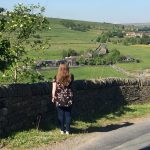
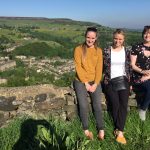
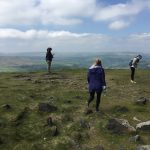
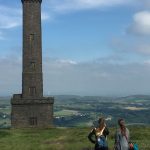
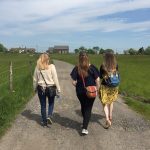
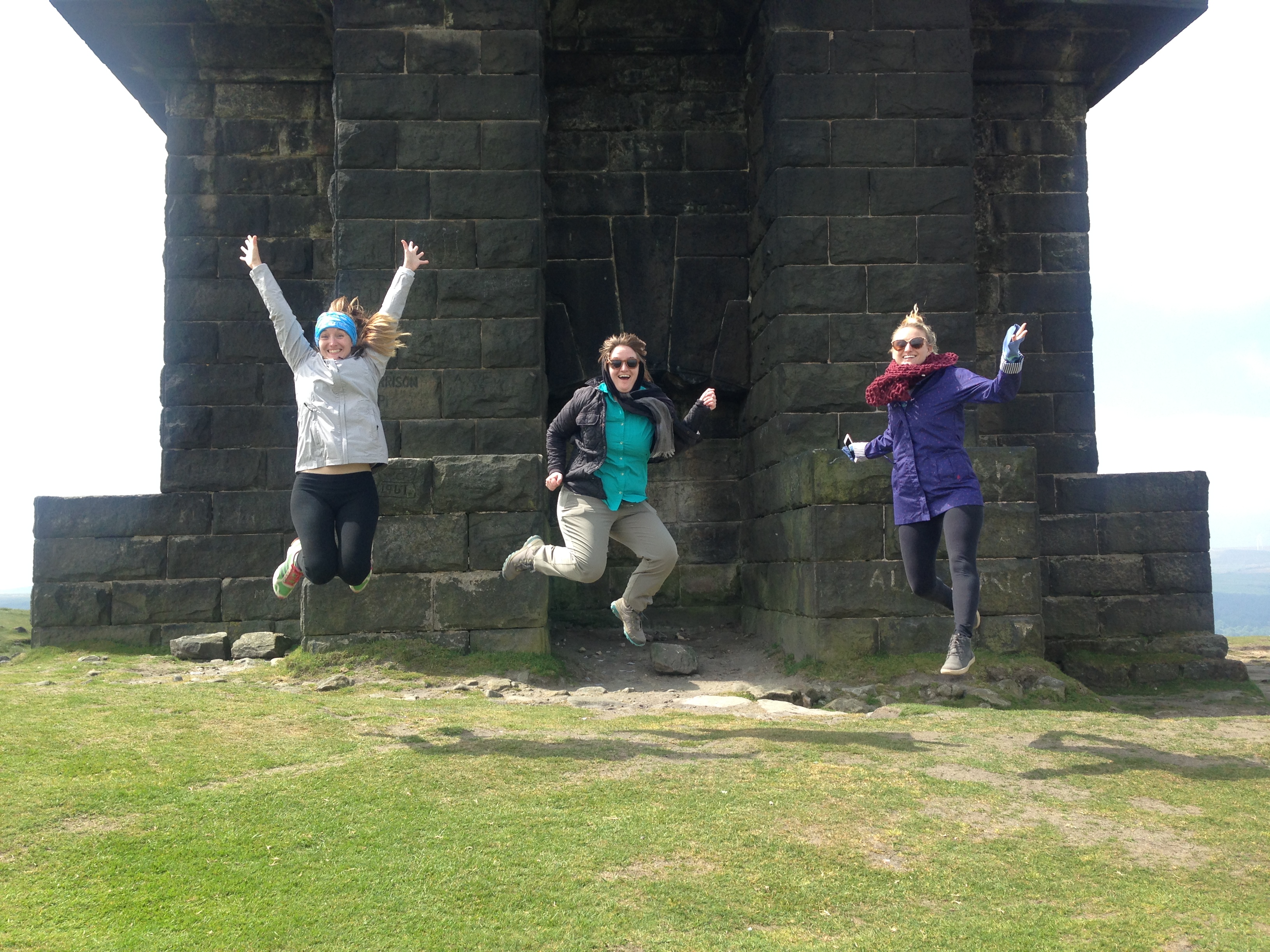 We climbed up to Stoodley Pike from my apartment. It was very windy at the top.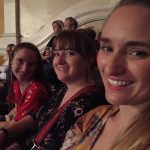
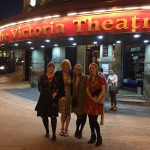
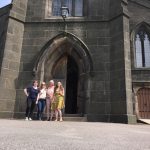
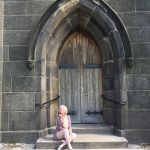
 Outside St Anne’s, Turton. I recently used the grotesque in my new quilt. I often create a quilt at a major change in my life and my move to Hebden Bridge last autumn was no exception.

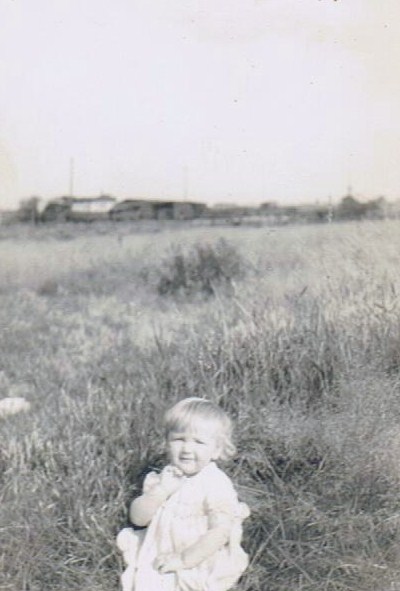
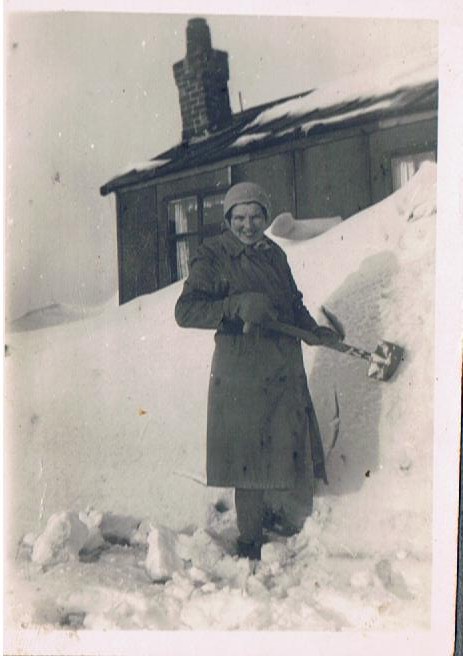








 In the boxes I even found a doggie pedigree. The last Abraham Gibson was an avid Airdale terrier man. The current owner knew a lady who Mr Gibson used to give a ride to when she was a little girl. He had one of the first cars in Calderdale. His detailed account books are in the archives and go right up until the week he died in 1956. His personal diaries are there too, and postcards he received from friends or perhaps relatives on holiday in Blackpool and on a steam ship. Absolutely fascinating.
 market on Thursday, and also got a baguette from the tiny bakery that’s directly beneath my apartment – along with the fish and chip shop. Once a week I see the potatoes arrive in big sacks carried over the delivery man’s shoulders!


 It’s only a couple of miles around the reservoir and I found that it reminded me a lot of Entwistle reservoir in Turton. After crossing the dam I found myself in the woods, but what was this – a pile of old Christmas trees? I did a double take. OMG. Around the entire
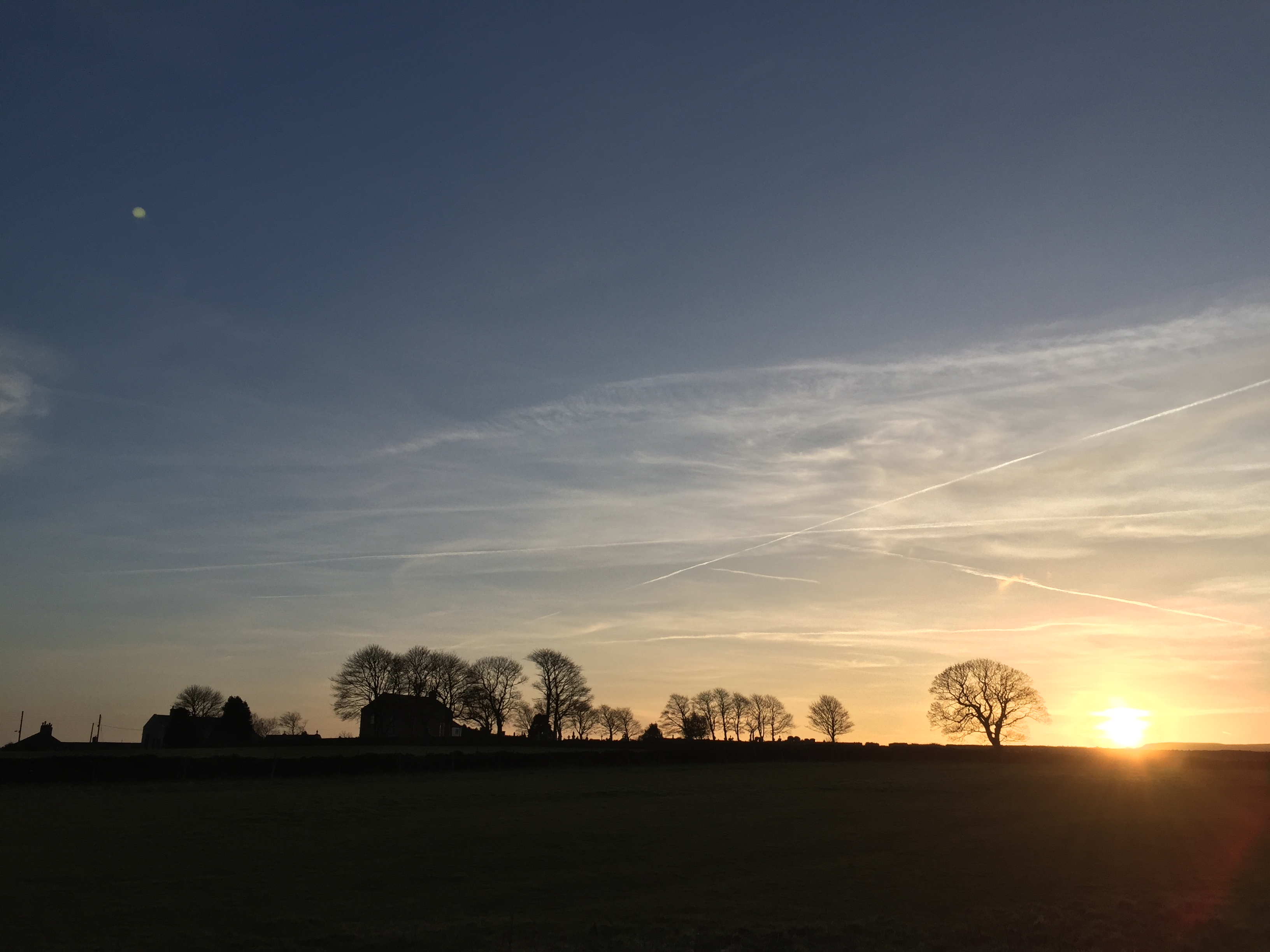
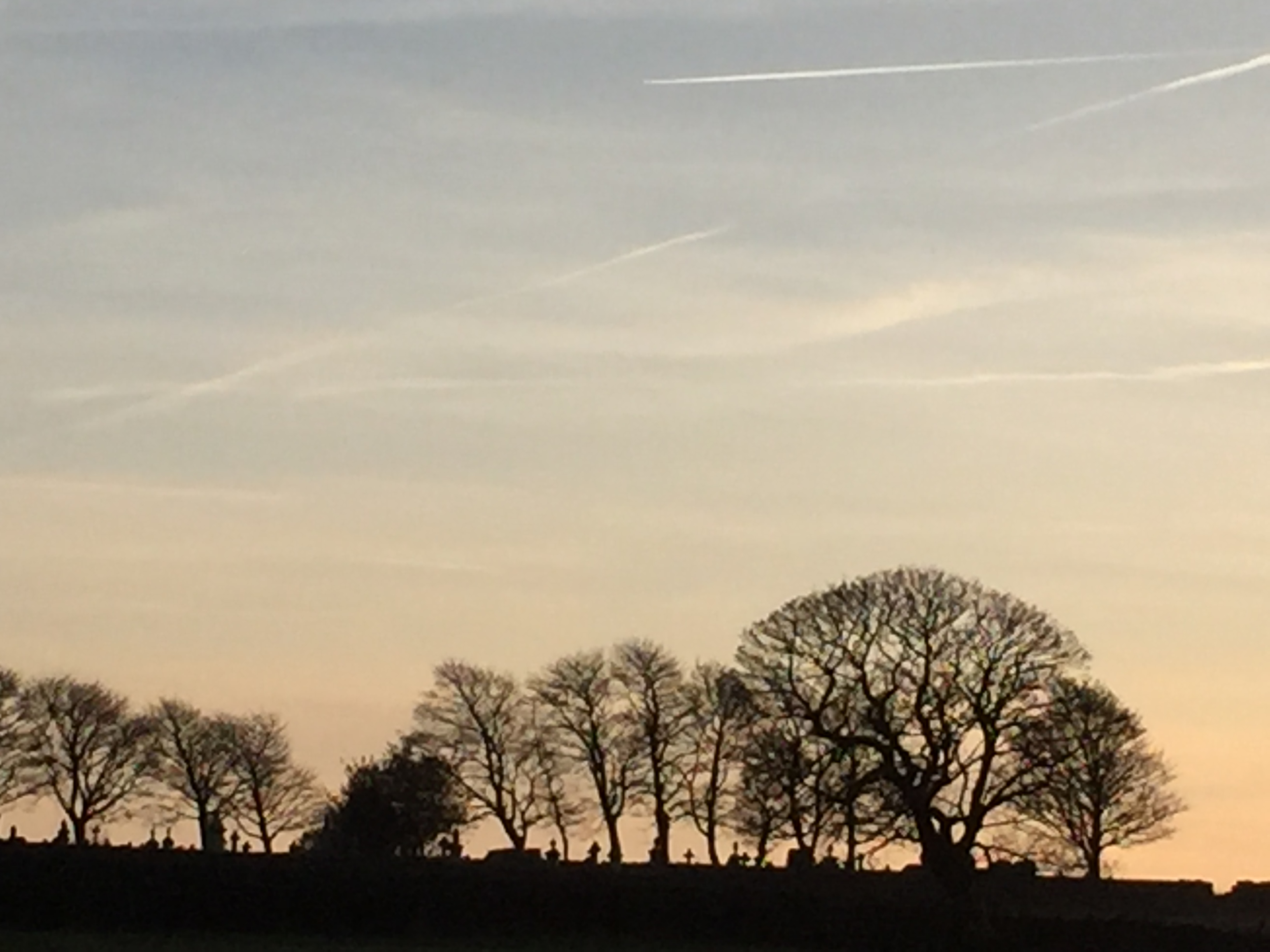
 perimeter of the reservoir is a hedge made out of recycled Christmas trees. I looked in vain, hoping to see at least one Christmas ornament, but the only object I found suspended from one tree was a price tag! By the time I got around to the far side of the lake the sun was on the horizon and the light was beautiful. Taking photos was a bit




Recent Comments